If your Mac has started to freeze, slow down, or display the error message "Your system has run out of application memory," you may have run out of RAM. Some possible reasons are that you have too many apps open at once, you've launched an app that's too demanding for your laptop (such as a video editing program), or you haven't restarted your Mac in a while. Below, I'll show you how to free up RAM on a Mac and prevent it from overloading in the future.
What is RAM
RAM stands for Random Access Memory. Think of RAM as your Mac's short-term memory — it's where your computer keeps the information it needs for whatever you're doing right now.
This differsfromyour solid-state drive (SSD), whichstores all your files and apps permanently, consuming disk space.LetmeexplainwithSafari as an example. The Safari app itself livesonyourSSD.ButwhenyoulaunchSafariandbrowsewebsites,yourMacusesRAMtodisplaypages and let you interact with content.
When you turn off your Mac, everythingstored in RAM getswipedclean–it'scompletelytemporarystorage.
The amount of available RAM determines how many tasks your Mac can handle simultaneously. Morememorymeansrunning more apps, playingdemanding games, or openingdozensof browsertabs without slowdowns
How much RAM do you need on your new Mac, MacBook Pro, and MacBook Air
Okay, so what is "more RAM," and how much RAM do you need? It all depends on your tasks.
Volume
Who is it for
Verdict
8GB
For people who primarily surf the web, check email, work with word processors, or stream videos.
For very light use. Still viable on modern Macs but leaves little headroom.
16GB
For users who multitask, do light photo/video editing, or run multiple apps and tabs.
The practical baseline for most users who multitask.
32GB or more
For professional video editors, 3D animators, software developers, and data scientists working with virtual machines or large databases.
For power users and heavy multitaskers.
From my experience, I'd recommend getting a slightly higher amount of RAM than you think you need right now. Softwarebecomesmoredemandingovertime,so that extraheadroomwillserveyouwell. This isespeciallyimportantifyou'rerunningmultiplecreativeappslikePhotoshopandFinalCutProsimultaneously.
Top tool to use to free up RAM on Mac
What's wrong?
How to solve?
System running slow due to RAM issues
Perform a comprehensive, one-click cleanup of RAM and system junk with CleanMyMac
Apps consuming a lot of memory
Identify and manually close apps consuming too much memory with Activity Monitor
Need to clear RAM cache
Clear RAM cache using a command-line method in Terminal
Multiple apps need to be closed quickly
Quickly close all or selected apps in one go with QuitAll
Cache files occupying memory
Manually clear cache files to free up memory in Finder
Resource-heavy apps reducing performance
Manage resource-heavy apps to reduce CPU usage in App Tamer
Need real-time monitoring of performance
Monitor RAM usage and system performance in real time with iStat Menus
Restart a Mac to refresh RAM and clear temporary processes
Outdated system affecting performance
Update macOS to keep system optimized and efficient
How to check RAM usage on Mac
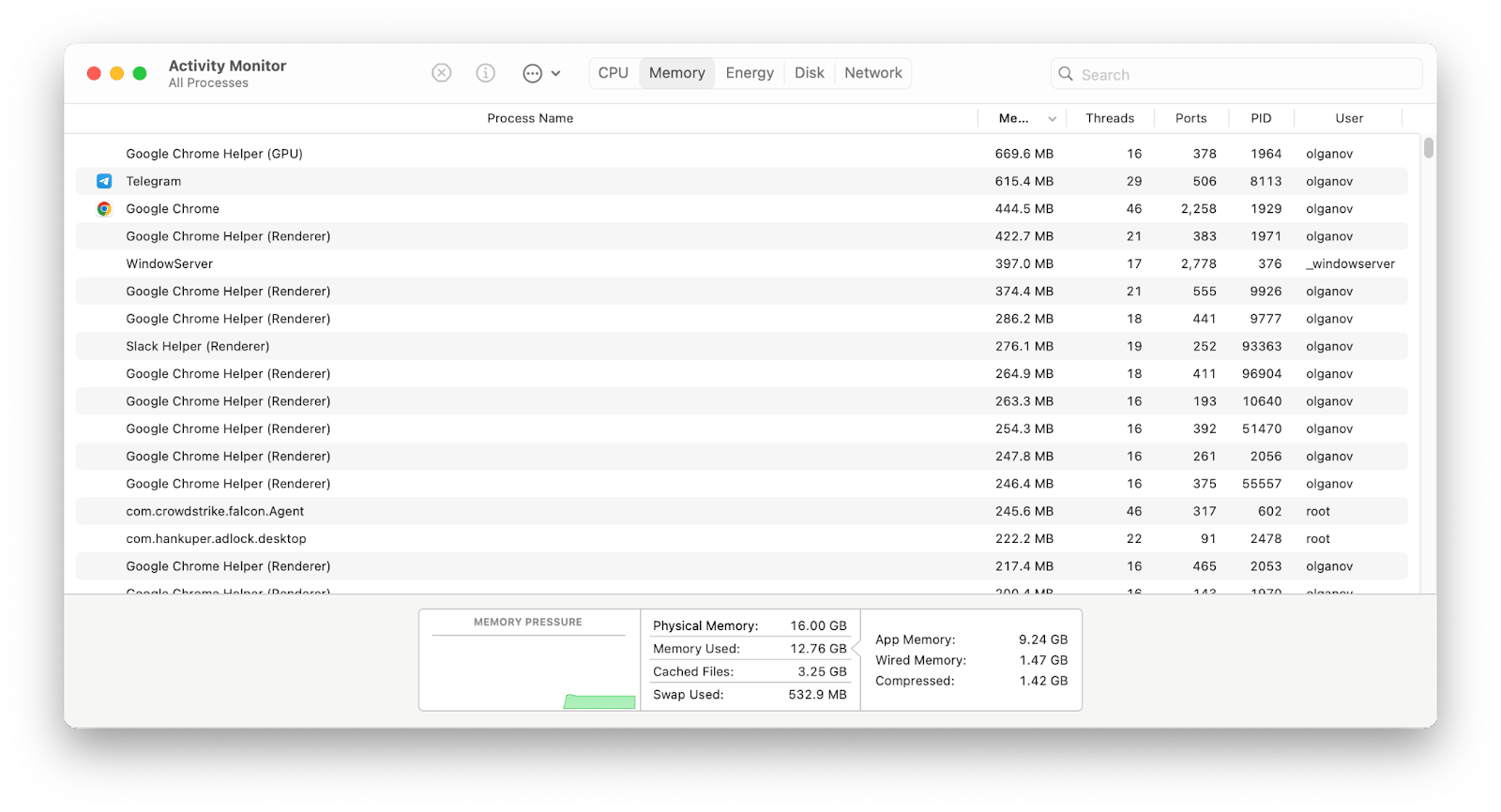
If you want to check the status of your RAM, but clogged memory isn't your typical problem, use Activity Monitor. It's a built-in Mac app that you can access from the Finder or Launchpad.
Open Activity Monitor and click the Memory tab.
Check the colorindicator at the bottom:
Green means everything is fine.
Yellow indicates attention needed.
Red shows that the memory is full.
Click the Memory column tosortprocessesbyusage.
Click the Xbuttontoclosememory-hungryapp.
But what if you're in a different boat? Where you can't allow memory overload because then your apps will freeze and you might lose data?
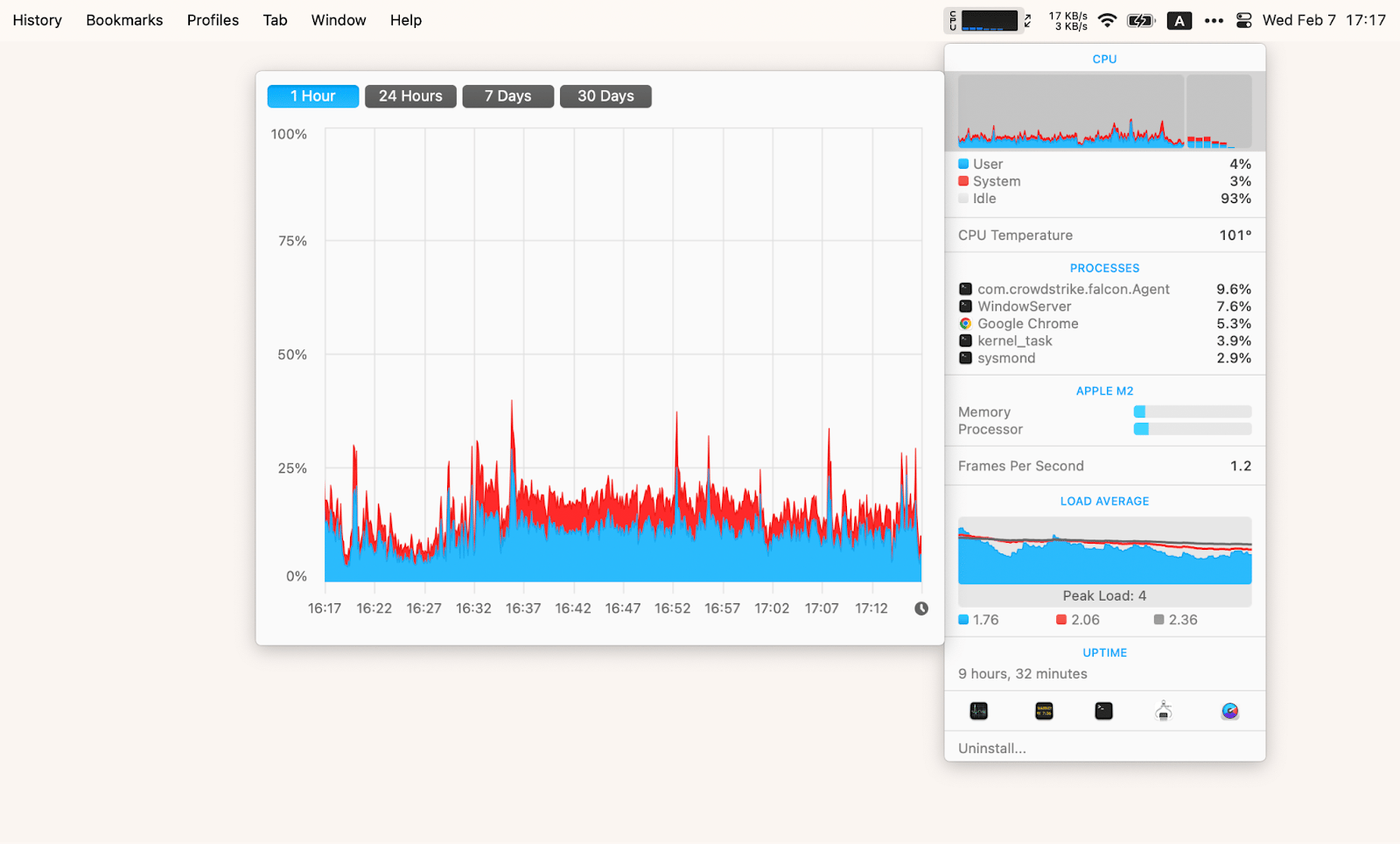
In this case, you'd better use a third-party app that notifies you when your Mac is about to run out of memory. This is the principle behind iStat Menus. We recommend setting alerts in case memory pressure exceeds a certain threshold (the app suggests 80%). This option can be found in iStat Menus > Alerts.
In addition, iStat Menus is a convenient tool for quickly monitoring the status of your Mac. It lives in the menu bar and monitors CPU, GPU, hard drive temperature, and more. Then, it combines the information into easy-to-read graphs. It's convenient: you'll know if your Mac needs cleaning with one click.
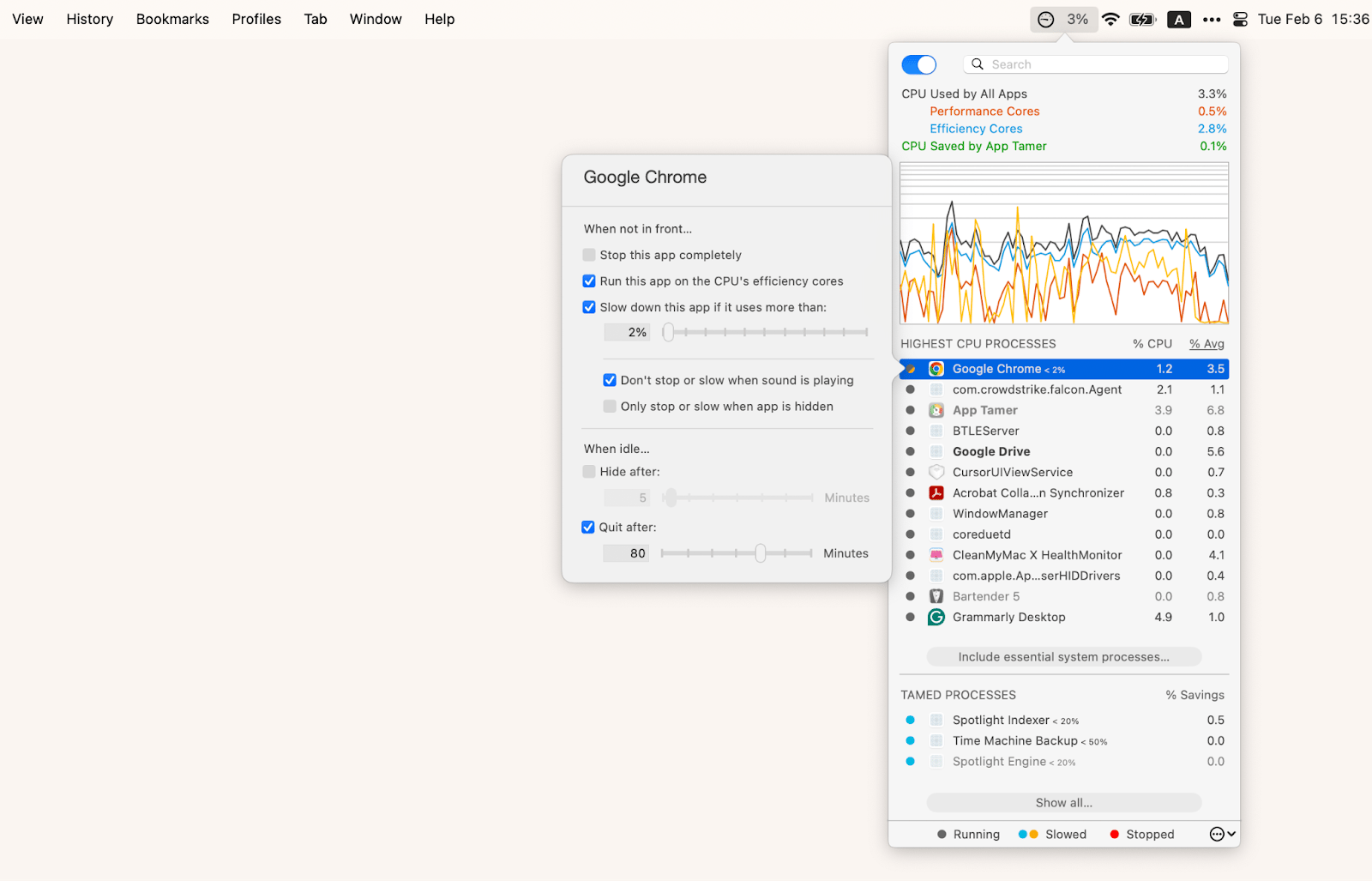
If killing apps is not the right solution for you, try slowing them down or running them in the CPU's efficiency cores. We use App Tamer for this.
The app displays all processes and allows you to customize them, as shown in the image below. Important system processes can be excluded from the list so you don't accidentally kill a critical one.
How to free up RAM memory on Mac
Once you realize your Mac's RAM usage is through the roof, you can start thinking about an effective way to fix it. I'll start with one-click solutions and move on to more complex methods.
1. Clear RAM on Mac in one click with CleanMyMac
CleanMyMac is a smart and effortless Mac care app that helps you tidy up your computer and keep it in tip-top shape.
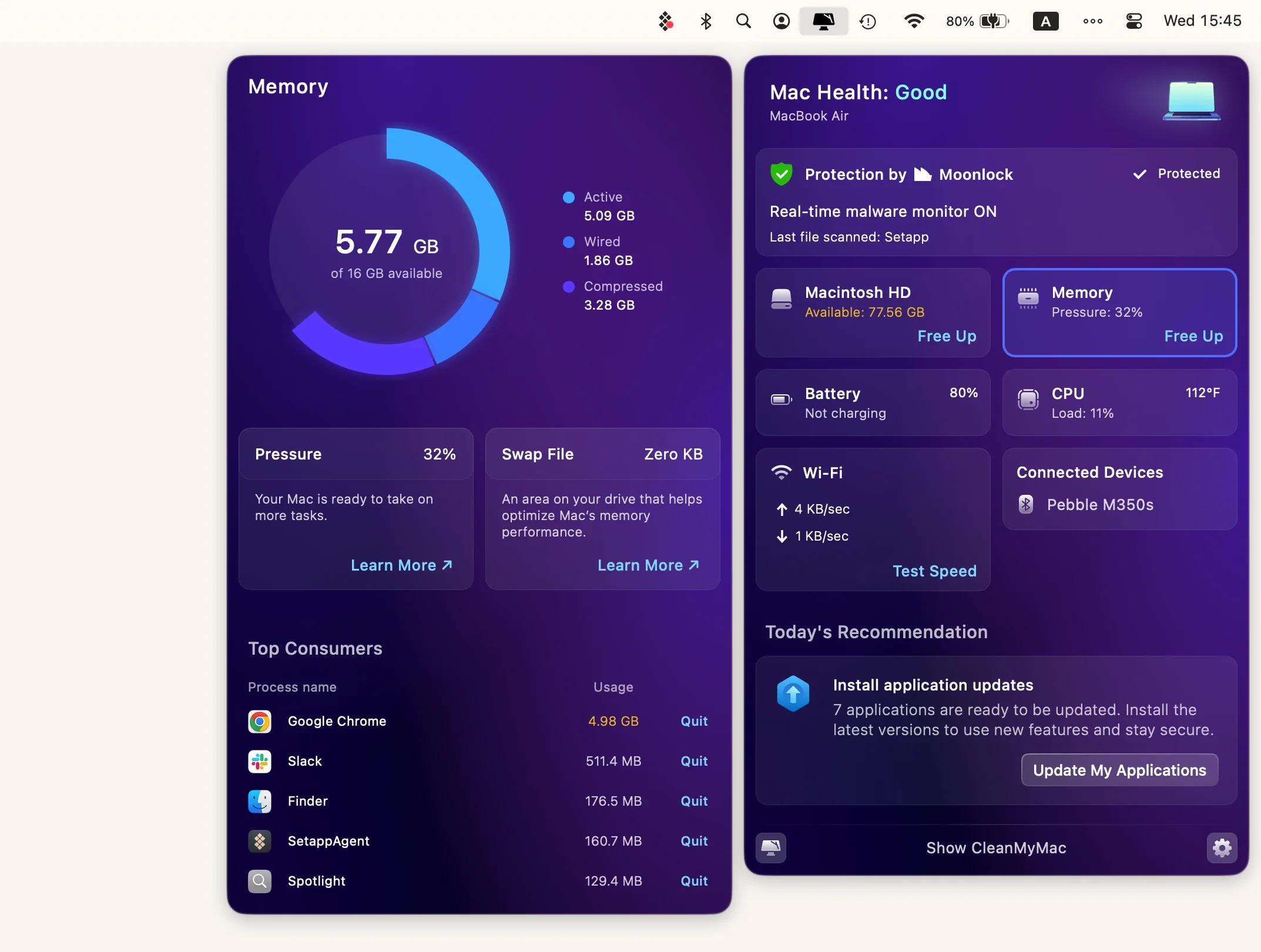
Here's how to clear RAM on a Mac.
Install CleanMyMac.
Open the app icon in the menu bar.
Click Free Up on the Memory tile.
And that's it. Unnecessary processes are cleaned up or optimized, while important ones remain untouched.
Just as quickly, you can clean up system junk, malware, unnecessary apps and their associated files, and more.
CleanMyMac frees up RAM, clears junk, and cleans every browser cache — in three clicks from the menu bar.One-click memory cleanup, malware scan, login item manager, and system junk removal. Trusted by millions of Mac users.Try CleanMyMac free. Orget CleanMyMac standalone via Marketplace— no membership needed from $15.95/mo or $195.95 one-time.
2. Clear RAM with Terminal
The Terminalprovidesadirectmethod to clear disk cache.This command won't close apps but willfreeupcachedmemory:
Here's how to lower RAM usage on Mac with Terminal.
Launch Terminal.
Type sudo purge.
Press Return.
Enter your Mac user password.
Expect a short pause while the system rebuilds caches. Use this sparingly — a restart often achieves similar results more cleanly.
3. Clear app memory
Running apps consume a significant amount of memory. Closing them means freeing up RAM. Here's how to clear application memory on Mac:
Open Activity Monitor and press the X button next to the app you want to force quit.
Open the unneeded app and press Command + Q to quit.
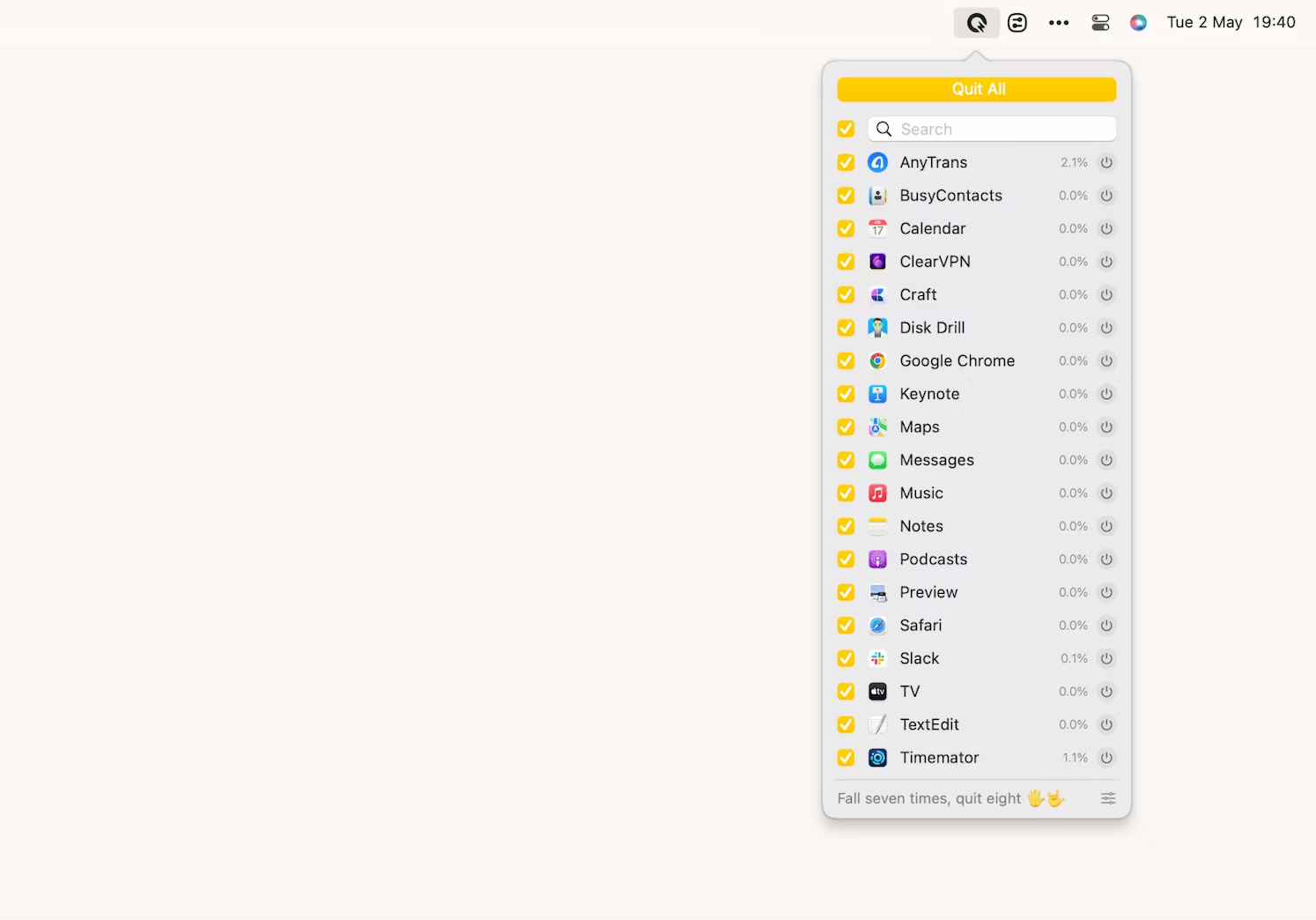
Quit all or selected apps with a single click right from your bar menu using QuitAll.
Background apps are silently consuming RAM right now — and Command + Q won't show you half of them. QuitAll surfaces everything and closes it all in one go. Free for 7 days. Try QuitAll free.
4. Clear RAM cache
The next way to free up some space on your Mac is to empty the RAM cache. Don't expect gigabytes of extra disk space, but your Mac will definitely feel a bit better.
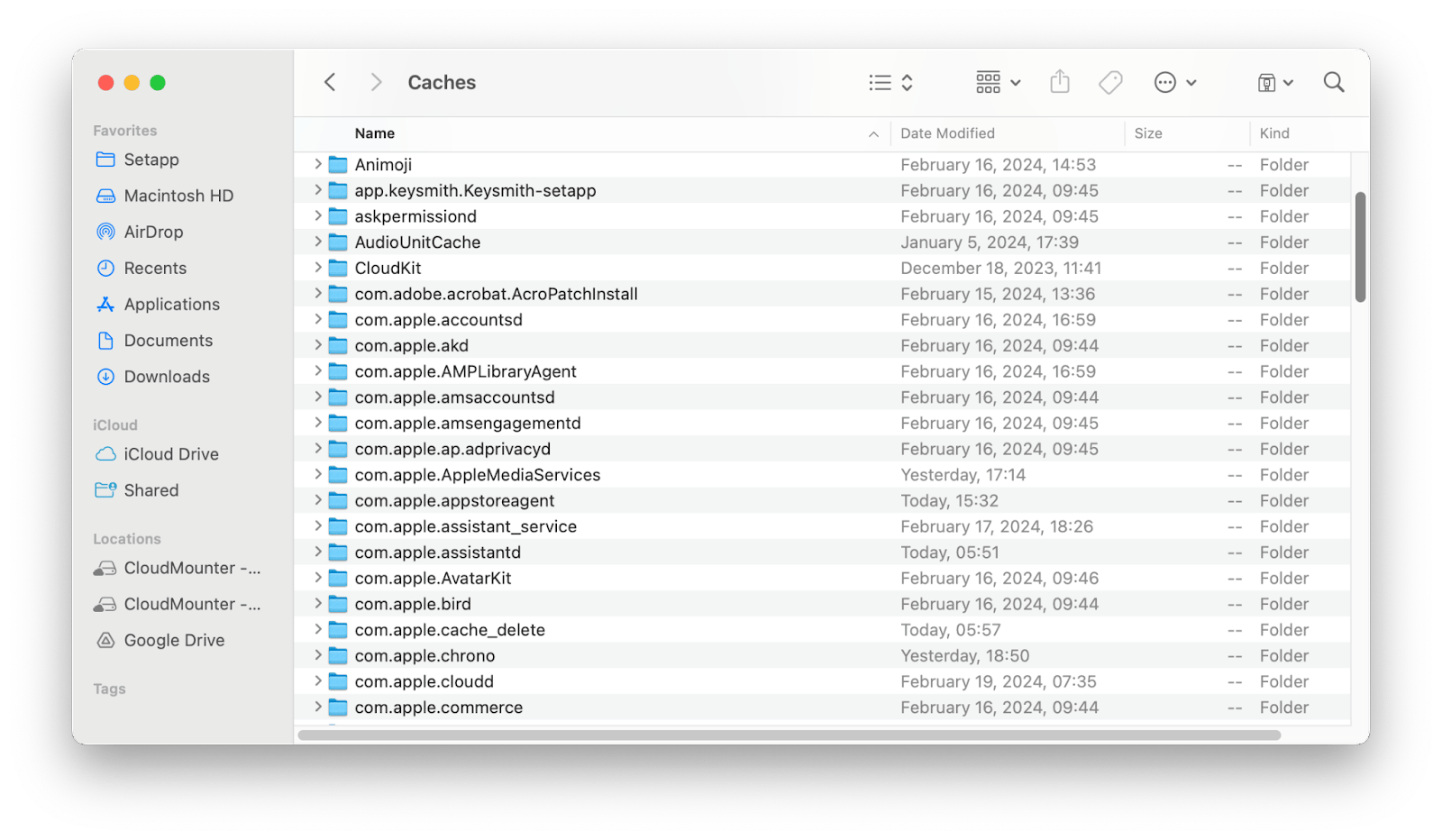
In Finder, select Go > Go to Folder… (or just press Shift + Command + G).
Type ~/Library/Caches and press Enter.
Select all or particular folders in the directory.
Move them to Trash.
Some folders may remain. This is normal.
5. Declutter your desktop to reduce RAM usage
A cluttered desktop can affect your Mac's performance in several ways. For example, the Finder might have difficulty launching and processing apps. So, your best bet is to move files to other folders or cloud storage.
To simplify the process of sorting files, try Spotless. After you set a few rules, the app will automatically sort files from your desktop. All you have to do is drag files to the drop zone, and the app will put them in the right folders. For example, photos can go to Images, text files to Documents, etc.
Several other ways to organize your desktop without deleting or removing files or icons exist.
Use the built-in Stacks feature to organize files you want to keep handy. Right-click anywhere on your desktop and select Use Stacks to organize files by type.
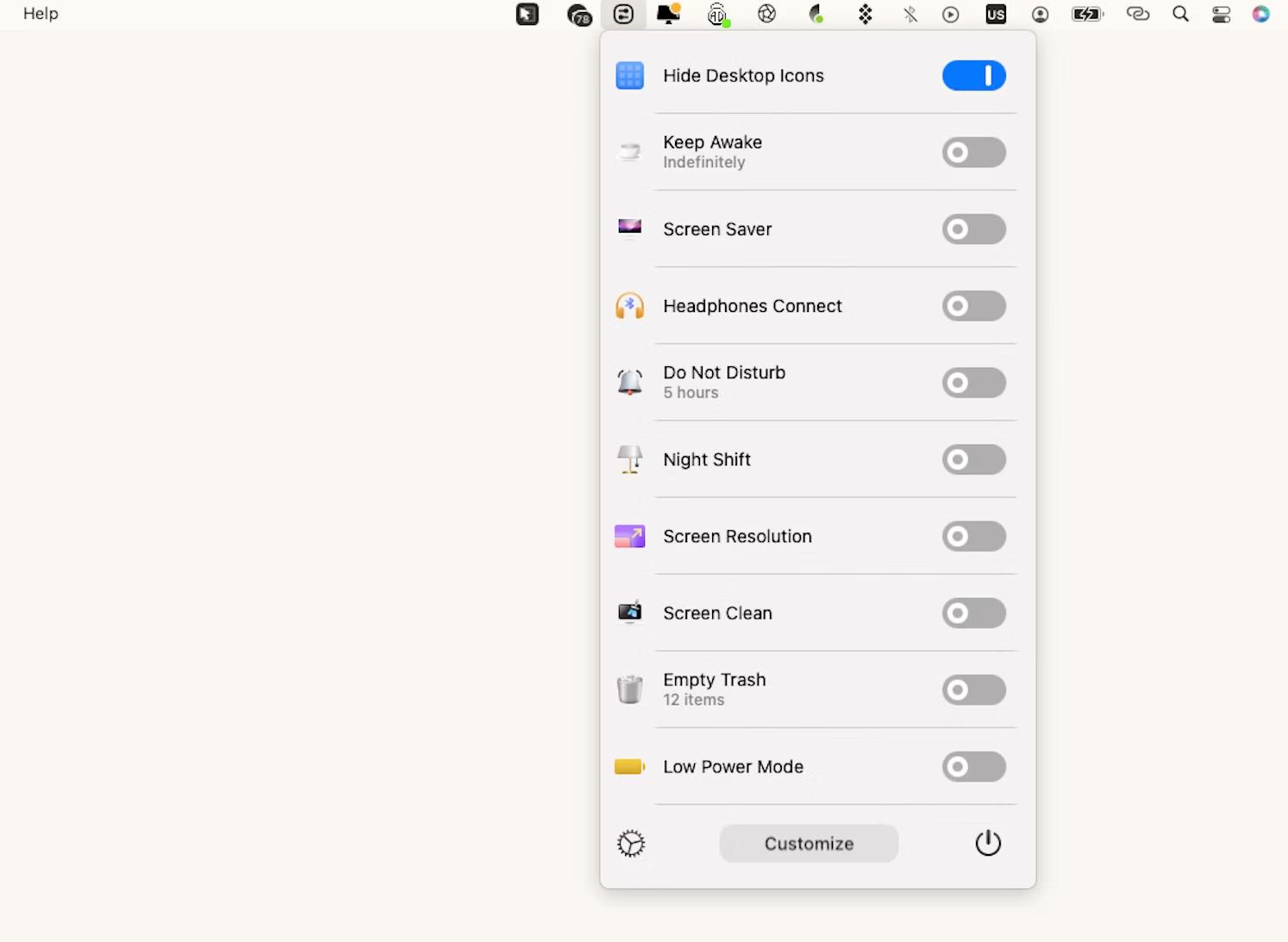
If you want to hide icons from your desktop altogether, whether for cleanliness or privacy, try One Switch. Just activate One Switch from the menu bar and select Hide Desktop Icons.
6. Fix the "kernel_task" high CPU usage bug
When you check the Activity Monitor, you may see kernel_task at the top of the list of the most consuming processes.
The kernel_task process is a core part of Mac operating system, which is responsible for various system tasks, including regulating the temperature of the CPU. The kernel_task itself is not a problem and does not cause problems. It is a symptom of an overloaded or overheated CPU. Here's what you can do to help your Mac:
Having many Finder processes, tabs, and windows open can also result in high memory consumption. Here's how to reduce RAM usage Mac in Finder:
Close all the Finder tabs you don't need.
Merge the rest of the windows in a single Finder window with tabs by selecting Window > Merge All Windows.
Remove some of the columns your Finder displays in the list view (such as Date Modified, Size, Kind, etc.). Right-click the column header and deselect the columns you don't need.
Clear the Finder cache. In the Terminal, type the command sudo rm -rf ~/Library/Caches/com.apple.finder/ and press Enter. Then type your password and press Enter again.
Restart the Finder. Hold down the Option key, right-click the Finder icon in the Dock, and choose Relaunch.
These actions can free up space on your Mac for essential processes.
8. Improve Chrome's memory usage
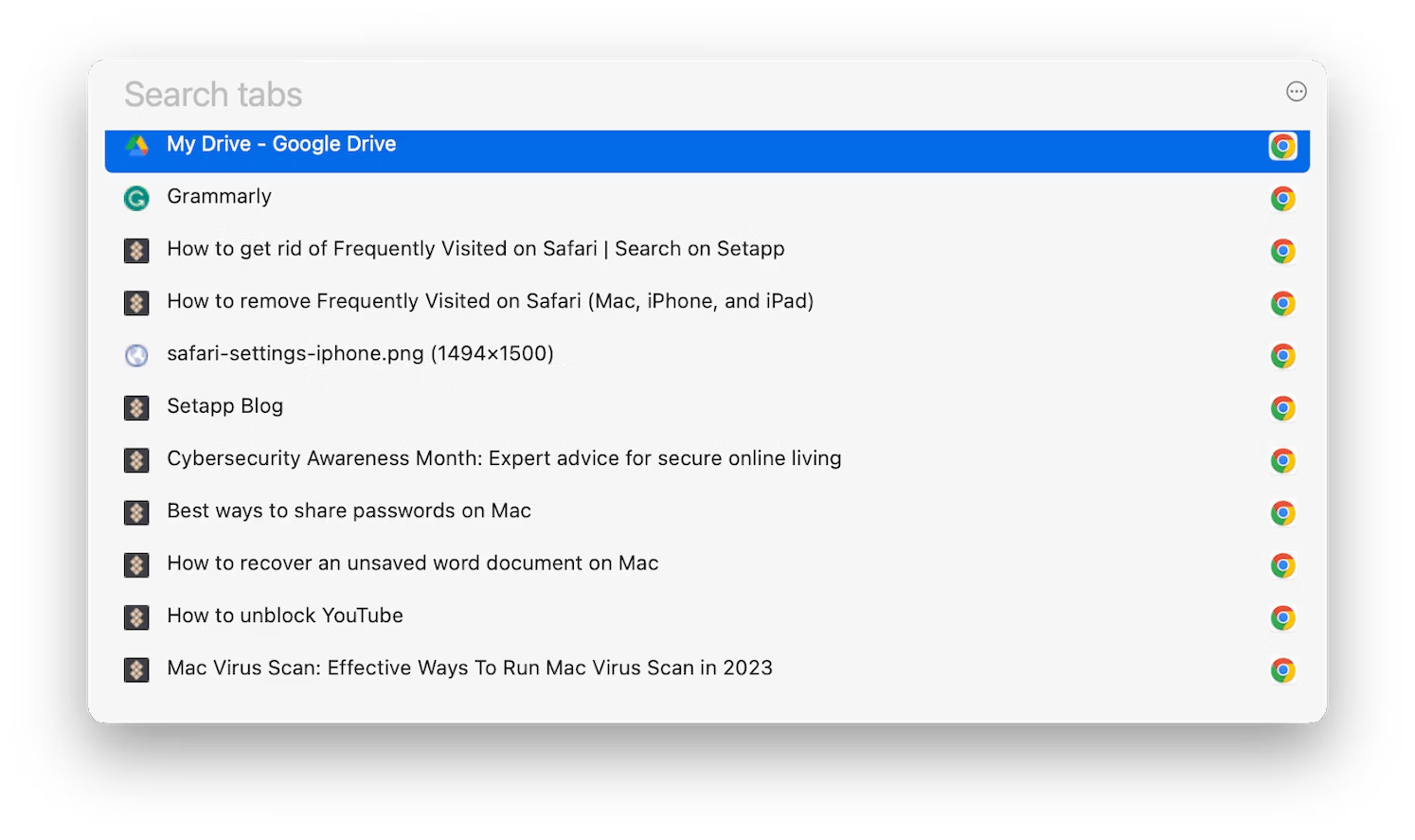
Google Chrome is known to use a lot of RAM. Closing unused tabs may be the best option. But since inactive tabs don't take up much memory, you can also avoid forcing tabs to reload by using Tab Finder instead of just clicking through all the tabs.
Tab Finder is the fastest way to find and switch between tabs on your Mac. This quick search utility works for all browsers at once, including Chrome, Safari, and Firefox, so you can avoid reloading inactive tabs that would spike RAM usage.
9. Clean up web browsers
Accumulated cache and cookies can increase the memory that web browsers use over time. That's why cleaning RAM on Mac includes cleaning all browsers you use.
Safari. Go to Settings > Advanced tab > Check Show Develop menu in menu bar > Develop menu > Empty Caches. Or just press Option + Command + E.
Chrome. Navigate to Settings > Privacy and security > Clear browsing data.
Opera. Click Settings > Privacy & security > Clear browsing data > Choose time range and check Cached images and files > Clear data.
Or clean all your browsers in one go with CleanMyMac.
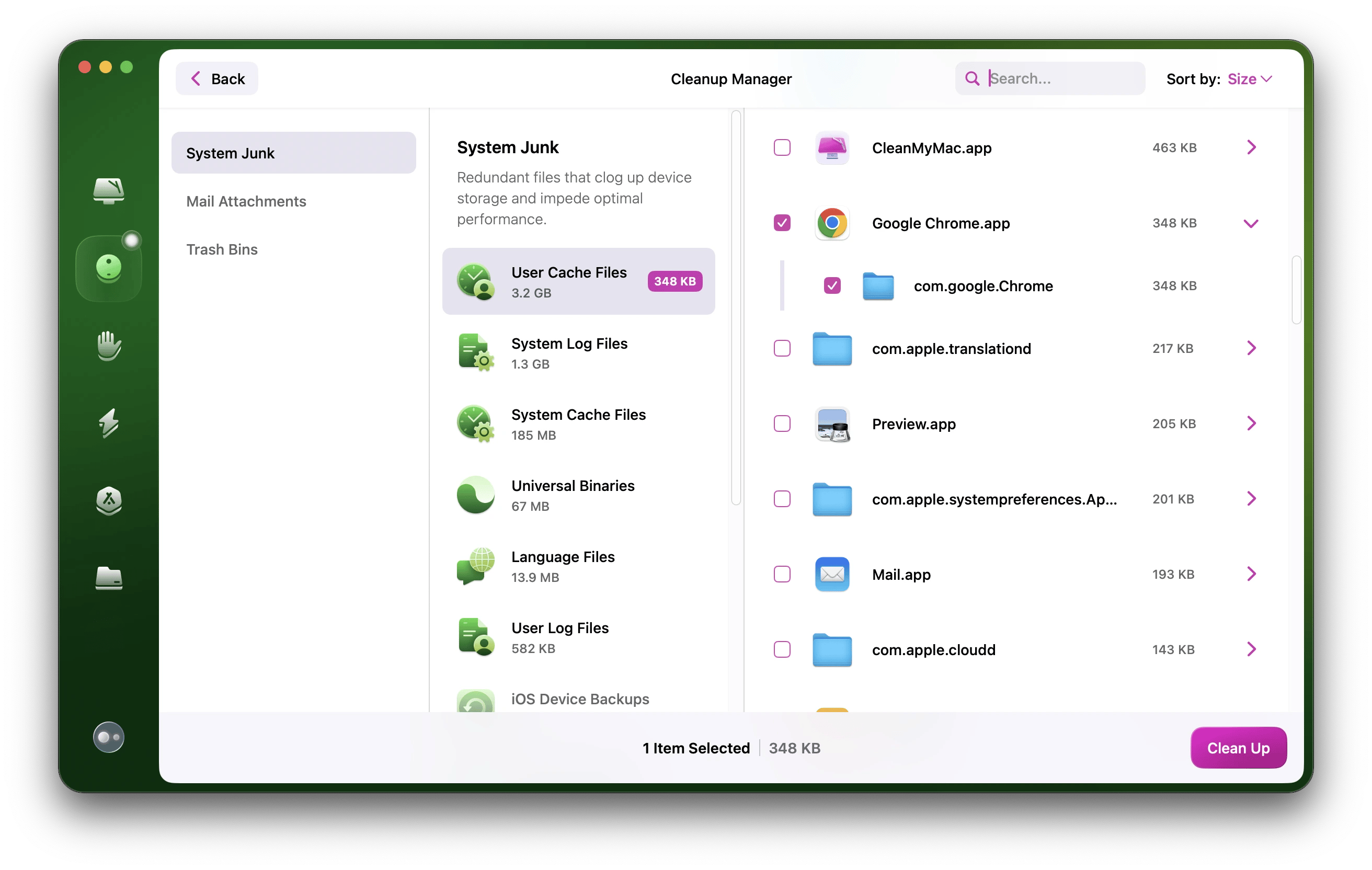
Launch CleanMyMac.
Click Cleanup > Scan.
Click Review All Junk.
Check all the browsers.
Click Clean up.
This will delete user cache files — it's safe.
10. Disable login items to free up memory
You may have allowed many apps to start when you turn on your Mac and forgotten about them. Disabling unnecessary startup items is an effective way to clean memory on Mac and speed up its startup time.
Open System Settings.
Go to General > Login Items & Extensions.
Turn off any apps or tools that aren't necessary.
Or you can delete all Login Items in one go with CleanMyMac (Performance > Scan > View All Tasks > Login Items).
How to decrease RAM usage on Mac: Solved
RegularmaintenancekeepsyourMacperformingoptimally.Restartyour Mac occasionallytorefreshRAMcompletely.
Plus, use iStat Menus to monitor your Mac's performance, CleanMyMac to clear Mac memory and delete browser cache files, App Tamer to limit CPU usage for certain apps, and QuitAll to quit all apps in one go.
Additionally, try Spotless to organise your desktop, One Switch to keep important actions accessible, and Tab Finder to call up tabs across browsers.
CleanMyMac, iStat Menus, QuitAll, App Tamer, One Switch — the full Mac memory toolkit, free for 7 days on Setapp.One subscription covers all five apps plus 250+ more Mac and iOS tools. Monitor, clean, throttle, and quit without opening Activity Monitor once. Start My 7-Day Trial.Just need the cleaner?Get CleanMyMac standalone via Marketplace— from $15.95/mo or $195.95 one-time.
FAQ
Why is my Mac's RAM always full?
Your memory fills up when you run many apps, keep dozens of browser tabs open, or use resource-hungry tools like video editors. Long sessions without a restart and memory leaks in some apps can also eat RAM. Close the apps you don't need, shut extra tabs, or restart your Mac to flush RAM. For live stats, open Activity Monitor > Memory or keep an eye on iStat Menus in the menu bar.
How much RAM should be free on a Mac?
A general recommendation is to have 20% of your RAM free. Light users can usually count on 20-30% free space. For heavy users who run demanding apps, 15% can be fine. The amount of RAM and free space you need depends on the tasks you perform on your Mac.
How do I clear the RAM cache on a Mac?
The fastest fix is to restart your Mac — this wipes RAM and temporary caches in one shot. Need a manual option? Open Terminal, type sudo purge, press Return, and enter your password. macOS will flush inactive memory within seconds. You can also clear app-specific caches in ~/Library/Caches, but delete only folders you recognize.
How can I check how much RAM my Mac is using?
Open Activity Monitor (Finder > Applications > Utilities) and click the Memory tab. The graph at the bottom shows Memory Pressure — green is fine, yellow needs attention, red means you're out of RAM. Sort the list by the Memory column to spot the apps using the most RAM.
Will restarting my Mac clear RAM?
Yes. A restart empties RAM, closes every app, and reloads macOS, giving you a clean memory slate. It's the quickest way to fix sudden slowdowns caused by full RAM.
Why is my Mac RAM so full?
Your Mac RAM is so full is the result of running multiple or resource-intensive apps, background processes, and, occasionally, memory leaks in certain apps (meaning, the app does not use and allocate resources properly).
Does more RAM make Mac faster?
More RAM can make your Mac run faster if the problem with your slow Mac is due to a lack of memory. With more RAM, your Mac can run more demanding apps and handle more tasks at once.






 Best solution
 Best solution