Start with built-in tools. Optimize iCloud Photos, offload unused apps, remove streaming downloads, and clear Safari data to reclaim space without deleting what matters.
Shrink new photos and videos. Switch the Camera to High Efficiency and lower the video resolution or frame rate so future files take up less room.
Back up before you delete.AnyTrans for iOS transfers iPhone content to your Mac, so you can safely remove local copies.
Review duplicates and large files.CleanMy®Phone finds duplicate photos, blurry shots, screenshots, and large videos, and you choose what goes.
iPhone storage running low? You’re not alone. Photos, videos, apps, and offline downloads can fill even a roomy iPhone surprisingly quickly.
No matter which model you have, you may eventually see the dreaded iPhone Storage Almost Full notification. So, how do you get more space without losing anything important?
Here’s how to free up space on iPhone while keeping the files you still need.
The fastest way to free up space on iPhone without losing files is to turn on Optimize iPhone Storage in iCloud Photos, offload unused apps, remove offline streaming downloads, and clear Safari data. Back up anything you want to keep to your Mac before you delete local copies. Paths below start in Settings.
*Setapp is a curated platform for 300+ Mac, iOS, and web apps.
How do you free up iPhone storage without deleting important files?
To free up iPhone storage without deleting important files, first check what’s using your space in Settings > General > iPhone Storage. Then optimize photos in iCloud, offload unused apps, remove offline downloads, and clear browser data. These steps keep your original photos in iCloud and your app documents and settings intact.
Apple provides a breakdown of storage used by apps, photos, media, messages, and system data. You may also see recommendations based on your device's contents. Review each recommendation carefully because some options remove local data or old attachments. Apple explains the available storage controls in its iPhone storage guide.
Newer iPhones support high-resolution photos, RAW images, and 4K video. These features are useful, but their files can take up plenty of room. Here are five ways to reduce their impact:
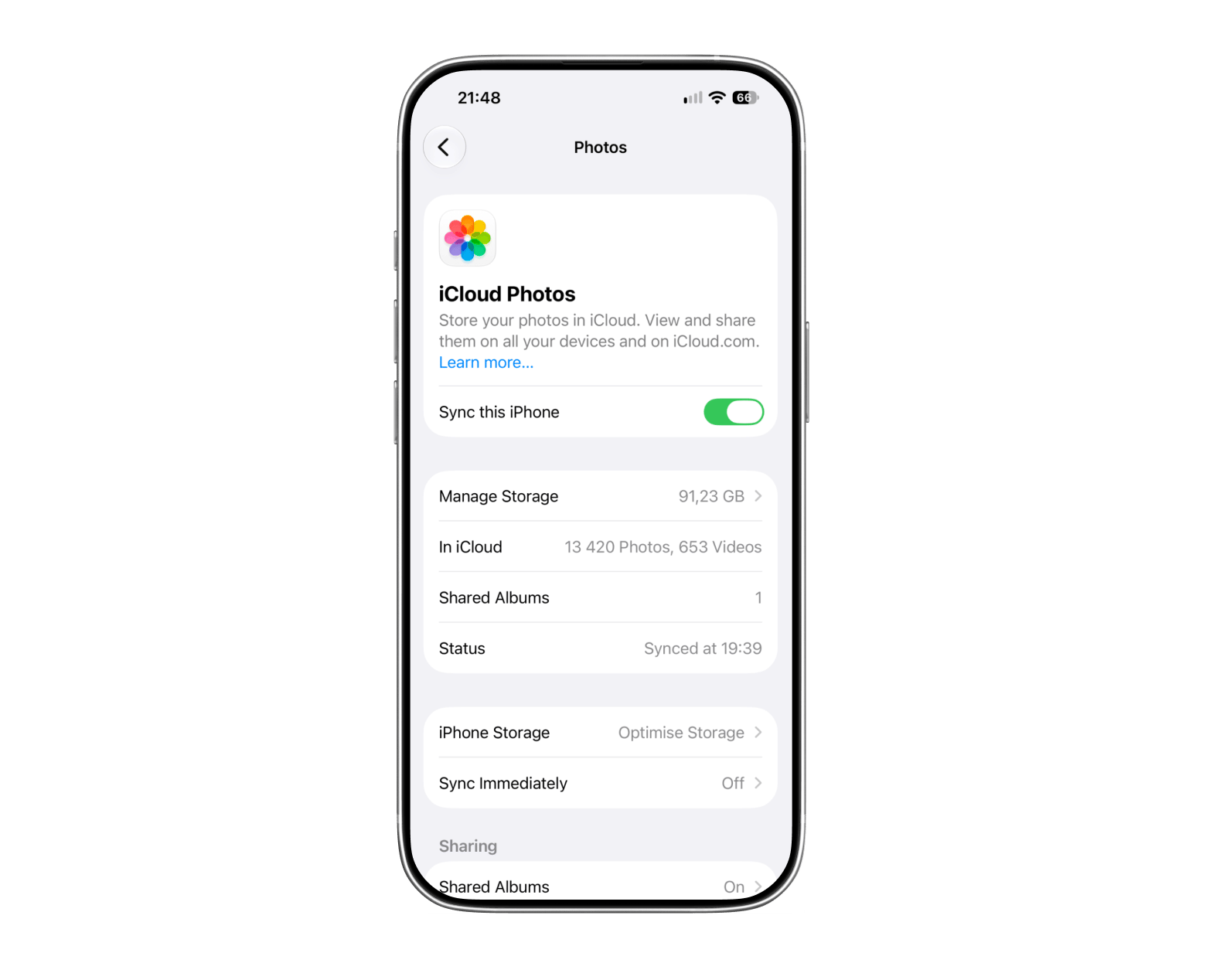
Optimize photo storage. Full-resolution photos and videos remain in iCloud, while your iPhone keeps smaller versions when it needs space. Go to Settings > [your name] > iCloud > Photos, turn on Sync this iPhone, and tap Optimize iPhone Storage. Make sure your iCloud plan has enough capacity. See Apple's guide to managing photo storage.
Change the image format and video resolution. Go to Settings > Camera > Formats and tap High Efficiency. HEIF (High Efficiency Image File Format) and HEVC (High Efficiency Video Coding) generally use less space than JPEG and H.264 while preserving quality. Next, open Record Video and choose a lower resolution or frame rate. Apple provides more details about HEIF and HEVC media.
Remove downloads from streaming apps. Netflix, YouTube, Spotify, and similar services can store large offline libraries. Open the relevant app and remove downloads you no longer need. You can also check Settings > General > iPhone Storage because some apps list downloaded media there.
Offload apps you don't use. Offloading removes the app itself but keeps its documents and settings. If you reinstall it later, you can continue where you left off. Go to Settings > General > iPhone Storage, tap an app, and tap Offload App. To automate this, go to Settings > Apps > App Store and turn on Offload Unused Apps.
Clear your browser cache. Go to Settings > Apps > Safari and tap Clear History and Website Data. This removes browsing history, cookies, and cached website data, so you may need to sign in to websites again. For Chrome, open the browser, tap the three-dot menu, tap Delete Browsing Data, tap the data types, and confirm.
These adjustments can make a noticeable difference without removing your favorite apps or original iCloud photos.
How to get more space without deleting apps or photos
To get more space without permanently deleting apps or photos, move important files to a backup and review duplicate media.
When my iPhone gets close to full, I back it up to my Mac before I touch anything. I use AnyTrans for iOS, which transfers content from an iPhone or iPad to a Mac. Connect your device via USB, choose the categories you want to export, and select where the files should go. What I liked is that I could pick categories, so I moved only the videos and left my photos alone. After the initial setup, it can also create scheduled wireless backups.
A backup alone does not reduce the storage used on your iPhone. Before deleting anything, I open a few of the exported files in Finder to make sure they play and look right. After confirming that your files transferred correctly, you can remove local copies you no longer need.
Cloud storage does not expand your iPhone's physical capacity. It can, however, reduce the amount of local space used by photos and videos.
Every Apple Account includes 5 GB of free iCloud storage, with paid iCloud+ plans available if you need more. Here's how to optimize photo storage with iCloud:
Open Settings.
Tap your name.
Tap iCloud.
Tap Photos.
Turn on Sync this iPhone.
Tap Optimize iPhone Storage.
Your iPhone can then replace full-resolution local photos and videos with smaller versions when storage runs low. The originals remain in iCloud as long as there is enough cloud capacity.
Keep in mind that iCloud Photos is a syncing service, not a separate archive. If you delete a photo from your iPhone, it also disappears from other devices using iCloud Photos. Deleted photos remain in Recently Deleted for up to 30 days unless you remove them from there sooner.
Free up iPhone storage without losing what matters
Phones fill up fast, but you don't need to wipe everything to reclaim space. Start with Optimize iPhone Storage, offload unused apps, remove offline downloads, and clear browser data.
For files you want to keep elsewhere, AnyTrans for iOS can transfer and back up iPhone content on your Mac. CleanMy®Phone helps you review photo clutter and shrink large media files.
Both apps are part of Setapp, a subscription with 300+ Mac and iOS apps. AnyTrans for iOS runs on your Mac and CleanMy®Phone runs on your iPhone, so pick a plan that includes iOS to use both. Try either one during the 7-day free trial.
FAQ
How do I clean up my iPhone so it runs faster?
Freeing up storage can speed up a nearly full iPhone, but it won’t fix every slowdown. Restart your iPhone and install the latest iOS update first. Then open Settings > General > iPhone Storage and review large apps, downloads, and attachments. Offload unused apps, clear browser data, and remove media you have safely backed up.
Can I expand iPhone storage?
No, you can’t upgrade the built-in storage after buying an iPhone. You can create more available space by optimizing iCloud Photos, offloading apps, moving files to a Mac, or, on iPhone 15 and later, connecting a compatible external drive over USB-C. For backups and file transfers, AnyTrans for iOS can move content between an iPhone and Mac.
What happens when iPhone storage is full?
You may be unable to take photos, record videos, install updates, download files, or add new app data. Apps may also struggle to save temporary files. Check your available capacity in Settings > General > iPhone Storage and follow the recommendations shown there.
How do I clear the cache on my iPhone?
For Safari, go to Settings > Apps > Safari > Clear History and Website Data. Other apps manage caches differently. Check the app's settings first. If the app has no cache option, you can delete and reinstall it. That clears the cache but also removes the app’s local data, so back up anything you need first. Offloading keeps an app’s documents and settings, so it isn’t a cache cleaner.
How can I free up space on my iPhone without paying?
Use built-in tools first. Turn on Optimize iPhone Storage if your existing iCloud capacity is sufficient, offload unused apps, remove streaming downloads, clear browser data, and review large attachments. You can also transfer files to a Mac before removing local copies from your iPhone.






 Best solution
 Best solution