Add widgets: Right-click the desktop > Edit Widgets > choose an app from the sidebar > drag widget to the desktop. Works on macOS Sonoma and newer.
Customize widgets: • Right-click any widget to change its size or remove it. • Go to System Settings > Desktop & Dock > Widgets to adjust style (Automatic, Monochrome, Full-color).
For better widgets and older macOS support:
• WidgetWall — adds Pomodoro timers, system trackers, white noise, and more; works on macOS versions before Sonoma.
• NotchNook — turns the MacBook notch into a widget hub with media controls and calendar.
• SideNotes — keeps notes as a desktop overlay widget.
• Moment — countdown timer widget for deadlines and events. Try them FREE for 7 days on Setapp— no ads, limitations, or hidden fees.
Widgets are essentially mini-apps that sit on your desktop and give you quick access to frequently used information or tools. Think of MacBook widgets as little helpers that save you time and simplify your digital life. With widgets, you can check the weather, view a to-do list, monitor system performance, or control music — no separate apps needed.
In this guide, I'll walk you through everything you need to know about Mac widgets. You'll learn the basics of widgets on Mac, how to access and manage them, and discover the most useful widgets available for different purposes.
Key solutions: How to use widgets on Mac
Need a quick overview? This table covers the most useful widget actions on Mac — from viewing and adding to customizing and boosting productivity.
I want to…
Solution
View widgets
Click the date/time in the menu bar (top-right) or swipe to open Notification Center
Add new widgets
Click the date/time in the menu ba → Click Edit Widgets → drag widgets to desktop
Customize widgets
Right-click widget and apply size or style from the menu that appears
Remove widgets
Right-click widget → Remove Widget
Change widget settings
System Settings → Desktop & Dock → Widgets. Adjust style, placement, and behavior
Add more advanced widgets
Install WidgetWall for more options and customization
Use notch for widgets
Install NotchNook to turn the notch into a widget hub
Install SlideNotes as a to-do widget for Mac. Install Moment to keep track of deadlines, events, and tasks with widgets.
How to view Mac widgets
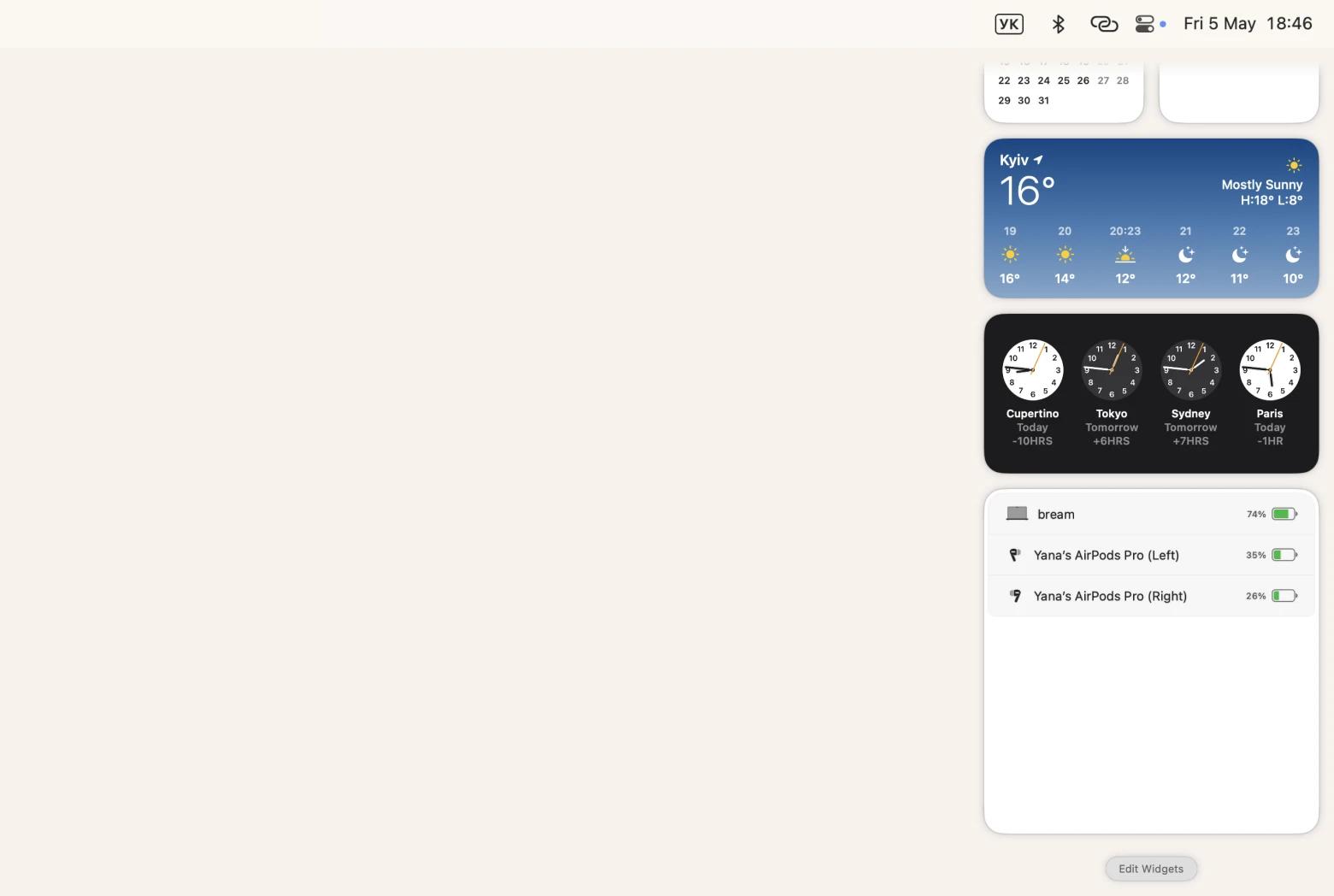
To see your widgets at any time, click the date or time in the menu bar. You can also swipe left from the trackpad's right edge to open Notification Center. Your widgets live at the bottom of that panel.
Widgets have a long history in macOS. Dashboard, introduced in macOS 10.4 Tiger, displayed widgets as an overlay on top of the desktop. All other windows would disappear from the screen while you viewed the desktop widgets.
Since macOS Big Sur, you've been able to use widgets in the Notification Center. These widgets display when you activate the Notification Center and hide when it closes.
The Notification Center is divided into two sections:
The top half shows all your notifications with an expansion button
The bottom half displays your widgets
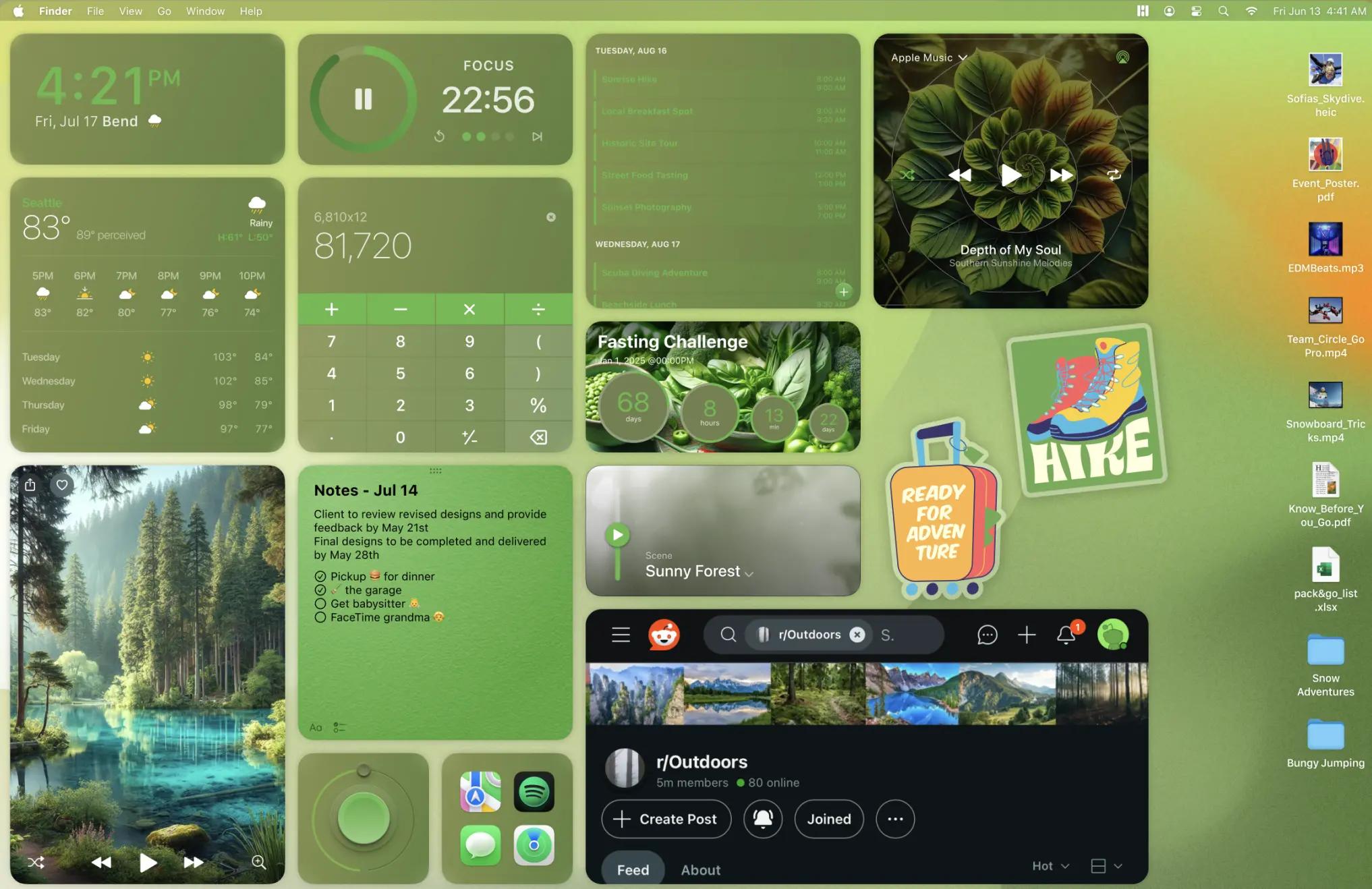
With macOS Sonoma, Sequoia, and Tahoe, you can place widgets directly on the desktop. This means you can see their information constantly — perfect for tracking news headlines, stock prices, or temperature.
How to add widgets to Mac
There are two ways to place Mac home screen widgets on the desktop.
Here's how to add widgets to a Mac desktop through the Notification Center:
Click the date and time in the upper-right corner of your screen.
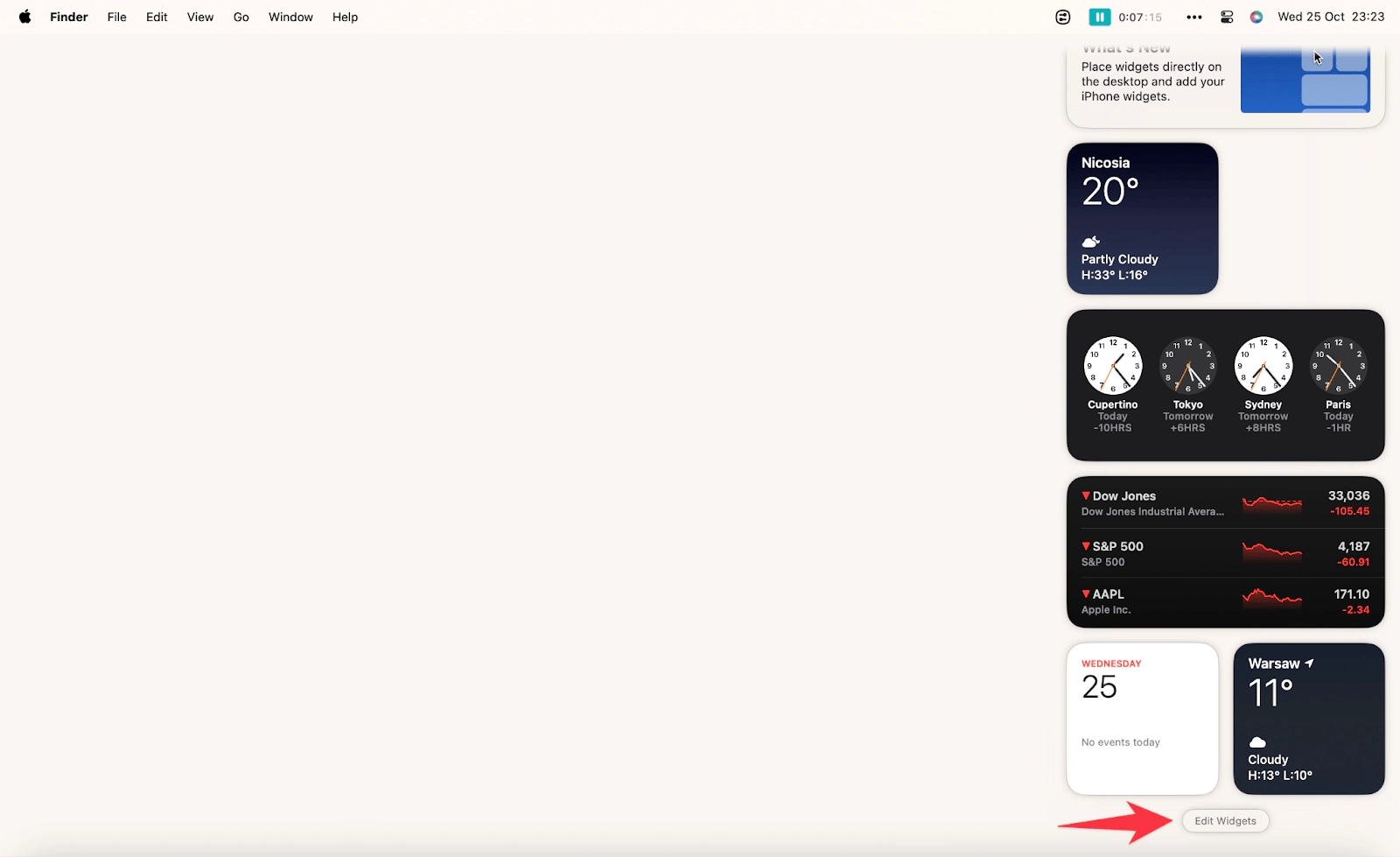
Scroll down to the bottom of the Notification Center and click the Edit Widgets button.
Choose a Mac app from the left sidebar. Then, choose the corresponding widget in the right pane to add to your desktop.
Drag any widget to your Mac's desktop and place it anywhere on your home screen.
macOS aligns widgets on an invisible grid. When you add a second widget and drag it near the first one, you'll see guides for alignment.
Here's how to add widgets to Mac desktop in macOS Tahoe by right-clicking:
Right-click on the desktop and choose Edit Widgets.
Select an app from the sidebar.
Drag widgets you need on your desktop.
Compared to the native option, the app called WidgetWall has a wider selection of widgets. The app can turn anything into a widget and keep it visible on your screen. And you can customize the color of each widget, too!
Some widgets here are so feature-rich that they could work as standalone apps. For example, in the Widget Wall collection, you'll find system trackers, Pomodoro timers, countdown timers, white noise, and a memory game — all beautifully designed.
Source: WidgetWall
WidgetWall also regularly updates the widgets by adding new and updated widgets and lets users vote on which widget should be released next.
So if you want to try this app on your Mac, follow the steps below:
Install and open WidgetWall.
Click on the + icon to add a widget.
Choose the widget you would like to add and click it. You can also use the search bar to find specific widgets.
Easily customize the widget by clicking the gear icon.
My recommendation is to add Widget Wall to your login items so it starts automatically every time you turn on your MacBook. You'll want it running, since the widgets are only displayed when the app is active. Don't worry — it won't distract you. It quietly sits in the menu bar or the Dock, just the way you set it up.
This app is great for anyone who wants to keep important info or tools right on their Mac desktop. For example, if you're a designer juggling several projects, WidgetWall lets you make and show off custom widgets — like color palettes, design notes, or to-do lists — without making your main workspace a mess.
Get WidgetWall plus 250+ Setapp apps, free for 7 days. Start 7-day access.
How to manage widgets on Mac
How to customize widgets on MacBook
When you click Edit Widgets (steps described in the previous section), you'll see a list of widgets that are currently available. Some widgets come in different sizes. To add a widget, simply click the + icon next to it.
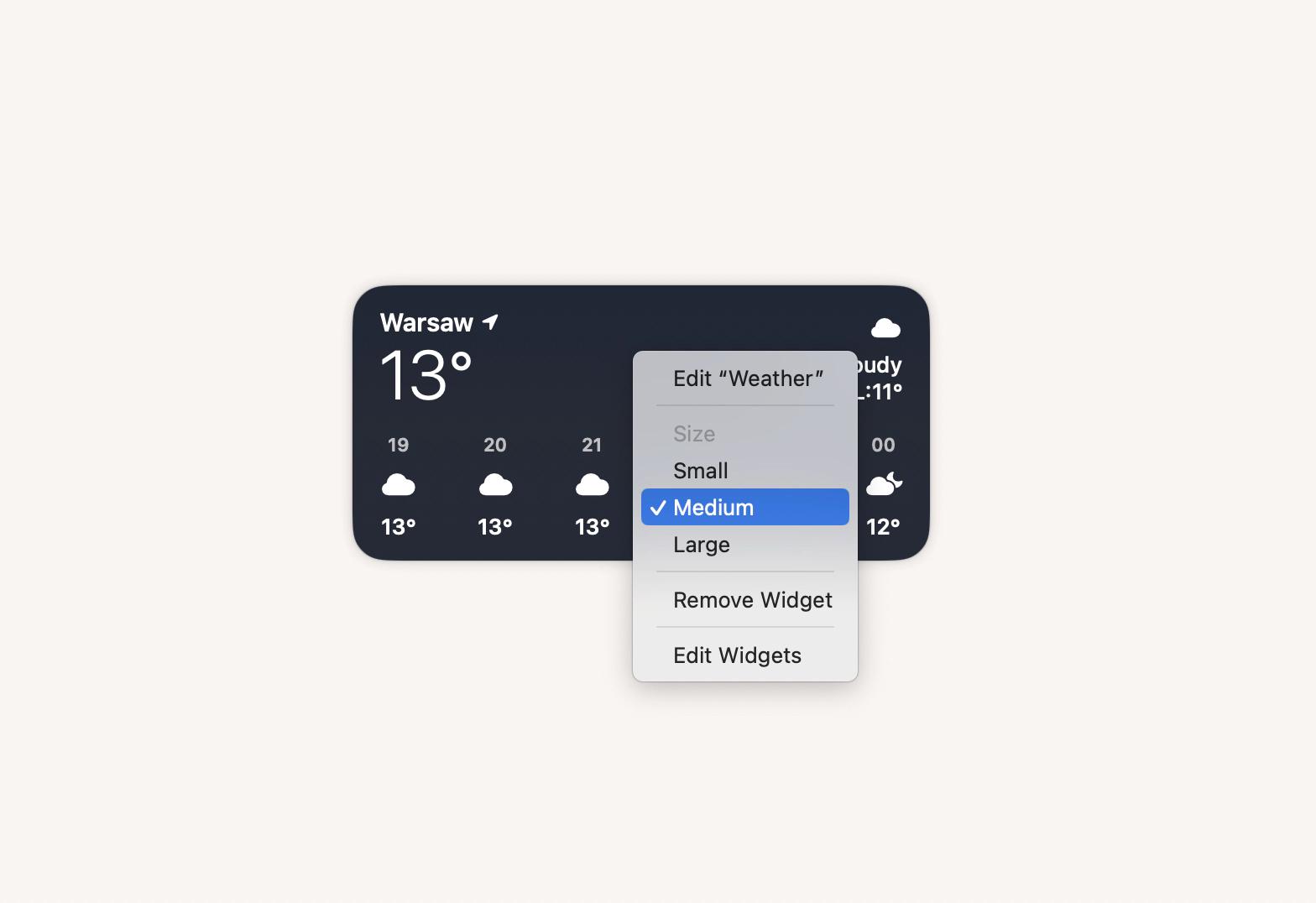
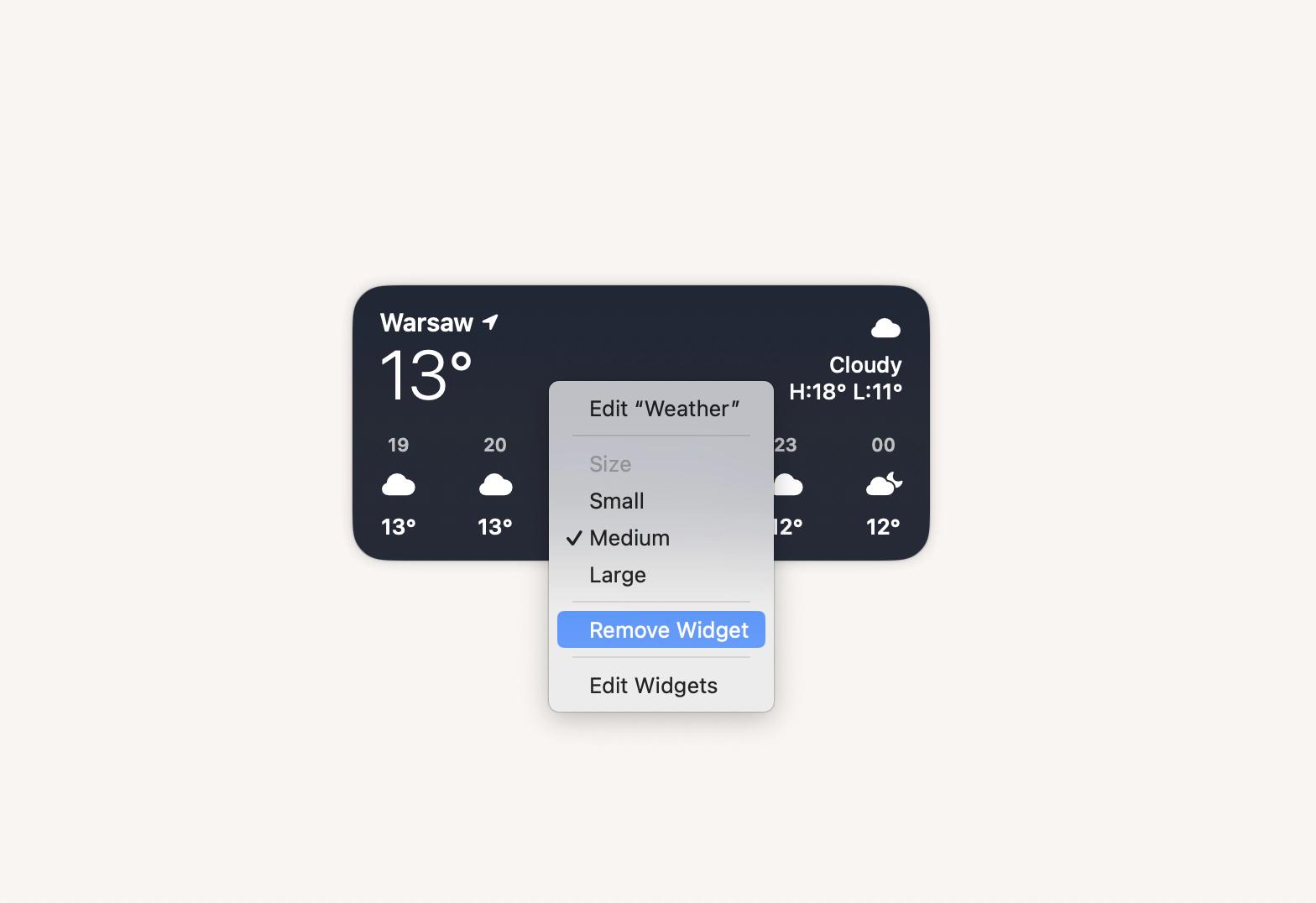
You can right-click on any widget added to your desktop to change the size (Small, Medium, Large, and Extra Large).
How to remove widgets on Mac
You can also delete the widgets from the right-click context menu. Choose Remove Widget.
How to change widget settings in macOS
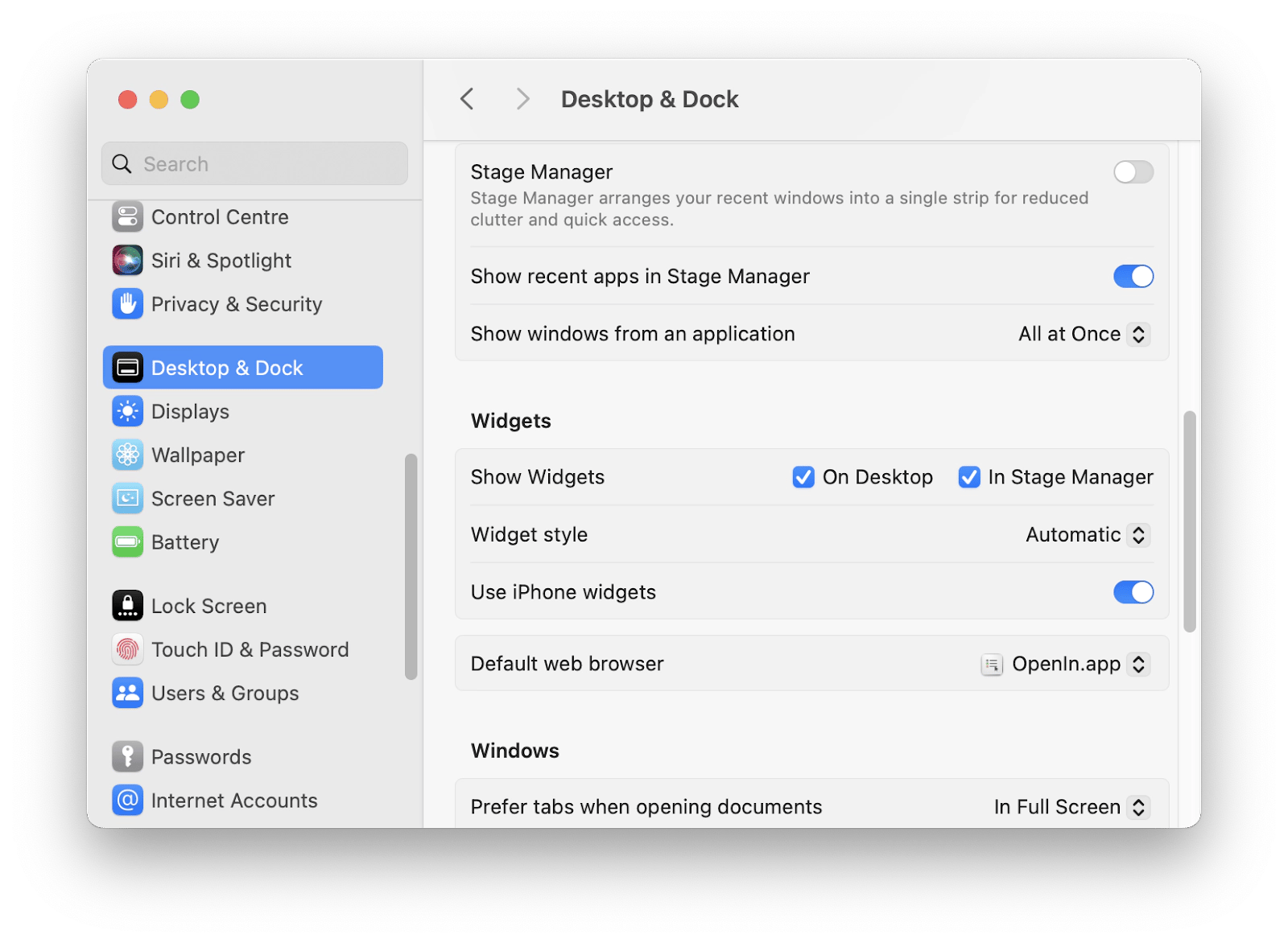
Aside from the widgets' size, you can customize their appearance and where your widgets appear:
Go to Apple menu > System Settings.
Click Desktop & Dock from the sidebar.
Scroll down to Widgets.
Here you can configure:
Widget placement:
Toggle On Desktop to show/hide desktop widgets
Toggle In Stage Manager for Stage Manager display
By default, widgets show both On Desktop and in Stage Manager. Deselect either or both if you don't want them to show there beside Show Widgets.
Widget style:
Automatic: Allows your widgets to automatically adjust the colors in accordance with the wallpaper to ward off distraction.
Monochrome: Creates a faded, minimal look.
Full-color: Shows widgets in their original colors
Default browser:
Select your preferred browser from the dropdown menu
How to stick widgets on Mac desktop
By default, macOS Tahoe is set up so that you can view all your widgets by clicking the desktop. The feature that enables this is called Click Wallpaper to Reveal Desktop.
As mentioned, you can drag your chosen widgets to any location on your desktop. The widgets will stay there once you let go.
Best widgets for your Mac
There are a lot of widgets available for macOS, and each one has its own unique set of features and functionality. We'll show you just some of the most useful widgets you may want to try.
Weather displays current weather conditions and forecasts for your location.
Calendar displays your upcoming events and appointments.
Calculator lets you perform basic calculations without having to open the Calculator app.
Battery shows the battery level and status of your MacBook or other Apple device.
WorldClock lets you keep track of time in different time zones worldwide.
Music is also among the best widgets for macOS. It lets you control your music playback and view information about the song you're playing.
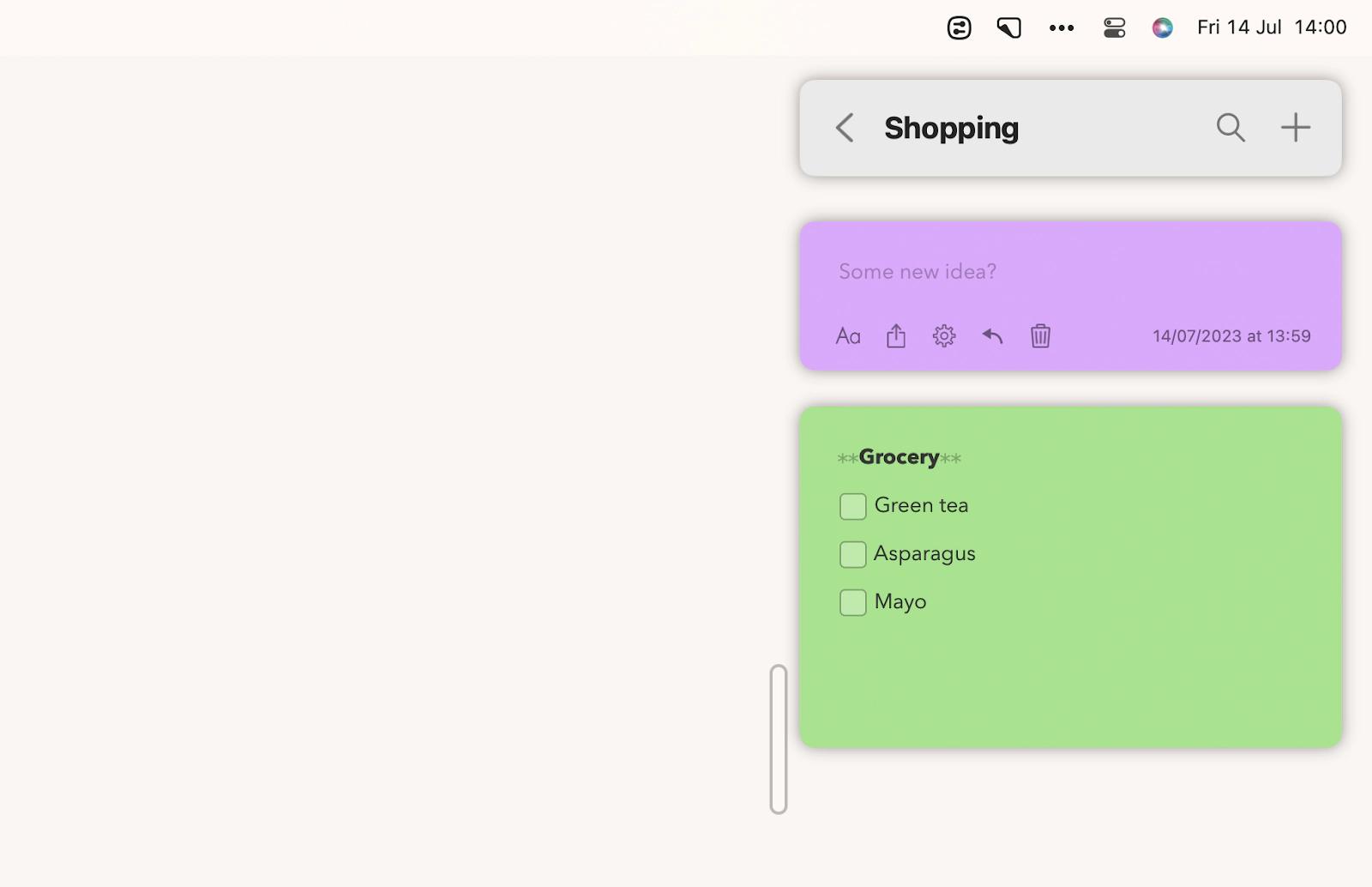
I also like the app called SideNotes, which can be used as a to-do widget for Mac. It keeps all your notes right on your desktop. Best of all, you won't even know they're there. The app acts as an overlay menu, bringing notes to your attention when you need them.
Use Setapp to add SideNotes, WidgetWall, and Moment today, cancel anytime. Unlock 250+ apps. Prefer just one tool? Get SideNotes in Setapp Marketplace, same app and plans as developer. $19.99 one-time or $9.99 yearly.
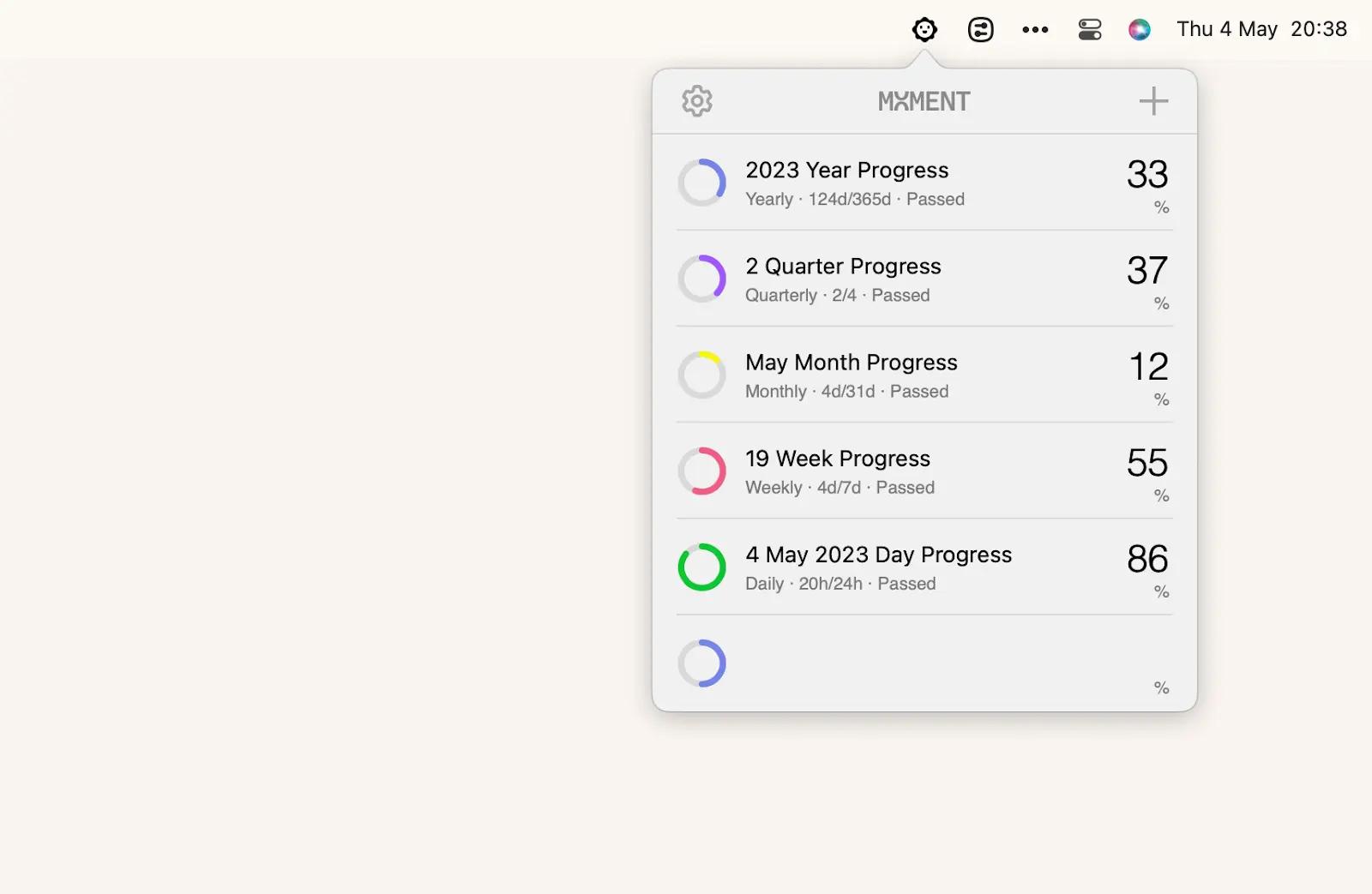
Another great widget to help you stay prepared and make sure you never miss an important event or deadline is called Moment. It allows you to set a countdown timer for birthdays, holidays, and special events. Then, the widget will display the remaining time in days, hours, and minutes.
With Moment's clear countdown display, I can easily plan ahead and ensure I'm always prepared for what's coming up — because we all know that forgetting a birthday is basically signing up for a lifetime of "Why didn't you remember?" guilt.
Boost your productivity with widgets for MacBook and Setapp
From weather and calendars to reminders and countdowns, there are plenty of useful widgets to help you stay organized and productive.
And if you want even more cool features and tools, try Setapp. It's a subscription service that gives you access to a variety of Mac, iPhone, iPad, and web apps, including WidgetWall, NotchNook, Moment, and SideNotes, mentioned in this article.
Build a cleaner desktop with widgets that show what matters all day. Explore 250+ vetted apps in Setapp, free for 7 days. Begin free week.
Frequently asked questions
Can I use widgets from my iPhone on my Mac?
Yes, starting with macOS Sonoma. When your iPhone is nearby, unlocked, and using the same Apple Account (Apple ID), you'll see an From iPhone section in the widget gallery. Select any iPhone widget to add it directly to your Mac desktop — even if the Mac version of the app isn't installed. This feature requires Continuity to be enabled on both devices.
Why don't I see the "Edit Widgets" option on my desktop?
This feature requires macOS Sonoma (version 14) or later (Sequoia, Tahoe). Earlier versions of macOS only support widgets in the Notification Center, not on the desktop. To check your version, click the Apple menu > About This Mac. If you're running an older version, you can still access widgets through Notification Center or use third-party apps like WidgetWall.
Do widgets slow down my Mac or drain the battery?
Most widgets have minimal impact on performance and don't consume much CPU. Apple's native widgets are optimized for efficiency. However, having many active widgets may slightly affect battery life on MacBooks. To optimize performance, limit yourself to essential widgets and remove any you don't actively use.
How do I move or resize a widget after adding it?
To move a widget, simply click and drag it to your desired location on the desktop. To resize, Control-click the widget and select a size option (Small, Medium, Large, or Extra Large). Not all widgets support all sizes—the available options depend on the specific widget's design.
Superpowers for your Mac
Tackle your tasks with dozens of helpful apps on Setapp.






 Best solution
 Best solution