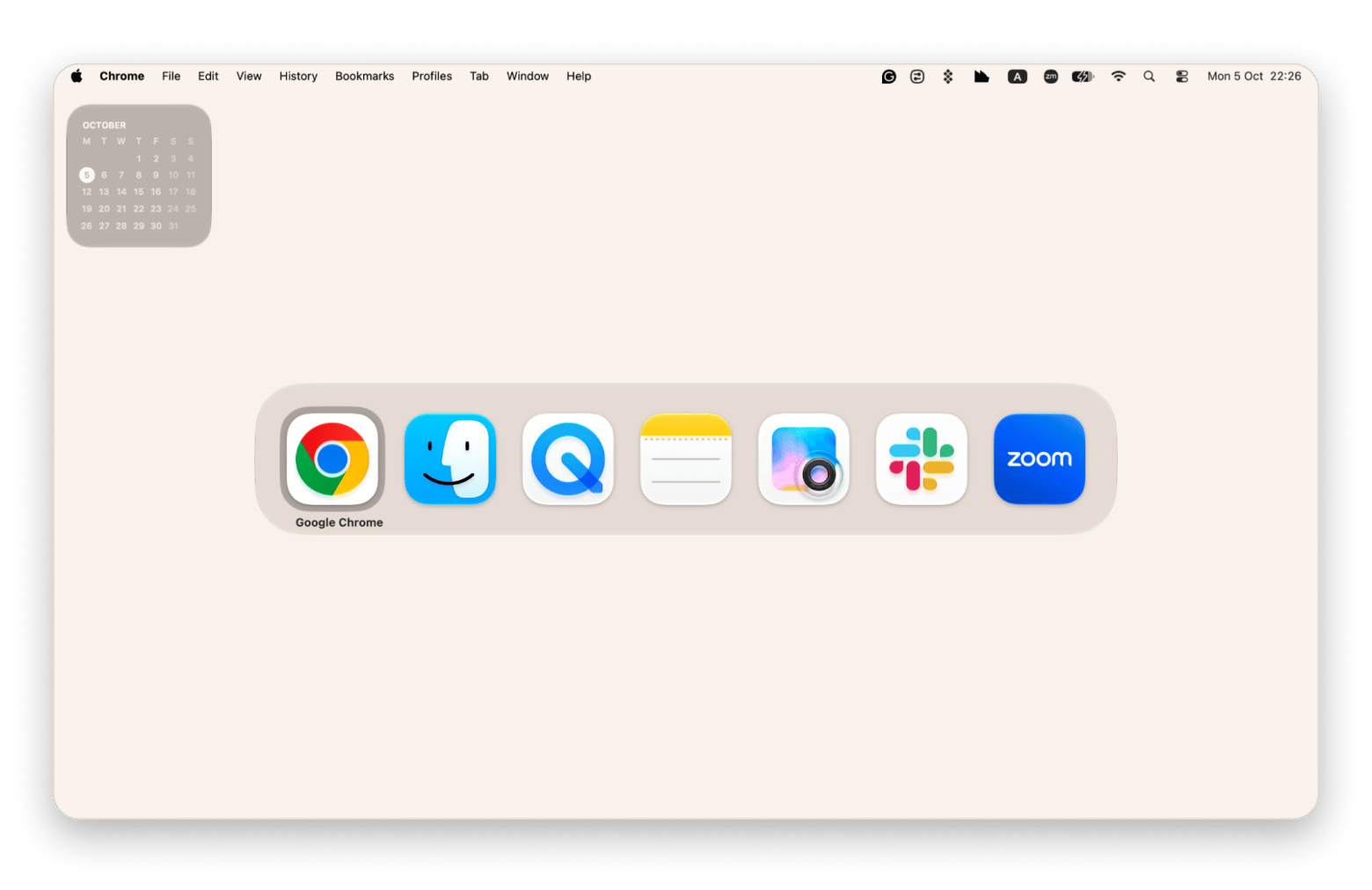
Command + Tab is the Mac equivalent of Alt + Tab. It switches between running apps ordered by recent use. To cycle through windows within the same app, press Command + `.
Mission Control gives you a full window overview. Swipe up with three or four fingers, press F3, or hit Control + Up Arrow to see all open windows and spaces at once.
BetterTouchTool lets you replicate Alt + Tab exactly. You can set up a custom shortcut to show a window switcher for the active app or all apps with full control over the key combination.
Pie Menu simplifies shortcut navigation across apps. Surface relevant shortcuts without memorizing them individually.
Tab Finder unifies browser tabs in one searchable list. If switching between browser tabs slows you down, Tab Finder pulls them all together and opens them via a hotkey. BetterTouchTool, Pie Menu, and Tab Finder are available on Setapp. Start your free 7-day trial.
On a Mac, Command + Tab is the closest equivalent to Windows’ Alt + Tab. However, it switches between apps, not every open window. In this guide, I’ll explain how Alt + Tab works on Mac and how to reach the exact window you need.
Here's a breakdown of the most common Alt + Tab pain points on Mac and what to do about each one. Detailed instructions follow below:
Problem
Solution
Command + Tab doesn't switch individual windows
Press Command + ` to cycle through windows of the current app
Minimized window doesn't restore when switching apps
Click the minimized window in the Dock, or use Command + Tab + Option
Can't switch between browser tabs quickly
Press Command + Option + Left/Right Arrow in Chrome, or use Tab Finder from Setapp*
Too many apps to remember shortcuts for
Use Pie Menu from Setapp* to surface shortcuts for any app
Want a true window-by-window switcher like Windows
Use BetterTouchTool from Setapp* to set up a custom window switcher shortcut
*Setapp is a curated app platform that gives you access to 300+ Mac apps for a single monthly subscription.
What is the Mac equivalent of Alt?
The Option key corresponds to Alt for many shortcuts, while Command handles app switching and many common system actions.
By design, the Option key sits where you’d usually find Alt on a Windows keyboard. It also works with Command to unlock additional shortcuts. For example:
Option + Command + Esc lets you choose and force an app to quit.
The list is extensive, but the Option key does almost everything except switching apps by default. You can check out the top keyboard shortcuts list.
How to switch windows on Mac
To switch between apps, press Command + Tab. To cycle through windows belonging to the current app, press Command + `, using the backtick key above Tab.
You can also use Mission Control to see your open windows and choose one. According to Apple’s Mission Control guide, you can open it in several ways:
Swipe up with three or four fingers on the trackpad.
Press the Mission Control key, usually F3.
Press Control + Up Arrow.
Mission Control tiles open windows across the screen, while your desktops and full-screen spaces appear along the top.
How to use Alt + Tab on a Mac
The quickest way to replicate Alt + Tab on macOS is to press Command + Tab.
When you press Command + Tab on your Mac, you’ll see icons for your running apps, ordered by recent use. Keep holding Command and tap Tab to choose the app you want.
However, Command + Tab doesn’t cycle through different windows opened by the same app. To do that, switch to the app and press Command + `, using the backtick key above Tab.
Browser tabs work differently from app windows. In Chrome, press Command + Option + Left Arrow or Command + Option + Right Arrow to move between tabs. You can find more combinations in Google Chrome’s keyboard shortcut guide.
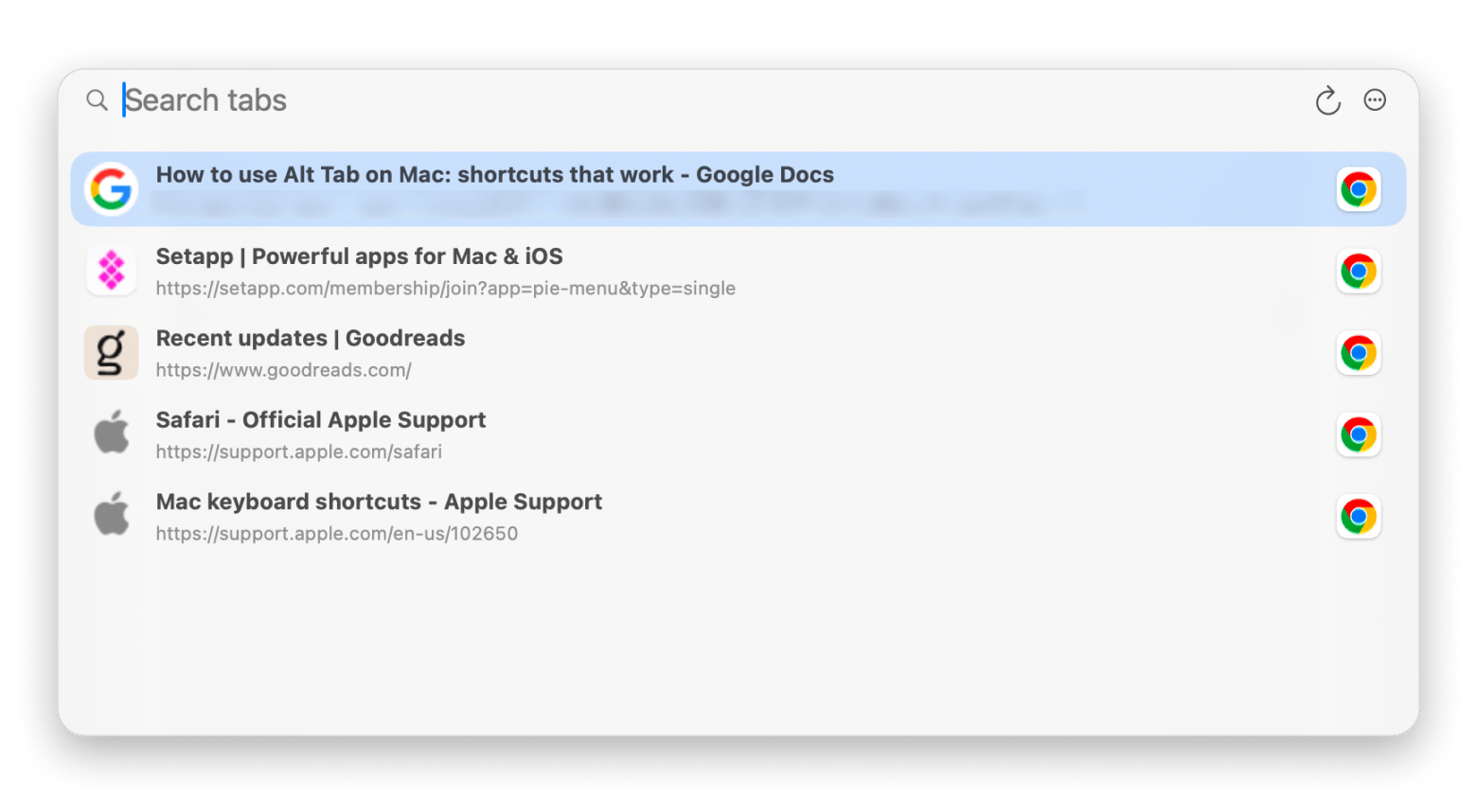
If browser tabs are the real headache, I recommend trying Tab Finder. It gathers tabs from supported browsers into one searchable list and can open via a hotkey. I use Tab Finder when I'm juggling research across multiple browsers at once. Instead of hunting through window after window, I hit a hotkey, type a few letters, and the right tab appears instantly.
Tab Finder is available through Setapp Membership, so you can try it free for 7 days together with the other apps mentioned in this guide.
What to do when Alt + Tab is not working on Mac
If Alt + Tab isn’t working, remember that macOS Golden Gate uses Command + Tab as its built-in app switcher. Command + Tab includes running apps even when they’re hidden or minimized. However, choosing an app may not restore a minimized window automatically.
I know that solely relying on Mac’s app-switching shortcuts can be counterproductive. So, what to use instead of Alt + Tab on Mac?
I recently tested BetterTouchTool on Setapp (fully unlocked during a free 7-day trial), which I must say is handy if I want to replicate the Alt + Tab function.
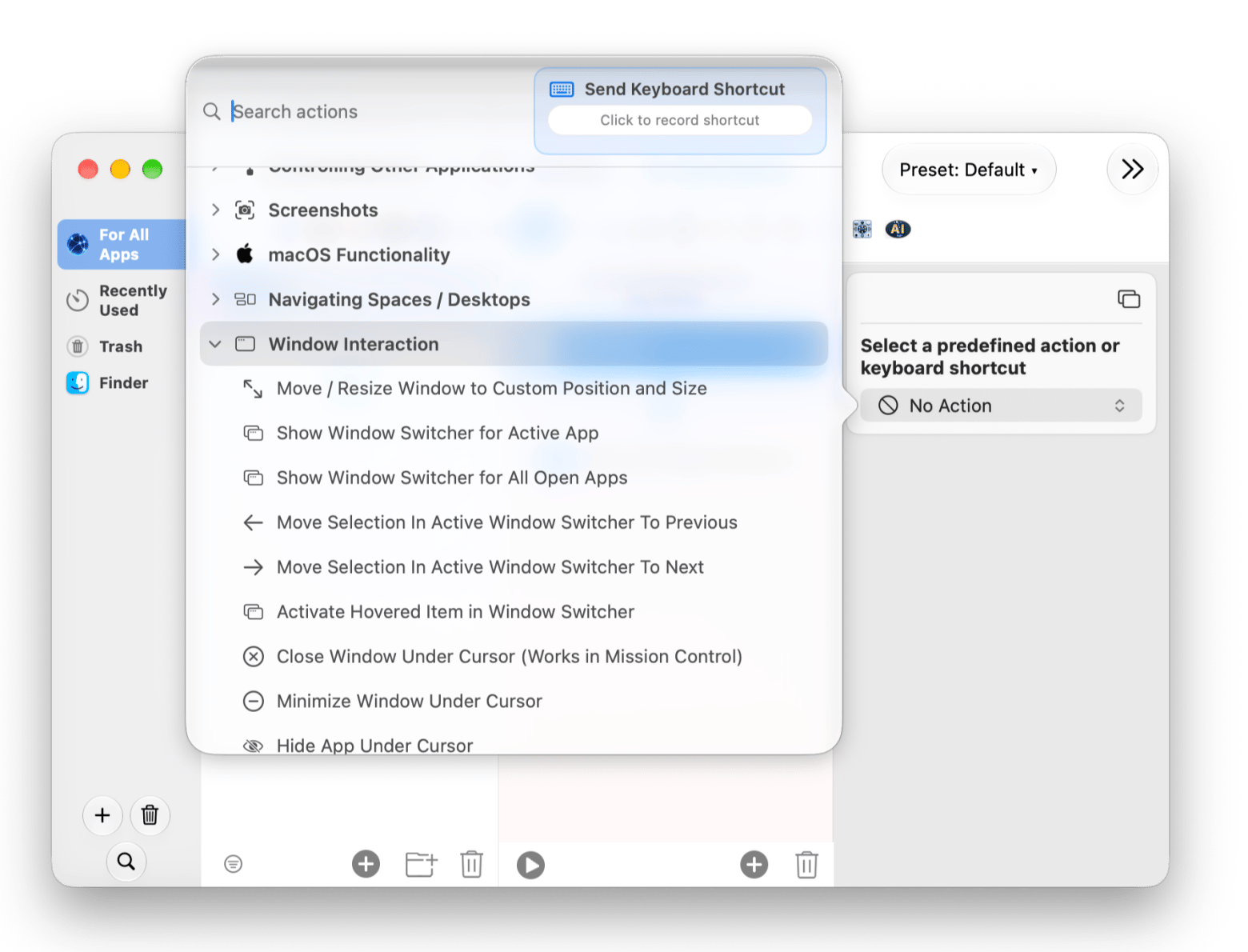
First of all, there are so many actions with windows that you can set up. For example, move to a specific window, activate a specific window, activate a previous window, show the window switcher for the active application or for all applications, and more. Here’s how handy (and pretty) an app window switcher looks.
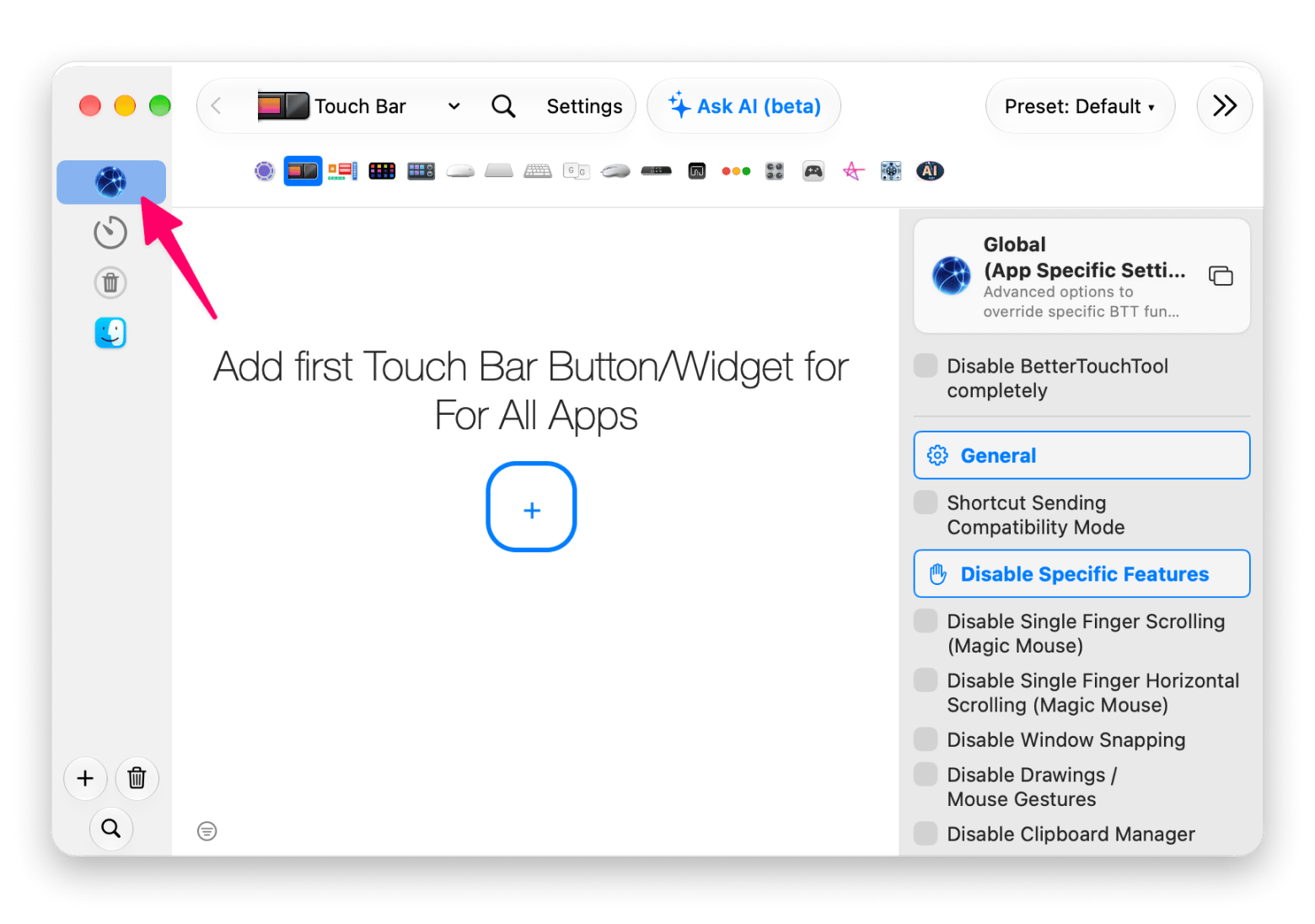
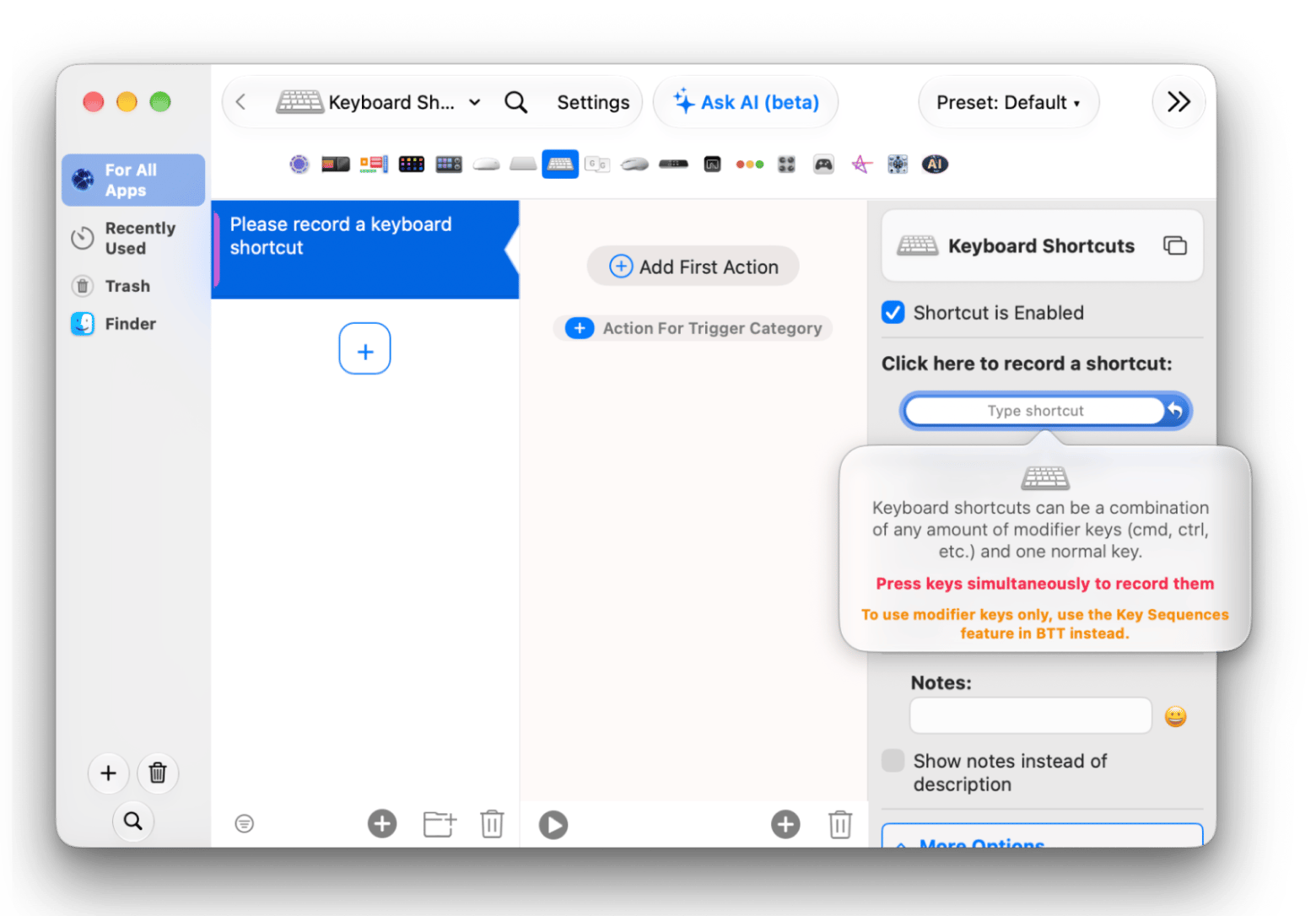
To set it up, follow these steps:
Install and open BetterTouchTool.
Click For All Apps on the left pane.
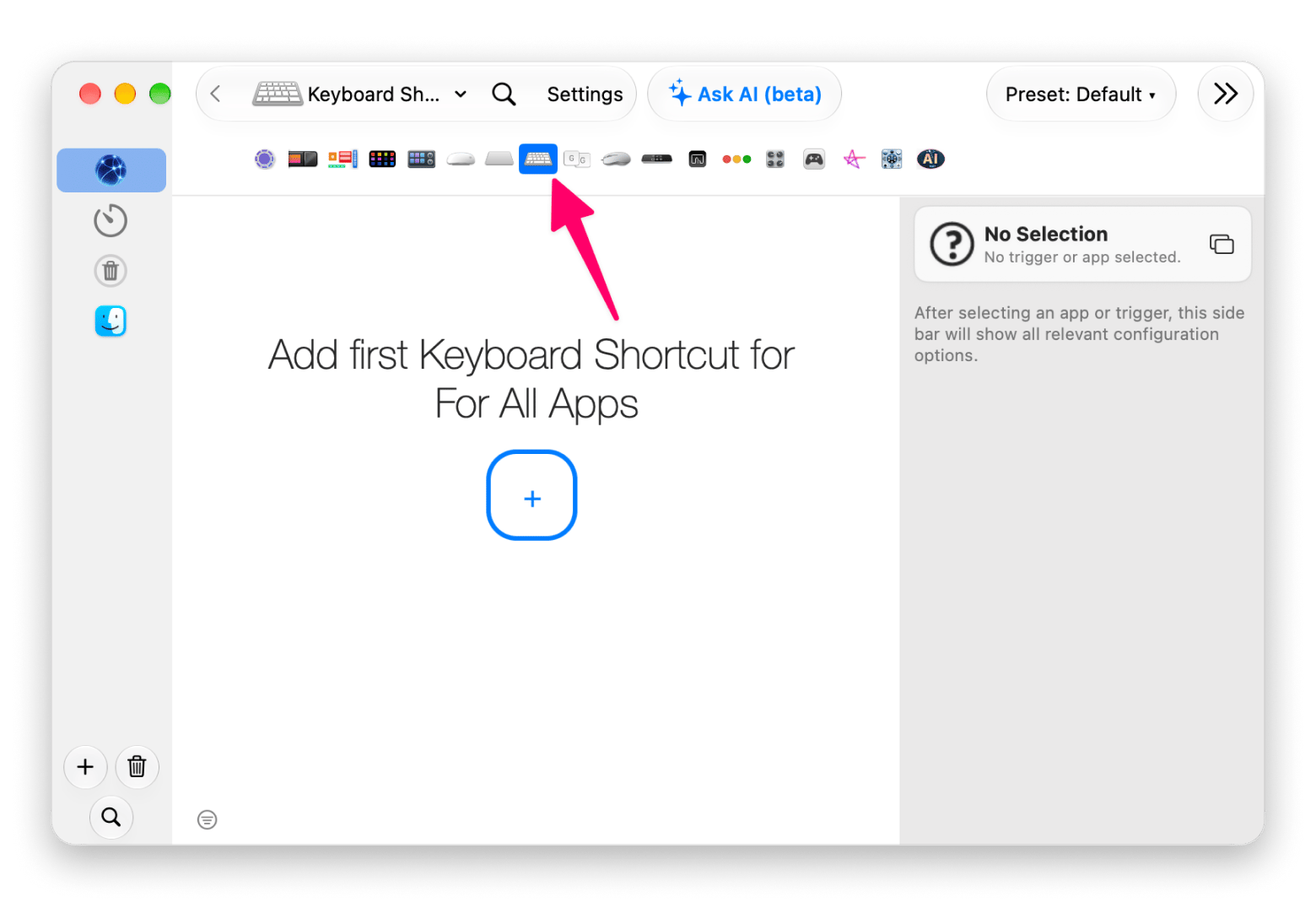
Choose Keyboard in the upper pane.
Press the + sign and create a shortcut. Mine is Shift + Command + W.
Click Add First Action > Choose the action you want to perform (Show Window Switcher For Active App).
The shortcut’s ready.
Secondly, you can configure the app to bring up the Application Switcher, which is what Command + Tab actually does, in different ways. For example, I created a script that lets me mimic Command + Tab with a 3-finger tap. This might come in handy if the shortcut keys are not working on your Mac.
But that’s not all. BetterTouchTool is a powerful app that lets you customize almost any commonly used action on Mac. For example, I can toggle dark mode by setting specific gestures in the app.
How do you enable Alt + Tab on Mac?
Command + Tab is built into macOS and enabled automatically. You don’t need to change any settings, although macOS doesn’t assign app switching to the literal Alt + Tab combination.
Still, I find that Mac’s shortcuts experience, whether in-app or system-wide, could be better. For example, I don’t fancy clicking around and memorizing different apps' shortcuts.
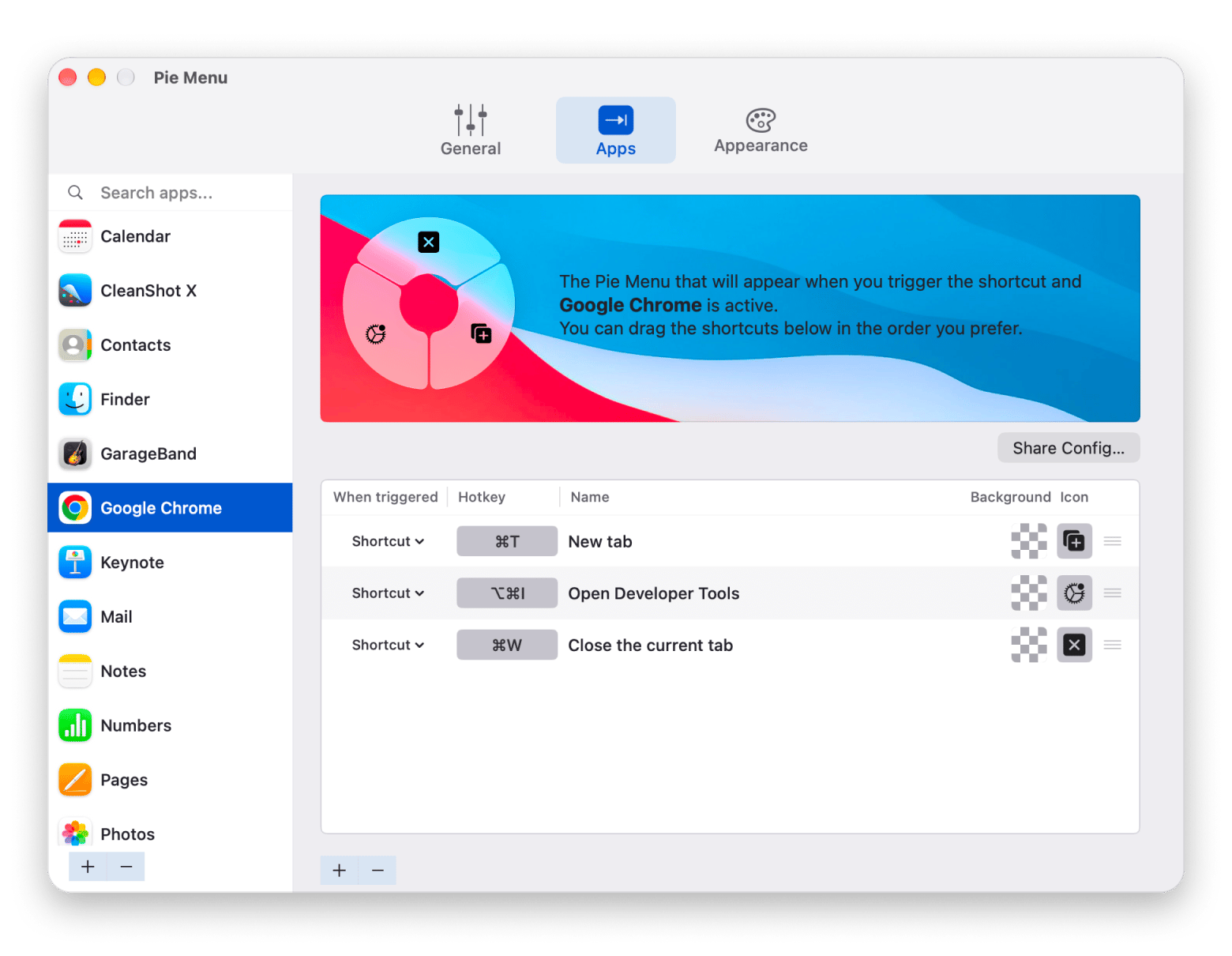
Instead, I use Pie Menu, which does all the hard work. It’s an app that remembers all the shortcuts for different apps and lets you access them easily. I just press Option + ` in any app and get hints with the most appropriate actions. Plus, I can customize which options appear.
On Windows, Alt + Tab spares you the effort of clicking, minimizing, and finding the window you want to open. Hold Alt and press Tab to cycle through open windows, as Microsoft’s keyboard shortcut guide explains.
There’s also a lesser-known trick: Press and release Alt + Tab quickly to return to the last active window.
Now you can Alt + Tab on Mac
There’s no direct replacement for Windows’ Alt + Tab on Mac. Command + Tab switches between apps, while Command + ` cycles through windows belonging to the current app.
However, if you want simpler solutions, try BetterTouchTool. It lets you activate different actions, including switching windows, with customized shortcuts. Together with Pie Menu, you’ll find navigating between apps more effortless, as I do. If browser tabs slow you down, Tab Finder brings tabs from supported browsers into one list.
BetterTouchTool, Pie Menu, and 300+ other Mac apps are all in one Setapp Membership. Try it free for 7 days.
FAQ
What is the Mac equivalent of Alt + Tab?
Command + Tab is the Mac equivalent of Alt + Tab. It switches between running apps. To cycle through separate windows in the current app, press Command + `.
What is the quickest way to switch between applications on Mac?
Command + Tab is the quickest way to switch to another running app. Note that minimized windows won't automatically restore when you choose an app — click the minimized window in the Dock to bring it back.
Why doesn’t Command + Tab work on my Mac?
Make sure you’re pressing Command rather than Option. Test each key separately, close any app that remaps shortcuts, and restart your Mac. If the keys still don’t respond, check your keyboard connection or try another keyboard.
How do you switch tabs with a keyboard?
In Chrome, press Command + Option + Left Arrow or Command + Option + Right Arrow. Shortcuts vary by browser. Tab Finder can also list open tabs from multiple supported browsers.
How do you toggle between windows on Mac?
Press Command + ` to cycle directly through windows belonging to the current app. The backtick key usually sits above the Tab key.
How do you switch out of a game on Mac?
Try Command + Tab first. To leave full-screen mode, press Control + Command + F if the game supports the standard macOS shortcut. Otherwise, use the game’s display settings or press Esc.
Superpowers for your Mac
Tackle your tasks with dozens of helpful apps on Setapp.






 Best solution
 Best solution