The fastest way: touch and hold the app icon, tap Remove App, then Delete App and confirm. Jiggle mode and the App Library work for several or hidden apps.
Cancel subscriptions first. Deleting an app doesn't stop its charges.
To free space, use Settings > General > iPad Storage. It lists apps by size, and you can offload an app to keep its data.
If the Delete option is missing, check built-in apps, Screen Time (set Deleting Apps to Allow), and school or work profiles.
Delete apps in bulk from your Mac with Setapp.AnyTrans for iOS is included in Setapp Membership with 300+ other apps. Start a free 7-day trial and cancel anytime.
Quick answer: Touch and hold the app icon, tap Remove App, then tap Delete App to confirm.
Deleting apps on iPad you no longer use frees up storage and keeps your Home Screen clutter-free. Before you start, remember to cancel any in-app subscriptions you don't need — deleting an app won't stop the charges.
In this article, I'll walk you through how to permanently delete apps from iPad, how to remove apps while keeping their data, and how to clear an app off the Home Screen without uninstalling it.
*Setapp is a subscription with 300+ Mac apps and a free 7-day trial.
How to delete apps from the Home Screen
The most straightforward way to delete an app on iPad is by long-pressing its icon on the Home Screen. Can't spot the icon? Swipe down to open Spotlight, type the app's name, long-press it in the results, and choose Delete App.
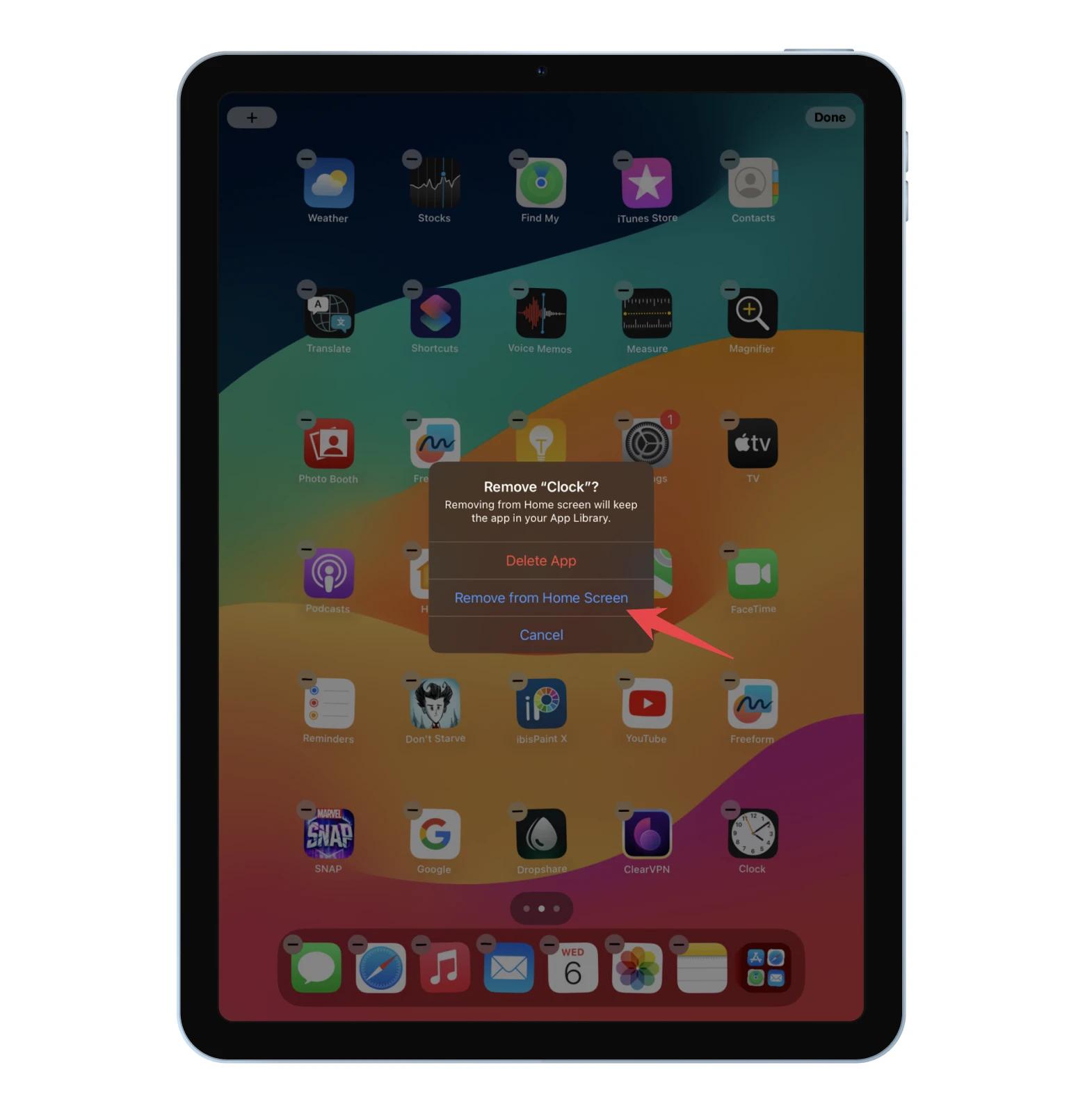
Long-pressing activates a pop-up menu. From there, pick the option that works best for you:
Tap Remove App.
Choose Delete App to permanently remove it, or Remove from Home Screen to keep the app but hide its icon.
Tap Delete to confirm.
How to delete hidden apps from Settings
If you've already hidden an app from the Home Screen, you can still remove it from Settings. You can also remove space-hungry apps straight from here:
Open Settings > General > iPad Storage.
Choose the app you'd like to delete and tap it.
Tap Delete App.
Tap Delete App again to confirm.
Settings is the best place to delete apps when you're low on storage — it lists apps by size, so you can spot the biggest offenders fast. Avoid deleting pre-installed Apple apps here, as removing them can break system features like iCloud sync or device configuration.
How to delete apps using Jiggle mode
Jiggle mode (sometimes called "wiggle mode") lets you rearrange or delete app icons on Apple devices. You activate it with a long press on any blank area of the Home Screen. Once the icons start shaking, Jiggle mode is on.
To delete an app using Jiggle mode:
Long-press a blank spot on the Home Screen to activate Jiggle mode.
Tap the minus symbol in the upper-left corner of the app icon.
Choose Delete App.
Tap Delete to confirm.
Tap any blank spot to exit Jiggle mode.
How to delete apps from the App Library
In App Library, touch and hold the app you want to remove, tap Delete App, and confirm — that's all there is to it. (App Library, introduced in iPadOS 15, groups every installed app, even ones you keep off the Home Screen, so they're always easy to find.)
Here's the full process:
Swipe your Home Screen pages left until you reach the App Library categories.
Use the search field at the top to find the app, or swipe down diagonally from the upper right for an alphabetical list.
Long-press the app's icon and choose Delete App.
Tap Delete to confirm.
Once you remove an app from iPad, you can always reinstall it from the App Store later.
How to delete multiple iPad apps at once with AnyTrans
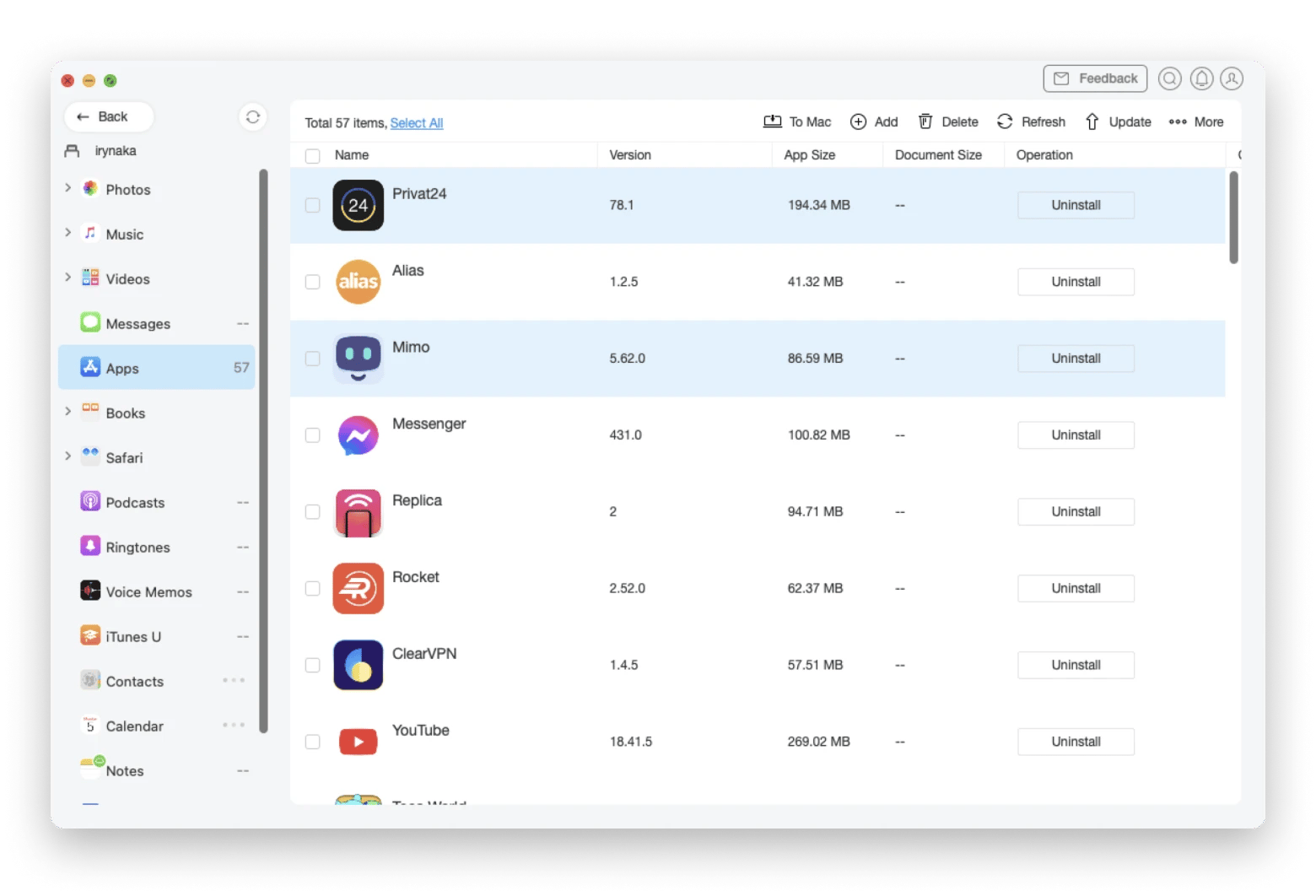
The average person has 80-plus apps installed on their device. I’m no exception, as I use a lot of apps for work. Sometimes, I install apps just to test their features and then never use them again. Over time, they can take up valuable storage space and leave my iPad running out of room. That's where AnyTrans for iOS, an iOS device manager from Setapp, comes in. It lets you manage your iPad's apps, backups, and transfers from your Mac.
Find the app you'd like to delete, then click Uninstall.
Or select multiple apps and click Delete in the top menu to remove them together.
Bulk deletion saves real time when you're clearing out a cluttered device.
How to offload apps to free up space
Don't currently use an app but don't want to lose its data or images? There's a special option called "offloading."
To offload an app:
Go to Settings > General > iPad Storage.
Tap the app you want to offload.
Choose Offload App.
Tap Offload App again to confirm.
Offloading removes an app from your iPad so it no longer uses storage space, while keeping its data. Your settings, configurations, and passwords stay saved — ready to go if you reinstall the app later.
Can you delete built-in Apple apps from iPad?
You can delete many built-in Apple apps the same way you delete any other app, and you can tuck the rest into the App Library. Some apps, such as Photos, Camera, and Settings, can't be deleted.
According to Apple Support, you can delete these built-in apps (the list varies by iPadOS version):f
Apple TV
Calendar
Clock
Files
Home
iTunes Store
Mail
Measure
Notes
Reminders
Shortcuts
Stocks
Tips
Voice Memos
Wallet
Weather
If you'd rather not see these icons, move them into the App Library or a hidden folder instead of deleting them.
If the Delete option is missing, one of these is usually the reason:
Built-in app: Some Apple apps, such as Photos, Camera, and Settings, can't be deleted.
Screen Time limits: Go to Settings > Screen Time > Content & Privacy Restrictions > iTunes & App Store Purchases and set Deleting Apps to Allow.
School or work profile: MDM (Mobile Device Management) profiles can block deletion. Ask the administrator to remove the limit.
App is still downloading: Touch and hold the icon, then tap Cancel Download before you try again.
If everything else fails, try these two reliable fixes:
Restart your iPad: Go to Settings > General > Shut Down, wait a minute, then turn it back on and try again.
Reset all settings: Go to Settings > General > Transfer or Reset iPad > Reset > Reset All Settings. This restores your settings, including saved Wi-Fi networks and passwords, but doesn't delete your apps or data. Don't choose Erase All Content and Settings, which wipes the whole iPad.
After you clear the cause, delete the app as usual: touch and hold the icon > Remove App > Delete App.
How do I delete apps from my child's iPad?
I don’t have children yet, but I understand how important it is for parents to manage their kids’ devices, keep them safe, and limit access to inappropriate content. If you’re a parent, learning how to delete apps from your child’s iPad can help you maintain better control over what they can access.
First, make sure Screen Time allows app deletion:
Open Settings > Screen Time on your child's iPad.
Tap Content & Privacy Restrictions > iTunes & App Store Purchases.
Set Deleting Apps to Allow (enter the Screen Time passcode if asked).
Now remove apps as usual: touch and hold the icon > Remove App > Delete App. Want to keep the app but hide it? Choose Remove from Home Screen instead.
Keep your iPad organized with the right tools
Each method covered here works — pick whichever fits your situation. Use the Home Screen or App Library for quick one-off deletions, Settings when storage is the issue, and AnyTrans for iOS when you need to manage apps in bulk. Whichever route you take, you now have everything you need to keep your iPad running lean.
Delete one app by hand. Delete many from your Mac. AnyTrans for iOS is in Setapp with 300+ other apps. Free for 7 days. Start My 7-Day Trial.
FAQ
Does deleting an app cancel its subscription?
No. Deleting an app doesn't cancel any subscriptions tied to it. You'll keep getting charged until you cancel manually. Go to Settings, tap your name > Subscriptions, choose the subscription, and tap Cancel Subscription before removing the app.
Can I reinstall an app after deleting it?
Yes. Any app you delete stays available in the App Store. Just search for it and reinstall — apps you previously downloaded show a cloud icon. If you offloaded the app instead of deleting it, tapping its greyed-out icon restores it along with all your saved data.






 Best solution
 Best solution