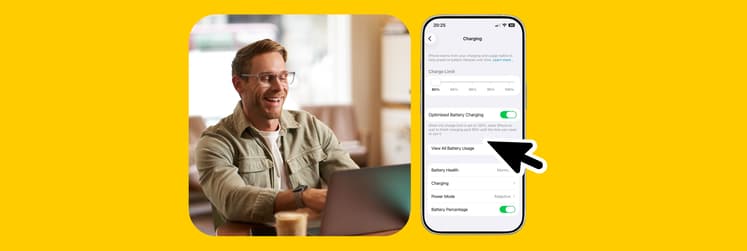
What it does. Low Power Mode cuts your iPhone’s power use by limiting background activity, dimming the display, and turning off some visual effects until you charge to 80%.
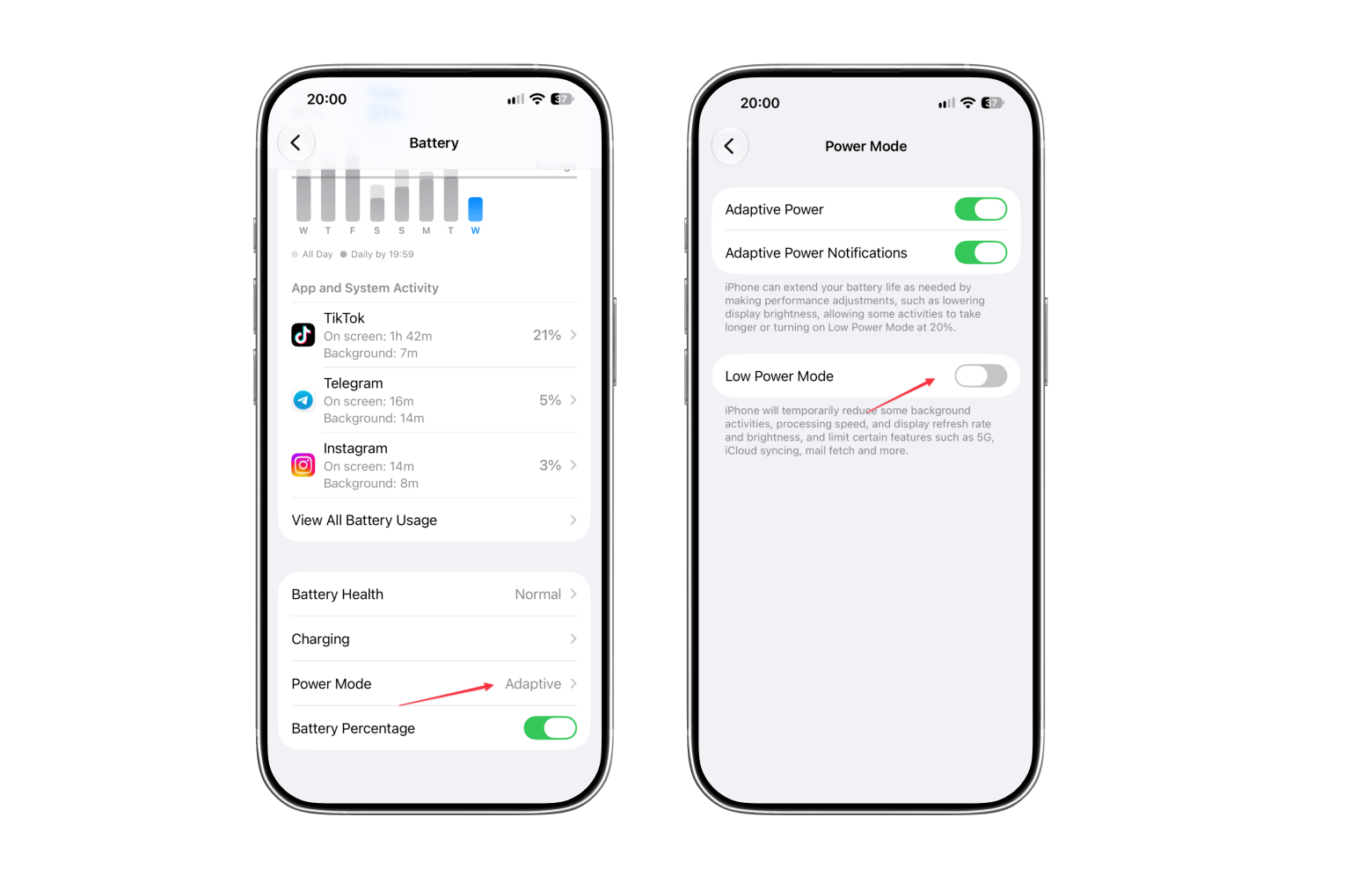
How to turn it on. Open Settings, tap Battery, and turn on Low Power Mode. On iPhone 15 and later, tap Power Mode first.
How to automate it. Create a Shortcuts automation that turns Low Power Mode on when your battery falls below a level you choose.
What you trade off. Email fetch, Background App Refresh, and automatic downloads pause, so use it when you need the charge, not all day.
At 20% battery, your iPhone typically prompts you to turn on Low Power Mode. If Adaptive Power is on, it can turn on automatically. This built-in feature reduces background activity and performance to make the remaining charge last longer. The exact battery-life improvement depends on your device, battery health, and usage.
You can also turn on Low Power Mode manually before your battery reaches 20%. If you prefer a hands-off approach, you can create a Shortcuts automation that turns it on at a battery level you choose.
Problem
Solution
Want it on right now
Settings > Battery
Need one-tap access
Control Center control
Forget to turn it on
Shortcuts automation
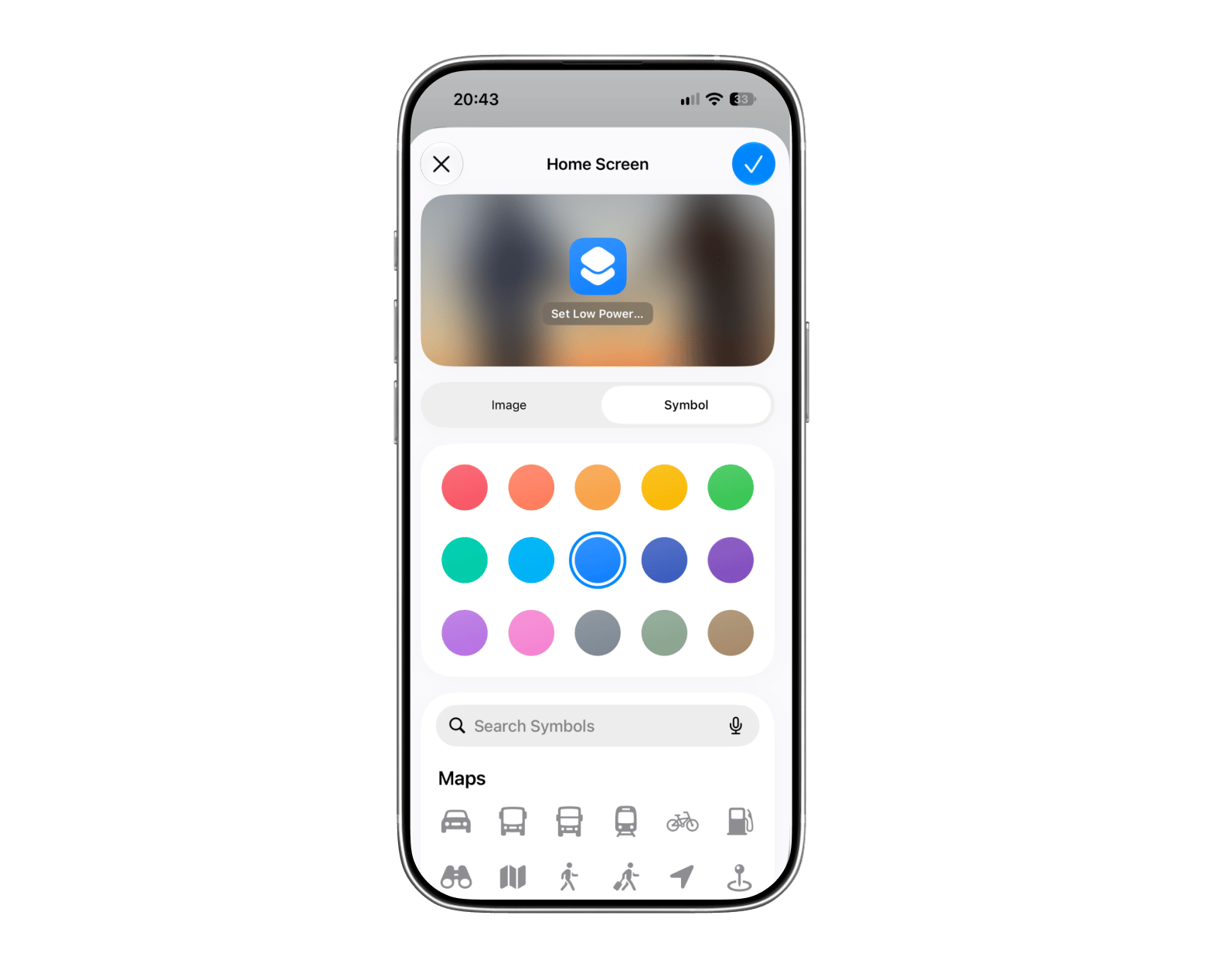
Want a Home Screen icon
Shortcuts toggle
What does Low Power Mode do?
Low Power Mode reduces your iPhone’s power use by limiting background activity, dimming the display, and turning off some visual effects until you charge to 80%.
According to Apple Support, Low Power Mode extends battery life by limiting certain features. Here's what it changes:
Reduces non-essential activity: Low Power Mode limits certain features and background processes to conserve battery power.
Pauses background tasks: It turns off Mail fetch, Background App Refresh, and automatic downloads, and temporarily pauses iCloud Photos syncing.
Adjusts display settings: It reduces display brightness and sets Auto-Lock to 30 seconds.
Limits 5G usage: On iPhone 12 and iPhone 13 models, Low Power Mode generally disables 5G, except during video streaming and large downloads.
Reduces visual effects and performance: It turns off some visual effects and may make certain tasks take longer to complete while Low Power Mode is enabled.
Low Power Mode helps when you're traveling, facing an emergency, or spending a long day away from a charger. It can be especially useful on an older iPhone with reduced battery health.
If you have an iPhone 15 Pro or later, you may also see Adaptive Power. This separate feature makes smaller performance adjustments, slightly lowers brightness, limits background activity, and turns on Low Power Mode when your battery reaches 20%. Apple explains the differences in its Adaptive Power guide.
How to turn Low Power Mode on or off on iPhone and iPad
You can switch on Low Power Mode whenever you need to conserve battery. For example, it's handy on a packed day when you know you won't have access to a charger.
To turn on Low Power Mode:
Open the Settings app.
Tap Battery.
On iPhone 15 and later, tap Power Mode. On iPhone 14 and earlier, skip this step.
You might be thinking, why not use Low Power Mode all the time? Your phone may last longer on a single charge, but there's a trade-off. Performance can feel slower, and features such as background app refresh and email fetching become limited. I'd suggest using Low Power Mode when you genuinely need to conserve power.
To turn it off manually, return to Settings > Battery > Power Mode and turn off Low Power Mode. On iPhone 14 and earlier, skip Power Mode. The toggle sits directly under Battery. You can also tell Siri, "Hey Siri, turn off Low Power Mode."
What surprised me was how quickly Low Power Mode switched itself off. I charged to 80% over lunch, and by the evening the yellow battery icon was gone, so I had to turn it back on.
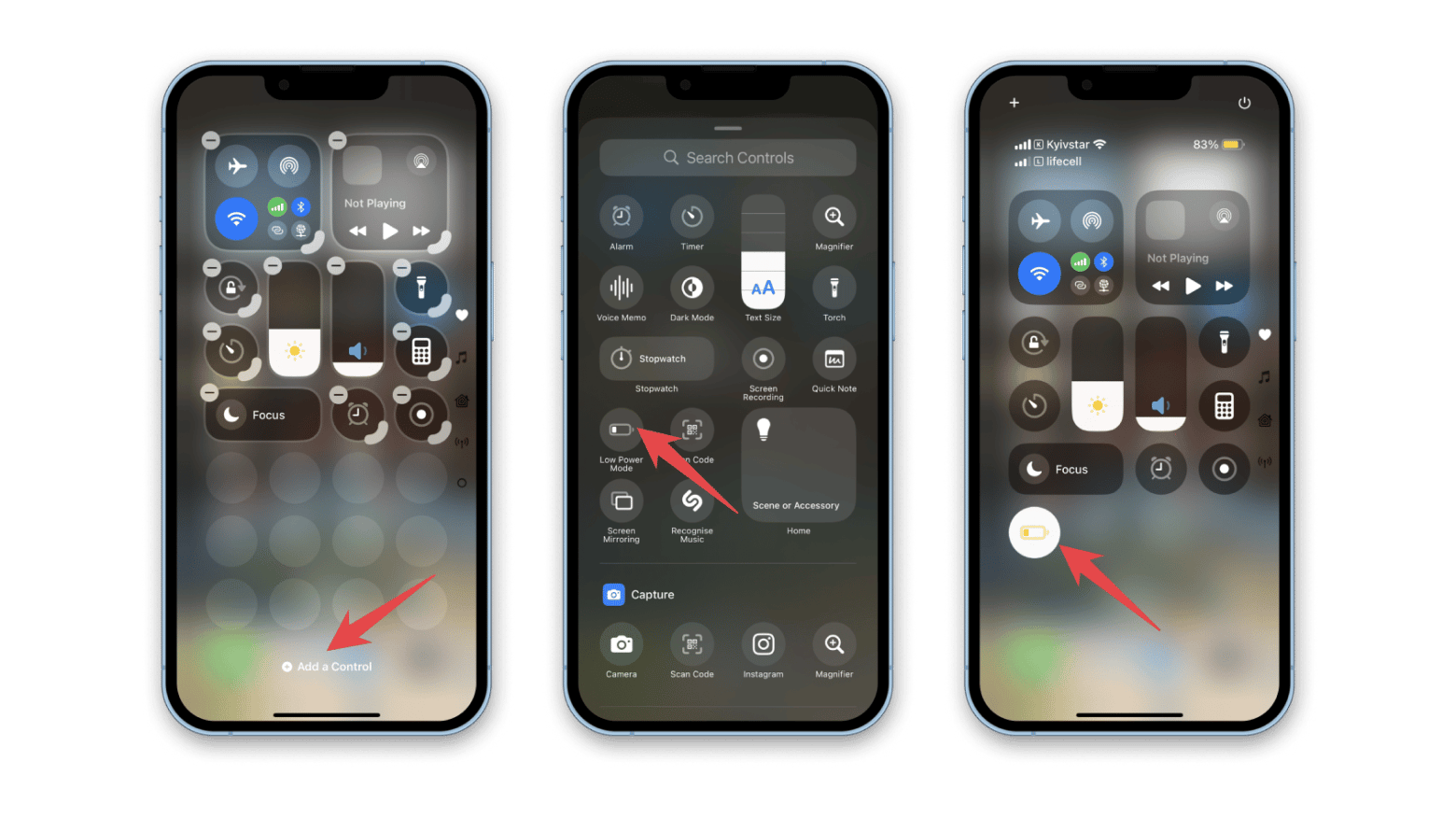
Control Center gives you quick access to Low Power Mode without opening Settings. Swipe down from the top-right corner of the screen to open it. On an iPhone with a Home button, swipe up from the bottom edge instead.
If the Low Power Mode control isn't there, add it manually:
Swipe down from the top-right corner to open Control Center.
Press and hold an empty area of the screen.
Tap Add a Control.
Tap Low Power Mode.
Press and drag the control to move it if needed.
Tap an empty area to finish editing.
Control Center is my fastest route: one swipe, one tap. I tried the Home Screen shortcut too, but I kept reaching for Control Center.
It may be worth trying if your photo library is taking up a significant amount of storage. Also, remember that Low Power Mode temporarily pauses iCloud Photos syncing, so your photo library may not sync until Low Power Mode is turned off or syncing resumes.
How to add a Low Power Mode shortcut to the Home Screen
You can also add a Low Power Mode shortcut to your iPhone's Home Screen. The Shortcuts app lets you create a simple toggle.
To add the shortcut:
Open Shortcuts and tap the + button.
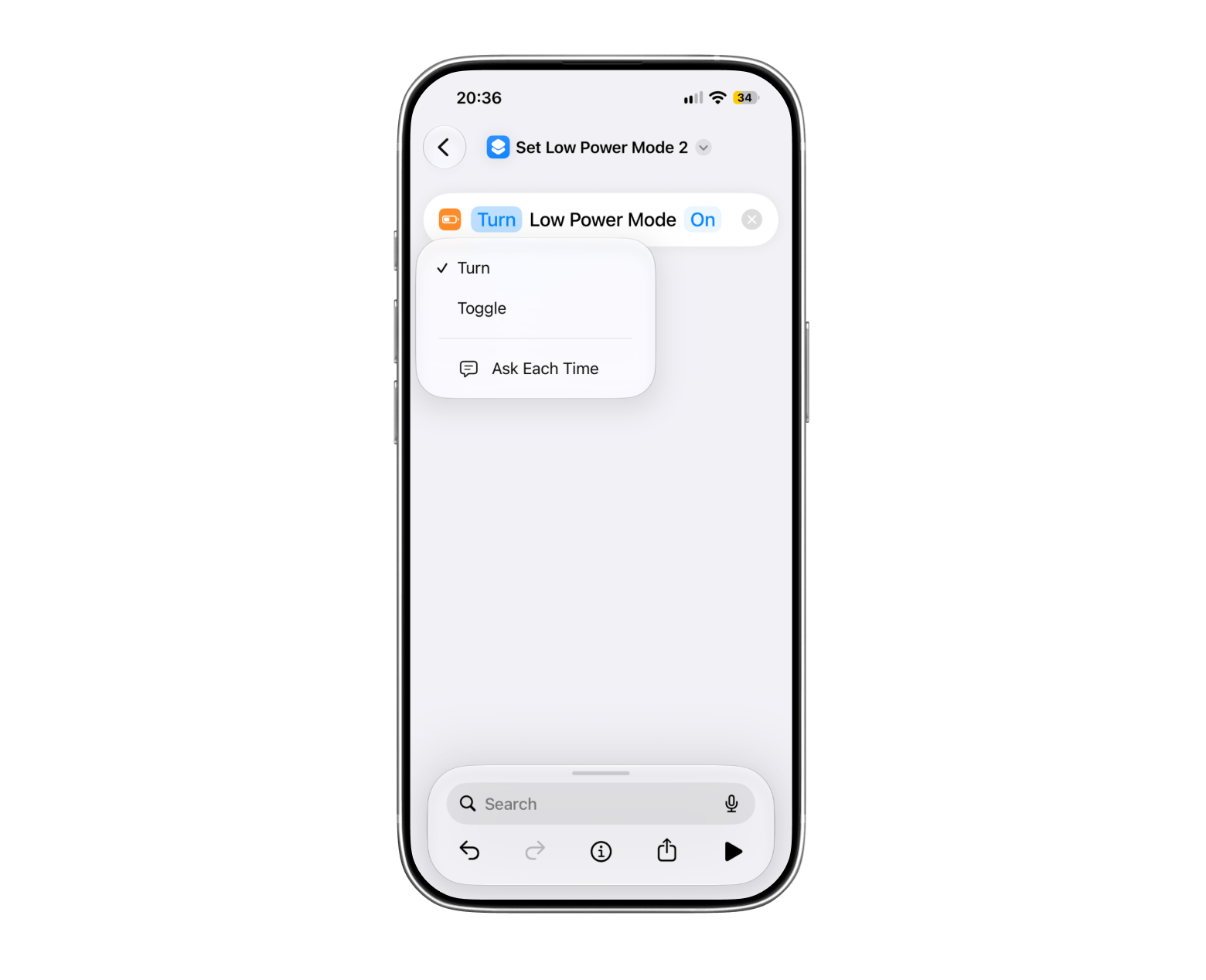
Tap the Search field at the bottom of the screen, type Set Low Power Mode and tap it.
Tap Turn and choose Toggle.
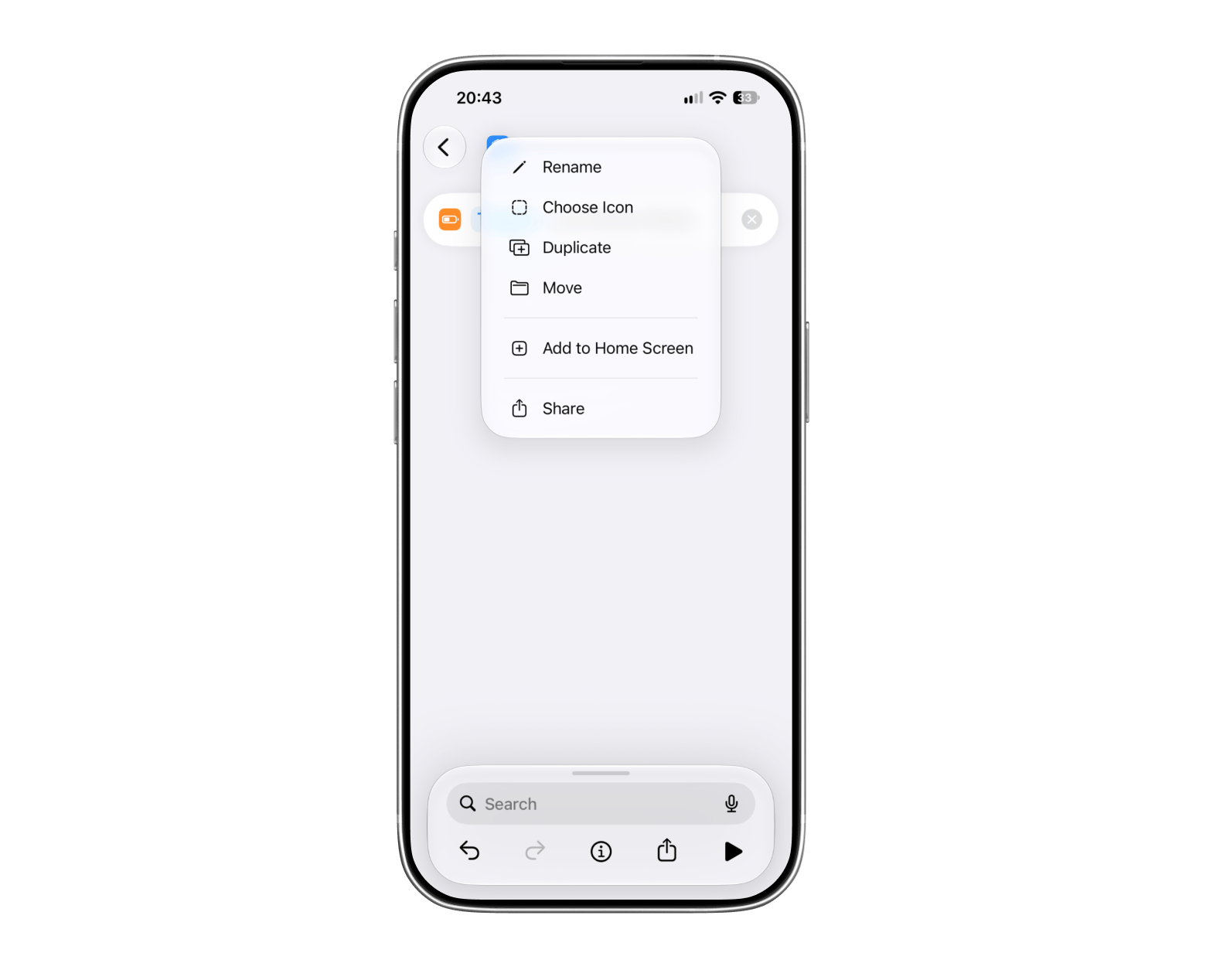
Tap the shortcut name at the top of the screen.
Choose Add to Home Screen.
Name the shortcut, choose an icon, and tap the checkmark (✓).
A Low Power Mode icon will now appear on your Home Screen. Tap it whenever you want to turn Low Power Mode on or off.
Manage battery life beyond Low Power Mode
Low Power Mode is a reliable way to stretch your iPhone or iPad battery when you need it most. Batteries can remind you when connected Apple devices need charging, while Usage keeps important iPhone performance information within easy reach. CleanMy®Phone can help you declutter a large photo library.
Not by design. Apple doesn’t list charging speed among the things Low Power Mode changes. Your charger, cable, battery temperature, and how much you use the device affect charging speed far more.
Why use Low Power Mode?
Use Low Power Mode when you're away from a charger and need your battery to last longer. It's particularly helpful during travel, emergencies, and long days out.
Is it okay to keep an iPhone in Low Power Mode all the time?
Yes, keeping Low Power Mode on won't damage your iPhone. However, it limits background refresh, email fetching, visual effects, display brightness, and performance. Those trade-offs can make everyday use less convenient. It also turns off automatically once you charge to 80%, so you’d need to turn it back on.
Does Low Power Mode slow down the iPhone?
Yes, some demanding tasks may run more slowly because Low Power Mode reduces performance and background activity. Calls, messages, and light browsing should continue to work normally. Turn it off when you need full performance.
Can I make Low Power Mode turn on automatically?
Yes. Create a personal automation in Shortcuts:
Open Shortcuts and tap +..
Choose Automation, scroll down and tab Battery Level
Set a threshold and choose Falls Below.
Leave Automation enabled.
Tap Search, type Set Low Power Mode, and select the action.
Set the action to Turn Low Power Mode On rather than Toggle.
Tap the Play button (▶) in the bottom-right corner.
Your iPhone will now enable Low Power Mode when the battery falls below your chosen level.
Superpowers for your iPhone
Power up your workflow with apps for Mac and iOS on Setapp.






 Best solution
 Best solution