Yellow battery icon means Low Power Mode is on — here's how to manage it
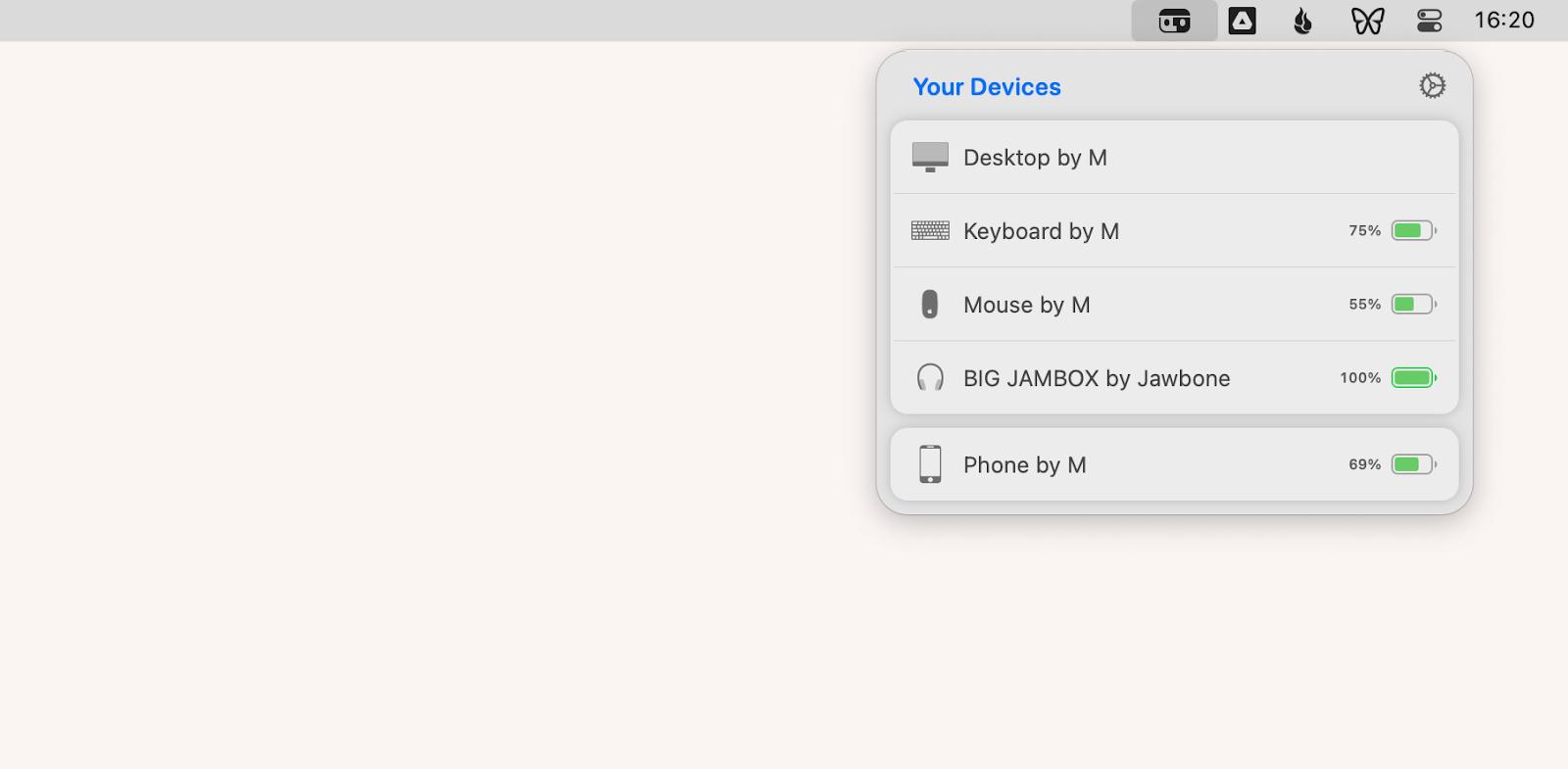
AirBuddy displays charge levels for your iPhone, AirPods, and Apple Watch in one menu bar click and notifies you when any device needs charging. Available on Setapp.
Yellow battery = Low Power Mode. Your iPhone reduces power use to extend battery life. It's a feature, not a problem.
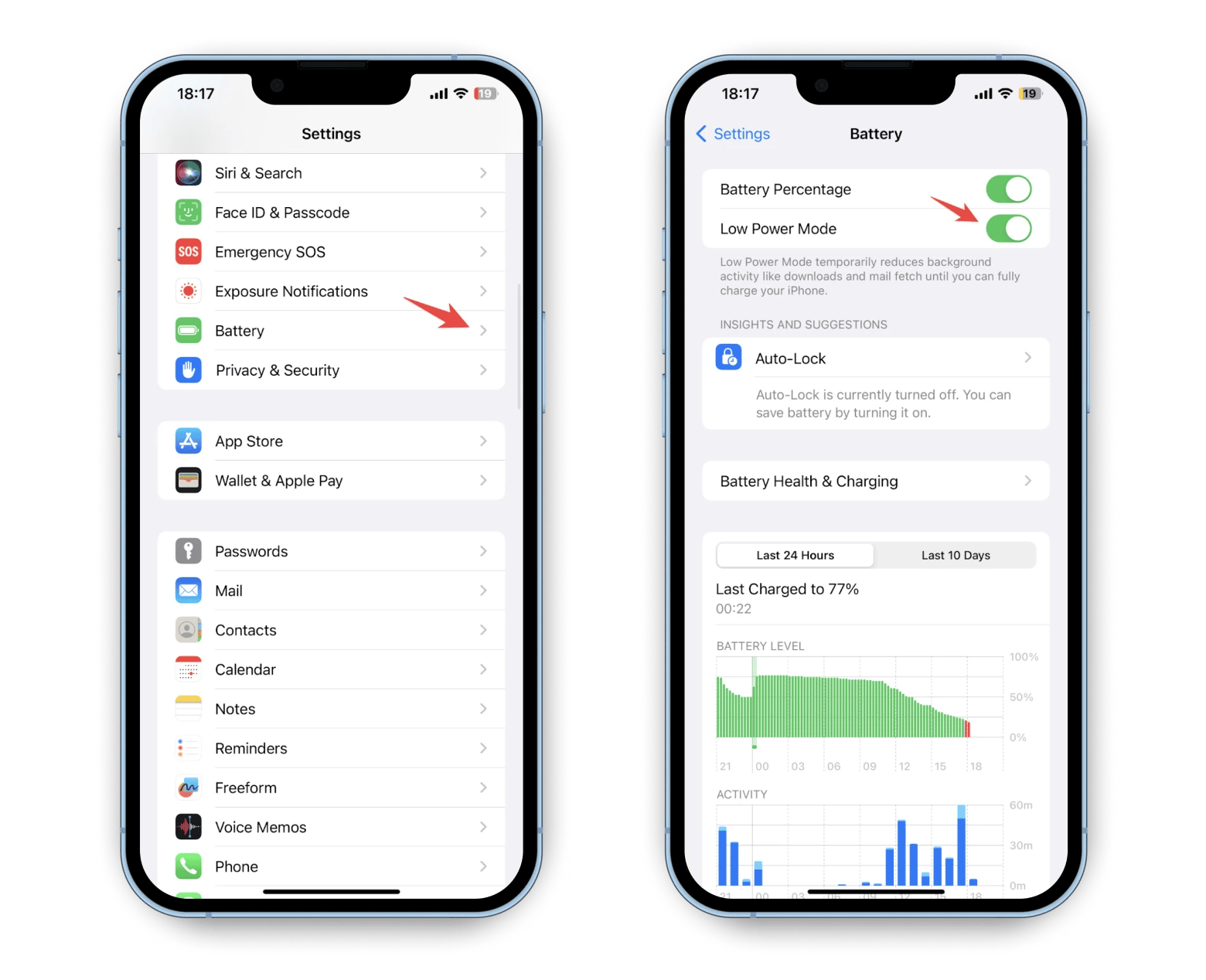
Turn it off: Go to Settings > Battery > Power Mode and disable Low Power Mode.
Charge the iPhone: The icon returns to normal once your iPhone charges above 80%.
To monitor your iPhone battery level from your Mac, use AirBuddy. With it, one click in the menu bar shows all connected devices and their charge levels, along with low-battery notifications. Try the app FREE for 7 days on Setapp.
You may have noticed that the battery icon on your iPhone sometimes turns yellow. Wondering why? Here's the answer: Low Power Mode, which is not a device problem but a feature.
This article will help you understand why your iPhone battery is showing up as yellow and what you can do about it. Plus, I'll add a few personal tips and ideas on managing the iPhone's battery.
Low Power Mode on iPhone: Quick overview
Don’t have time to read the full article? This quick table explains what the yellow battery icon means, how to turn it off, and what actually matters for keeping your iPhone battery in good shape.
Key idea
What it means for you
A yellow battery icon means Low Power Mode is on
Your iPhone is reducing the amount of power use to help the battery last longer. It’s a normal feature, not a sign that something is wrong
Low Power Mode limits certain features
It may pause background app refresh, email fetch, iCloud Photos syncing, some visual effects, and reduce brightness or refresh rate
You can turn it off anytime
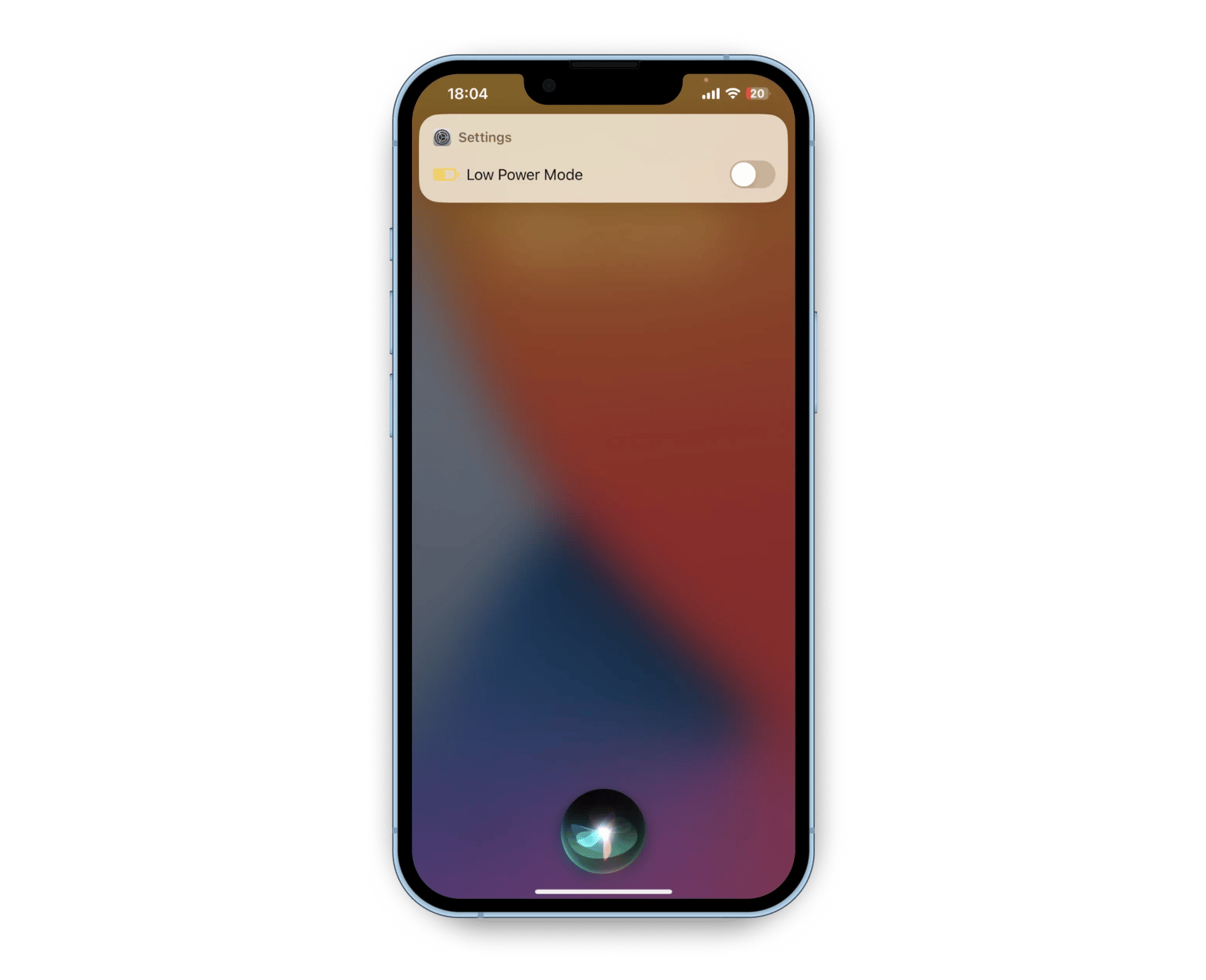
Go to Settings > Battery > Power Mode, use Control Center, or ask Siri to disable it
The icon also goes away automatically
Once your iPhone charges above 80%, Low Power Mode turns off on its own in normal cases
Using Low Power Mode all the time is safe
It won’t damage your battery or reduce battery health by itself, but your iPhone can feel slower and less convenient because some features stay limited.
Battery health depends more on daily habits
Avoid overheating, keep iOS updated, use Optimized Battery Charging, and try not to fully drain the battery too often
Battery monitoring tools can make this easier
Apps like AirBuddy help you track battery levels from your Mac and remind you when it’s time to recharge
What does yellow battery mean on iPhone?
If you see a yellow battery indicator on your iPhone, there is nothing to worry about. This happens when your phone goes into Low Power Mode, which can be done either by you or by the device when the battery falls below a certain level.
Apple introduced this feature in iOS 9 (2015) to extend iPhone battery life. Your iPhone prompts you to enable Low Power Mode when the battery drops to 20%. If you decline, you'll see the prompt again at 10%.
You can also enable Low Power Mode manually anytime:
Open Settings.
Tap Battery.
Tap Power Mode.
Toggle on Low Power Mode.
The yellow icon disappears once you charge above 80% or manually disable the feature. That's really all there is to understanding why your battery appears yellow.
What changes when Low Power Mode is on?
Low Power Mode squeezes extra minutes out of your remaining charge by pausing or dialing down power-hungry features.
You may have noticed unusual behavior when this mode is active. Tasks run slower. Certain features stay disabled until you exit Low Power Mode or charge past 80%.
According to Apple Support, these are some of the features that may be affected by iPhone Low Power Mode:
Auto-Lock (30 seconds by default)
5G is turned off (except for video streaming)
On iPad and iPhone models with the ProMotion display2, the display refresh rate is limited to 60Hz
iCloud Photos (temporarily paused)
Email fetch (temporarily paused)
Automatic downloads (temporarily paused)
Display brightness reduced
Background app refresh (temporarily paused)
Some visual effects turned off, etc.
It's all done to conserve iPhone battery life when it's running low on juice.
Is it safe to use power-saving mode all the time?
You might consider using Low Power Mode constantly to preserve battery life. However, this approach significantly impacts your iPhone's functionality and user experience. You're probably going to find that this isn't worth bothering with. It's not as easy to use your iPhone with this mode turned on.
Pros — slightly longer iPhone battery life; handy on long travel days.
Cons — slower animations, 30-second Auto-Lock, no background app refresh, and no instant Mail or "Hey Siri" responses, etc.
Your screen will automatically lock after 30 seconds, regardless of your normal auto-lock settings. Features like background app refresh, email check, and Hey Siri are turned off while you're in Low Power Mode.
So, if you ask, "Should I use Low Power Mode all the time?" The answer is no. It will not damage your device, but it will affect your experience using your phone.
That said, I've had situations where it was really appropriate to turn on Low Power Mode before my iPhone dropped to 20% or 10%. This was usually useful during long hikes or when traveling on buses without power outlets near the seats (yes, those buses do exist).
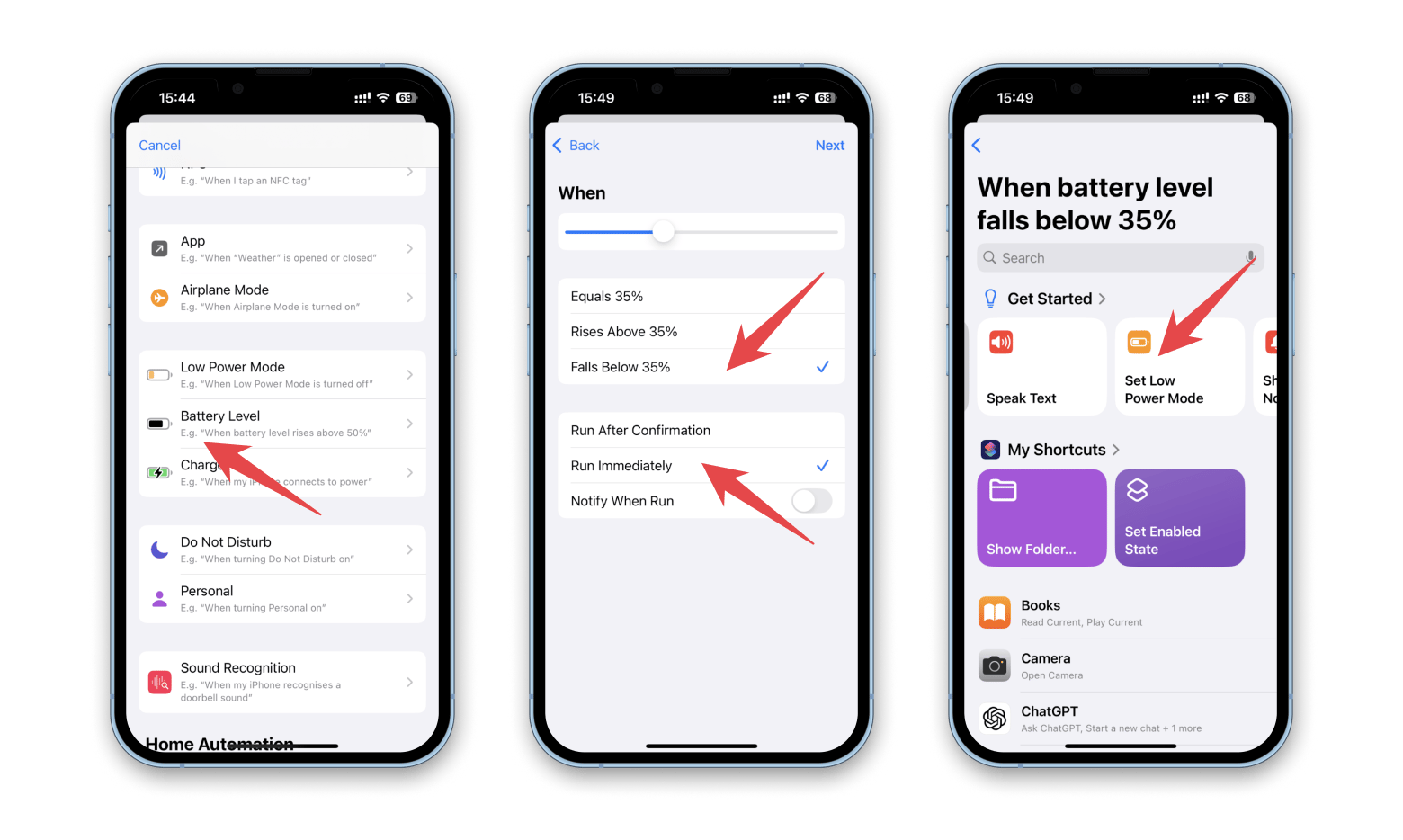
In such cases, I set up Low Power Mode to activate at 30-35% charge. Here's how to do it:
Open the Shortcuts app on your iPhone (find it via Spotlight search).
Tap Automation at the bottom of the screen.
Tap New Automation or the + sign.
Scroll down and tap Battery Level.
Select Falls Below X% and adjust the slider to your desired level (I use 35%).
Choose Run Immediately and press Next.
Tap Set Low Power Mode > Done.
How to turn off the yellow battery icon on iPhone
If you want to get rid of the iPhone yellow battery indicator, you can:
On iPhone 15 and later — open Settings > Battery > Power Mode and switch Low Power Mode off
On iPhone 14 and earlier — head to Settings > Battery and disable Low Power Mode
From Control Center — swipe down from the top-right corner and tap the battery icon
Pick whichever option is quickest for you and the yellow icon will switch back to its regular color.
Bonus: How to keep iPhone battery 100% healthy
Diminishing battery life is one of the most common complaints among iPhone users. Unfortunately, there is no way to keep the iPhone battery at 100% health all the time. Note that Apple considers 80% or more capacity ideal. To avoid falling below this level and causing your battery to malfunction, you need to follow best practices and maintain your iPhone's battery health.
To view your battery's current health, go to Settings > Battery > Battery Health & Charging and check the Maximum Capacity percentage.
Now, to my tips.
Tip 1. Turn on Adaptive Power
Starting with iOS 26, Apple introduced Adaptive Power, which uses on-device intelligence to predict high-usage periods and make subtle adjustments (like slightly lowering brightness or limiting background activity) to help your battery last longer. It can also turn on Low Power Mode automatically at 20% when needed.
To enable Adaptive Power:
Go to Settings.
Tap Battery.
Tap Power Mode.
Turn Adaptive Power on.
The Adaptive Power feature is available on iPhone 15 Pro and newer models that support Apple Intelligence (on by default on iPhone 17 series and iPhone Air).
Tip 2: Avoid letting your iPhone die
You've probably heard that iPhone batteries last longer if you charge them to 80% and avoid draining them completely. Apple supports this practice and, starting with the iPhone 15, has introduced an 80% charge limit feature (Settings > Battery > Battery Health & Charging > Charging Optimization > 80% Limit).
Some people have even tested charging to 80% for a year and found it can really help preserve battery capacity by several percent. I think it might make sense in the long run, but personally, I've chosen not to mess with this charging scenario for now. (Although I do have Optimized Battery Charging enabled and try to use the battery conservatively).
Plus, I avoid fully discharging my iPhone and use two methods to get low battery reminders — from my Mac and from the iPhone itself.
When on Mac, I monitor the state of charge of my devices at a single glance with AirBuddy. A simple click on an icon in the menu bar displays a list of wireless devices connected to my Mac, along with their battery status. The app also sends a notification when the devices' batteries are low and when charging is complete.
Additionally, I created an Automation with a voice reminder to charge the battery every time it falls below 30%. Here's how.
Open the Shortcuts app on your iPhone (find it via Spotlight search).
Tap Automation at the bottom of the screen.
Tap New Automation or the + sign.
Scroll down and tap Battery Level.
Select Falls Below X% and adjust the slider to your desired level (I use 30%).
Select Run Immediately and tap Next.
Tap Speak Text and type the reminder you want to get (e.g., Charge your phone!).
Tap Done.
Tip 3: Don't charge your phone overnight
A lot of people charge their phones overnight because it is the most convenient way to go. However, overcharging an iPhone can damage the battery and shorten the life of the phone.
Fortunately, there's a built-in, optimized battery charge feature that helps keep your iPhone's battery healthy. You can turn it on by going to Settings > Battery > Battery Health & Charging and toggling Optimized Battery Charging. If you unplug your phone at about the same time every day, your iPhone will learn that pattern and avoid charging to 100% until you need it.
Tip 4: Don't let your iPhone overheat or overfreeze
One important way to maintain the health of your iPhone battery is to keep its operating system up to date. Over time, the iPhone receives software updates that improve its speed and performance. This keeps the battery in good shape over time. Plus, these updates often include new battery-saving features for you to enjoy. Go to Settings > General > Software Update.
Tip 6: Monitor your iPhone performance
Your iPhone drains faster when it's handling too many tasks or is overloaded. To keep track of your device's health, try the Usage app. It creates widgets that display the status of memory, battery, disk and network data.
When memory usage exceeds 70%, I investigate resource-draining processes. This might include unnecessary background tasks, updates, or downloads.
iPhone battery yellow: Resolved
Now you know the answer to the questions "What is the iPhone battery icon yellow?" and "How do you get rid of yellow battery on iPhone?" As you can see, there is nothing to worry about. This is what happens when your iPhone is put into battery-saving mode. Note that you can turn Low Power Mode off manually at any time. You just need to go to your Settings app, tap Battery, and then disable Low Power Mode.
Want to manage your battery more effectively? Monitor your iPhone's charge from your Mac using AirBuddy. The app can notify you when your iPhone's battery is running low. You can access AirBuddy along with 250+ other tools for Mac and iPhone through Setapp. Try every Setapp app for free for 7 days, with access to all features, no restrictions, no ads, and no hidden fees during the trial period.
Frequently asked questions
Does Low Power Mode damage iPhone battery health?
No. Low Power Mode only tweaks software settings — like dimming the screen, pausing background refresh, and slowing the processor — to squeeze more time from a charge. It doesn't stress the battery or shorten its life. I often switch it on during long hikes, and my battery health stays the same.
How can I keep my iPhone battery healthy?
Keep the charge between about 30% and 80%. Avoid full discharges and all-night 100% charging.
Avoid heat: don't leave your phone in hot cars or direct sun.
Update iOS and apps. Apple often adds battery-saving tweaks.
Turn on Optimized Battery Charging (Settings > Battery > Battery Health & Charging).
Turn on Adaptive Power (Settings > Battery > Power Mode > Adaptive Power).






 Best solution
 Best solution