The fastest method to erase all content and settings for modern Macs: On macOS Monterey or later with a T2 chip or Apple silicon (2018+), use System Settings > General > Transfer or Reset > Erase All Content and Settings. It handles iCloud sign-out and Find My deactivation automatically.
For older Macs, use Recovery Mode: Restart holding Command + R, open Disk Utility, erase your startup disk, then reinstall macOS. It takes longer but works on any Mac.
Always back up first: Before erasing anything, back up your essential files. Get Backup Pro lets you choose exactly which folders to save — useful when you only need specific documents, not a full system backup.
Selective cleanup as an alternative: If you don't need a full wipe, CleanMyMac can remove system junk, large files, and duplicates without erasing everything.
Your Mac holds more junk than you think — CleanMyMac clears it without a full wipe. Try CleanMyMac free on Setapp — free for 7 days for 270+ apps.
To erase all content and settings on a Mac, you can use Apple's Erase Assistant feature. For older Macs, there are still reliable methods to completely wipe your data.
Whether you're selling your Mac, giving it to someone else, or just want a fresh start, knowing how to properly erase your device is essential. I've helped dozens of friends and colleagues through this process, and I can tell you that Apple has made it much simpler in recent years.
Here's a summary of the main ways to erase your Mac, with detailed instructions following below:
Method
Best for
Time needed
Requirements
Erase Assistant
Newer Macs (2018+)
30-60 minutes
macOS Monterey or later, Apple T2 Security Chip or Apple silicon
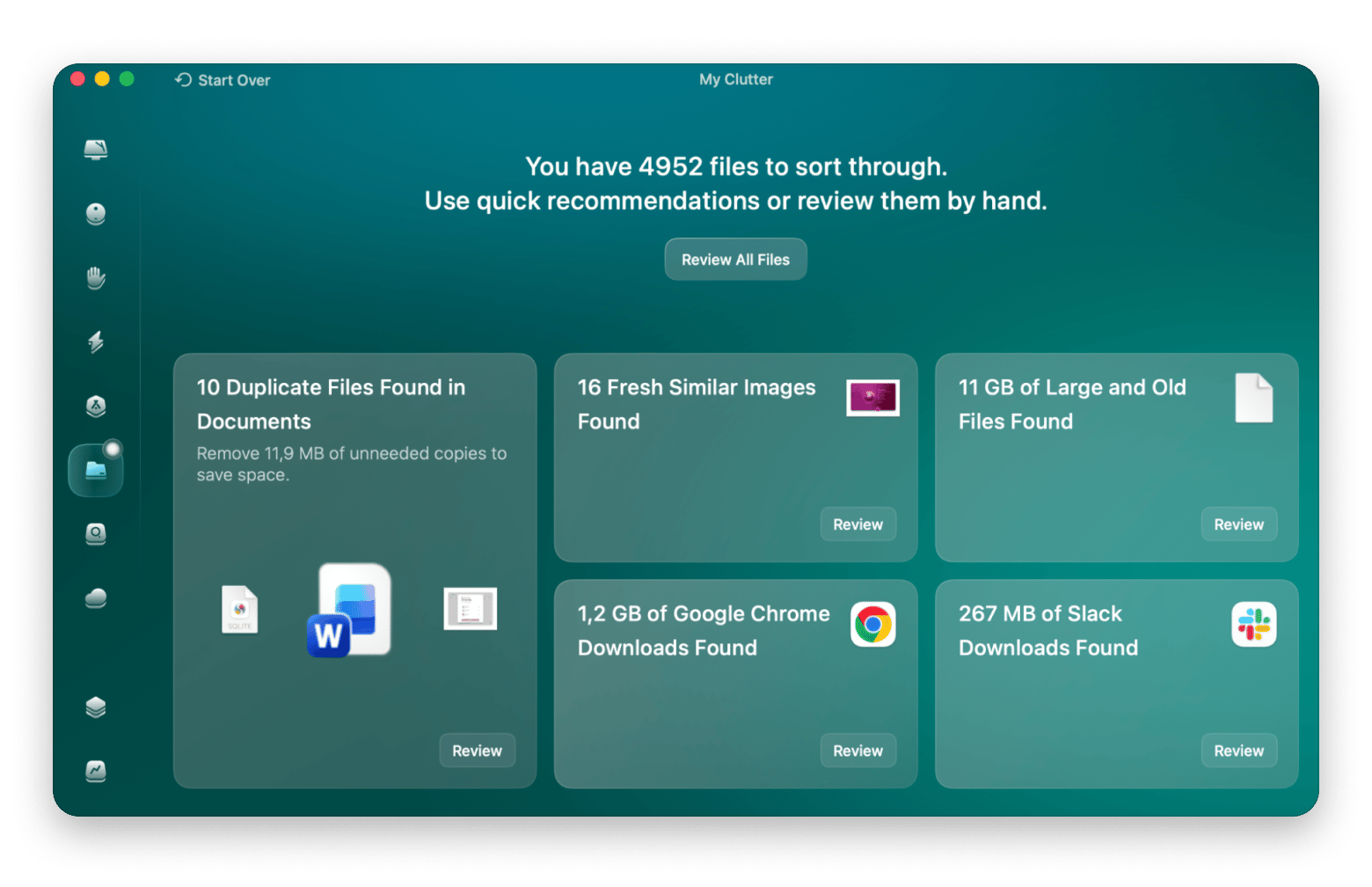
For older Macs or those running earlier macOS versions, I recommend using CleanMyMac, a Mac cleaner and optimizer. Its My Clutter module removes unwanted files and folders without leaving a trace.
Here's how to erase all settings and content with CleanMyMac:
Open CleanMyMac.
Click the My Clutter module in the left sidebar > Scan.
Click Select Files to choose the files you want to erase.
Important: Before proceeding, check your macOS version by clicking the Apple menu > About This Mac. These instructions work for macOS Monterey through macOS Tahoe. For detailed version requirements, see Apple's compatibility guide.
The location of Erase Assistant varies slightly between macOS versions. I'll show you the steps for each.
Erase all content and settings on macOS Monterey
If you have older macOS versions, like Monterey and lower:
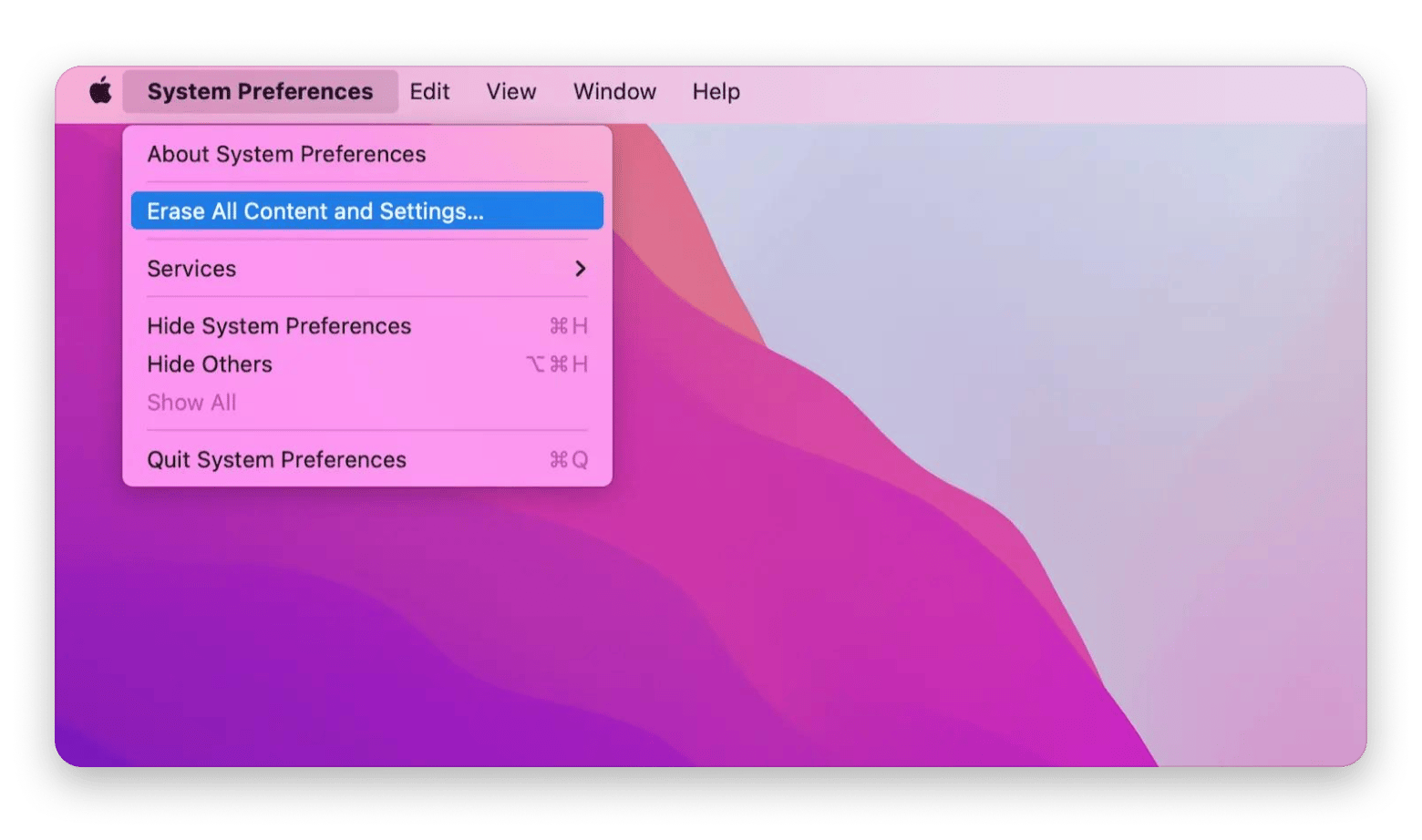
Go to the Apple menu and click System Preferences.
Click System Preferences in the menu bar.
Choose Erase All Content and Settings.
Enter your administrator password.
Sign out of your Apple ID when prompted.
Click Erase All Content & Settings.
The process takes about 30 to 60 minutes — times vary by hardware and storage size.
I set up a scheduled backup in Get Backup Pro the night before I ran Erase Assistant, just a selective backup of my work folder and Documents. The restore afterward took about ten minutes, which felt almost anticlimactic for how much I was dreading it.
Erase all content and settings on macOS Ventura and later
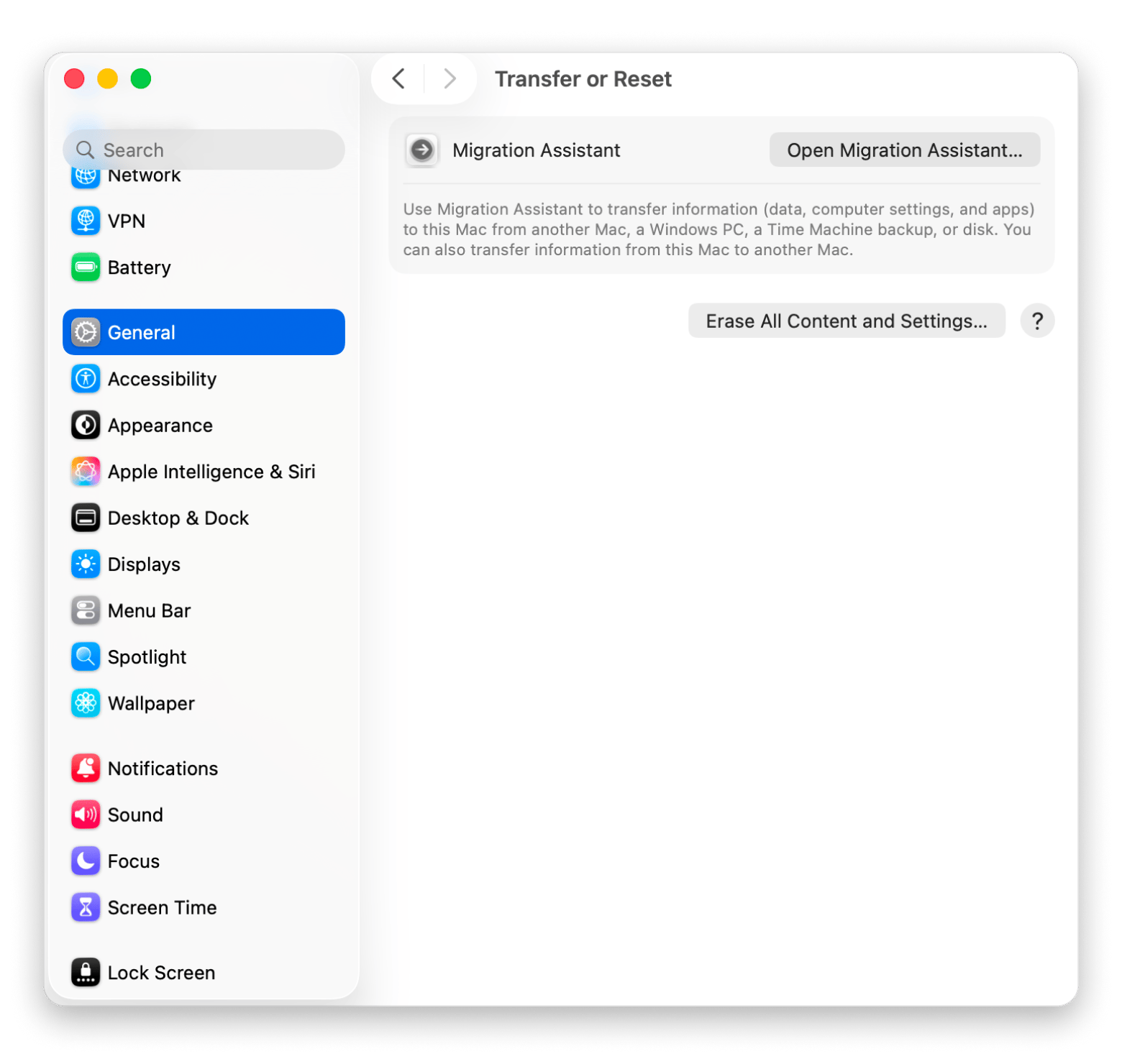
For macOS Ventura and later, the process is similar, but the location has changed:
Click Erase All Content & Settings to start the process.
Wait for the progress bar to complete.
Click Restart when prompted.
After the restart, your Mac will display the Setup Assistant just like when it was new.
What's the difference between factory reset and Erase All Content & Settings?
Factory reset and Erase All Content & Settings are two different things:
Erase All Content & Settings is essentially Apple's modern implementation of a factory reset. The main distinction from older methods is that it maintains your current macOS version rather than reverting to the original.
Reset All Settings option only resets system settings, not your data. Don't confuse this with Erase All Content & Settings, which removes everything.
Erase All Content & Settings on macOS Big Sur and earlier
If you have a Mac from 2017 or older, the resetting process requires more technical steps. For Macs running macOS Big Sur or earlier, you have two options:
Option 1: Update to macOS Monterey or later (if compatible), then follow the Erase Assistant steps.
Option 2: Use recovery mode to manually erase and reinstall macOS. According to Apple's guide for older Macs, this involves:
Back up your important files.
Sign out of all Apple services.
Restart while holding Command + R.
Use Disk Utility to erase your drive.
Reinstall macOS from recovery mode.
This manual process takes longer but achieves the same result.
What does Erase Assistant do?
With the help of Erase Assistant, you can reset your Mac to factory settings and erase it before reinstalling macOS with a few clicks.
Here’s what you can do with the Erase Assistant:
Sign you out of Apple services like iCloud
Turn off Find My and Activation Lock, so the Mac you’re wiping is no longer associated with you
Erase all content and settings, as well as any apps you have installed
Erase all volumes (not just the one you’re using). If you installed Windows on your Mac using Boot Camp Assistant, the BOOTCAMP volume will also be erased.
Delete all user accounts and their data (not just your own user account).
Erase and reset your Mac safely
Now you know how to erase all content and settings on your Mac. The method depends on your hardware and macOS version.
Before erasing anything, always back up your essential data. I recommend using Time Machine or a dedicated backup solution. This ensures you can recover important files if needed.
Erasing your Mac is a fresh start — make sure your files are safe first. Get Backup Pro and CleanMyMac are both on Setapp. Back up what matters, clean what you don't need — free for 7 days. Get 270+ Apps Free. Or get CleanMyMac standalone from $9.95 USD/month.
FAQ
How do I completely wipe my Mac?
For newer Macs (2018 or later) running macOS Monterey through Tahoe, use Erase Assistant: System Settings > General > Transfer or Reset > Erase All Content and Settings. For older Macs, boot into recovery mode (Command + R at startup), use Disk Utility to erase the drive, then reinstall macOS. Alternatively, use the CleanMyMac tool (no matter the macOS version) to delete data on your Mac.
How do I wipe an older Mac before recycling?
Boot into recovery mode by restarting and holding Command + R. Open Disk Utility from the macOS Utilities window. Select your startup disk and click Erase. Choose APFS (Apple File System) or Mac OS Extended format. After erasing, reinstall macOS or leave it blank for recycling. Remember to deauthorize the Mac in iTunes and sign out of iCloud first.
What's the difference between factory reset and Erase All Content and Settings?
Erase All Content & Settings is Apple's modern factory reset tool introduced in macOS Monterey. It performs a complete factory reset while keeping your current macOS version. A traditional factory reset through recovery mode may revert to the original OS version. Both methods completely erase your data, but Erase All Content & Settings is faster and simpler on compatible Macs.
Fix Mac issues with Setapp
Get an ever-growing selection of troubleshooting apps.






 Best solution
 Best solution