- Export iPhone contacts directly from the Contacts app in under a minute. Open the Contacts app, tap Lists, touch and hold All Contacts, then tap Export to save your address book as a vCard (.vcf) file. No computer needed.
- Use iCloud.com for bulk exports from any device. Sign in at iCloud.com, open Contacts, select the necessary contacts, click the gear icon, and choose Export vCard. Works on Mac, Windows, and Linux.
- Convert contacts to CSV via Google Contacts for spreadsheet use. Export your iPhone contacts as vCard first, import the .vcf into Google Contacts, then re-export as Google CSV or Outlook CSV. The whole process takes about five minutes.
- Transfer contacts between iPhones using AirDrop, iCloud sync, or a cable. On iOS 17 and later, AirDrop is the fastest option; iCloud sync keeps both devices updated automatically; a USB-C or Lightning cable works for direct transfers.
- Manage and back up your contacts with apps from Setapp. BusyContacts turns your contacts into a CRM with activity tracking and smart filters, while AnyTrans for iOS handles advanced transfers and scheduled backups. Try them free for 7 days.
The quickest ways to do it are exporting directly from iPhone through the Contacts app (vCard format), using iCloud on any computer for bulk exports, or converting to CSV format through Google Contacts for spreadsheet compatibility.
Before diving into the step-by-step instructions, here's a quick summary of your options. Each method serves different needs, so pick the one that matches your situation:
| Method | Best for | File format | Time needed |
| iPhone Contacts app | Quick single/all contact export | vCard (.vcf) | Under 1 minute |
| iCloud.com | Bulk exports from any computer | vCard (.vcf) | 2-3 minutes |
| Google Contacts | Spreadsheet compatibility | CSV, vCard | 5 minutes |
| AnyTrans for iOS | Advanced backup & transfer options | Multiple formats | 2-5 minutes |
Export directly from the iPhone Contacts app (vCard)
This method is perfect when you need contacts exported right now, no computer required.
Here’s how you do it:
- Open the Contacts app on your iPhone.
- Tap the arrow in the top-left corner to open Lists.
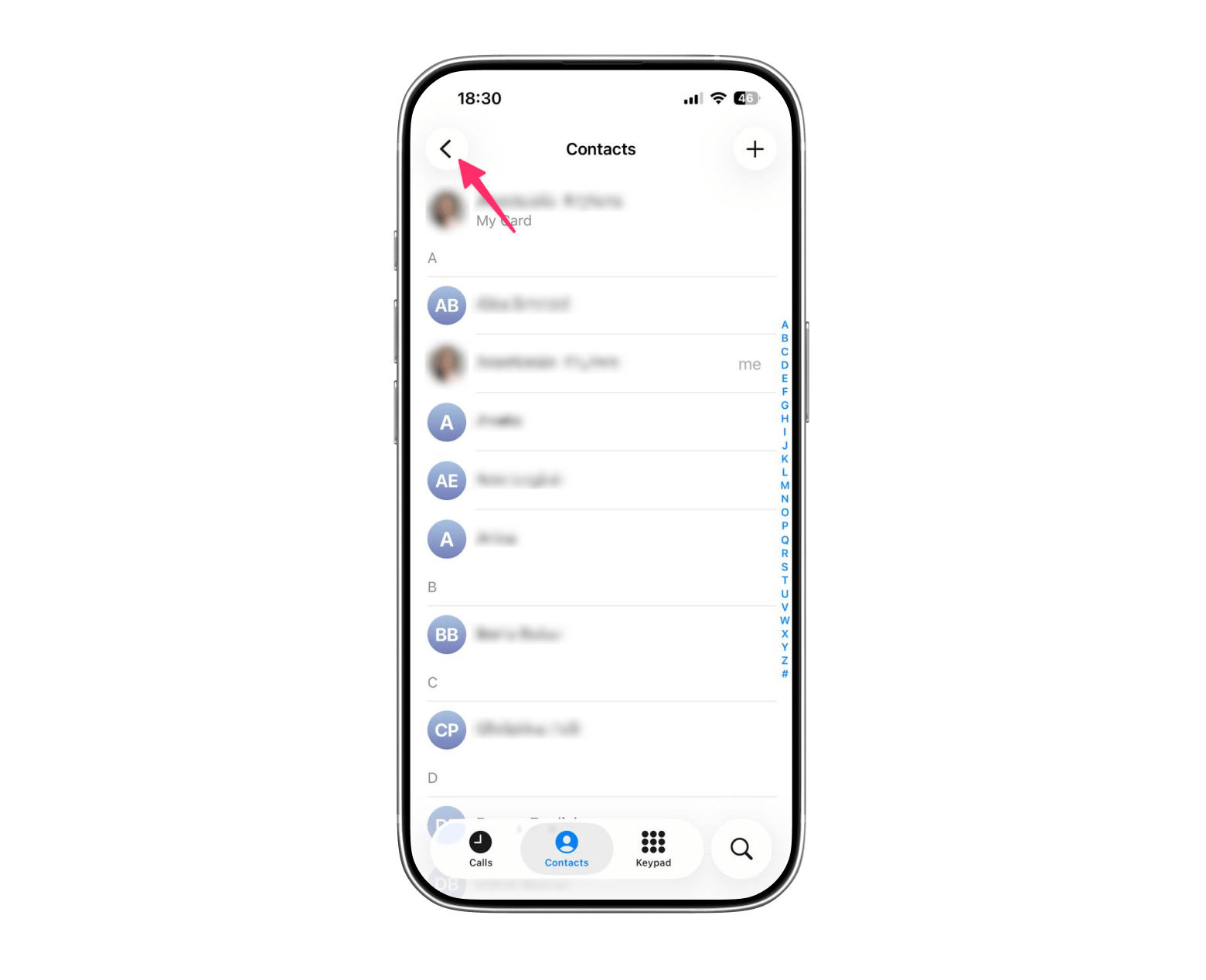
- Touch and hold any existing list, or tap Add List to create a new one.
- Tap Export from the menu that appears.
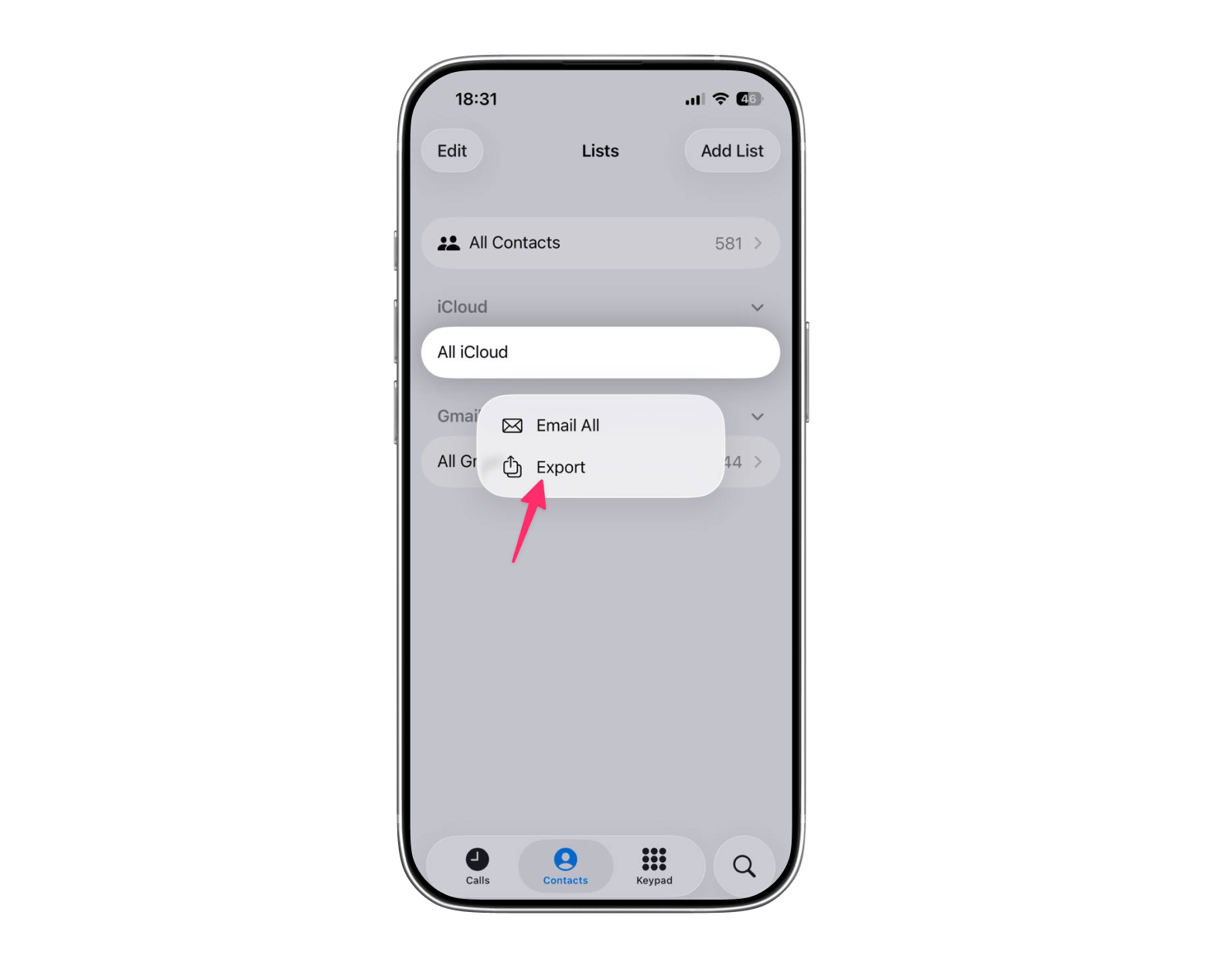
- Choose your export destination: Save to Files, share via AirDrop, or send through any messaging app.
The exported file will be in vCard (.vcf) format, which works with virtually every contact management system. If you selected multiple contacts, they'll all be bundled into a single file.
Export through iCloud on a computer
If your contacts already sync with iCloud, this desktop method gives you more control over the export process.
Follow these steps:
- Visit iCloud.com and sign in with your Apple Account.
- Click the Contacts icon from the app grid.
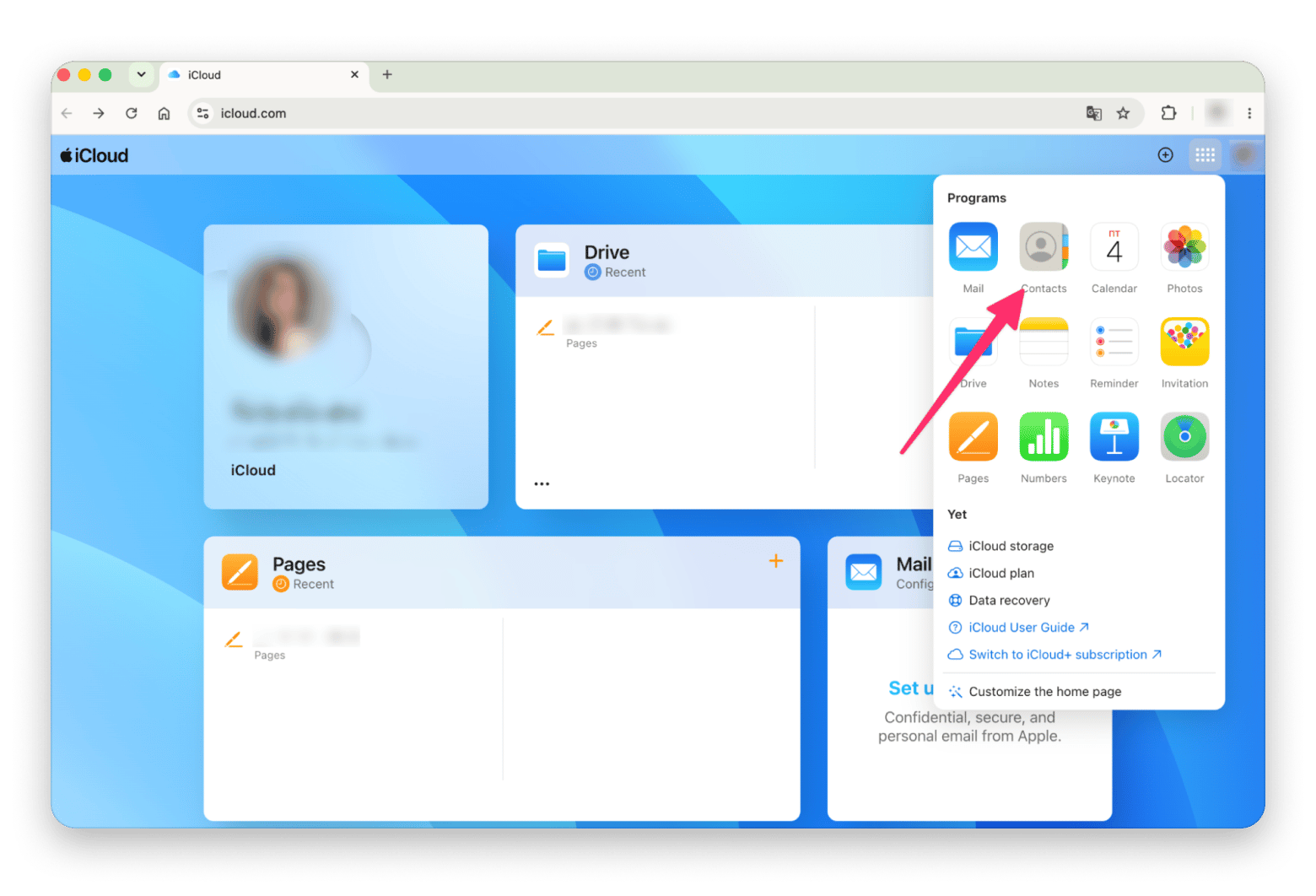
- Select contacts using Command + A (Mac) or Control + A (Windows) to select all, or Command / Control + click for specific ones.
- Click the gear icon in the top-right corner.
- Choose Export vCard from the drop-down menu.
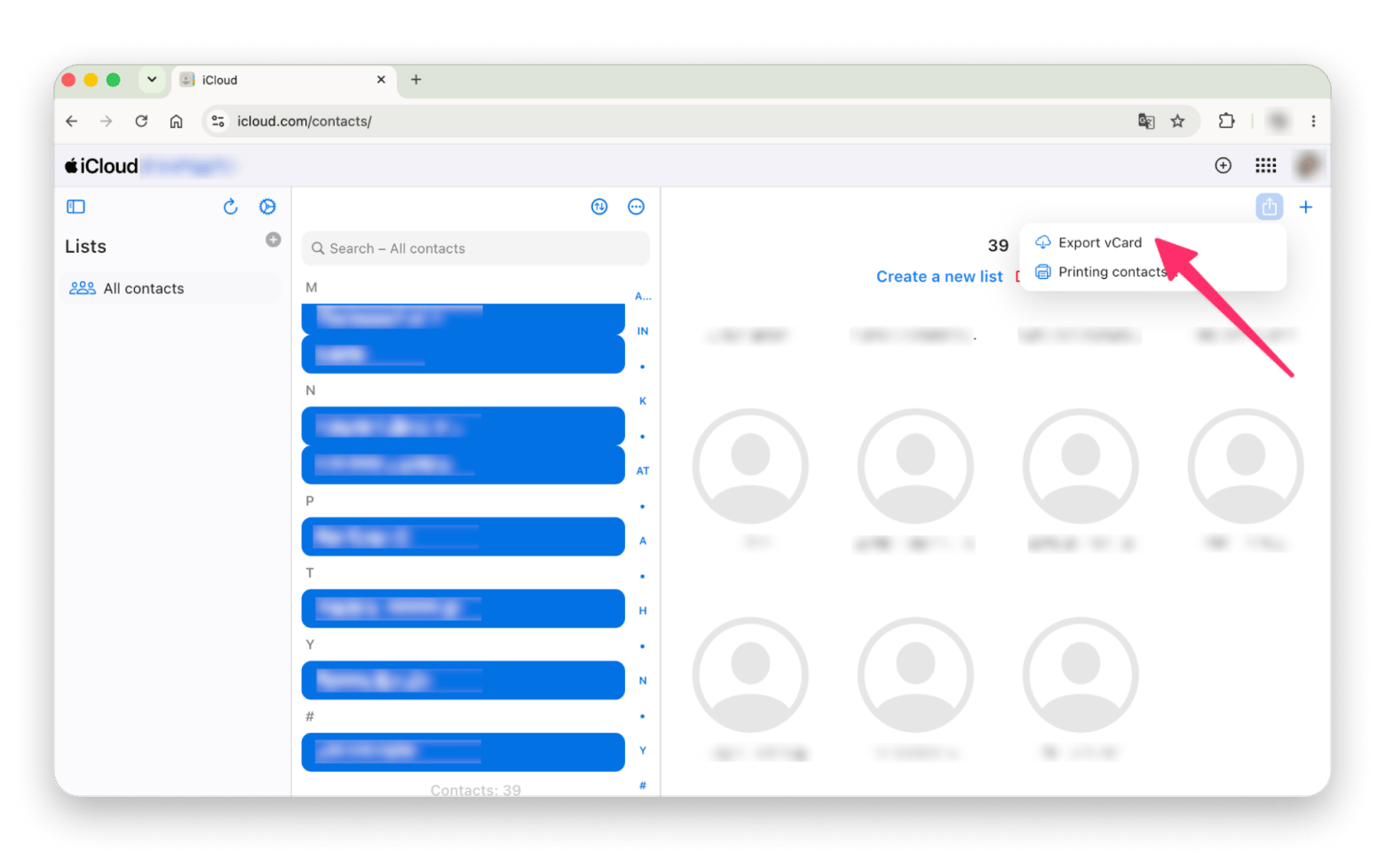
Your browser downloads a .vcf file containing all selected contacts. This method works on any computer — Mac, Windows, or even Linux — as long as you have a web browser.
According to Apple's official support documentation, this is their recommended approach for bulk exports.
Convert your contacts to CSV with Google Contacts
Here's how to convert your contacts to CSV for Excel or Google Sheets compatibility:
- Export your iPhone contacts as a vCard using one of the methods above.
- Visit contacts.google.com and sign in.
- Click Import in the left sidebar, then choose your .vcf file.
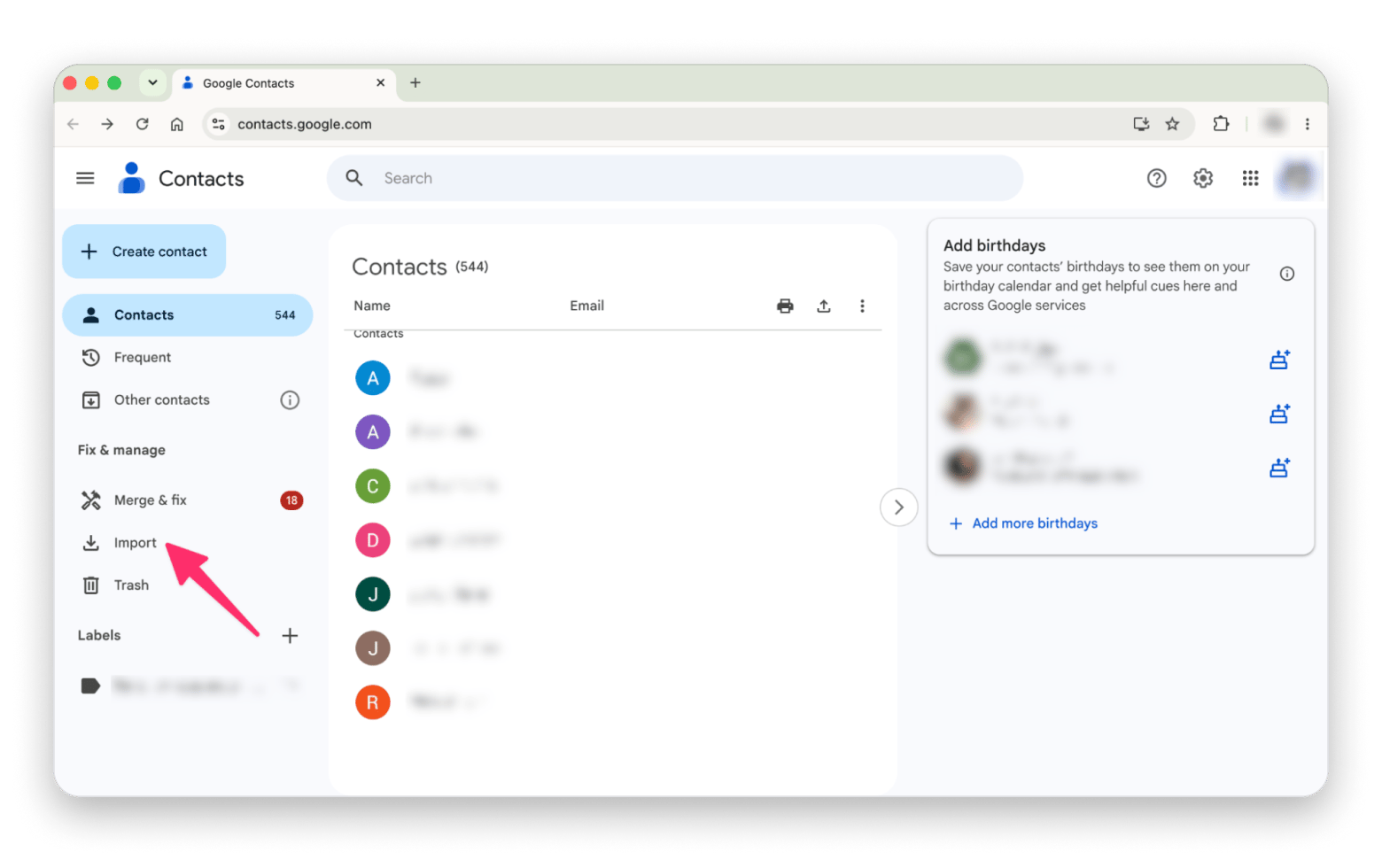
- Once imported, click the Export icon (just above the contacts).
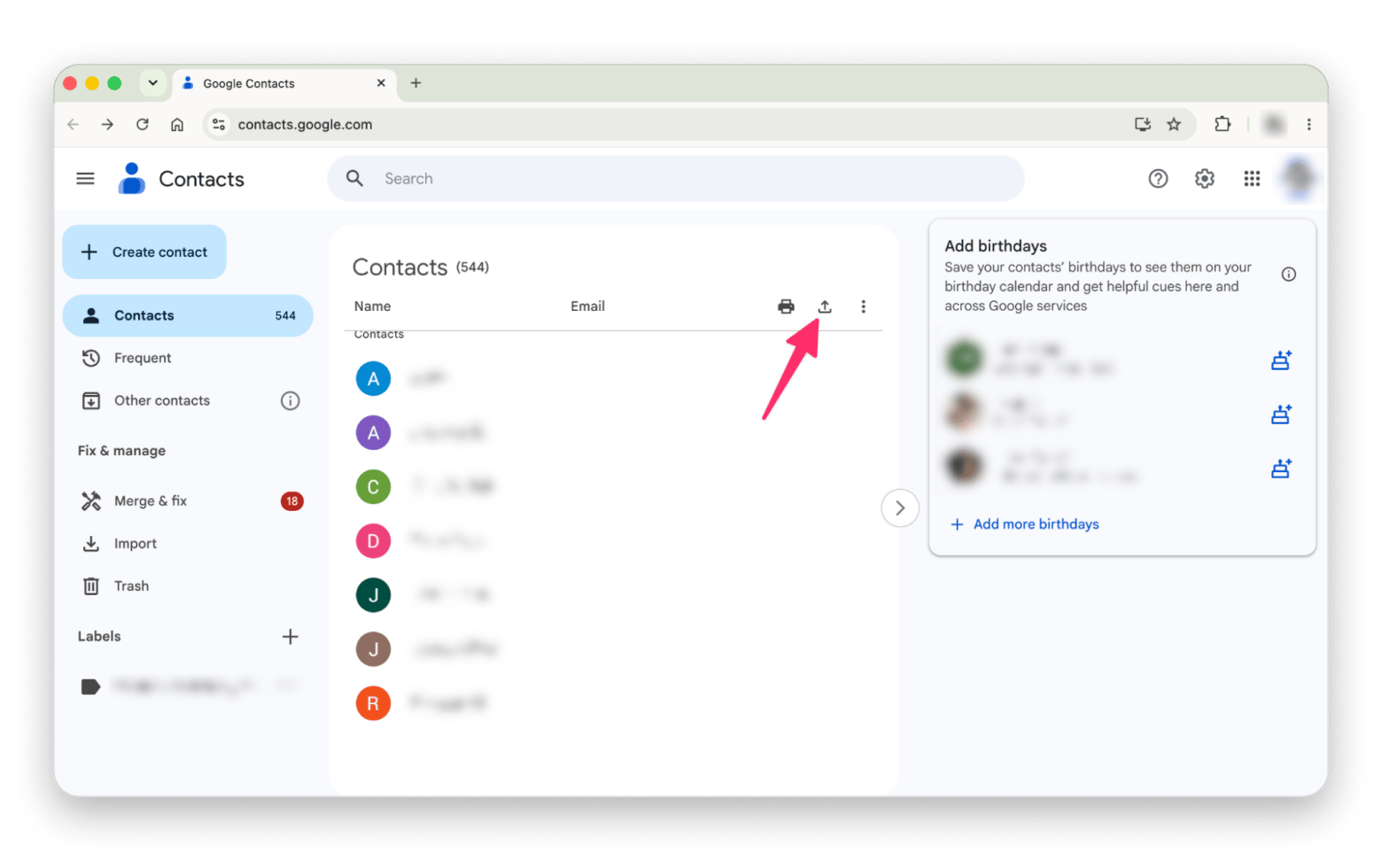
- Choose Google CSV or Outlook CSV depending on your needs.
Google's converter preserves all contact fields, including photos, notes, and custom labels. The whole process typically takes about five minutes, and you don't need to keep the contacts in Google afterward.
How to transfer contacts between iPhones in 2026
With iOS 17 and later (including the current iOS versions in 2026), Apple has optimized the phone-to-phone transfer process. The quickest method uses Quick Start during iPhone setup, but you can also transfer contacts anytime using these methods:
- AirDrop method: Select contacts in the Contacts app, tap Share, then AirDrop to the nearby iPhone.
- iCloud sync: Open Settings > Apple Account > Saved to iCloud > Enable Contacts. Do it on both devices.
- Direct cable transfer: Use a USB-C to USB-C cable (for iPhone 15 and newer) or a Lightning cable with an adapter.
For Android-to-iPhone transfers, Apple's Move to iOS app handles the entire contact migration automatically during initial setup.
Tip: Once your contacts are on your new device, you might also want to sync contacts from iPhone to Mac, so your desktop address book stays current too.
Level up contact management on Mac with Setapp
Once you have your .vcf or .csv file, you might want more sophisticated tools for managing those contacts. For that, I use Setapp. It’s basically a subscription platform that gives you access to 270+ macOS and iOS apps, all for one flat fee. It has different categories, from productivity tools and digital security toolkits to contact management apps. Here are a couple of them I find useful for managing my contacts.
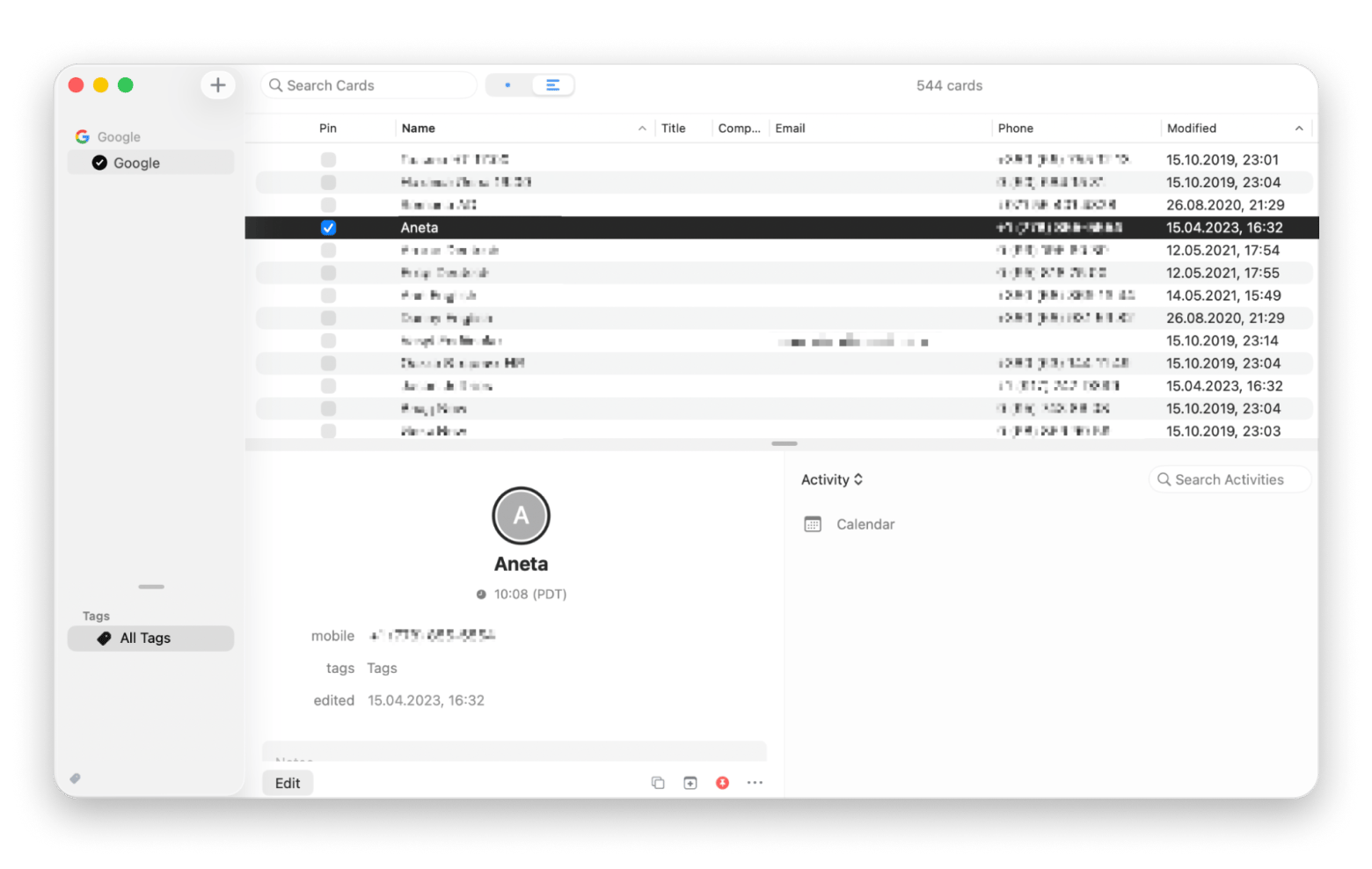
BusyContacts transforms your exported contacts into a powerful CRM system. It syncs with all major services (iCloud, Google, Exchange) and adds features like activity tracking, smart filters, and custom tags. I particularly love how it shows your complete interaction history with each contact.
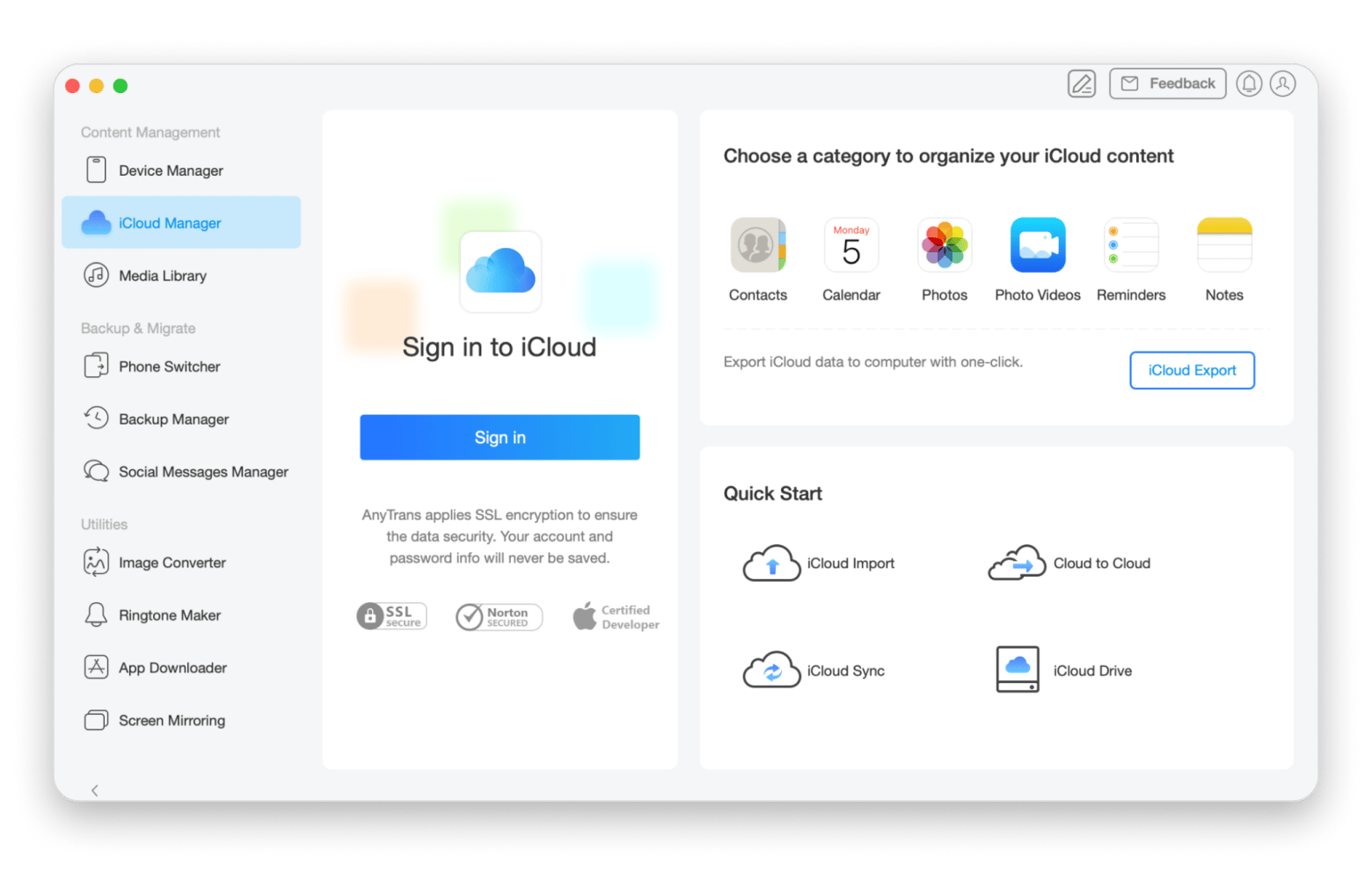
For more complex data migrations, AnyTrans for iOS offers advanced backup options. It can transfer contacts between any iOS devices, create scheduled backups, and even extract contacts from old iTunes or iCloud backups. I find it really useful if you need to restore your iPhone from a backup and want to make sure contacts survive the process. The app also supports incremental backups, saving only changed data since your last backup.
Keep your contacts safe and accessible
Exporting iPhone contacts doesn't have to be complicated. Whether you use the built-in Contacts app for quick exports or use tools like BusyContacts and AnyTrans for iOS for advanced management, your contacts stay under your control.
The apps I mentioned are available with a Setapp Membership, along with 270+ Mac and iOS apps. Start your free 7-day trial and keep your contacts under control.
FAQ
How do I export all contacts from iPhone at once?
Open the Contacts app, tap Lists, touch and hold All Contacts (or create a Smart List including everyone), then tap Export. Choose your destination. The entire contact list exports as a single vCard file. This usually takes under a minute for most users.
Can I export iPhone contacts to CSV format directly?
iPhone doesn't natively export to CSV. Export your contacts as vCard first, then use Google Contacts or BusyContacts to convert the .vcf file to CSV format. The conversion preserves all contact fields, including custom labels.
How do I transfer contacts from iPhone to Windows PC?
Sign in to iCloud.com on your Windows PC, open Contacts, select all (Control + A), click the gear icon, and choose Export vCard. Alternatively, use the iCloud for Windows app, which syncs contacts directly with Outlook.
Where do exported contacts go on iPhone?
When you export from the Contacts app and choose Save to Files, the vCard file saves to your chosen iCloud Drive or On My iPhone location. Check the Files app > Recents to find recently exported contact files.
Do exported contacts include photos?
Yes, vCard files include contact photos when exported from iPhone or iCloud. The photos are embedded in the .vcf file as base64-encoded data. Most contact management apps preserve these photos during import.
What does "export contacts" actually mean?
Exporting contacts creates a file containing all your contact information (names, numbers, emails, addresses) that you can save, share, or import into other devices and services. It's essentially creating a portable backup of your address book.






 Best solution
 Best solution