There are four easy ways to make a slideshow on Mac. Photos, Keynote, and Preview are built-in Apple apps, while Google Slides is a browser-based option great for collaboration — each suited for a different use case.
Keynote is the best choice for professional results. It gives you full control over transitions, text, charts, and audio, and lets you export your presentation as a video or PDF.
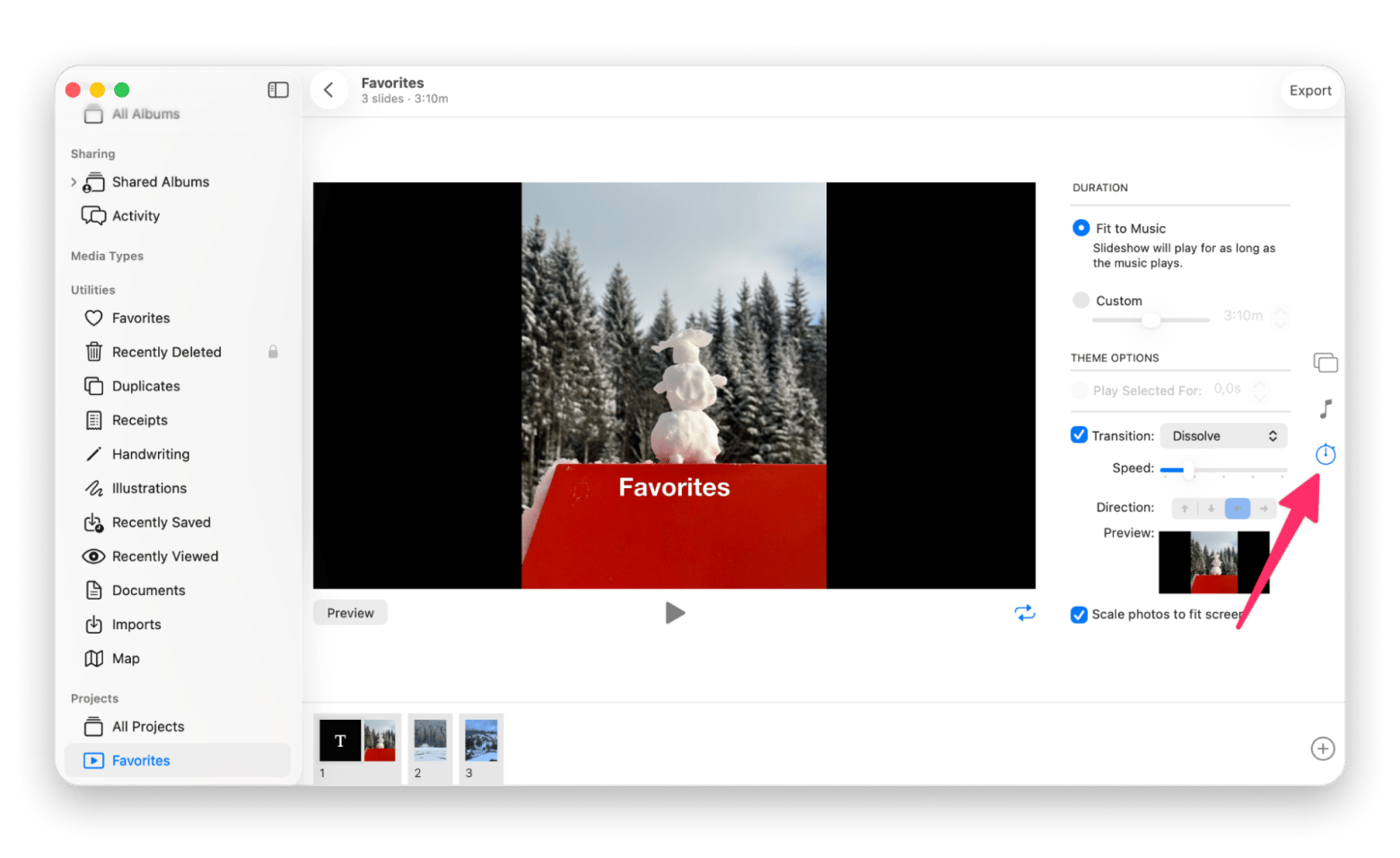
Photos is ideal for photo-heavy slideshows with music. It automatically adjusts transitions and timing based on your chosen theme, and syncs slide duration to your soundtrack with the Fit to Music option.
Preview is the fastest option for quick viewing. Select your images, press Shift + Command + F, and your slideshow starts instantly — no setup required.
Prep your media before building the slideshow. Compress images with Squash, polish video clips with CameraBag Pro, and create time-lapses with GlueMotion — all available on Setapp with a 7-day free trial.
You can create a slideshow using built-in Apple apps, like Photos, Preview, or Keynote, or Google Slides. Whether you need to prepare a fun slideshow of your vacation photos to catch up with friends or put together a work presentation, these apps will make the process surprisingly simple.
Here's a summary of the slideshow-creating apps, along with tips to help you choose the one that best fits your needs. Detailed instructions for each method below:
Method
Best for
Export options
Music support
Time to create
Photos app
Photo collections
Video file, iCloud sharing
Yes, built-in library
2–3 minutes
Keynote
Professional presentations
Video, PDF, PowerPoint
Yes, custom audio
5–10 minutes
Preview
Quick viewing
Screen display only
No
30 seconds
Google Slides
Online collaboration
Video, PDF, web link
Limited
5 minutes
Key tips for creating a slideshow
Picture slideshows work best when they're simple and focused. I've found that a few high-quality images tell a better story than dozens of random shots.
Here are my go-to tips for making slideshows more engaging:
Compress your photos first to keep file sizes manageable.
Group similar photos into collages when dealing with lower-quality images.
Add short video clips to break up static images.
Choose background music that matches the mood of your content.
The more intentional your choices are upfront, the fewer adjustments you’ll need to make once you start creating a slideshow.
How to prepare photos and videos for your slideshow
Before diving into slideshow creation, let's get your media files ready. Start by picking images that tell a coherent story. Choose the highest-quality versions available, and pick a consistent aspect ratio like 16:9 for all images. Export them all in the same format, preferably JPEG for photos.
Here are apps that help me with all the necessary preps:
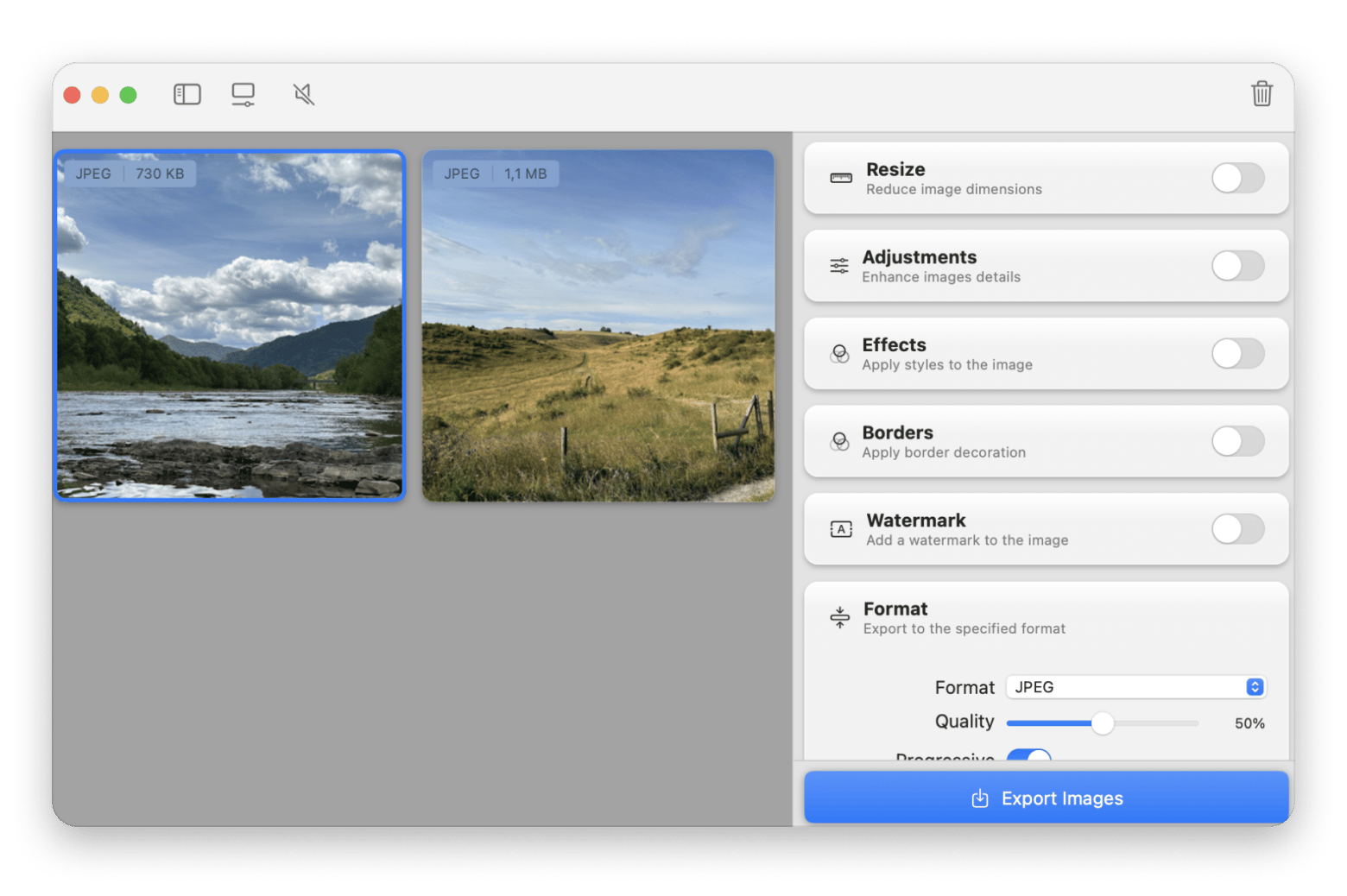
For batch processing images, my go-to choice is Squash. You just drag your photos into the app, set your compression parameters, and export optimized versions in seconds. This keeps the slideshow running smoothly without quality loss.
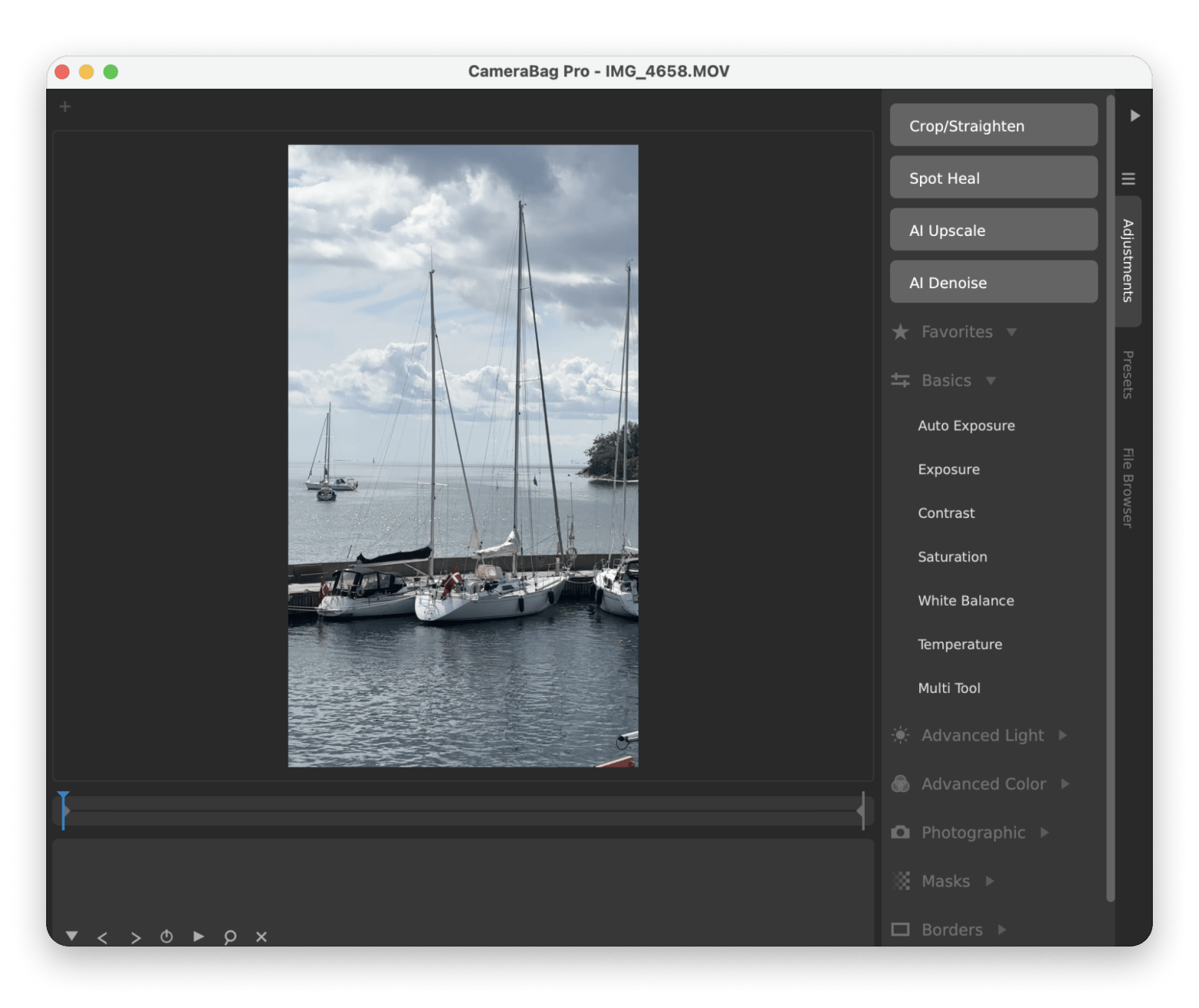
For video editing, I use CameraBag Pro. It’s easy to use, too. I drag in a video, apply effects from the sidebar, and export. In my experience, CameraBag Pro is far more approachable than tools like Premiere Pro or Final Cut, and yet the results are just as good. If the video clips are too large after editing, here's how to compress video on Mac without losing quality.
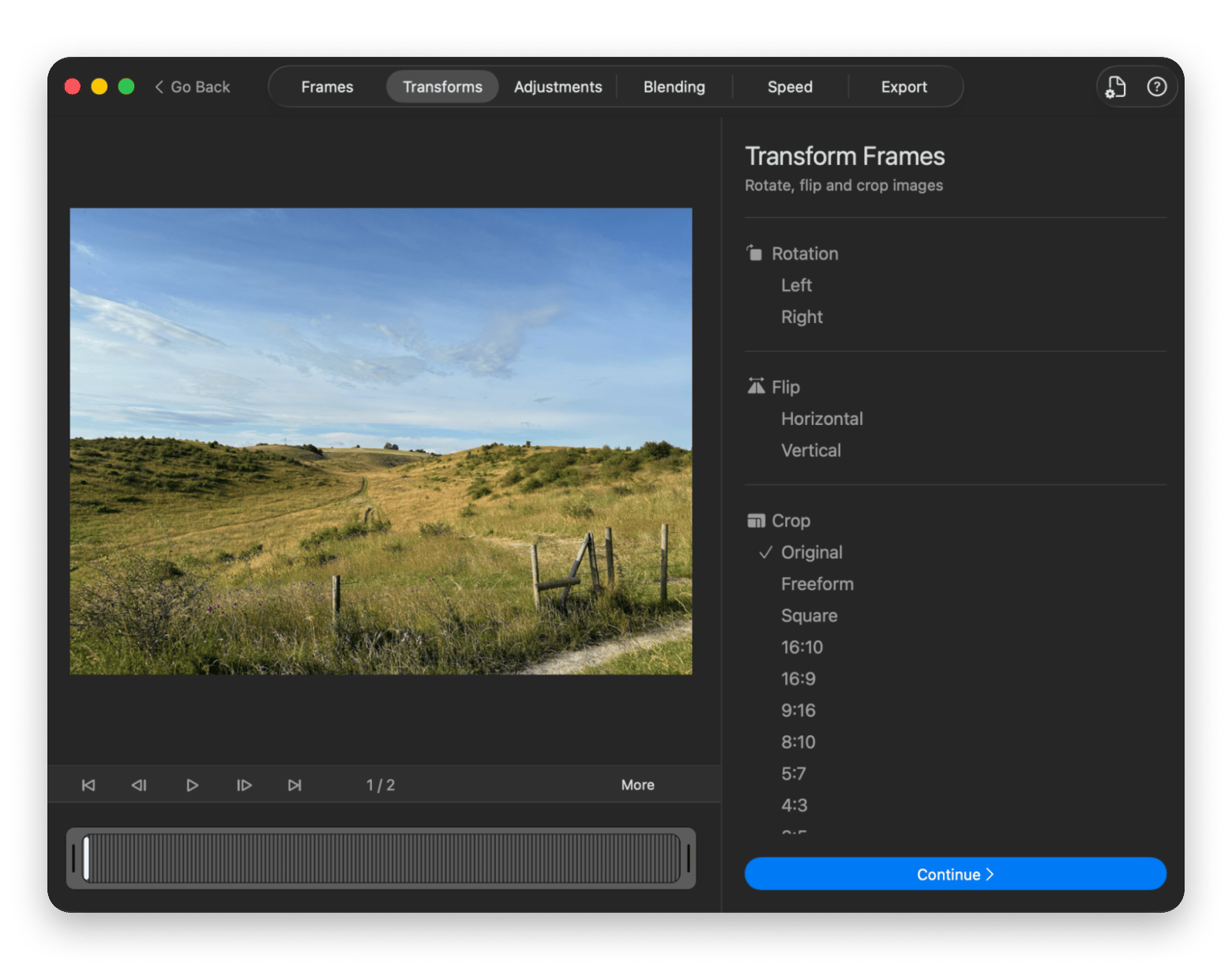
Sometimes I need to create time-lapses for a presentation, and they can be tricky due to lighting changes and uneven framing. GlueMotion helps deal with it easily. Just like the other apps I mentioned, you don’t have to rack your brain to use it — open a folder of time-lapse images in the app and let it handle the technical details automatically.
I won't lie, before I found these apps, media prep was the part I always dreaded most. Now I knock it out in minutes and move on to the fun part.
How to create a slideshow in Keynote
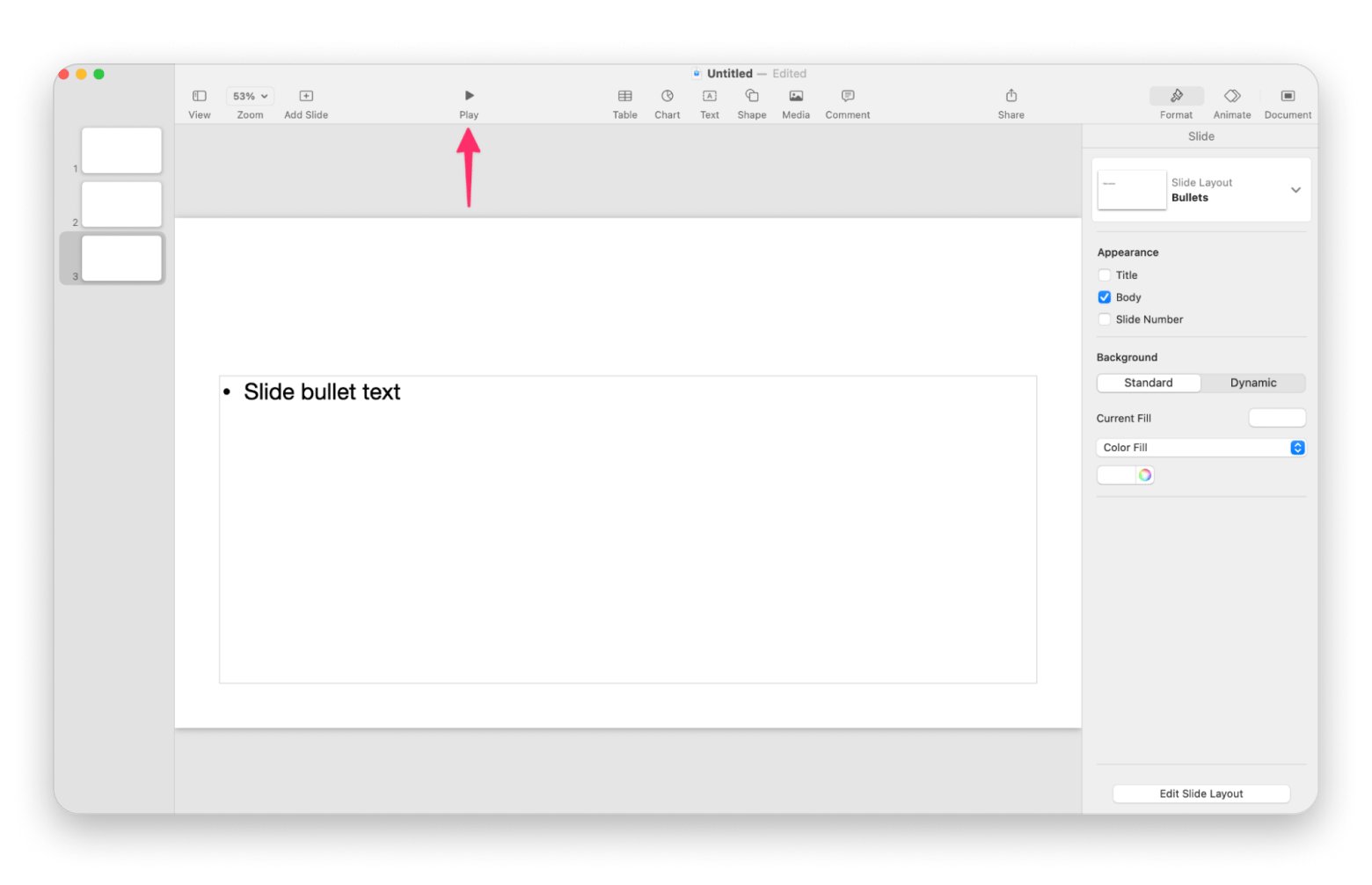
Quickest route: Open Keynote, add slides with your images, choose transitions, and hit Play.
Keynote remains my favorite for creating polished slideshows. This free app from Apple makes professional presentations accessible to everyone.
Here's how to build your slideshow:
1. Open Keynote > Click New Document.
2. Choose a theme > Click Create in the bottom-right corner.
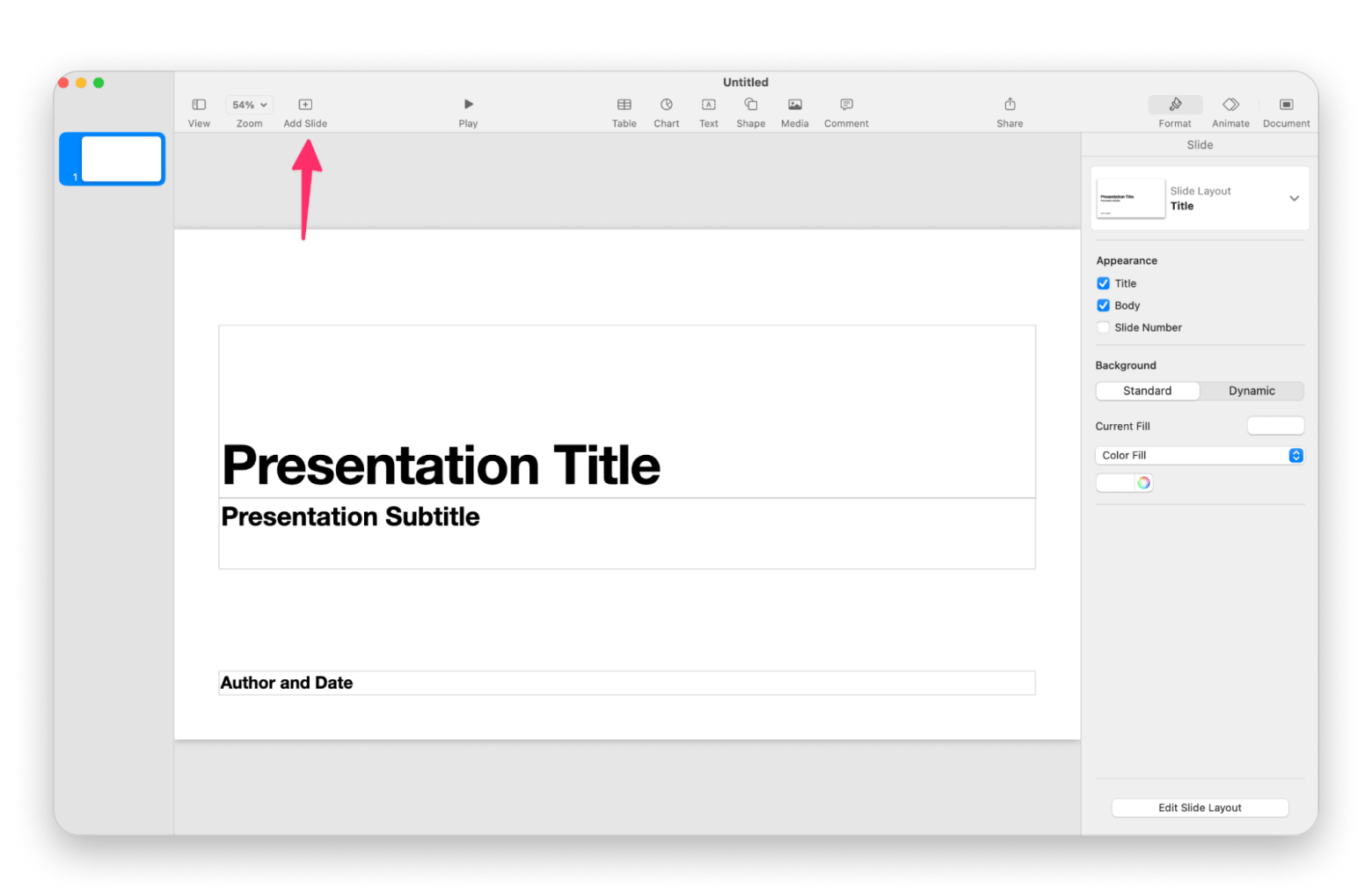
3. Add new slides using the Add Slide button.
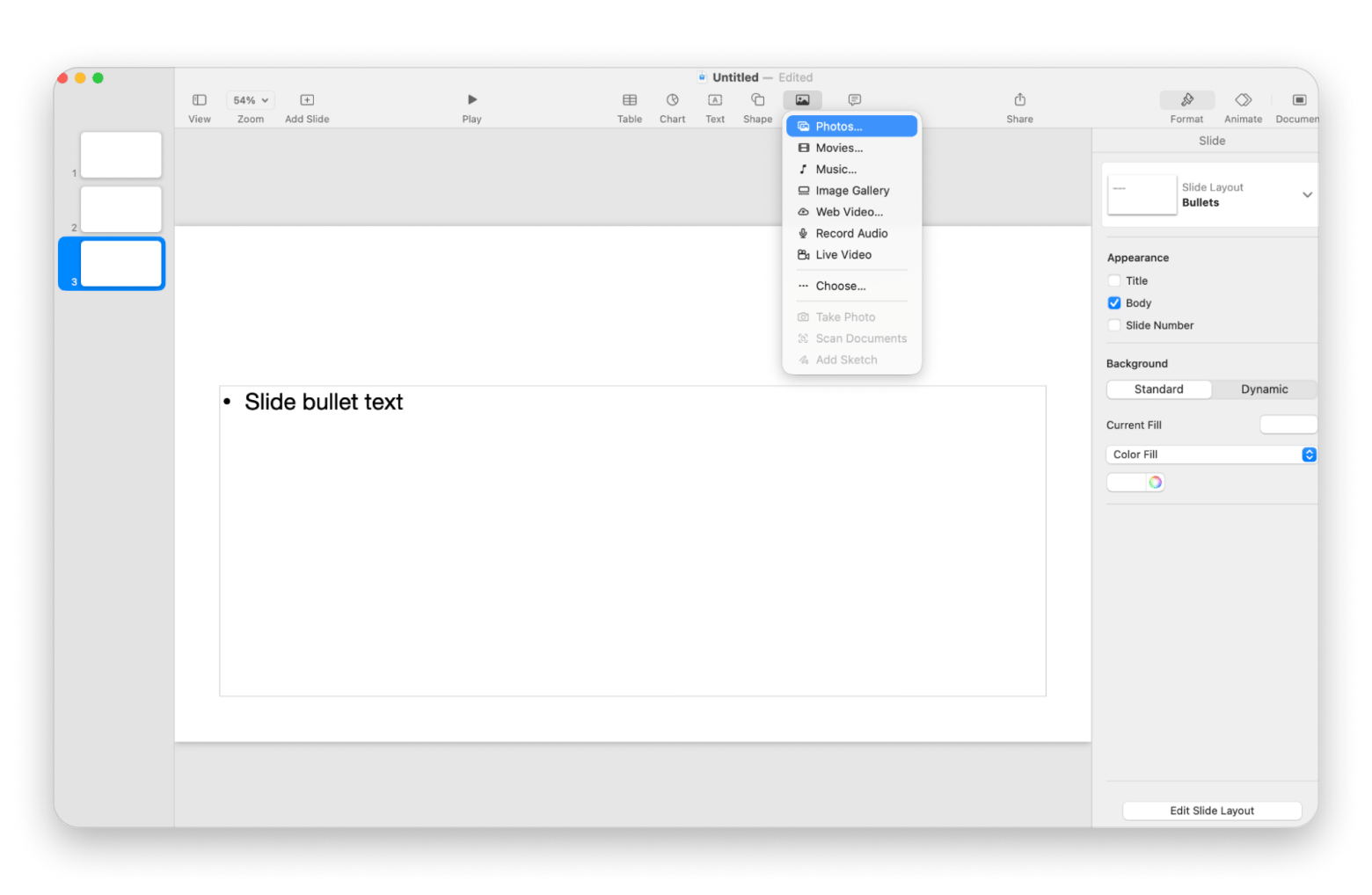
4. Insert photos by clicking Media > Photos.
5. Insert videos through Media > Movies.
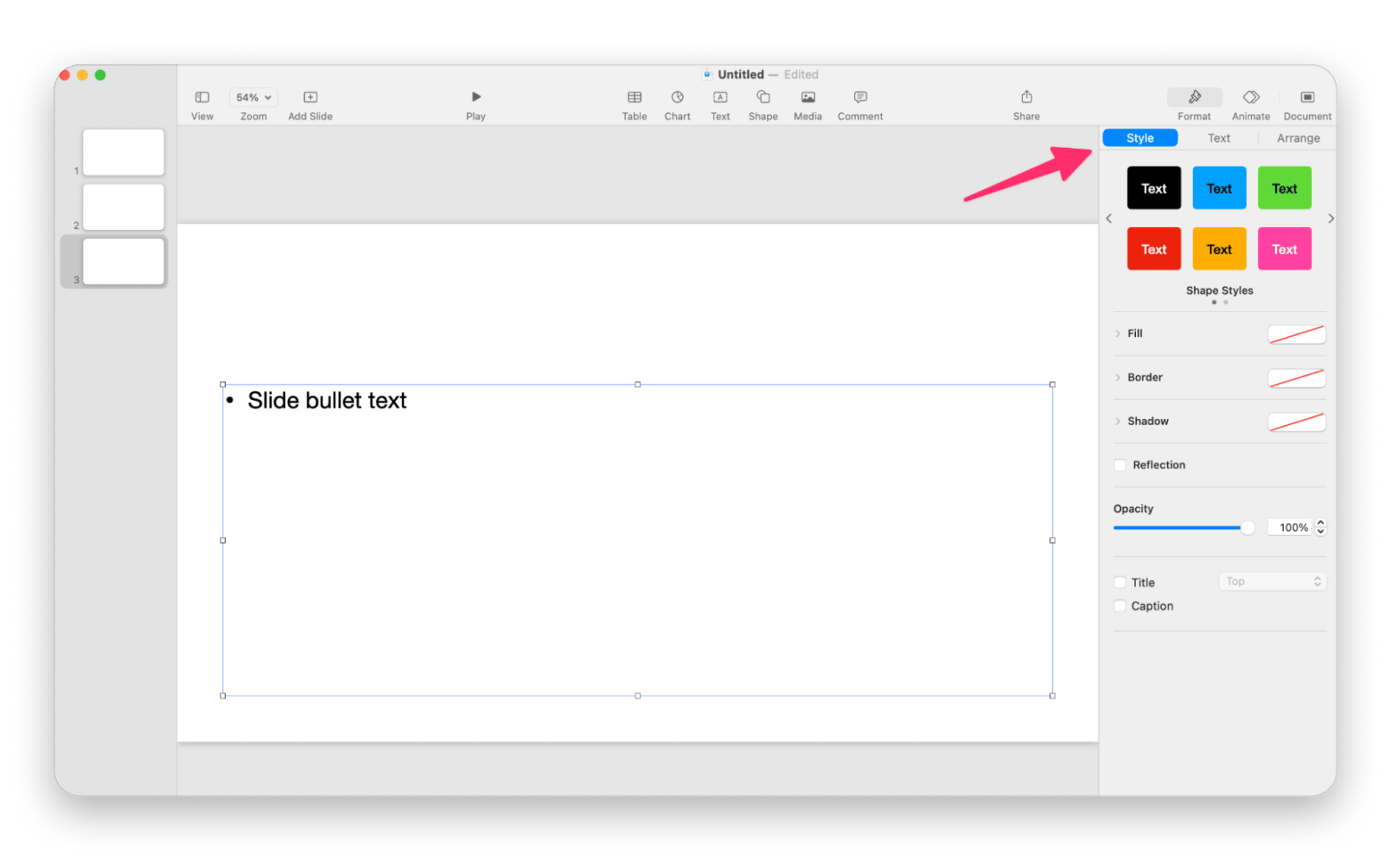
6. Add text by clicking the Text button and choosing a style.
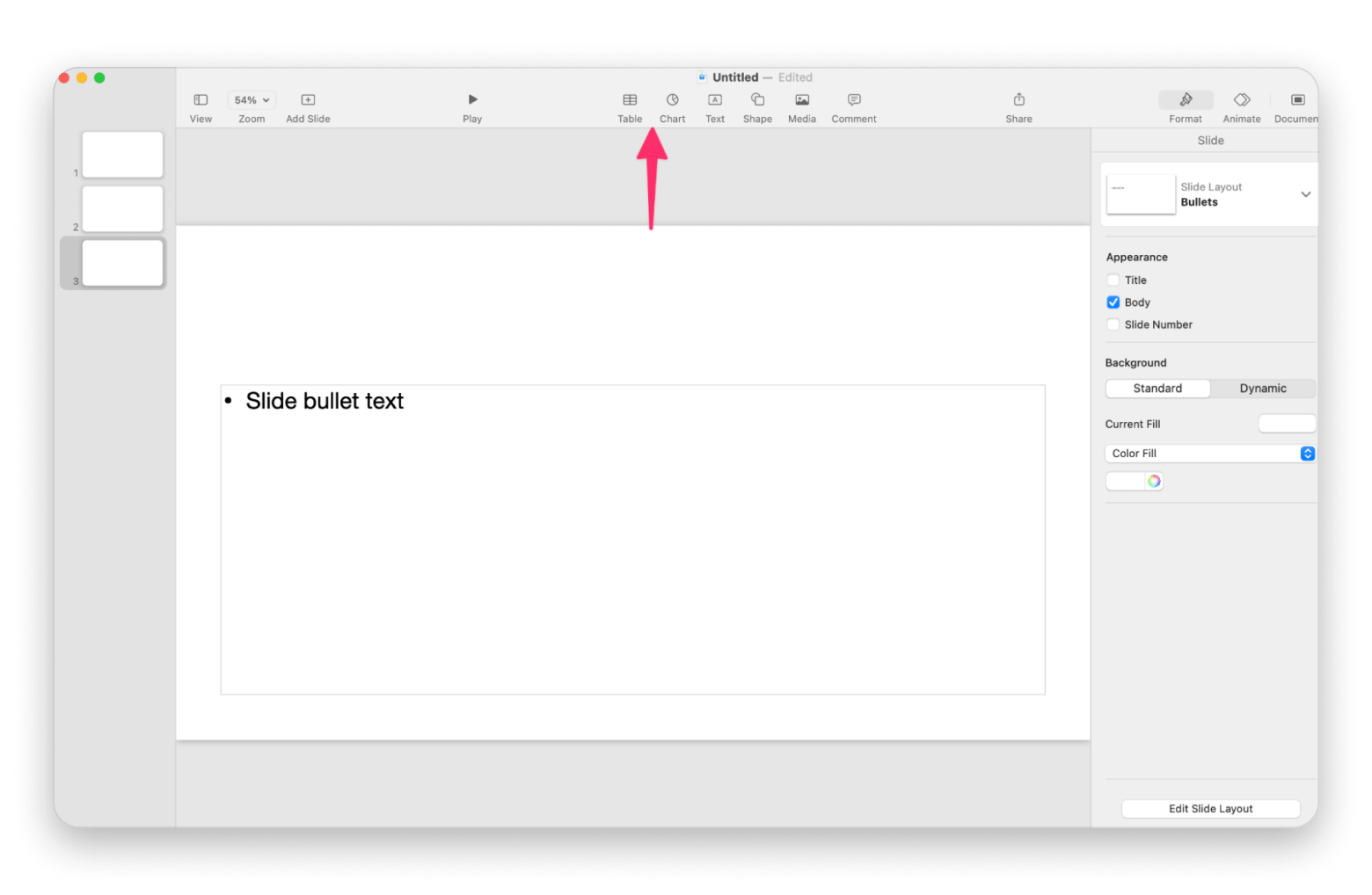
7. Add charts or tables from the toolbar if needed.
8. To present, choose Play > Play Slideshow (Option + Command + P).
9. Export as a video via File > Export To > Movie.
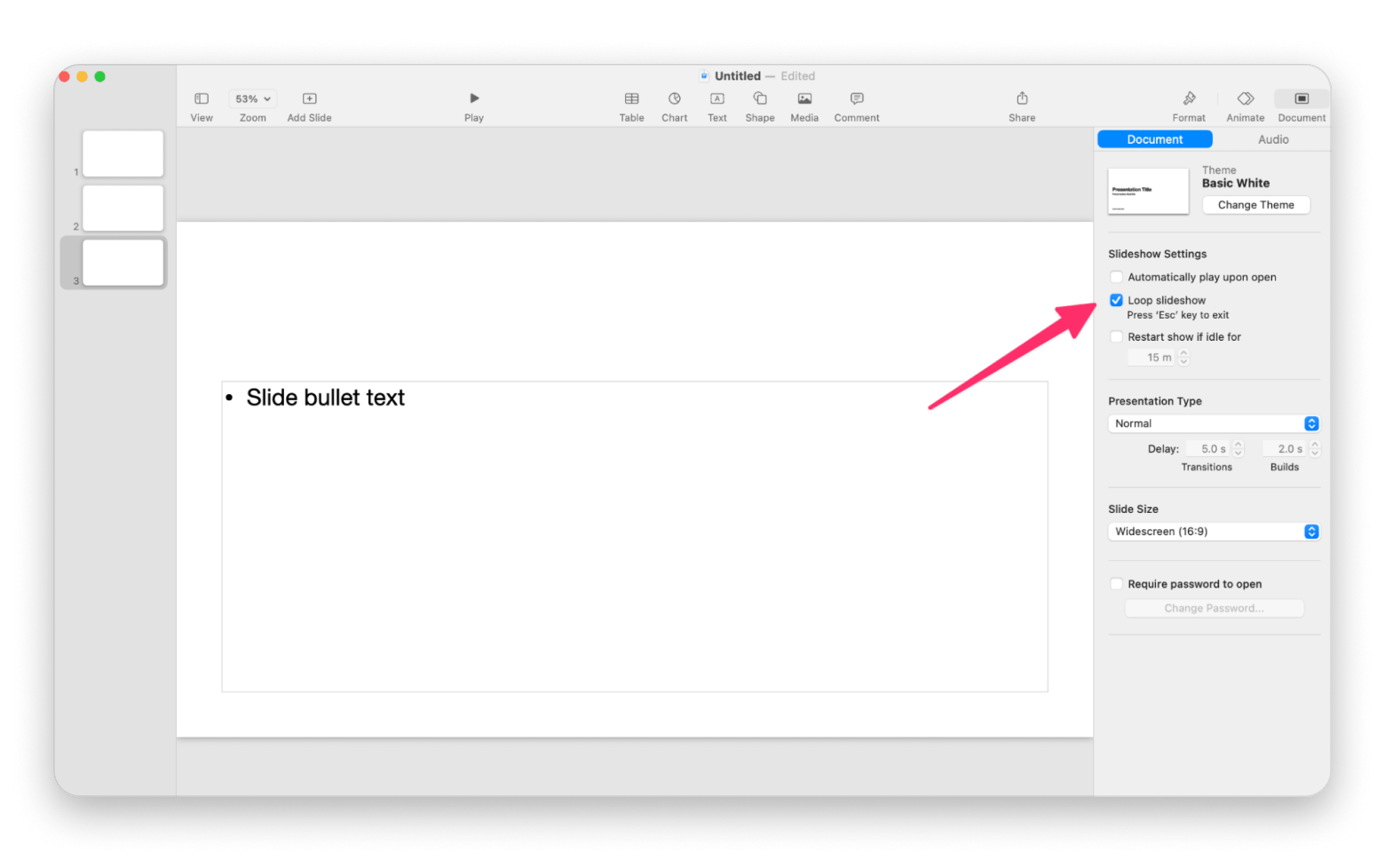
For continuous playback, check Loop slideshow in Document settings. This turns your presentation into an automatic slideshow perfect for displays or events.
How to create a slideshow in Photos
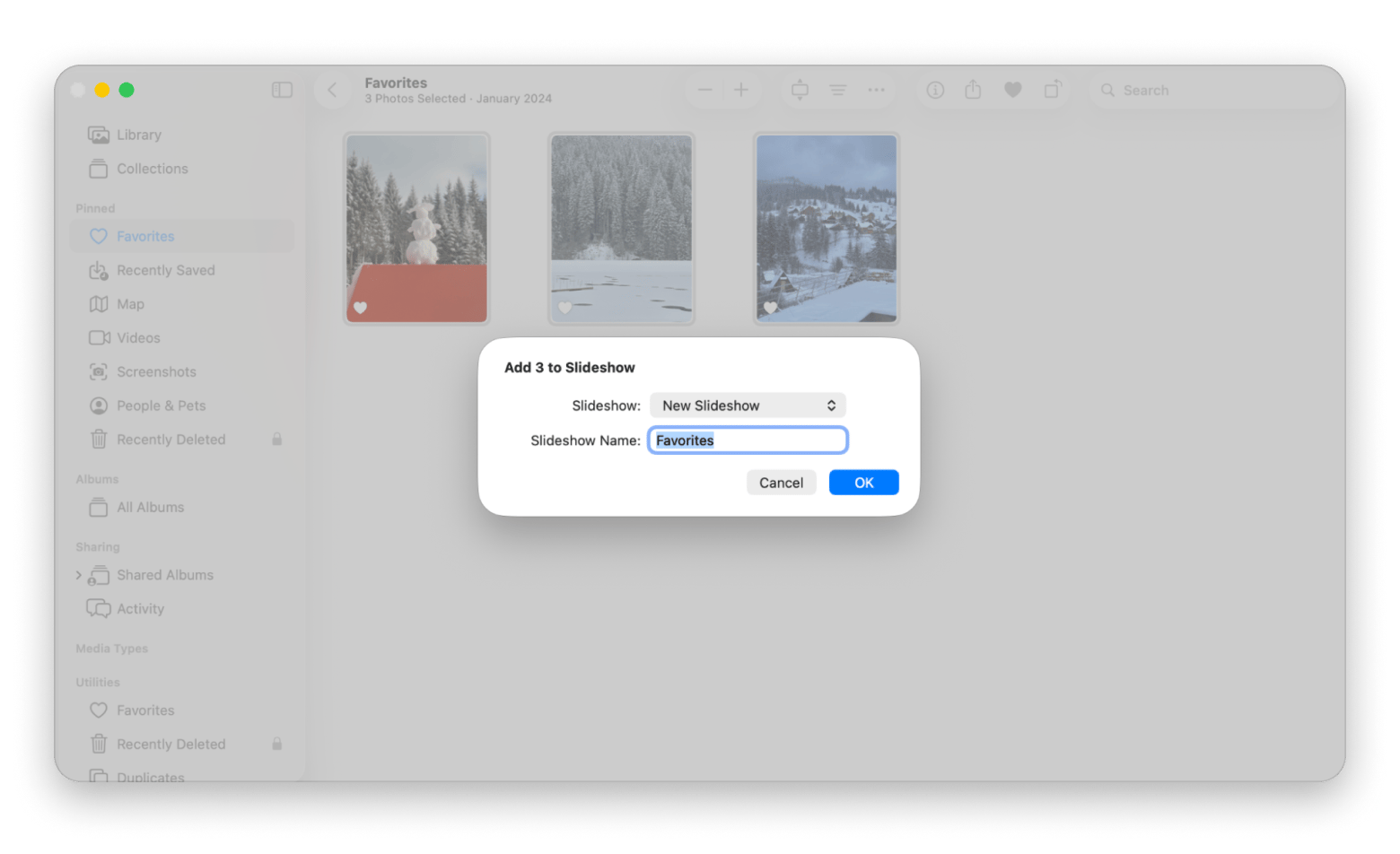
Quickest route: Open Photos, choose your pictures, choose File > Create > Slideshow > Photos, click New Slideshow, name it, and hit Play.
The Photos app is actually a surprisingly capable choice for photo-heavy slideshows. It keeps your library tidy with albums and syncs everything with iCloud so you can view the slideshow on any device.
To create a quick slideshow:
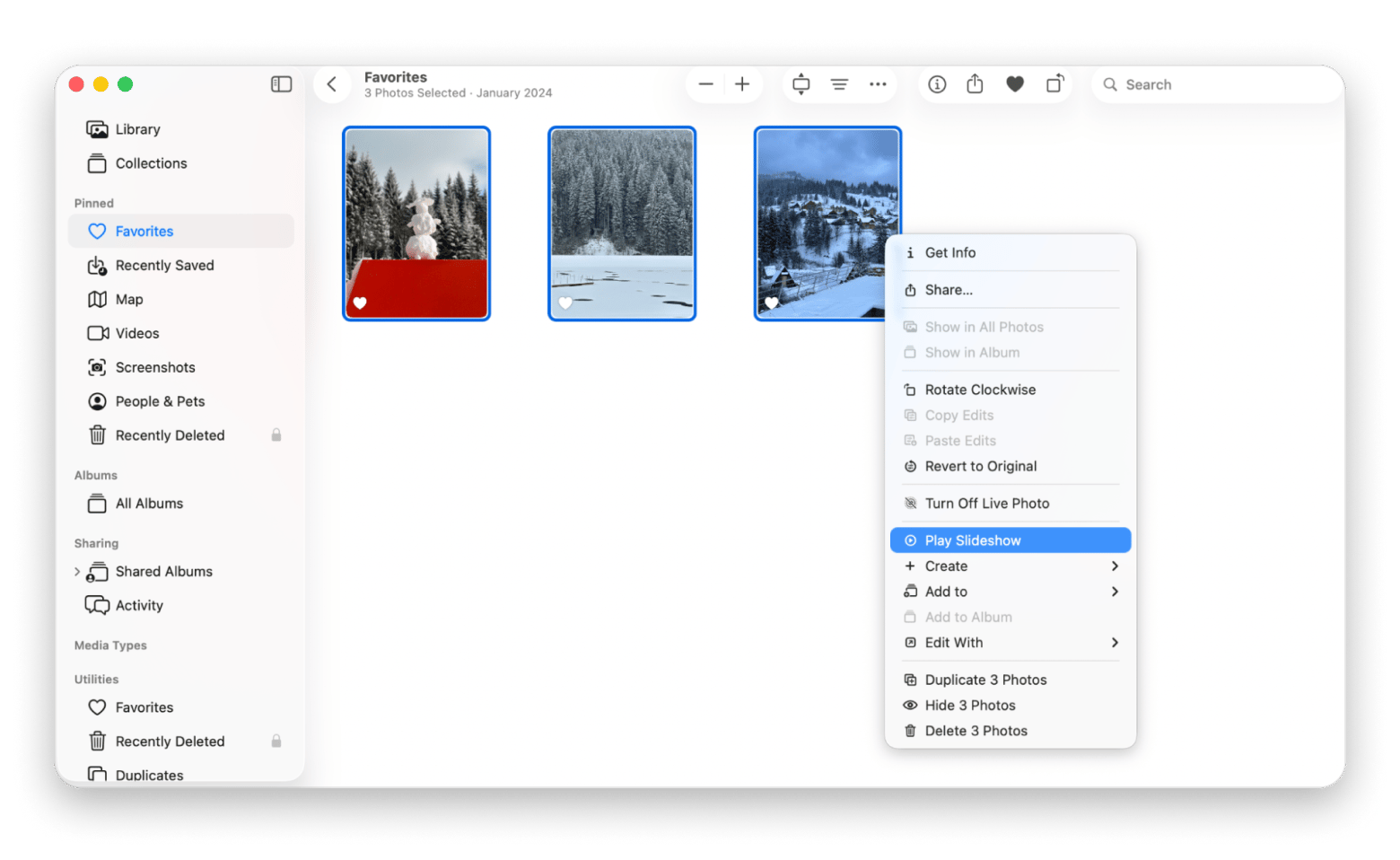
Choose multiple photos or albums.
Right-click and pick Play Slideshow.
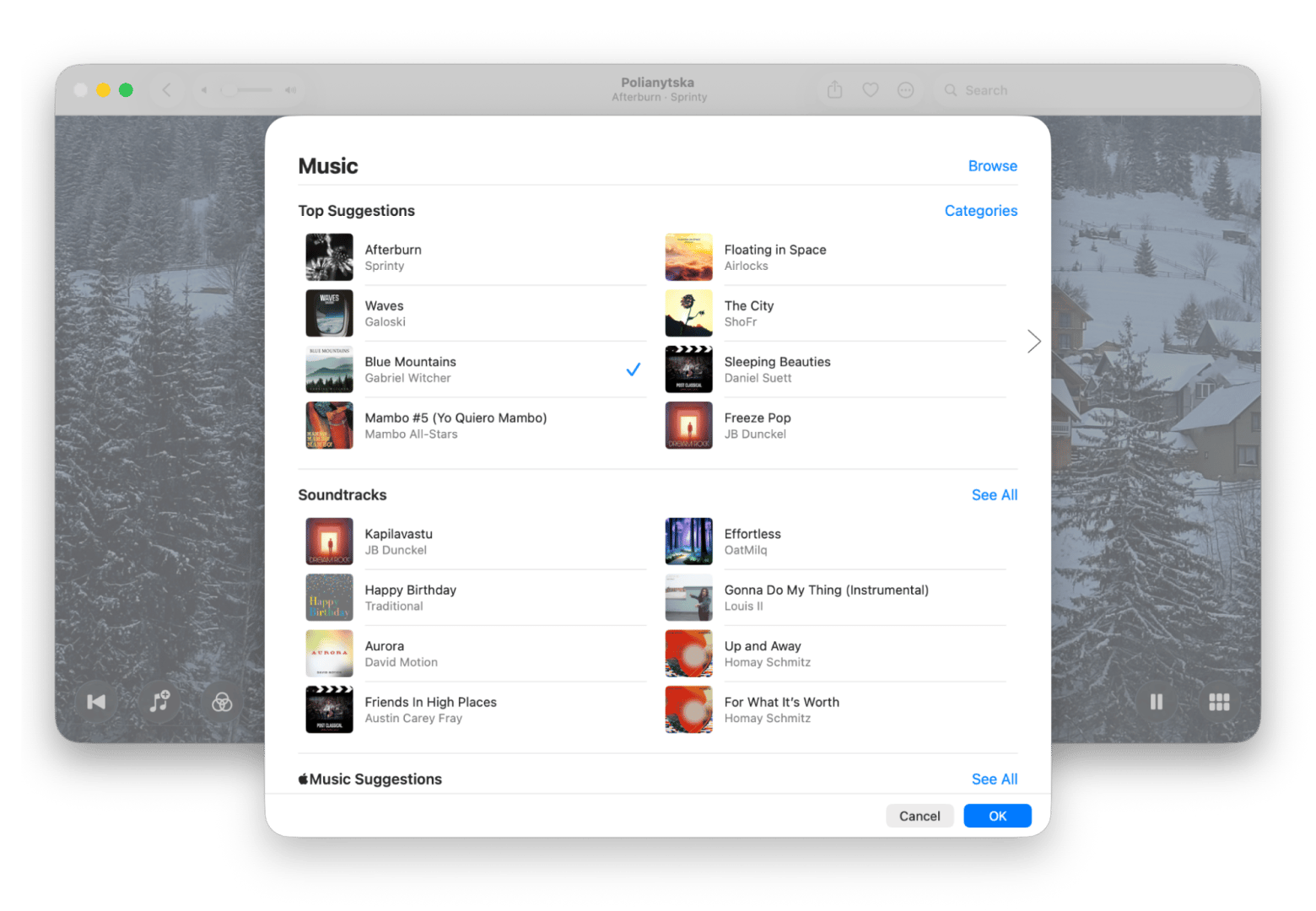
3. To change the music, click the music icon in the bottom-left corner.
For a custom slideshow project:
Choose your photos or albums.
Go to File > Create > Slideshow > Photos.
Click New Slideshow and name your project.
4. Arrange photos in your preferred sequence.
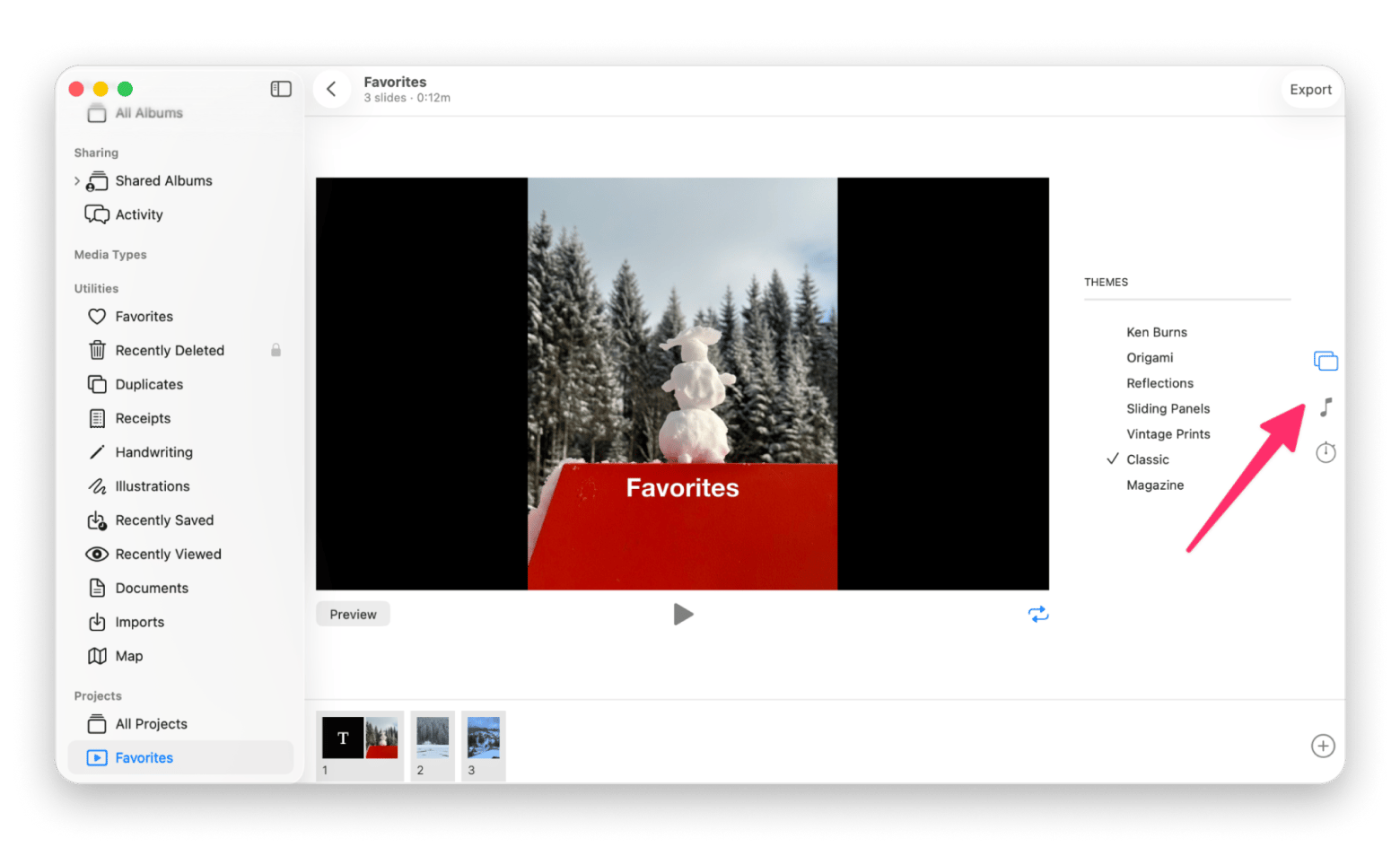
5. Add music from the Music tab and choose a theme.
6. Choose "Fit to Music" for automatic timing or set custom durations.
Photos automatically adjusts transitions and timing based on your chosen theme. Personally, I like the Ken Burns effect, as it adds subtle motion to still images, keeping viewers engaged.
How to create a slideshow in Preview
Quickest route: Open Preview, choose the images, and start a slideshow through the View menu.
Preview offers the fastest way to view images as a slideshow. No fancy features, just your photos displayed full-screen.
Here's the process:
Open Preview.
Go to File > Open.
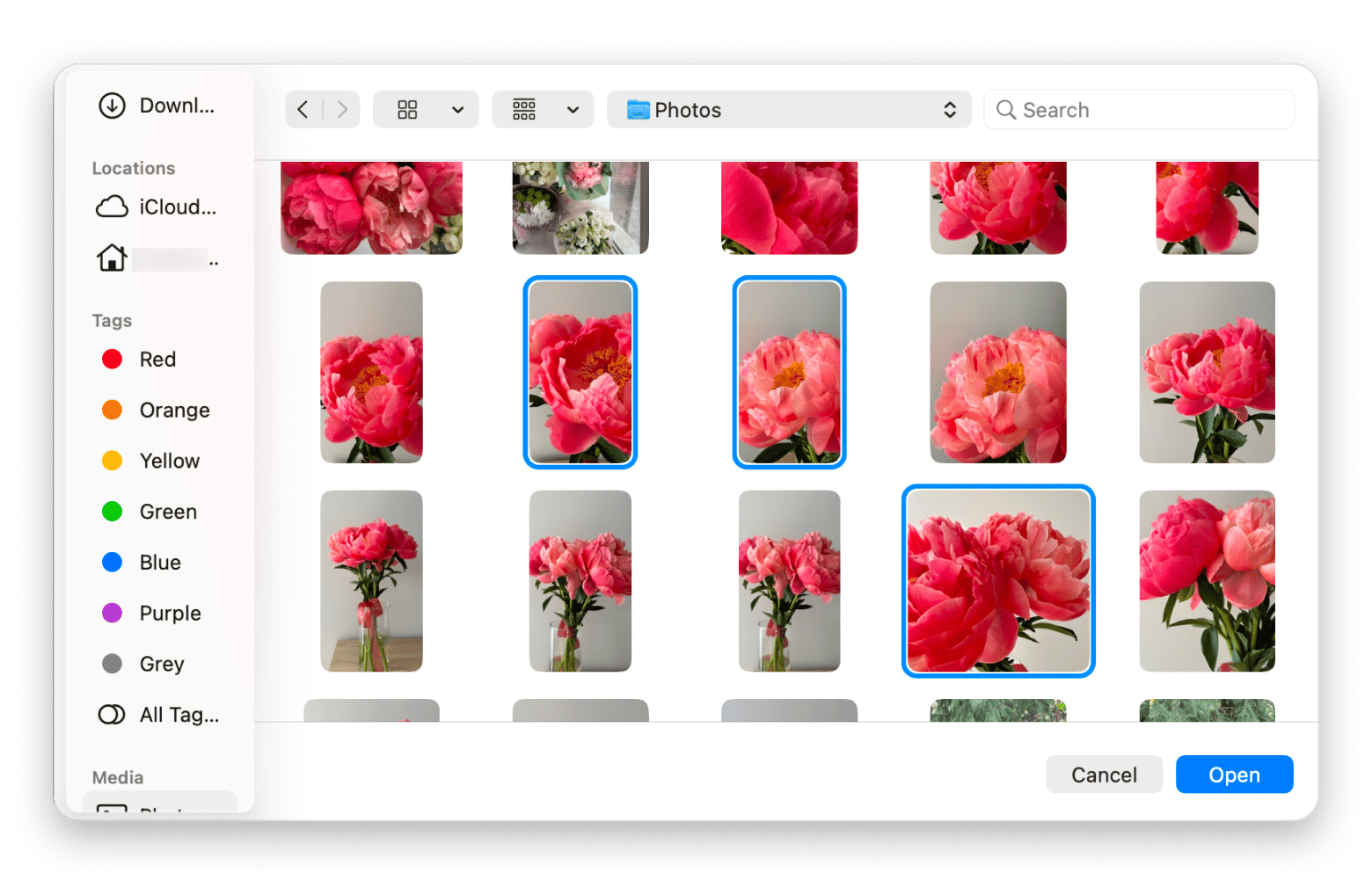
Choose your images > Click Open in the bottom-right corner.
4. Click View > Slideshow (Shift + Command + F).
That's all there is to it. Preview cycles through your images automatically, perfect for quick reviews or casual viewing.
How to create a slideshow online
Google Slides is a handy complement to your Mac workflow when you need easy sharing or collaboration. It works similarly to Keynote but lives in your browser.
To create a slideshow in Google Slides:
Open Google Slides and create a new presentation.
Add images using Insert > Image.
Include text with Insert > Text box.
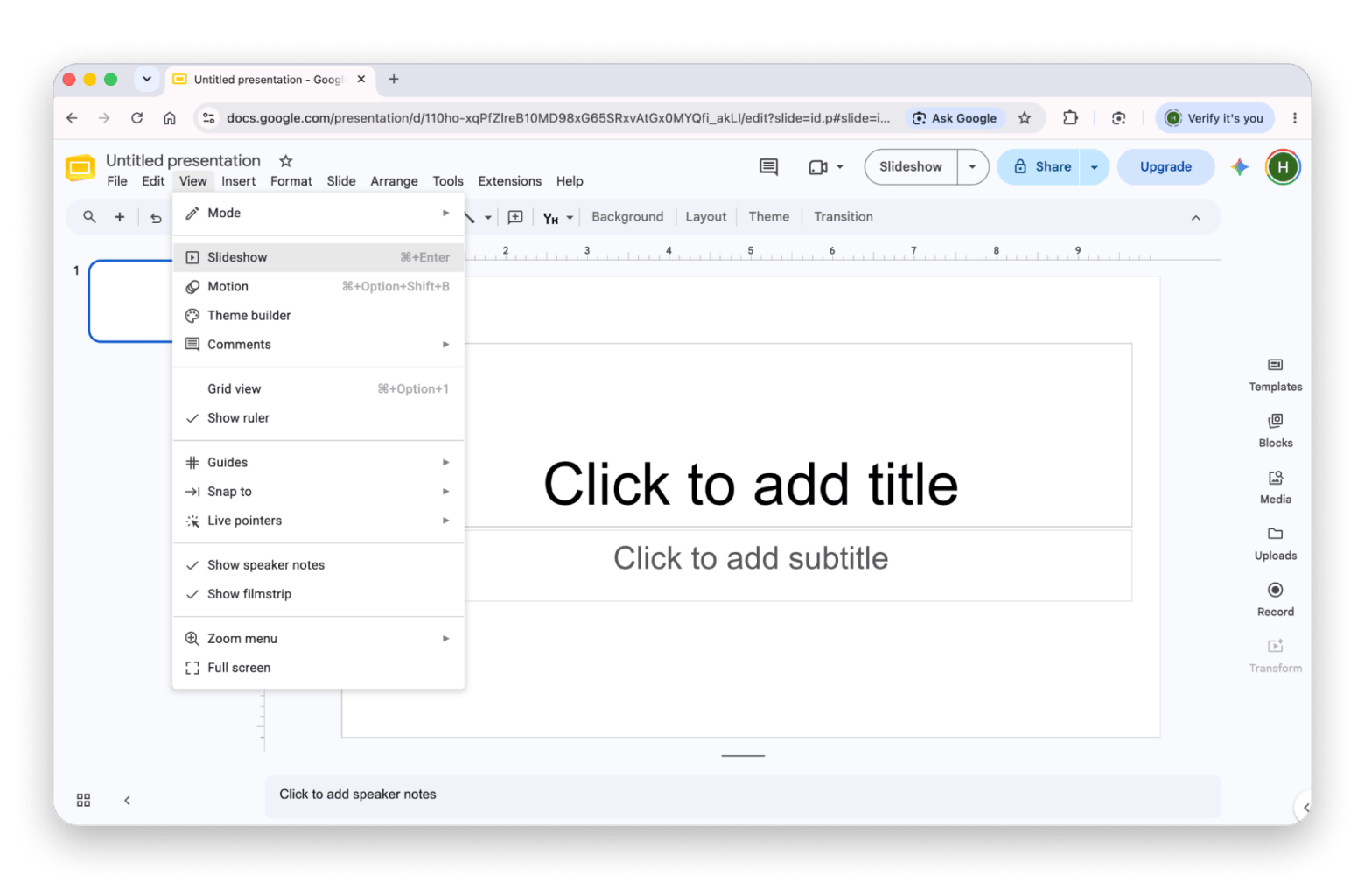
Present using View > Slideshow (Command + Enter).
You can share a link, so others can view your slideshow anytime. The collaborative features let multiple people work on the same presentation at the same time.
Best slideshow makers for Mac
Here's a quick recap of the best tools for each task:
Keynote gives you the most control for professional presentations.
Photos excels at photo slideshows with built-in music and themes.
Preview works great for instant viewing without any setup.
Google Slides handles online sharing and collaboration.
If you want to go beyond the basics, check out this roundup of the best presentation tools for Mac, from AI-powered decks to whiteboard apps.
Making your slideshows stand out
The key to a great slideshow is matching your tools and style to your audience. Business presentations call for clean transitions and minimal effects — Keynote handles this best. For family photo slideshows, feel free to lean into music, themes, and more playful effects in Photos.
The faster your media prep goes, the sooner you get to the creative part. All three media prep apps I mentioned — Squash, CameraBag Pro, and GlueMotion — are available on Setapp. One subscription gives you access to 270+ high-quality apps for Mac and iOS, with a free 7-day trial to get started. Start your free trial today.
FAQ
Can I add videos to my slideshow?
Yes. In Photos, select one or more videos along with your photos before creating the slideshow. Note that Photos might trim videos based on your theme. Edit clips beforehand with CameraBag Pro for precise control.
Can I add text to my slides?
Yes, multiple apps support text. Keynote offers full text formatting options. Google Slides provides similar text tools. In Preview, click Tools > Annotate > Text to add text overlays to individual images before starting your slideshow.
How can I delete slideshows?
In Photos, find your slideshow under All Projects in the sidebar. Right-click it and choose Delete. For exported video files, move them to Trash from their saved location on your Mac.
What's the easiest way to start a photo slideshow on Mac?
Open Photos and press Command + A to select all photos. Right-click and choose Play Slideshow. Alternatively, choose images in Preview and press Shift + Command + F for instant playback.
Can I add music to my slideshow on Mac?
Yes. In Photos, click the Music tab when creating a slideshow and choose from your music library. In Keynote, add audio through the Audio pane in Document settings. Both apps let you sync slide timing to your soundtrack.
How do I export or share my slideshow as a video?
In Keynote, choose File > Export To > Movie and select your quality settings. In Photos, go to File > Export > Export Slideshow and choose your resolution. Both create video files you can share via email or upload online.






 Best solution
 Best solution

 3. To change the music, click the music icon in the bottom-left corner.