Cellular not working right? Run a speed test before you troubleshoot
CleanMy®Phone measures download speed, ping, and IP info and tells you whether your connection is ready for video calls, gaming, or messaging. Available on Setapp.
Check the basics first. Most cellular data problems come from Airplane Mode, a disabled Cellular Data toggle, or Data Roaming settings. Check Control Center and Settings > Cellular before trying anything else.
Restart, then reset network settings. A restart clears temporary glitches. If that doesn’t work, reset network settings to remove saved Wi-Fi networks, cellular settings, and VPN or APN settings without affecting your photos or apps.
Inspect your SIM and install updates. Reseat a physical SIM card or toggle your eSIM line off and on. Also install any carrier settings and iOS updates, which often fix connection issues.
Back up before a factory reset. Erase All Content and Settings is the last software fix, so save your data first with AnyTrans for iOS. If you still see No Service, contact your carrier or Apple Support.
When your iPhone cellular data isn’t working, the quickest fixes are to make sure Cellular Data is on, toggle Airplane Mode, and restart your device. If that doesn’t help, I’ll show you how to handle SIM, carrier, and network settings issues.
As someone who depends on cellular data for work, I understand the challenges you might be facing. Before we get into the details, here’s a quick cheat sheet I use to figure out which fix to try first:
What you’re seeing
What it usually means
What to do
Cellular Data icon is gray or off
Cellular Data was turned off by accident
Turn on Cellular Data in Control Center or Settings > Cellular
Data feels slow or unstable
Weak signal or a network issue
Check your download speed, upload speed, and ping with CleanMy®Phone from Setapp
No Service after a signal drop
The connection to the carrier network is stuck
Turn Airplane Mode on, wait 10 seconds, then turn it off
No data while traveling abroad
Your iPhone can’t join a partner network
Turn on Data Roaming and check your plan for extra charges
Data stopped for no clear reason
A temporary system glitch
Restart your device, then reset network settings if needed
No Service after dropping your phone or removing the SIM tray
A damaged or loose SIM card
Reinsert the physical SIM, or turn your eSIM line off and on
Data broke after an update
Outdated carrier settings or an iOS bug
Install the latest carrier settings and iOS updates
It sounds obvious, but you can easily toggle cellular data off by accident. This is always worth checking first.
To check your device’s cellular data status:
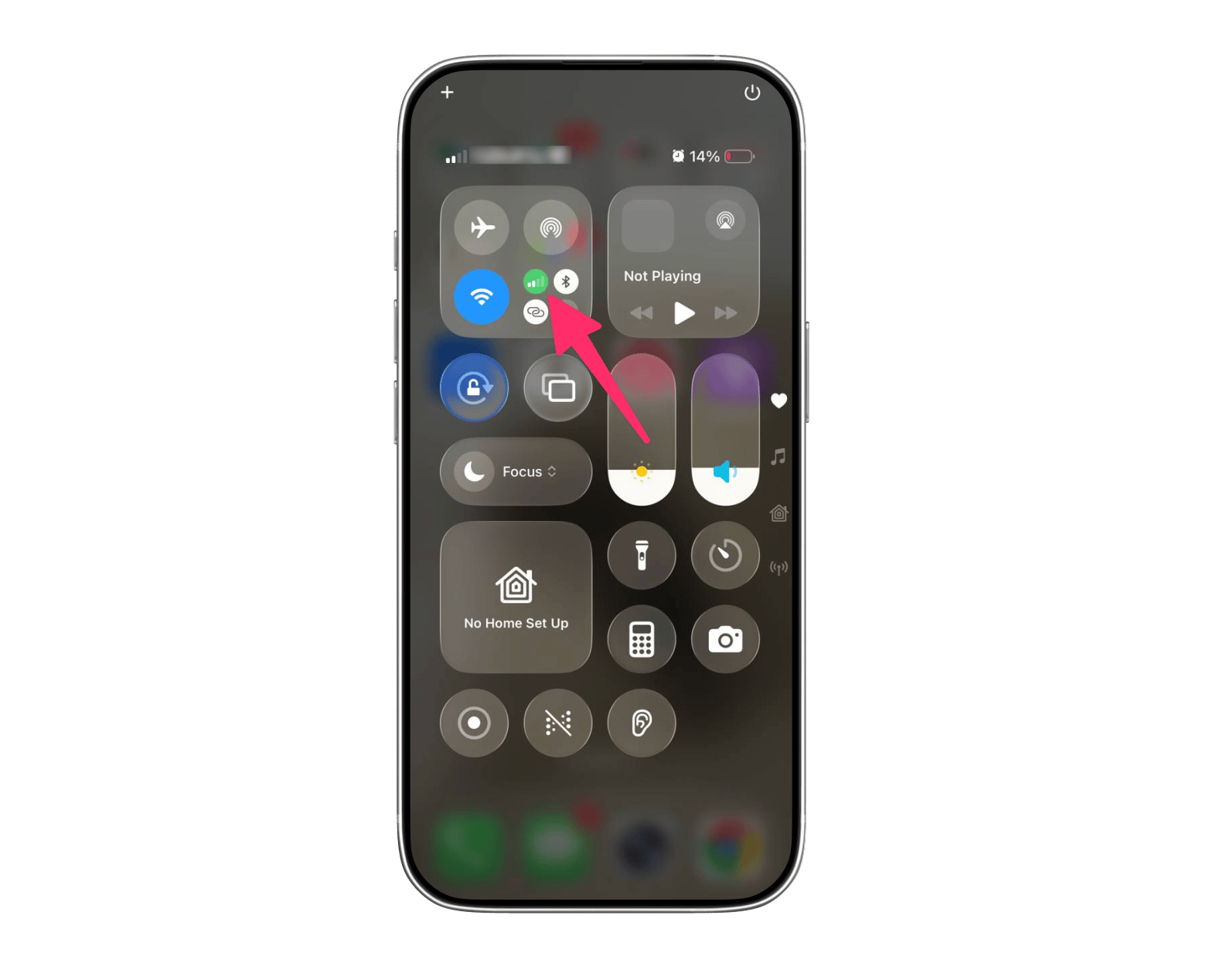
Swipe down from the top-right corner to open Control Center.
Look for the Cellular Data icon, which should be green.
Tap the icon to turn on cellular data if it’s off.
Alternatively, go to Settings > Cellular > Cellular Data and check whether it’s turned on.
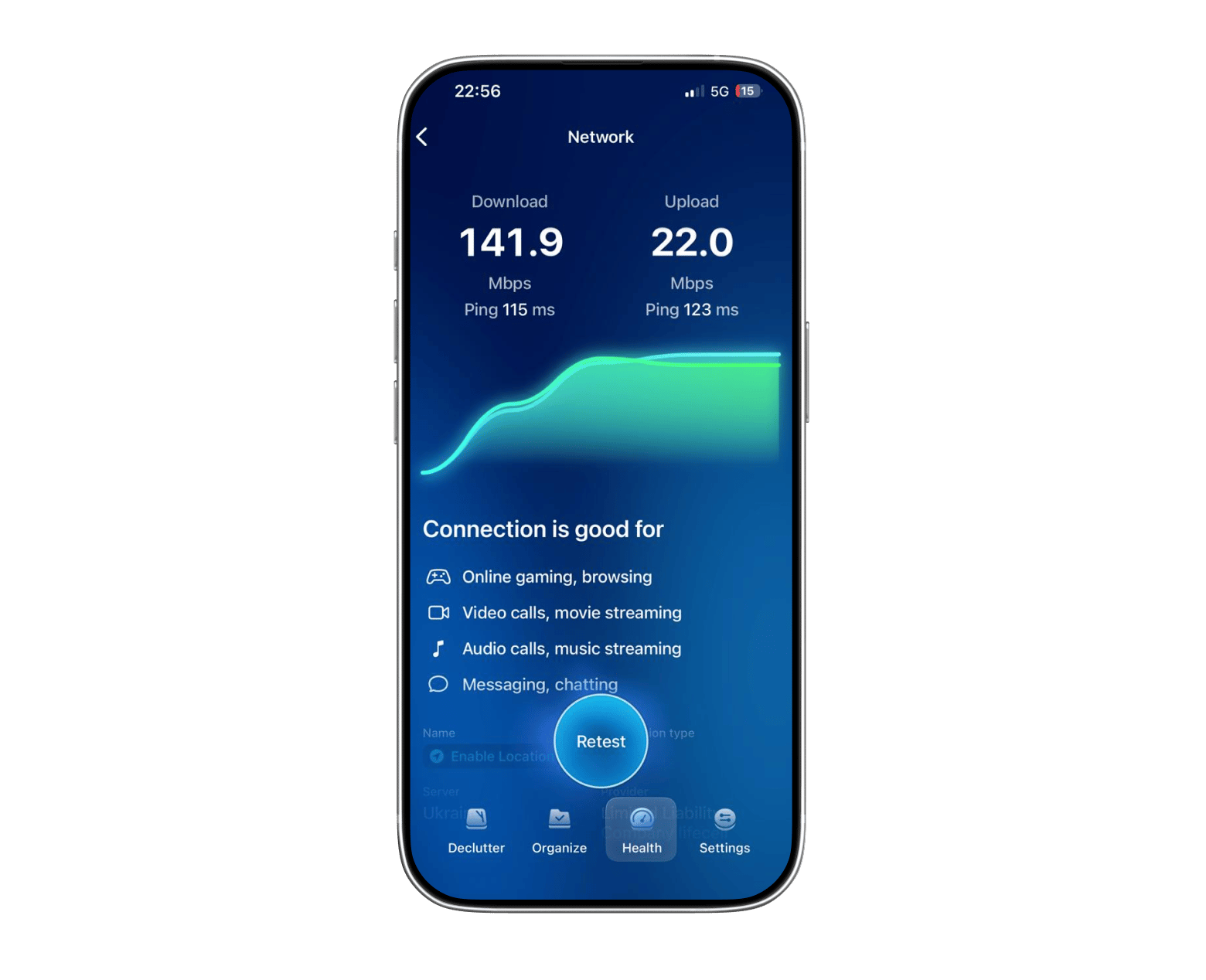
To test my internet speed, I use CleanMy®Phone. The app includes a helpful Network tool that provides information about your download and upload speeds, ping time, IP address, connection type, and service provider. Based on the results, it recommends whether your connection is suitable for activities such as online gaming, video calls, messaging, and more.
Another feature I appreciate about CleanMy®Phone is its Declutter tool, which scans your iPhone or iPad gallery to identify and remove duplicates, blurry photos, and screenshots. Give it a try. I promise you’ll love it.
Fix 2. Toggle Airplane Mode
Airplane Mode disconnects your device from the cellular network. Wi-Fi and Bluetooth may remain available if you’ve previously turned them back on while using Airplane Mode.
If your cellular service is not working, check whether Airplane Mode is on. Otherwise, toggle it on and off to force your device to reconnect to the cellular network.
Here’s how:
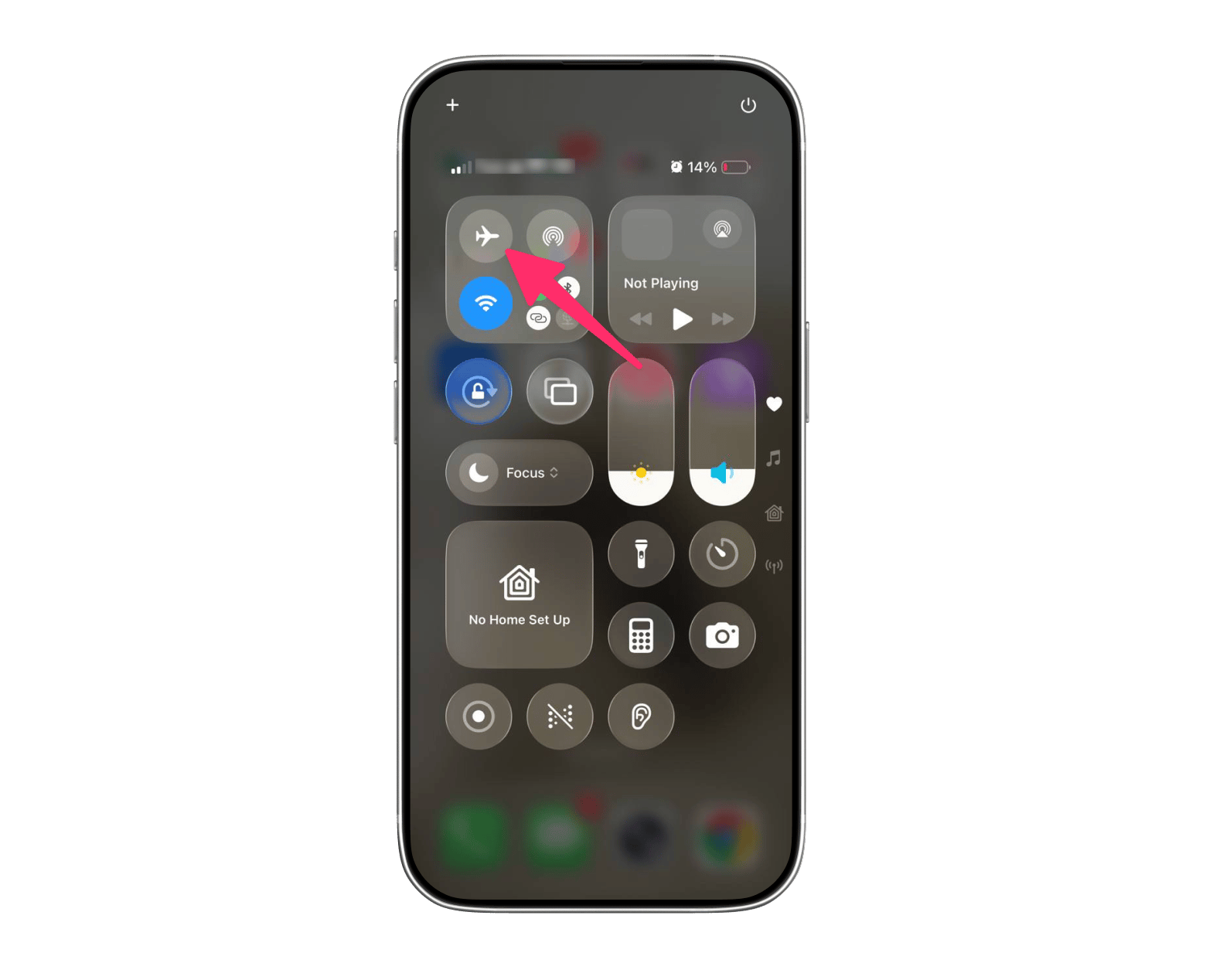
Open Control Center on your iPhone or iPad.
Tap the Airplane Mode icon to turn it on.
Wait for 10 seconds.
Tap the icon again to turn it off.
Wait for your device to reconnect to the carrier’s network. If cellular data still isn’t working, try the next method.
Fix 3. Check data roaming settings
If cellular data stops working while you’re traveling, check Data Roaming. Your device may need it to connect to a partner network outside your carrier’s regular coverage area.
Roaming can result in extra charges, so check your plan before turning it on abroad.
Here’s what to do:
Go to Settings > Cellular.
Tap your SIM.
Turn on Data Roaming.
Wait for your iPhone or iPad to connect to a local carrier. If you only enabled roaming for testing, turn it off again afterward.
Fix 4. Restart your device and reset network settings
Restarting can resolve temporary system glitches that interfere with cellular data.
Go to Settings > General > Shut Down, then drag the slider. Wait a few seconds, then turn the device back on.
If the problem continues, reset your network settings:
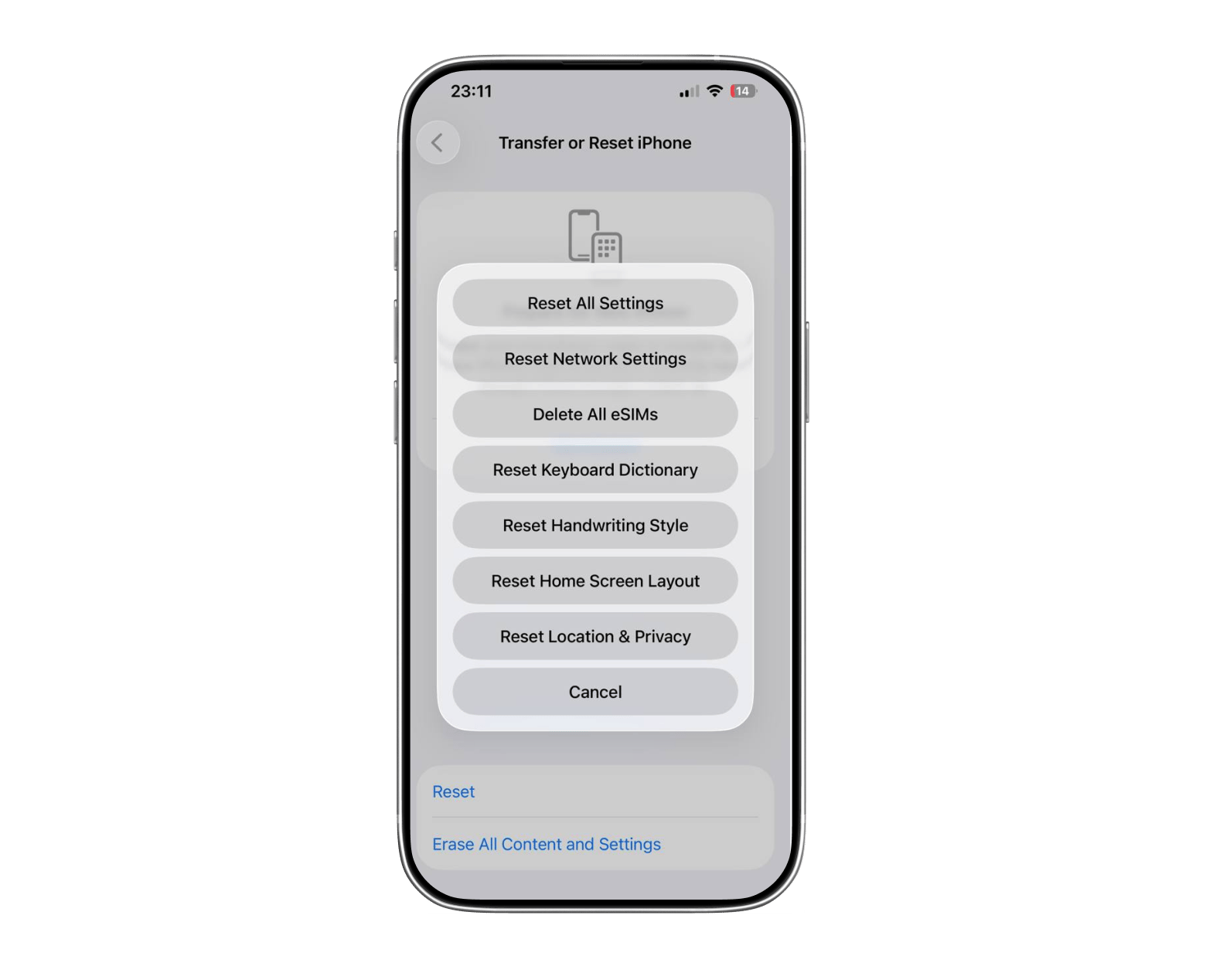
Go to Settings > General > Transfer or Reset iPhone.
Tap Reset > Reset Network Settings.
Enter your passcode and confirm the reset.
This clears saved Wi-Fi networks and passwords, cellular settings, and VPN or APN settings. It doesn’t delete your photos, apps, or other personal files.
Fix 5. Remove and reinsert your SIM card
A damaged or incorrectly seated physical SIM card can cause your iPhone to lose its cellular connection. This is more likely after you drop the device or remove the SIM tray.
If your iPhone or iPad uses a physical SIM:
Power off your iPhone or iPad.
Eject the SIM tray.
Check the SIM card and tray for visible damage.
Place the SIM card back in the tray, ensuring it is oriented correctly.
Reinsert the tray and turn on your device.
After restarting, check whether the device connects to your carrier. Handle the SIM card carefully to avoid damaging it.
If your device uses an eSIM, go to Settings > Cellular, choose your cellular line, and turn it off and back on. Contact your carrier before deleting an eSIM, because you may need their help to reactivate it.
Fix 6. Check for carrier and iOS updates
Carriers occasionally release settings updates to improve network connectivity and support. These updates don’t always install automatically.
Connect your iPhone to Wi-Fi, then follow these steps:
Go to Settings > General > About.
Wait a few seconds for the Carrier Settings Update prompt.
Also go to Settings > General > Software Update and install any available iOS update. If cellular data stopped working after updating to iOS 27, restart the device and check for a carrier settings update first. Then recheck your SIM or eSIM and reset network settings if needed.
Fix 7. Back up your iPhone and perform a factory reset
If none of the previous steps worked, a factory reset is the final software fix to consider.
Before you reset, back up your data because the process erases everything from the device. Otherwise, you risk losing photos, videos, documents, and other important files.
For backups, I prefer AnyTrans for iOS. It’s a handy app that lets you quickly move files between iOS and macOS and create backups. You can also switch between Android and iOS devices.
I use AnyTrans for iOS to schedule regular backups so I can always recover my files if I ever lose access to my iPhone.
With your files saved, you can perform a factory reset:
Go to Settings > General.
Tap Transfer or Reset iPhone.
Tap Erase All Content and Settings.
Tap Continue and follow the on-screen instructions.
Wait for your iPhone to erase its data and restart. Set it up again, then check whether it connects to the cellular network.
If it still shows No Service, contact your carrier to check your account and local coverage. You may also need Apple Support to inspect the device for hardware damage.
Why cellular data stops working
Your device can run into data connection issues for several reasons. Without troubleshooting, you can’t be sure which one is responsible.
Here are the most common reasons:
Poor coverage. Your device needs to connect to a nearby cell tower. In rural areas or inside some buildings, the signal may be too weak.
Misconfigured settings. Airplane Mode, disabled cellular data, or incorrect roaming settings can interrupt your connection.
Carrier problems. A local outage, suspended account, or exhausted data allowance can leave your iPhone showing No Service.
Hardware issues. A damaged physical SIM card, SIM tray, antenna, or another component may disconnect your device from the carrier.
Software problems. An iOS update or temporary system glitch can sometimes affect cellular service.
Settings and software issues are quick to fix yourself, but if the cause is an outage or damaged hardware, your carrier or Apple Support will need to step in.
Why isn’t my mobile data working? Solved
Poor coverage, incorrect settings, carrier outages, SIM problems, and temporary software glitches can all stop cellular data. The steps above should help you identify the cause and restore your connection.
To monitor your connection, try CleanMy®Phone for network tests. Before a factory reset, AnyTrans for iOS can back up your iPhone to your Mac.
Why doesn’t mobile data work during calls on my iPhone?
Your carrier and network must support simultaneous voice and cellular data, typically through VoLTE (Voice over LTE) or 5G. Check for carrier settings updates under Settings > General > About. You can also turn on Wi-Fi Calling under Settings > Apps > Phone > Wi-Fi Calling. If data still stops during calls, ask your carrier whether your plan and local network support the feature.
How do I refresh cellular service on iPhone?
Open Control Center and turn cellular data off for 10 seconds, then turn it back on. If that doesn’t work, toggle Airplane Mode, restart your iPhone, and test again. You can also reset network settings under Settings > General > Transfer or Reset iPhone > Reset > Reset Network Settings.
Why doesn’t mobile data work for some apps on iPhone?
Cellular access may be disabled for those apps. Go to Settings > Cellular, scroll to the app list, and turn on cellular data for the affected app. If it’s already on, temporarily disable any VPN and restart the app. Low Data Mode may also limit background activity, although it shouldn’t block an app completely.
How do I reset network settings on my iPhone?
Go to Settings > General > Transfer or Reset iPhone > Reset > Reset Network Settings. Enter your passcode and confirm. Your iPhone will remove saved Wi-Fi passwords, cellular settings, and VPN or APN settings, then restart. Your photos, apps, and other personal files remain untouched.
Why did my iPhone suddenly show No Service?
Common causes include a carrier outage, weak coverage, account problems, Airplane Mode, or a SIM or eSIM issue. Toggle Airplane Mode, restart your iPhone, and check your carrier’s outage information. If that doesn’t help, inspect the physical SIM or toggle your eSIM line. Contact your carrier if the account may be suspended or the outage continues.
Superpowers for your iPhone
Power up your workflow with apps for Mac and iOS on Setapp.






 Best solution
 Best solution