The safest ways to share passwords on Mac are end-to-end encrypted. Use iCloud Keychain Shared Groups, AirDrop, or a third-party password manager like Secrets 4 or Strongbox, all of which encrypt your data before it leaves your device.
iCloud Keychain lets you share multiple passwords at once. Create a Shared Group in the Passwords app, add people from your contacts, and move the logins you want to share. Everyone in the group sees updates automatically.
AirDrop is the quickest option for one-time sharing. It transfers a single password over an encrypted connection to a nearby Apple device in seconds, no account or setup required.
Third-party password managers give you more flexibility. Secrets 4 lets you share entire vaults and even create view-only access for people without a subscription. Strongbox adds support for KeePass format, breach alerts, and sync across any cloud storage.
Both Secrets 4 and Strongbox are available on Setapp — a single subscription that gives you access to 300+ Mac and iOS apps. Try it free for 7 days and start sharing passwords securely right away.
You can share passwords securely on a Mac using Keychain (via Shared Groups in Passwords), AirDrop (one password at a time to nearby Apple devices), or a third-party password manager like Secrets 4 (a shared vault).
Here's a summary of the main approaches covered in this article. Detailed instructions for each method follow below:
Setapp Membership ($14.99 USD/mo + tax) or standalone ($24.99 USD/year + tax), free for 7 days
*Setapp is a subscription platform offering 300+ macOS, iOS, and web apps for a flat monthly fee.
The easiest way to share passwords securely
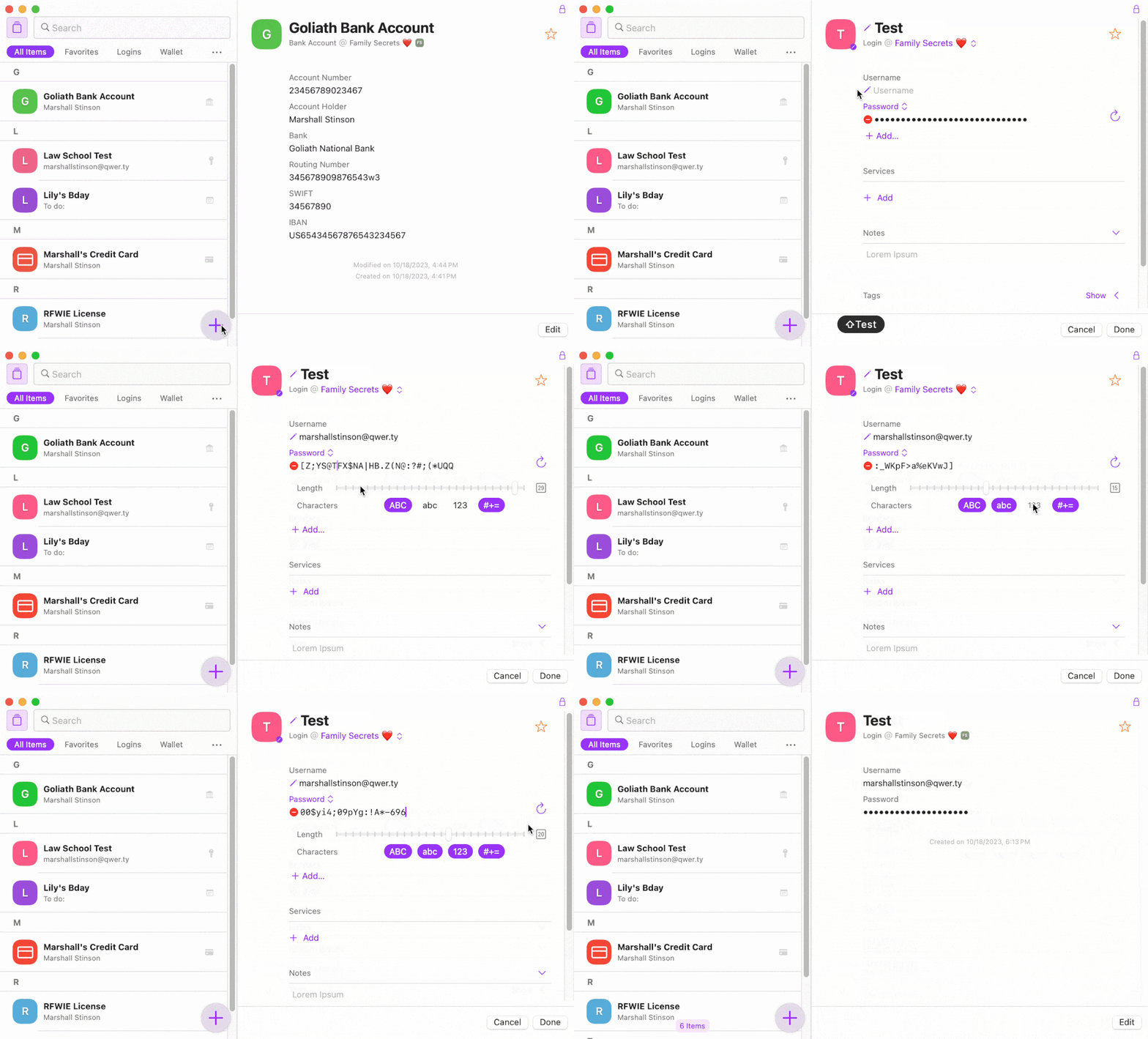
If you want one tool that handles everything (passwords, credit cards, private notes), I recommend Secrets 4. It stores all your sensitive data in encrypted vaults that sync across your devices.
The app generates strong passwords with one click. You can create as many vaults as you want and store them locally or on iCloud. The ones on iCloud can be shared with anyone.
Here's how to share a password with Secrets 4:
Install and open Secrets 4.
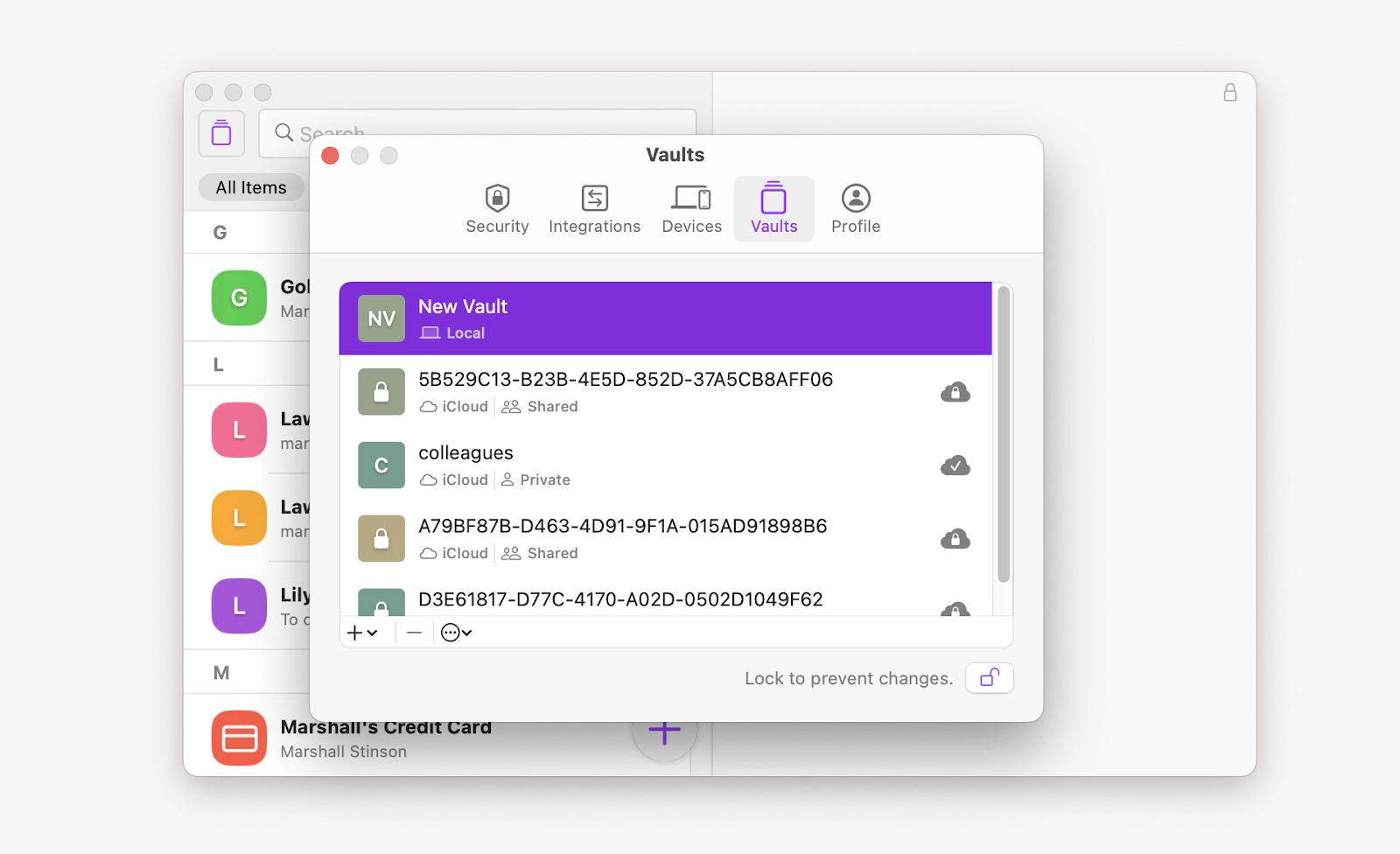
Go to Settings > Vaults.
Click Unlock in the lower-right corner to make changes.
Use Touch ID to unlock.
Choose the vault you want to share and double-click it.
Press the three-dot button in the lower-left corner.
Choose Share.
Click Invite and choose a person from your contacts or enter an email.
Click the Invite button and share the link that the app generates.
Once the person installs Secrets 4 and follows the link, they can access the vault. Others don't need a subscription if they only want to view the vaults. Paid access is only required for editing.
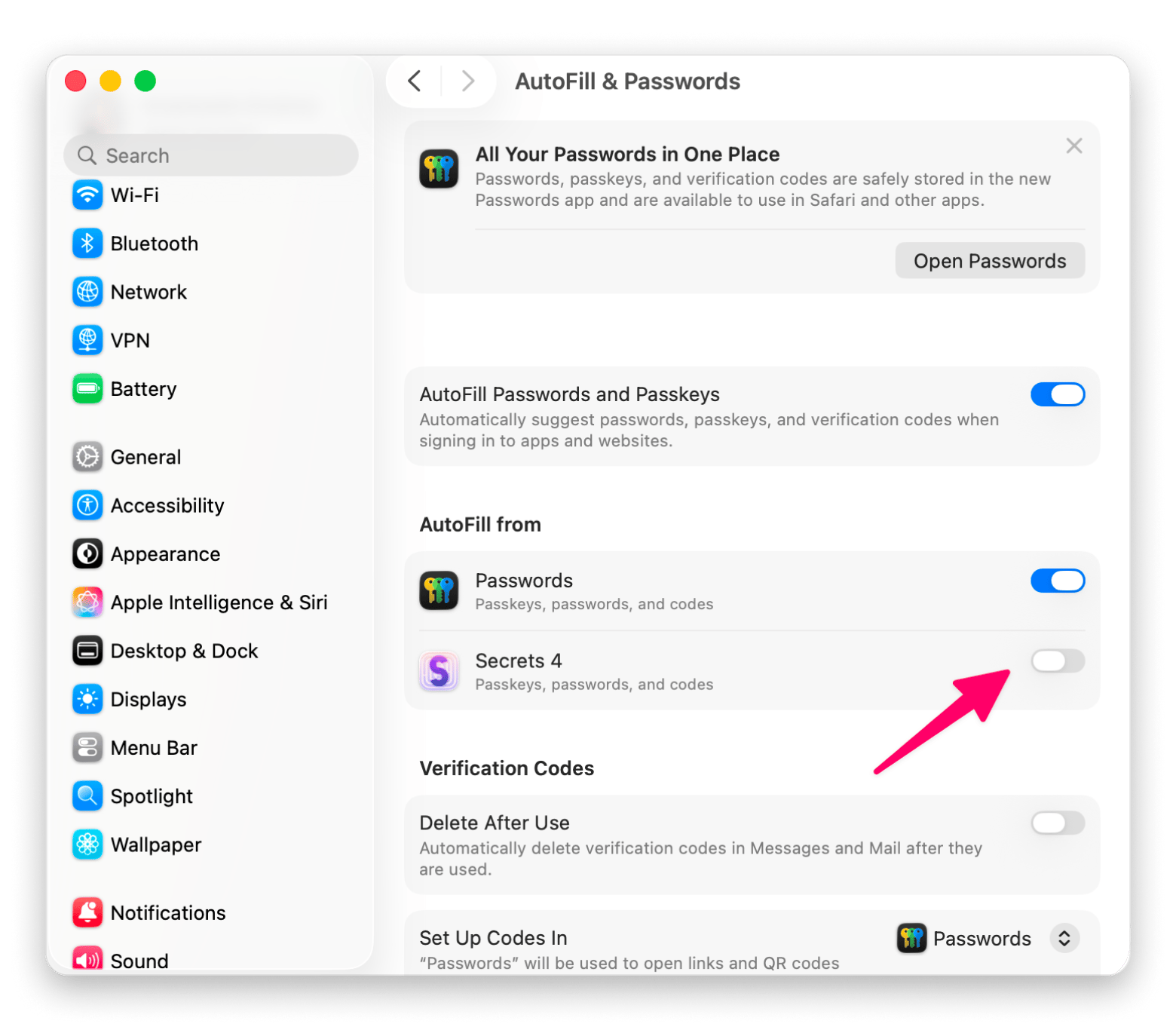
To offer autofill on websites, you and the people you share with need to enable one setting. Go to System Settings > General > AutoFill & Passwords and turn on Secrets 4.
If you don't have a vault that syncs with iCloud yet, here's how to create one:
Open Secrets 4 and go to Settings > Devices.
Confirm your Mac is a verified device.
Go to Storage and click the + in the lower-left corner.
Choose iCloud Vault.
Give the vault a name.
Return to the app and add new secrets to the vault.
It looks like a lot of steps, but honestly, once you've done it once, the whole thing takes under a minute.
If you're still deciding which password manager fits your workflow, this roundup of the best password managers for Mac breaks down the top options by use case.
Share passwords with iCloud Keychain
Your Mac stores passwords in iCloud Keychain, managed through the Passwords app in macOS Sonoma and later. The first time you enter credentials on a website, iCloud Keychain prompts you to create and save a strong password. It fills in automatically the next time you visit that website.
Before iOS 17 and macOS Sonoma, you could only share one password at a time. Now, you can create a group and share multiple passwords at once. According to Apple's security documentation, these shared groups use end-to-end encryption.
Despite these improvements, iCloud Keychain has some limitations:
A password can only belong to one group. You can't share your Amazon account with both your Family and Friends groups. Secrets 4 overcomes this by letting you duplicate passwords across vaults.
Passwords sync through iCloud across all your Apple devices. For added security, enable two-factor authentication on important websites.
Even with these limits, Mac gives you solid options. Let's walk through them.
How to share passwords using iCloud Keychain
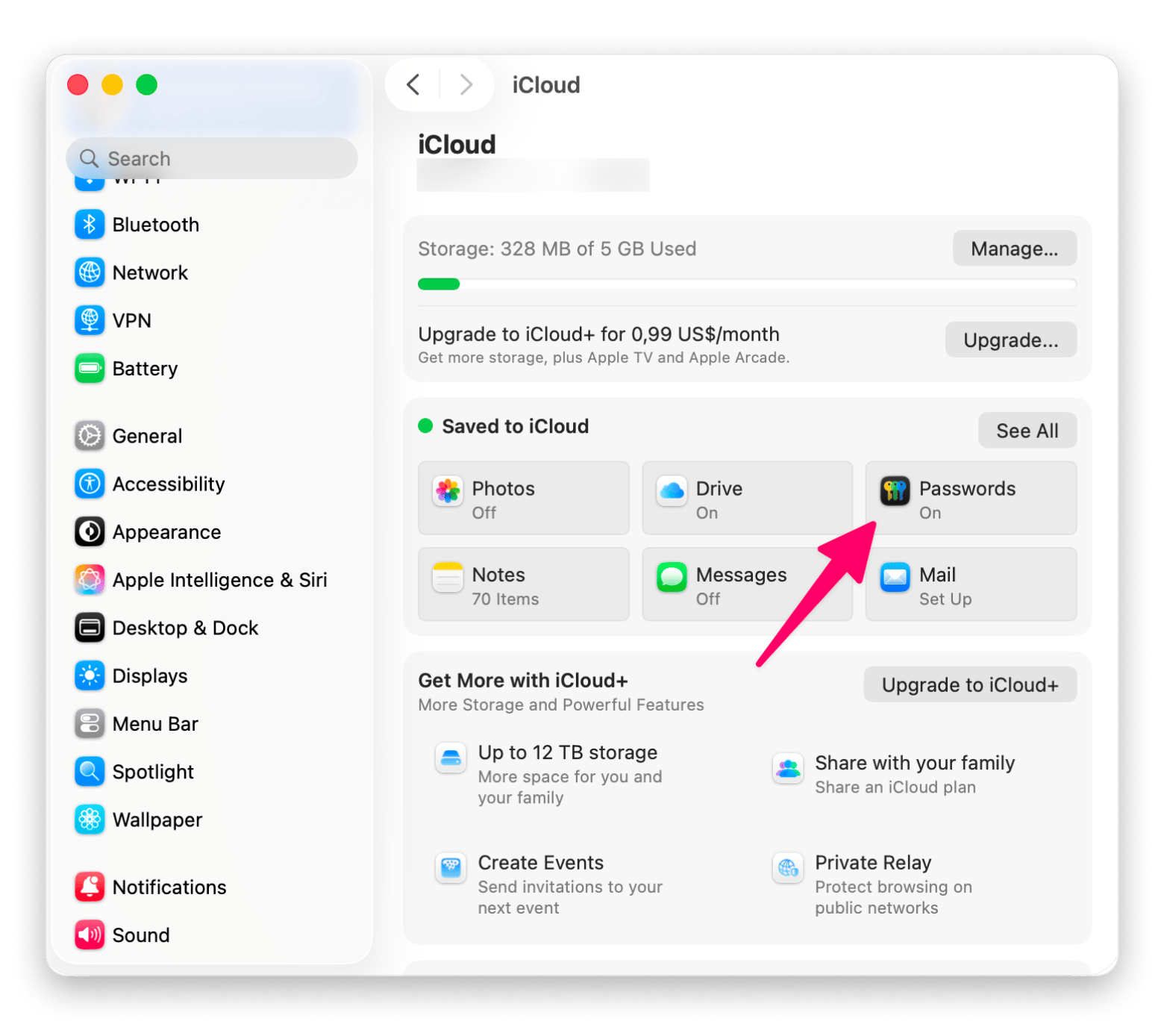
First, make sure iCloud Keychain is enabled. Check in the Apple menu > System Settings > Apple Account > iCloud > Passwords.
From here, click the Details button near See Passwords. You'll be redirected to the Passwords menu. Or reach it directly with these steps:
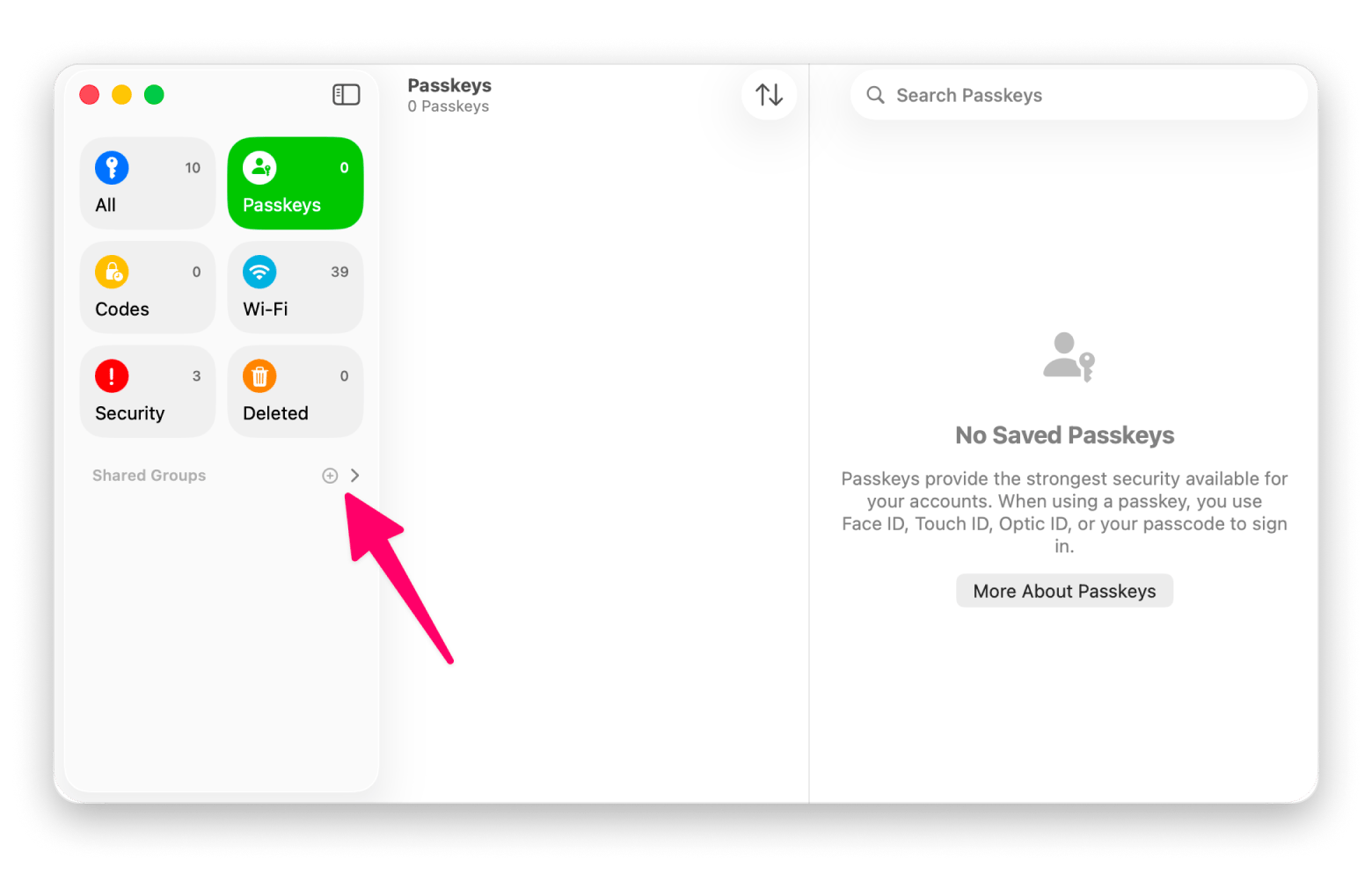
Open Passwords from Apps.
Enter your password or use Touch ID to log in.
Click the + sign next to Shared Group.
Give it a name.
Add people to the group (or do it later) and click Create.
Select the passwords you want to add to this group.
Click Move.
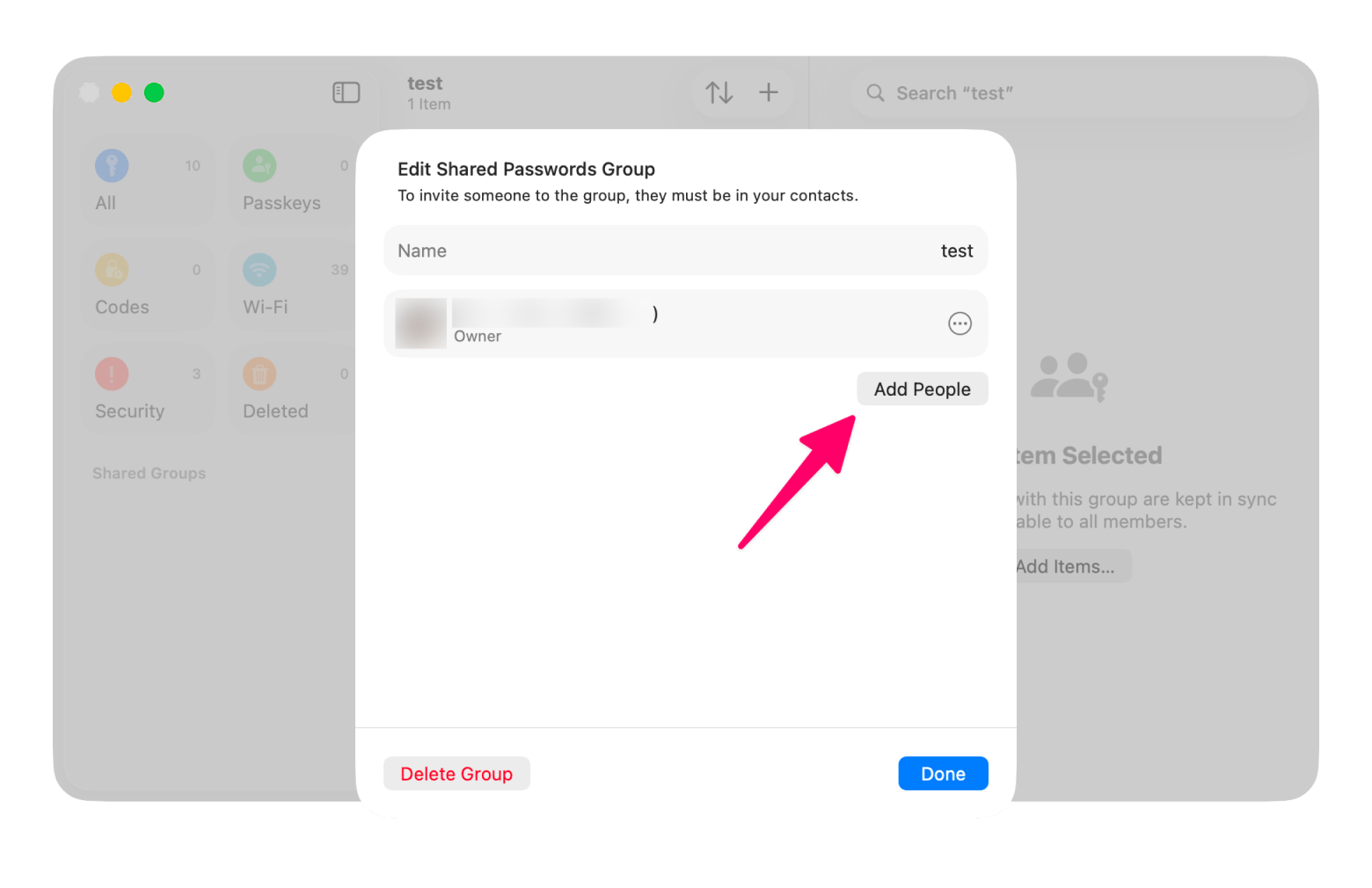
Click Manage > Add People.
Choose people from your contacts and click Add.
You can notify people with a message, but even if you don't, they'll see a notification the next time they log in to the Passwords section. When they visit the website you shared access to, they'll see an offer to sign in with your credentials.
How to share passwords and passkeys with Safari
Safari password sharing uses Apple's built-in system password manager. Passwords sync automatically across the group — if you change a password, it updates for everyone automatically.
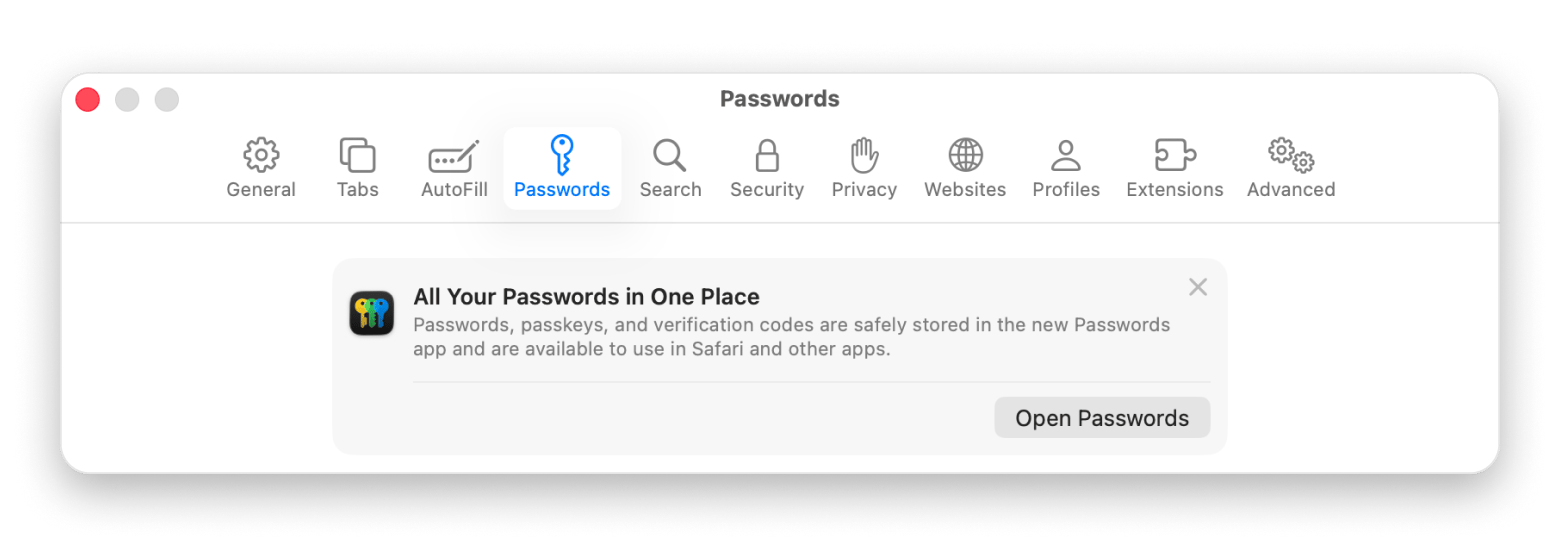
To share a password using Safari (macOS Sonoma or later), launch Safari and go to Safari > Settings > Passwords. From there, you'll be redirected to Apple's built-in Passwords app. Follow the step-by-step instructions above to create your group and share credentials.
Share passwords with nearby Apple devices via AirDrop
To share your password with nearby Apple device users, AirDrop works well for one-time transfers. Before you start, check these settings on both devices:
Wi-Fi and Bluetooth are turned on.
The recipient is visible in AirDrop. Check in System Settings > General > AirDrop & Continuity. Choose Contacts Only or Everyone for 10 Minutes.
Keychain is enabled. System Settings > Apple Account > iCloud > Passwords.
You and the recipient are in each other's contacts. The email associated with your Apple Account should be in the contact information.
When settings are ready, access the vault through the Passwords app. Then follow these steps:
Right-click the website for which you want to share the password.
Choose Share with AirDrop.
Make sure the recipient clicks Accept.
Click Done.
The password transfers over an encrypted connection and appears in the recipient's Passwords app immediately.
The most secure way to share passwords on Mac
If you want more advanced control over your passwords, Strongbox is worth a look. It's a professional-grade password manager that supports both KeePass and Password Safe formats, and uses AES-256 or ChaCha20 encryption to keep your data secure.
Strongbox stores your vault locally or syncs it via iCloud, Dropbox, Google Drive, or OneDrive.
Here's how to share a vault with Strongbox:
Install and open Strongbox.
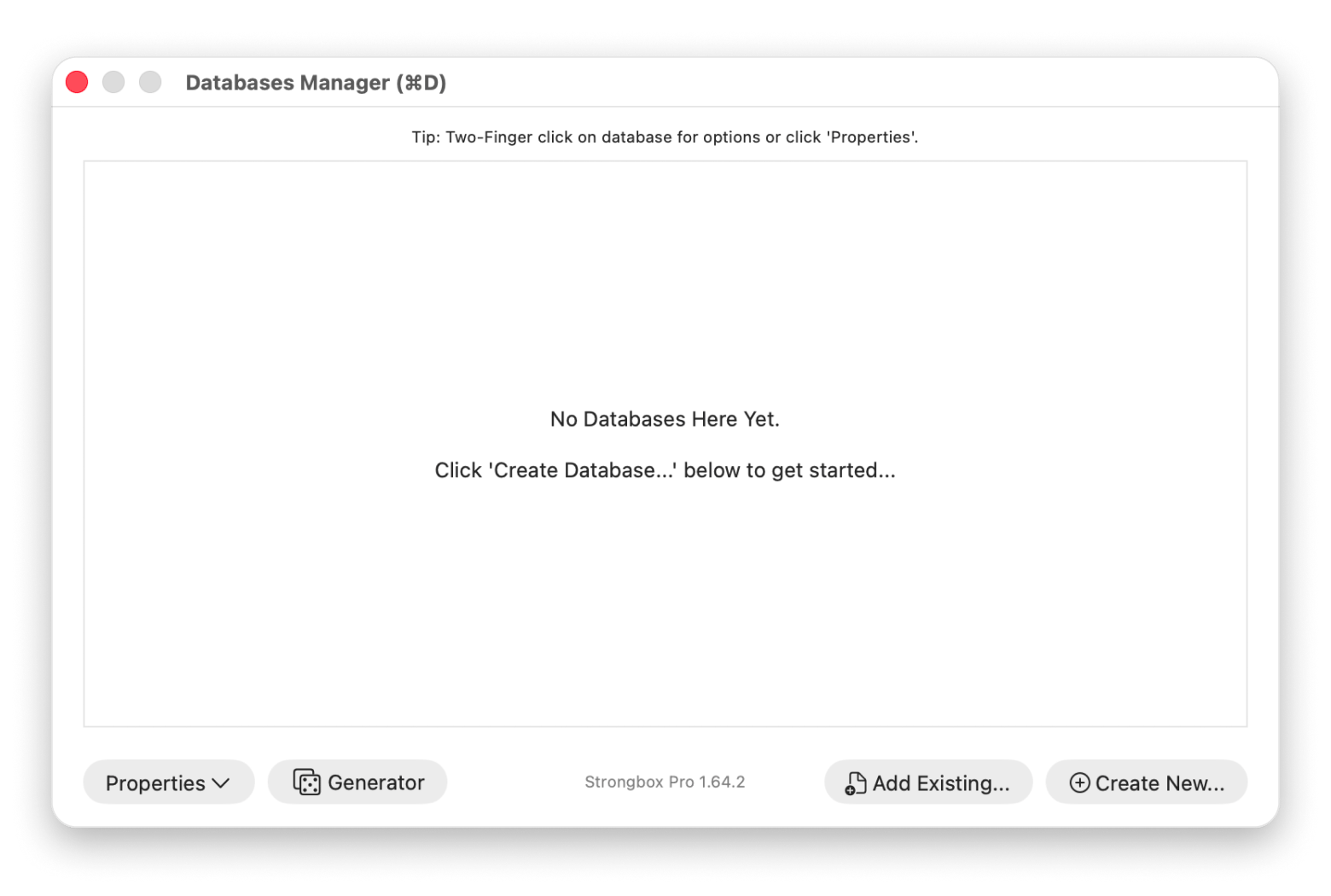
Create a new database or open an existing one.
Click File > Export and save the vault to a shared cloud folder (iCloud, Dropbox, or Google Drive).
Open Strongbox on the other device and choose Add Existing.
Navigate to the shared cloud location and select the vault file.
Share the master password through a separate channel (a call, AirDrop, or a secure message).
Once connected, both users can access the same vault. In my experience, the sync is reliable enough that I've never had to think about it after the initial setup.
Strongbox also integrates with Face ID and Touch ID, supports two-factor authentication entries, and can flag weak or reused passwords across your vault. The feature I find most reassuring is the built-in Have I Been Pwned integration. It quietly checks your credentials against known data breaches and alerts you if anything looks compromised.
If you're coming from 1Password and looking for a native Mac alternative, check eight options side by side, including Strongbox and Secrets 4.
Before we wrap up, it's worth calling out the methods you should avoid, no matter how convenient they seem:
By email
In text messages
In voice messages
In shared documents or notes
On paper
Also, avoid sharing passwords when connected to public Wi-Fi networks.
Keep your passwords safe and accessible
Password sharing doesn't have to be risky. Once you've set up a shared vault, you'll wonder why you ever resorted to texting passwords.
With the right tools, you can share access securely while keeping full control over your sensitive data. Secrets 4 and Strongbox are available on Setapp — a single subscription that gives you access to 300+ Mac and iOS apps, so securing and sharing your passwords doesn't require piecing together multiple apps. Start sharing passwords securely today with the 7-day free trial.
FAQ
What is the safest way to share passwords?
Use an end-to-end encrypted password manager that lets you share items or vaults. Apps like Secrets 4 or iCloud Keychain groups scramble your data before it leaves your device, so only the people you invite can read it. Avoid email, text messages, or shared docs because they send passwords in plain text.
How do I send a password-protected document to someone?
To create a password-protected file on a Mac, open Disk Utility and choose File > New Image > New Image from Folder, then pick the folder you want to protect. Choose 128-bit or 256-bit AES encryption, enter a password, set the image format to read/write, and click Save to generate an encrypted .dmg file. Once it's created, delete the original folder — it stays on your Mac unencrypted unless you remove it manually. Send the encrypted file, then share the password through a different channel (like a quick call or an AirDropped note). This keeps both the file and its key from traveling together.
Can I share a password with someone who doesn't use a password manager?
Yes. Secrets 4 lets you create a one-time share link that anyone can open in their browser, even without an account. You can also AirDrop a single password to a nearby Apple device. After they copy the login, ask them to delete the link or AirDrop card to keep things tidy.
What about mandatory password rotation in 2026?
According to NIST's updated guidelines, mandatory periodic password resets are no longer recommended. Instead, focus on using unique, strong passwords for each account. Strongbox can scan your vault for weak or duplicate passwords and alert you if any appear in data breaches through the Have I Been Pwned integration.






 Best solution
 Best solution