Spam is unavoidable, but controllable
You can’t eliminate spam completely, but you can significantly reduce it by training filters, blocking senders, unsubscribing properly, and setting custom rules.
Always mark spam instead of just deleting it
Use “Mark as spam” or “Move to Junk” to train your email provider’s AI filters. Rescue real emails from spam to improve accuracy.
Use blocking, filters, and unsubscribe strategically
Block persistent senders, create keyword-based rules, and only unsubscribe from legitimate newsletters. Mark suspicious emails as spam instead of clicking unknown links.
Protect your email with stronger security habits
Enable two-factor authentication, avoid unknown links, use email aliases or Hide My Email, and check for data breaches to prevent spam at the source.
Use the right tool for each type of inbox problem Spark Mail helps manage incoming messages, Leave Me Alone handles subscription overload, and CleanMyMac Email Cleanup helps clear existing Gmail clutter in bulk. CleanMyMac can also scan the Mac for malware and clean your email inbox. Try them all free on Setapp.
Everyone gets spam emails. These unwanted messages clutter your inbox, waste your time, and can even put your privacy at risk. If you're like most professionals or creatives, managing spam is key to staying productive. While you can't eliminate spam completely, you can control it effectively. Here are proven methods to reduce spam and protect your email account.
How to stop spam emails: Key solutions
Let me start by explaining the key solutions for stopping email spam. Note that I’m covering only the most essential tips here. Below, you’ll find detailed instructions for both the Mac and iPhone apps, along with additional tips — both native and third-party — that will help you manage your inbox.
Problem
Gmail
Apple Mail
Yahoo Mail
Spam slipping into inbox
Mark as spam (Report spam button or octagon icon) to train Google's strong AI filters. Rescue false positives by marking "Not spam."
Mark as junk (Junk button or right-click > Move to Junk). Enable junk filtering in Settings > Junk Mail if needed.
Mark as spam (Spam button or More > Mark as Spam).
Persistent sender
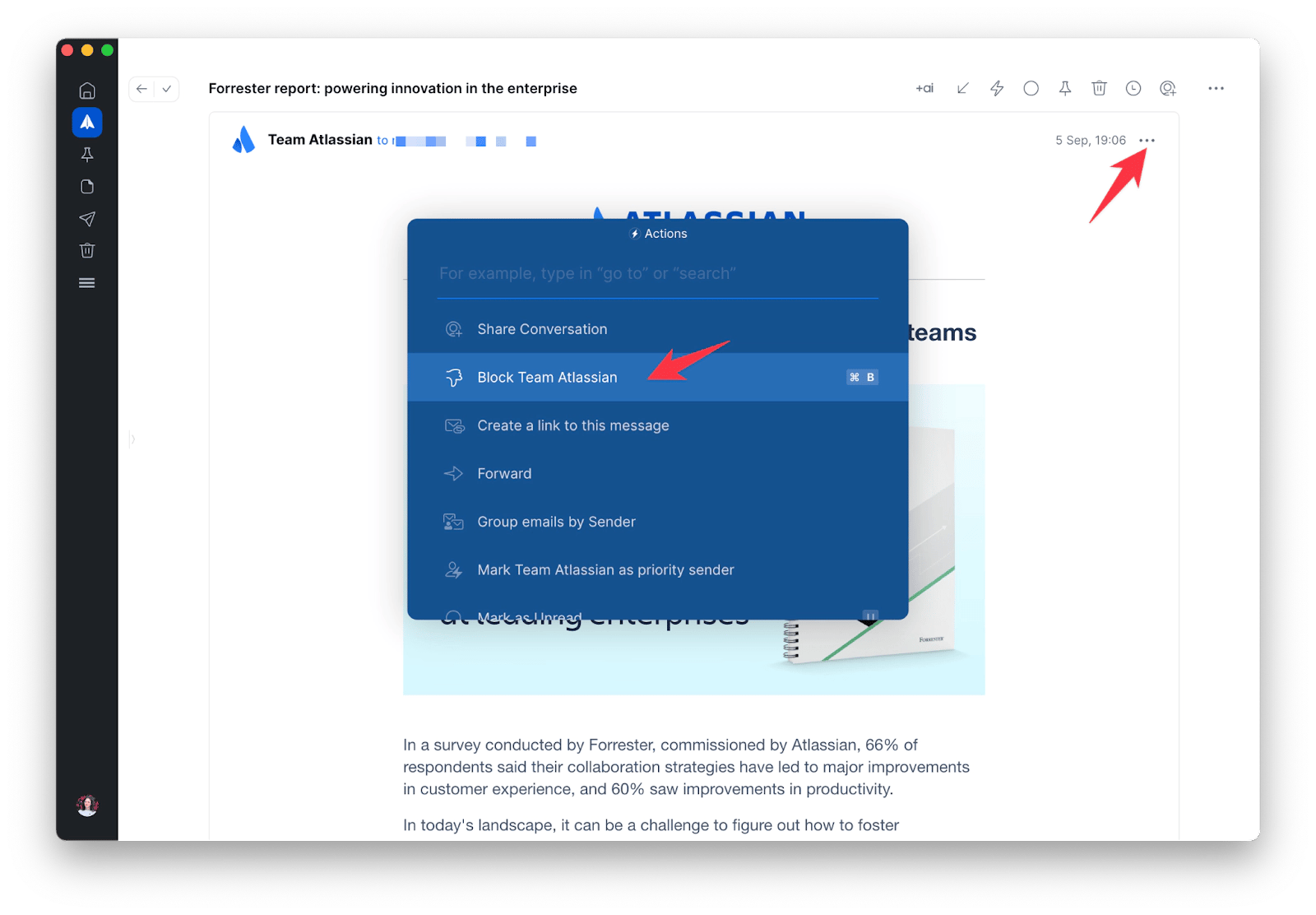
Block sender: Open email > three dots > Block [Sender]. Future new emails go to Spam.
Block sender: Settings > More Settings > Security and Privacy > Blocked addresses > Add.
Unwanted subscriptions / marketing
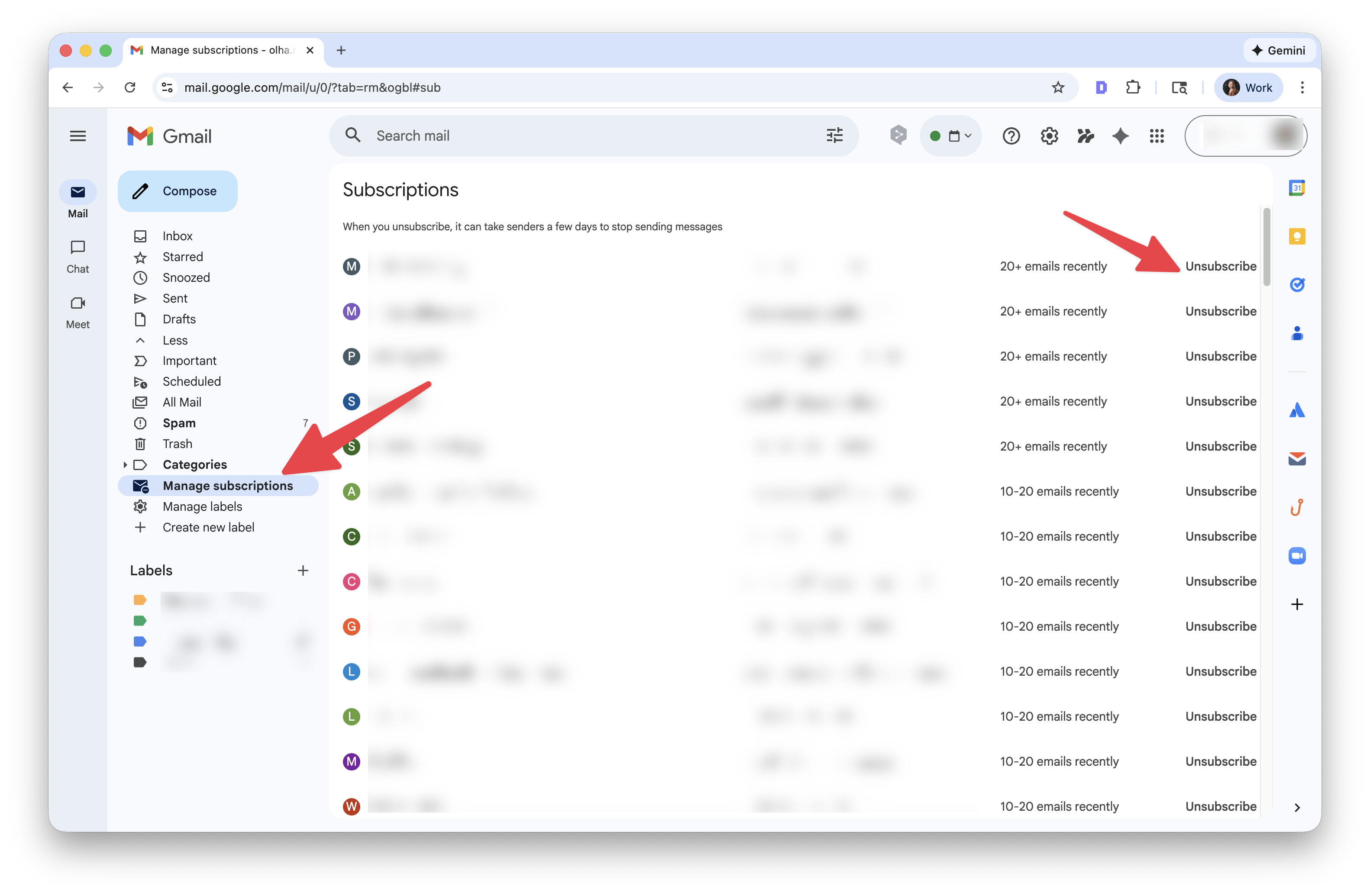
Hover over email > Click Unsubscribe. Or, go to left sidebar > Manage subscriptions to unsubscribe in bulk.
Unsubscribe via link in email footer.
Unsubscribe: Open email > More > Unsubscribe.
Recurring patterns (keywords / domains)
Create filters: Settings > See all settings > Filters and Blocked Addresses > Create new filter.
Set rules: Mail > Settings > Rules > Add rule.
Use filters: Settings > More Settings > Filters > Add rules.
Spammy mails in various accounts
Use Spark Mail to manage all your inboxes. The app’s Gatekeeper screens senders, offers advanced rules and AI organization beyond native options. AI highlights important mail and bundles junk.
Unwanted emails
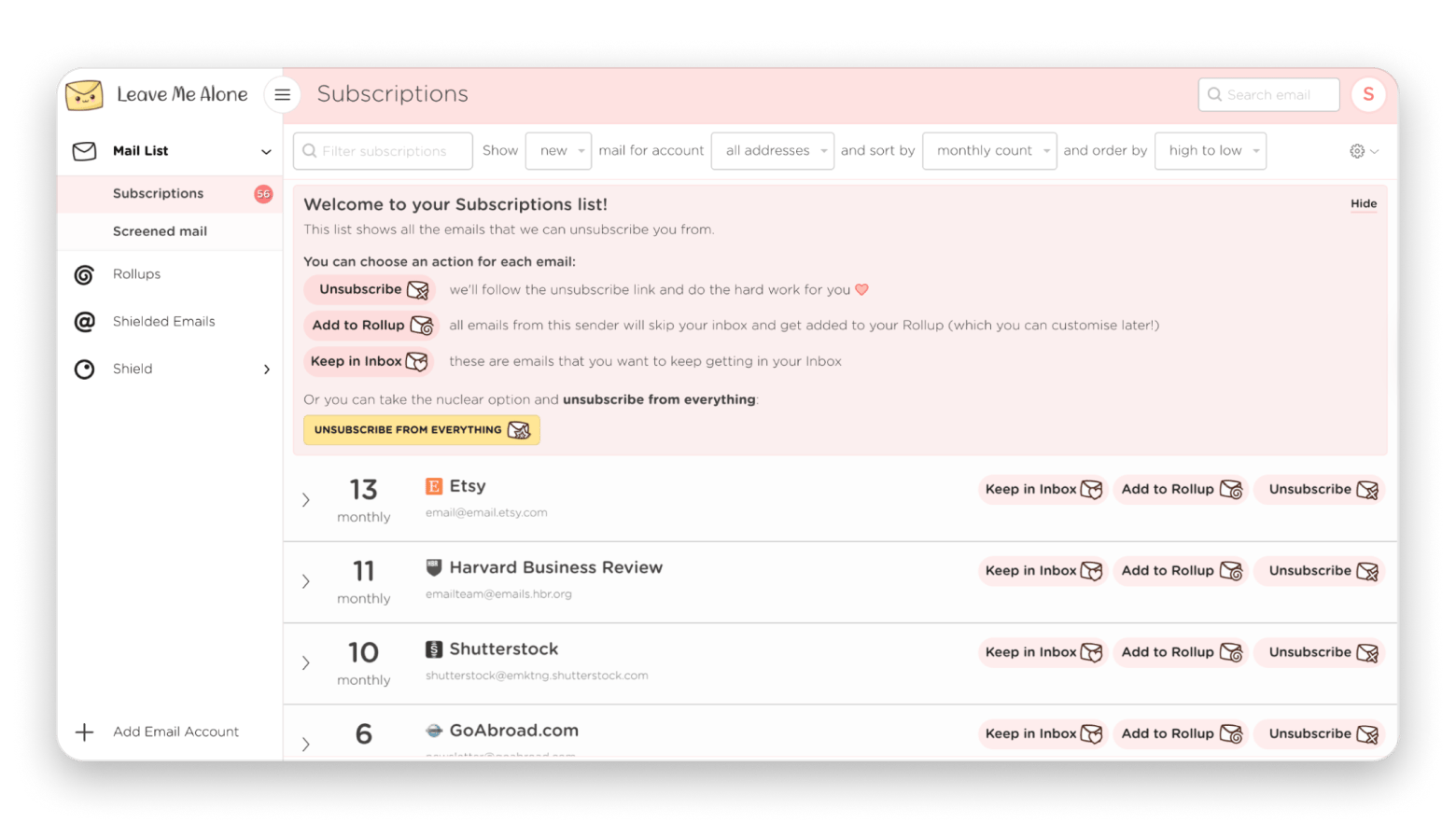
Use Leave Me Alone — to sync accounts, bulk unsubscribe, block cold emails, and create newsletter rollups.
Existing Gmail clutter
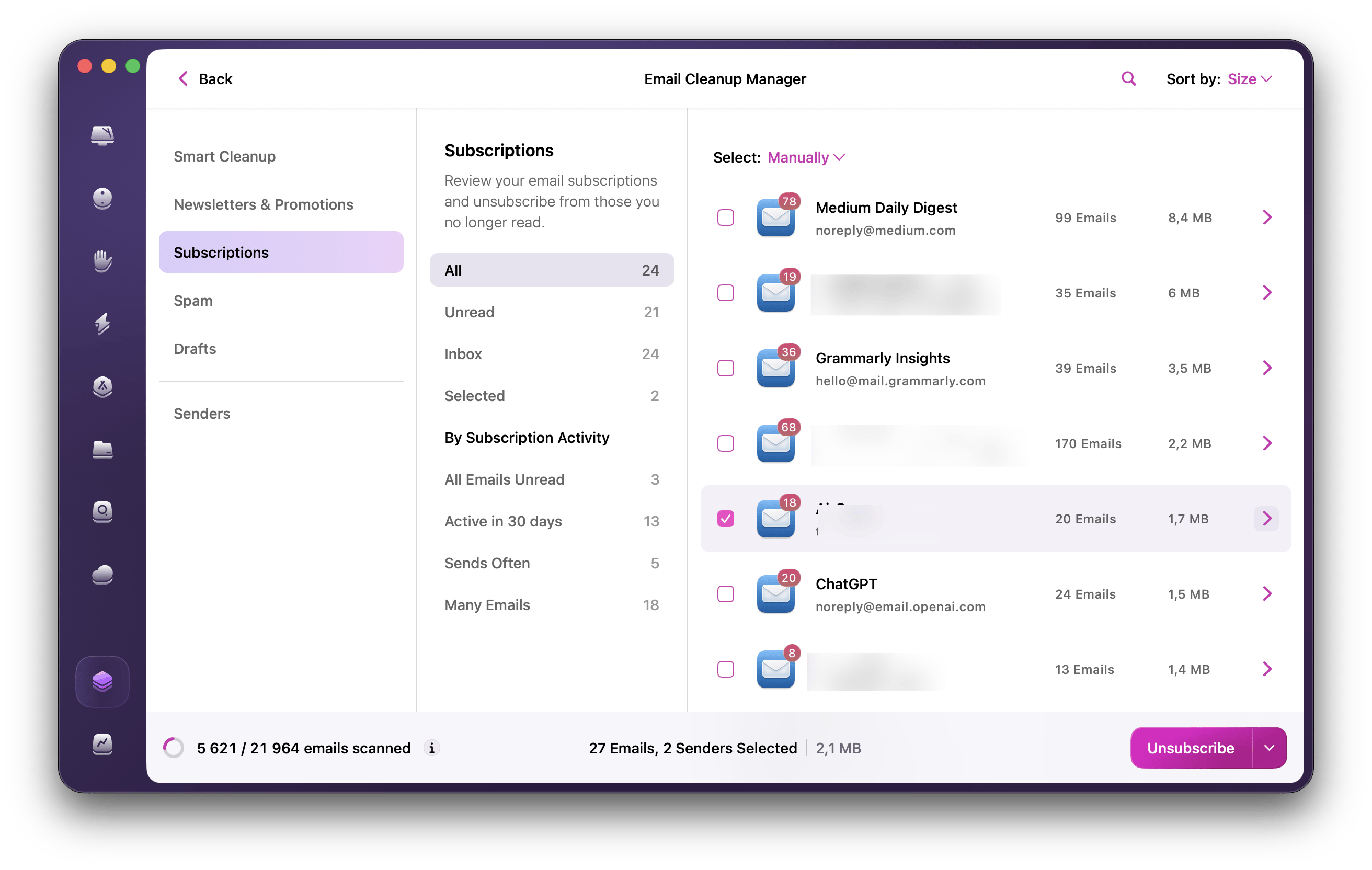
Use CleanMyMac Email Cleanup to review old messages, large attachments, promotions, and unwanted senders in bulk.
Malware/privacy risks from spam
Use CleanMyMac and scan Mac for malware regularly.
What is spam?
Let's start with the basics of what we're dealing with. Spam emails are unsolicited messages sent in bulk, usually for advertising, phishing, or spreading malware. We've all seen spam emails promising millions in winnings or dream jobs for $250. Junk emails often use scare tactics, contain mistakes and false information, and fake senders distribute them in bulk.
According to the latest FBI Internet Crime Complaint Center (IC3) 2024 Report (covering 2024 data, released in 2025), total reported internet crime losses reached $16.6 billion (a 33% increase from 2023). Phishing/spoofing was the most reported crime type by complaints (193,407 incidents). Phishing often delivers scams leading to major fraud losses (e.g., investment scams at $6.57B).
Spam vs. phishing emails: what's the difference?
Phishing often uses spam email as a delivery method. Unlike regular spam, phishing aims to steal your personal information. Attackers target banking credentials, passwords, and other valuable data.
Why spam emails are risky
Spammers and scammers constantly change their tactics. They trick people into sharing personal and contact information, donating money, or downloading malware. For example, you might get an email from a "colleague" asking you to open an attachment — one click and your device could be infected.
Scan your Mac for malware regularly, even if you've never clicked spam links or downloaded attachments. Tools like CleanMyMac can help keep your device clean and your data safe.
How to reduce spam in your inbox
While there's no magic button to eliminate spam forever, I've learned that with the right approach, you can significantly reduce it and take back control of your inbox. The goal is simple: keep the emails you want in your inbox and filter out everything else. Here's how to get as close to that ideal as possible.
For messages that have already built up, you’ll also need a cleanup step: reviewing the existing backlog and deciding what to keep, archive, delete, or unsubscribe from.
#1. Teach your email app’s spam filters
Most email providers have built-in spam filters that scan incoming messages for suspicious content. You can help these filters get smarter:
Mark spam: When you see suspicious emails and spam messages in your inbox, mark them as spam or junk.
Rescue good emails: If a real email lands in your spam folder, mark it as "Not Spam."
Both actions help train your spam filter to better recognize what you do and don't want to see.
#2. Use a secure email client on Mac
You might wonder why spam keeps slipping through even with good filters. A big reason is spoofing: scammers fake sender addresses to look legitimate (like your bank or a trusted contact). Email authentication protocols — SPF, DKIM, and DMARC — help fix this.
SPF (Sender Policy Framework) lists which servers are allowed to send mail from a domain.
DKIM adds a digital signature to prove the message hasn't been tampered with.
DMARC ties them together and tells receivers what to do with fakes (quarantine or reject).
In 2026, major email services like Gmail, Yahoo, Microsoft, Outlook, and others strictly enforce these for bulk senders. Non-authenticated emails often land in spam or get blocked entirely. While you can't force every sender to set them up, choosing providers that check authentication aggressively (like Gmail) means more spoofed spam gets caught before it reaches you.
For those using multiple email accounts, I’d recommend trying Spark Mail, an app for managing emails with strong spam filters.
Spark Mail comes with a feature called Gatekeeper that gives you complete control over who can and can't email you. Gatekeeper screens and filters all incoming emails for you, so your inbox stays organized with only the important emails you care about.
Overall, Spark Mail gives you the tools to organize your inbox according to your own rules and make it serve you — rather than the other way around. It automatically highlights important messages, bundles non-essential threads, and helps you sift through your inbox with the help of its AI Assistant.
Tedious threads? Mute them individually. Use calendar-related tools? Connect them to Spark Mail — it works with Todoist, Dropbox, Evernote, Google Drive, Microsoft Teams, Slack, Zoom, Trello, and more.
#3. Block unwanted senders
Blocking the sender of spam emails ensures you won't get more messages from that address. Unfortunately, spammers know this trick and often use different email addresses to get around blocks. Still, it's useful for persistent unsolicited emails from a single sender.
Here is how to block a contact in Apple Mail on Mac:
Open Apple Mail.
Select or open a message from the sender.
In the message header, move the pointer next to the sender name → Click the downward arrow (or right-click the message).
Choose Block Contact.
Future emails from them go to Junk (adjust in Settings > Junk Mail if needed).
To block a contact in Apple Mail on iPhone, follow these steps:
Open Mail app and find/open the message.
Tap sender’s name/email in From field (turns blue/link).
Tap again to open Contact Card/View options.
Tap Block this Contact (confirm if prompted).
Now, junk emails go to Trash (change to Leave in Inbox via Settings > Mail > Blocked Sender Options).
To block sender in your Gmail account:
Open the email from the sender.
Click the three vertical dots in the top-right corner.
Select Block [Sender].
Tip: Spark Mail offers a feature called Gatekeeper, giving you complete control over who can and can't email you. Gatekeeper screens all incoming emails, so your inbox stays organized with only the important messages.
#4. Unsubscribe from mailing lists
The fewer subscriptions you have, the less likely marketers and spammers will find your address. Most marketing emails include an unsubscribe link at the bottom. Some email apps, like Gmail, display an Unsubscribe button at the top.
Here's the key difference between unsubscribing and marking as spam:
Unsubscribe: Use this for emails from companies or newsletters you signed up for but no longer want.
Mark as spam: Use this when emails are clearly malicious or from sources you never signed up for.
If you’re using a Gmail account, note that they have introduced an easy way to unsubscribe from unwanted marketing emails and newsletters. With the new Manage subscriptions view, you can see all your active email subscriptions in one place and remove yourself with a single click.
Gmail also places a visible Unsubscribe button next to the sender’s name in many promotional emails, so you don’t have to scroll to the tiny footer link anymore. To use it, open Gmail and look for the “Unsubscribe” option at the top of a promotional email. A similar button appears when you hover over a promo letter in your inbox — even without opening it. Alternatively, go to the subscription management section in the left pane and clean up multiple senders at once.
If you want to manage all your subscriptions in one place, Leave Me Alone lets you sync your email accounts and unsubscribe with a click. You can also block cold emails, pause messages during focus hours, and organize newsletters into rollups.
Deal with the spam that is already in your inbox
Unsubscribing helps prevent future newsletters and promotions, but it does not remove the backlog already sitting in your Gmail account. If you have years of unwanted messages to sort through, CleanMyMac’s Email Cleanup feature can help you handle them in groups.
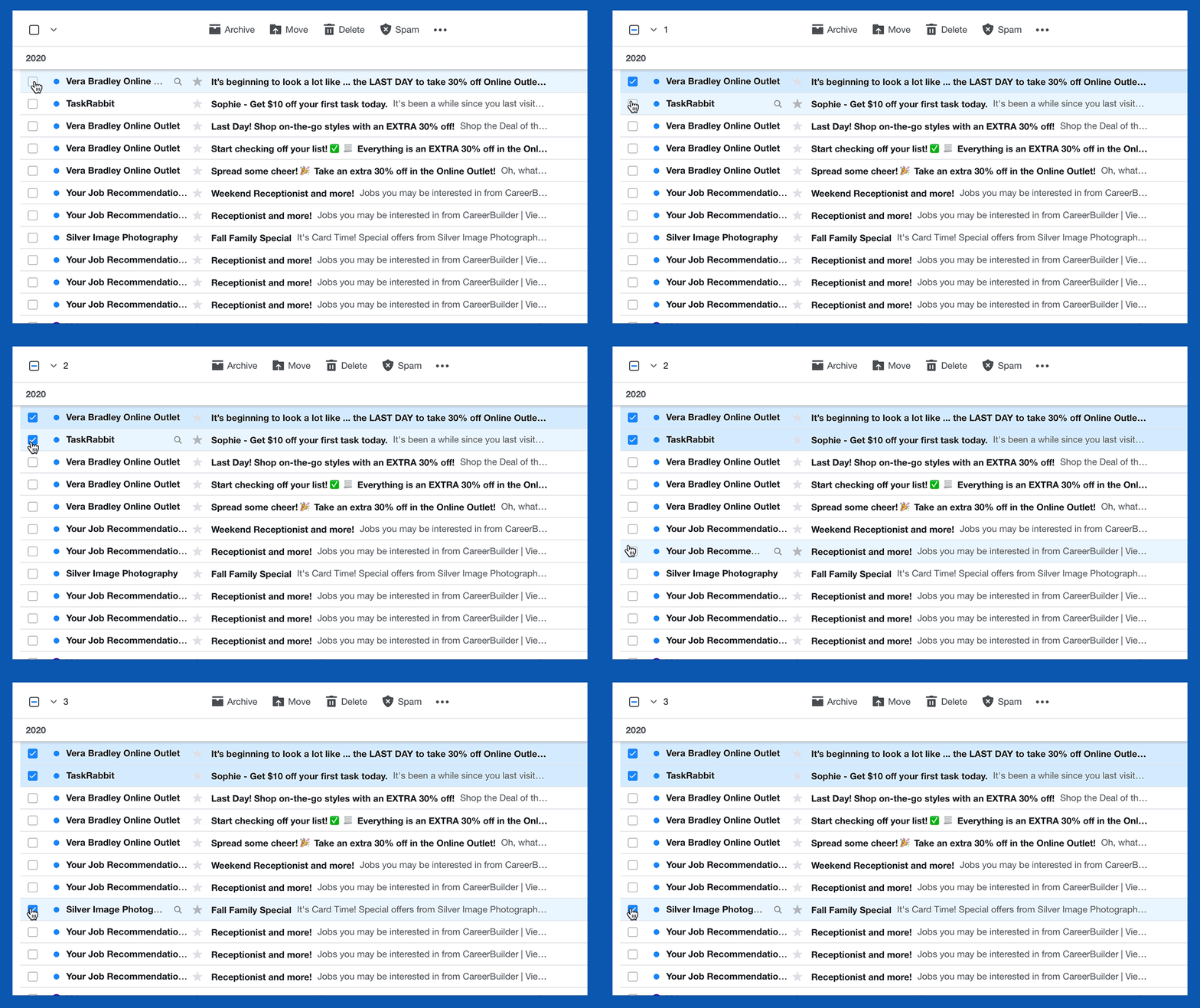
Instead of opening emails one at a time, you can review your Gmail messages by year, sender, or size. This makes it easier to spot old promotions, abandoned subscriptions, spam, and large attachments that are taking up storage.
#5. Protect your address with Hide My Email
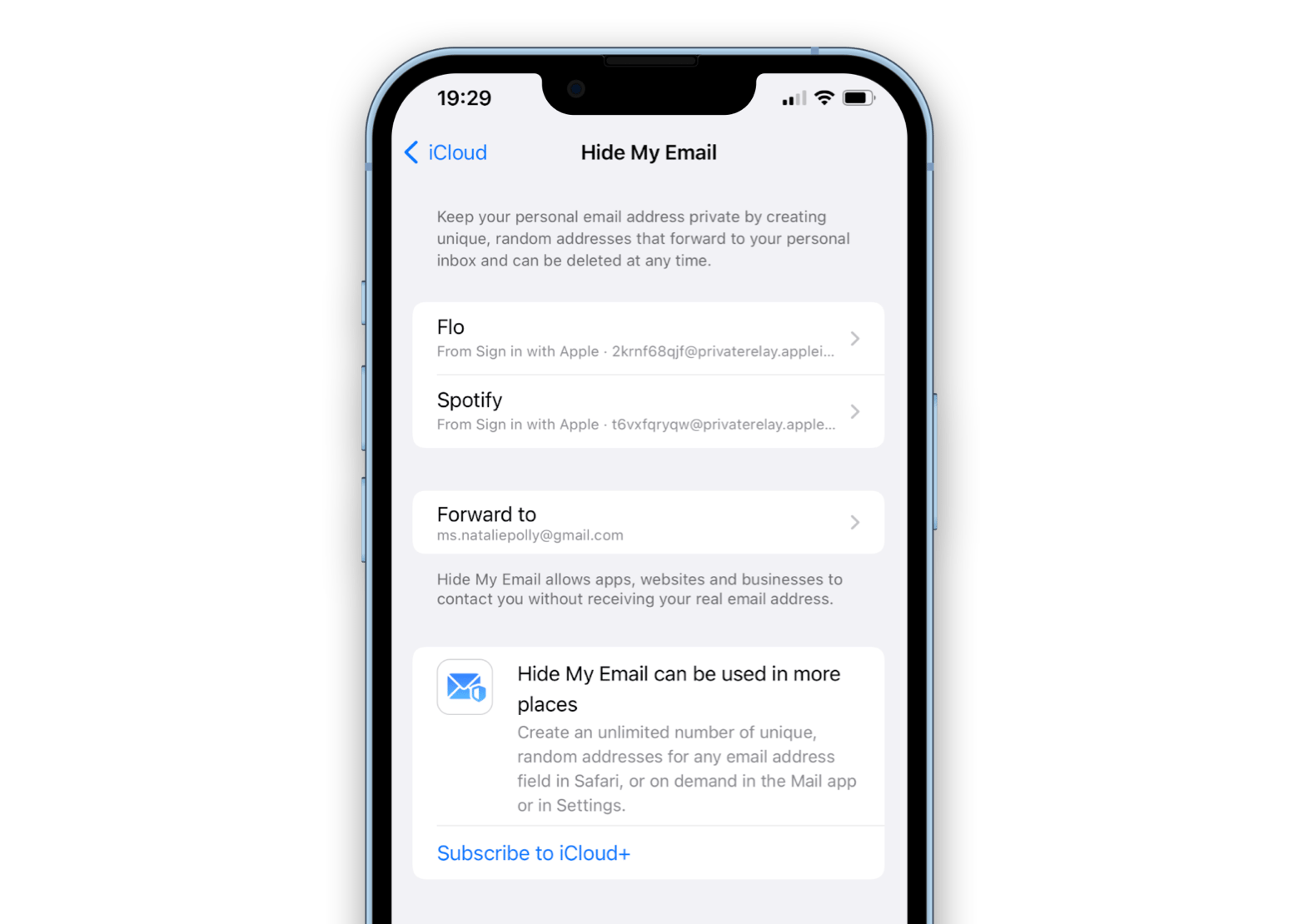
If you subscribe to iCloud+ (starting at $0.99/month), you can use Hide My Email to create random email addresses. This lets you sign up for sites or services without revealing your real address. If you start getting spam, simply deactivate that address.
#6. Set up email filters and advanced filtering rules in your email
Native spam filters are smart, but custom rules catch what slips through — like newsletters with specific keywords or senders from certain domains.
To set up an email filter in Gmail:
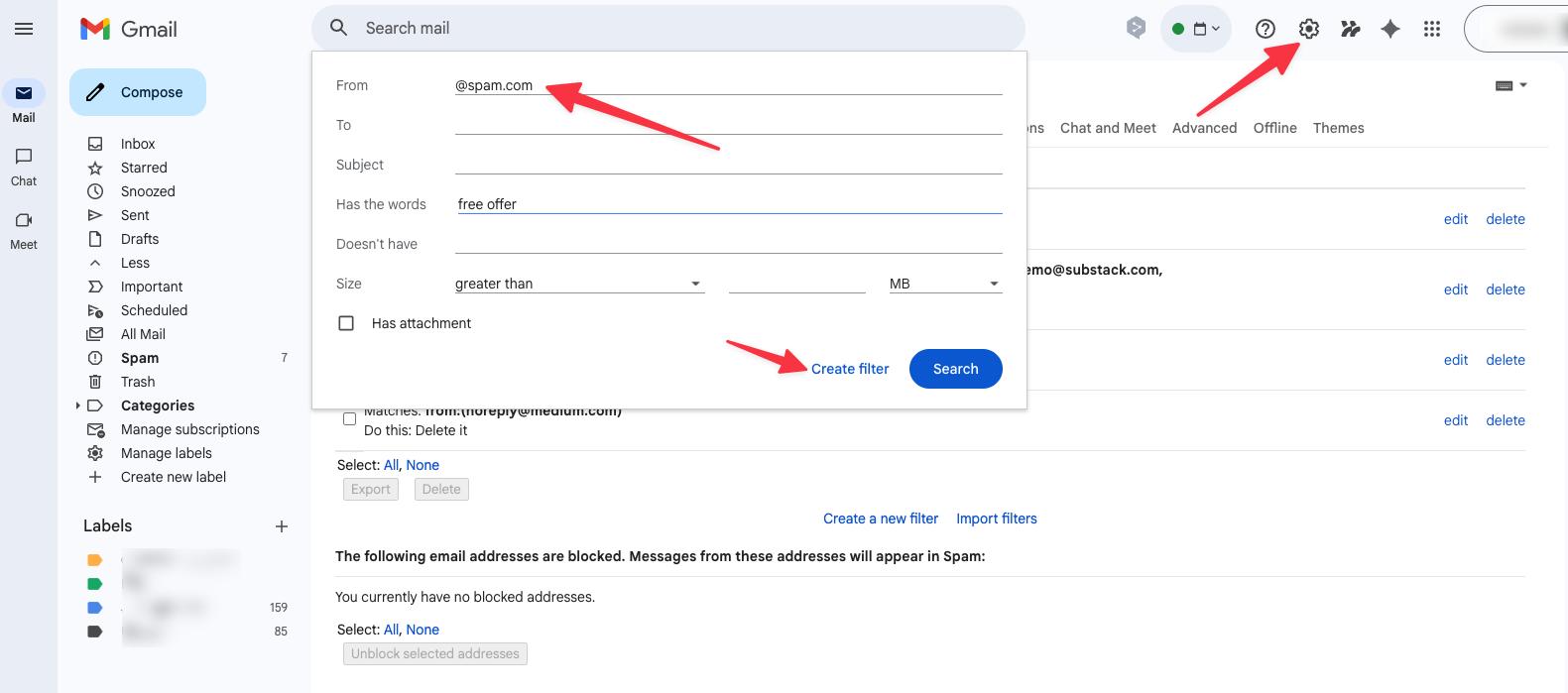
Open Settings → See all settings → Filters and Blocked Addresses.
Create a new filter (e.g., from: @example.com → Delete it, or label and skip inbox).
Combine criteria: words like “free offer,” size, attachments — then auto-archive, delete, or forward.
To set filtering rules in Apple Mail on Mac:
Go to Mail → Settings → Rules.
Add a rule: If sender contains “newsletter@”, move to Junk or a custom folder.
For iCloud Mail (web): Gear icon → Preferences → Rules — add conditions to filter server-side.
These rules run automatically, so once set up, your inbox stays cleaner without daily effort. Start simple — one rule at a time — and tweak as you go
How to delete spam in Apple Mail
Apple Mail usually filters spam to your Junk folder automatically. You can manually mark emails as junk if needed.
To remove junk emails in Apple Mail on Mac:
Open Mail and select the message(s).
Click the Junk button in the toolbar (customize toolbar via View > Customize Toolbar if not visible), or right-click the message > Move to Junk, or drag to Junk in the sidebar.
This trains the filter. You can also enable junk filtering in Mail > Settings > Junk Mail if off.
To mark junk emails in Apple Mail on iPhone:
Open Mail app
Swipe left on the message > tap More > Move to Junk.
For multiple junk mails: Tap Edit/Select > choose messages > Mark > Move to Junk. (Alternative: Open message > tap Move icon in toolbar > Junk.)
Spam isn't just annoying — it's often a gateway to worse threats. Layer on these habits to stay safer:
Enable two-factor authentication (2FA) or multi-factor everywhere possible — especially your email. Use an authenticator app or passkey instead of SMS when available (more resistant to phishing).
Never click links or open attachments in unexpected emails. Hover to check URLs first.
Use a VPN on public Wi-Fi to encrypt your connection.
Run regular malware scans (tools like CleanMyMac help spot anything sneaky).
If spam suddenly spikes, change your password, enable 2FA if off, and check haveibeenpwned.com for breaches.
These steps — combined with the filtering tips earlier — slash risks, reduce the amount of spam, and keep your inbox (and data) much safer.
Prevent spam at the source: Stop it before it starts
The best defense? Keep your email address out of spammers' hands in the first place. Here are the key cybersecurity rules that make it harder for them to find or exploit you:
Treat your email as sensitive information whenever possible. Never post your main email publicly on social media, forums, blogs, or comment sections. Use a throwaway address or alias for sign-ups where possible.
When filling out online forms, uncheck “subscribe to newsletter” or “send me offers” boxes — those are sneaky opt-ins.
Use email aliases or disposable addresses for one-time needs. Apple's Hide My Email (via iCloud+) is great, but cross-platform options like Firefox Relay or SimpleLogin let you create unlimited forwards that you can disable if spam starts.
Be extra careful with data breaches: Visit haveibeenpwned.com regularly to see if your address leaked. If it did, expect a spam surge, change passwords, and watch closely.
Avoid buying or sharing lists, and think twice before entering your email for “free” downloads or Wi-Fi logins. In this context, you might also want to check this: Is Temu safe to buy from?
Small habits like these dramatically cut down on how spammers harvest and target your address.
Keep unwanted emails out
Spam is annoying and sometimes even dangerous but there are many ways you can fight it. Email clients such as Apple Mail, Gmail, Yahoo! Mail, Spark Mail, and Leave Me Alone offer junk email management features. On top of that, remember that CleanMyMac can help you keep your Mac safe from malware and safeguard your privacy while using it. CleanMyMac, along with Spark Mail and Leave Me Alone, are available via Setapp, and you can try them for 7 days free. For professionals and creatives who value productivity, these steps make a real difference.
FAQ
Is it better to block or delete spam emails?
First, mark the message as Spam/Junk. That trains your mail service to catch similar emails for you — and for everyone else. Delete only after you’ve reported it. Blocking works when one real sender keeps bugging you, but most spammers switch addresses too fast for blocks to matter.
Why am I suddenly getting a lot of spam emails?
The usual reasons are:
Data breach – your address leaked from a service you use. Check haveibeenpwned.com.
Public exposure – you posted the address on social media or a forum.
“Spam-bombing” cover-up – crooks flood you to hide real purchase or login alerts.
Compromised device or account – malware or a weak password lets attackers send mail in your name.
Change your email password, turn on two-factor authentication, and run a malware scan with a trusted tool like CleanMyMac. Then tighten your spam filter and stop clicking links in suspicious mail.
Should I click “Unsubscribe” on every unwanted email?
If the email comes from a company you know — a store, newsletter, or app — use the official Unsubscribe link or a helper tool like Leave Me Alone. For shady offers, prize claims, or messages with bad spelling, skip the link and hit Spam instead. Clicking unsubscribe on true spam only confirms your address is active.
Can CleanMyMac remove spam from Gmail?
CleanMyMac’s Email Cleanup feature can help you review and manage unwanted messages in Gmail, including old promotions, newsletters, spam, and messages from unwanted senders. You can browse messages by year, sender, or size, then delete, archive, or unsubscribe from them in bulk.
Superpowers for your Mac
Tackle your tasks with dozens of helpful apps on Setapp.






 Best solution
 Best solution