The "scratch disk full" error happens when Photoshop runs out of temporary storage space.
Scratch disks are virtual memory where apps like Photoshop store temporary project files. When that space fills up — often from leftover files or large projects — the error interrupts your workflow.
Clearing disk space is the fastest way to fix the error.
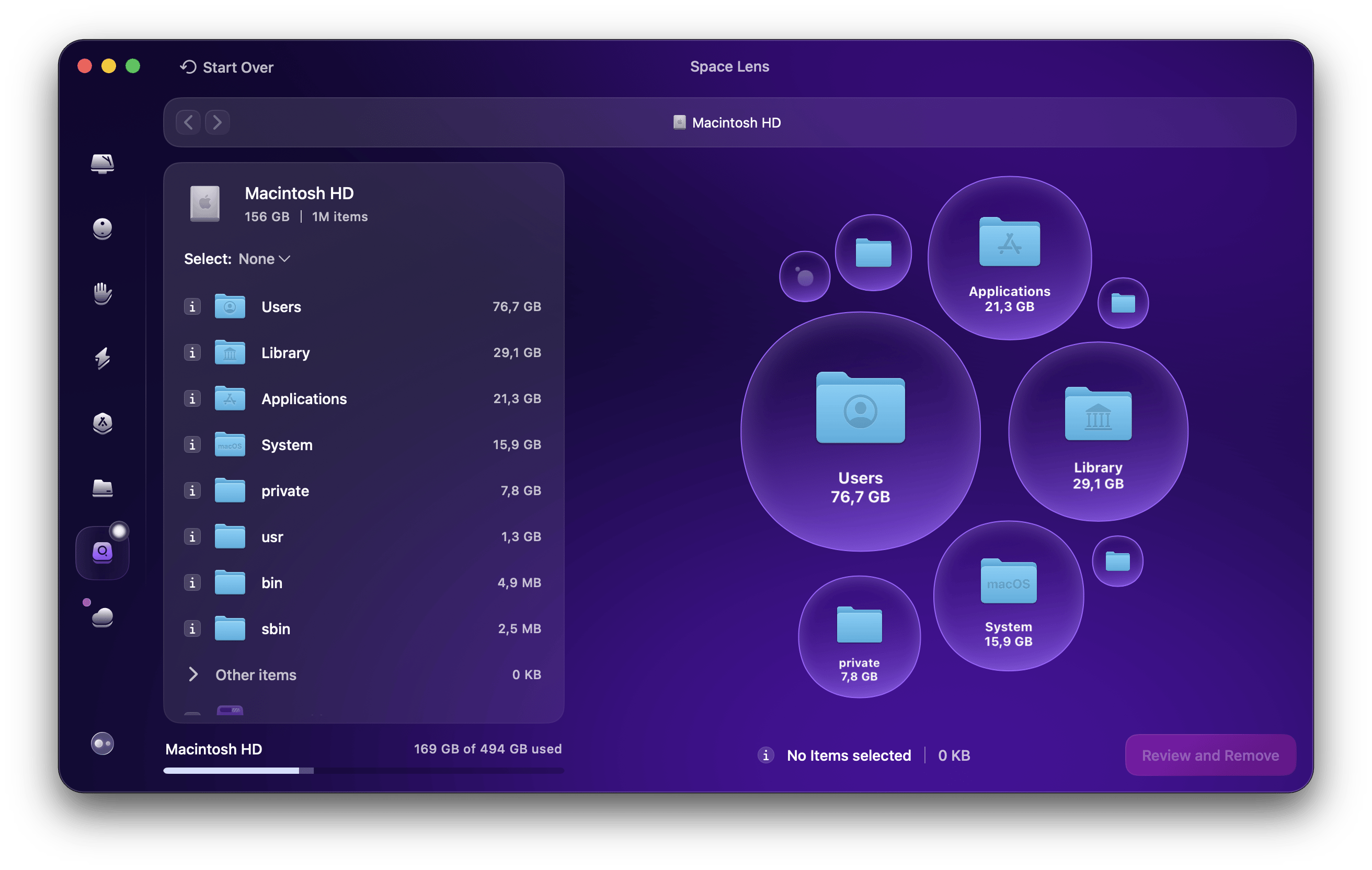
Use CleanMyMac's Space Lens feature to scan your Mac and identify which folders are consuming the most storage. Delete what you don't need, and the scratch disk error usually clears right away.
You can change where Photoshop stores its scratch disk.
Go to Photoshop > Settings > Scratch Disks and select a different drive, including an external one. Just make sure the new location has at least 40GB of free space and stays connected to your Mac.
Modern Macs with SSDs don't need defragmentation — backups matter more.
Defragmenting an SSD can actually harm your Mac. Instead, use Get Backup Pro to automate backups and protect your files in case cleanup accidentally deletes something important.
Intensive programs like Photoshop, Premiere Pro, and Final Cut Pro often serve up the scratch disk error when they have trouble storing their temporary files. This often happens due to a lack of disk space, and it can be quite annoying and even affect your workflow.
Here, I’ll show you how to clear the scratch disk Photoshop error and get everything back working. We’ll also look at how to empty the scratch disk for use, why Photoshop scratch disks are full, and how to better manage memory to reduce or eliminate the frequency with which these pop-ups occur.
Understanding Photoshop scratch disks on Mac
Scratch disk is a virtual memory that more intensive apps like Photoshop, Premiere Pro, and Final Cut Pro use to store temporary data when you are editing your files. You can think of it as a scratch pad of paper you use to write down notes for something; maybe it’s ideas for a book you’re writing or sketching some illustrations by hand before testing the waters in a design app.
When you have your final copy, you won’t need these notes, and scratch disk works the same way. When you close your project, the files are cleared.
But while it’s meant to be temporary, the data stored there can quickly build up as these apps are used for heavy projects like editing videos. Accumulation can slow down performance, so you need to monitor and manage your scratch disk space to ensure an uninterrupted workflow.
Possible cause
Solution
Steps
Scratch disk full
Clear disk space
Open CleanMyMac > Space Lens > Scan > Select folders to delete > Click Remove.
Temporary files in Photoshop
Delete Photoshop temporary files
Open Finder > Search for .tmp files > delete files starting with pst.
Photoshop cache
Clear scratch disk in Photoshop
Open Photoshop > Select Edit > Purge > All.
Location of scratch disk
Move scratch disk
Open Photoshop > Preferences > Scratch Disks > Select new drive > OK > Restart Photoshop.
Full hard disk
Free up RAM
Open CleanMyMac > Menu bar icon > Memory > Free Up.
Persistent issues
Reset Photoshop
Open Photoshop > Preferences > General > Reset Preferences On Quit > OK > Restart Photoshop.
Old Macs with HDD
Upgrade to a larger drive
Contact a professional to replace HDD with SSD.
Non-upgradable newer Macs
Use external drive as scratch disk
Connect external drive > Open Photoshop > Preferences > Scratch Disks > external drive > OK.
For persistent storage problems that cleaning caches doesn't resolve, the Fix My Mac fix Mac tool is worth trying. Describe what's happening and it'll suggest targeted fixes to free up disk space without guessing which files to delete.
How to fix Photoshop scratch disk full on Mac
There are a few tips and tricks for clearing your scratch disk that are effective, but remember, the best path forward is always managing your memory proactively. Here, we’ll show you how to clear a scratch disk partition and show some apps that may prevent the errors from popping up ever again.
1. Clear your disk space
You’re here to learn how to clear the scratch disk in Photoshop, but the root of the problem is your Mac’s cluttered storage space. How often do you save items and never touch them again?
CleanMyMac has an incredible feature named Space Lens that provides you with an overview of your Mac’s storage makeup so you can quickly identify which folders are overflowing with stuff. It analyzes your entire system and surfaces which folders are too bulky, and offers a quick way to delete files you don’t need. Here’s how it’s done:
Install and open CleanMyMac on your Mac.
Click Space Lens from the left side of the window.
Click Scan at the bottom of the window.
When the app is done analyzing your Mac, select the folders you want to delete.
Click Remove at the bottom of the window.
Tip: CleanMyMac's Space Lens shows exactly what's filling your drive — and removes it in two clicks. Scan your entire Mac, see storage by folder, and delete what's bloating your scratch disk. Also clears Photoshop temporary files, RAM, and browser caches. Free for 7 days on Setapp. Try CleanMyMac Free.
2. Delete Photoshop temporary files
Knowing how to clear Photoshop scratch disk errors is sometimes as simple as deleting temporary files. To locate and delete temporary Photoshop files, search your Finder for any files with the extension “.tmp”. Photoshop begins its filename with “pst”, so anything matching those parameters can be deleted.
3. Clear the scratch disk in Photoshop
While you want to know how to clear the scratch disk, Photoshop doesn’t make it easy, does it?
When you want to clear your Photoshop scratch disk, you’re essentially deleting its cache. To do that, follow these steps:
Open Photoshop on your Mac.
Click Edit from the menu bar.
Choose Purge > All.
When the pop-up appears, click OK.
Now your Photoshop cache is clear, and it’s free to write more temporary files to a scratch disk.
4. Move your scratch disk
You can change the location of your scratch disk in Photoshop, too! One popular method is to use an external drive as a scratch drive – just remember to leave it plugged into your Mac.
Here’s how to change the scratch drive location on your Mac:
Open Photoshop on your Mac.
From the menu bar, click Photoshop.
Choose Settings > scratch disk.
Select the drive you’d like to use > OK.
Force-close Photoshop, then re-open it.
Now the location of your scratch disk has changed!
5. Why defragmentation is usually unnecessary on Macs
Do Macs need defragmentation? The short answer is no. Macs don't need defragmentation, and if you have a modern Mac with an SSD, defragmenting it can actually harm your Mac.
Your best bet is to create backups of your file system, and often. Get Backup Pro for Mac helps you automate your backups, sync files between computers and mounted devices, and encrypt those backups for safekeeping. You can also create projects within Get Backup Pro for saving files from apps like Photoshop!
Backing up files is a great option because there will be times when cleaning up an app’s cache or files inadvertently destroys or deletes files you actually wanted to keep. Having a backup is your safety net.
Tip: Before clearing any files, back up your Mac. Get Backup Pro does it automatically — and encrypts everything. Automated backups, folder sync, and bootable clones — so cleanup never means lost work. Create a Photoshop project backup before you purge anything. Try Get Backup Pro Free.
6. Free up RAM in Terminal
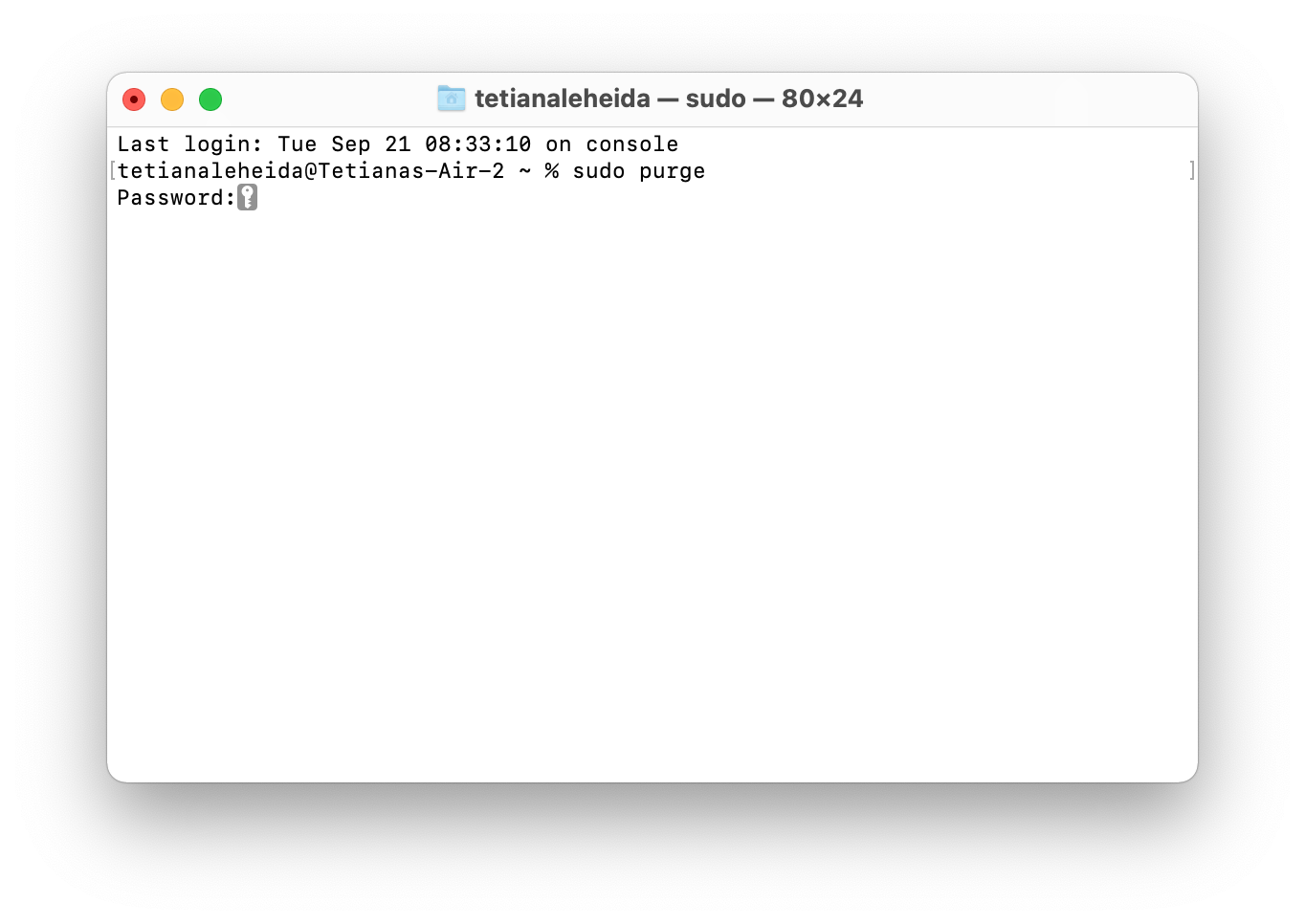
Sometimes your Photoshop will just freeze, and freeing up purgeable space might not help. In this case, try clearing up some RAM via Terminal.
To do so:
Open Terminal through Spotlight.
Type the command sudo purge.
Enter your password.
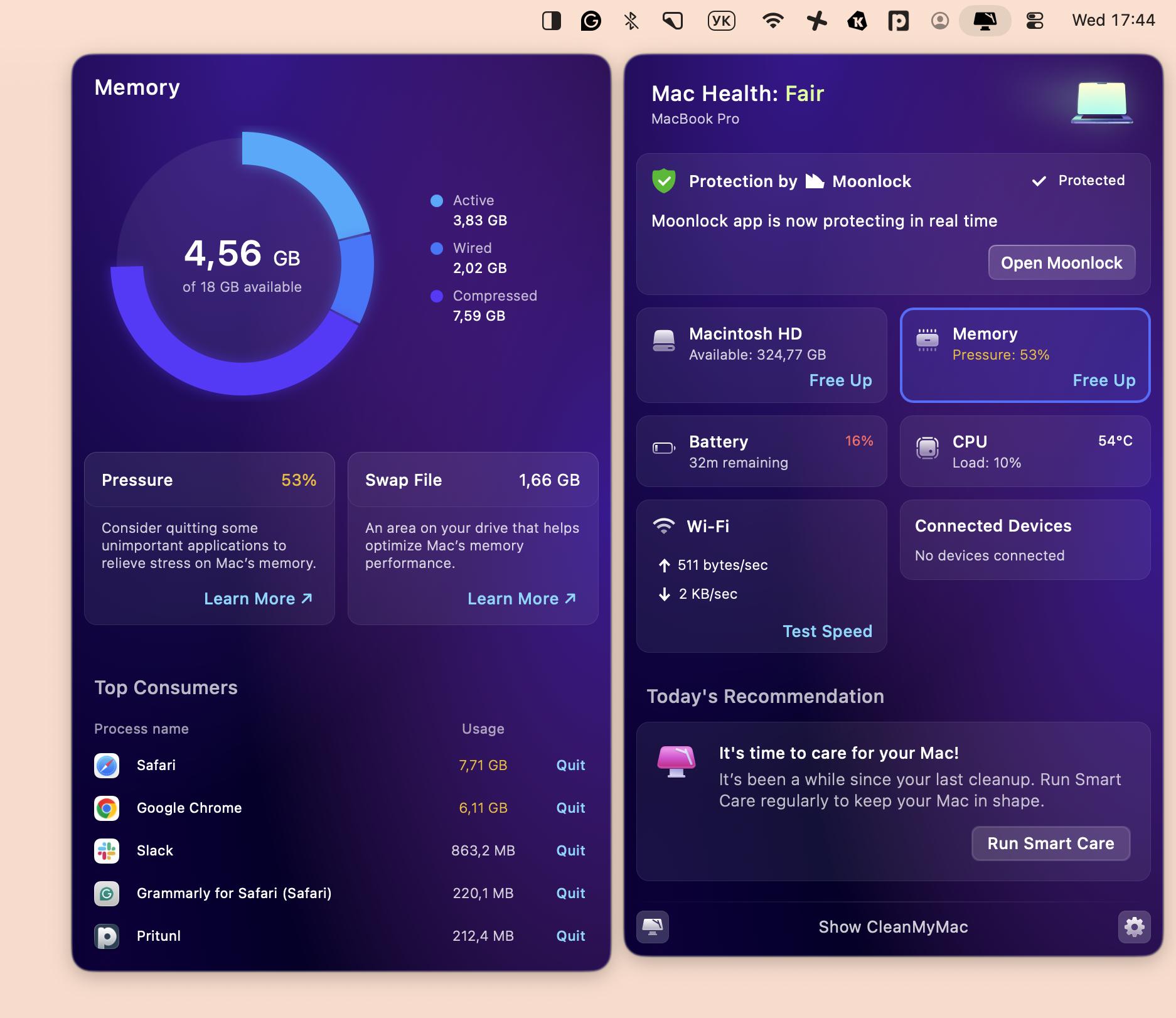
The lack of memory on Mac often causes issues with intensive programs like Photoshop. With CleanMyMac, RAM cleanup is the easiest thing to do:
Open the app, and click the menu bar icon.
In the Memory box, click Free up.
That’s it!
7. Reset Photoshop
If you’ve tried to fix the “scratch disk is full” error using the methods above, and it didn’t help, you might need to reset Photoshop to its factory settings. Please note that this action will also reset your color settings and other settings to the original defaults. So you’ll need some time to get back on track with your work after the reset. Here’s how to reset Photoshop:
Go to Photoshop > Settings > General.
Click Reset Preferences On Quit.
Click OK to confirm your action.
Restart Photoshop to proceed with the reset.
Alternatively, you can just quit Photoshop, press and hold Command + Option + Shift, and open Photoshop without releasing those keys. Once you see a dialog asking if you want to delete the settings file, click Yes, and reopen Photoshop. This should fix the scratch disk problem.
This should win you a good chunk of memory for your Photoshop to continue stable work. Try restarting Photoshop to see the difference.
8. Upgrade to a drive with more space
In some cases, you can try to add additional storage to your drive — but that’s only possible if you have an old Mac. For example, Macs from 2012 and earlier come with an HDD that can be replaced with an SSD (a modern and speedy type of Mac storage drive). Newer Macs mostly use SSD, which is very hard to replace. Generally, all Macs from 2016 and later have internal drives that are not upgradeable, so you’ll have to look for an alternative solution — clean up your current drive or use an external drive as a scratch disk.
If you do find that your internal drive can be upgraded, contact the professional Apple service to do the job — this is a very serious task that requires solid expertise.
Is it possible to empty my scratch disk without opening Photoshop?
Using CleanMyMac is the best way to purge temporary files and clear up scratch disk space on your Mac without digging through Photoshop. Remember that scratch disks only hold temporary files, and those files don’t always delete themselves when not in use.
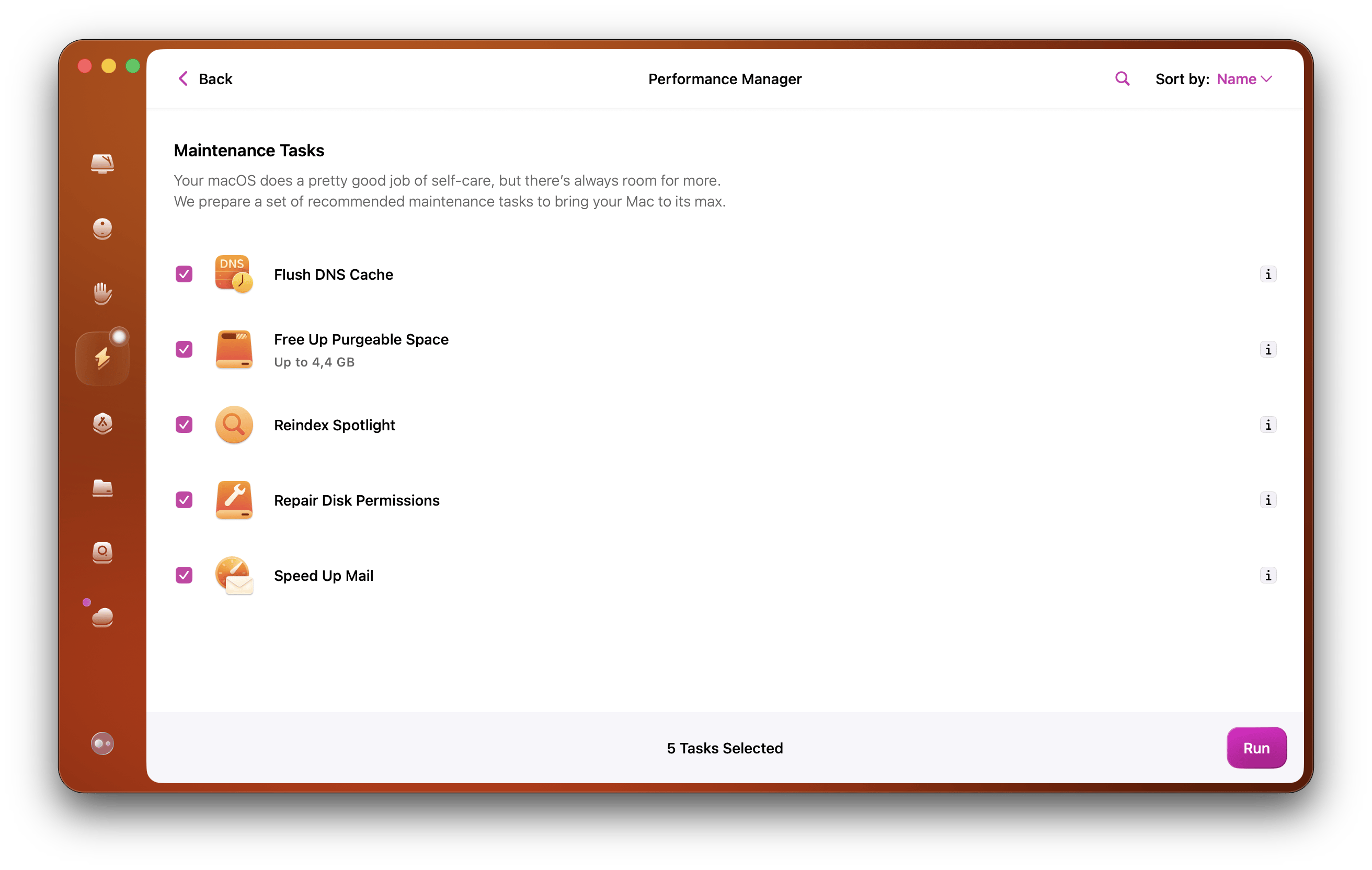
CleanMyMac’s Performance module has a feature named “Free up purgeable space” that tackles temporary files stored on the scratch disk. Thought it may be a good idea to run the entire Performance module and really get your Mac in perfect condition, freeing up purgeable space is great when you just need to free up space on a scratch disk. Just keep in mind you should have Photoshop closed when you run this module!
How to clear the scratch disk on Windows
If you have a Windows computer, you are not immune to the “scratch disk is full” error, unfortunately. Here’s how to clear sthe cratch disk on Windows:
In Photoshop, choose Edit > Settings.
Click Scratch Disks and choose the drive that is used as a scratch disk.
Remove large files from the disk if it has less than 40GB of free space.
You might also consider deleting temporary files — on Windows computers, they are generated the same way as on Mac. To do this, quit Photoshop and go to C:\Users\Your Username\AppData\Local\Temp. You can remove all files that have “temp” in the names.
Common reasons for scratch disk full errors in Photoshop
The main reason behind the ‘Photoshop scratch disk full’ Mac error is due to a lack of enough space. Sure, temporary files are meant to clear out automatically, but some projects can run out of hand and fill the space before you’ve completed them.
There are also several other reasons that can cause the Photoshop scratch disk full Mac error:
Leftover temporary files that didn’t clear up, probably because you frequently force-quit Photoshop.
Limited RAM, which forces Photoshop to use your disk as virtual memory for crucial tasks.
Knowing how to manage your RAM and disk space will help solve and avoid the error.
What do you do when scratch disks are full?
When you see "Photoshop scratch disk full," Mac computers have no good recourse for solving the issue. It won’t automatically clear disk space or create a unique partition, so the problem doesn’t occur. You have to know the methods for clearing a scratch disk yourself.
This is how to fix Photoshop scratch disk full error
The power of Photoshop is a gift and a curse. It can do just about everything you want when it comes to editing photos, but it’s consumptive. Clearing up scratch disk space may not be routine for you, but if you’re a Photoshop power user, you’ll likely run into it at some point.
Photoshop's "scratch disk full" error can be annoying, but it's easy to fix. The key is maintaining your Mac's storage. Regular maintenance, such as clearing temporary files, cache, and system junk, is essential. For detailed steps on how to keep your Mac optimized, check out this article "How to clean up and optimize your Mac."
Clear the scratch disk error for good. CleanMyMac cleans it up — Get Backup Pro makes sure you never lose work doing it. Both apps included in Setapp plus 250+ other Mac tools. Start My Free 7-Day Trial.
FAQ: Hot to clear scratch disk
Why does Photoshop say “scratch disk full” when hard drive still has space?
Photoshop can use your hard drive, a SSD, or even an external drive as a scratch disk. So it could be the case that you’re checking the wrong disk for space. You can read more about assigning scratch disks here. It’s recommended that you don’t use your main drive — the one where macOS is installed — as a scratch disk for Photoshop.
Another reason might be that even though your drive has space, it lacks unfragmented space, which is essential for Photoshop to work properly. Some sources recommend running disk defragmentation in such cases, but it’s not always secure, so we recommend regularly backing up your drive with Get Backup Pro.
What does scratch disk full mean in Photoshop?
The error usually means that you’re running out of RAM or disk space in the drive where Photoshop’s scratch disk is located. This is a very common problem because Photoshop tends to generate lots of temporary files in the background, which pile up and clutter your drive.
How to prevent scratch disk full in Photoshop?
Run regular disk cleanups with CleanMyMac. It will remove junk files, including tons of temporary files generated by Photoshop. One monthly cleanup should be enough to prevent scratch disk full errors.
How to clear a scratch disk in Photoshop without opening?
Use CleanMyMac to purge temporary files and free up scratch disk space:
Open CleanMyMac.
Select Performance > Scan.
Click Run Tasks.
You can also manually delete Photoshop temporary files:






 Best solution
 Best solution


 The lack of memory on Mac often causes issues with intensive programs like Photoshop. With