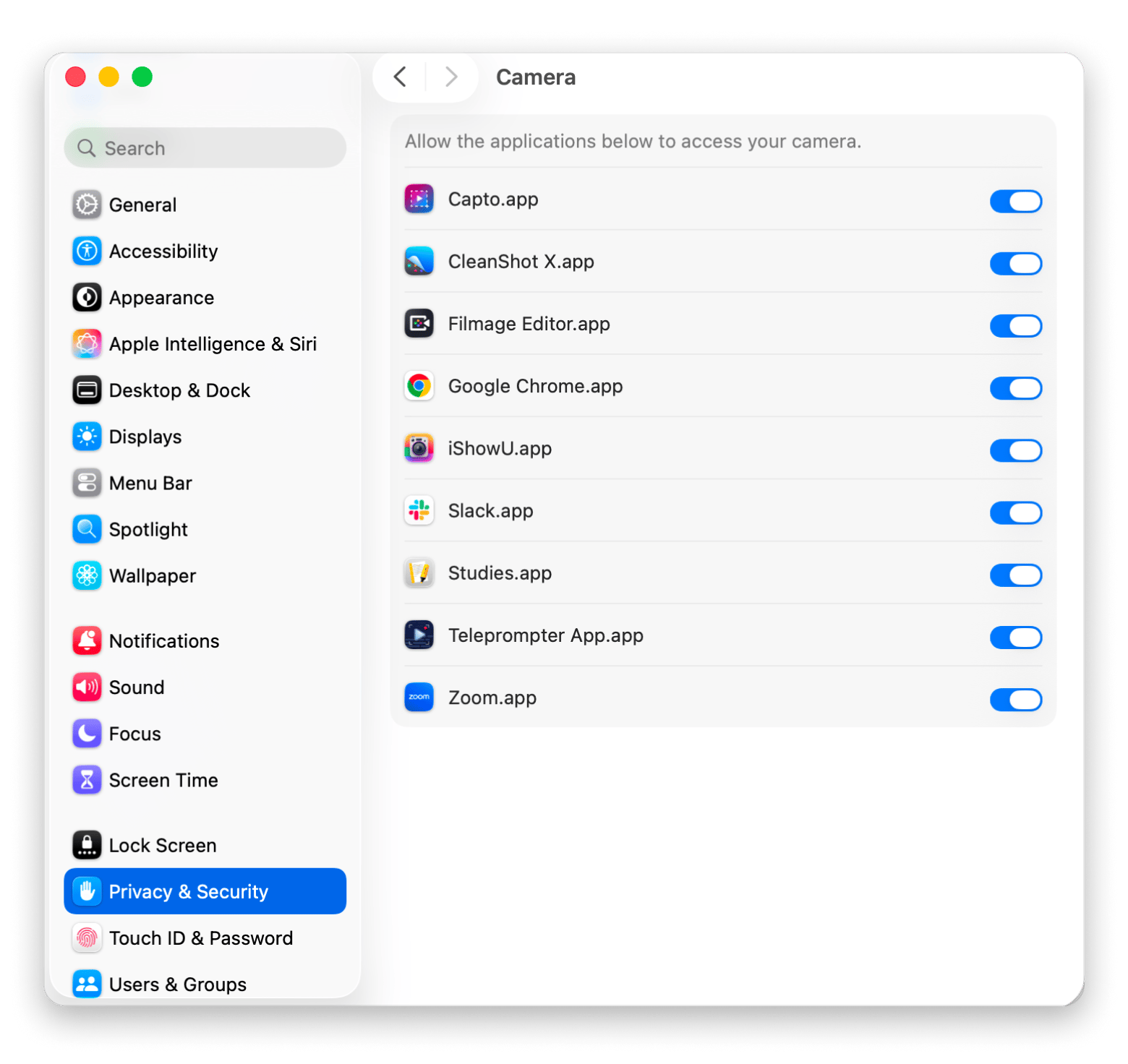
Manage camera permissions in System Settings. Go to System Settings > Privacy & Security > Camera to see every app with camera access. Toggle switches to allow or deny each one individually.
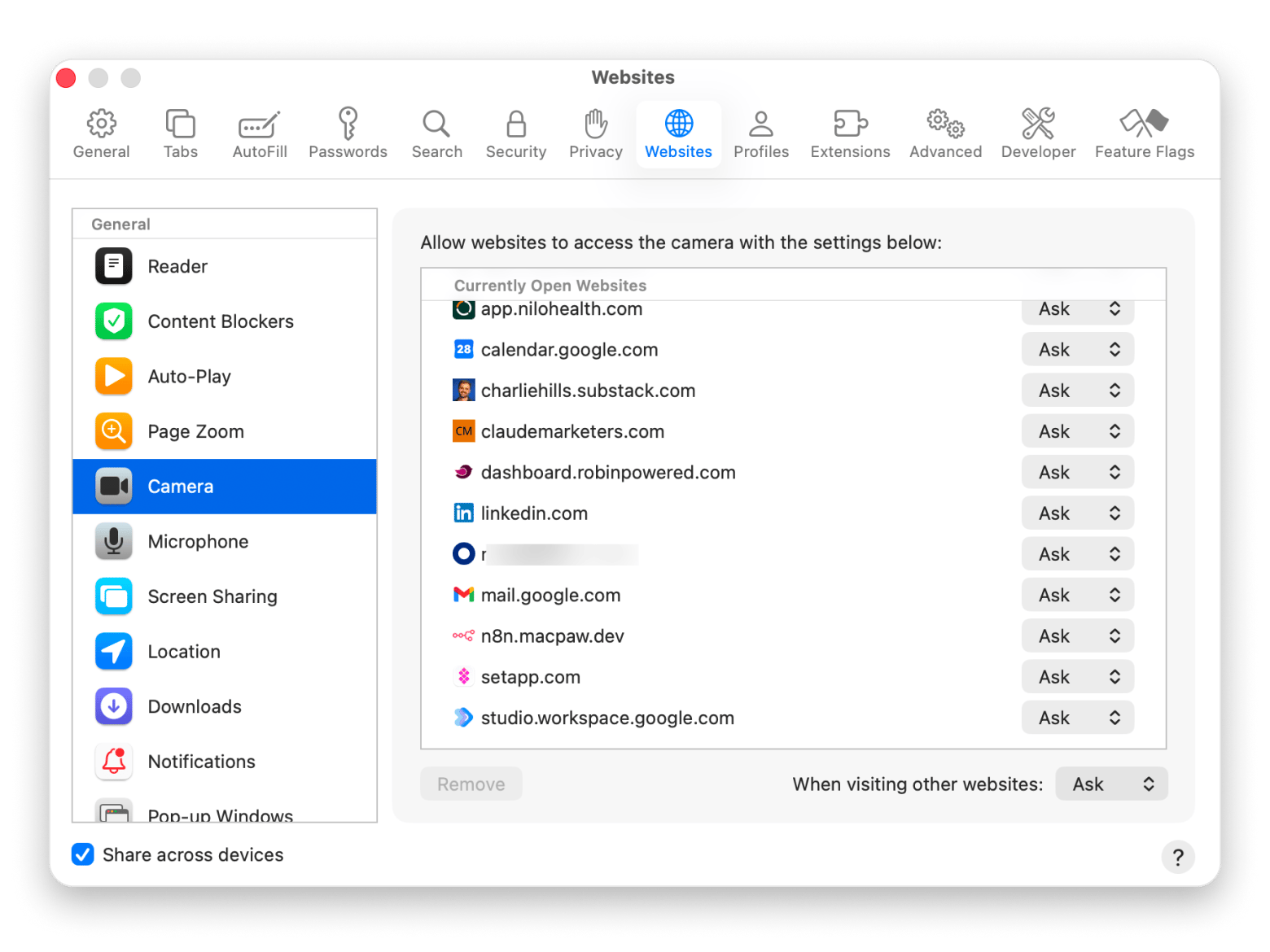
Grant website access separately in Safari. Open Safari > Settings > Websites > Camera and set each site to Allow, Deny, or Ask. Keep the default set to Ask for security.
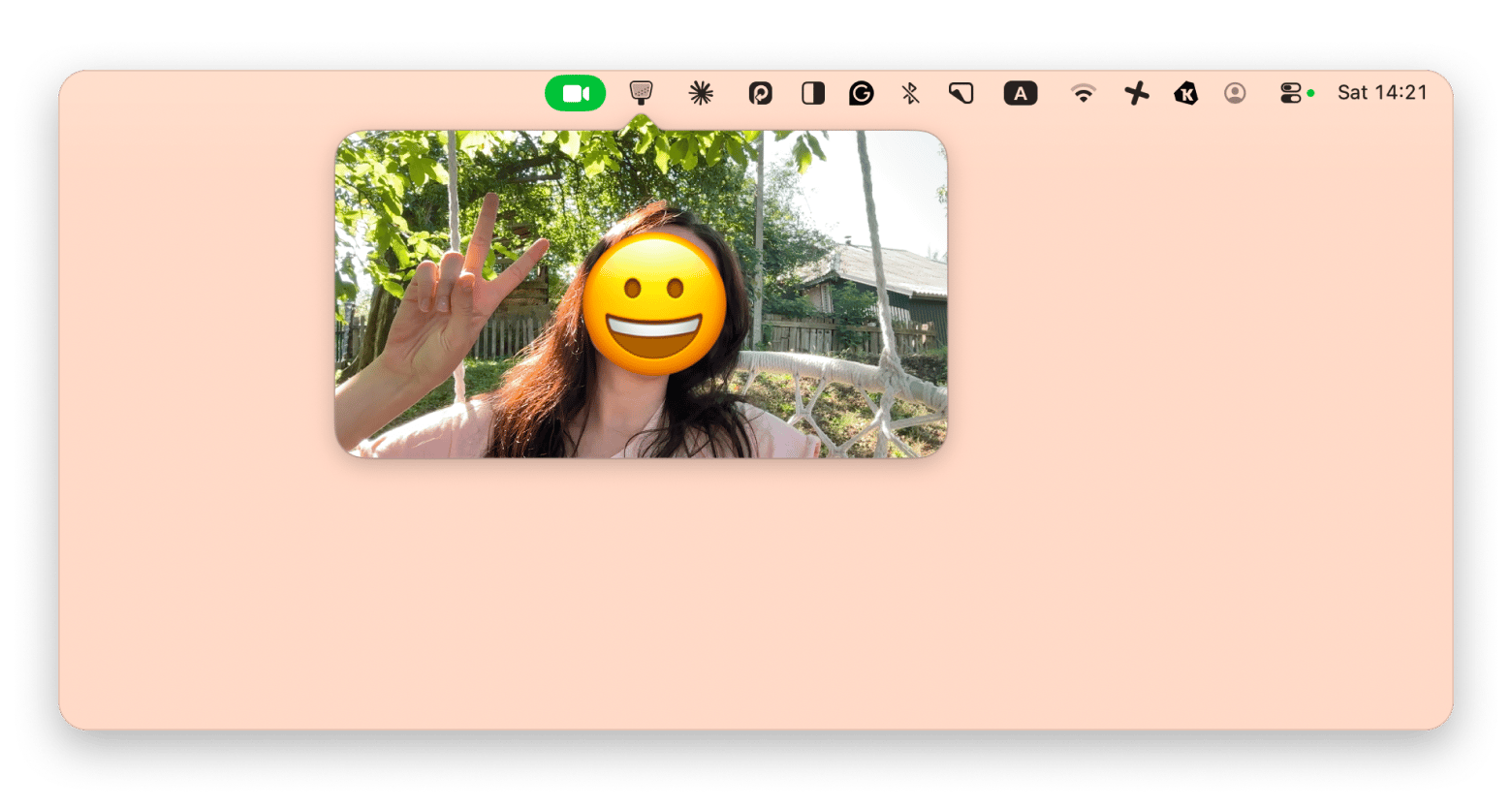
Trust the green LED indicator. Apple's hardware-wired LED turns on whenever the camera activates and cannot be disabled by software. If it lights up unexpectedly, investigate immediately.
Troubleshoot missing camera options by launching an app first. The Camera section in Privacy & Security only appears after an app requests access. Open FaceTime or another camera app, then check again.
Manage permissions faster withCleanMyMacand preview your camera withHand Mirror. Control all app permissions from one dashboard and check your camera angle before every call — both available through a Setapp membership.
Quick answer: To control camera access on Mac, open System Settings > Privacy & Security > Camera. You'll see every app that has requested access, with toggle switches to allow or deny each one.
If you’re trying to use your Mac’s camera for a video conference or to take a picture, you might find it's not working. This can be frustrating, but controlling camera access on a Mac is straightforward.
I’ll walk you through the steps for giving your Mac permission to access the camera, how to find the camera access settings on your computer, how to enable the permissions, and the best way to test that your camera is working.
Here's a summary of the main solutions for managing camera permissions on your Mac. I'll explain each method in detail below:
How do I see which apps can access my camera on Mac?
To check which apps are allowed to use the camera on a Mac, you can go to the Apple menu > System Settings and click on Privacy & Security. From there, click on Camera.
You'll see every app that has requested camera access. Switch next to each app to allow or deny access. Built-in apps like FaceTime and Photo Booth already have permission by default.
How do I allow an app to use the camera on Mac?
Quick answer: Go to System Settings > Privacy & Security > Camera and turn on the app you want to allow.
Apple built macOS to protect your privacy by default. When you open an app that needs camera access, you'll see a permission request. Here's how to grant access manually:
Open System Settings from the Apple menu.
Click Privacy & Security in the sidebar.
Select Camera from the list.
Turn on the switch next to your desired app.
For quick camera checks before meetings, I also recommend Hand Mirror. This simple app lives in your menu bar and gives you an instant camera preview with one click. It's perfect for those last-second appearance checks before video calls.
Before video calls, I used to open Photo Booth just to check my camera angle, which meant waiting for it to launch and then quitting it. Hand Mirror is literally one click in the menu bar.
How do I let a website use my Mac camera in Safari?
Yes, if someone installs spyware or gains remote access to your Mac, they could activate your camera.
Apple includes a hardware-based protection: the green LED next to your camera is hard-wired to turn on whenever the camera activates.This LED cannot be disabled by software.
Watch for these warning signs:
The green LED turns on unexpectedly
The LED flickers when no apps should be using the camera
Your Mac runs slower than usual
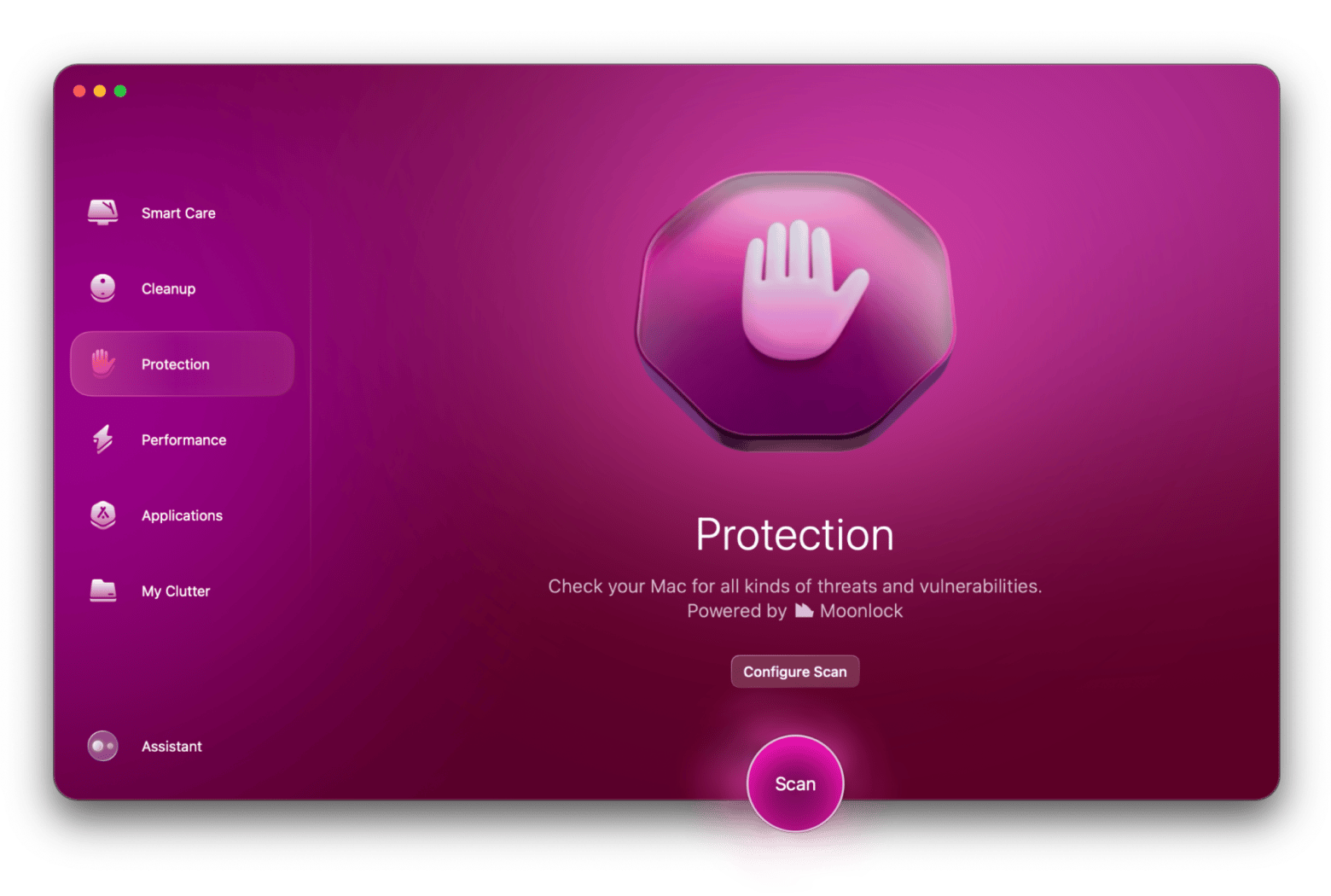
To protect myself, I use CleanMyMac's Protection feature. It scans for viruses, miners, and spyware that could compromise your camera. The app checks against a database of known threats and removes anything suspicious.
ClearVPN adds another layer of protection by encrypting your internet connection. ClearVPN encrypts your video calls and blocks malicious sites that could install camera-hijacking software. The app also blocks malicious websites that might try to install camera-hijacking software.
For a deeper look at protecting your Mac beyond camera security, here are the best antivirus apps for Mac — several of them specifically scan for camera-targeting spyware.
Turn on your Mac camera and stay secure
Now you know how to manage camera permissions through System Settings and Safari.
Remember these key points for camera security. Keep your apps updated regularly. Check your camera permissions monthly. Use security tools to scan for malware. And trust that green LED: if it's on when it shouldn't be, investigate immediately.
Your camera permissions are set. Now keep your Mac secure with the right tools. CleanMyMac, Hand Mirror, and 270+ other Mac and iOS apps — all in one Setapp membership. Cancel before Day 7 — $0 charged. Start Your 7-Day Trial.
FAQ
Why can't I give an app access to my Mac camera?
First, make sure the app is running and has tried to access the camera. Then restart your Mac and check again. Update the app to its latest version through the App Store or the developer's website. Finally, verify you're running macOS Mojave or later — older versions don't have camera permission controls.
If you'd rather manage all app permissions from one place instead of digging through System Settings, CleanMyMac's Application Permissions module lets you review and revoke camera, microphone, and location access in a single dashboard.
How do I let a website use my Mac camera in Safari?
Open Safari and go to Safari > Settings > Websites > Camera. Find the website in the list and set it to Allow. If the site isn't listed, visit it first and let it request camera access. You can also change the default setting for all websites at the bottom of this panel.
Why is the Camera option missing in System Settings?
The Camera option only appears after an app requests camera access on macOS Mojave or later. Launch any camera-using app like FaceTime or Zoom first. If you recently updated macOS, restart your Mac and try again. The option should then appear in Privacy & Security settings.






 Best solution
 Best solution