WAV and MP3 serve different purposes based on your needs.
WAV stores uncompressed audio at studio quality but takes up massive file sizes (up to 10× larger than MP3). MP3 compresses files by 95% with barely noticeable quality loss, making it ideal for storage and sharing while preserving excellent sound at 192–320 kbps bitrate.
You have three practical ways to convert WAV to MP3 on Mac. Permute is the fastest (drag, drop, convert in seconds). The built-in Music app (iTunes) is free but slower. VLC is completely free and reliable. Choose based on how many files you're converting and whether you value speed or cost.
Always backup original WAV files before batch converting.
MP3 compression is one-way, and you can't recover lost audio data. Store originals on iCloud, an external drive, or Time Machine. After conversion, verify quality with a trusted media player like Elmedia Player to ensure the conversion worked properly.
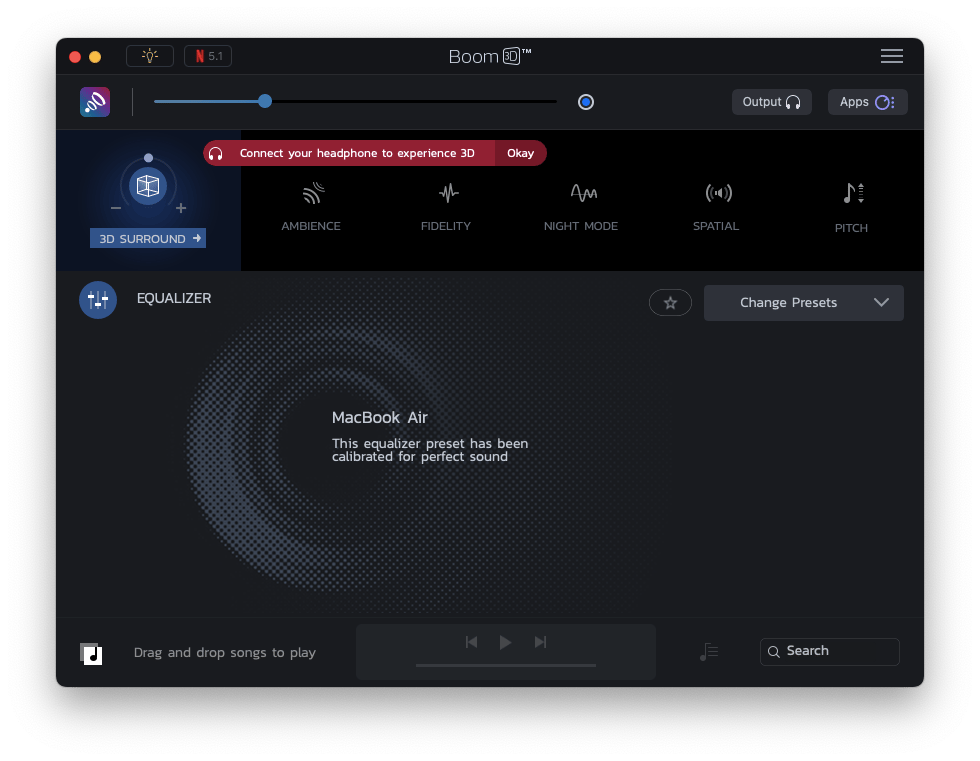
Enhance playback quality after conversion with audio tools. Boom 3D adds virtual surround sound, audio boosting, and advanced equalizer presets to elevate your MP3 listening experience beyond standard Mac audio. Elmedia Player supports 70+ formats with hardware-accelerated decoding for pristine playback.
Choosing between the best audio quality of WAV files and the convenience of MP3s can be tricky at times. But once you understand when the quality of sound is critical and when it’s smarter to use a compressed version of your audio, WAV to MP3 conversion will no longer feel like too much of a compromise.
In this article, I'll discuss the difference between WAV and MP3 file formats and explain multiple ways to convert WAV to MP3 on Mac — to help you better manage your disk space, easily transfer files, and ensure great sound quality.
What’s the problem?
How to resolve it
Not tech-savvy, need an easy solution
Install and open Permute. Drop WAV file into app window > Choose MP3 > Click the play button.
Want to use macOS tools
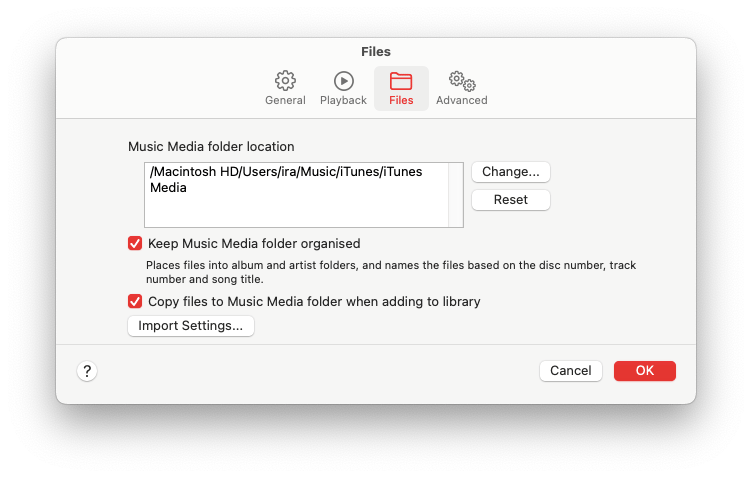
Go to Music > Settings > Files > Import Settings > Select MP3 Encoder > Add WAV files.
Go to File > Convert > Create MP3 Version.
Don’t want to pay for a conversion app
Download VLC to convert WAV to MP3.
Mac won’t play converted MP3 files
Install Elmedia Player to play over 70 audio and video formats, including WAV and MP3.
Need to improve audio quality
Install Boom 3D to boost your Mac’s audio for superior sound quality, volume, and virtual surround sound.
Stuck troubleshooting a Mac issue? The Fix My Mac GPT goes beyond the standard "restart and hope" approach. Describe your problem and get a tailored solution that targets the actual issue instead of wasting time on generic fixes.
Best method to convert WAV to MP3 on Mac with Permute
The most straightforward way to convert .wav to .mp3 is Permute. It's one of the most versatile and easy-to-use converters of audio, image, or video files for macOS.
Permute can convert WAV to MP3 literally in two clicks. Even if you want to change WAV to MP3 format for multiple files at once.
To use Permute as a WAV to MP3 converter:
Install and open the app.
Drop your WAV file into the app’s window.
Choose MP3 from the drop-down at the upper left.
Click the play button for instant WAV to MP3 conversion.
Your new MP3 file will automatically be saved to the same location as its WAV original.
Permute converts WAV to MP3 in two clicks — and handles video, image, and audio conversions too. Drop any file in, choose your output format, click play. Batch conversion, 50+ formats, no quality loss, no internet required. Your private audio never leaves your Mac. Free for 7 days on Setapp. Try Permute Free.
How to convert WAV to MP3 on Mac using music (iTunes)
If you’d like to try native macOS tools to turn WAV into MP3, you can use iTunes or Music (for macOS Catalina or later). The process will take a little longer than with Permute, but it allows you to use the app you already have on your Mac.
Follow these steps to turn WAV into MP3 using Music or iTunes:
Open the Music app.
Go to Music in the app’s top menu bar > Settings (if you’re using iTunes, go to Edit in the top menu bar > Preferences).
Open the Files tab (in iTunes — choose the General tab) and click on Import Settings.
Choose MP3 Encoder next to Import Using > OK.
Add the WAV file (or files) you’d like to convert to your Music or iTunes Library.
Find and select all the files you want to convert.
Go to File in the top menu > Convert > Create MP3 Version.
How to convert WAV to MP3 on Mac for free using VLC
Another free app that can be used as a WAV to MP3 converter is VLC, a popular video player that also supports the conversion of audio files.
To convert .wav to .mp3 with VLC:
Open VLC.
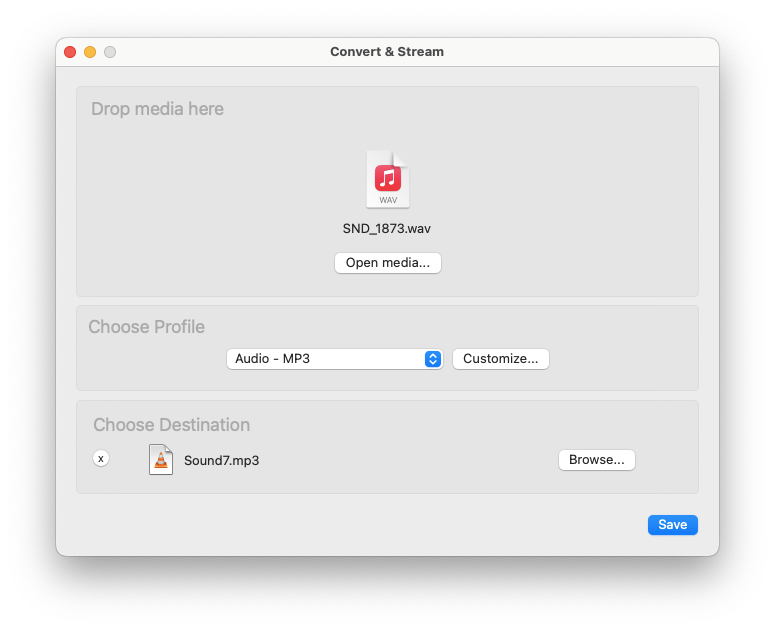
Go to the File menu at the top of your screen > Convert/Stream.
Drop your WAV file into the top section of the dialogue window that appears (or click on Open Media and browse to add your file).
Choose Audio - MP3 in the Choose Profile section > Save as File > Browse.
Name the file (make sure you add the .mp3 extension to the name manually for the conversion to work properly) and the location where you’d like to save it > Save.
How to play WAV and MP3 files on Mac effortlessly
As we’ve already discussed, both iTunes/Music and the VLC player are good candidates for a WAV to MP3 converter free of charge for you. You can also use any of them to play WAV and MP3 files.
Built-in options to play WAV and MP4 files:
Music app: Perfect for MP3 libraries, playlists, and AirPlay
QuickTime Player: Simple drag-and-drop for both formats
If you’re interested in additional advanced functionality of a media player that could help you improve your viewing and acoustic experience, we recommend Elmedia Player.
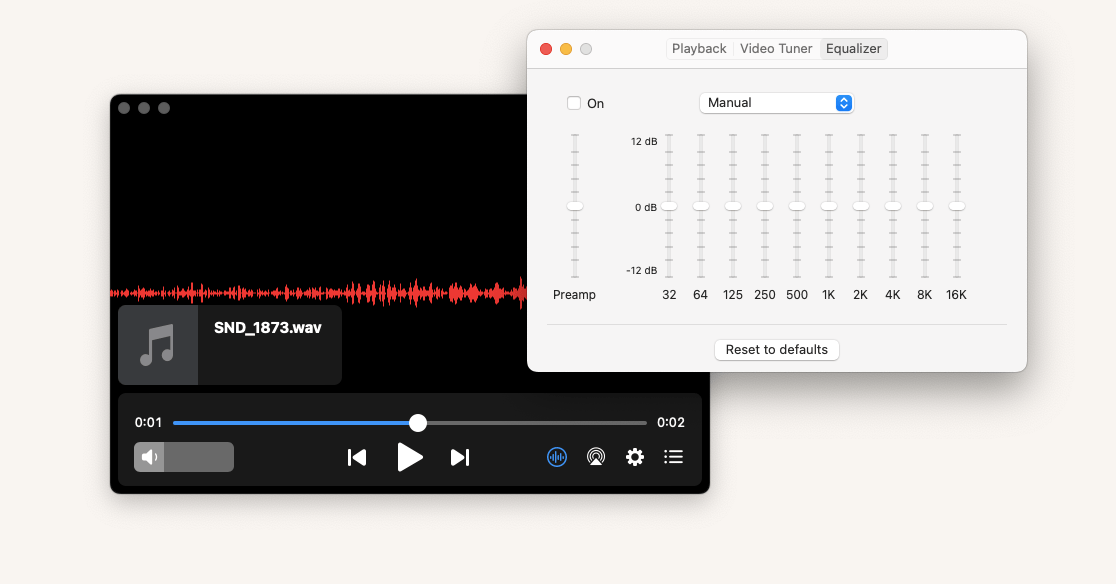
Elmedia Player is one of the most versatile options for Mac that can play audio and video files in over 70 formats, including WAV, MP3, SWF, MP4, AVI, MOV, DAT, and others. Simply drop your file onto the app’s window or paste a web link to your video into the app’s browser and enjoy:
Wireless streaming from and to your Mac, making use of a larger screen or speakers
Outstanding picture and sound quality due to hardware-accelerated decoding that reduces the load on your Mac’s processor, integrated video tuner, and audio equalizer
Full-screen movies, picture-in-picture mode, or playback pinned on top of other active apps for multitasking
Subtitles, screenshots, and bookmarks support
Easy out-of-sync audio adjustment and more
Converted your WAV to MP3? Elmedia Player plays both — plus 70+ other formats — with hardware-accelerated quality. Built-in audio equalizer, picture-in-picture, wireless streaming, and subtitle support. Verify your conversion sounds perfect before sharing. Free for 7 days on Setapp. Try Elmedia Player Free or get Elmedia Player standalone via Marketplace — from $4.99/mo.
How to boost Mac sound quality after conversion
Don’t want to miss out on the surround sound experience of a bigger acoustic setup when playing files on your Mac? Try using Boom 3D audio enhancer.
Boom 3D can boost both the quality and volume of your audio, redefining your listening experience on Mac and pushing your Mac’s audio hardware for its peak performance:
Enjoy the sound enhanced by the innovative virtual surround sound feature and an extensive palette of advanced genre-based equalizer presets
Push your audio volume higher than the system default with Audio Boost without sacrificing audio quality
Set custom volume levels for different apps in your system
Access Boom 3D, iTunes, VLC, QuickTime, and Spotify sound controls wirelessly from your iPhone or iPad with Boom Remote for iOS
Watch compatible Netflix content in surround sound and 1080p video settings with Boom 3D Netflix browser extension
Quick tips:
Use high bitrate (320 kbps) during conversion
Pair with good headphones/speakers
Enable Boom 3D “Night Mode” for late listening
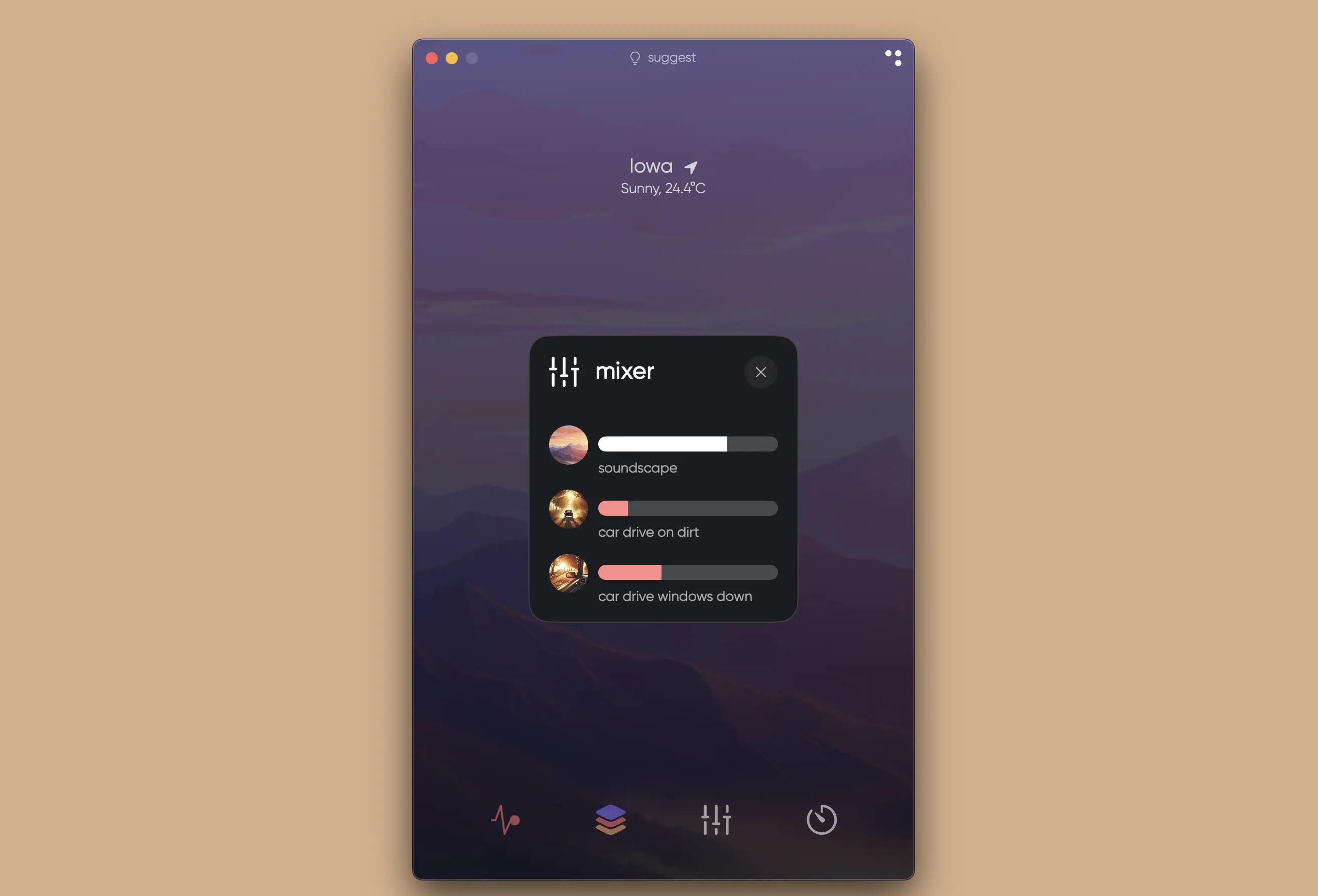
What would you say if I told you that it’s not only the quality of the sound that you can work with, but you could also easily create unique, one-of-a-kind sound environments on your Mac? Meet AI-generated soundscapes from Clariti.
What’s a soundscape? It’s an ambient sound stream that can help you stay focused and productive or, depending on your goals, calm and relaxed.
What’s WAV and MP3? What’s the difference between them?
WAV (pronounced as "wave”) was developed by IBM and Microsoft back in the 1990s and remains the format of choice in professional audio engineering today. It stores uncompressed raw audio and is the closest in quality to the original sound. The downside is that WAV files are usually large and can take up to 4 GB of space.
MP3 format solves this problem by compressing the data to produce more reasonable file sizes. Although some quality is lost in the process, it’s hardly perceivable by the human ear (the most noticeable downside to MP3 music is a weakened bass response) — while the file size may go down 95% from the original.
Both WAV and MP3 are popular file formats used for recording and storing audio.
Key differences between MP3 and WAV:
File size: WAV can be 10× larger than MP3 at the same quality.
Editing: WAV is ideal for pro editing, while MP3 loses quality with each re-save.
Compatibility: MP3 works everywhere; WAV is supported but less universal on mobile/old devices.
Audio quality: WAV retains every detail; MP3 discards some data (still sounds excellent at 192–320 kbps).
Tips for fast and secure WAV to MP3 conversion
Here are some simple ways to keep your conversions efficient and safe:
Use trusted apps only: Use reliable software like Permute, VLC, or the built-in Music app. Avoid unverified online tools that may compromise file security or inject malware.
Verify your source files: Before converting, check that your WAV files are complete and uncorrupted. Incomplete files can lead to conversion errors or audio glitches.
Organize and rename files before converting: Keeping a consistent naming structure helps you easily identify originals vs. converted versions after batch processing.
Backup originals: Always keep a copy of your original WAV files, especially before using batch conversion tools. Store backups on iCloud, an external drive, or Time Machine.
Check output quality: After conversion, play the MP3 files in a trusted media player like Elmedia Player to ensure audio quality hasn’t dropped. If needed, re-export using a higher bitrate.
If you're converting WAV to MP3 in bulk, apps like Permute can handle multiple files efficiently. Just drag and drop your folder and choose MP3 as the output format.
Mind privacy with online converters
If you’re tempted to use online tools, be cautious. Never upload sensitive or personal audio files, as some services store or process files on third-party servers.
Become a WAV to MP3 conversion master on Mac
The great news is that you have different options when looking for ways to convert .wav to .mp3. The easiest one is to use Permute media file converter: it can convert all types of video, audio, and image files for you (not just WAV to MP3) and only asks you to drop your file into the app’s window, choose a desired file format, and click on Play. You can also find a WAV to MP3 converter free of charge right on your Mac — both Music (iTunes) and VLC player can turn a WAV file to MP3.
Once you have your files converted, don't forget about the powerful tools that could help you make the most of the sound quality on your Mac:
Use hardware-accelerated decoding, an integrated video tuner, and an audio equalizer to play files with Elmedia Player
Go for the surround sound simulation and advanced genre-based equalizer presets in Boom 3D
Or create your own ambient sound mixes with Clariti
Convert with Permute. Play with Elmedia. Hear it better with Boom 3D. All free for 7 days on Setapp. Three apps that cover every step of your audio workflow — plus 247 more. Free for 7 days. Start My Free 7-Day Trial.
FAQ
What app converts WAV to MP3 on Mac?
The easiest way to convert WAV to MP3 is using a specialized media file converter, like Permute. But you can also use Music (iTunes) or VLC player on your Mac for WAV to MP3 conversion.
Does Apple use WAV or MP3?
You can play both WAV and MP3 files on Mac. But the default format for Apple Music is AAC (uses a more complex compression algorithm than MP3 to offer a higher quality at a very similar file size).
Does iTunes convert WAV or MP3?
Yes, you can use iTunes to convert WAV to MP3. Simply set Import preferences to MP3 Encoder and change WAV to MP3 after you add your files to the iTunes library.
How do I change a .WAV file to MP3?
You can change a .WAV file to MP3 on a Mac using several methods:
With Permute: Open the app, drag and drop your WAV file, choose MP3 as the output format, and click the play button to convert.
With the built-in Apple Music app (or iTunes on older macOS versions): Go to Settings > Files > Import Settings, select MP3 Encoder, add your WAV file to the library, then choose File > Convert > Create MP3 Version.
With VLC media player: Open VLC, choose File > Convert/Stream, add your WAV file, select Audio – MP3 as the profile, and save the converted file.
Can you convert audio files on a Mac?
Yes, macOS offers multiple ways to convert audio files:
Built-in tools like Apple Music (or iTunes on older systems).
Free third-party apps like VLC media player.
Dedicated converters like Permute for faster batch processing and broader format support.
Most tools allow you to convert between formats like WAV, MP3, M4A, and more in just a few clicks.
How to convert M4A to MP3 or WAV on Mac?
To convert M4A to MP3 or WAV on Mac:
With Apple Music: Open Settings > Files > Import Settings and choose either MP3 Encoder or WAV Encoder. Add your M4A file to the library, then select File > Convert > Create [chosen format] Version.
With Permute: Drag the M4A file into the app, select MP3 or WAV as the output format, and start the conversion.
With VLC media player: Go to File > Convert/Stream, add your file, choose the desired output format profile, and save.
Is WAV compatible with Mac?
Yes, WAV is fully compatible with macOS. You can play WAV files using:
While WAV files offer excellent, uncompressed audio quality, they are significantly larger than compressed formats like MP3, which is why users often convert them for storage and sharing convenience.
Get a universal media converter
Permute quickly converts files in a required format.






 Best solution
 Best solution