Add a user in System Settings: Choose Apple menu > System Settings > Users & Groups, click Add User, pick an account type, and click Create User. You need an administrator password.
Pick the right account type: Standard suits most people. Administrator gives full control. Sharing Only is for remote file access, and Guest User is for short visits.
Delete accounts safely: Log the user out first, then decide whether to keep their home folder as a disk image or delete it for good.
Keep a shared Mac fast:iStat Menus shows which apps use memory, and CleanMyMac clears the clutter each account leaves behind.
Get the tools in one plan: iStat Menus, CleanMyMac, and Almighty are included in Setapp Membership, with 300+ apps and a 7-day free trial.
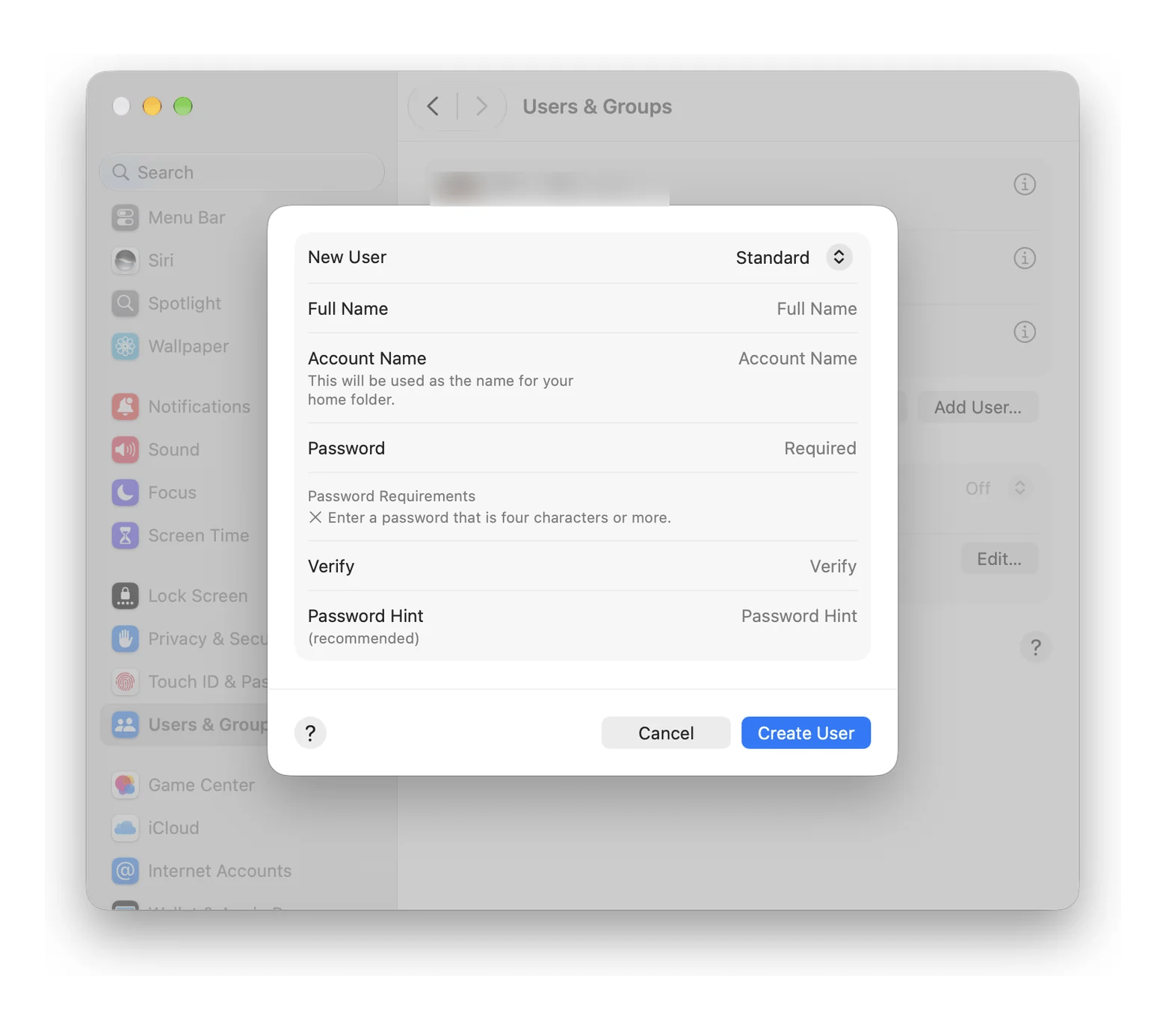
To add a user on Mac, choose Apple menu > System Settings > Users & Groups, click Add User, and enter your administrator password. Then choose an account type, fill in the name and password, and click Create User.
The first time I did this, it was for my partner. Their new job required a Mac, and a separate account kept their work files apart from my cluttered desktop.
Below, you’ll also learn the account types and how to delete old users.
What you need
Account type or setting
Share with a partner or coworker
Standard account
Give someone full control
Administrator account
Set limits for a child
Standard + Screen Time
Let a visitor use the Mac
Guest User
Share files without login
Sharing Only account
Same folder access for several
Group
What types of user accounts can you create on Mac?
Before you add a user on Mac, it helps to know the account types. When I first read about them, I was surprised by how many options Apple offers. Here’s a quick breakdown.
Administrator account
An administrator account gives you full control of your Mac. You can install apps, change system settings, and add or manage other users. The first account you create when you set up a Mac is an administrator. I use mine to install apps, adjust settings, and manage the other accounts on our shared Mac.
Standard account
A Standard account works best for everyday tasks like browsing the web, checking email, and working on documents. Standard users can install apps and change their own settings, but they can’t add other users or change anyone else’s settings.
If you’re adding someone who doesn’t need administrator access, a Standard account is usually the safer choice.
Accounts for children and parental controls
macOS no longer has a separate Managed with Parental Controls account type. To set up an account for a child, add a Standard user, then set limits with Screen Time.
Guest User account
Sometimes someone only needs your Mac for a few minutes. That’s what the Guest User account is for. Guests can’t see files in other user accounts, and everything they create is deleted when they log out.
Sharing Only account
A Sharing Only account lets someone access shared files remotely. They can’t log in to your Mac or change its settings. Think of it as a key to one room — they can open shared folders, but nothing else.
Group
A group gives several existing users the same access permissions. It’s useful when a family or team needs the same shared folders. Nobody logs in to a group; it only controls access.
To add a user on Mac, open Users & Groups in System Settings. You need an administrator account to do it. I’ve set up several accounts this way in macOS 27 Golden Gate, and it only takes a few minutes.
Here’s how to add a user on Mac:
Choose Apple menu > System Settings.
Click Users & Groups in the sidebar. You may need to scroll down.
Click Add User below the list of users, then enter your administrator password if asked.
Click the pop-up menu next to New User and choose Administrator, Standard, or Sharing Only.
Enter the user’s full name. macOS fills in the account name automatically. If you want a different one, change it now, because you can’t change it later.
Enter a password, verify it, and add a password hint.
Click Create User.
The new user can now choose their account in the login window. To make a Standard user an administrator later, click the Info button next to their name and turn on Allow user to administer this computer. These steps follow Apple’s current instructions for adding a user on Mac.
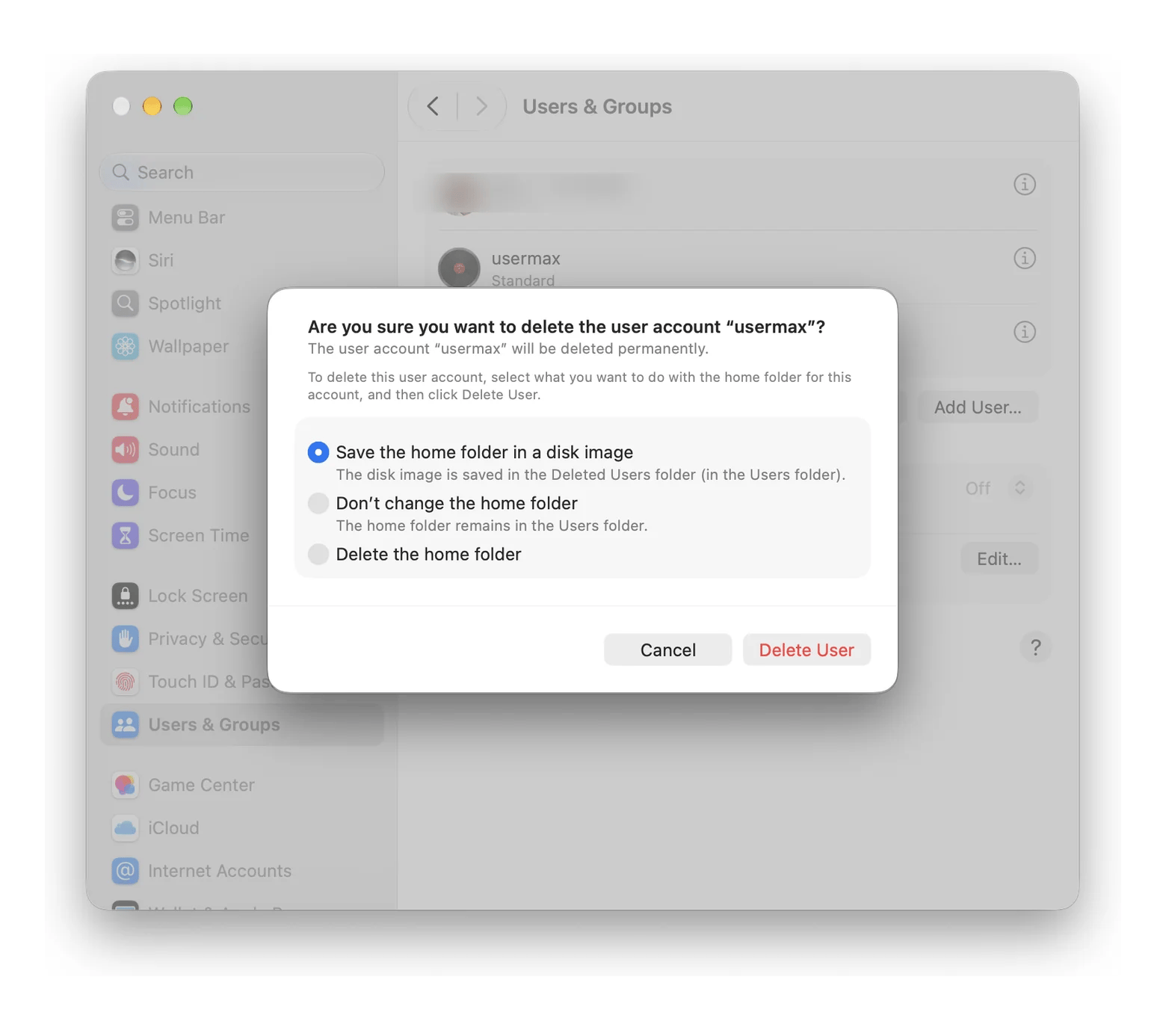
To delete a user on Mac, sign in as an administrator and make sure the account you’re deleting is logged out. Then follow these steps:
Choose Apple menu > System Settings.
Click Users & Groups in the sidebar.
Click the Info button next to the user you want to delete.
Click Delete User, then enter your administrator password if asked.
Choose what happens to the user's home folder: save it as a disk image, leave it unchanged, or delete it.
Click Delete User to confirm.
How to keep a Mac with multiple users fast
When several users stay logged in, their open apps and background processes keep using memory and CPU. Checking what’s running and quitting apps nobody uses keeps your Mac responsive.
Set up new accounts faster with Almighty
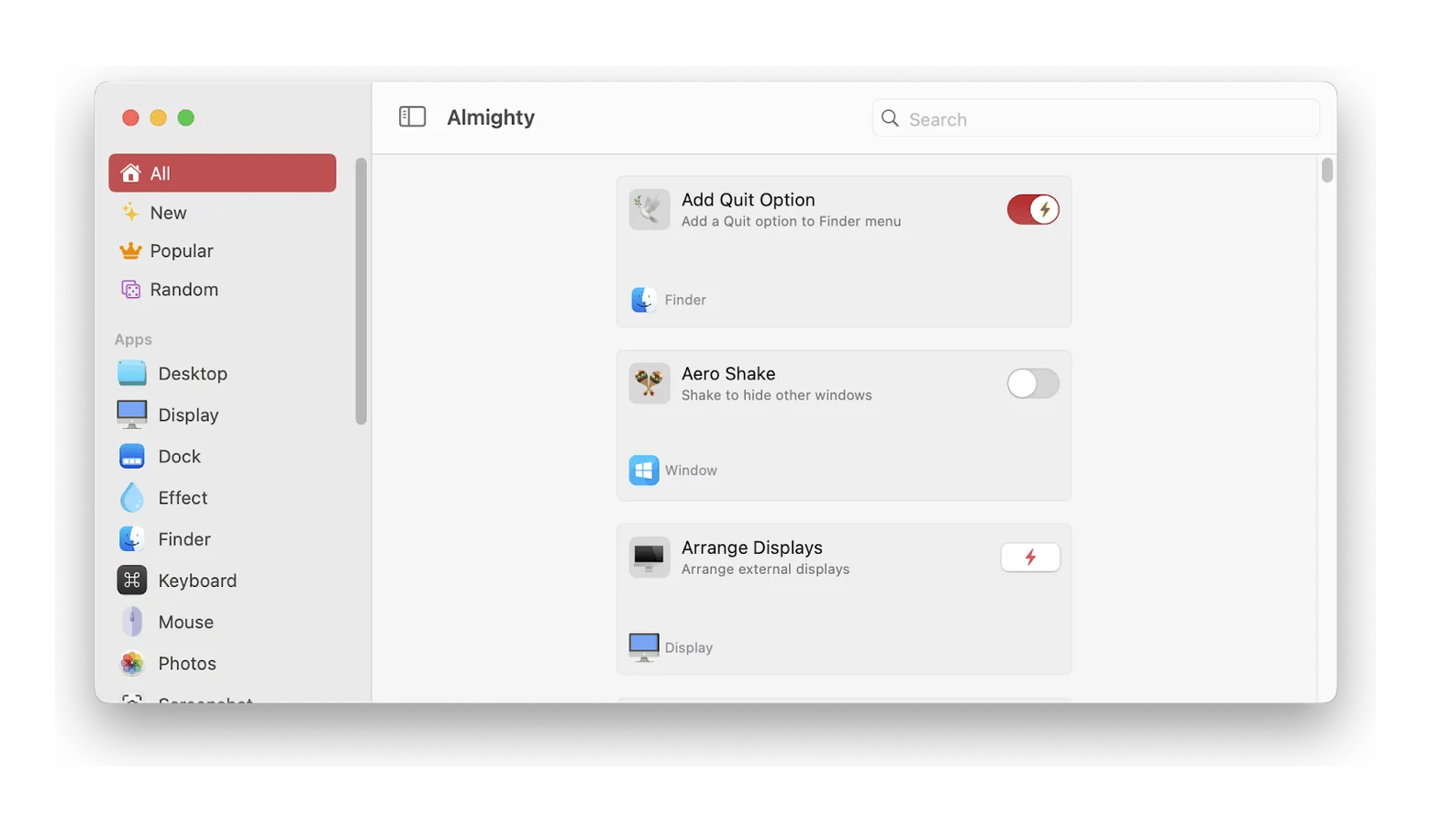
Every new user starts with default macOS settings, so a fresh account often needs the same tweaks I use on mine. Almighty puts 50+ Mac tweaks in one place, like showing hidden files in Finder, hiding desktop icons, and choosing which apps appear in the Dock. Instead of hunting through System Settings in each account, I turn on the tweaks I want in a couple of clicks.
Share one Mac without sharing everything
Separate user accounts keep everyone’s files and settings organized on a shared Mac. They also help you keep work and personal files apart without buying a second computer.
To keep that shared Mac running well, iStat Menus shows which apps are using memory, CleanMyMac finds files you no longer need, and Almighty gets a new account set up faster. All three are included in Setapp Membership, along with 300+ apps for Mac, iOS, and web. You can try them free for 7 days.
FAQ
Can you have two user accounts on Mac?
Yes. macOS supports multiple user accounts, each with its own files, settings, and preferences. An administrator can add accounts in System Settings > Users & Groups.
How do I open Users & Groups on Mac?
Choose Apple menu > System Settings, then click Users & Groups in the sidebar. From there, you can add users and manage existing accounts.
How do I add a guest user on Mac?
Open System Settings > Users & Groups, click the Info button next to Guest User, and turn on Allow guests to log in to this computer. Anything a guest creates is deleted when they log out.
Do I need administrator access to add or delete a Mac user?
Yes. macOS asks for an administrator password before you can create or delete user accounts. A Standard user can’t manage other accounts.
How do I free up space after deleting a user on Mac?
If you chose Delete the home folder, macOS frees that storage right away. If you saved the home folder as a disk image, it stays in the Deleted Users folder until you remove it, so delete it once you’re sure you don’t need it. To find other leftover files, CleanMyMac scans for system junk and large files you can safely remove.
Superpowers for your Mac
Tackle your tasks with dozens of helpful apps on Setapp.





 Best solution
 Best solution