Create your iCloud address in seconds. Go to System Settings > Apple ID > iCloud, turn on Mail, and macOS creates your free @icloud.com address on the spot.
It syncs automatically across all your Apple devices. Once enabled, iCloud Mail works in the background — your inbox stays current on Mac, iPhone, and iPad without any extra setup.
You can check it anywhere. Read iCloud email in the Mac Mail app, on icloud.com in any browser, or in the Mail app on iPhone and iPad.
Rules keep your inbox organized. Set up mail rules at icloud.com to automatically sort, flag, or forward messages — no third-party tools required.
Setting up iCloud Mail is easier than most people expect, and it's free. Whether you've just got a new Mac or you've never turned on Mail in your iCloud settings, this guide walks you through every step:
Creating your @icloud.com address
Checking your messages
Changing your account
Setting up rules to keep your inbox tidy
Let’s start.
Create an iCloud email address
Want an @icloud.com address? Just turn on Mail in your iCloud settings, and macOS will create it for you (Apple Support: Set up iCloud Mail).
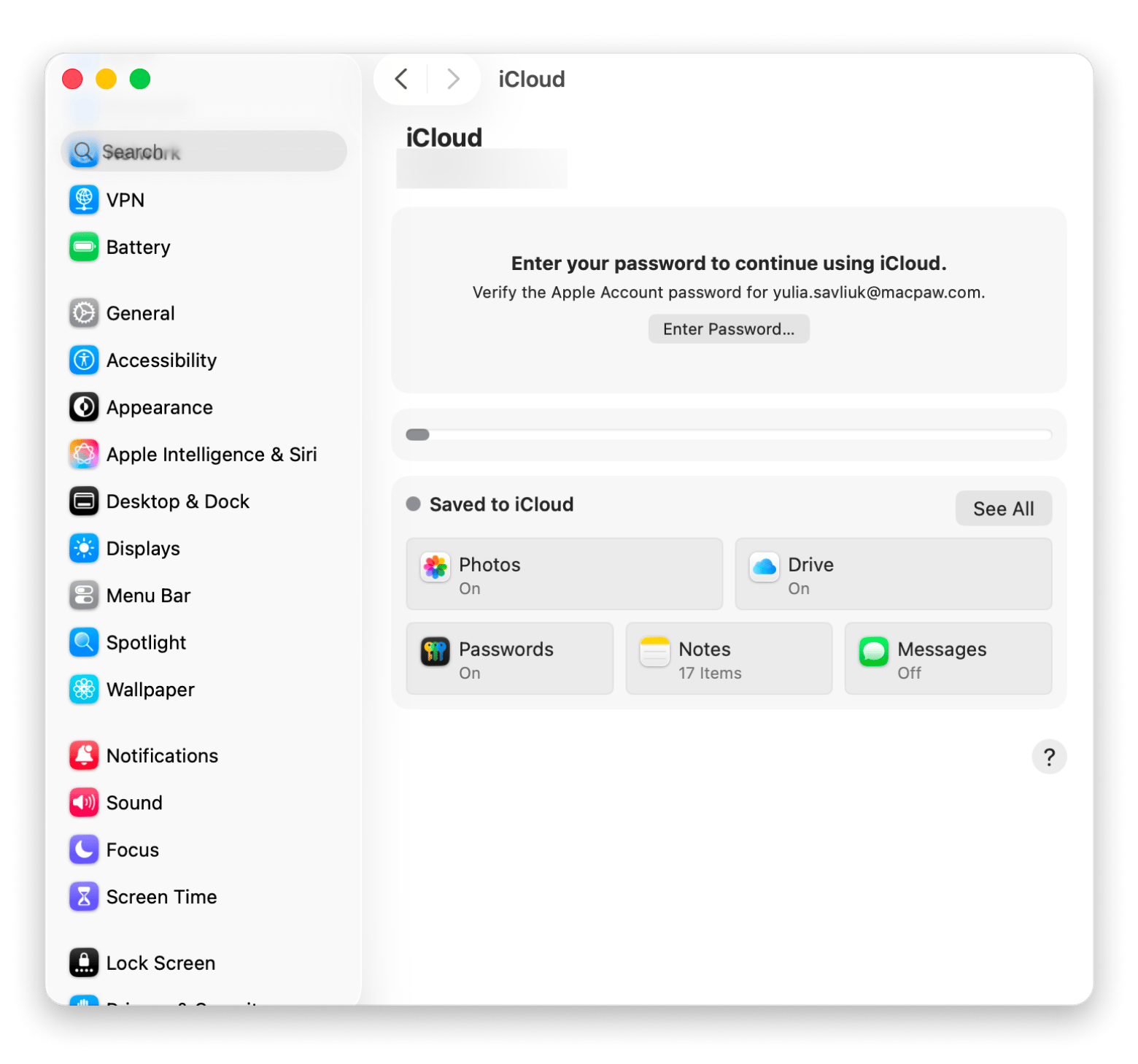
To create your iCloud email address on a Mac:
Click the Apple menu and select System Settings.
Click Apple Account > iCloud.
Turn on Mail and follow the prompt to pick your new @icloud.com address.
Once you've completed these steps, your free iCloud email is ready to use.
That’s it. Mail is now live and will sync across your Apple devices.
Change your iCloud email address on Mac
You might need to change your iCloud email on a Mac for various reasons, such as updating your Apple Account or switching to a new address. Changing your iCloud email address means changing the Apple Account associated with your device, which will impact logins for Apple Music, the App Store, FaceTime, Contacts, and other iCloud data (Apple Support: Change your Apple Account).
To change your iCloud email address on a Mac:
Go to System Settings > Apple Account > iCloud.
Click Sign Out to log out of your current Apple Account. (You’ll see a message that logging out may impact iCloud Drive documents and data.)
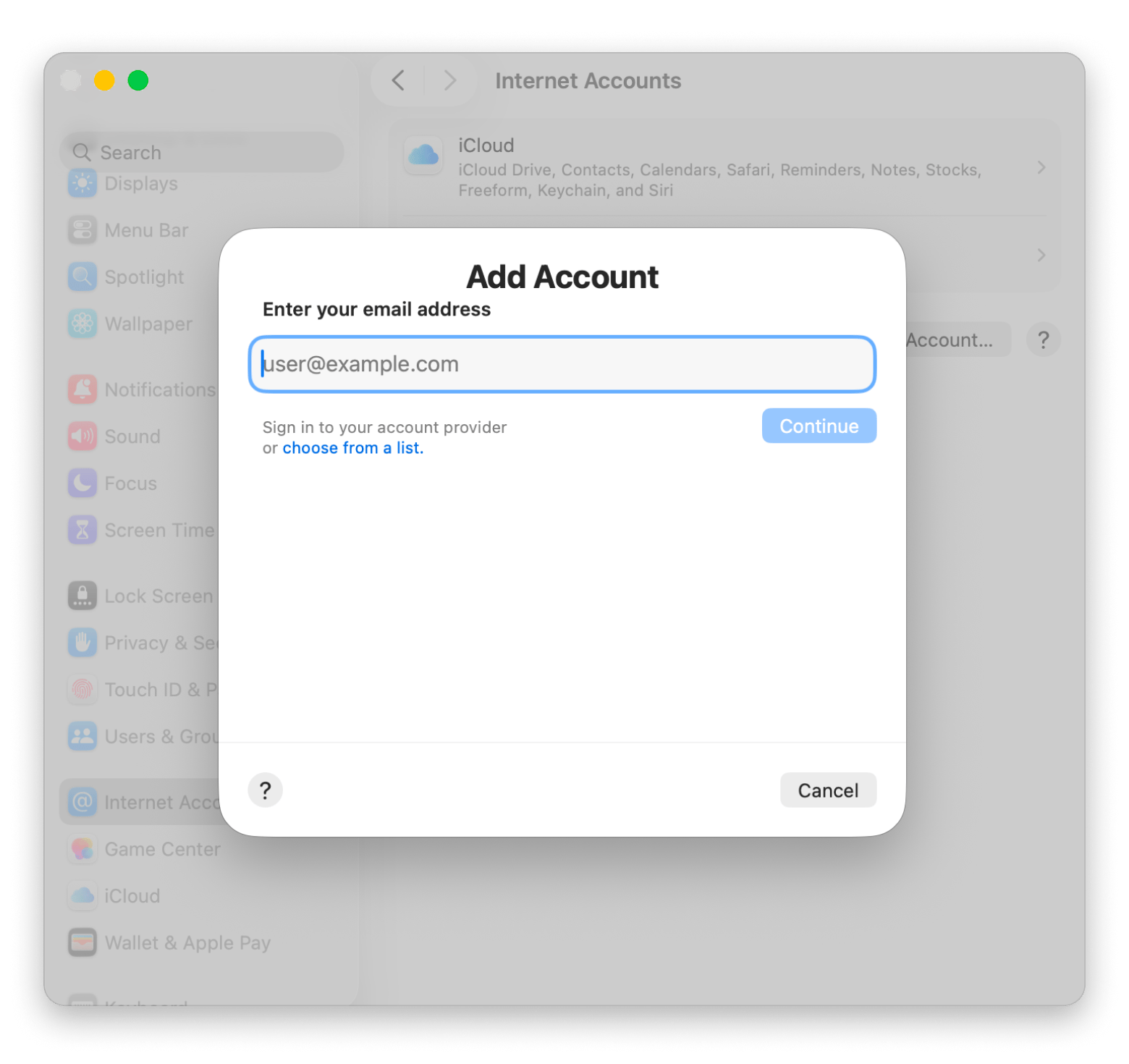
When iCloud finishes logging out, you'll see a simple login screen.
Provide the new Apple Account credentials to sign in.
If the email you provide does not end in @mac.com or @me.com, iCloud will prompt you to set up a new iCloud email address.
Tip: It's technically possible to have a separate iCloud account and Apple Account, but this can cause unexpected issues and is generally not recommended.
Check your iCloud email
You can check your iCloud email from anywhere, using the method that works best for you:
Web: Go to icloud.com and sign in with your Apple Account. Click the Mail icon to view your inbox.
Mac: Open the Mail app in your Applications folder.
iPhone or iPad: Open the Mail app; your iCloud account will appear if Mail is enabled for your Apple Account.
While Apple Mail is reliable and straightforward, some users prefer more advanced features. Here is the alternative available through Setapp.
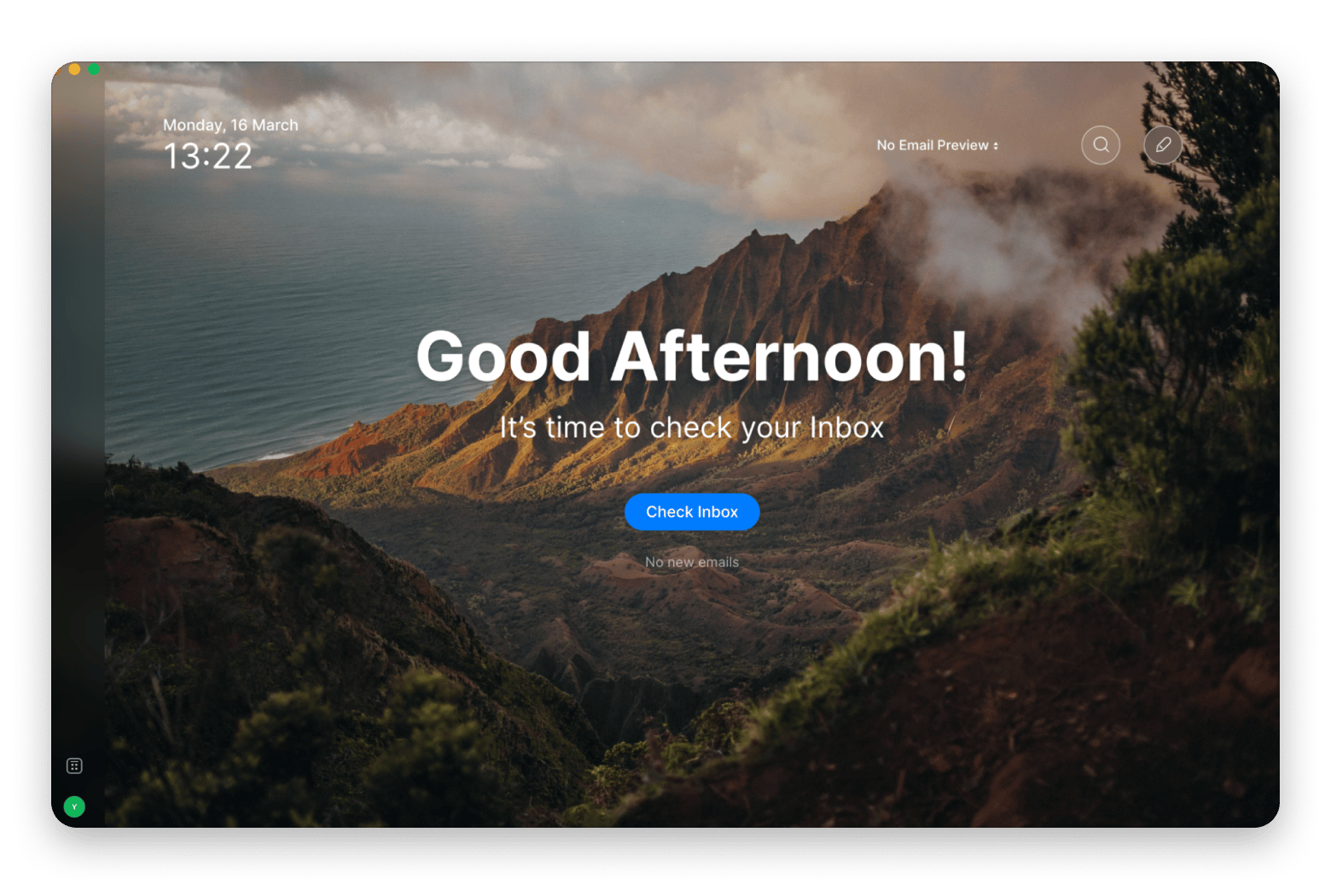
If your inbox is constantly overwhelming, Spark Mail is worth trying. Its Smart Inbox separates newsletters and notifications from real messages automatically — I found it cut my morning email triage time significantly. Email scheduling and AI drafting are useful extras, but the inbox organization alone makes it stand out.
Spark Mail is rated 89% by 2,800+ users and is available on Mac and iPhone. Smart Inbox, AI drafting, and email scheduling — included in your Setapp plan. Start my 7-day trial.
Set up iCloud Mail rules
Setting up rules for your iCloud Mail helps keep your inbox organized by automatically moving, flagging, or forwarding messages.
Click the gear icon (Show Actions menu) at the bottom left, then choose Rules.
Click Add a Rule.
Set your conditions (e.g., if a message is from a certain sender or has a specific subject).
Choose what action to take (move, forward, flag, etc.).
Click Done to save your rule.
You can add as many rules as you need to keep your inbox tidy.
Get the most out of your iCloud email
Setting up iCloud Mail takes about 30 seconds, and once it's running, it handles syncing across all your devices automatically. For most everyday use, Apple Mail is all you need. But if you want a smarter inbox, Spark Mail is worth a look for its automatic email sorting and AI drafting tools. Spark Mail is available on Setapp, with 250+ other Mac apps, free for 7 days. Start a 7-day trial.
FAQs
How do I create an iCloud email address?
You can create an iCloud email address in two ways:
On Mac: Go to System Settings > Apple Account > iCloud. Turn on Mail and follow the prompt to choose your new @icloud.com address.
On the web: Sign in at icloud.com, go to Mail, and follow the on-screen instructions.
How do I set up iCloud Mail on Mac?
Open System Settings (or System Preferences on older macOS).
Click Apple Account > iCloud.
Turn on Mail.
Follow the prompts to complete setup.
For older versions (macOS High Sierra or earlier), enable Mail & Notes in iCloud preferences.
How do I check iCloud email?
Web: Visit icloud.com and sign in, then click the Mail icon.
Mac: Open the Mail app.
iPhone/iPad: Open the Mail app; your iCloud inbox will appear if enabled.
Is an iCloud email address free?
Yes, you get a free @icloud.com email address when you set up iCloud Mail. Apple includes 5 GB of free storage. If you need more space, you can upgrade your iCloud storage plan.
How do I activate iCloud Mail on my devices?
Mac: Go to System Settings > Apple Account > iCloud and enable Mail.
iPhone/iPad: Open Settings > tap your name > iCloud > turn on Mail.
Web: Sign in at icloud.com and click the Mail icon.
Can I read my iCloud email on Windows or Android?
Yes. Go to icloud.com in any web browser and sign in to access your mail. On Windows, you can also add your iCloud account to Microsoft Outlook.
Get Canary Mail
Your path to a focused and securely encrypted inbox.






 Best solution
 Best solution