Luminar Neo is the strongest direct Lightroom alternative. It covers RAW editing, batch processing, presets, AI effects, and layers (which Lightroom doesn't have).
TouchRetouchdoes one thing and does it quickly. It’s the fastest tool for removing unwanted objects, blemishes, and lines from photos.
PhotoBulk replaces Lightroom's export and delivery workflow. Batch rename, resize, convert, compress, and watermark hundreds of images at once.
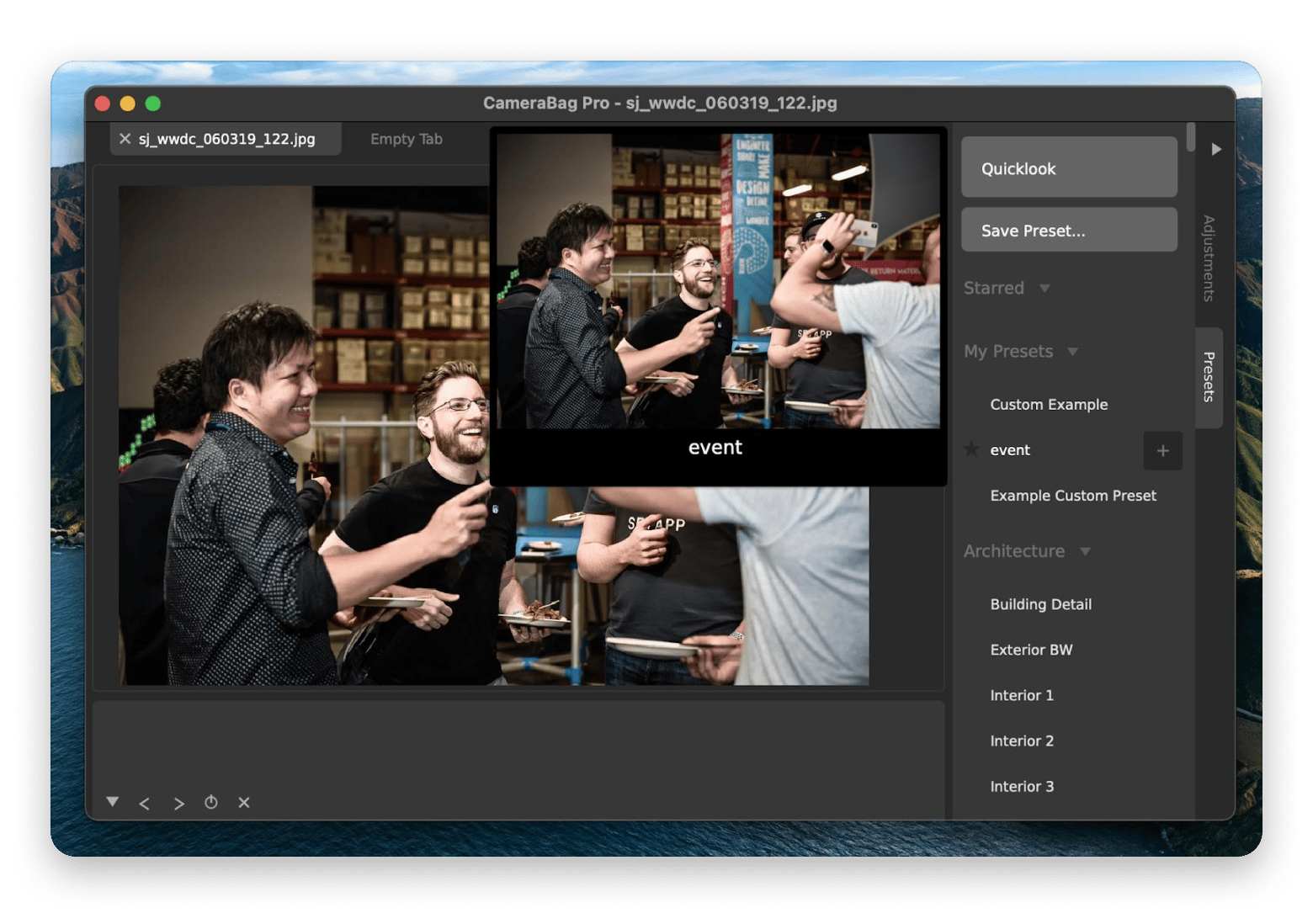
CameraBag Pro covers Lightroom's editing and extends it to video. 200+ filters, RAW support, custom presets, masks — plus color grading for video.
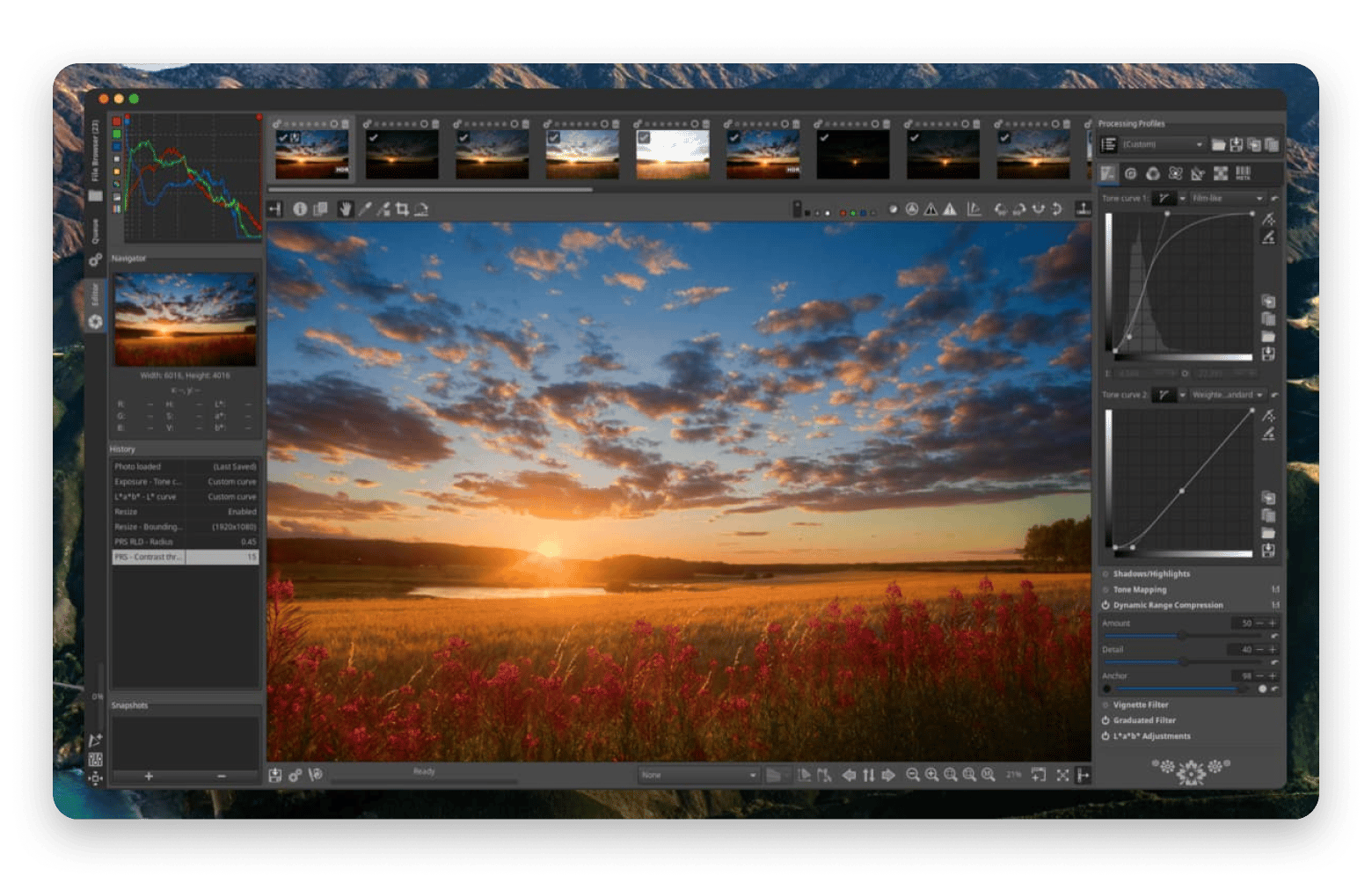
For a free option, RawTherapee handles RAW processing well. Open-source, non-destructive, and no cost. The trade-off is no catalog system and a steeper learning curve.
You don't need a single Lightroom replacement. Luminar Neo, TouchRetouch, and PhotoBulk — the Lightroom replacement toolkit, all in one Setapp subscription. Start your 7-day Setapp trial — Cancel before Day 7 — $0 charged.
Lightroom used to be my favourite tool for editing photos. I could organize thousands of images and enhance them in just a few clicks.
But over time, the subscription price started to feel a bit high for my needs. The app also slowed down when I worked with large batches of photos, and it seemed to run best on a powerful computer. That's when I began looking for Lightroom alternatives for Mac. And it turns out there are quite a few great options.
Quick comparison table: Lightroom alternatives on Mac
Here’s the comparison of the best Lightroom alternatives:
If you're building a full creator workflow (photo editing, batch processing, and video) and not sure which combination of tools covers your needs without overlapping, this video and the creative software for Mac GPT assistant can help you map it out. Describe your typical workflow, and it'll suggest the right combination.
7 best Lightroom alternatives for Mac (compared)
Let's take a closer look at some of the best Lightroom alternatives for Mac and what makes them worth trying.
1. Luminar Neo — Best for AI edits and fast preset-based results
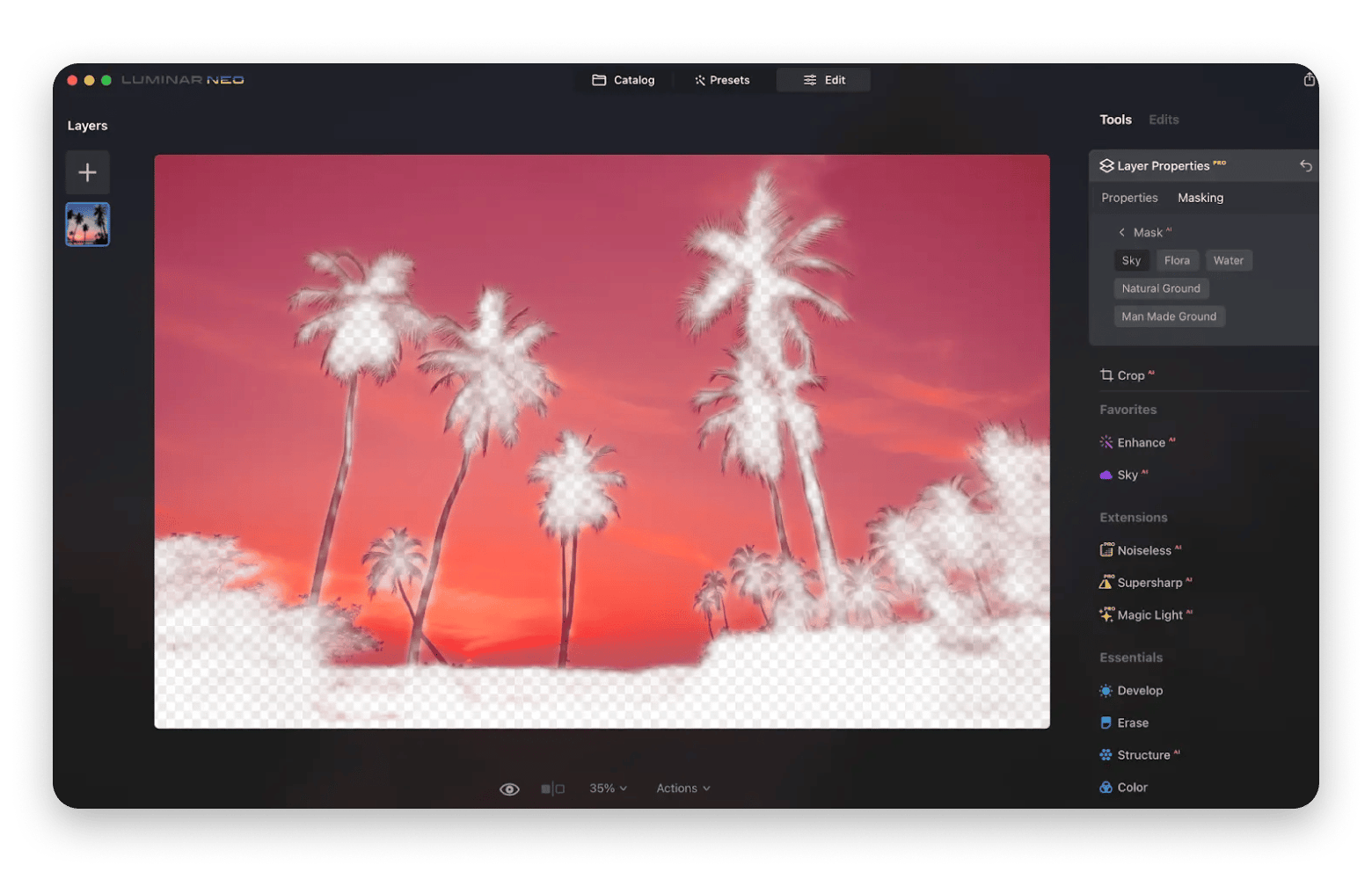
Luminar Neo has been developed by Skylum as a plug-in for Adobe apps and a standalone photo editor with RAW support and impressive AI capabilities. Today, it's a full-featured app that's a serious Lightroom alternative.
With Luminar Neo, you can do almost all the same things you do with Lightroom — upload a whole folder and apply consistent edits to a collection of photos, use professional presets and filters, and edit RAW format to preserve the original quality.
Even more, Luminar Neo has its own unique features. You'll love its AI effects. Try AI Skin and Portrait Enhancer for portrait photography, or AI Augmented Sky Mask for nature landscapes. You'll be impressed by how one-click edits can transform your photos.
Another standout feature of Luminar Neo is its collection of Looks (portrait, aerial, nature, and more) that help you quickly style your photos. It also includes Layers. Lightroom doesn't support layers, so you normally need Photoshop for that. With Luminar Neo, you get both in one app.
Pros:
Great layers (similar to Photoshop's)
Unique AI enhancements
Easy-to-use interface with one-click edits
Supports RAW editing and batch processing
Cons:
The healing brush works more slowly
No keyword-based sorting
Price: Available through Setapp Membership for a flat monthly fee, which gives you access to hundreds of Mac and iOS apps, or as a standalone app via Setapp Marketplace ($5.69/mo). Uses Setapp AI credits or your own OpenAI API key for AI features.
Best for: Newbies and photography enthusiasts. People who want to experiment with AI effects and one-click edits. People who miss Layers in Lightroom.
How it compares to Lightroom: Luminar Neo is easier to use and packed with AI tools that can quickly enhance photos, replace skies, or remove objects. It also supports layers, which Lightroom lacks. The trade-off is workflow — Lightroom still handles photo libraries and batch edits better, especially if you manage thousands of images.
2. TouchRetouch — Best for removing objects, blemishes, and lines
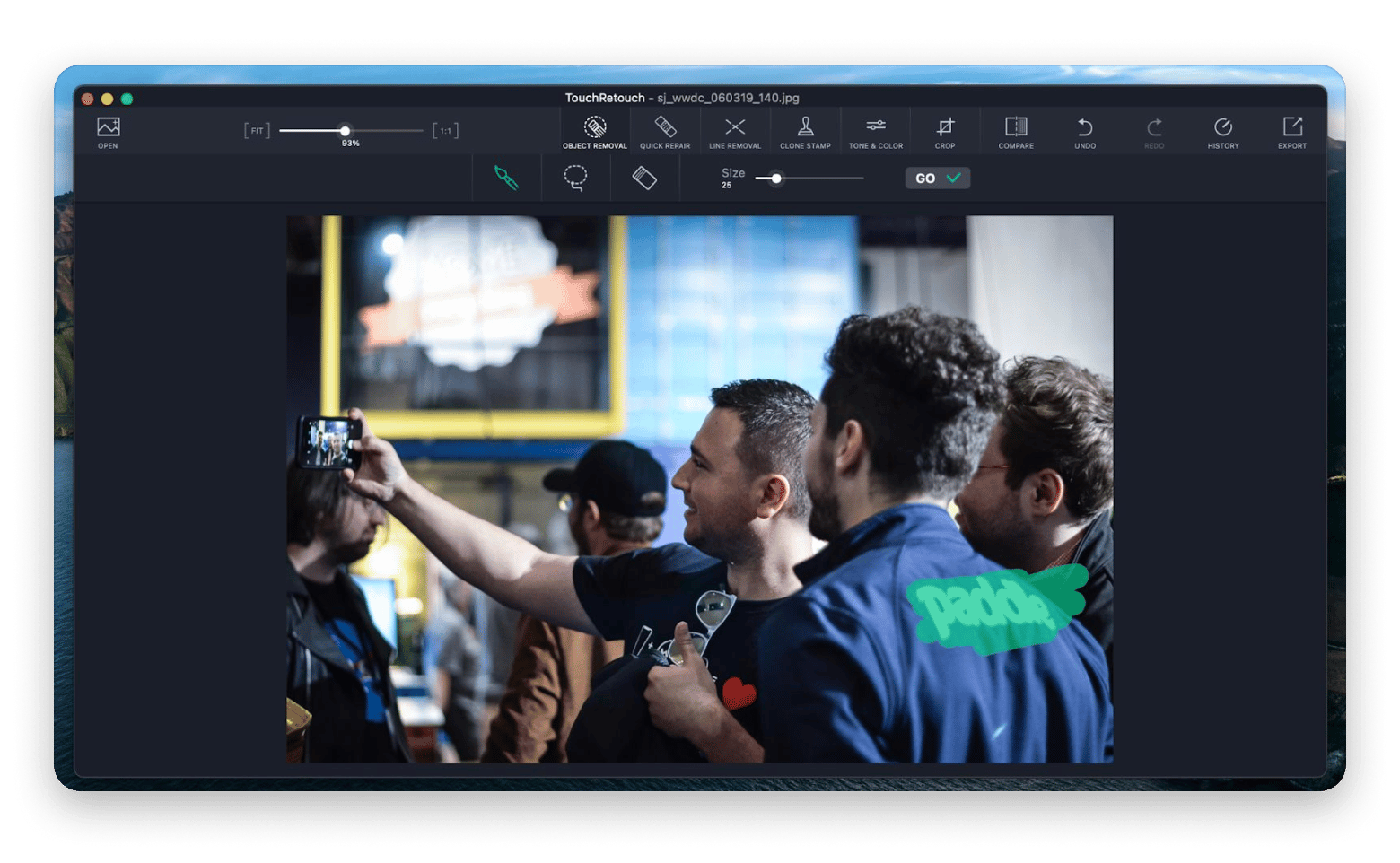
TouchRetouch is essentially a photo editor meant to "fix" whatever is wrong with your photos. It's the best tool to get rid of blemishes, remove unwanted objects, run quick color correction, etc. Think of it as a first aid kit for photos.
The app also offers some basic tone and color adjustments and a handy compare tool to check the before-and-after. The downside is that it lacks some advanced features, such as presets and batch editing. But if you need an easy and quick retouch tool, this is the one.
Pros:
Quick and easy way to remove unwanted objects
Handy tools for cleaning up lines, wires, and small blemishes
Simple interface that makes retouching feel effortless
Cons:
No batch editing
No presets and filters
Price: Available through Setapp Membership for a flat monthly fee,, which gives you access to hundreds of Mac and iOS apps, or as a standalone app via Setapp Marketplace for $4.99/month.
Best for: When you need to cover up a logo, remove a person from the photo, or get rid of any flaws and defects.
How it compares to Lightroom: TouchRetouch is much simpler than Lightroom. It focuses on one task: removing unwanted objects, lines, or blemishes from photos. This makes it faster and easier for a quick cleanup. The downside is scope — Lightroom offers full editing workflows, RAW adjustments, presets, and photo management tools.
3. Capture One Pro — Best Lightroom alternative for professional studio work
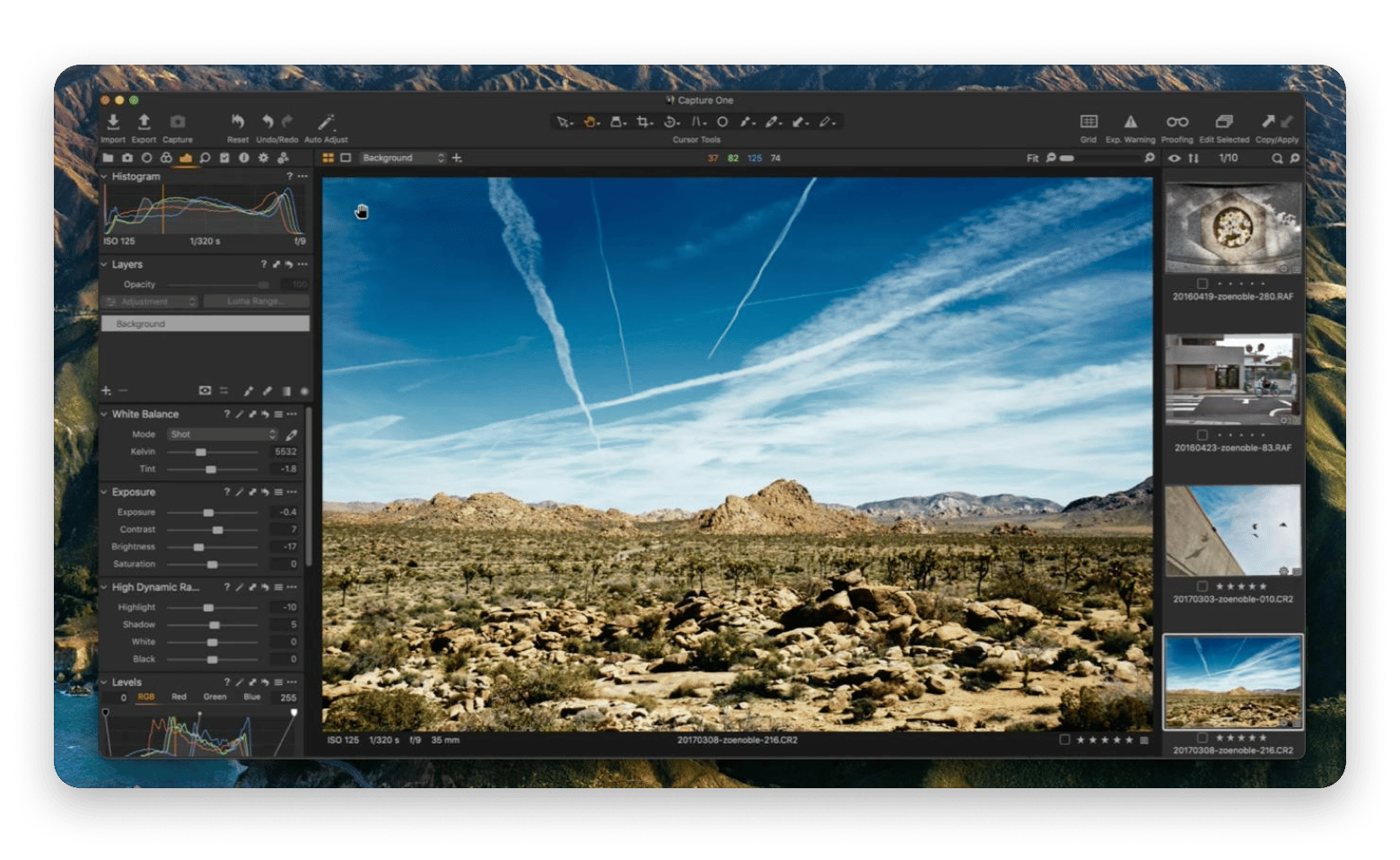
If you're a pro photographer, you need a pro Lightroom alternative. Capture One Pro is a good choice for people who want to have the power of Lightroom and Photoshop in one suite. The app was developed by a camera company and has lots of what you could call "studio" features.
You get RAW editing, Photoshop-style layers, excellent processing power, an advanced color wheel, and more. Some people think you can achieve even better results with photo editing if you choose Capture One Pro over the entire Adobe Creative Suite. But it all depends on your flow and priorities. For instance, Lightroom is better with HDR tools. Capture One Pro has more customization options, but it's also harder to navigate.
Pros:
Combines many Lightroom and Photoshop features in one app
Highly customizable interface and editing workflow
Powerful RAW processing and advanced color grading tools
Cons:
Higher price compared to many Lightroom alternatives
Doesn't include built-in HDR tools like Lightroom
The interface can feel complex and takes time to learn
Price: Starting at $26/month or $17/month if you subscribe to the annual plan.
Best for: Pro photographers looking for more studio features.
How it compares to Lightroom: Capture One Pro is a more professional alternative. It offers advanced color grading, layer-based editing, and excellent tethered shooting for studio work. The downside is usability — Lightroom is easier to learn and better for managing very large photo libraries and automation features like presets and syncing edits.
4. PhotoBulk — Best for batch renaming, resizing, watermarks, and metadata
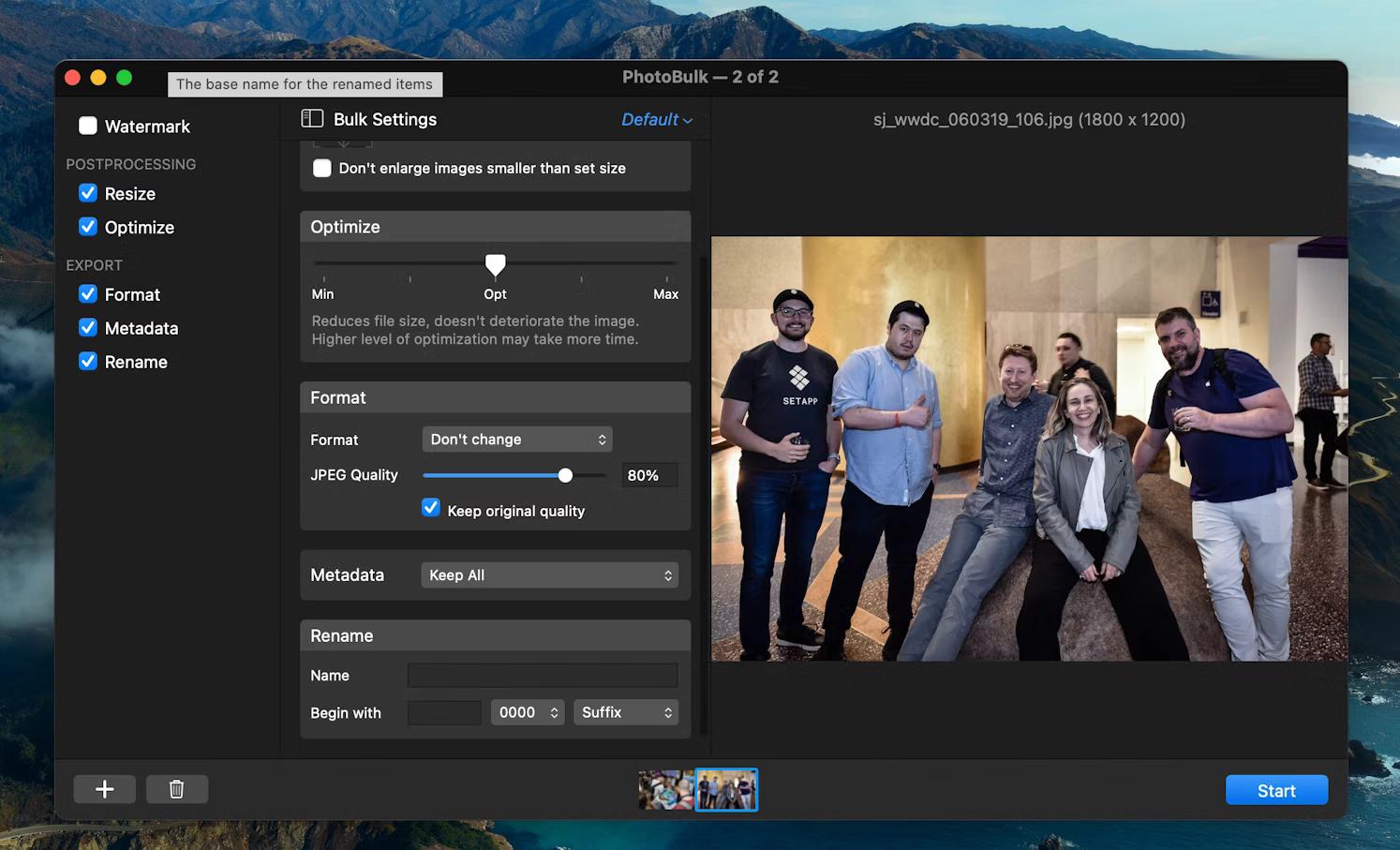
Imagine you have a folder with photos from an event or a photoshoot, and need to resize and rename all of them. You also need to change metadata, add watermarks, or convert the whole batch to another format. PhotoBulk does exactly that.
The app is designed for batch processing, so you can apply the same changes to hundreds of images at once. For example, you can resize images proportionally, compress them for the web, convert them between formats like JPG, PNG, or TIFF, and add text or image watermarks to protect your work.
Another helpful feature is live preview, which lets you see how the edits will look before processing the whole batch. That way, you can adjust watermark placement, size, or file settings before exporting everything.
Pros:
Process large batches of images in seconds
Easily add text or image watermarks to protect your photos
Resize, rename, compress, and convert files in one place
Cons:
No tools for color correction or exposure adjustments
Doesn't include creative editing features like filters or layers
Price: Available through Setapp Membership for a flat monthly fee,, which gives you access to hundreds of Mac and iOS apps, or as a standalone app via Setapp Marketplace.
Best for: Quick size and format optimization; initial processing of photoshoot materials; preparing photos for client delivery and social posting.
How it compares to Lightroom: PhotoBulk focuses on batch processing rather than full photo editing. It can resize, rename, convert, optimize, and watermark hundreds of images at once, which is great when preparing photos for websites or sharing online. What you lose is editing depth — Lightroom offers RAW editing, presets, and photo library management, which PhotoBulk doesn't include.
5. CameraBag Pro — Best for creative color grading (plus video editing)
If Photoshop is pro and Lightroom is mainstream, CameraBag Pro is somewhere in between. This Mac app has lots of professional filters (200+), great retouching tools, custom presets, masks, and much more. At the same time, it's super intuitive and easy to make part of your workflow, no matter if you're switching from Lightroom or if it's your first photo editor.
Another cool thing about CameraBag Pro is that it can also edit video. From trimming to preview to color grading, you get everything you need in your videography toolkit. CameraBag Pro works with the RAW format and can even help you fix "dead" pixels.
You can even pair it with Filmage Editor (available on Setapp). It adds timeline editing, which is useful for creating reels, YouTube videos, or longer visual projects when you've outgrown CameraBag Pro's video tools.
Pros:
Large library of presets and filters for photos and videos
Best for: Professional photographers/videographers and newcomers alike.
How it compares to Lightroom: CameraBag Pro covers many of the editing tasks you'd normally do in Lightroom. It offers filters, presets, masks, and RAW editing in a clean, easy-to-use interface. What you lose is library management — Lightroom still does a better job organizing large photo collections with catalogs, ratings, and tags.
6. RawTherapee — Best free Lightroom alternative for RAW processing
RawTherapee is an open-source RAW image processing app that shares many of its features with Lightroom. As the name suggests, it works with the RAW format, so you don't have to worry about losing the quality. Best of all, it's free.
The app includes tools for color correction, exposure adjustments, sharpening, noise reduction, and lens corrections. It also uses non-destructive editing, which means your original photo always stays untouched while you experiment with different settings.
Pros:
Supports RAW photo editing without reducing image quality
Includes useful tools for exposure, color correction, sharpening, and noise reduction
Completely free and open-source
Cons:
No built-in catalog or photo library management
Interface can feel technical and less beginner-friendly
Price: Free
Best for: Newbies or people who need a tool for basic photo adjustment without spending money.
How it compares to Lightroom: RawTherapee focuses more on deep RAW processing control. It gives you detailed tools for sharpening, noise reduction, highlight recovery, and color adjustments. What you lose is convenience — Lightroom has a smoother interface, built-in catalogs, and automation features that make editing and organizing photo libraries faster.
Best free Lightroom alternatives for Mac
RawTherapee isn't the only free option. There are some tools that come with RAW editing and basic photo adjustments without you having to spend a dime.
Here are some free Lightroom alternatives for Mac:
RawTherapee — A powerful open-source RAW editor with strong controls for exposure, color, sharpening, and noise reduction.
Darktable — A full RAW editing workflow with non-destructive editing and color tools.
digiKam — A photo manager with tagging, search, and facial recognition.
LightZone — An open-source editor with a zone-based system to fix brightness and contrast.
The downside of free tools is the workflow. Most don't offer Lightroom's catalog system, presets, or polished interface. Still, if your goal is simple RAW editing without spending money, these apps can get the job done.
Best Lightroom alternatives for photo management (Catalogs, tagging, ratings)
One reason photographers stick with Lightroom is its photo management system. The catalog feature makes it easy to organize large libraries, add tags, rate images, and more.
If you care about photo management, here are some options that come with photo organization features:
Emulsion — A Mac photo manager built around catalogs, tags, ratings, and metadata editing. Great for organizing photo collections.
digiKam — A powerful open-source photo manager with tagging, facial recognition, labels, and advanced search tools.
Capture One Pro — Includes professional photo organization tools alongside RAW editing and tethered shooting features.
Mylio Photos — Focuses on managing photo libraries across multiple devices.
Migration tips: How to switch from Lightroom without losing your library
Switching from one app to another can feel stressful. What if you lose years of memories? That's exactly how I felt when I started thinking about moving away from Lightroom. After using it for so long, I worried about my edits and photo catalogs.
The good news is you don't have to lose anything. Just follow these steps:
Check that your original photos are accessible. Lightroom catalogs reference your files, but the actual photos should live in folders on your Mac. Confirm everything is still there.
Write metadata. In Lightroom, you can save keywords, ratings, and other metadata directly into the image files.
Export important edited photos. If you have images with edits you want to keep exactly as they are, export them as high-quality JPEG or TIFF files.
Clean your folders before moving. Many Lightroom alternatives rely on a simple folder structure instead of catalogs. A clean folder system makes the transition easier.
Try a small test import first. Before moving your entire library, import a few folders into the new app. It's a quick way to see how everything behaves.
Once you do a quick test run, switching tools usually feels much less scary than it sounds.
Which Lightroom alternative should you choose? (Quick picks by use case)
The harsh truth is this: there's no app that's less expensive than Lightroom and comes with the exact same features. The good news is you can get a collection of tools that do all the things Lightroom does, and use them together in your workflow. This way, you'll save money on a Lightroom subscription and still build a powerful photo editing toolkit.
Here's what your Lightroom alternative flow could look like:
Organize and edit your photos with tools like Luminar Neo or CameraBag Pro. Both let you apply filters, presets, and adjustments across your images.
Remove distractions or small defects with TouchRetouch. It's great for cleaning up unwanted objects, lines, or blemishes.
Batch process large photo sets with PhotoBulk. You can rename files, change formats, resize images, or add watermarks in seconds.
Restore old family photos with PhotosRevive. If you manage old black-and-white photos in Apple Photos, it's a great tool for colorizing and bringing them back to life. It uses AI, so it requires Setapp AI credits or your own OpenAI API key.
Create time-lapse videos from photo sequences with GlueMotion. It's a handy app if you used Lightroom for batch exposure tweaks before exporting frames into a video.
All of these apps are available through Setapp Membership, so instead of paying for each tool separately, you get access to them through a single subscription. You can mix and match them to build a workflow that fits the way you edit and manage your photos.
What is Adobe Lightroom (And why people replace it)?
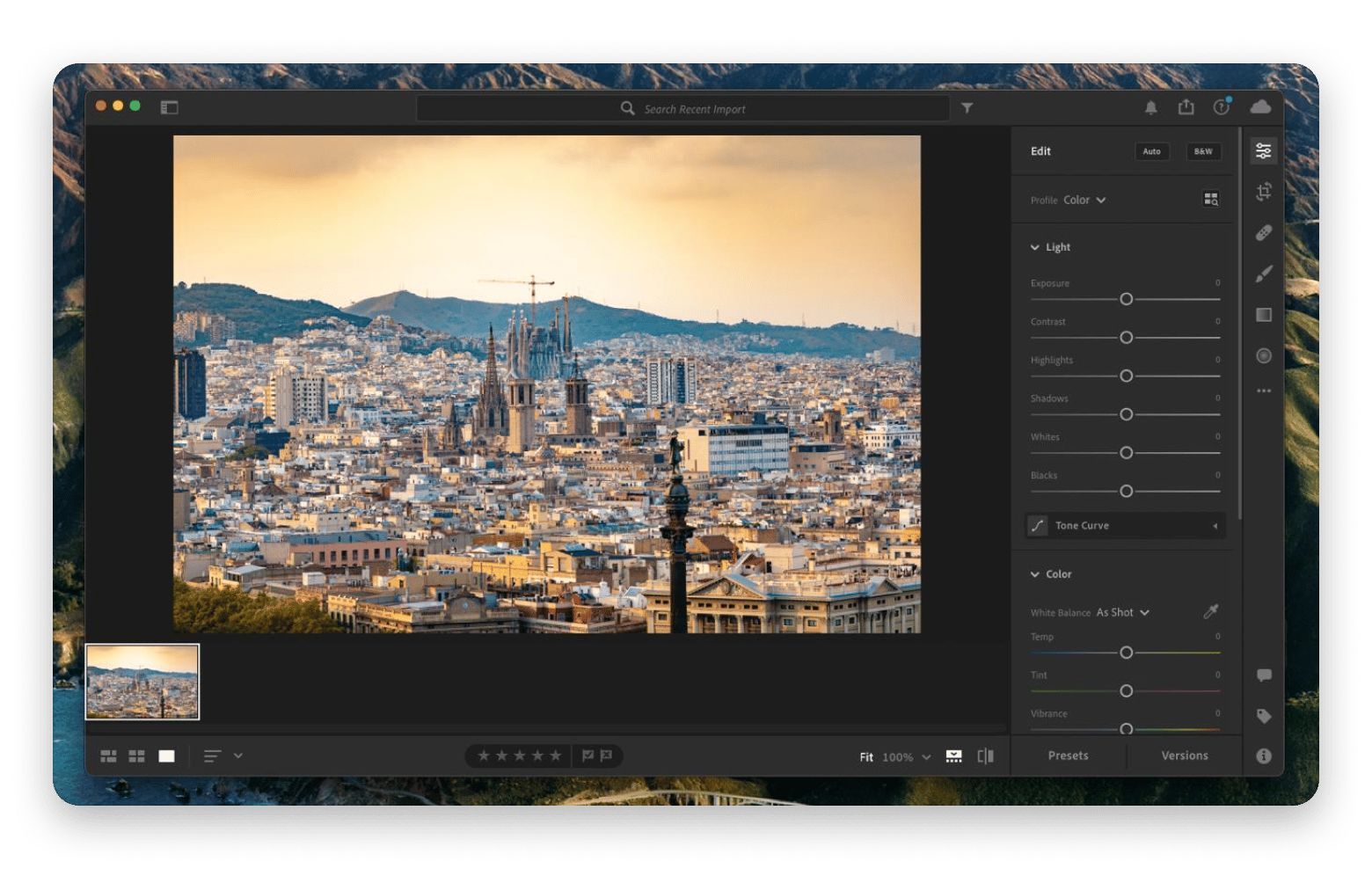
Designers often call Lightroom a lighter version of Photoshop. Both are photo editors created by Adobe. While Photoshop is a hardcore pixel-level software that gives you unparalleled control over your photos, Lightroom is a simpler cloud-based photo editor with fewer advanced features but more possibilities for workflow automation, such as presets, batch editing, etc.
People often start looking for alternatives because Lightroom can feel expensive, run slowly with photo libraries, require a powerful computer, or simply offer more tools than they actually need.
Is Adobe Lightroom free on Mac? (Free trial vs free version)
No, Adobe Lightroom is not free on Mac, but there's a 7-day free trial, which gives you full access to the app.
After the trial, Lightroom starts at $11.99 per month for individuals. If you want both Lightroom and Photoshop, the Photography plan costs $19.99 per month. There's also the Creative Cloud Pro plan, which includes 20+ apps and starts at $34.99 per month. There's no option to buy a lifetime license at the moment.
How to choose a Lightroom alternative (RAW, presets, batch editing, catalogs)
Let's face it, Lightroom is expensive. Plus, it doesn't always cover all your needs. And if you get both Lightroom and Photoshop, you'll pay even more, spend more time figuring out how it works (Photoshop's UI is pretty complicated), and waste a good deal of space on your drive.
Instead, you can replace Lightroom software with a toolkit that fits your specific workflow and doesn't drain your budget.
Lightroom features to match: RAW editing, presets, batch, and photo management
If you Google "Lightroom alternative Mac," you'll be overwhelmed with the options. With the rise of Instagram and advances in professional photography, the number of photo editors is growing. How do you choose the right one? Since you're obviously searching for something like Lightroom, let's not reinvent the wheel and look at the best features Lightroom offers:
RAW file editing. With Lightroom, you can work on RAW photos from different cameras. This means you preserve the original quality of the photo despite all the edits you apply.
Presets. You can use built-in presets or create your own. Presets help photographers maintain a consistent style across all their work, without having to apply the same edits to every photo manually.
Batch editing flow. One thing where Lightroom stands out is processing large collections of photos very quickly. It's easy to match exposure, align color balance, or correct light across a batch of photos.
Adjustment tools. Brightness, contrast, noise reduction, gradient effects, and removing unwanted objects — the traditional adjustment features are all there.
Catalogs. Most photo editors use the traditional folder structure to organize photos. Lightroom gives you the choice to organize by folders or catalogs. People love catalogs for the ease of file referencing, tagging, assigning ratings, etc.
Good news, there are apps that have all of Lightroom's stellar features. And even more! Some of them are geared towards professional use, others are free, yet others are part of a large photo editing toolkit in Setapp (which is way more affordable and feature-rich than Adobe software).
Lightroom vs Lightroom Classic: which one are you replacing?
Many people say "Lightroom" when they actually mean Lightroom Classic. The two apps look similar but work differently.
Lightroom is the cloud-based version. Your photos are stored in Adobe's cloud, and you can edit them on desktop, mobile, or web.
Lightroom Classic is the desktop-focused version. Your photos stay on your Mac or external drive, and you manage them through catalogs. There are advanced tools to organize and edit photo libraries.
Most of the alternatives below are replacing Lightroom Classic — the desktop version with catalogs, local storage, and advanced batch workflows.
Can you get Lightroom for free? (Legit options)
Lightroom isn't completely free, but there are some legitimate ways to use it without paying right away.
Adobe offers a 7-day free trial of Lightroom through Creative Cloud. You'll have full access to the desktop app so you can test the editing tools and workflow before committing.
What's more, Lightroom Mobile is free on iOS and Android. The app lets you capture, edit, and share photos with basic tools.
There are also discounted plans for students and teachers. Adobe offers a Creative Cloud plan with Lightroom, Photoshop, and other apps at a reduced price for the first year.
More Setapp apps for a Lightroom-style workflow on Mac
Setapp is a subscription service for Mac and iOS that gives you access to a curated library of apps in one place. Instead of buying each tool separately, you can use hundreds of apps through a single membership, with a 7-day free trial available.
Beyond the editing apps above, Setapp includes a few more tools that fit naturally into a photographer's workflow:
CleanShot X — Useful for creating tutorials or client proofs: annotate screenshots of your edits, record short screen walkthroughs, and share via a cloud link. Rated 99% by 13,559 users.
PixelSnap — For designers who place photos in web or print layouts: measure spacing and alignment directly on screen to make sure everything lines up. Rated 99% by 1,444 users.
LookAway — A health add-on for long editing sessions: reminds you to take breaks and rest your eyes after extended time at the screen. Rated 98% by 205 users.
Bonus apps you get with Setapp
What’s Setapp, and what does it have to do with photo editors? Setapp is a productivity tool for Mac and iOS users. It has curated collections of apps geared towards different tasks and jobs. Access to the whole suite (250+ apps) costs a flat monthly fee,, and you can try it for 7 days free.
If you’re interested in photography, design, and creativity, Setapp gives you the whole “Lightroom alternative” package we described above, plus many other helpful utilities. For instance, there’s Squash for file compression that will help you save space on your disk, and many more.
Luminar Neo, TouchRetouch, PhotoBulk, CameraBag Pro — your complete Lightroom replacement on Setapp. RAW editing, AI cleanup, batch delivery, color grading — all in one subscription. 250+ Mac apps, free for 7 days. Get 250+ Mac Apps Free.
Need just PhotoBulk or CameraBag Pro? Browse Setapp Marketplace for standalone options — no membership needed.
FAQ
Is there a free alternative to Lightroom for Mac?
Yes. RawTherapee is a free, open-source RAW editor that runs on Mac, but it lacks Lightroom's catalog-style photo management and has a steeper learning curve.
What is the best photo software for Mac?
It depends on your workflow: for fast AI edits, use Luminar Neo; for pro studio shooting and color work, consider Capture One Pro; for simple Mac edits, Apple Photos or Preview work; for batch production tasks, use PhotoBulk.
Is Luminar Neo on Setapp the same as buying it directly?
All features, AI tools, tutorials, and presets are included.
You can use it as a standalone app for macOS or as a plug-in for Adobe Photoshop and Lightroom.
The main difference is in subscription terms and platform access.
On Setapp:
You get the macOS version only — but at a significantly lower price compared to the bundled versions on the developer's website.
You can access the app on 1 to 5 macOS devices.
All upgrades are included while you're subscribed.
On the developer's website:
You get a perpetual desktop license for both macOS and Windows (with other platforms available on higher tiers).
You can access the app on up to 2 computers and 3 mobile devices.
All minor updates to your current version of the app are included.
Major upgrades can cost extra.
How can I get Lightroom for free?
Adobe typically offers a free trial; beyond that, there isn't a legitimate "free full version" of Lightroom — avoid cracked copies due to security and account risks.
Is there a free version of Adobe Lightroom for Mac?
There's no permanently free desktop Lightroom for Mac; you may be able to use a limited mobile version and/or a time-limited free trial, depending on Adobe's current offers.
What are the alternatives to Adobe Lightroom for photo management?
Look for tools that support catalogs, ratings, and keywords or integrate tightly with Apple Photos. Capture One Pro, digiKam, Emulsion, and Mylio Photos all offer photo management features alongside or instead of editing.
What's the closest Lightroom Classic alternative on Mac?
Capture One Pro is commonly considered the closest "pro" alternative for RAW editing plus advanced workflow tools, but it's typically more expensive and has a learning curve.
Is there a "Lightroom Mobile" alternative for iPhone/iPad that works with Mac?
Yes — choose apps that integrate with Apple Photos/iCloud, so edits and libraries sync naturally between iPhone and Mac, though features vary compared to desktop tools.






 Top-rated on Setapp
 Top-rated on Setapp