How to extract data from a corrupted ZIP file
Start by using specialized archive tools like BetterZip or Archiver. These apps allow you to open, preview, and selectively extract files from a damaged ZIP without fully unzipping it.
Use Terminal for manual repair
If third-party tools don’t help, open Terminal and try commands like zip -F broken.zip --out repaired.zip or zip -FF broken.zip --out repaired.zip to attempt repairing the archive manually.
Check for download issues
If your ZIP got corrupted after downloading, the problem might be your network. Use WiFi Explorer to scan your connection, fix interference, and re-download the file cleanly.
Recover files from severely damaged ZIPs
When repair attempts fail, use iBoysoft Data Recovery to scan your Mac’s drive and retrieve files directly from the corrupted archive. It can recover data even if the ZIP is too damaged for repair tools.
Fix a broken ZIP faster with a full toolkit of trusted Mac apps Start now with 7 days of Setapp access to use BetterZip, Archiver, WiFi Explorer, and iBoysoft Data Recovery.
A ZIP file can fail to open due to incomplete downloads, disk errors, or improper compression when creating the archive. And when it happens, it can be a frustrating experience, especially if the file contains valuable data.
The good news is you can still resolve corrupt ZIP file issues. Terminal commands like zip -F and zip -FF can help repair the files, but you may need a more advanced ZIP repair tool for deeper issues. Even better, you can open the file with a more advanced tool like BetterZip, which lets you directly manipulate archived files without unzipping them.
If you are in this fix, I’ll show you how to retrieve data from a corrupted ZIP and get your files back.
What happened?
What to do
Corrupted ZIP file on Mac
Install BetterZip or Archiver. (Right-click corrupted ZIP file > Extract > Repair).
Open Terminal > Name the corrupted file as broken.zip > Type zip -F broke.zip --out pleasework.zip > Enter.
ZIP file corrupted after download
Install WiFi Explorer. Check network connections, reconnect, and re-download.
ZIP file too damaged for repair tools
Use iBoysoft Data Recovery to scan the drive and recover files that can’t be extracted with other methods.
Want to fix Mac problems fast? Try out the ChatGPT assistant for Mac – just tell it what’s wrong, and get an instant answer.
Or, get Commander One via Setapp Marketplace, same app and plans as the developer for ZIP repair and file handling. From $14.99 yearly subscription or $29.99 one-time purchase.
Extract files from a corrupted ZIP archive using Mac zip repair tools
Sometimes, even if a ZIP archive is corrupted, you can still extract specific important files from it using the right apps.
BetterZip, Archiver, and Commander One are the most effective ZIP repair tools I’ve used, and they can help you retrieve your data from a corrupt ZIP file.
They let you preview all files without unzipping them, and you can even extract a particular one. The three also work with formats like ZIP, RAR, and 7-ZIP, and you can add encryption to protect your files.
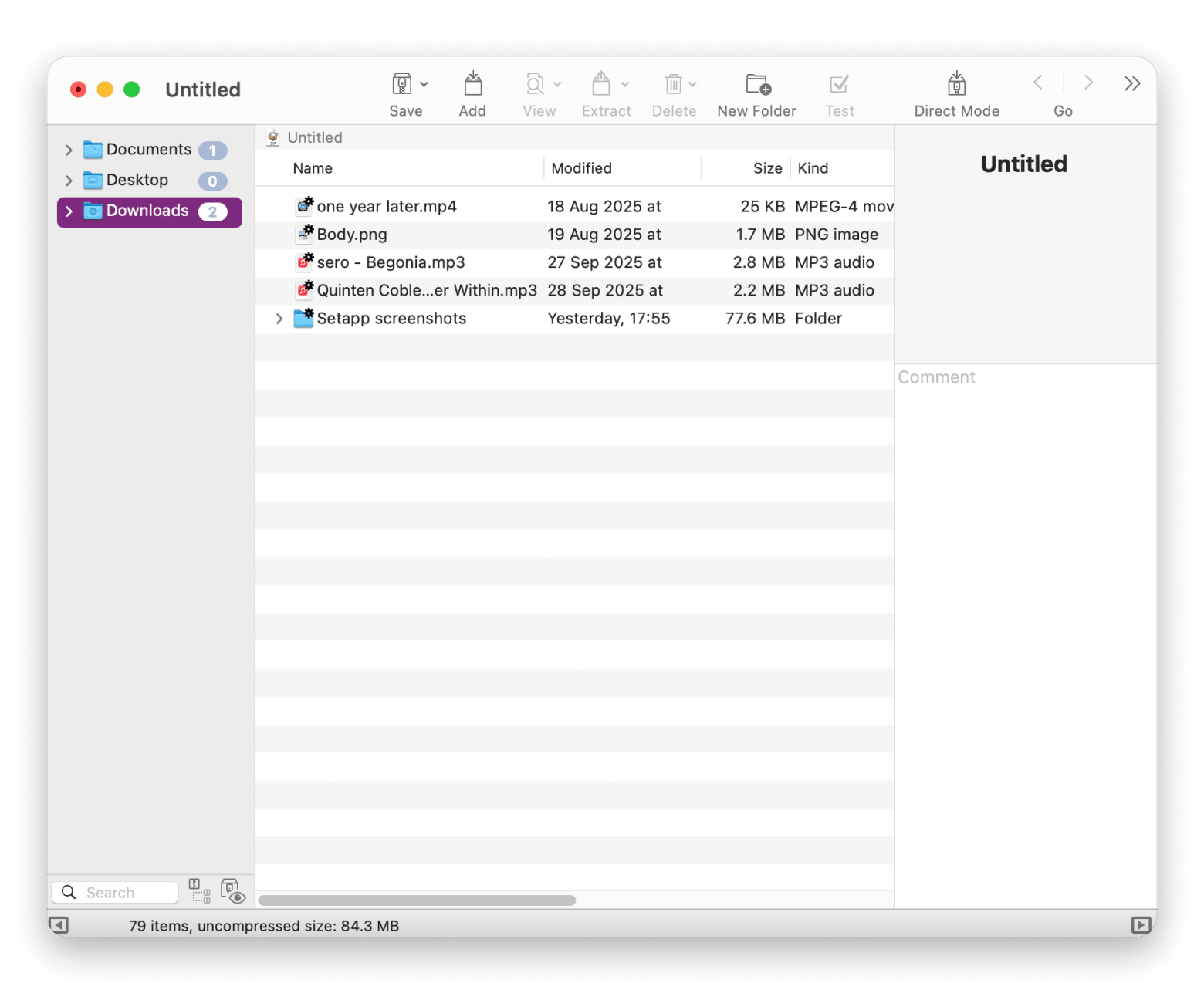
Here’s how to recover data from a corrupted ZIP folder using BetterZip:
Install and open BetterZip on your Mac.
Choose the zipped folder with the file(s) you want to extract.
Right-click the file you want to extract.
Choose Extract Selected from the drop-down menu.
Tip
If you find BetterZip’s interface a bit overwhelming, there’s another great option called Archiver. It's one of the most intuitive compressors and extractors for Mac. Just like BetterZip, Achiever can also extract anything selectively.
For those who prefer a dual-pane file manager, there's Commander One. Commander One is a dual-pane file manager for Mac that makes it easier to browse, move, and manage files side by side. It supports ZIP archive handling, unlimited tabs, built-in preview, and also connects to FTP, cloud, and remote storage services.
Extract corrupted ZIP files using Terminal on Mac
If simple double-clicking doesn’t work for your corrupt ZIP file, you can try Terminal. It’s much more powerful than Finder as it has direct access to the specific files included in the archive.
To exctratct corrupted ZIP files:
Open Terminal. You can find it in the Utilities folder or search for it using Spotlight (Command + Space).
Type unzip followed by a space.
Drag and drop your ZIP archive into the Terminal window, then press Return.
Your unzipped files will be placed in your user account folder, which you can easily access using Finder. If this doesn’t repair the corrupted ZIP, proceed to the next step.
Terminal will attempt to unzip the file, but it won’t repair it. That requires different commands we’ll look at later.
Recover ZIP files from a corrupt ZIP using data recovery tools
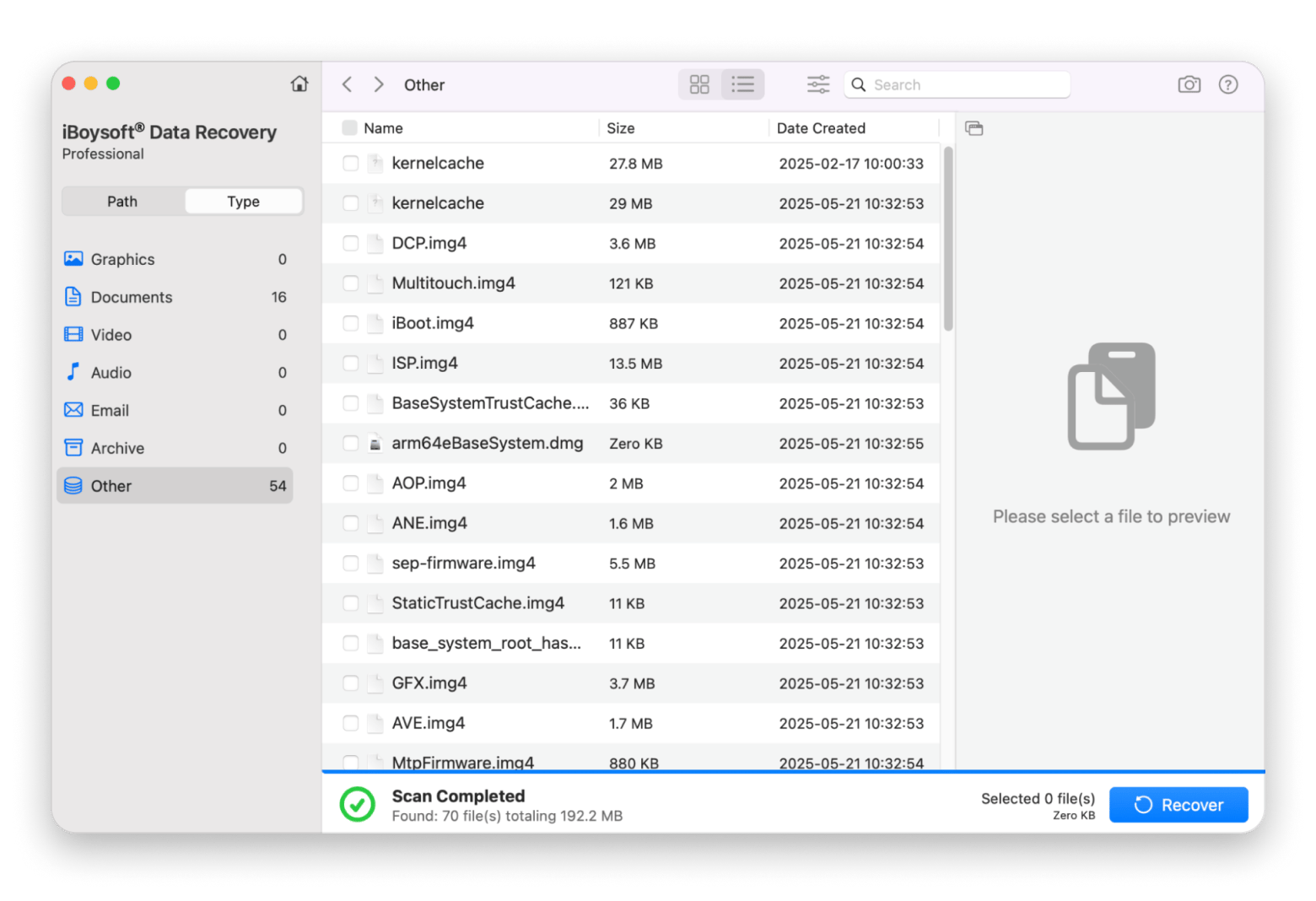
If nothing else works, don't despair, because there's still one more option to try. iBoysoft Data Recovery is a tool that can scan your drive and help you recover the files inside, even when other methods fail. It’s effective as, instead of just dealing with the visible file, it scans your storage for a more complete version. While it’s not a typical ZIP repair tool, it will help you recover ZIP files in a better format.
Here’s the step-by-step process:
Install and open iBoysoft Data Recovery.
Select the affected drive in which the damaged ZIP folder is stored.
Click Search for Lost Data.
Select the files and click Preview on the right pane, then click Recover.
Setapp puts iBoysoft Data Recovery alongside BetterZip and Archiver for tougher cases. Cancel anytime. Get recovery tools.
How to repair a damaged or corrupted ZIP archive
If you are an advanced user, you can also try using Terminal to fix a corrupt ZIP file with the following commands:
zip -F: The command tries to perform standard repair on your ZIP archive. You can use it when the damage is minor.
zip -FF: This one tries deeper repairs, so go with it when your archive is severely damaged.
Here’s how to recover ZIP files with Terminal:
Open Terminal (Applications > Utilities > Terminal).
Type and enter the command zip -F broke.zip --out pleasework.zip or zip -FF broke.zip --out pleasework.zip. Replace “broke.zip” with the name of the file and “pleasework.zip” with your desired output name.
Confirm single-disk archive by typing Y and pressing Return.
Why can’t I extract files from a zipped folder?
When your zipped folder refuses to extract, it’s usually because the archive is damaged in a way that macOS can’t read its structure.
Here are some of the common issues that can lead to a corrupt ZIP file:
Incomplete downloads: If the download process was interrupted for whatever reason, the archive can become corrupt.
Improper compression: If the file was created incorrectly or using a tool that’s not stable, it can fail to open.
Disk errors or bad sectors: Problems with the disk can corrupt files stored within bad sectors.
Sudden power failures: If the system shuts down unexpectedly due to a power failure, the archive structure may be left incomplete.
Sometimes your Mac shows you're connected to the internet, but there might be hidden issues that can stop a file from downloading completely. To check, use WiFi Explorer to scan your network. Click your current connection and open Network Details to see if your Wi-Fi is sharing a channel with too many other networks. If it is, that could be the cause of slow or unstable downloads.
Final thoughts on how to recover data from a corrupted ZIP folder
If your ZIP file accidentally becomes corrupted, don’t worry. Going through the above steps can help you recover your data. While Terminal may be an effective option, not everyone is comfortable with its complex commands and instructions.
Tools like BetterZip, Archiver, and Commander One make it simple to preview and extract files, even from damaged archives. If the corruption happened during download, WiFi Explorer can help you troubleshoot network issues and re-download the file. And if the corruption is severe, iBoysoft Data Recovery can go a step further by scanning your drive and recovering files when other methods fail.
7 days of full Setapp access unlocks BetterZip, Archiver, WiFi Explorer, and iBoysoft Data Recovery. Cancel anytime. Claim 7-day access. Prefer a single tool for archive work? Get Commander One in Setapp Marketplace, handpicked and reviewed for a clean, developer-style purchase experience. From $14.99 yearly subscription or $29.99 one-time purchase.
FAQ
How do you repair a ZIP file on a Mac?
To repair the ZIP file on a Mac:
Open Terminal, and type zip -F broken.zip --out repaired.zip to attempt file recovery.
Alternatively, you can use third-party apps like BetterZip and Archiver to repair ZIP files faster.
How to unzip a corrupted ZIP file on a Mac?
To unzip a corrupted ZIP file on a Mac, use apps like Archiver or Commander One, which can preview the contents and allow you to extract specific files.
What is the ZIP repair tool on a Mac?
BetterZip and Archiver are two effective ZIP repair tools available for Mac users. They extract corrupted ZIP files and offer advanced features like encryption and selective file extraction.
Why do ZIP files get corrupted?
ZIP files can get corrupted due to various reasons, including:
Incomplete downloads or transfers
Sudden system crashes or power failures while creating or copying ZIPs
Virus or malware interference
Disk errors or bad sectors on storage drives
How to repair a ZIP with a Mac?
To repair a ZIP file on a Mac, you can use Terminal commands like zip -FF or unzip -FF. If that doesn’t work, tools like iBoysoft Data Recovery can help you recover the data safely, even when manual repairs fail.
How to unzip a corrupted ZIP file on a Mac?
To unzip a corrupted ZIP file on a Mac, you would normally double-click it or use the built-in Archive Utility. However, a corrupted ZIP won’t open this way. In that case, you may need to use a data recovery tool like iBoysoft Data Recovery or run a Terminal command to extract the files.
What is the ZIP repair tool on a Mac?
macOS doesn’t have a dedicated ZIP repair tool. There are built-in Terminal commands that you can use. For more complex cases, third-party software like iBoysoft Data Recovery is the best option.
Why do ZIP files get corrupted?
ZIP files can get corrupted due to various reasons, including:
Incomplete downloads or transfers
Sudden system crashes or power failures while creating or copying ZIPs
Virus or malware interference
Disk errors or bad sectors on storage drives
Get a reliable archiver app
Compress and unpack any files on Mac with Archiver.






 Best solution
 Best solution