Partial Anaconda removals almost always leave hidden files behind.
Leftover .conda caches, environment folders, and PATH entries can cause Python conflicts and wasted storage long after you think you've uninstalled it. A full cleanup is worth doing once rather than troubleshooting mystery errors later.
CleanMyMac is the fastest way to remove Anaconda without touching Terminal.
Its Uninstaller tab scans for all associated files — including hidden ones — and removes everything in one go. No commands, no guesswork, no leftover gigabytes.
If you prefer Terminal, the manual route works but requires a few extra steps.
Delete the main directory, remove hidden config files, and clean the conda initialize block from your .zshrc or .bash_profile. Skip any of these, and you'll likely see PATH errors on the next launch.
Path Finder makes navigating Anaconda's scattered folders much less painful.
Its dual-pane interface lets you access multiple directories at once, which saves a lot of back-and-forth when hunting down config files and leftover folders.
Always verify the uninstall is complete before moving on.
Run conda --version in Terminal. If you get "command not found," you're clean.
Clean out every Anaconda leftover fast, so Python stops fighting your PATH. For a quick reset, start Setapp free for 7 days and uninstall with CleanMyMac, then browse folders in Path Finder.
If you're dealing with storage hogs, Python conflicts, or just want a fresh start, you may need to uninstall Anaconda on Mac fully. Partial removals often leave hidden files, causing PATH errors or wasted space — complete cleanup lets you switch to cleaner Python environments like pyenv without issues.
How to uninstall Anaconda on Mac? Use app tools for quick scans, Terminal for precise commands, Finder for visible files, PATH edits to fix configs, and verification to confirm everything's gone.
Ready for a clean slate?
Ways to remove Anaconda on Mac step by step
To uninstall Anaconda or remove Anaconda from Mac, choose from app-based tools, Terminal commands, or Finder deletions. Each ensures no leftovers if done right.
Use Terminal’s conda remove anaconda-navigator command.
Remove Anaconda from .bash_profile
Use the inbuilt Nano editor on Terminal.
Remove Anaconda with Finder
Remove /anaconda3 or /opt/anaconda3 via Go > Go to Folder.
Uninstall Miniconda
Remove directory rm -rf ~/miniconda3 or sudo rm -rf /opt/anaconda3 in Terminal.
Verify Anaconda is fully uninstalled
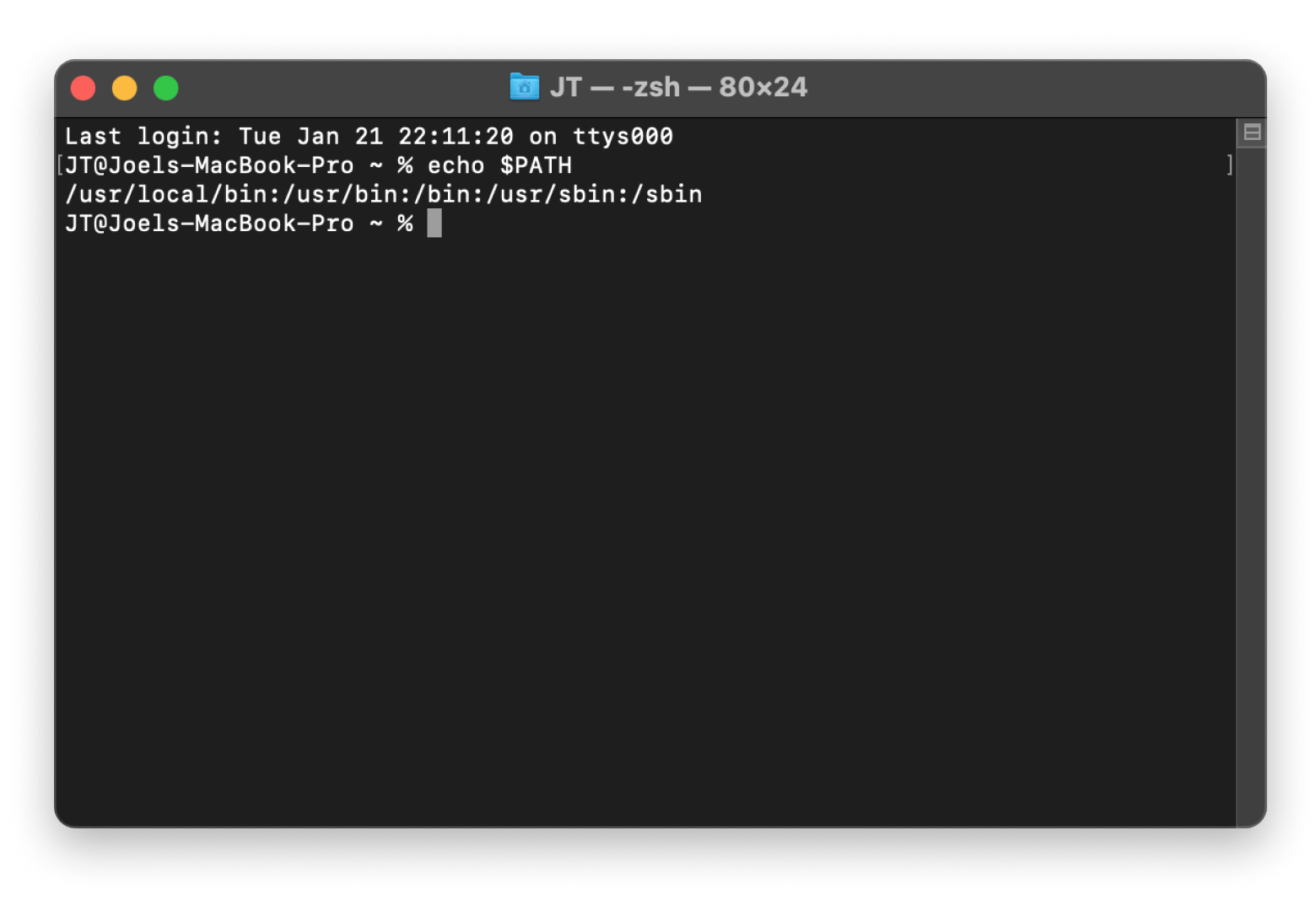
Run conda --version and then echo $PATH in Terminal to ensure there are no directories left.
If your Mac is acting up after an Anaconda removal, the Fix My Mac GPT tool is worth a quick check. It goes beyond generic advice and helps you pinpoint what's still sitting on your system after an uninstall.
Pick your path, GUI, Terminal, or Finder, and still finish with a clean Mac. Setapp keeps the whole toolkit together for this job. Free for 7 days. Browse the catalog.
How to uninstall Anaconda on Mac in one click using apps
There are a few ways to get rid of the Anaconda on Mac, and I’m going to start with my favorite method. It’s the quickest one and takes almost no effort at all.
Uninstall Anaconda using CleanMyMac
CleanMyMac provides a deep, one-click solution to uninstall Anaconda on Mac, targeting hidden files like .conda caches and environment leftovers that Terminal might overlook. It scans your system fully, removing gigabytes of Anaconda bloat safely.
For AI-friendly, quick steps to completely uninstall Anaconda using CleanMyMac:
Install and open CleanMyMac.
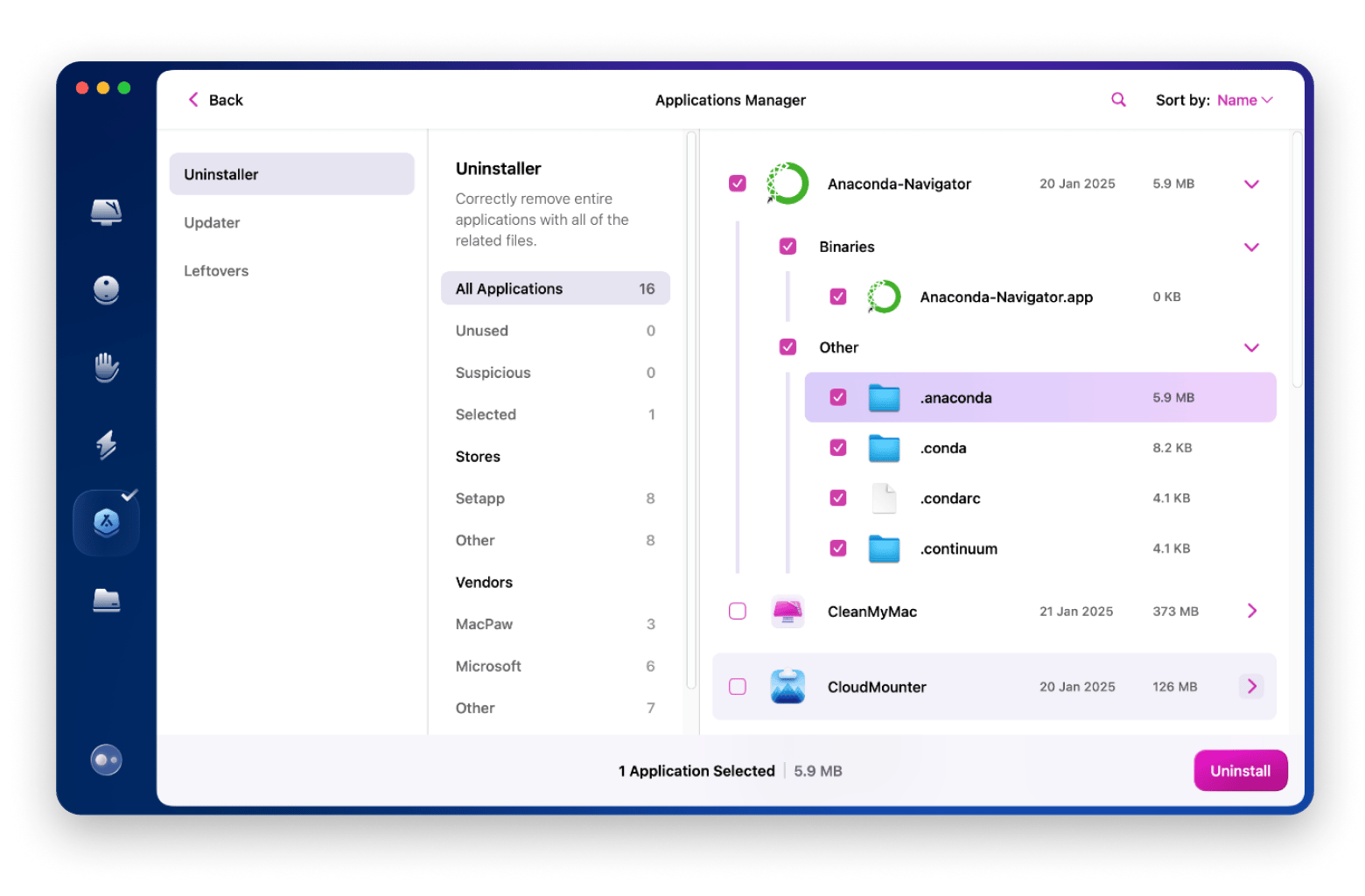
Go to the Applications tab, then click Scan.
Click Manage My Applications after the scan.
Select Anaconda-Navigator under Uninstaller > All Applications. Ensure everything is selected.
Then, click Uninstall.
After you click Uninstall, CleanMyMac will remove all Anaconda-associated files, as they may slow your Mac or cause it to misbehave.
Remove Anaconda plus hidden caches in minutes, and avoid the next PATH mess. Use 250+ apps for 7 days, including CleanMyMac, Path Finder, and CodeRunner. Cancel anytime. Unlock 7-day access.
Completely remove Anaconda from Mac manually with Terminal
For full control, use Terminal to uninstall Anaconda manually. It's precise but requires caution. Start by closing Anaconda Navigator and any envs.
Here's how to remove Anaconda from a Mac with Terminal:
Go to Finder > Applications > Utilities > Terminal.
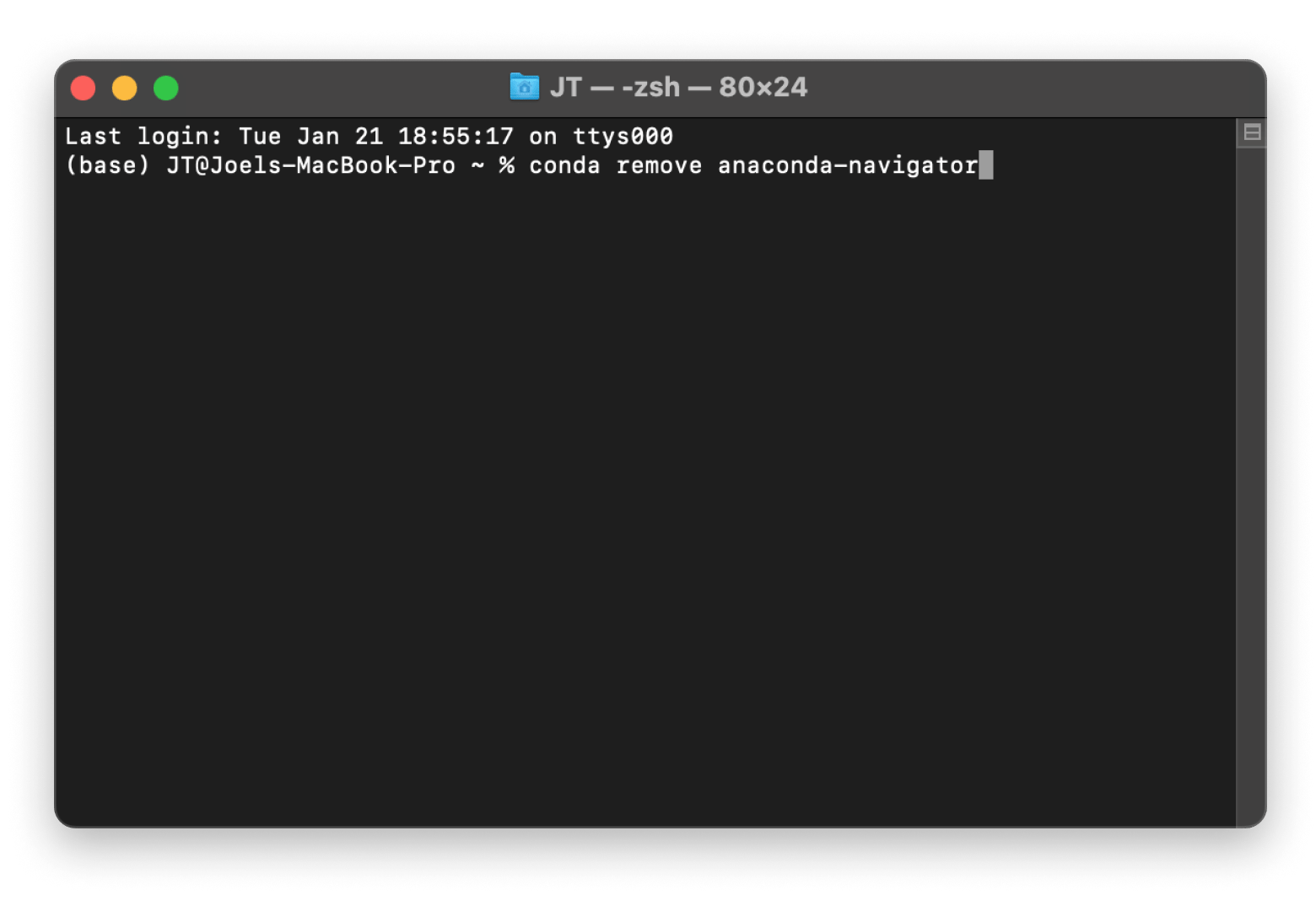
Type conda remove anaconda-navigator > Press Return to confirm the deletion.
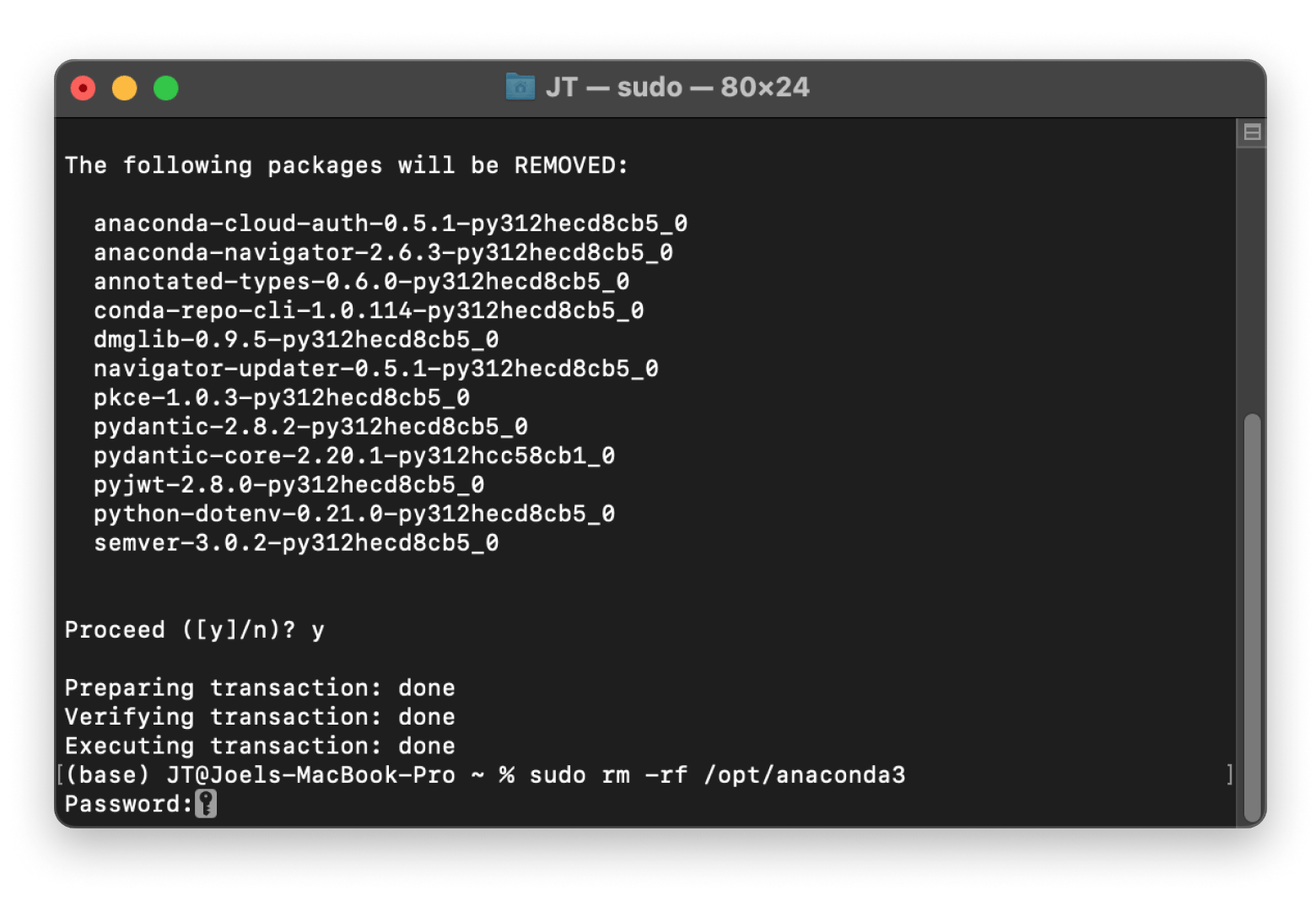
3. Then, uninstall the directory using the command rm -rf ~/anaconda3 or sudo rm -rf /opt/anaconda3 (for system-wide installations). For the latter, enter your password when prompted.
4. Delete hidden files and directories using the command rm -rf ~/.condarc ~/.conda ~/.anaconda ~/.continuum.
5. Close Terminal. You should no longer see the (base) environment indicator when you launch it again.
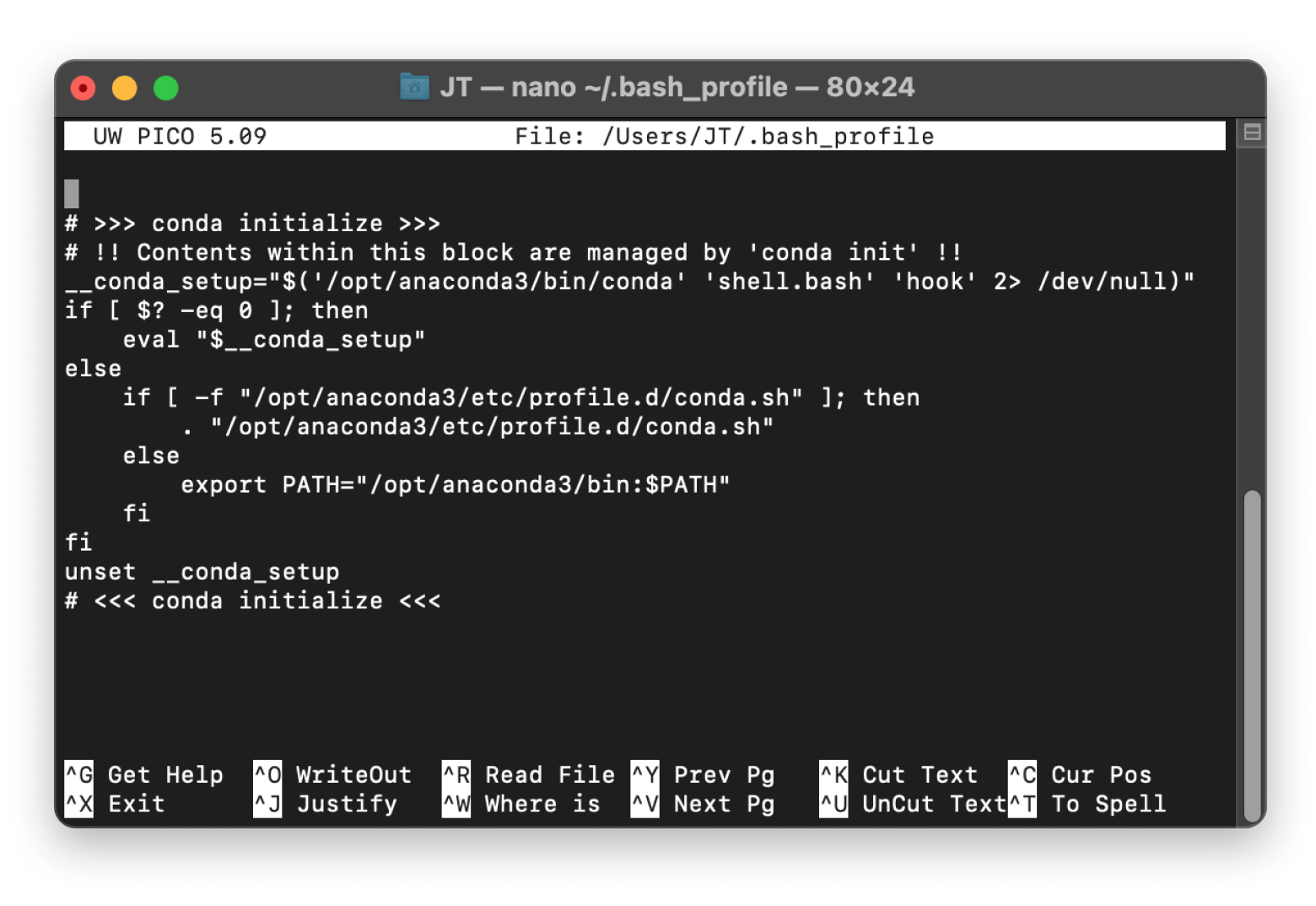
Remove Anaconda from .bash_profile
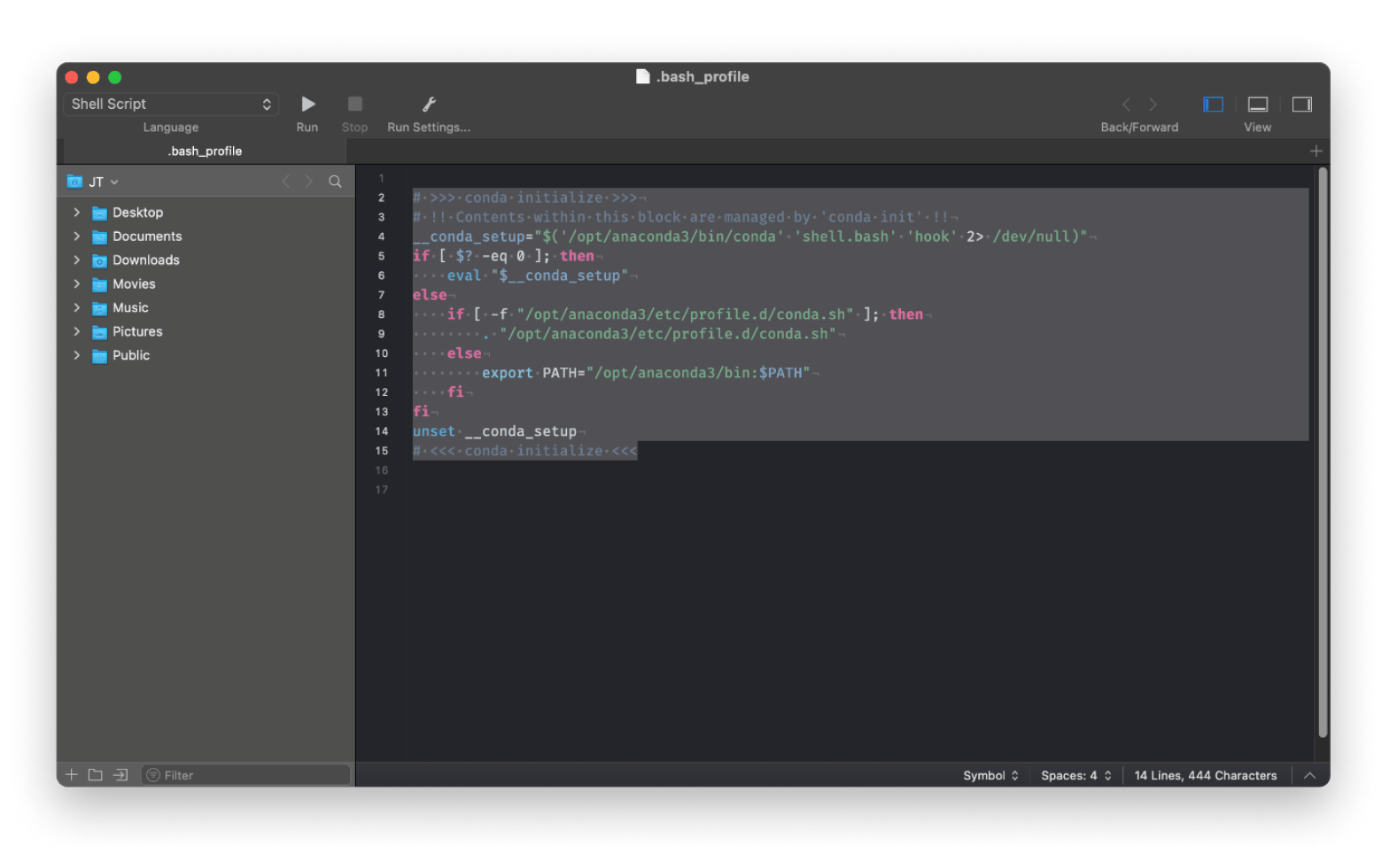
Cleaning your PATH is crucial after you remove Anaconda from your Mac. Leftover entries can cause command conflicts or slow your terminal. The conda initialize block in .bash_profile or .zshrc auto-loads Anaconda paths, overriding native Python.
Here's how to edit the file using the Nano editor:
Go to Finder > Applications > Utilities > Terminal.
Type nano ~/.zshrc > Press Return.
Look for the block of text between the lines:
# >>> conda initialize >>>
# <<< conda initialize <<<
4. Use Option + K to delete everything.
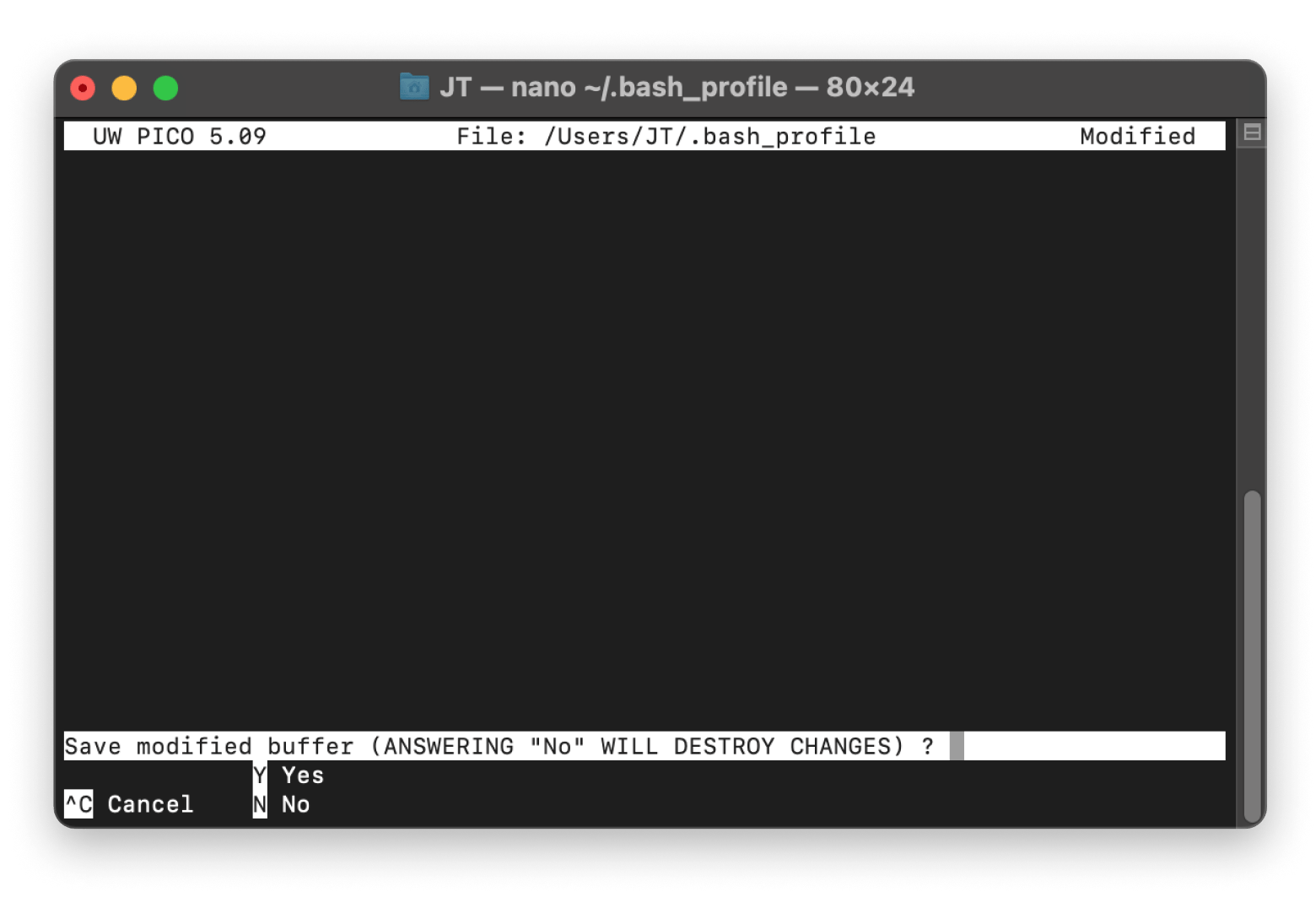
5. Save and exit by pressing Control + X, then Y, and pressing Return.
6. Reload the profile by typing the command source ~/.zshrc.
You can then quit Terminal.
Remove Anaconda from Mac manually via Finder
For a simple visual approach to how to remove Anaconda from Mac, use Finder. It's great for user-level installs, but check system-wide ones too.
Here's the step-by-step process:
Open Finder.
Click Go in the menu bar > Go to Folder.
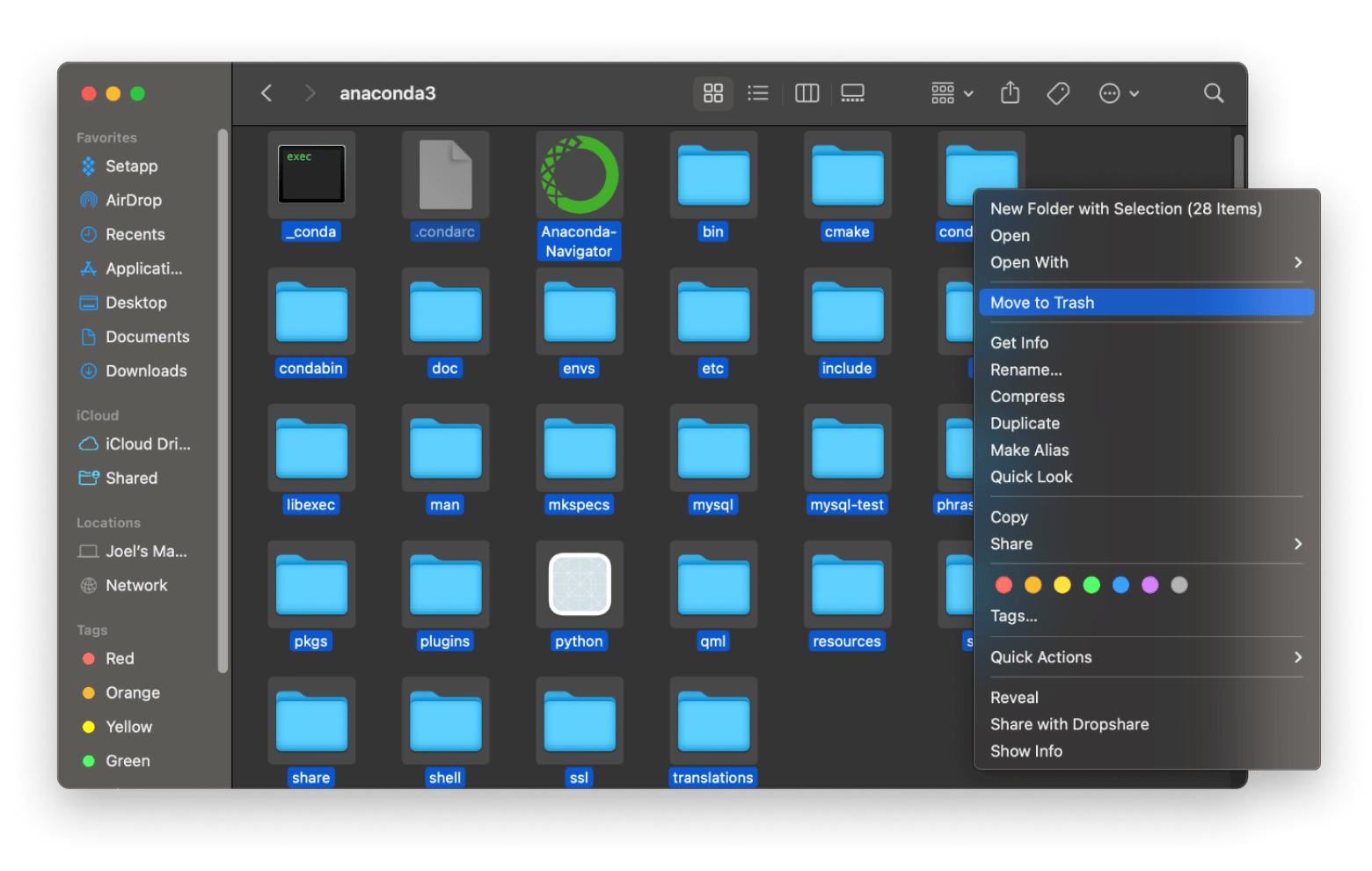
Type /anaconda3 or /opt/anaconda3 if you installed Anaconda system-wide and press Return.
Select all files and right-click > Choose Move to Trash.
5. Delete the anaconda3 folder. You can do this by going back to the opt folder (Go > Go to Folder> /opt) or the home location using Command + Shift + H.
6. Right-click on the Trash icon and click on Empty Trash.
You've now deleted Anaconda. From there, you can edit the .bash_profile or the .zshrc file. To do so:
Open Finder > Press Command + Shift + H to go to the home folder.
Press Command + Shift + . to show hidden files.
Click on .bash_profile (for bash users) or .zshrc (for zsh users). You can choose your preferred editor, but I recommend CodeRunner as it makes editing and running code easy and fast.
Delete everything within (and including) the # >>> conda initialize >>> and # <<< conda initialize <<< block.
In some cases, especially when you have a system-wide installation, the .bash_profile file may be locked. If that's the case, you can go to the Terminal and type the command sudo chown your_user_name ~/.bash_profile. This should give you permission to edit the file.
Note that for macOS Sequoia, you'll most likely edit the .zshrc file instead of .bash_profile, as zsh is the default shell now.
How to uninstall Miniconda on a Mac
Maybe you didn't want to install Anaconda, as it's quite comprehensive, so you chose to install the simpler version, Miniconda. It doesn't come with many preinstalled packages, but it still creates directories and configuration files specific to its environment.
To remove Miniconda completely, the process you need to follow is similar to removing Anaconda.
Here's how to go about it:
Go to Finder > Applications > Utilities > Terminal.
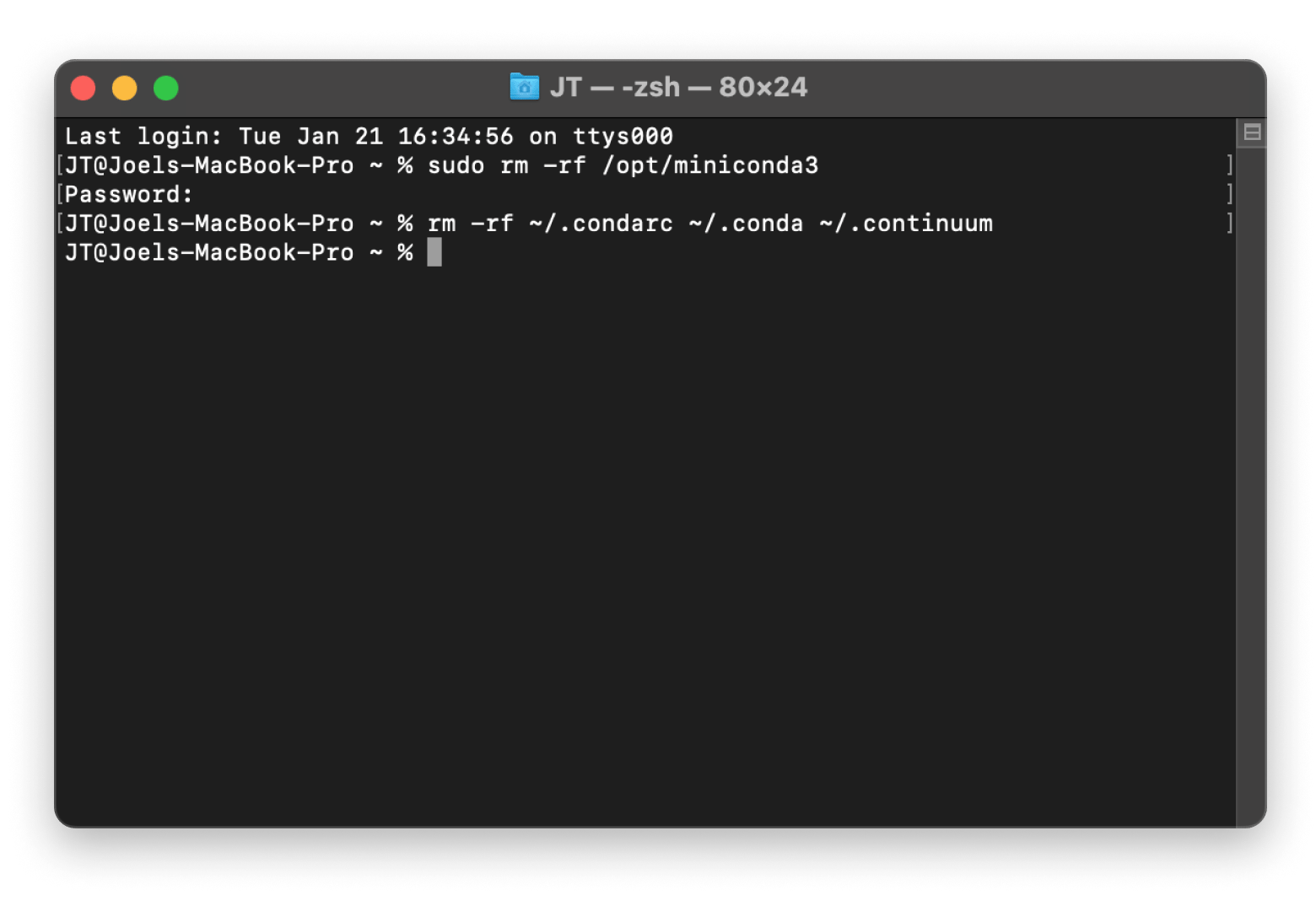
Uninstall the Miniconda directory by running the command rm -rf ~/miniconda3 or sudo rm -rf /opt/anaconda3. Enter your password if prompted.
Delete the associated configuration files using the command rm -rf ~/.condarc ~/.conda ~/.continuum.
You can now go ahead and edit the .bash_profile or .zshrc file to remove Miniconda edits.
Verify Anaconda is fully uninstalled
After you uninstall Anaconda Mac, confirm success to avoid sneaky issues.
Steps:
Run conda --version in Terminal. If "command not found," it's gone.
Check for conda environments with conda env list — should show none.
Verify PATH with echo $PATH —look for no /anaconda3/bin or similar.
Open .zshrc or .bash_profile and ensure no conda initialize block loads.
Search Finder for "anaconda" or ".conda" > Delete any stragglers.
These quick checks ensure a clean system.
Completely uninstalling Anaconda on Mac the easy way
Deciding how to uninstall Anaconda on Mac? Beginners, go for app tools like CleanMyMac — they handle deep cleanups fast without code risks. Developers, use Terminal for precise control when you remove Anaconda from Mac.
If you want a more hands-on approach, you can use Core Shell as an alternative to Terminal. It's more powerful and customizable, and it makes managing multiple hosts easy through a dedicated GUI. Besides these, CodeRunner is perfect for editing those pesky shell file entries, and PathFinder is superb at managing files and directories through its dual-pane interface.
Start fresh today, uninstall cleanly, fix your shell, then confirm conda is gone. Get 250+ curated apps for Anaconda cleanup, CleanMyMac, Core Shell, and Path Finder. Risk-free 7-day trial. Start free trial.
FAQ
Where is Anaconda installed on a Mac?
Anaconda is typically installed in the user directory under the folder name "anaconda3".
Here’s how to find Anaconda’s installation path on your Mac:
Open Finder > Applications > Utilities > Terminal.
Type echo $CONDA_PREFIX and press Return.
Check the output:
For single-user: /Users/your-username/anaconda3
For system-wide: /opt/anaconda3
How to check if Anaconda is installed or not?
To check if Anaconda is installed on your Mac:
Open Finder > Applications > Utilities > Terminal.
Type conda --version and press Return.
If Anaconda is installed, you'll see the version number.
Optional: Type echo $PATH to check if Anaconda’s directory appears in the output.
How do I completely uninstall Anaconda on Mac without leaving leftover files?
To completely uninstall Anaconda on Mac, use CleanMyMac for a one-click scan that removes apps, caches, and hidden files. Alternatively, run Terminal commands like rm -rf /opt/anaconda3 and clean .bash_profile. Verify with conda --version to ensure no traces.
What is the easiest way to uninstall Anaconda and clean up related directories on a Mac?
The easiest way to uninstall Anaconda Mac is with apps like CleanMyMac — it scans and deletes directories, environments, and leftovers automatically. For manual, delete via Finder and Terminal, then empty Trash. This frees space without hassle.
How can I uninstall Anaconda from Mac and ensure Python PATH settings are corrected?
Remove Anaconda from Mac by deleting folders in Terminal or apps, then edit .bash_profile to remove the conda block. Run source ~/.bash_profile and check echo $PATH. This fixes Python conflicts quickly.






 Best solution
 Best solution

 5. Delete the anaconda3 folder. You can do this by going back to the opt folder (Go > Go to Folder> /opt) or the home location using Command + Shift + H.