Use Microsoft AutoUpdate for hands-free updates. Open any Office app, click Help > Check for Updates, and enable automatic updates. Microsoft Office checks for new versions regularly and installs them in the background.
Update Office from the App Store if you installed it there. Open the App Store, click Updates, and look for any Microsoft Office app updates. Enable Automatic Updates in App Store > Settings to stay current.
Manage all app updates in one place with CleanMyMac.CleanMyMac includes an App Updater that scans your Mac for outdated software and lets you update everything — including Office — with a single click. Try CleanMyMac free for 7 days and let App Updater handle the rest.
Office 2021 support ends October 13, 2026. After that date, no more security updates or bug fixes. If you're still on Office 2021, plan your upgrade to Office 2024 or Microsoft 365.
Explore Setapp for Office alternatives and Mac tools.Ulysses for focused writing, Craft for collaborative documents, and NotePlan for task planning — all available alongside CleanMyMac and 270+ other apps on Setapp. Try free for 7 days.
Quick solution: To update Microsoft Office on Mac, open any Office app, go to Help > Check for Updates, and click Update Now in the Microsoft AutoUpdate window.
Microsoft Office updates are set to auto by default, which means you should get all updates automatically. You can, however, turn off this feature and choose to update manually whenever you want.
To get the best experience with Microsoft Office, keep it up to date for better performance and the latest features. The newest Office suite version will also have the latest security fixes.
I'll walk you through checking your current version, setting up automatic updates, and a few alternative methods I've discovered for keeping everything current.
Here's a quick overview of the main ways to update Microsoft Office on Mac:
To update Microsoft Office on Mac, open any Office app, click Help > Check for Updates, and follow the prompts in Microsoft AutoUpdate. Here are several methods depending on how you installed Office.
Check your Microsoft Office version on Mac
Before updating, it's helpful to know which version you're currently running. Here's how I check my Office version:
1. Open any Office app like Word, Excel, or PowerPoint.
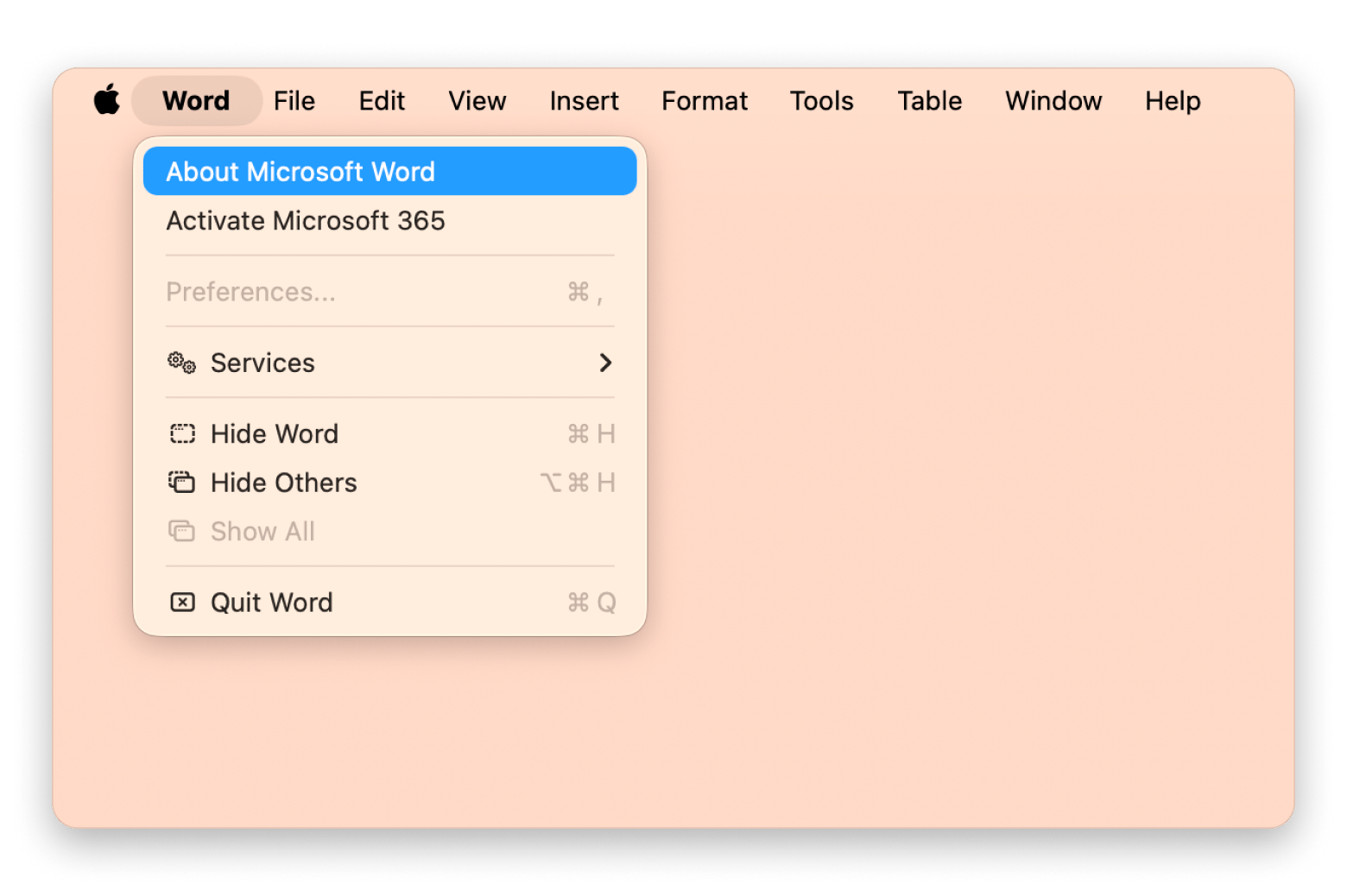
2. Click on the app's name in the menu bar (Word for Microsoft Word, Excel for Microsoft Excel).
3. Choose About Microsoft [App Name] from the drop-down menu.
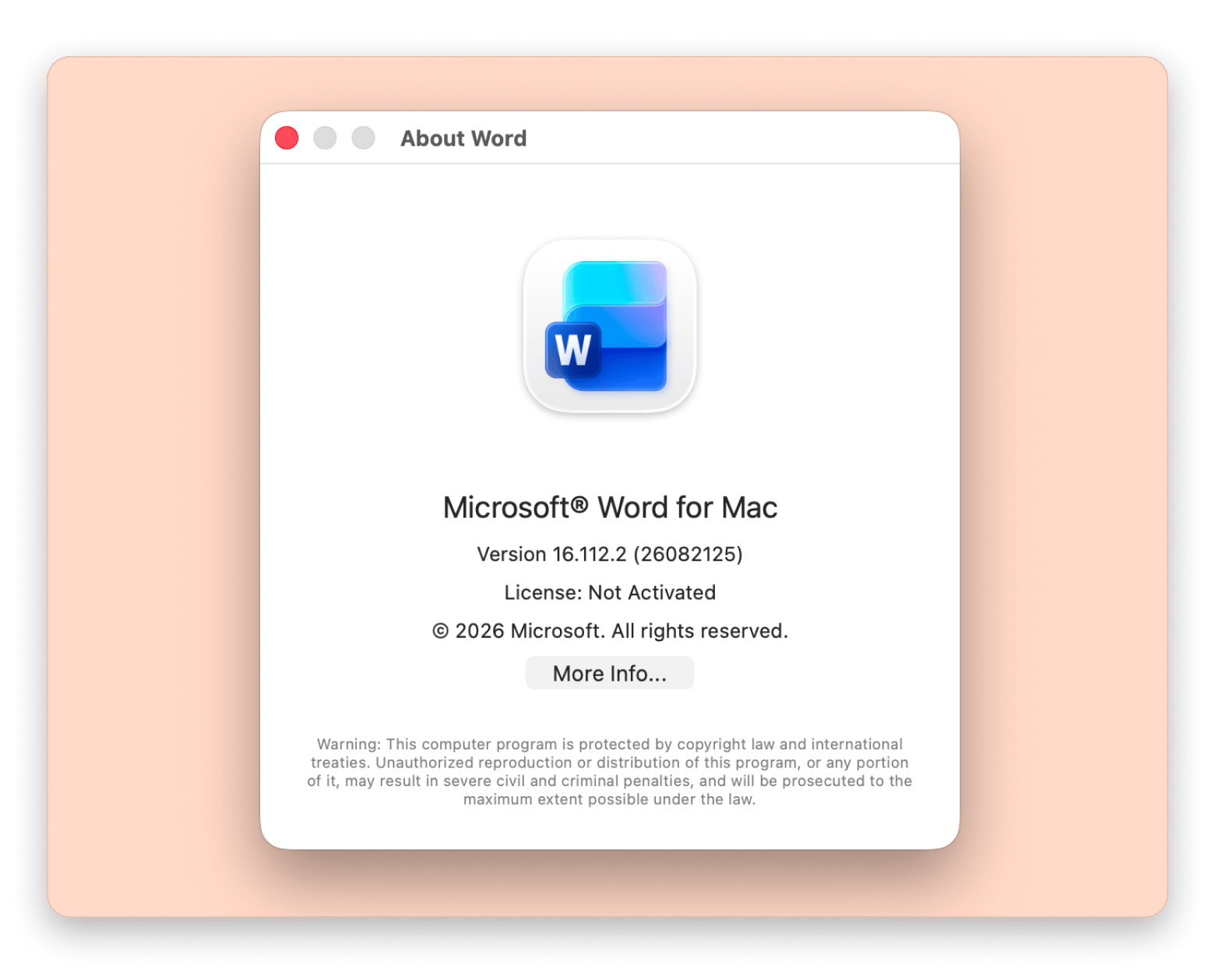
4. A window appears showing your version number and license information:
Note: According to Microsoft's current support policy, Office 2024 and Office 2021 both require macOS Sonoma or later to receive the latest updates. While older versions of Office 2021 could originally run on macOS Big Sur, Microsoft has since dropped support for those older operating systems.
Next, check if your Microsoft AutoUpdate is on. To do that:
1. Open any Microsoft app like Word or Excel.
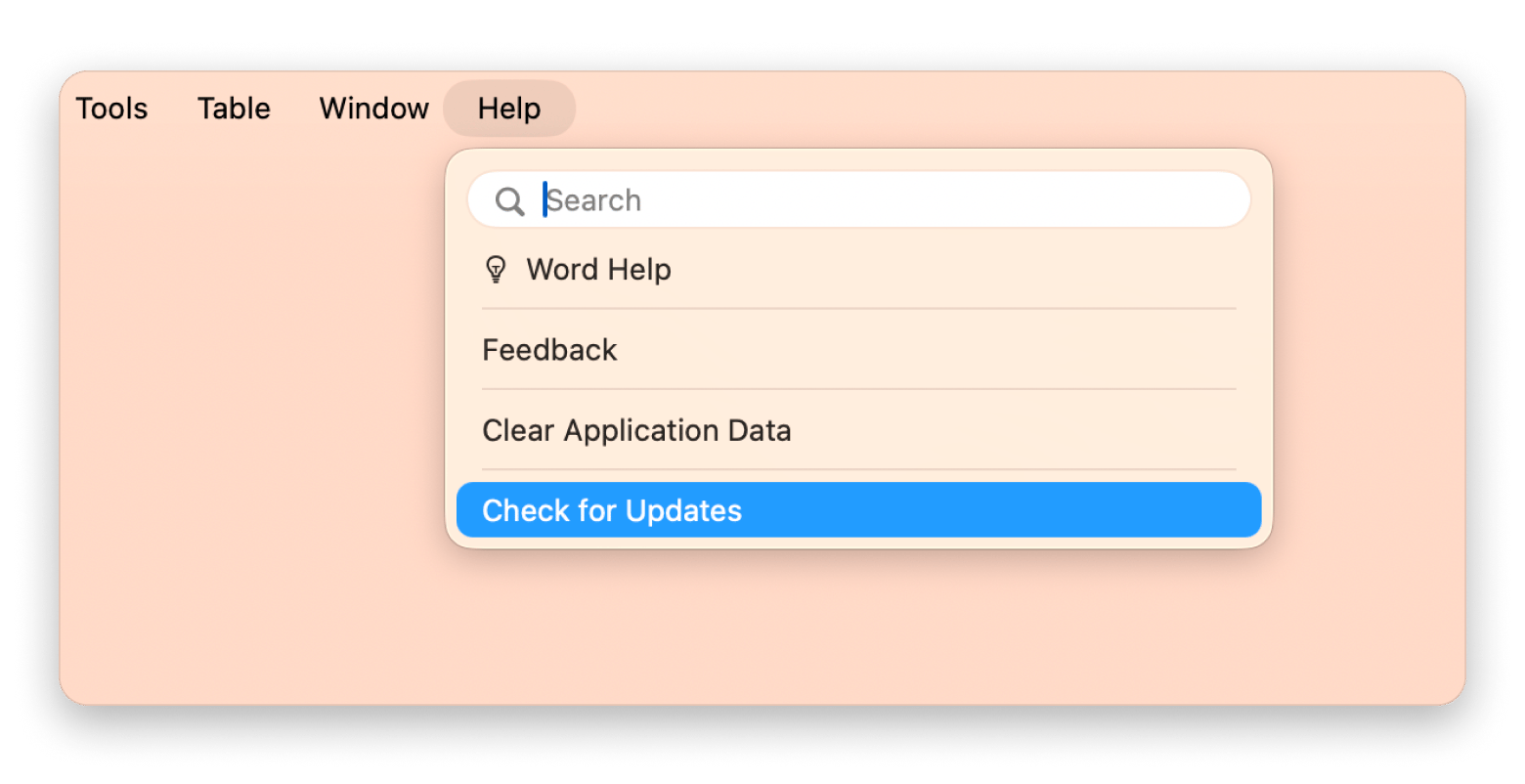
2. Click Help in the menu bar.
3. Select Check for Updates from the drop-down list.
4. In the Microsoft AutoUpdate window, select Automatically keep Microsoft Apps up to date.
5. Choose your update channel (Current Channel recommended for most users).
Microsoft AutoUpdate checks for updates regularly and installs them in the background. You can also click Update Now to manually check for available updates at any time.
Stay current with CleanMyMac’s App Updater
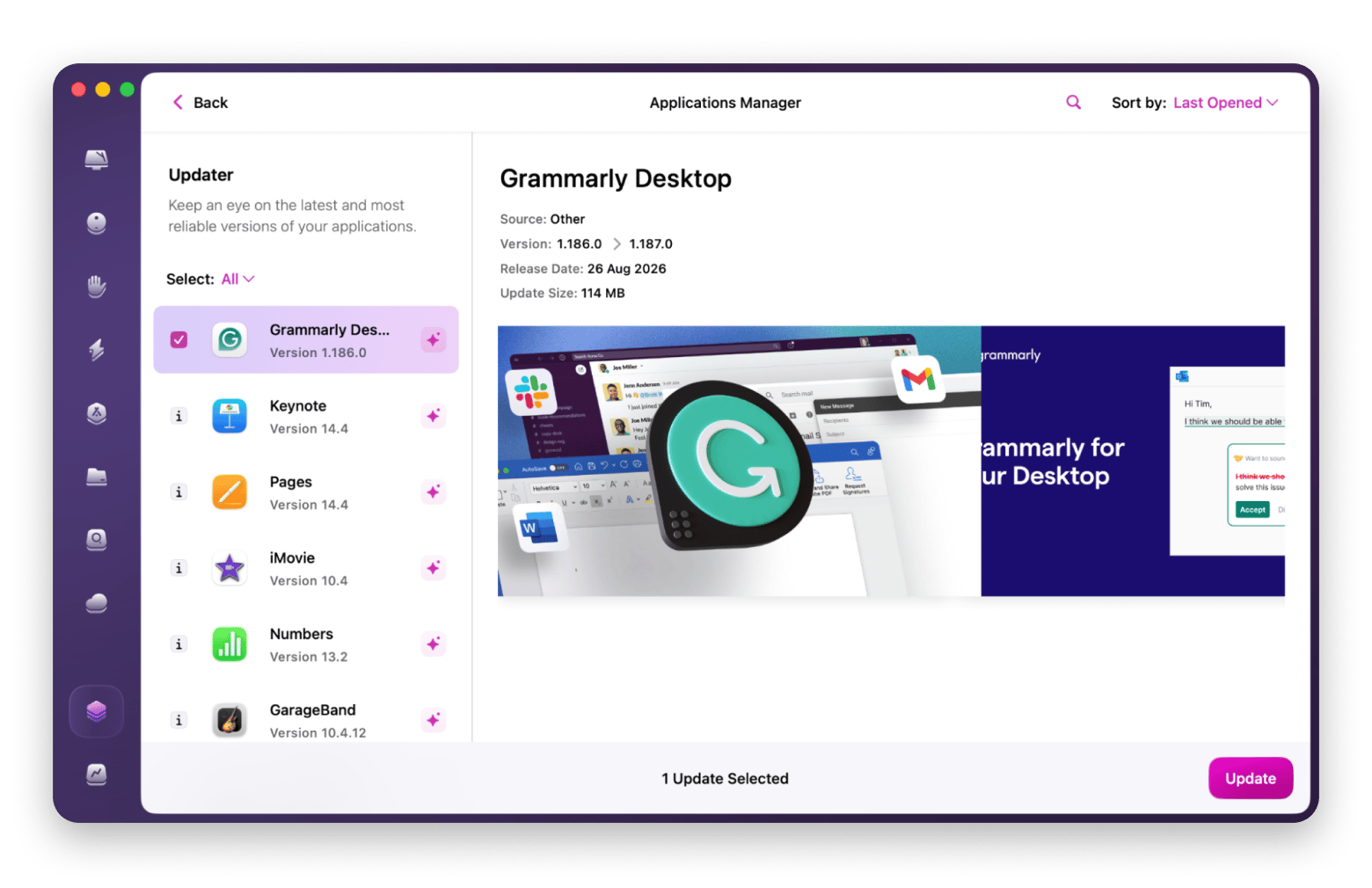
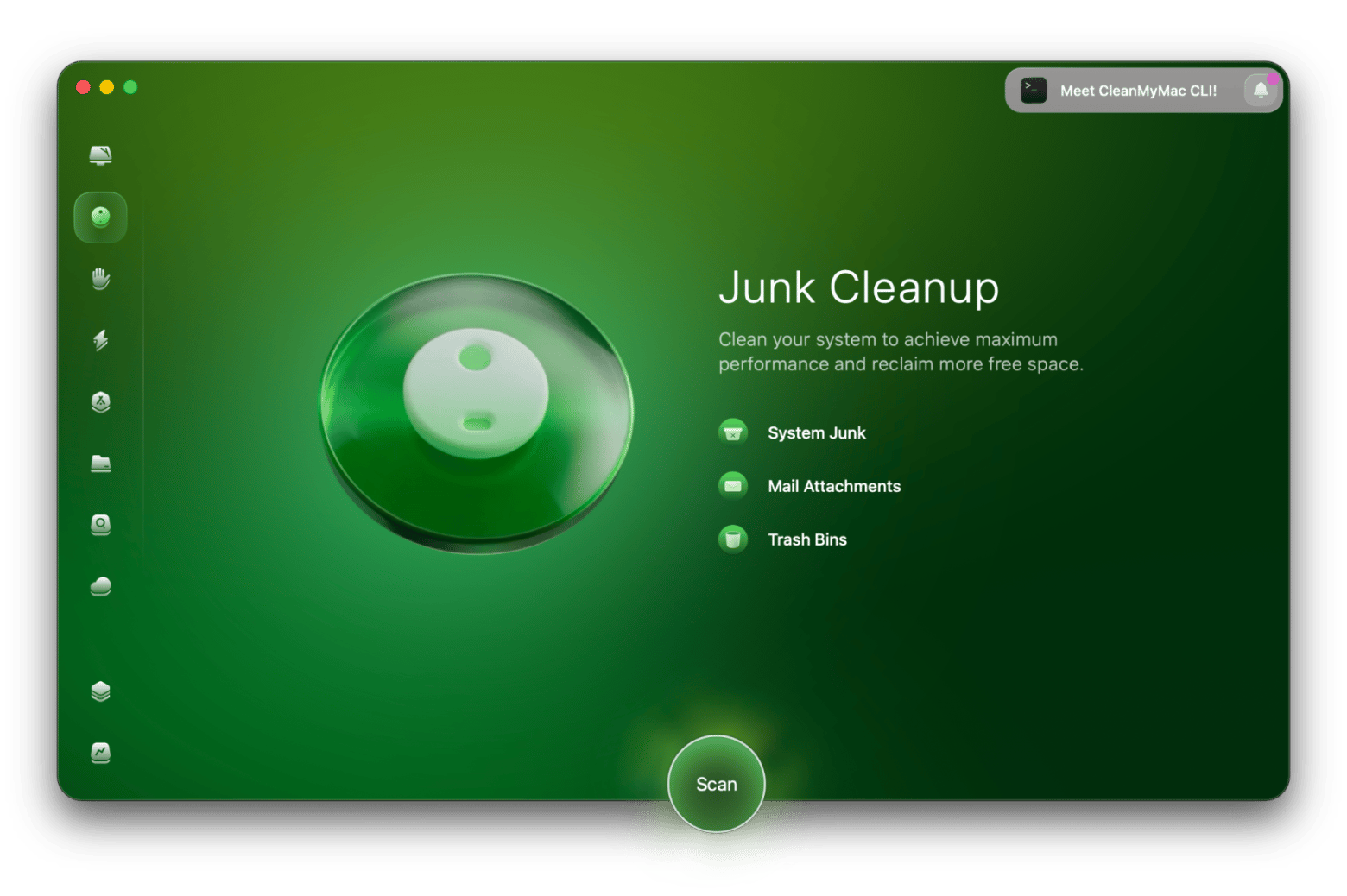
CleanMyMac includes an App Updater feature that manages all your Mac app updates in one place. I find this particularly useful because it shows updates for Office alongside all my other apps. The Updater scans your system for outdated software and lets you update everything with a single click.
To update Microsoft Office and other apps, install and open CleanMyMac > Go to My Tools > Find App Updater and click Scan. Once you see the app that needs an update, choose Microsoft Office or select all apps for a batch update:
CleanMyMac also helps free up space by removing old Office cache files and temporary data. This keeps your Mac running smoothly while ensuring you have the latest app versions installed. For this, you can use the Cleanup module:
Update Microsoft Office in the App Store
Whether you are using just one or two apps out of the full Office pack or the whole Microsoft bundle, you can keep it updated through the App Store.
Note that if you installed Office apps through the App Store, updates work differently:
Open the App Store from your Dock or Applications folder.
Click Updates in the sidebar.
Look for any Microsoft Office app updates.
Click Update next to each app or Update All.
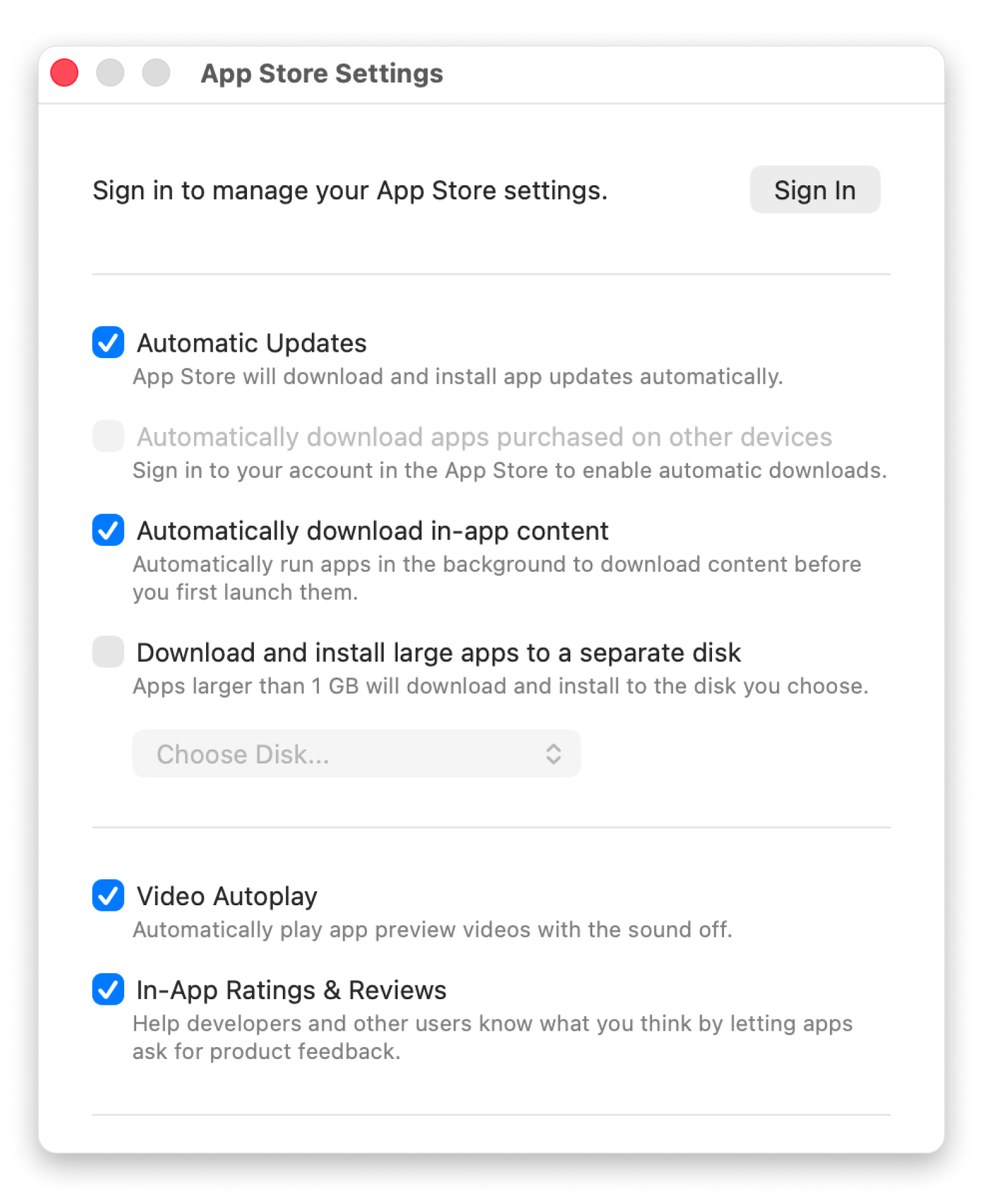
By default, App Store checks for updates to the apps you have installed on your Mac and notifies you when updates are available for your apps. To check if your auto-update is on, go to App Store > Settings and ensure Automatic Updates is selected:
What if updates fail?
Sometimes Office updates don't install properly. I've encountered this a few times, and here's what usually works.
First, restart your Mac and try updating again. If that doesn't help, you might need to reset Microsoft AutoUpdate:
Quit all Office apps completely. If it doesn’t work, use the Force Quit feature or the QuitAll tool.
Open Finder > Go > Go to Folder> Paste ~/Library/Containers/com.microsoft.autoupdate2.
Delete the Microsoft AU Daemon folder by moving it to the Trash.
Restart your Mac and try updating again.
For persistent issues, Microsoft's official support page provides detailed troubleshooting steps and direct download links for specific updates.
Microsoft Office alternatives to try
Now that you know how to update your Microsoft Office on Mac, let’s consider some alternatives you can use. If you're curious about trying something new or need specific features that Office doesn't offer, here are a few apps I've found really useful:
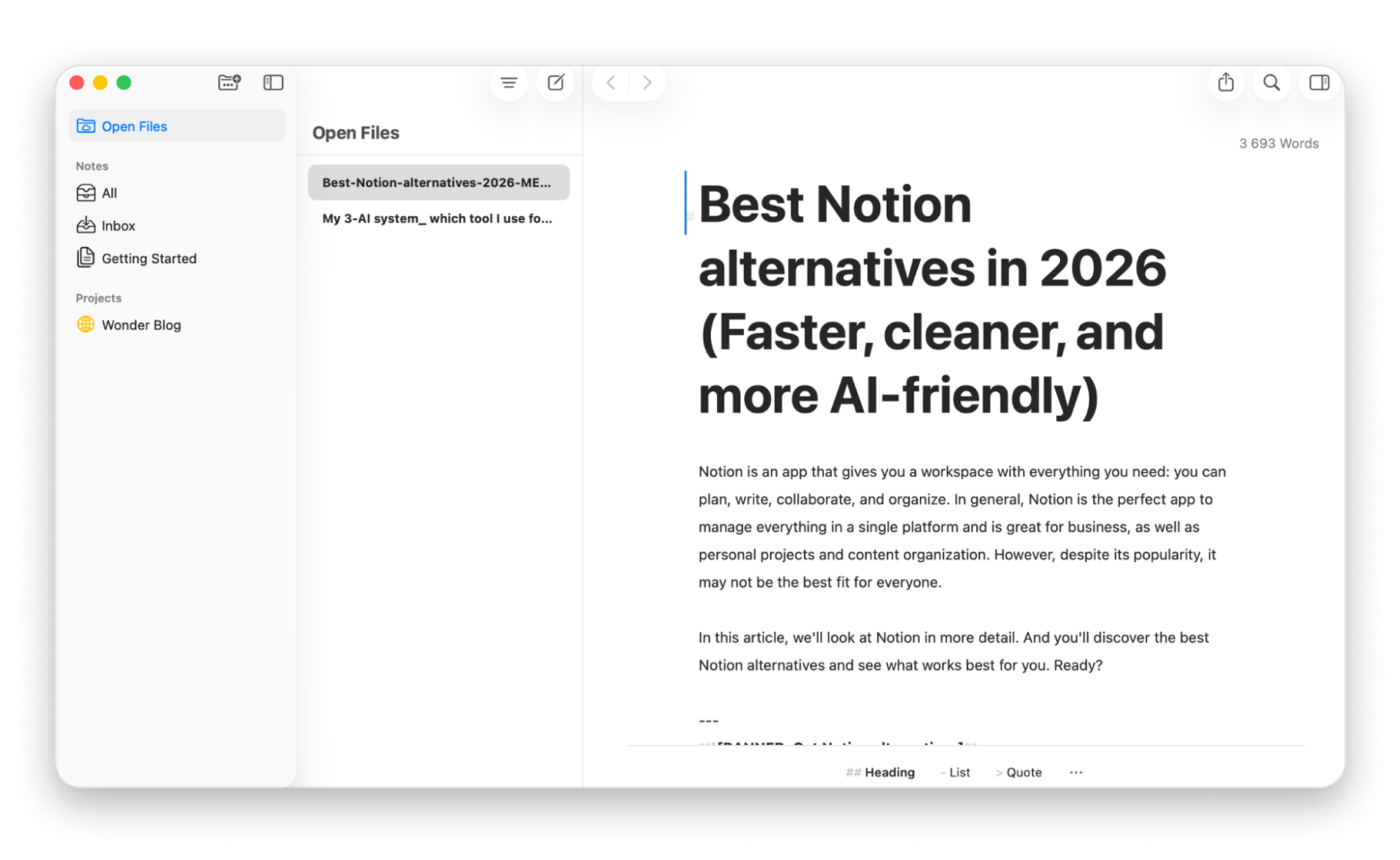
Ulysses is a text-editing app that offers a distraction-free writing environment with powerful organizational features. With Ulysses, you can do an advanced check of your spelling, grammar, style, and semantics, and export options for PDF, ePUB, DOCX, and HTML. You get built-in text stats, including average words per sentence, number of lines, sentences, and more. You can also view reading time for your text at various reading speeds. The app's minimal design helps me focus on writing without the complexity of traditional word processors.
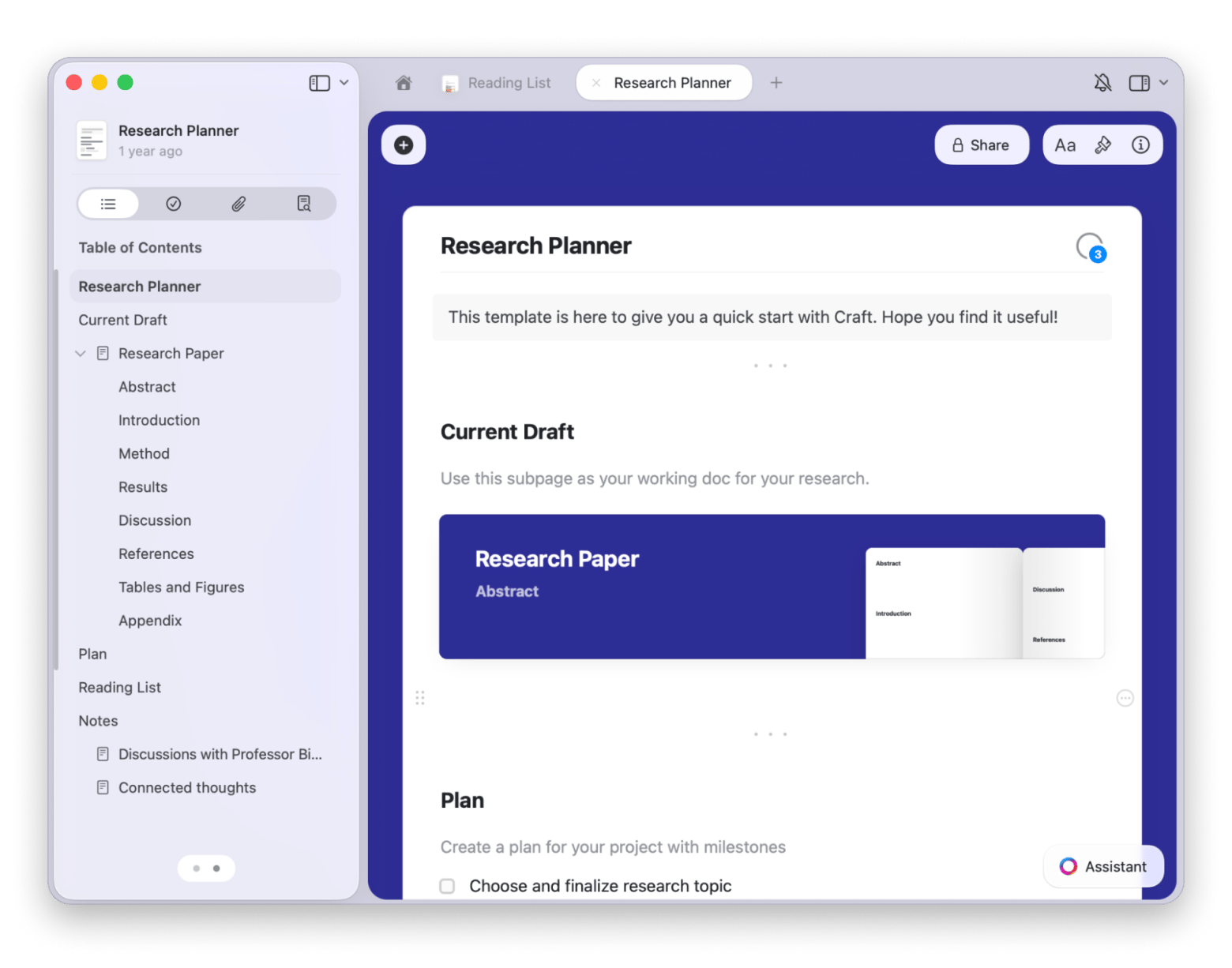
Craft takes a different approach than Microsoft Word, and I've found it offers some really compelling features. It’s an AI-powered document editor and writer with multiple amazing features, such as flexible note-taking, collaborative editing, tags and filters, advanced formatting, and more. If you’re searching for an organized platform to create visually appealing documents and collaborate on them, you’ll definitely like Craft.
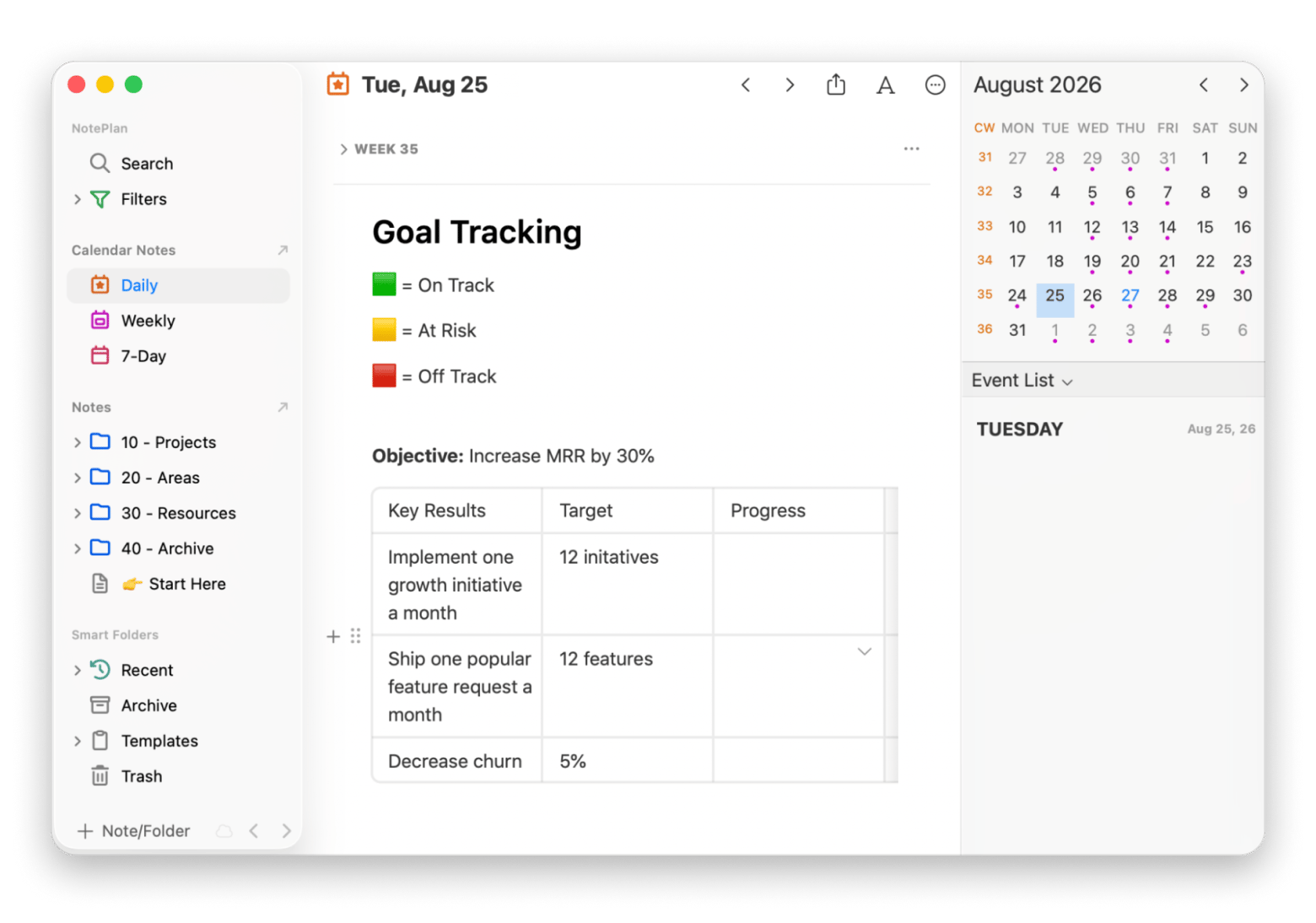
NotePlan is a simple note-taking app that helps you keep track of tasks and ideas, while also being able to sync up with loved ones, friends, and colleagues by sharing links to your individual notes. The app allows for easy scheduling of your upcoming tasks. You can create reminders, events, and tasks to keep yourself on track.
If you're rethinking your whole writing setup, here is the best word processing apps for Mac guide that compares Ulysses, Craft, and other editors side by side.
How to update and keep your Microsoft Office apps running
Keeping your Microsoft Office pack updated and ready for your daily tasks is an important aspect of your work, so turning on auto-updates for all your Microsoft apps is probably the optimal solution for most users. I recommend you keep the default auto-update settings for all your apps, including Microsoft Office, as that allows you to get automatic updates for your apps and work with the latest and most optimized features and security updates.
If you want, try out the Microsoft pack app alternatives I’ve mentioned – Ulysses for writing and formatting, Craft for co-editing, and NotePlan for keeping track of your daily tasks, projects, and overall schedule. And CleanMyMac for managing all your app updates in one place while keeping your Mac optimized.
Your Mac deserves apps that stay current, and tools that keep it running at its best. CleanMyMac handles updates and maintenance. Ulysses, Craft, and NotePlan cover writing, docs, and planning. All part of Setapp — 270+ Mac and iOS apps, one subscription. Cancel before Day 7 — $0 charged. Try Setapp Free. Or get CleanMyMac as a standalone app.
FAQ
How do I update Microsoft Office on my Mac?
Open any Office app and click Help > Check for Updates. In the Microsoft AutoUpdate window, click Update Now to install available updates. You can also enable "Automatically keep Microsoft Apps up to date" for hands-free updating. The process typically takes 2-5 minutes depending on your internet speed. Alternatively, use CleanMyMac > My Tools > App Updater to update all apps in one click.
How can I check my Microsoft Office version?
Open any Office app like Word or Excel. Click the app name in the menu bar and choose About Microsoft [App Name]. The version number appears in the dialog box. You can also find version information in Microsoft AutoUpdate by clicking Advanced after opening Check for Updates.
Does Office automatically update on Mac?
Yes, Microsoft Office updates automatically by default through Microsoft AutoUpdate. To verify or change this setting, open any Office app, click Help > Check for Updates, and ensure "Automatically keep Microsoft Apps up to date" is checked. You can disable this for manual control.
Is Office 2019 still supported on Mac?
No, Microsoft ended support for Office 2019 in October 2023. Office 2019 no longer receives security updates or bug fixes. Microsoft currently supports Office 2021 and Office 2024, with support for Office 2021 officially ending on October 13, 2026, under the Microsoft Lifecycle Policy.
To receive Office updates, your Mac must run one of the three most recent major versions of macOS, as Microsoft drops support for the oldest version whenever Apple releases a new one. Currently, Microsoft supports macOS 14 (Sonoma), macOS 15 (Sequoia), and macOS 26 (Tahoe). Both Office 2021 and Office 2024 require macOS Sonoma or later to receive updates; running older operating systems like Big Sur or Ventura will freeze your Office apps on their last compatible version.
Fix Mac issues with Setapp
Get an ever-growing selection of troubleshooting apps.






 Best solution
 Best solution