Slow upload speed on Mac is usually fixable without upgrading your plan.
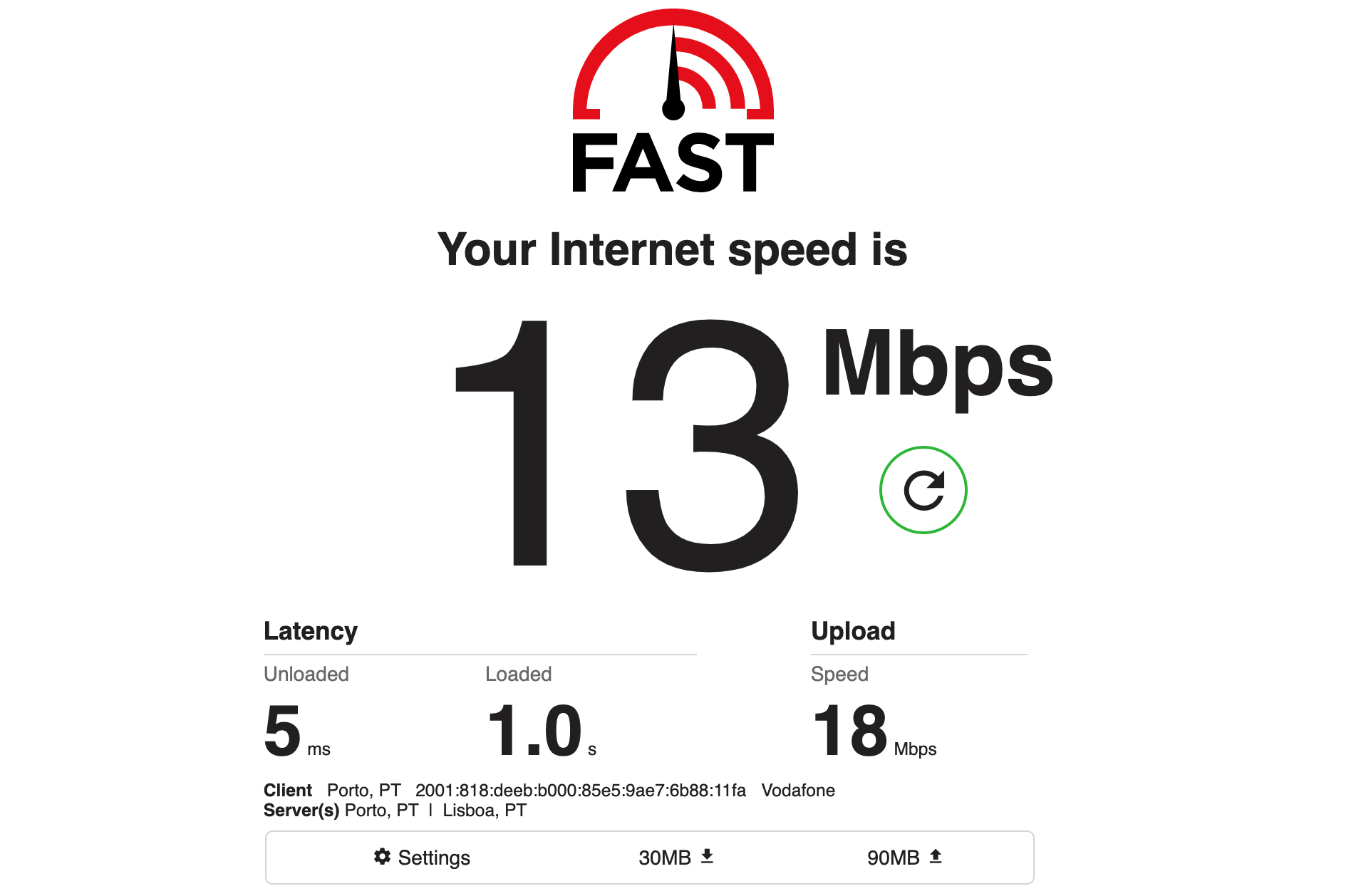
Most issues stem from system clutter, too many connected devices, weak Wi-Fi signals, background apps, or ISP throttling—not your internet plan itself. Test your baseline speed first with fast.com or speedtest.net to confirm what you're working with.
Clearing junk and monitoring bandwidth are the quickest wins.
Use CleanMyMac to remove temporary files and free system resources, then monitor bandwidth-hogging apps with iStat Menus. Limiting background processes often boosts upload speed noticeably without technical expertise.
Wi-Fi placement and network congestion matter more than you'd think.
Map your signal strength with NetSpot to find the best router location, and disconnect unused devices from your network. Even moving your desk or switching to the 5 GHz band can deliver measurable speed improvements.
DNS and VPN settings can unlock throttled upload speeds.
Switch DNS to Cloudflare (1.1.1.1) or Google (8.8.8.8) for faster address resolution. If your ISP throttles certain traffic like Zoom or cloud uploads, try ClearVPN with task-based modes optimized for video calls and streaming.
Small, consistent tweaks keep the upload reliable long-term: Keep this way with Setapp
Test speed before and after each fix to measure improvement. Use TripMode to limit data-hogging apps, keep macOS and apps updated, and monitor regularly. All these tools are available on Setapp with a free 7-day trial covering 270+ Mac and iOS apps.
Slow upload speed on Mac causes laggy Zoom calls, pixelated streaming, delayed cloud backups, interrupted gaming, and frustrating file sharing. How to increase upload speed matters because most home plans prioritize download over upload, but real-world tasks like remote work and content creation depend heavily on strong upload performance.
This guide shows practical ways to increase upload speed on a Mac. You'll learn how to diagnose issues, clear system junk, optimize your network, change DNS, limit bandwidth hogs, update software, and use a smart VPN when needed.
50+ Mbps: Live streaming in HD/4K, large file sharing, professional remote work with multiple high-res video feeds.
Run a quick test with the Fix Mac issue GPT tool. The fixes it offers can often improve upload speed significantly without changing your plan.
Tip: Try In Your Face for meeting management. It’s a great tool that puts all your meetings into one schedule and lets you auto-join from a notification.
How to check and monitor your upload speed
Knowing your baseline helps track fixes. How to check upload speed takes seconds.
Fast online tests:
Go to fast.com (Netflix). It shows download + upload instantly.
Visit speedtest.net (Ookla). It can select a nearby server for accurate results.
Try M-Lab (ndt.mlab.com). It shows detailed diagnostic report.
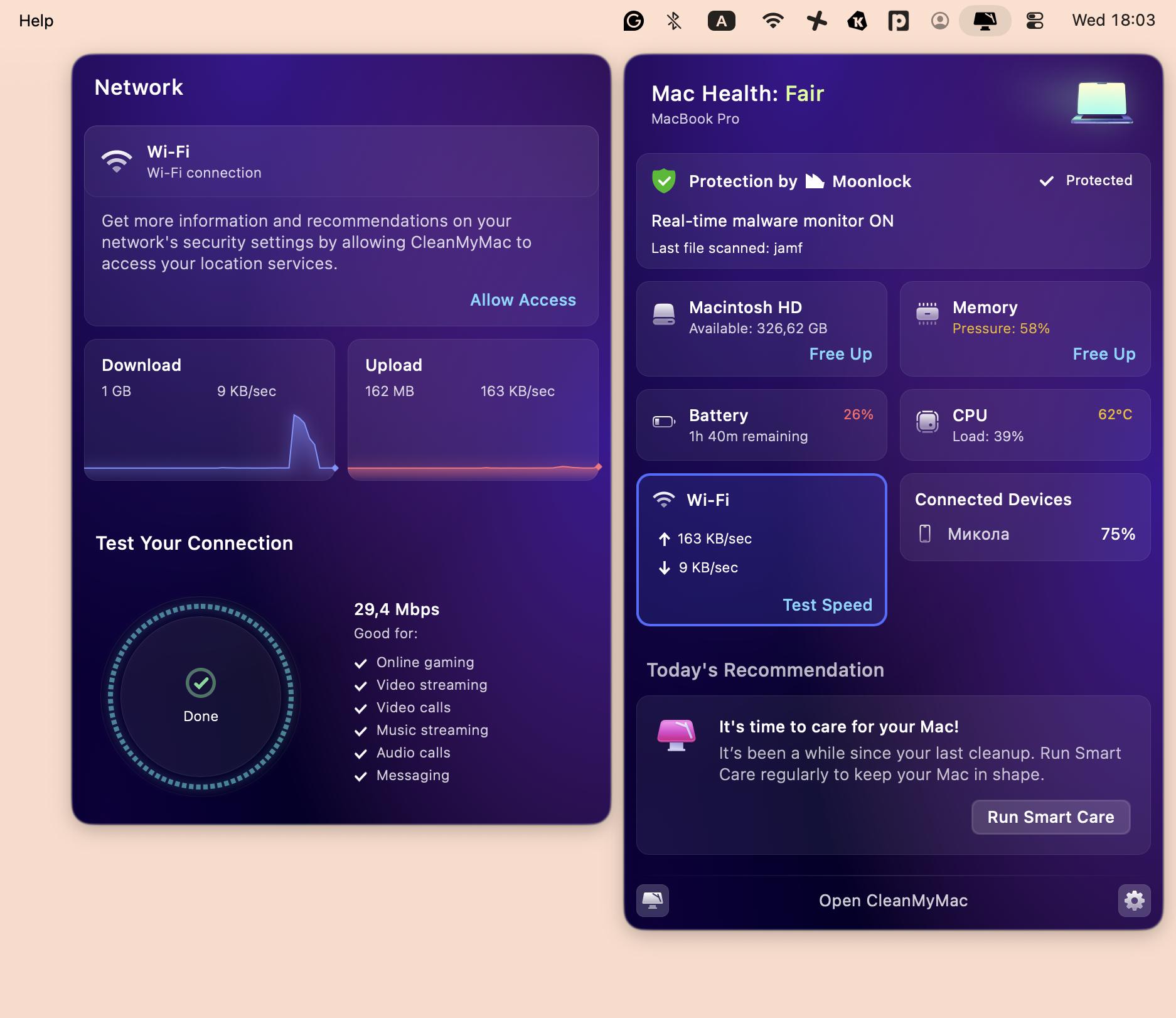
Sometimes, it’s impossible to do anything on the web when your browser is all frozen. This is why I think the best way to check your internet speeds is to use CleanMyMac right from your menu bar.
Look what it can do:
Install and open CleanMyMac'c menu bar.
See download and upload speed at a glance under Wi-Fi.
Click Test Speed to refresh the result.
See "Good for" to know if your upload speed is fast enough for different activities.
Remove 5.5 GB of hidden junk
with
CleanMyMac via Setapp
97%
18K ratings
Clean free
How to increase upload speed on a Mac efficiently
These proven steps help increase upload speed on a Mac without calling your ISP.
Quick wins first:
Clear temporary files and system junk
Disconnect other devices from your network
Identify and limit bandwidth-hogging programs
Change DNS settings
Update macOS and apps
Use a smart VPN when needed
All the best tools for these fixes are in Setapp — CleanMyMac, NetSpot, iStat Menus, TripMode, ClearVPN, and more.
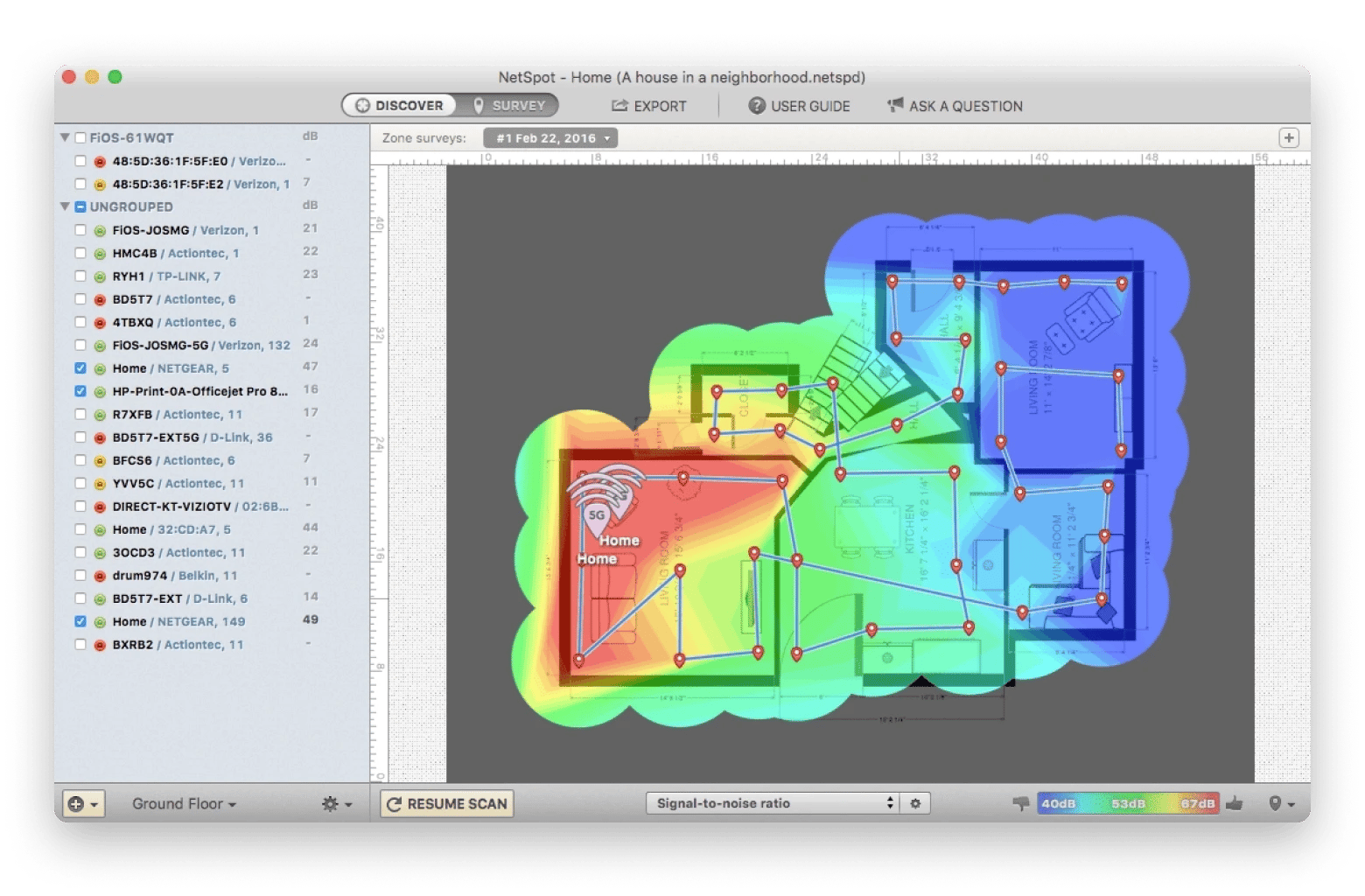
When your connection is lagging, the first one to blame is the network bandwidth. It’s important to know exactly what’s hampering your network, though — it could be some kind of technical problem or maybe your router is just in the wrong place. Here’s how NetSpot can help scan your upload speeds and check for other network issues:
Open NetSpot and draw a map of your room — it doesn’t have to be super detailed, just make sure to include the areas where you usually work. You can also upload a map if you have one.
Click and hold on three areas on the map to run a scan.
Once you’re done, click Stop Scan.
Choose Upload Speed from the list of scanning results.
The screenshot above shows the areas in my room where upload speed is better and those where it’s worse. Notice how some areas have over 5Mbps, so maybe you can solve your network issue just by moving the desk to another room!
Clear your temporary files
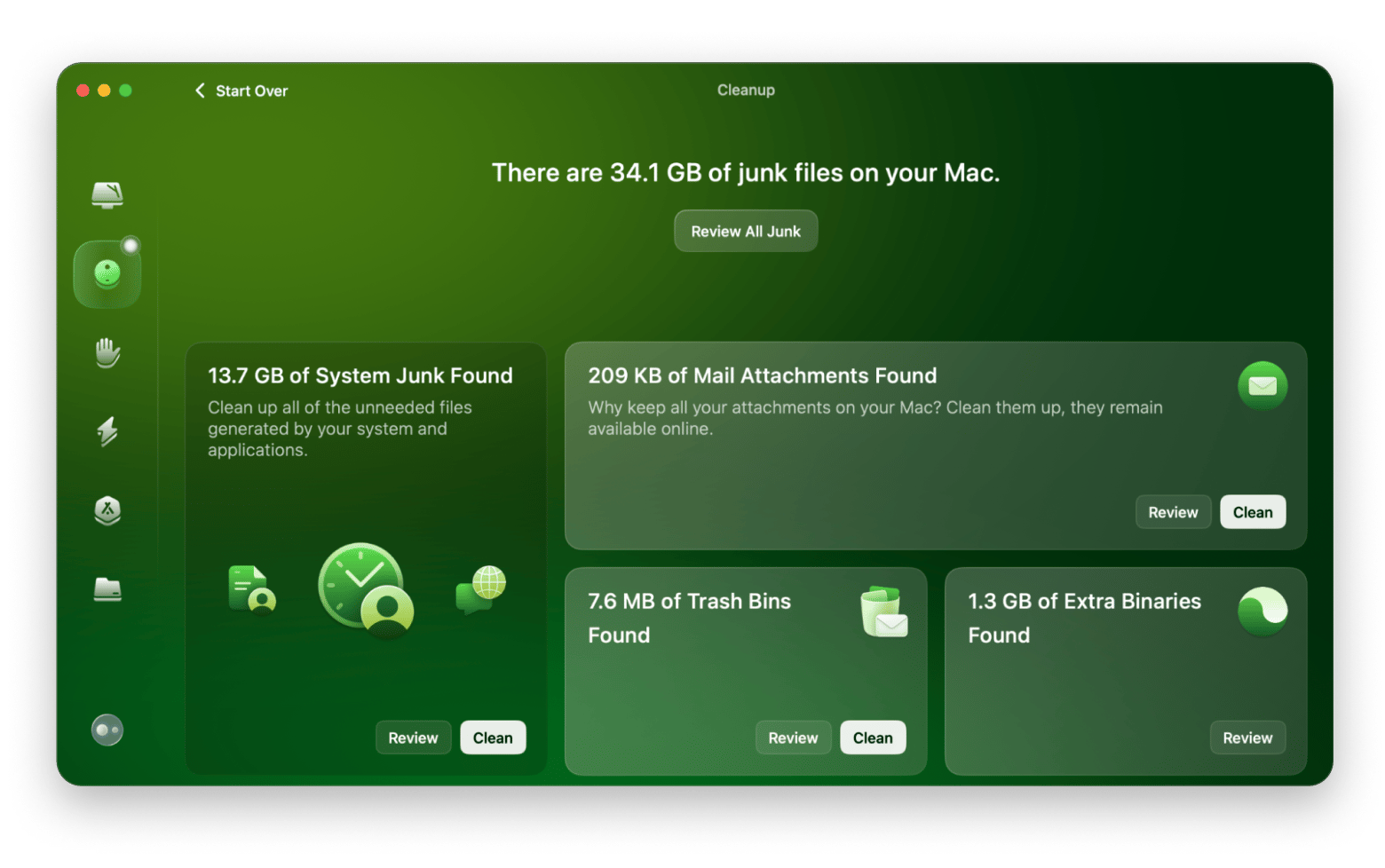
If your Mac is very cluttered, it will behave strangely. Strange behavior, in this case, often includes freezing and connection lags, so go ahead and delete system files and other clutter from your Mac with CleanMyMac:
In CleanMyMac, click Cleanup > Scan.
Click Review All Junk > Clean.
Remove 5.5 GB of hidden junk
with
CleanMyMac via Setapp
97%
18K ratings
Clean free
Remove other devices from your network
Just as you can’t carry too much heavy stuff, your network can’t handle too many upload-intensive tasks. Every connected device splits your upload bandwidth, especially during calls or backups. For example, streaming Family on Netflix while you’re on a Zoom call halves your upload bandwidth for the meeting.
To remove other devices:
Open router admin page (usually 192.168.1.1 or 192.168.0.1).
Check the connected devices list.
Disconnect or pause non-essential ones (smart bulbs, TVs, guest phones).
Test upload speed again.
Check for bandwidth-hogging programs
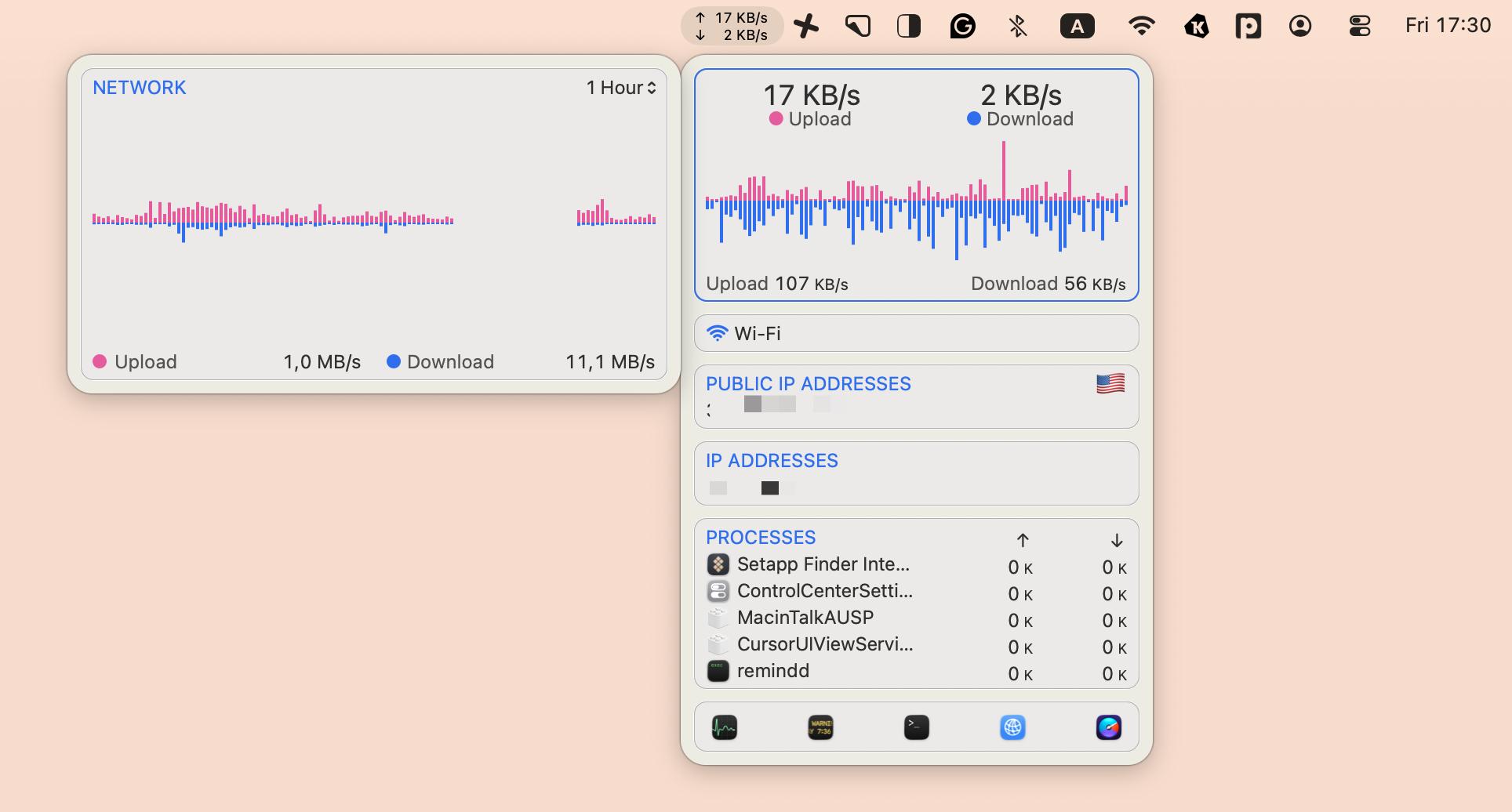
Some apps and macOS processes are brutal on your network resources. You can spot them and boost upload speed by quitting or uninstalling them. The best tool to monitor bandwidth consumption is iStat Menus, an advanced system monitor for Mac. iStat has lots of useful modules for your menu bar — for tracking CPU usage, fan temperature, and more.
You’ll find insights on your network under Network: it shows download and upload speeds in real time. Under Processes, you’ll find the key bandwidth-hogging processes — and even the amount of download and upload speeds they exhaust.
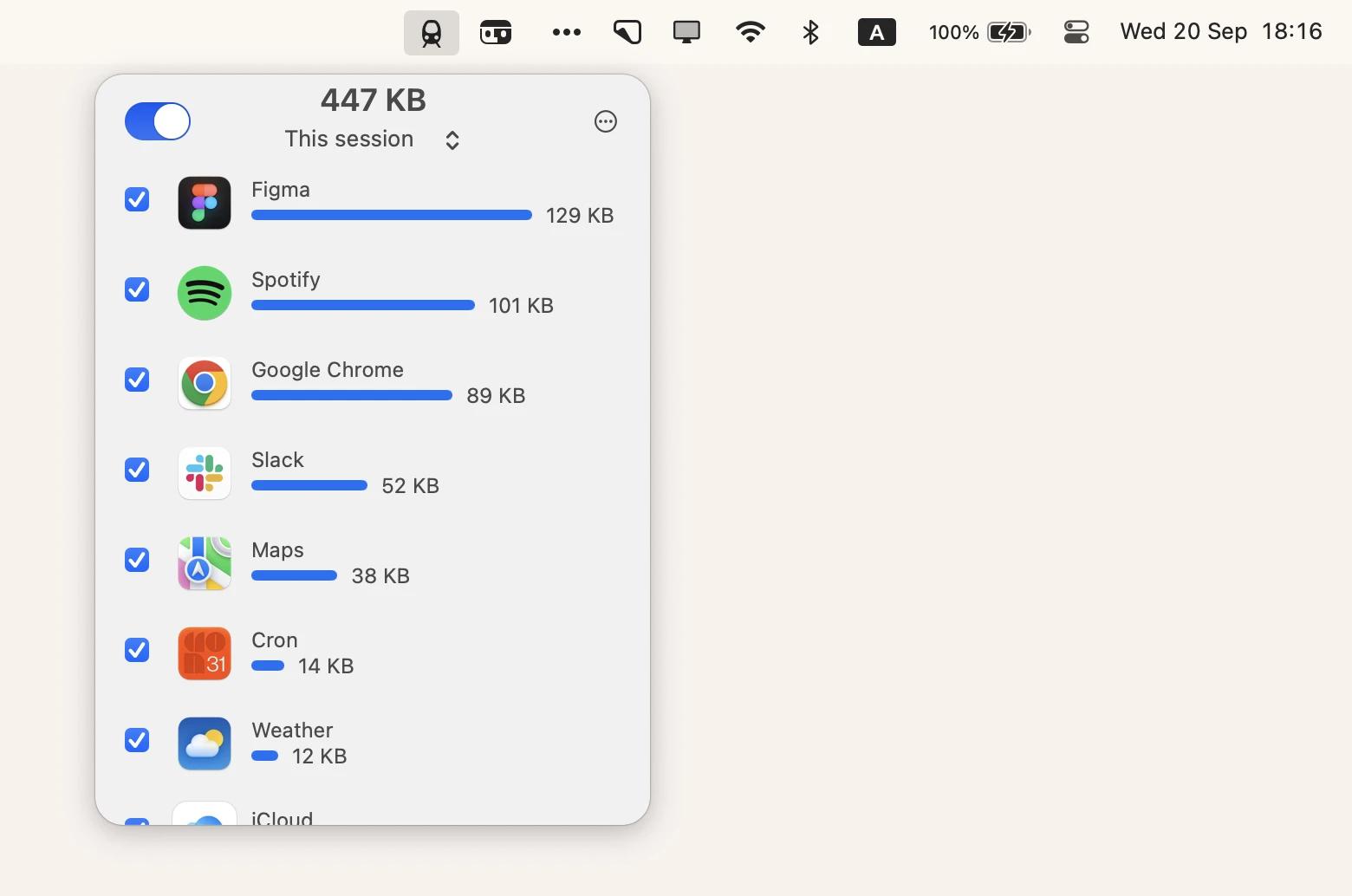
Another useful app to limit bandwidth-hogging apps is called TripMode. It’s a data-saving tool that lets you see data usage by app, manually set data usage limits, and block background updates. Sustainable internet use at its best!
Change your DNS settings
Slow DNS servers add latency and can throttle effective upload speed.
To change your DNS:
Go to System Settings > Network > Wi-Fi > Details > DNS.
Remove existing entries.
Add: 1.1.1.1 and 1.0.0.1 (Cloudflare) or 8.8.8.8 and 8.8.4.4 (Google).
Apply and test upload speed.
Faster DNS resolves addresses more quickly, improving perceived upload performance
Update your device software
Outdated macOS or apps cause network bugs and inefficient bandwidth use.
To update your device:
Go to Apple menu > System Settings > General > Software Update.
Install updates.
Open App Store > Updates > Update All.
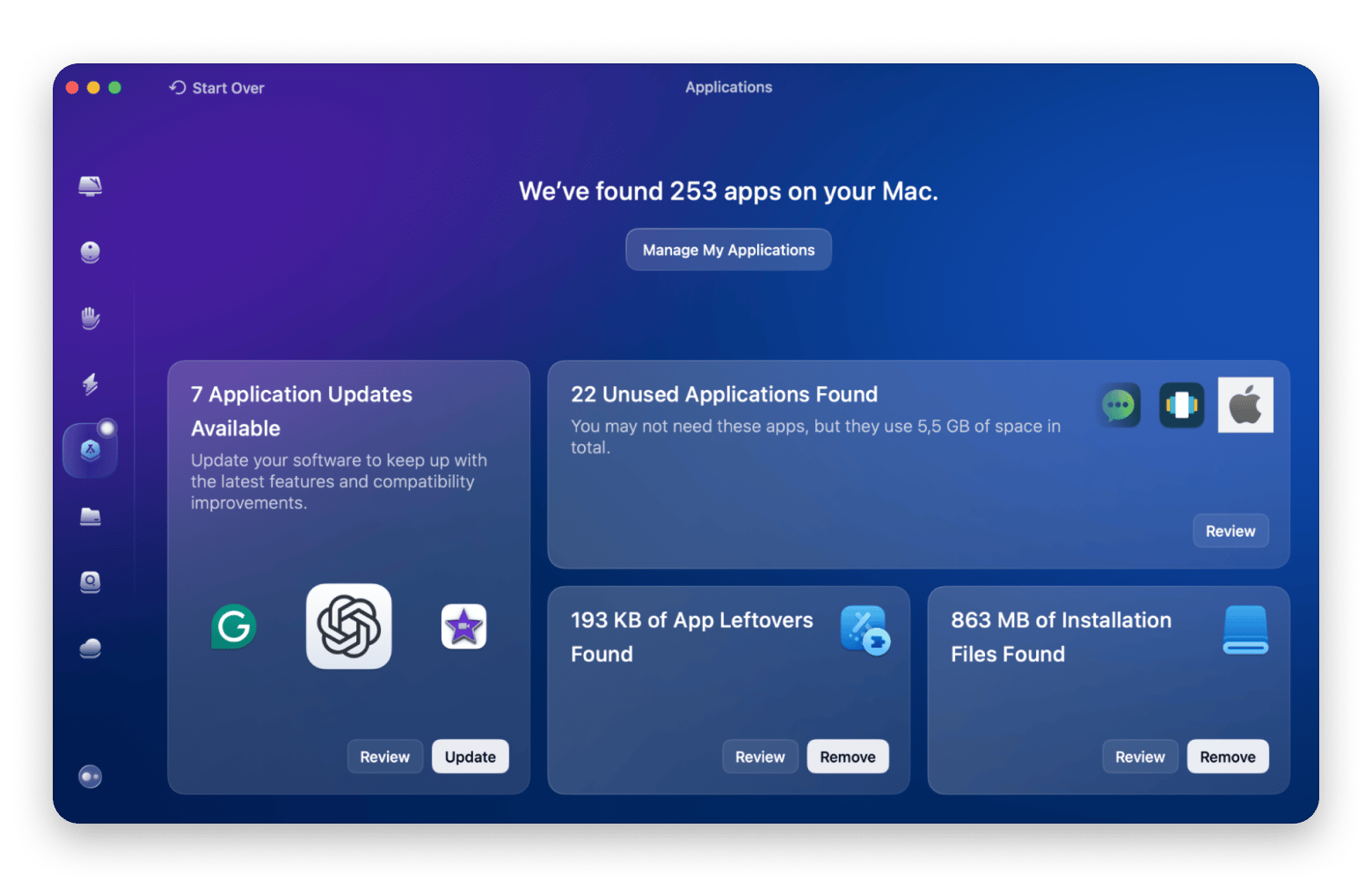
The fastest way to keep your software updated is with CleanMyMac — it has an Updater feature in the Applications module that scans for outdated apps and offers to update them all in one click.
Use a VPN
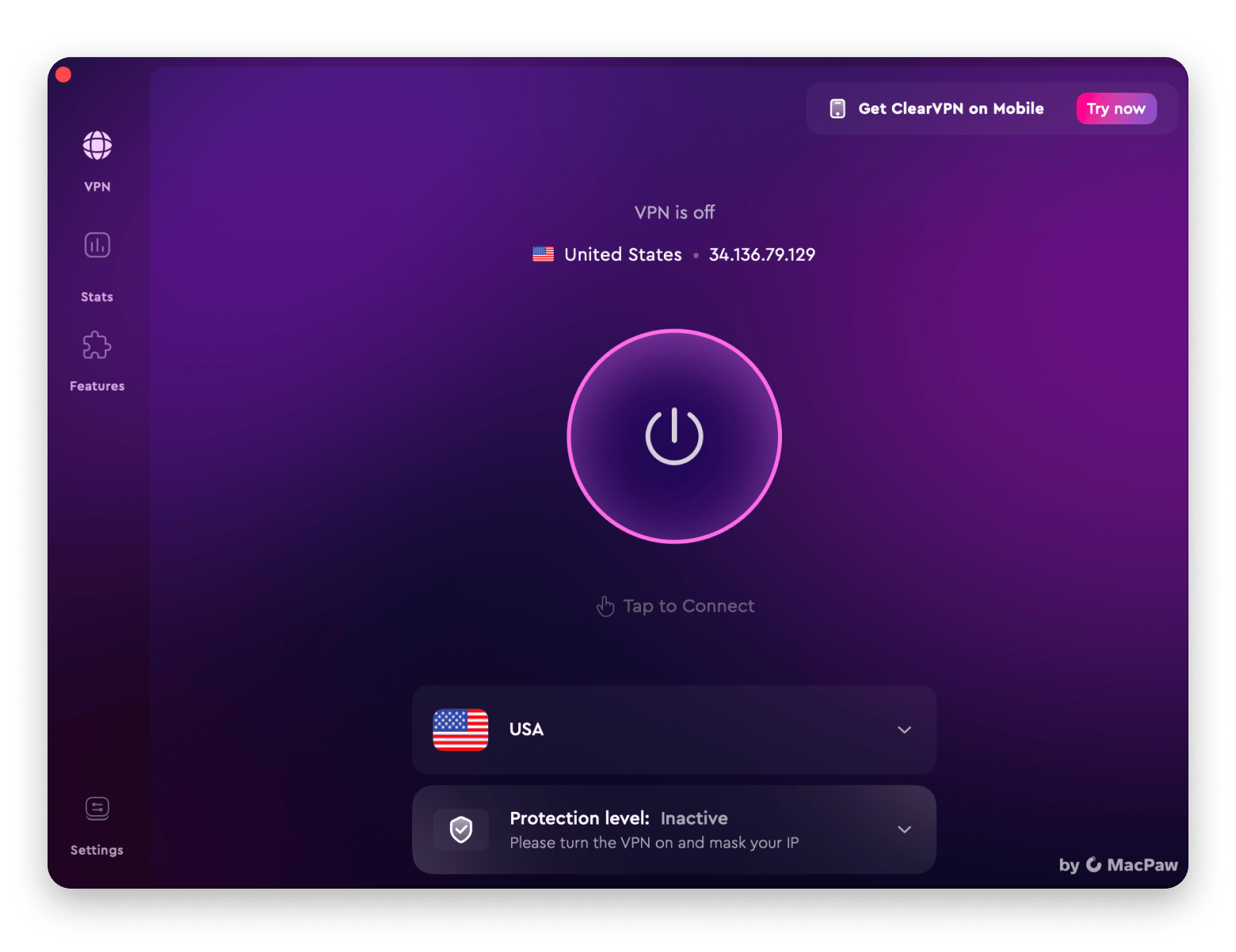
A good VPN can bypass ISP throttling and congested routes, sometimes increasing upload speed for calls and uploads. But, a reliable VPN app such as ClearVPN can help boost upload speeds too!
The Tech Reviewer reports ClearVPN shows the best results with upload speed across the key benchmarks. It’s also super convenient in use — you can choose a task, such as Twitch or streaming, and ClearVPN will adjust the upload speed automatically.
So that’s how to get better upload speed with ClearVPN.
45+ countries with servers
with
ClearVPN via Setapp
4.8
Across our platforms
Connect free
Common reasons your upload speed is slow
Upload speed rarely matches your ISP's promise. Here are the top culprits and quick fixes:
ISP throttling or network congestion:
ISPs sometimes slow upload during peak hours or for certain activities.
Fix: Test at off-peak times; try a VPN to mask traffic (ClearVPN or NordVPN often bypass throttling).
Too many devices on your Wi-Fi:
Smart TVs, phones, tablets, and IoT devices compete for bandwidth.
Fix: Disconnect unused devices or prioritize your Mac in router QoS settings.
Slow or cluttered Mac:
Background processes, junk files, and full storage slow network performance.
Fix: In this case, apps like CleanMyMac will help you delete the clutter from your Mac and increase upload speed.
Weak Wi-Fi signal or interference:
Distance from router, thick walls, or neighboring networks reduce speed.
Fix: Move closer, switch to 5 GHz band, or use NetSpot to find the best router placement.
Bandwidth-hogging apps:
Torrents, cloud syncs, auto-updates, or streaming eat upload.
Fix: Monitor with iStat Menus or limit with TripMode.
Run a speed test before and after each fix to measure improvement.
Understanding upload speed and why it matters
Upload speed is how fast your Mac sends data to the internet. The opposite of download speed, which is how fast data arrives.
Here are some of the real-world examples:
Video calls (Zoom, FaceTime, Teams) need a steady upload for clear audio/video > Low upload causes freezing or blurry quality.
Gaming (online multiplayer) relies on upload for sending your actions to the server > Lag spikes ruin gameplay.
Live streaming (Twitch, YouTube) depends entirely on upload bandwidth > Weak upload means buffering for viewers.
Cloud backups and file sharing (iCloud, Google Drive, Dropbox) crawl when upload is slow > Large folders take hours instead of minutes.
Most ISPs advertise high download but modest upload (e.g., 500 Mbps down / 20 Mbps up). How to increase upload speed often gives bigger real-life improvements than chasing faster download numbers.
Summary: How to increase upload speed effectively
Slow upload speed on Mac is fixable without upgrading your plan. Start with these steps:
Use NetSpot to map Wi-Fi and find the best router spot.
Monitor and limit bandwidth hogs with iStat Menus or TripMode.
Switch DNS to Cloudflare or Google for faster resolution.
Update macOS and apps regularly.
Try a task-based VPN like ClearVPN during important calls or uploads.
Monitor with fast.com or Ookla weekly.
Small, consistent tweaks keep upload reliable for work, gaming, and backups.
All these tools (CleanMyMac, NetSpot, iStat Menus, TripMode, ClearVPN) are in Setapp — try them free for 7 days and maintain fast, stable uploads long-term.
FAQ
How can I increase upload speed on my Mac without upgrading my internet plan?
You can improve upload speed by optimizing your Mac and network:
Test again after each step to confirm improvement.
Does using a VPN help improve upload speed for video calls or cloud uploads on a Mac?
A VPN can improve upload speed if your ISP throttles certain traffic (like Zoom, Twitch, or cloud backups). It works by routing data through less congested servers.
Apps like ClearVPN offer task-based modes that optimize connections for streaming or video calls. If congestion or throttling is the issue, a VPN may noticeably stabilize uploads.
What settings or apps should I use to increase upload speed on a Mac?
For better upload speed, adjust both system settings and use monitoring tools:






 Best solution
 Best solution


 CleanMyMac via Setapp
 ClearVPN via Setapp