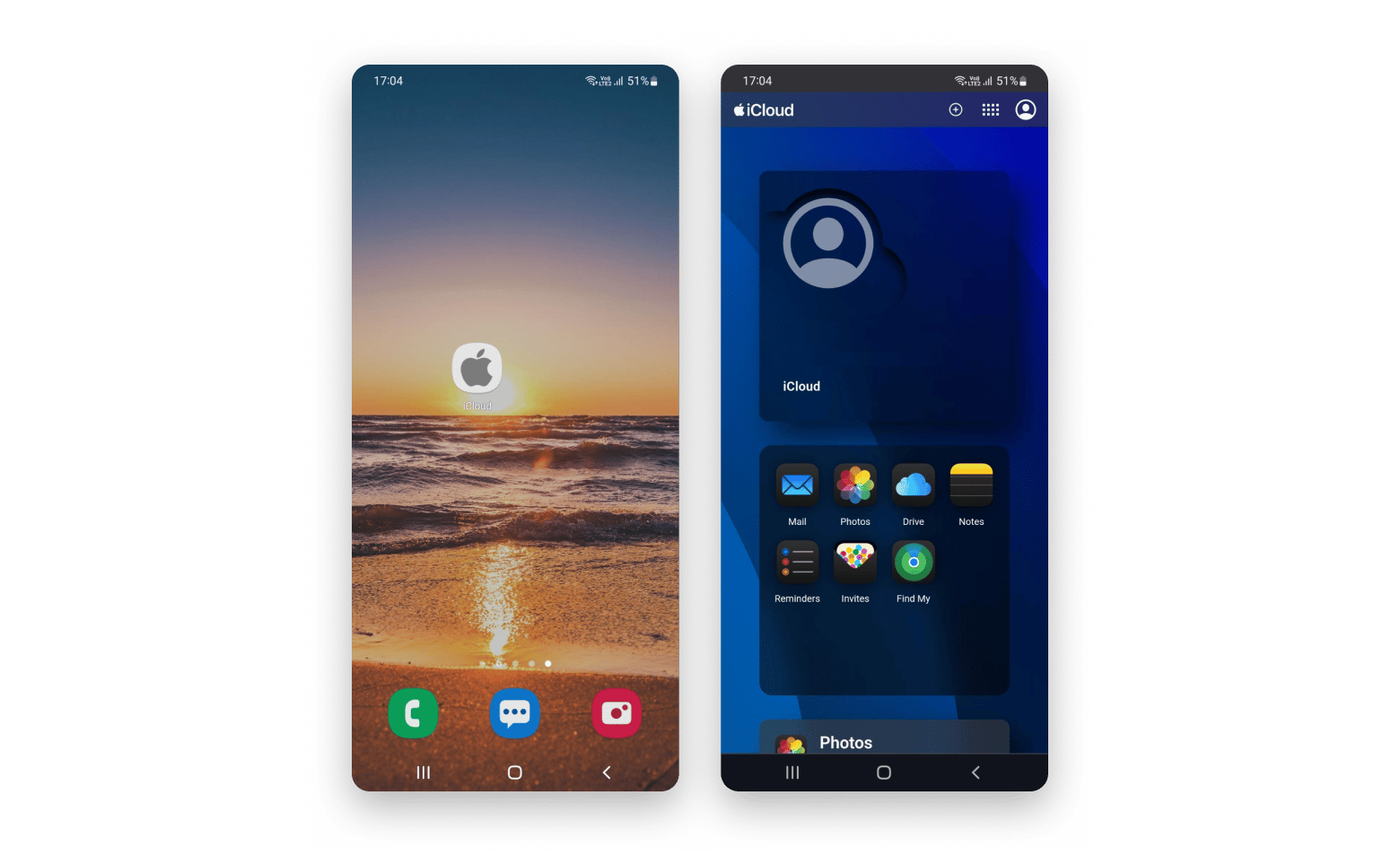
Access iCloud Photos easily across devices You can view iCloud photos through the Photos app on iPhone, iPad, or Mac, or via a browser at iCloud.com. Just make sure iCloud Photos sync is turned on.
Enable iCloud Photos to sync your library Go to Settings > [Your Name] > iCloud > Photos on iPhone/iPad or System Settings > [Your Name] > iCloud > Photos on Mac, then turn on syncing to access all your media everywhere.
Use browser access for flexibility If you don't have your Apple device nearby, log in to iCloud.com from any browser to view, download, or manage your photos from anywhere.
Fix common issues when photos don't appear Problems usually come from poor internet, wrong Apple account, disabled sync, low storage, or outdated software. Checking these quickly resolves most issues.
iCloud Photos automatically syncs all your media across all your Apple devices, so you don't have to worry about manually transferring photos or videos. You can easily share your memories with friends and family by creating creating Shared Albums.
But if you've just moved to Apple, you might wonder where or how to view iCloud photos. I think I can help with that.
Quick Access Guide: How to view iCloud photos in 2026
Before diving into the full guide, here’s a clear overview of the main ways to access your iCloud Photos library across devices and platforms. This table helps you quickly choose the right method based on the device you’re using.
Device / Platform
Best way to access
Key steps (2026)
Notes / Limitations
iPhone or iPad
Photos app
Settings > [Your Name] > iCloud > Photos > Turn on Sync this iPhone/iPad
Full library sync; optimize storage option available
Mac
Photos app
System Settings > [Your Name] > iCloud > Photos > Turn on Sync this Mac
Best for editing and organizing on large screen
Any web browser (including non-Apple)
iCloud.com
Go to icloud.com → Sign in → Click Photos
Works on Windows, Android, Linux; no app install needed
Windows PC
iCloud app for Windows or Microsoft Photos app
Download from Microsoft Store → Sign in → Enable Photos
Full sync to File Explorer; large libraries may be slower
Android phone/tablet
iCloud.com (progressive web app)
Visit icloud.com → Menu > Add to Home Screen
App-like experience; browser-based
Apple TV / Vision Pro
Photos app
Automatic if signed in with same Apple Account
Streaming-focused
This quick reference saves time whether you’re on your own devices or borrowing someone else’s.
How to access photos on iCloud
In this article, you'll find out how to view iCloud Photos and use this super convenient and powerful tool for managing your media with ease.
The simplest way to see your iCloud photos is through the Photos app — whether you're on your iPhone, iPad, Mac, Apple TV, or even the new Apple Vision Pro. First, check if your Photos app is linked to iCloud.
If the Photos app isn't connected to iCloud, it only shows photos taken or saved from the specific device. You can't view photos shared from other Apple devices you own. Here's how to connect the Photos app to iCloud.
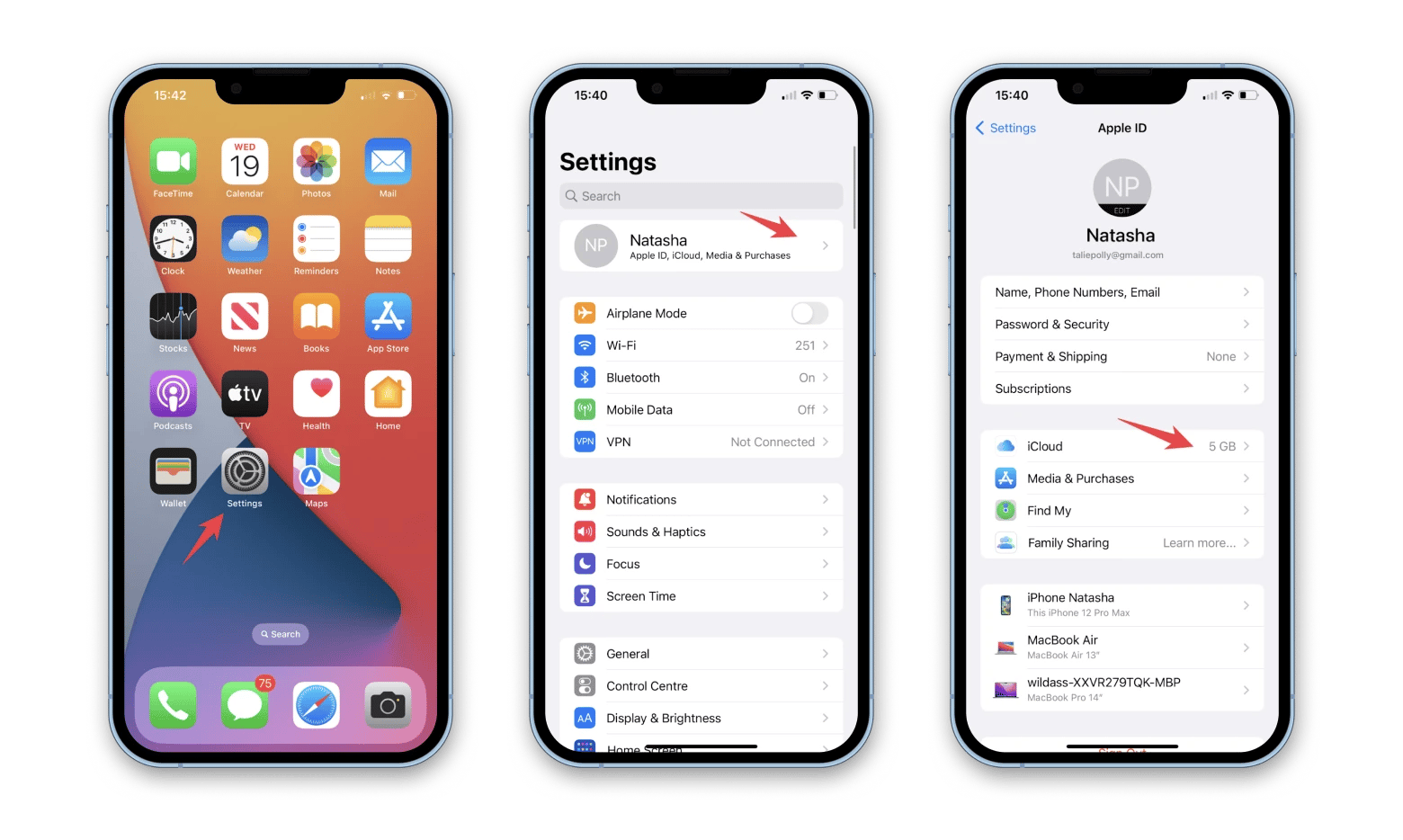
To turn on iCloud Photos on your iPhone or iPad:
Go to Settings > [Your Name] (Apple Account, ex Apple ID).
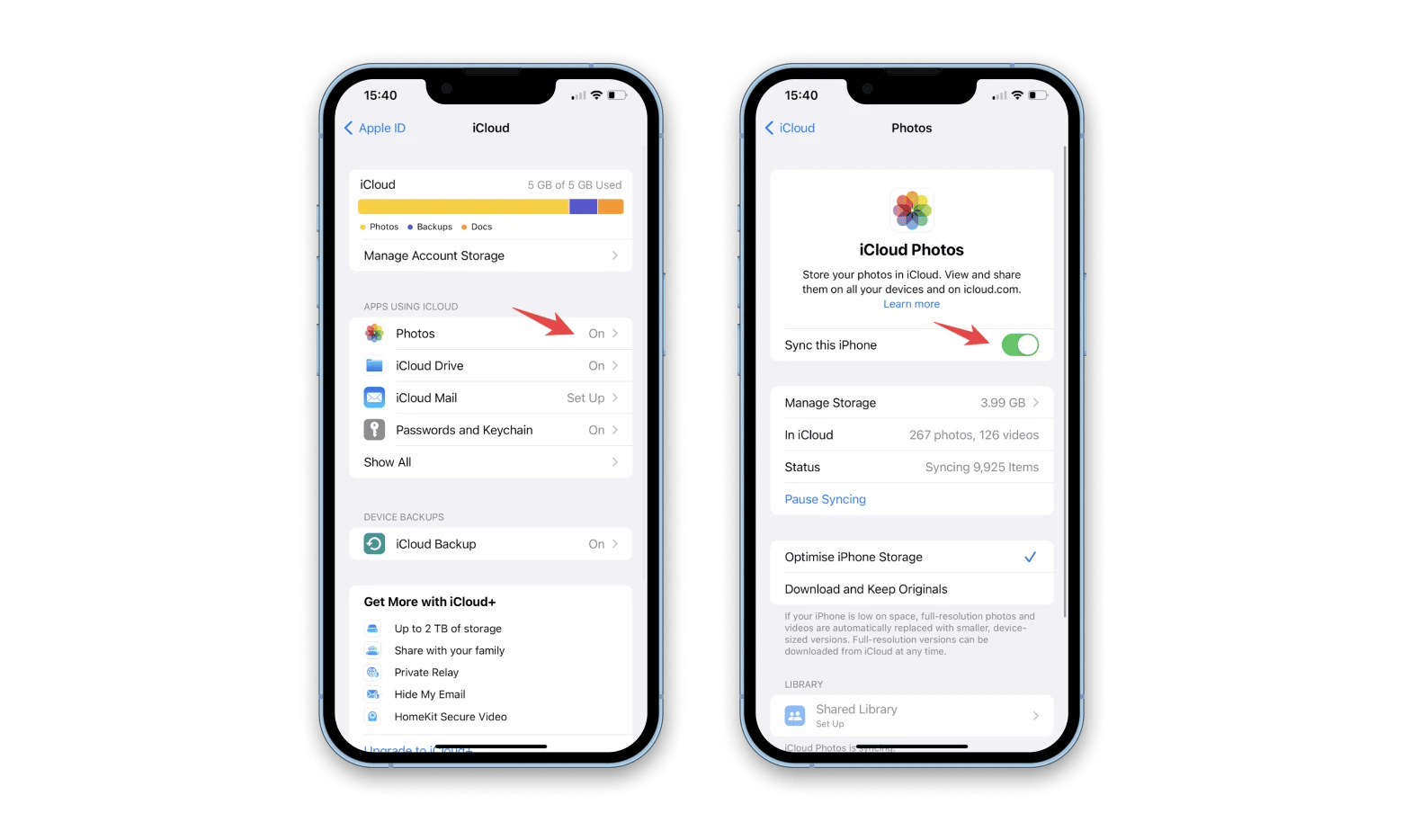
Tap iCloud > Photos.
Turn on Sync this iPhone (or iPad).
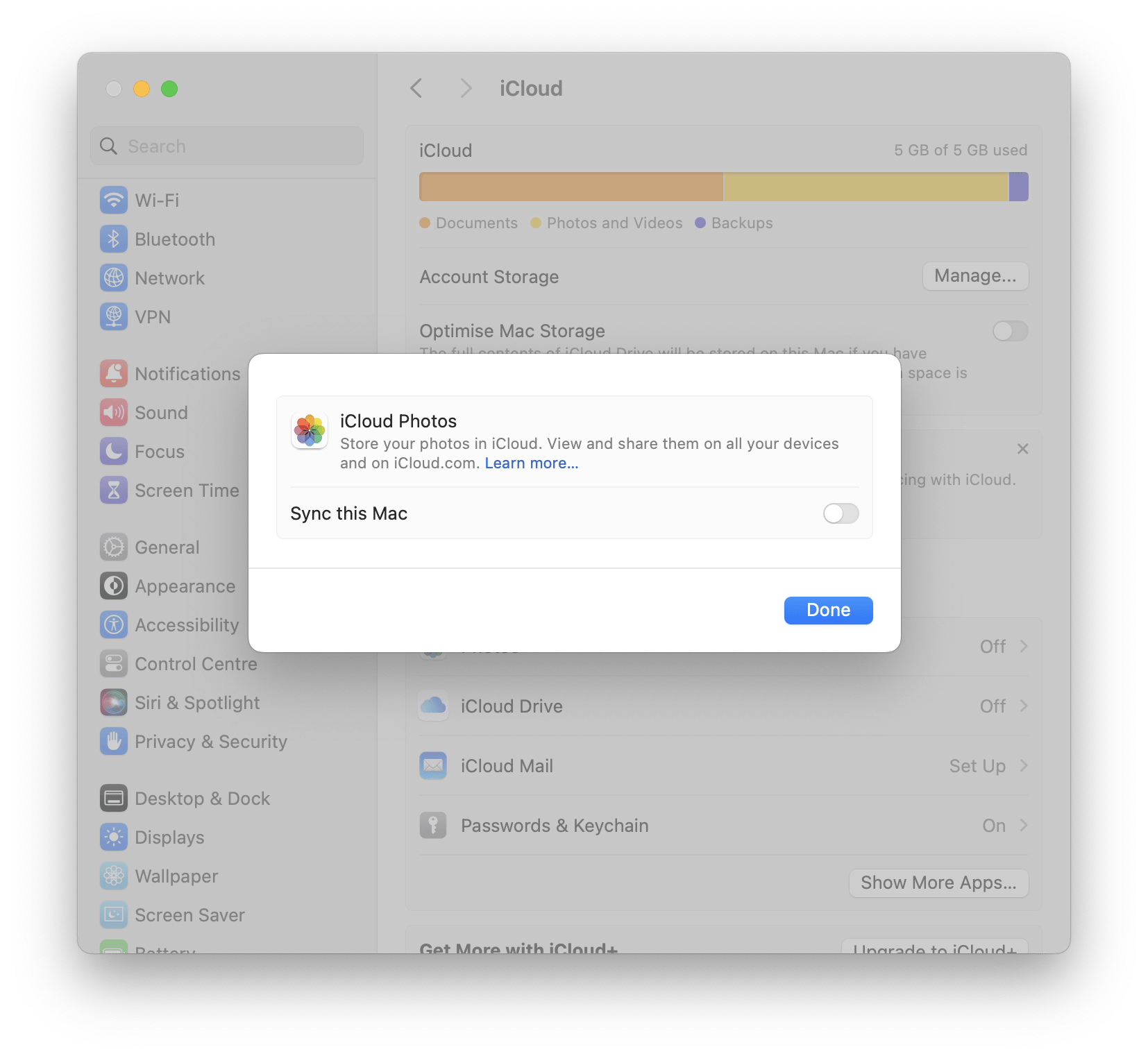
To turn on iCloud Photos on Mac:
Click the Apple menu > System Settings
Click [Your Name] > iCloud > Photos.
Turn on Sync this Mac.
After connecting Photos to iCloud, Apple will upload all the photos to the cloud. Simply open the Photos app on your Mac, iPhone, or iPad to access your collection of media.
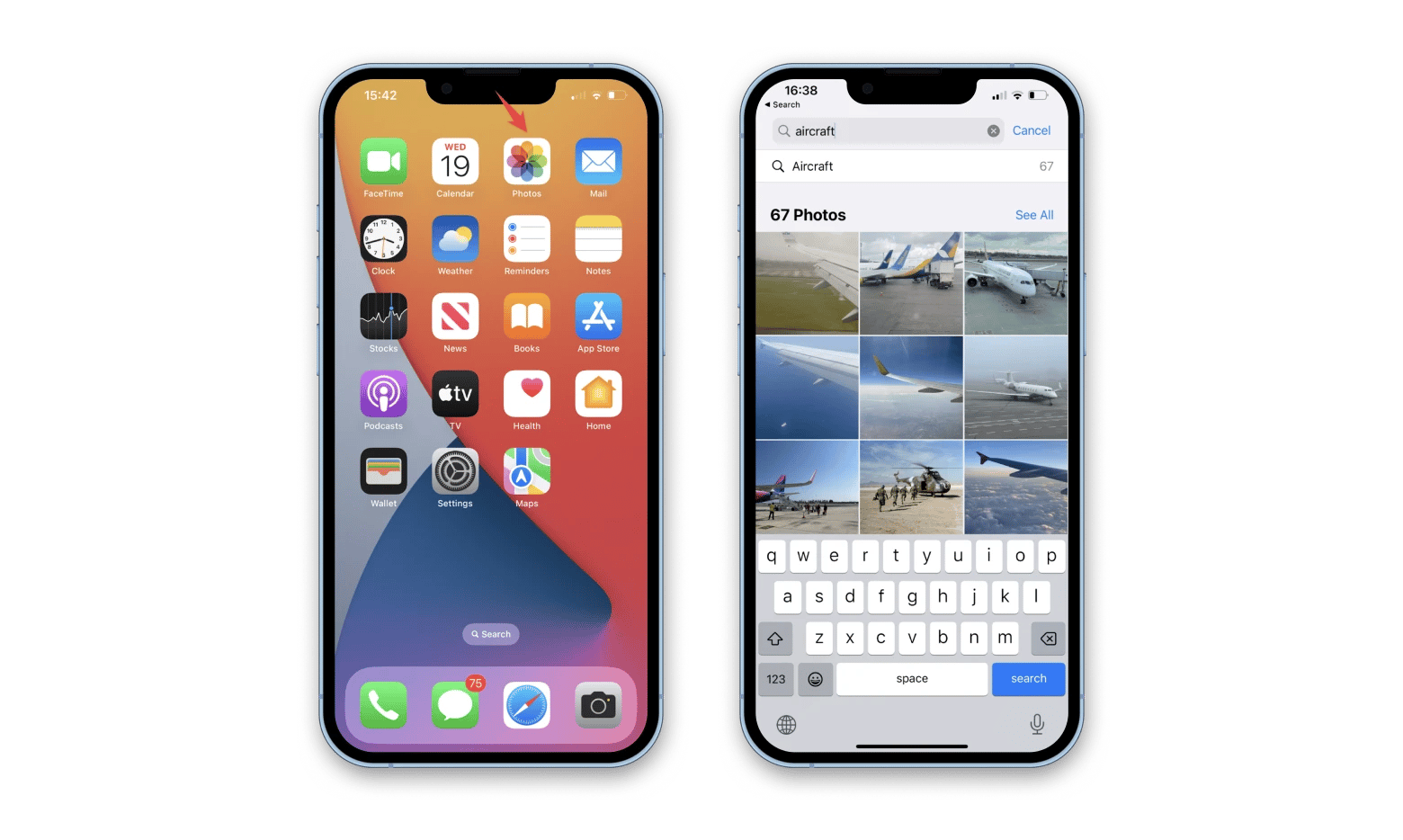
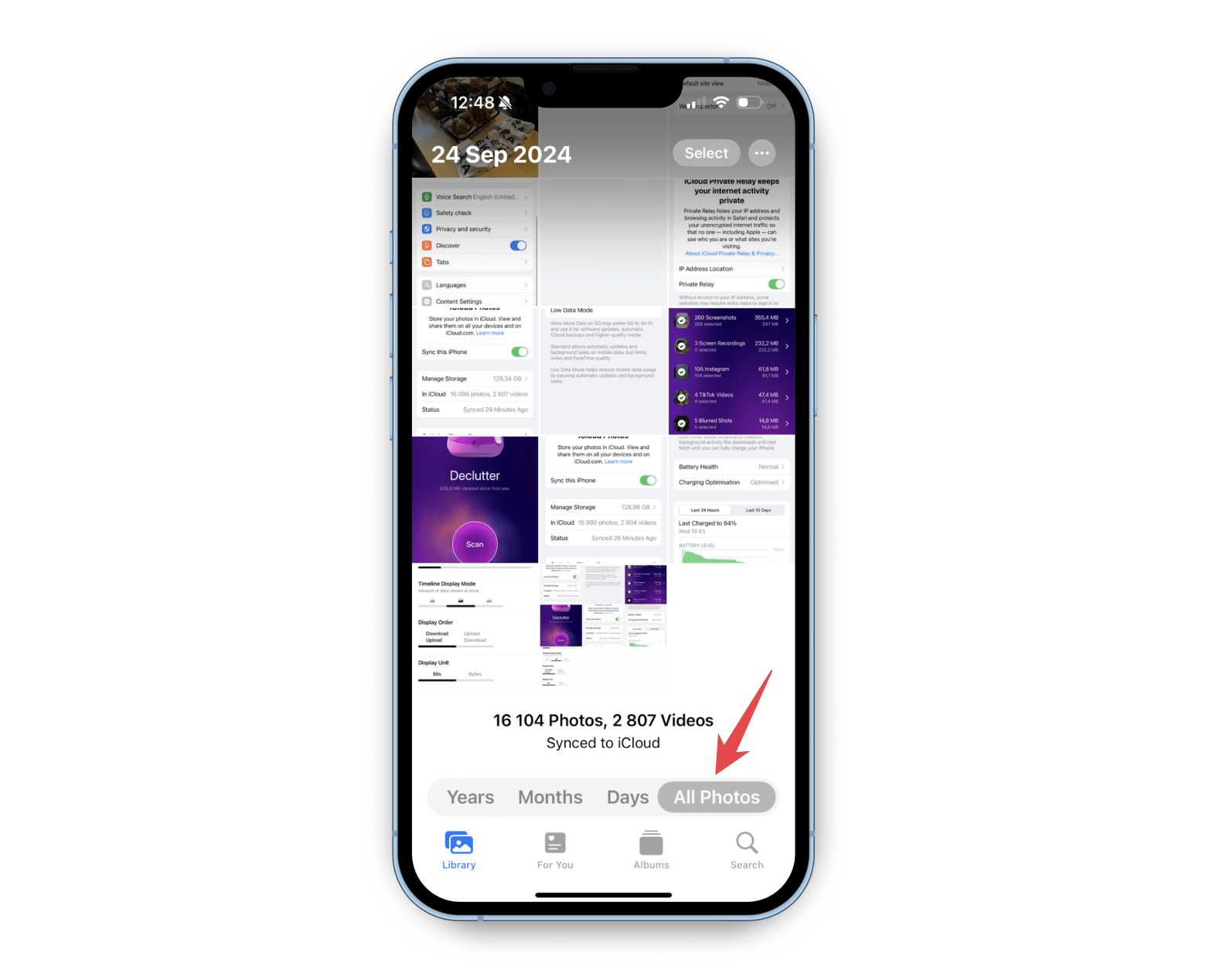
To browse your photos by album and category, tap Albums in the bottom menu. You can also tap Search to find photos by keyword, location, or date range.
Here's how to see iCloud photos on iPhone and iPad with the Photos app:
Open the Photos app.
Tap Library to see all photos.
Tap AllPhotos.
If you see "Synced with iCloud" or "Syncing x items to iCloud" at the bottom, it indicates that iCloud Photos is enabled and your media is synced across devices.
Before you upload to iCloud…
It's a good idea to clear out any blurry, duplicate, or unwanted photos from your iPhone before sending everything to iCloud.
How many photos do you have?
In 2024, we found that 35% of iPhone users have photo libraries with over 5,000 images, and another 35% have between 1,000 and 5,000. Wow!
Chances are, there are at least a few blurry shots or old screenshots in there.
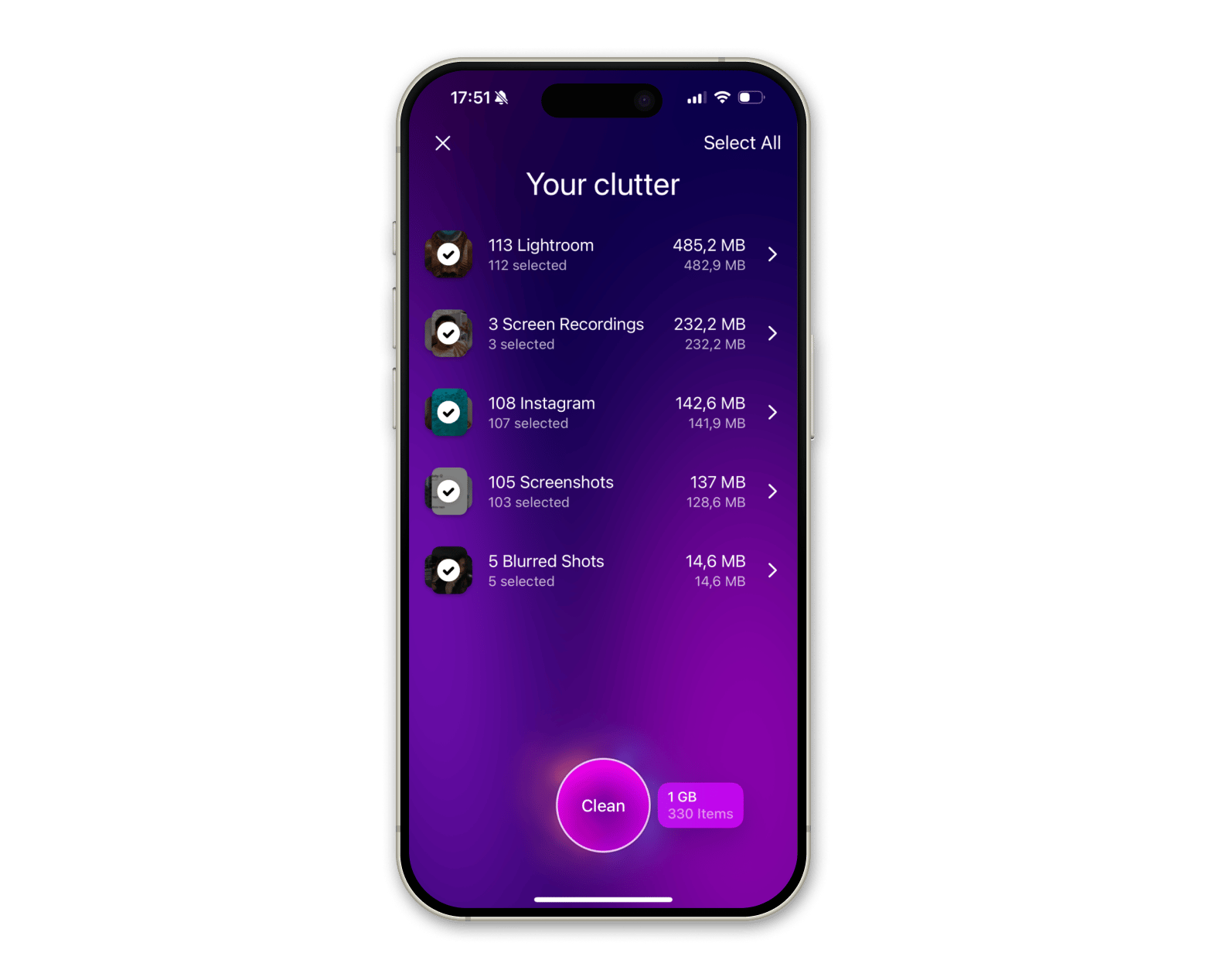
I recommend using CleanMy®Phone to scan your iPhone or iPad and filter out the clutter. That way, you're not filling up your iCloud storage with junk.
How to access your photos on Mac
There are two ways to access iCloud photos on your Mac: using the Photos app or in your browser via iCloud.com. Before we get to the instructions, let's check if iCloud Photos is turned on on your Mac device.
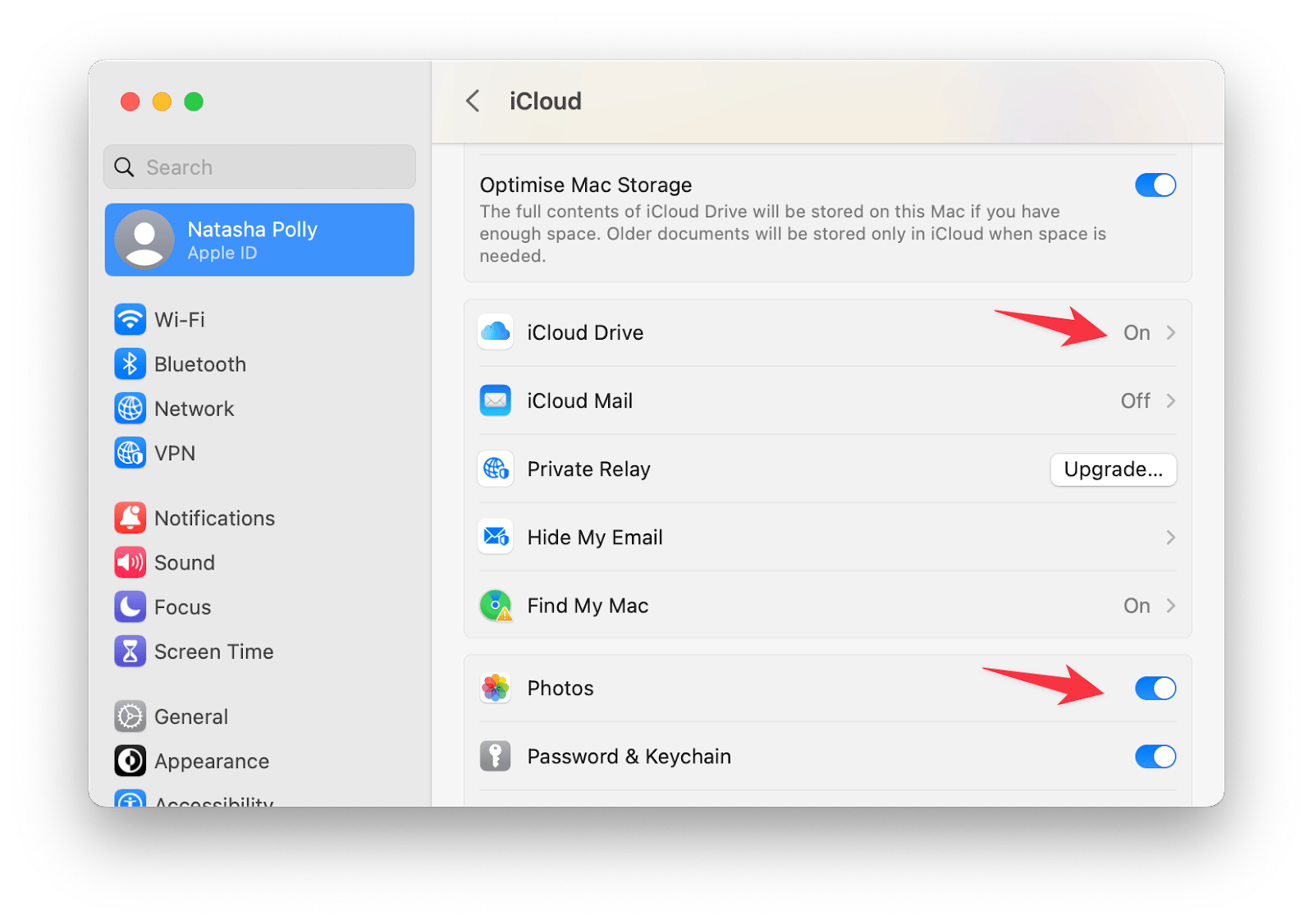
To get access to iCloud Photos on your Mac:
Click the Apple logo on the left side of the menu bar.
Choose System Settings from the menu.
Then click [Your Name] Apple Account.
Choose iCloud.
Sign in with your Apple Account, if needed.
Turn on iCloud Drive.
The Photos app is the best way to look at, sort, and share the photos saved on iCloud.
How to view iCloud photos in the Photos app
I like to edit photos on a big screen, despite taking most of them with my phone. I also save screenshots I capture for work on iCloud too. With Photos, I can organize them easily in the Libraries, knowing that they're streamlined across my iPad and iPhones, too.
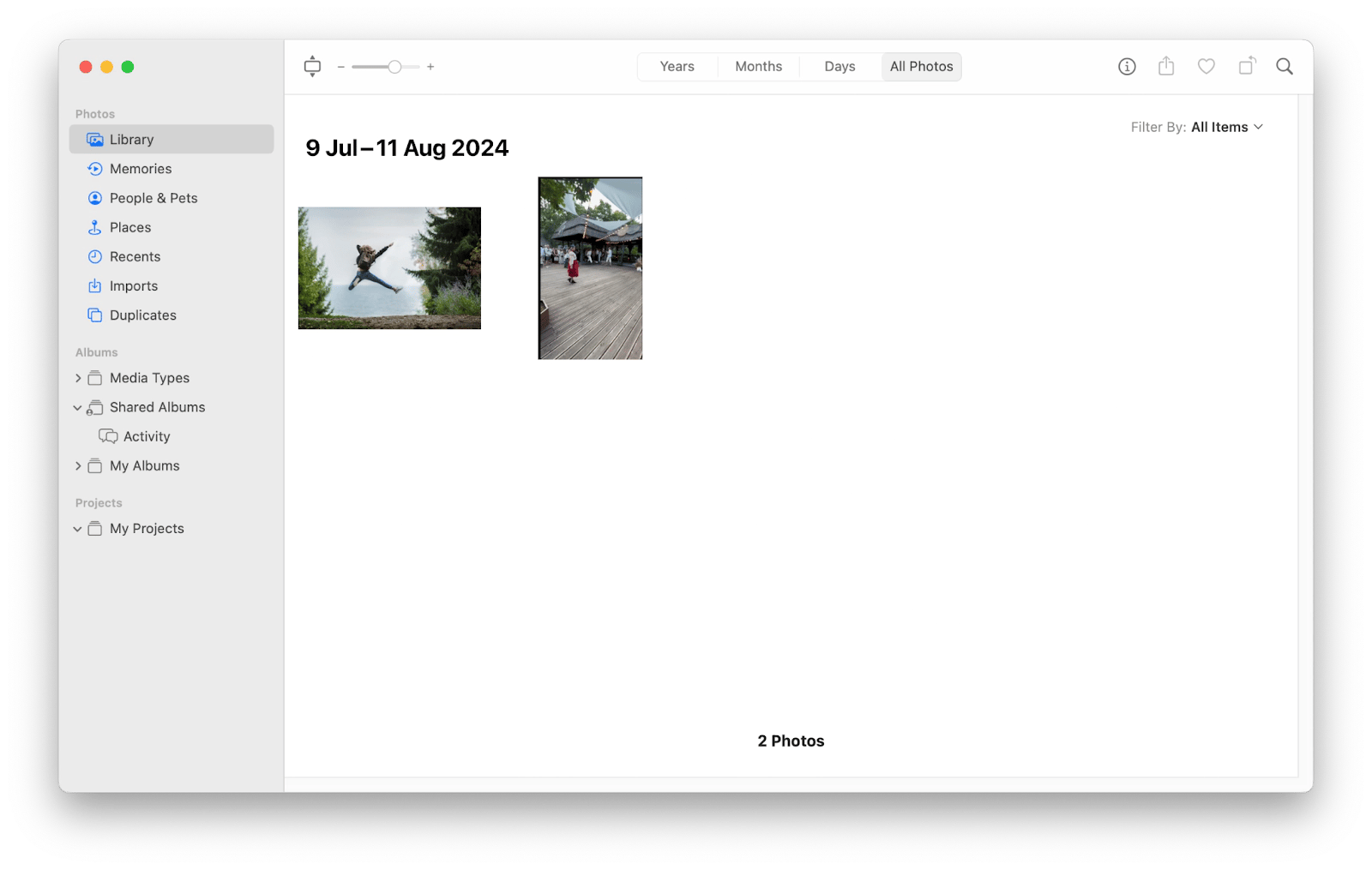
On your Mac, open Finder > Applications > Photos. Click Library to view all photos.
Check your Apple Account
If you can't see the photos you shared from another device, make sure you are signed in with the right Apple Account. Next, check that your device is linked to iCloud.
On iPhone:
Tap Settings.
Sign in with your Apple Account if needed.
Tap [Your Name] > iCloud > Photos.
Turn on Sync this iPhone.
On Mac:
Go to the Apple menu > System Settings.
Check if you see your Apple Account on the left.
Sign in if needed.
Click [Your Name] > iCloud.
Click Photos > Turn on Sync this Mac.
Unless you're experiencing a network breakdown, misconfiguration, or other software issues, you can view the iCloud Photo library from the MacBook itself.
How to view iCloud Photos in a browser
When you send your pictures to iCloud, Apple saves them on a faraway server. If you can't reach your Mac or iPhone photos quickly, you can still see the images — as long as you have a web browser.
I can't tell you how many times this feature has saved me! A while back, my cousin asked for some photos from our last trip together. I realized I didn't have my MacBook with me, but I quickly accessed my iCloud Photos from my friend's iPad.
Browse all uploaded photos in the Library, Memories, Albums, and other folders.
Now you can access iCloud photos even if you don't have your Mac, iPhone, or iPad with you.
How to access iCloud photos on non-Apple devices?
You don't use a macOS or iOS device? No problem, you can still access iCloud.
Windows PC: Install iCloud for Windows. Then, sign in to your iCloud account and enable Photos to sync to File Explorer. Sometimes the Windows app can get glitchy if it has to deal with really extensive libraries, like those with more than 50,000 photos. If you run into a glitch, try using the iCloud.com browser version instead.
Android: Use a browser (www.icloud.com) or download iCloud "app" for Android. To do so, go to icloud.com > Tap the three dots in the upper right corner of the page > Tap "Add to Home Screen." The website will be downloaded to your phone like an app and will appear on your home screen. The interface will become app-like and, I'm sure, you'll find it a lot easier to use.
Linux: Access via iCloud website with a compatible browser like Firefox.
See? iCloud is easy to access on any device, regardless of your operating system.
How to share an entire library with family using the Shared Photo Library
If Shared Albums feel too limited for everyday family moments, try Shared Photo Library — it’s a completely different and more powerful way to collaborate.
Unlike regular Shared Albums (where you manually pick what to add), a Shared Photo Library lets you and up to five other people share one combined collection. Everyone can add, edit, delete, or favorite photos and videos as if it were their own library.
To create Shared Photo Library on your iPhone or iPad:
Make sure iCloud Photos is already turned on: Go to Settings > [Your Name] > iCloud > Photos and turn on Sync this iPhone (or iPad).
Open the Settings app.
Tap Apps, then tap Photos. (On older iOS versions, just tap Photos directly in Settings.)
Tap Shared Library.
Tap Get Started or follow the onscreen prompt.
Choose up to five people to invite (from your Contacts or by entering their Apple ID email). You can also invite them later.
Decide what past photos and videos to move: You can select everything, photos by date or person, or pick them manually. Or choose to move items later.
Preview the Shared Library, confirm what will be shared, and tap Continue.
Invite the participants — they’ll get a notification in Messages and can accept to join.
To create Shared Photo Library on your Mac:
Open the Photos app.
Click Photos > Settings (or Preferences) in the menu bar.
Click Shared Library, then click Get Started.
Follow the same steps as on iPhone: add participants, choose which photos to move, preview, and invite.
Once everyone accepts, the Shared Photo Library appears as a separate option alongside your Personal Library in the Photos app. Everyone can add, edit, delete, or favorite items, and the content automatically flows into shared Memories and Featured Photos for the whole group.
It’s ideal for families who want to keep all the kids’ photos, vacation memories, and special occasions in one living, breathing collection that everyone helps build.
How to manage your device storage with iCloud Photos
If you’re worried about running out of space on your iPhone or iPad, iCloud Photos gives you two smart options for handling quality versus storage.
Go to Settings > [Your Name] > iCloud > Photos (or Settings > Photos on some devices) and you’ll see:
Optimize [Device] Storage — This is the default choice for most people. Your full-resolution originals stay safe in iCloud, while space-saving versions live on your device. As your device fills up, iCloud automatically replaces older photos and videos with smaller versions. You still see everything in beautiful quality, but you free up gigabytes without losing a single memory. Perfect when your device has limited storage.
Download and Keep Originals — This keeps every photo and video in full resolution right on your device, in addition to iCloud. Choose this if you have plenty of space (like on a 512 GB or 1 TB iPhone) or if you often edit photos offline and want instant access without waiting for a download.
You can switch between these anytime — the change happens gradually in the background. Just pick whichever matches your current device capacity and habits.
How to choose the right iCloud+ Plan
When your free 5 GB fills up (and with today’s photo libraries, it usually does quickly), upgrading to iCloud+ is simple and gives you way more room for your growing collection.
Current plans (as of 2026) include:
50 GB for $0.99/month
200 GB for $2.99/month
2 TB for $9.99/month
6 TB for $29.99/month
12 TB for $59.99/month
Any iCloud+ plan can be shared with up to five other family members through Family Sharing. Everyone gets access to the extra storage while keeping their own files completely private and separate. It’s a great way for households to pool space without mixing up personal libraries.
You can upgrade directly from your iPhone, iPad, or Mac in just a couple of taps.
Why can't I see my iCloud Photos?
When you upload your photos to iCloud from the iPhone, you expect to see them on the Mac. And vice versa. But sometimes this isn't happening. I've been there myself, especially since I wanted to show my friends the photos from my recent trip.
So, what's wrong? And how to look at iCloud photos if they're not synced to your device?
I'll share several scenarios that might prevent iCloud photos from showing up.
Network issues
If you're not connected to the internet, you can't sync photos to iCloud. The image files stay on your device until it connects to the internet again. If your internet connection is poor, iCloud photos might not sync across devices.
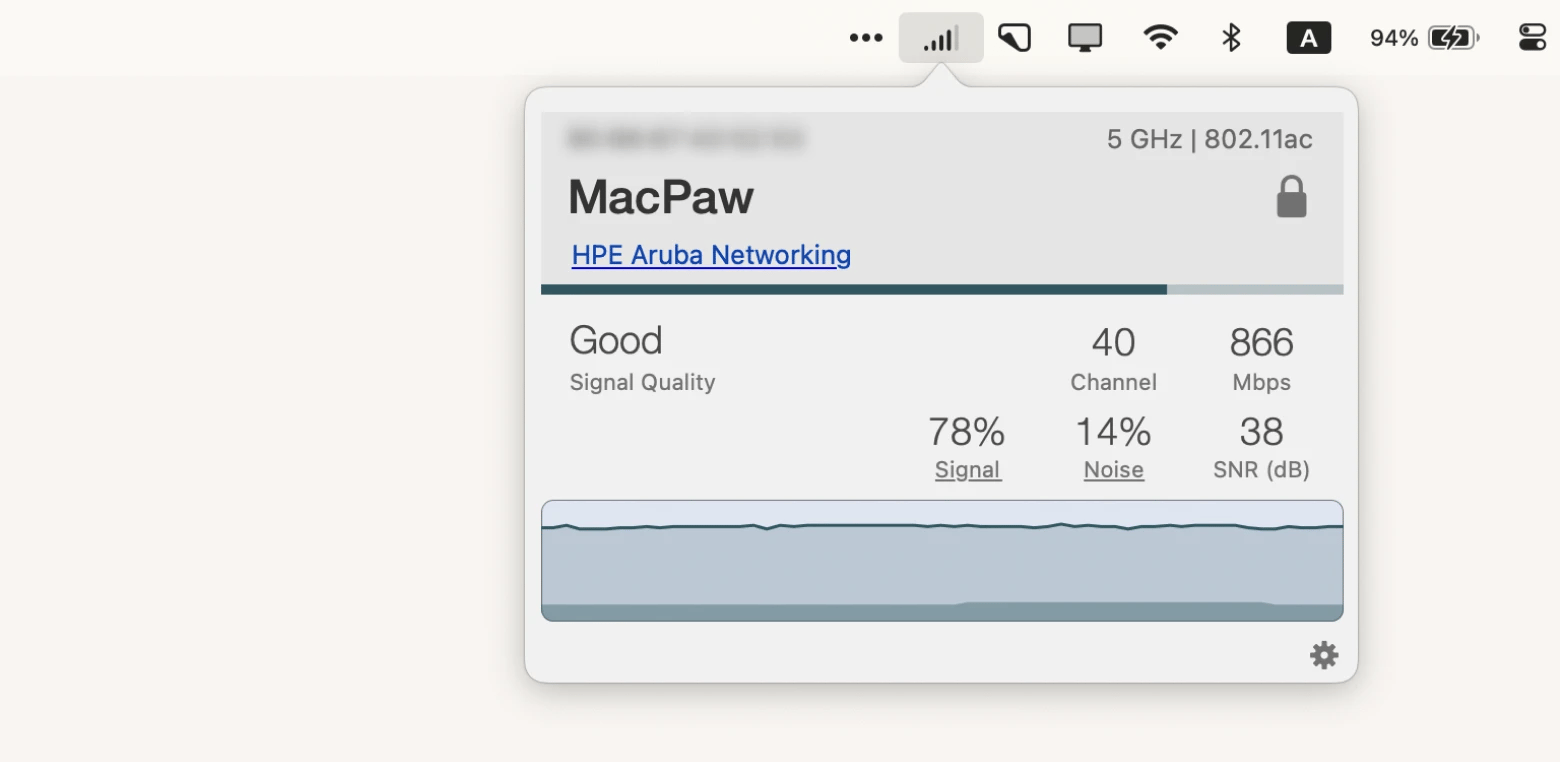
A quick check with apps like WiFi Signal can tell you if your Mac is suffering from network issues and can help you with troubleshooting steps.
The app alerts you when your device connects to or disconnects from a network or switches to a different access point. This feature can help identify connectivity issues that may be preventing your photos from syncing with iCloud.
Incorrect Apple Account
Your iCloud photos connect to your Apple Account. If you sign out of your device, you can't see, change, or remove photos in your iCloud. If someone else is logged in on your device, you'll see their iCloud photos, not yours.
The fix is simple: sign in to your device with your Apple Account and sync the iCloud photos.
iCloud Photos turned off
Apple lets you control which types of files you want to upload and sync with iCloud. If you've accidentally turned Photos off, you won't see them on other devices. This is a common issue that's easy to fix. Simply check to make sure you have allowed iCloud Photos to sync.
Outdated software
If it's been some time since you last updated your Mac, iPhone, or iPad, you should do it now. Sometimes, Apple adds new features and fixes to its services, like iCloud. Unless you do a proper update, iCloud Photos might not work.
Too many files to sync
Yes. This can happen, especially if you are moving a lot of photos from a camera to your Mac. Even with a good internet link, it can take 30 minutes or more to move 1,000 HD photos.
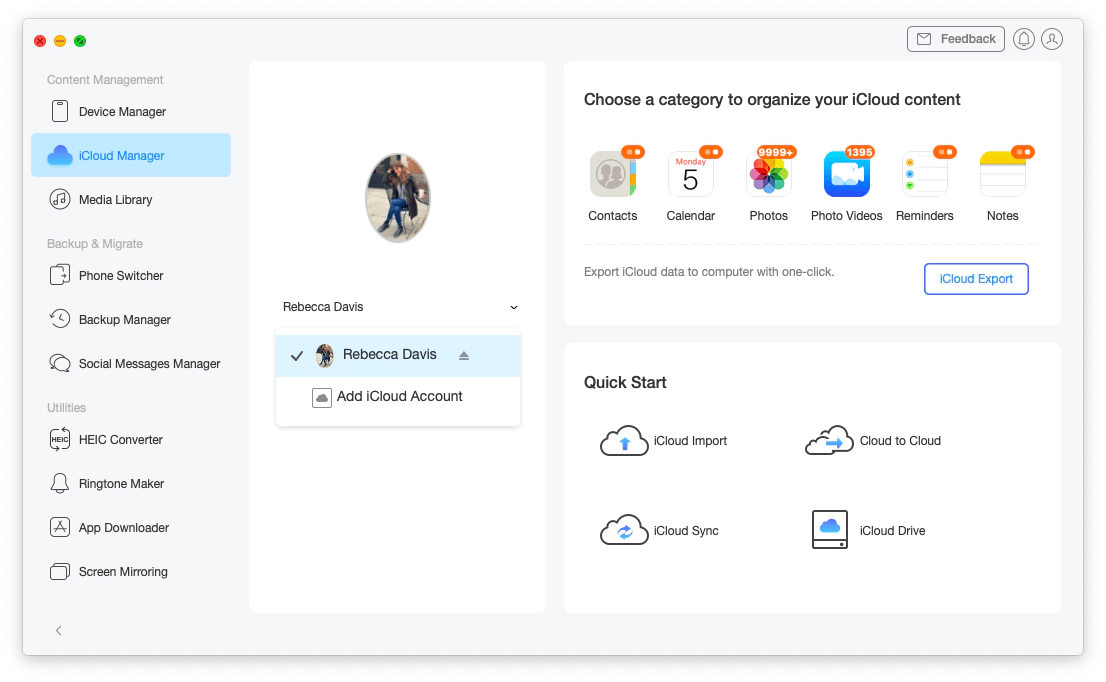
Personal experience: If you're looking for a faster way to sync photos to iCloud, I highly recommend trying AnyTrans for iOS. I've personally used this powerful file transfer app, and it's a saving boat for moving large batches of photos between devices and iCloud.
Here's how to sync iCloud with the app.
Install and open AnyTrans for iOS.
In the cloud tab, log in to your iCloud.
Click Photos.
Click the iCloud Sync button.
Now, I wouldn't say you will see the photos immediately on all devices, but at least reduce some of the wait time.
Device on Low Power Mode
If your device enters Low Power Mode, it will turn off certain features to prolong the battery's lifespan, including iCloud sync. So, you can't upload photos to the cloud or view those uploaded by other devices. Well, not unless you force an iCloud sync or reconnect the device to a power source.
Not enough iCloud storage
Apple gives all users 5 GB of free iCloud storage space. If you've used them up, you can't upload any more files to the cloud unless you have signed up for iCloud+ to expand the storage limit. Either that or you can delete photos you no longer need on iCloud. If you choose the latter, read this guide on how to delete photos from iCloud.
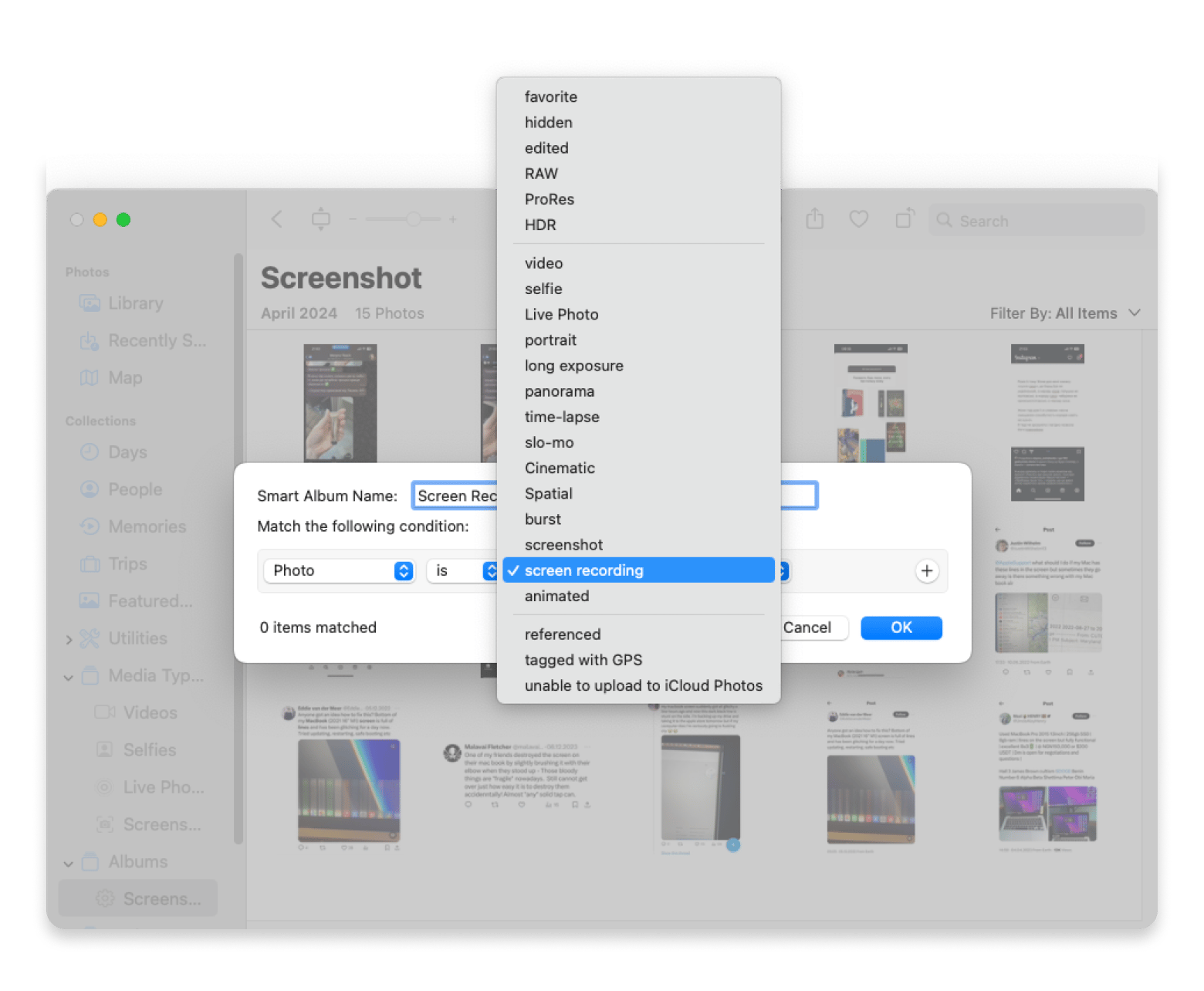
You can also try to remove photos you don't need. If you're using a MacBook, organize synched photos from your library into smart folders that will automatically include screenshots, screen recordings, or other types of media, like portraits, panoramas, and selfies. This helps you quickly review your photos and delete the ones you don't need.
Here's how to create a smart folder on your MacBook:
Open the Photos app.
Click Albums on the left sidebar.
Select a Smart Album.
Choose the type of photo you want to include.
To delete unwanted images, open the smart album and select photos you want to remove. They'll be deleted from all your synced devices, and your Mac and iPhone storage will get additional space.
To quickly remove unwanted photos from the iPhone, try CleanMy®Phone from Setapp (a free 7-day trial is available with Setapp Membership).
Your VPN might be causing trouble
Sometimes, your VPN can mess with your iCloud connection and syncing. If it's safe, try turning off your VPN temporarily and then try syncing iCloud again.
Should I entrust my photos to Apple iCloud?
Apple states that iCloud Photos is designed with privacy at its core. Here are the protection factors that are used:
Advanced data protection (optional): This feature, incorporated since 2022, enhances your account's security by allowing only you and devices linked to your Apple Account to access your photos. You can access it in Settings > iCloud > Advanced Data Protection.
Two-factor authentication: This is necessary because iCloud Photos is tied to your Apple Account (mandatory for new accounts since 2023). Not using 2FA? To enable it on iPhone: Settings > [Your Name] > Sign-In & Security > Turn On Two-Factor Authentication. On Mac: System Settings > [Your Name] > Sign-In & Security > Turn on Two-Factor Authentication.
Shared albums: The links you create use encrypted connections and the albums are available only to invited contributors.
However, any storage can pose potential risks if not used properly. While iCloud Photos is believed to be secure, there are some things to watch out for:
Always set a passwordor an expiration date for shared albums that contain sensitive information.
Use a strong password for your Apple Account (12 characters, mixed case, letters + characters).
Don't grant Apple account access to unverified apps, as it can provoke data leaks. Review permissions in Settings > Apple Account > Sign in with Apple.
Don't share metadata on photos if you need to hide your location. This is especially useful for those who post photos online or share with people they don't know very well. Review permissions in Settings > Privacy & Security > Location Services > Disable Camera > Select Never. You can update this setting later.
How to view photos in iCloud (Solved)
Normally, you should not have issues seeing, changing, or sorting the photos on iCloud. Of course, occasionally, you may bump into problems, and I hope the tips I shared prove useful.
On top of that, you can also use the apps I mentioned to manage iCloud photos better:
CleanMy®Phone from Setapp — lets you remove unwanted photos so you don't upload them to iCloud storage.
AnyTrans for iOS from Setapp — helps you transfer and sync a pile of photos across all devices much faster.
WiFi Signal from Setapp — scans your network for signal quality issues that prevent iCloud syncing.
You can find the apps I listed, including other useful apps, that help you become more productive on Mac, iPhone, and iPad on a Setapp platform. By the way, Setapp offers a 7-day free trial, so you should try it now!
FAQ
How to access my iCloud photos across devices?
Sign in to the device you want to view iCloud photos with your Apple Account. Then, ensure that you've turned on iCloud photos sync.
On iPhone/iPad:
Open Settings > [Your Name] > iCloud > Photos.
Turn on Sync this iPhone/iPad.
On Mac:
Go to Apple menu > System Settings > [Your Name] > iCloud > Photos.
Once you've done that, you can view iCloud photos on those devices.
Is there a way to access old iCloud photos?
If you can't find the photos you want, go to icloud.com. You'll find all the photos you've uploaded, including older ones. They're likely in the Albums or Library. If you've deleted them, go to the Recently Deleted folder and recover the photos within 30 days.
Can I recover photos after downgrading iCloud storage?
After downgrading your iCloud Storage, you have 30 days to save your data elsewhere. After that, it will be deleted. Make sure to download photos from iCloud before downgrading or within 30 days of downgrading or not paying for your current subscription.
What happens if I delete a photo from iCloud?
If you delete a photo from iCloud, it's deleted from all your synced devices too. You can restore it from the Recently Deleted folder within 30 days. The same happens if you delete a photo from an iPhone or Mac with iCloud Photos enabled.
Can I access iCloud Photos offline?
Yes, you can access iCloud photos offline if you enable Download and Keep Originals in Settings > [Your Name] > iCloud > Photos. This stores full-resolution photos and videos in both iCloud and on your device.
If you select Optimize iPhone Storage instead, iCloud stores the full-resolution versions while your device stores smaller versions to save space. Some photos may not download when you're offline.
Can someone see your photos if they have your iCloud?
Anyone with access to your iCloud can see and delete your iCloud photos. To prevent that, don't share your Apple Account and password. Also, turn on two-factor authentication to add another layer of security check that prevents strangers from logging in.
Verify you're signed in with the correct Apple Account
Ensure iCloud Photos is turned on in Settings
Update to the latest iOS/macOS version
Check available iCloud storage
Disable VPN temporarily
Force quit and restart the Photos app
Can I open iCloud Photos on a Windows PC or Android phone?
Yes. On Windows, install iCloud for Windows from the Microsoft Store for full sync capabilities. On Android, access your photos through icloud.com in any web browser. You can also add the iCloud website to your Android home screen for app-like access.
Superpowers for your Mac
Tackle your tasks with dozens of helpful apps on Setapp.






 Best solution
 Best solution