Check the basics first. Most iCloud Photos sync problems come from weak Wi-Fi, full iCloud storage, Low Power or Low Data Mode, or outdated macOS and iOS. Fix these, plug in your device, and let it sync uninterrupted.
Turn on iCloud Photos on every device. Go to Apple Account > iCloud > Photos on your Mac, iPhone, and iPad, then check the library status in the Photos app to see why syncing paused.
Declutter before you upload. Duplicates, blurry shots, and old screenshots eat into your 5 GB of free storage. CleanMy®Phone helps you find and remove them first.
Skip the wait when you’re in a hurry. If iCloud is still stuck and you need certain photos now, AnyTrans for iOS moves them from your iPhone or iPad to your Mac over USB.
Get both apps with Setapp. CleanMy®Phone and AnyTrans for iOS are included in your Setapp Membership alongside 300+ Mac and iOS apps. Try them free for 7 days.
Took photos on your iPhone and can’t find them on your Mac? iCloud Photos not syncing usually comes down to weak Wi-Fi, full storage, Low Power Mode, or outdated software. I’ve been there, and I’ll show you how to get your library moving again and speed it up.
Here’s a quick roundup of what usually stops iCloud Photos from syncing and the fastest fix for each issue. You’ll find detailed instructions below:
What happened?
How to fix it
Photos from your iPhone don’t show up on your Mac
Sign in at iCloud.com, open Photos, and compare it with the Photos app on your Mac
iCloud Photos isn’t turned on
Turn on Sync this Mac, Sync this iPhone, or Sync this iPad in your Apple Account settings
iCloud storage is full
Delete files you no longer need or switch to a larger iCloud storage plan
Duplicates, blurry shots, and old screenshots fill up your storage
Review and remove them with CleanMy®Phone from Setapp* before uploading
The first upload takes forever
Connect your device to power and Wi-Fi and let it sync uninterrupted overnight
Weak or unstable Wi-Fi
Move closer to your router, restart it, or try another trusted network
Shared or public network is slow
Finish the upload on your home Wi-Fi
Syncing is paused or stuck
Turn off Low Power Mode and Low Data Mode, check the library status, and tap or click Sync Now
You need specific photos right now
Transfer them to your Mac over USB with AnyTrans for iOS from Setapp*
*Setapp is a curated app platform that offers 300+ macOS, iOS and web apps for a flat monthly fee.
Check your iCloud photo library
If your photos aren’t syncing, check your iCloud photo library first. Open iCloud.com, sign in to your Apple Account, and click Photos.
If you’ve turned on iCloud Photos, you will find the same photos across all your Apple devices. On your Mac, open the Photos app and browse your library or albums. You can also use the search field to find photos by date, location, person, or object.
After synchronization finishes, the Photos app on your Mac, iPhone, and iPad should display the same library. Otherwise, you might see only locally stored photos or items previously downloaded from iCloud.
How to sync iCloud Photos across your devices
Before syncing, choose which devices can access your photos through iCloud. Thankfully, that’s pretty straightforward.
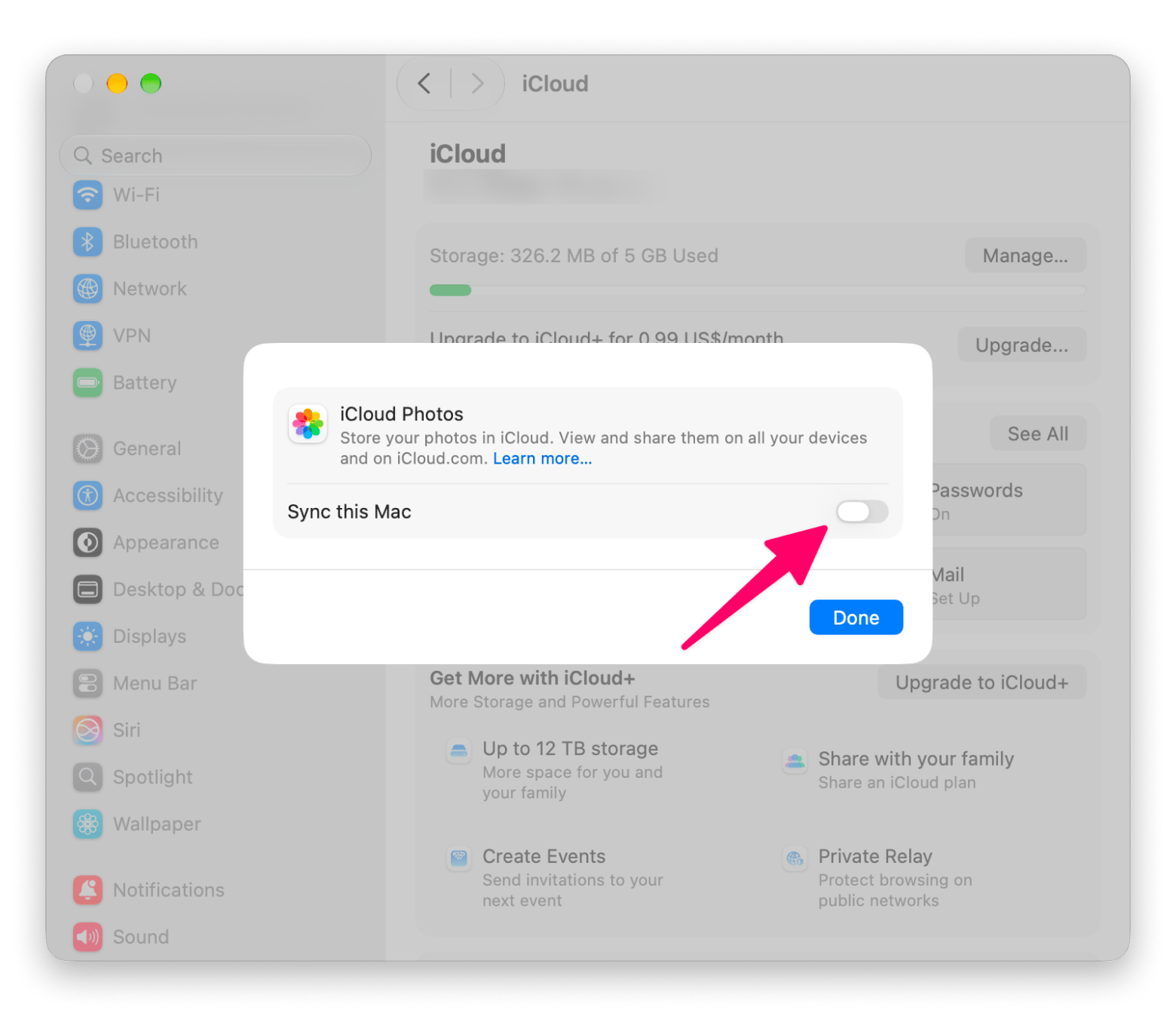
On a Mac running macOS Golden Gate:
Click the Apple menu and choose System Settings.
Go to Apple Account > iCloud.
Click Photos under Saved to iCloud.
Turn on Sync this Mac.
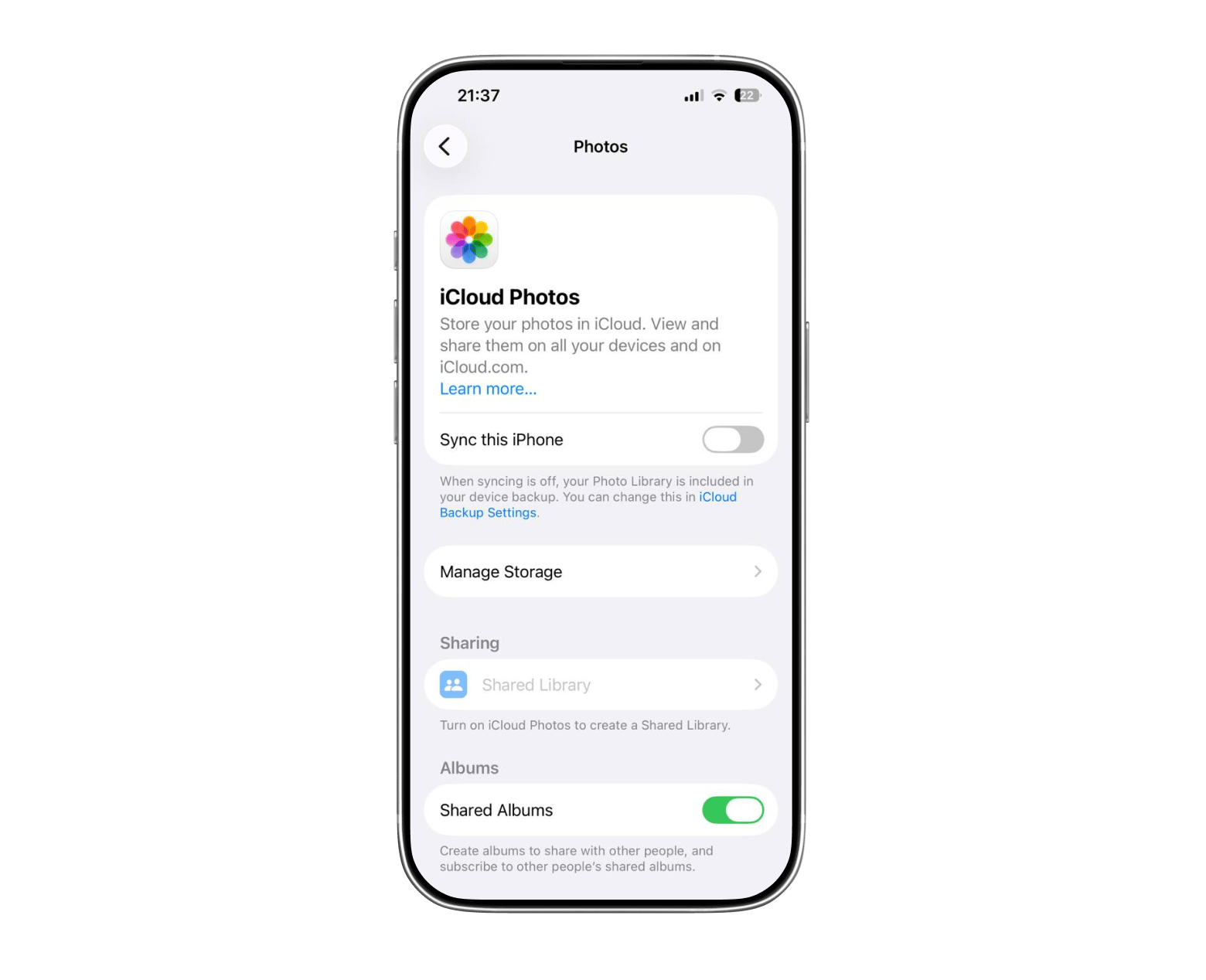
To sync photos on your iPhone or iPad:
Open Settings > Apple Account.
Tap iCloud > Photos.
Turn on Sync this iPhone or Sync this iPad.
Your Mac, iPad, and iPhone will now upload photos from local storage to iCloud. You can check the current sync status in the Photos app.
Note: Every Apple Account includes 5 GB of free iCloud storage, shared across photos, files, backups, email, and other data. Large photo and video libraries can fill it quickly.
It’s a good idea to clean up your device before uploading a large library. You don’t want to upload copies, blurry images, or unwanted screenshots to iCloud, do you?
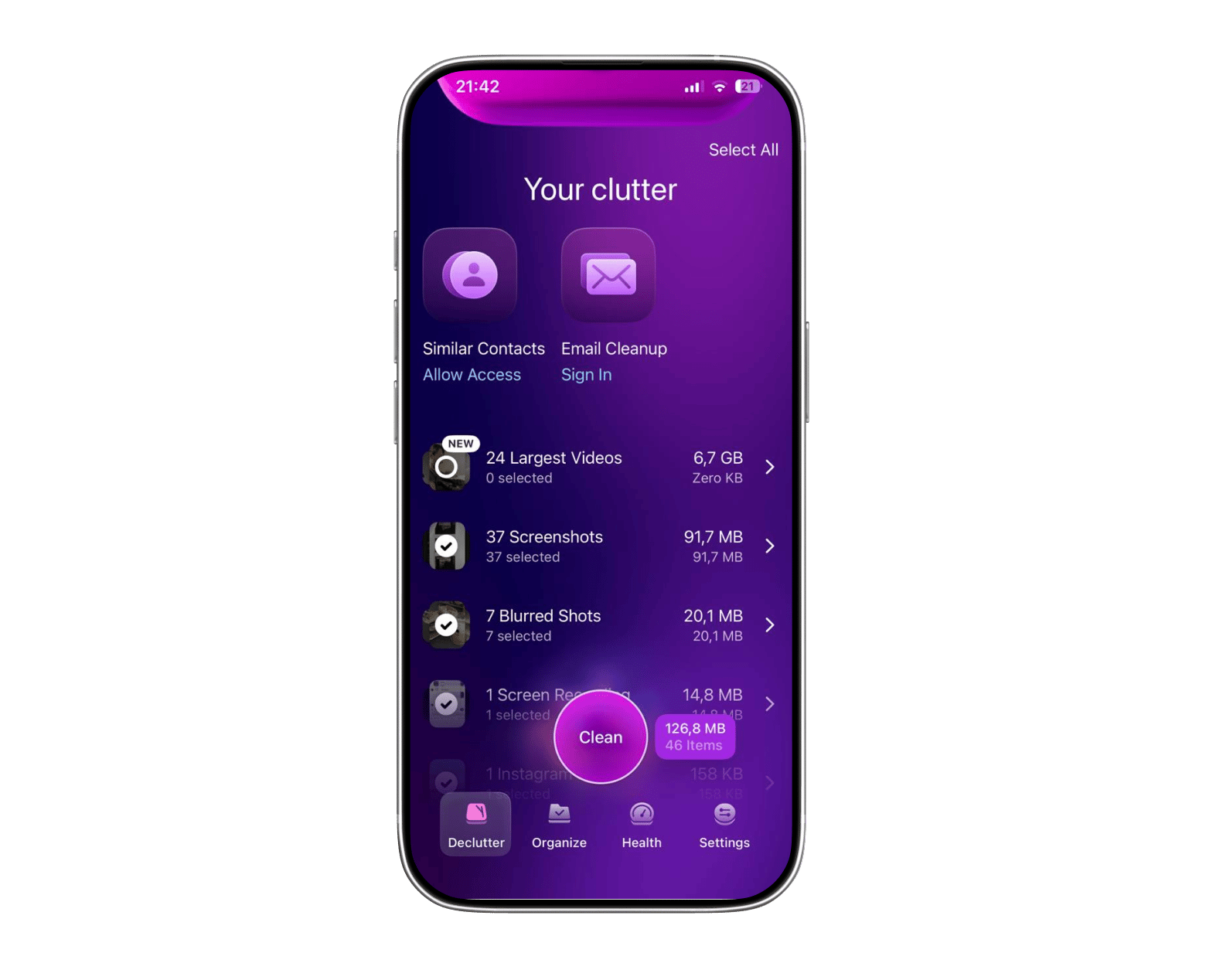
For this, I recommend using CleanMy®Phone. It identifies blurry shots, old screenshots, duplicates, and similar photos so you can review and remove unnecessary clutter.
After one of my latest vacations, I decided to scan my iPhone with the app. When you’re traveling, you end up with a bunch of similar or blurry photos, plus screenshots of hotel check-in files or car rental stuff. I actually managed to clear out more than 1 GB of junk from my storage with CleanMy®Phone.
Here’s how you can declutter your iPhone:
Install and open CleanMy®Phone on your iPhone.
Let the app analyze your photo library.
Review the suggested duplicates, similar shots, screenshots, and blurry photos.
Confirm which photos you want to remove.
You’ve now trimmed the photos on your phone, which lets you save as much iCloud space as possible.
How long does it take to sync all photos from iCloud?
Syncing can take anywhere from a few minutes to overnight. The total time depends on your library size, upload speed, available storage, and device status.
The first upload usually takes the longest because iCloud must process the entire library. Apple recommends connecting your device to power and Wi-Fi, then letting it sync uninterrupted overnight. You can find more guidance in Apple’s iCloud Photos troubleshooting guide.
If you need to pause the upload:
On your Mac: Open Photos and choose Library. Scroll to the bottom of the library and click Pause if the option appears.
On your iPhone or iPad: Open Photos, tap your profile button, and pause syncing from the library status area.
You can resume syncing at any time, but if the upload still crawls along, one of the issues below is likely the cause.
Why is it taking so long to sync photos to iCloud?
Large libraries need time to upload, but several issues can slow or pause the process. First, check your connection, storage, device settings, and software version.
1. Weak Wi-Fi
The first thing to check is your Wi-Fi connection. A weak or unstable signal can prevent photos from uploading reliably.
Move closer to your router or try another trusted network. You can also restart your router, reconnect your device, and then check the Photos app again.
2. Limited iCloud storage
Another reason iCloud sync might stall is insufficient cloud storage. Photos share your iCloud allowance with device backups, files, messages, and email.
Check your storage under Settings > Apple Account > iCloud on iPhone or iPad. On Mac, choose Apple menu > System Settings > Apple Account > iCloud. If necessary, remove files you no longer need or switch to a larger iCloud storage plan.
3. Too many network users
Sharing Wi-Fi with many users can reduce your available upload bandwidth. This often happens on public networks in cafés, airports, hotels, and coworking spaces.
When bandwidth is shared across many users, there’s little you can do to speed up the network. If possible, finish the upload on your home Wi-Fi instead.
4. Outdated macOS or iOS
If you haven’t updated your Mac or iPhone in a while, older software could interfere with iCloud Photos syncing. Installing current updates also gives you Apple’s latest bug fixes.
On macOS Golden Gate, choose Apple menu > System Settings > General > Software Update. On iPhone or iPad, open Settings > General > Software Update.
How to sync iCloud Photos faster
The best fix depends on what is limiting your upload speed.
Try these solutions:
Free up iCloud storage. Delete files you no longer need or upgrade your plan. Remember that deleting synced photos removes them from your other devices too.
Use a strong Wi-Fi connection. Keep your device near the router and avoid busy public networks.
Connect your device to power. iCloud Photos may pause or limit background activity when the battery is low.
Turn off Low Power Mode and Low Data Mode. Both settings can pause or restrict synchronization.
Update macOS, iOS, or iPadOS. Install any pending software updates before trying again.
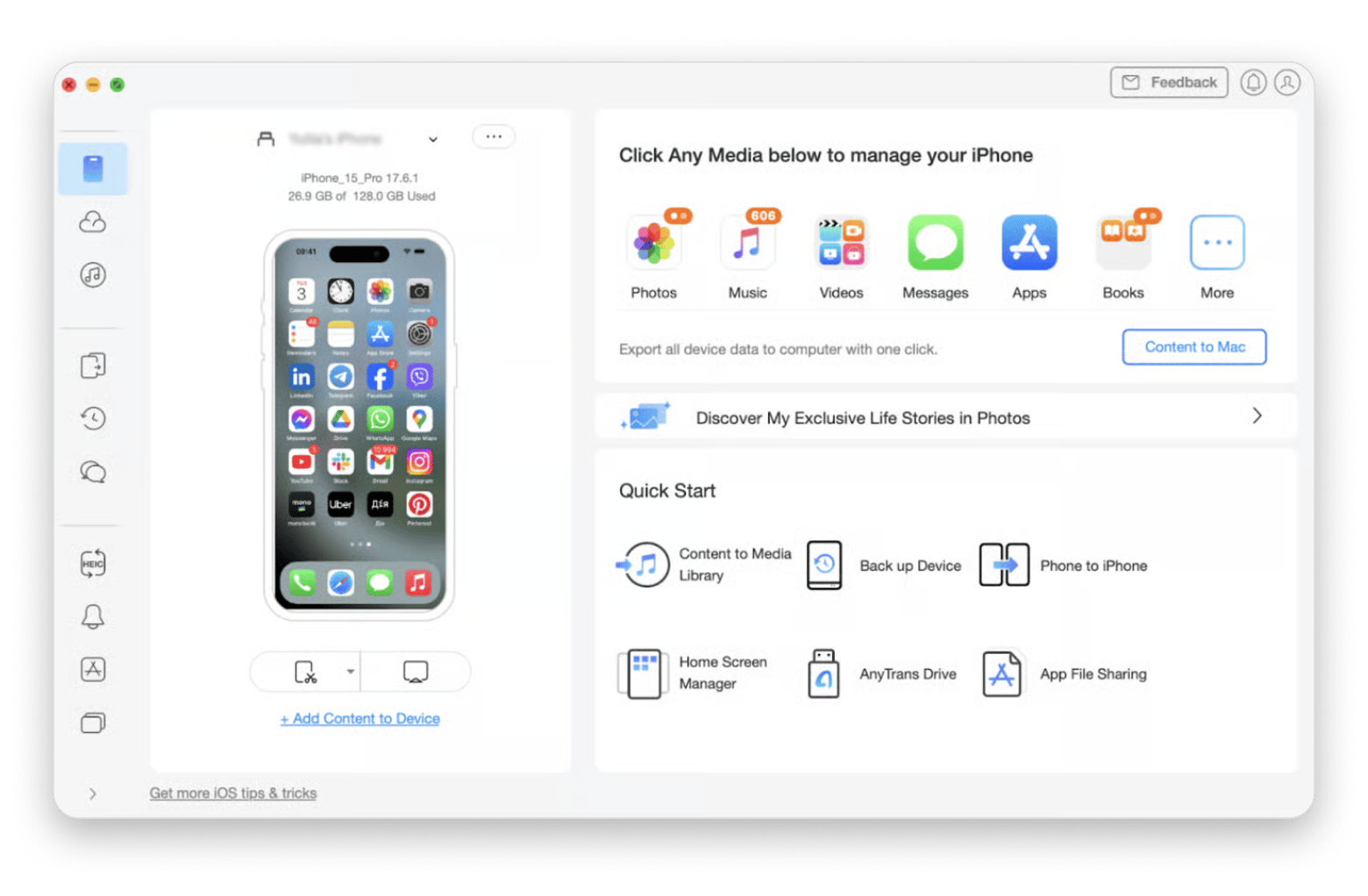
If iCloud still refuses to cooperate and you need specific photos immediately, AnyTrans for iOS offers a practical alternative. It transfers photos between an iPhone or iPad and your Mac via USB, without waiting for the full iCloud library to sync.
Here’s how to transfer photos to your Mac:
Install and open AnyTrans for iOS.
Connect your iPhone or iPad to your Mac with a USB cable.
Follow the prompts to trust the computer if asked.
Open Device Manager and choose the photos you want to export.
Choose a destination on your Mac and start the transfer.
Once the transfer finishes, open the destination folder on your Mac to find the exported photos.
iCloud Photos can pause because of Low Power Mode, Low Data Mode, a poor network connection, low battery, or insufficient storage. Apple also recommends checking the library status for messages that explain why syncing has stopped.
To resume syncing:
Connect your device to power and Wi-Fi
Turn off Low Power Mode and Low Data Mode
Open Photos and check the library status
Tap or click Sync Now if the option appears
If Sync Now doesn’t appear, leave the device connected to power and Wi-Fi. Apple recommends allowing it to sync uninterrupted overnight.
Now, you can sync iCloud Photos on all devices
I hope you’ve found the issue stopping your device from syncing with iCloud. In most cases, a stable connection, enough storage, current software, and a little uninterrupted time will get the library moving again.
CleanMy®Phone can help you review duplicates and unwanted photos before they consume more storage. If you need chosen files immediately, AnyTrans for iOS can transfer them directly between your iPhone or iPad and Mac.
iCloud Photos syncs supported photos and videos across devices signed in to the same Apple Account. You must turn on iCloud Photos on every device and have enough iCloud storage available. Items can take time to appear while the initial upload is still running.
Why is my iCloud syncing stuck?
Your network might be disconnected, your device could be in Low Power or Low Data Mode, or your iCloud storage may be full. Connect the device to power and Wi-Fi, check the library status in Photos, and tap or click Sync Now if it appears.
How long should iCloud Photos take to sync?
The time depends on your library size and upload speed. A small batch may sync within minutes, while a large first-time upload can take overnight. Keep your device plugged in, on a strong Wi-Fi connection, and leave syncing uninterrupted.
Why can’t I access iCloud Photos on my Mac?
Make sure your Mac uses the same Apple Account as your other devices. On macOS Golden Gate, choose Apple menu > System Settings > Apple Account > iCloud > Photos, then turn on Sync this Mac. Also check your internet connection, available iCloud storage, and pending macOS updates.
How do I sync my iCloud photo library to my Mac?
On macOS Golden Gate, choose Apple menu > System Settings > Apple Account > iCloud > Photos. Turn on Sync this Mac, then open Photos and leave your Mac connected to power and Wi-Fi while synchronization finishes.
How do I access my iCloud photos across devices?
Turn on iCloud Photos on every device using the same Apple Account. On iPhone or iPad, go to Settings > Apple Account > iCloud > Photos. On Mac, go to System Settings > Apple Account > iCloud > Photos. You can also sign in at iCloud.com and open Photos.
I have plenty of iCloud storage, so why aren’t my photos syncing?
Storage is only one factor. Confirm that every device uses the same Apple Account and has iCloud Photos enabled. Then update your software, connect to power and Wi-Fi, and turn off Low Power and Low Data modes. Check the library status in Photos for a specific pause message.






 Best solution
 Best solution