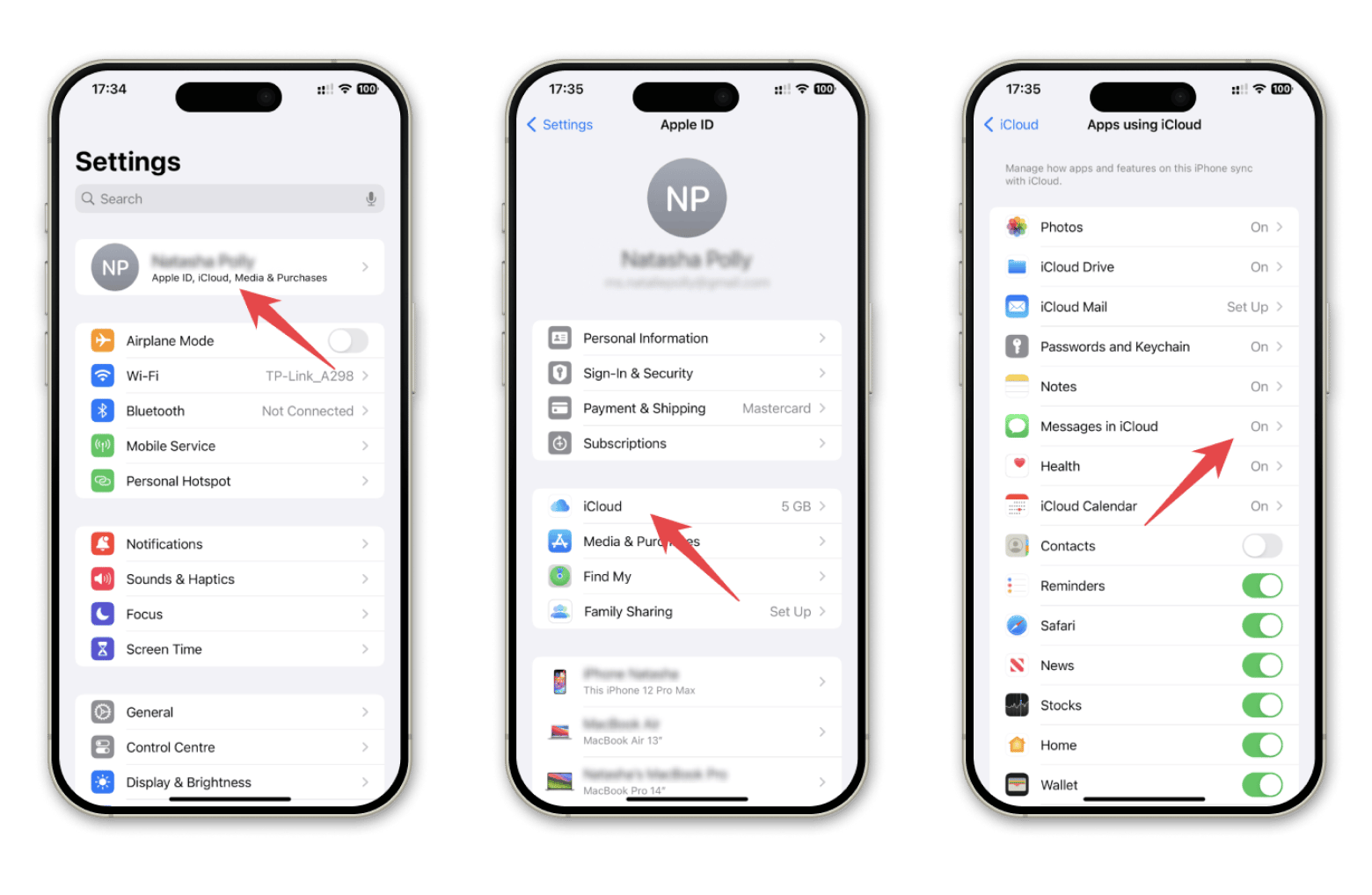
Enable Messages in iCloud on both devices. On your Mac, go to Messages > Settings > iMessage and check Enable Messages in iCloud. On your iPhone, go to Settings > Apple Account > iCloud > Messages and turn it on.
Use the same Apple Account on both devices. If your Mac and iPhone are signed into different accounts, iMessage won't sync. Sign out and back in with the same Apple Account on both.
Sign out of iMessage and sign back in. On your Mac, go to Messages > Settings > iMessage > Sign Out. On your iPhone, go to Settings > Apps > Messages > Send & Receive and sign out. Sign back in on both to refresh the connection.
Click Sync Now for a manual push. Open Messages on your Mac, go to Messages > Settings > iMessage, and click Sync Now. Give it a minute to catch up before trying other fixes.
Monitor your network with WiFi Explorer and transfer messages manually with AnyTrans for iOS. Diagnose Wi-Fi issues that block syncing and move messages directly between devices when iCloud fails — both available with a Setapp membership.
Quick fix: To fix iMessage not syncing on Mac, open Messages > Settings > iMessage and make sure Enable Messages in iCloud is checked, then click Sync Now.
I appreciate how the iMessage (Messages) app lets my messages travel seamlessly across all my devices. It's super convenient that I can send a message from my iPhone and pick up the conversation on my Mac so easily. Well, that's the theory, anyway. I noticed that many users have a problem with their iPhone messages not syncing with their Mac, especially after updating their systems.
If you have the same issue, try the quick fixes below:
How to sync iMessage on Mac
What to do
Check internet connection
Turn on Wi-Fi and use WiFi Explorer to fix network issues.
Sign out from iMessage and retry
Do it on both Mac and iPhone with the same Apple ID.
Enable Messages in iCloud
Confirm that Messages in iCloud is enabled on both devices.
Sync messages manually
Use AnyTrans for iOS to manually transfer messages from iPhone/iPad to Mac.
Verify email settings
Make sure the same email address is used on both devices for sending/receiving messages.
Confirm mobile number
Verify phone number is updated and matched with Apple ID contact details on both devices.
Update devices
Check for the latest software updates on both Mac and iPhone.
You will find detailed instructions on how to fix messages not syncing on Mac below in this article.
How to fix iMessage sync issues on Mac
Getting your iMessages to sync properly can be a bit of a hassle, but following these steps usually does the trick.
1. Check your internet connection
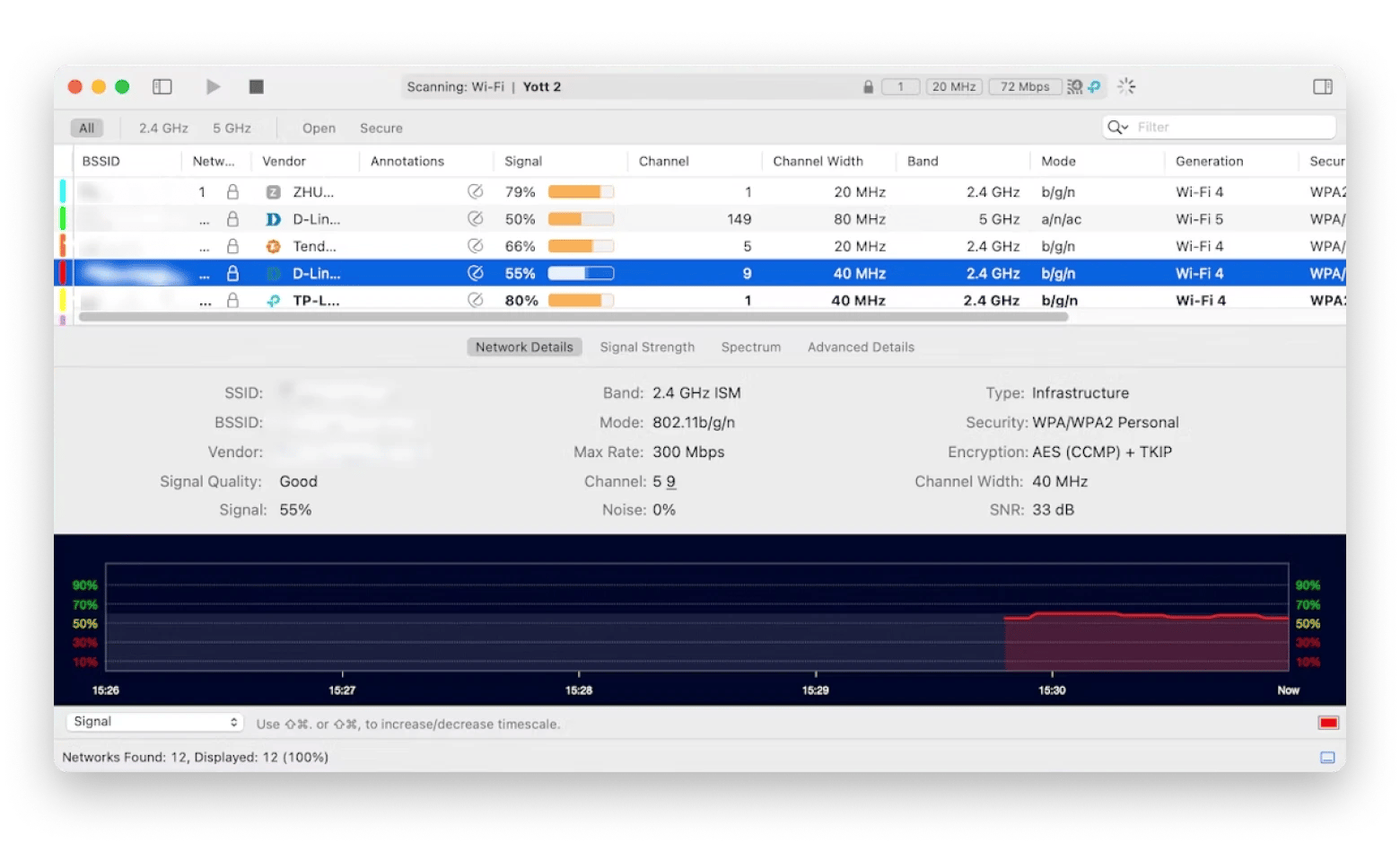
Unlike the old good SMS, iMessage requires a stable internet connection to be delivered from one device to another. To be on the safe side, just toggle Wi-Fi off and on. I also recommend you run a scan with WiFi Explorer:
Download, install, and open WiFi Explorer on your Mac.
Find your network name on the list and click on it.
Go to Network Details and check Signal Quality.
It might also be useful to check Channel — just to ensure you're not sharing the channel with too many other networks.
WiFi Explorer helps identify network issues that might prevent iMessage from syncing properly.
2. Sign out of iMessage and sign back in
Sometimes, all it takes is a fresh sign-in to fix the "Messages on Mac not syncing" problem.
On your Mac:
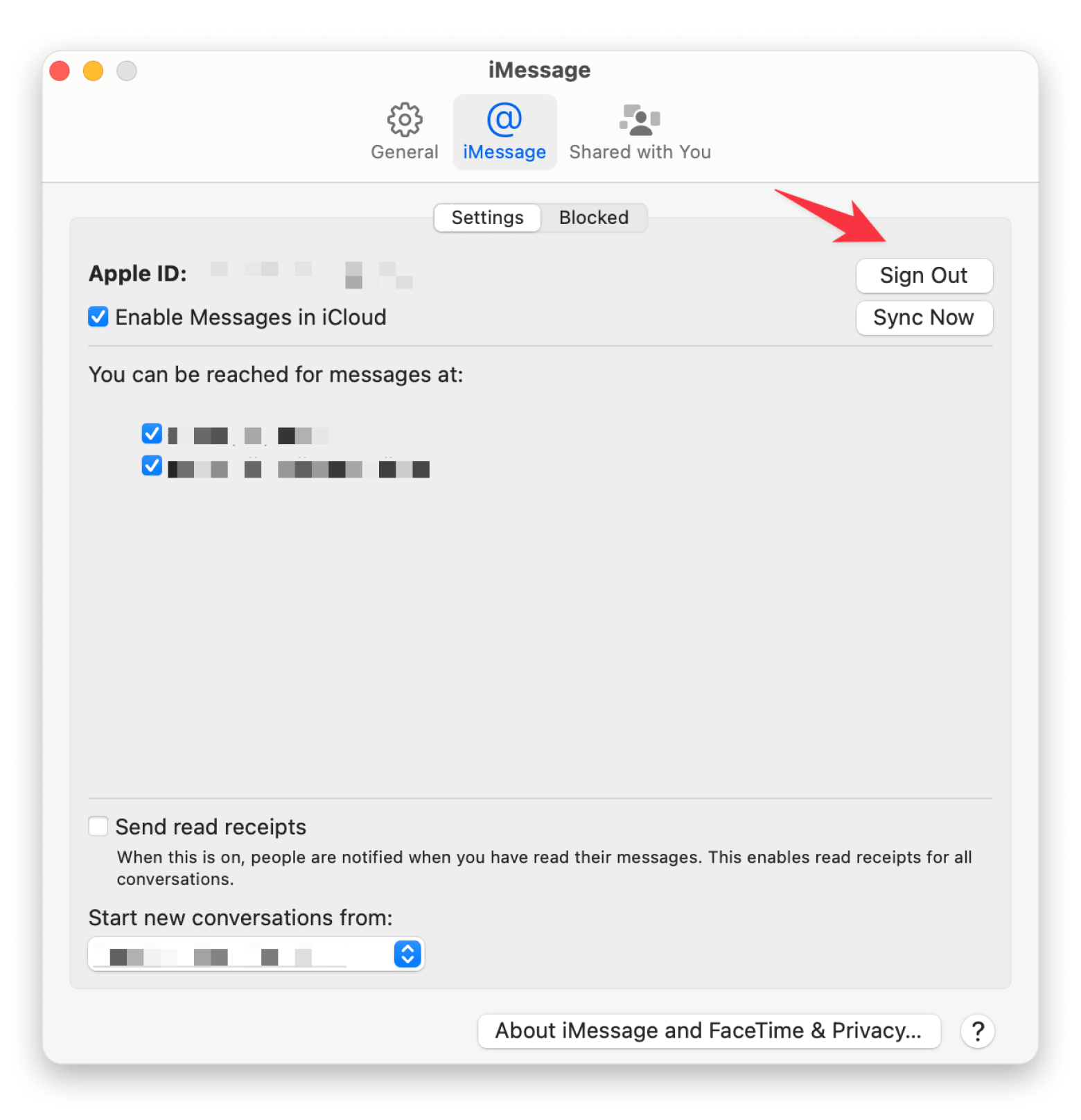
Go to Messages in the menu bar > Settings.
Click on the iMessage tab and click Sign Out.
Sign back in with the same Apple Account.
On your iPhone:
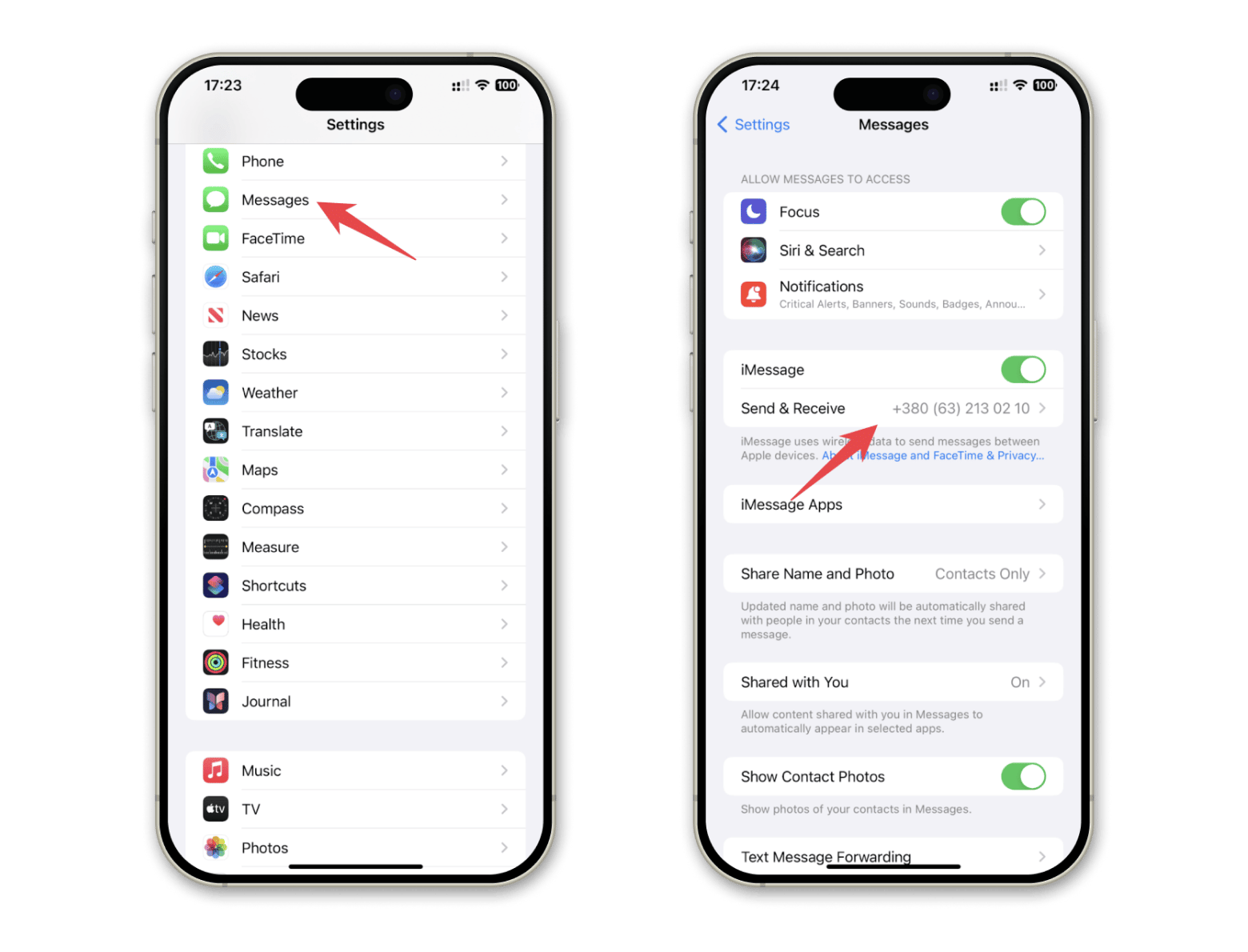
Go to Settings > Apps > Messages.
Tap Send & Receive and sign out.
Sign back in and check if iMessages are syncing.
This process refreshes your connection to Apple's servers and often resolves sync issues immediately.
3. Make sure Messages in iCloud is enabled
How to refresh messages on Mac? iMessage won't sync if iCloud is turned off. You'll need to check if it's on all your devices. Follow the steps below:
On your Mac:
Open the Messages app.
Go to Messages in the menu bar > Settings > iMessage.
Check Enable Messages in iCloud.
On your iPhone:
Go to Settings > Apple Account.
Tap iCloud > Messages. You may need to tap Show All.
Turn on Messages in iCloud to sync.
According to Apple Support documentation, enabling this feature ensures all your messages stay updated across devices.
4. Sync messages manually
Manual syncing can also force your messages to update quickly.
Try the built-in option first: open Messages on your Mac, go to Messages > Settings > iMessage, and click Sync Now. Give it a minute—often, that's all it takes.
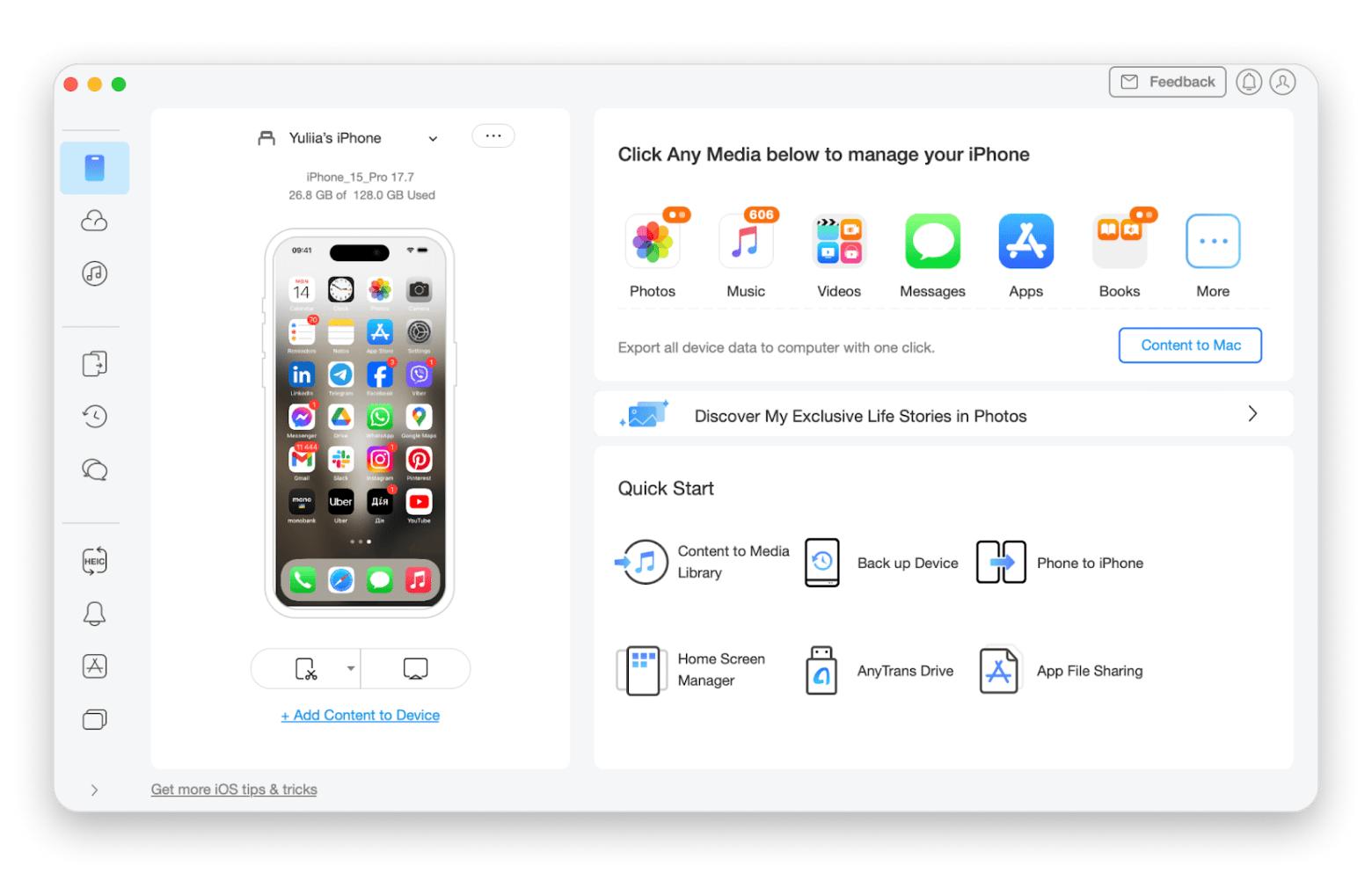
I prefer using the content-transferring app called AnyTrans for iOS. With its help, you can sync your messages across devices — either all of them or just certain ones. Here's how it works:
Download, install, and open AnyTrans for iOS on your Mac.
Connect your iOS device to your Mac using a cable.
Once your phone contents show up in AnyTrans for iOS, choose Messages.
Choose the messages you want to move from iPhone/iPad to Mac.
Click To Mac.
This method works especially well when the built-in sync feature fails to update your messages.
5. Check your email address
A mismatch in email settings can cause significant syncing issues and make you wonder, "Why are my iMessages not syncing between iPhone and Mac?" Double-check to make sure you're using the same contact details on all your devices.
On your Mac:
Open the Messages app.
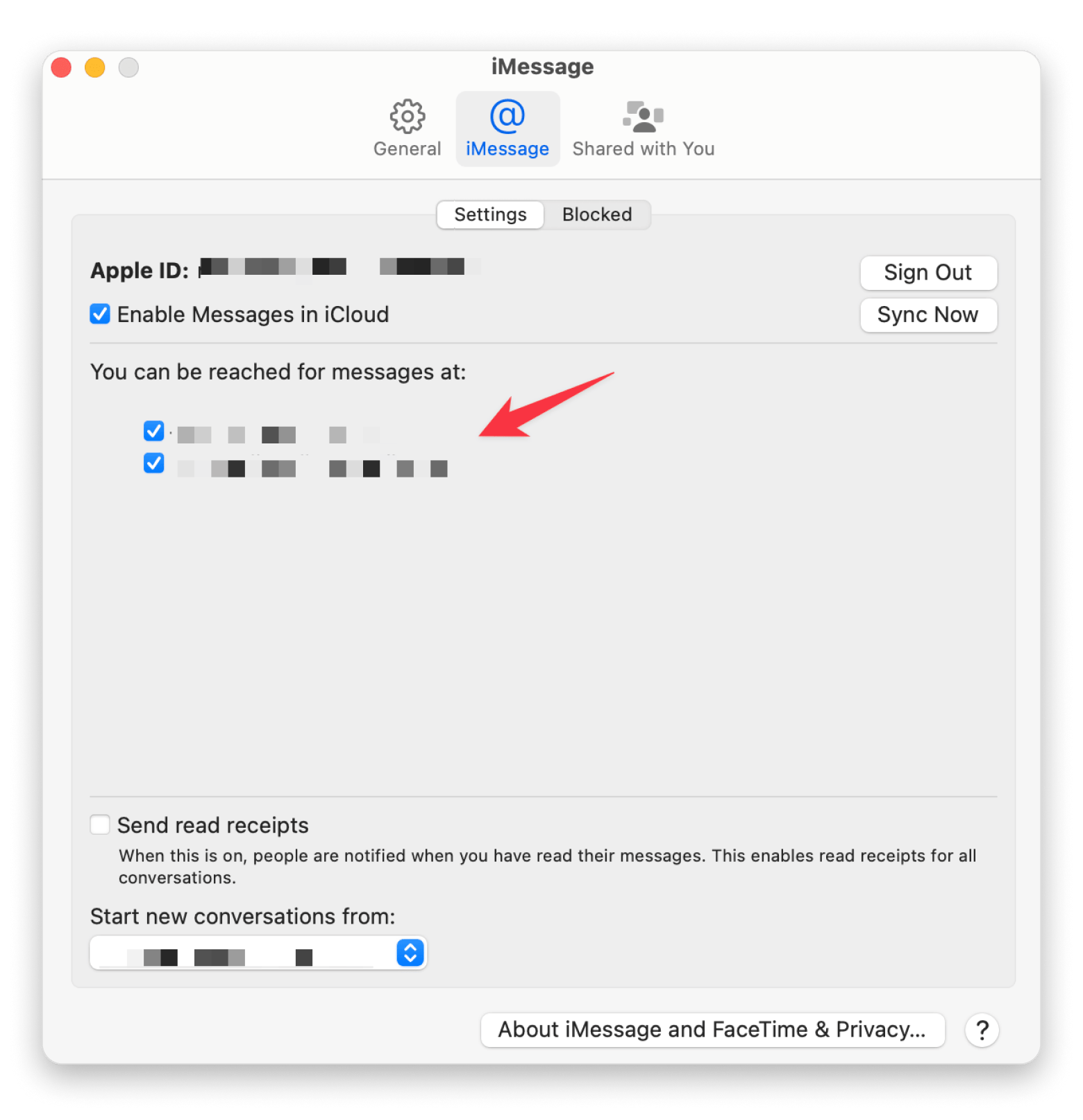
Go to Messages in the menu bar > Settings > iMessage.
Verify the addresses under You can be reached for messages at.
On your iPhone:
Go to Settings > Messages.
Tap Send & Receive.
Make sure that you select the same email address and phone number for sending and receiving messages on both devices.
Ensuring consistency across devices helps iMessage recognize them as linked.
6. Confirm your phone number in your Apple Account
Your contact details being outdated or incorrect can also affect syncing and lead to iMessage not updating on Mac. Verify your phone number is accurate and matched.
On your Mac:
Open the Messages app.
Go to Messages in the menu bar > Settings > iMessage.
Check that your phone number is listed and confirmed.
On your iPhone:
Go to Settings > Messages.
Tap Send & Receive.
Make sure your mobile number is listed and confirmed.
Both devices need to show the same phone number for proper synchronization.
Sometimes, text messages not showing up on Mac is caused by a software glitch. Apple may have already fixed it in a recent update. Check whether you've installed the latest version.
On your Mac:
Go to the Apple menu > System Settings.
Click General > Software Update.
Click Update Now or Restart Now and wait for the update to install.
On your iPhone:
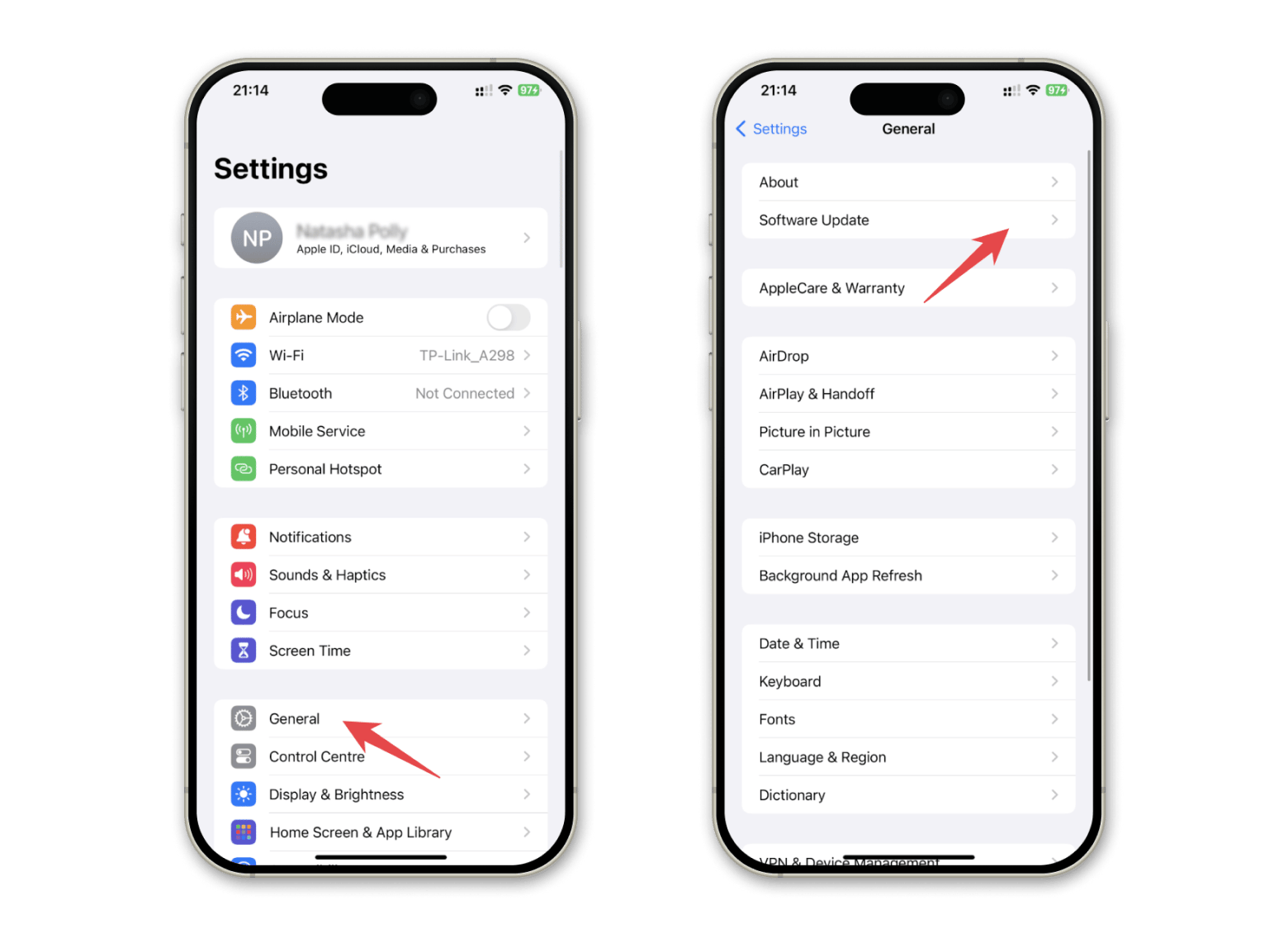
Go to Settings > General.
Tap Software Update.
Tap Update Now.
Why don't my iMessages sync between iPhone and Mac?
Syncing problems can appear for several reasons. Here are some of the most likely culprits:
Connectivity issues: A weak internet connection might cause your messages not to sync. Both your Mac and iPhone need a stable Wi-Fi or cellular connection to maintain synchronization.
iCloud syncing settings: iCloud settings are another common cause of messages not syncing on the Mac. If your iCloud or iMessage settings are misconfigured, your messages can be blocked from syncing between devices.
Apple ID mismatch: Your devices need to be connected to the same Apple ID. If they're not, messages won't sync correctly.
Workaround when Messages still won't sync on macOS
If your iMessages aren't syncing between your iPhone and Mac, the fix is almost always one of three things: Messages in iCloud is toggled off, your Apple Account doesn't match on both devices, or your internet connection is unstable. Start with enabling Messages in iCloud and signing out and back in — that resolves the issue for most people. For persistent sync failures, AnyTrans for iOS can manually transfer your messages between devices as a reliable fallback.
To prevent sync issues from coming back, keep both devices updated, use WiFi Explorer to monitor your network quality, and if you also manage WhatsApp conversations on your Mac, ChatMate for WhatsApp keeps that channel running smoothly too.
iMessage syncing again. Now keep all your communications running smoothly. WiFi Explorer, AnyTrans for iOS, ChatMate for WhatsApp, and 270+ other Mac and iOS apps — all in one Setapp membership. Cancel before Day 7 — $0 charged. Start Your 7-Day Trial.
FAQ
Why are my iMessages not syncing between iPhone and Mac?
Most sync problems come from one of these issues: connectivity problems (weak Wi-Fi blocks updates), Messages in iCloud is off (turn it on in Settings > iMessage), Apple ID mismatch (both devices need the same ID), outdated software (old iOS/macOS versions may have bugs), wrong date or time (incorrect time zones can stall iMessage), or Apple server outage (checkApple System Status). Identify which fits your case, fix it, then reopen Messages and give it a minute to catch up.
How do I force Messages to sync on Mac?
If your chats look stuck, try a manual sync:
Open Messages on your Mac.
In the menu bar, choose Messages > Settings > iMessage.
Check Enable Messages in iCloud, then click Sync Now.
Stay online until the progress bar disappears.
If "Sync Now" is missing or doesn't help, sign out of iMessage, restart your Mac, and sign back in with the same Apple ID. Need messages right away? Copy them with AnyTrans for iOS.
What should I do if iMessage syncing is paused?
When you see "Syncing Paused" in iMessage, first check your internet connection and make sure both devices are online. Sign out of iMessage on both devices and sign back in. If that doesn't work, go to Settings > Apple ID > iCloud and toggle Messages off and on. You can also try restarting both devices. For persistent issues, AnyTrans for iOS can manually transfer your messages between devices.
Keep Apple devices in sync
Enjoy full-way data transfer with AnyTrans for iOS.






 Best solution
 Best solution