One of my coworkers was always late to our meetings. No matter how many notifications popped up, he'd keep coding right through them. At a company outing one day, I told him: "You really need a reminder in your face. I'm going to make an app for you."
And I wasn't entirely joking. Over the next weekend, I built a simple prototype and installed it on his computer that Monday. And indeed, he wasn't late anymore to our meetings. This is when I realized I've got something here.
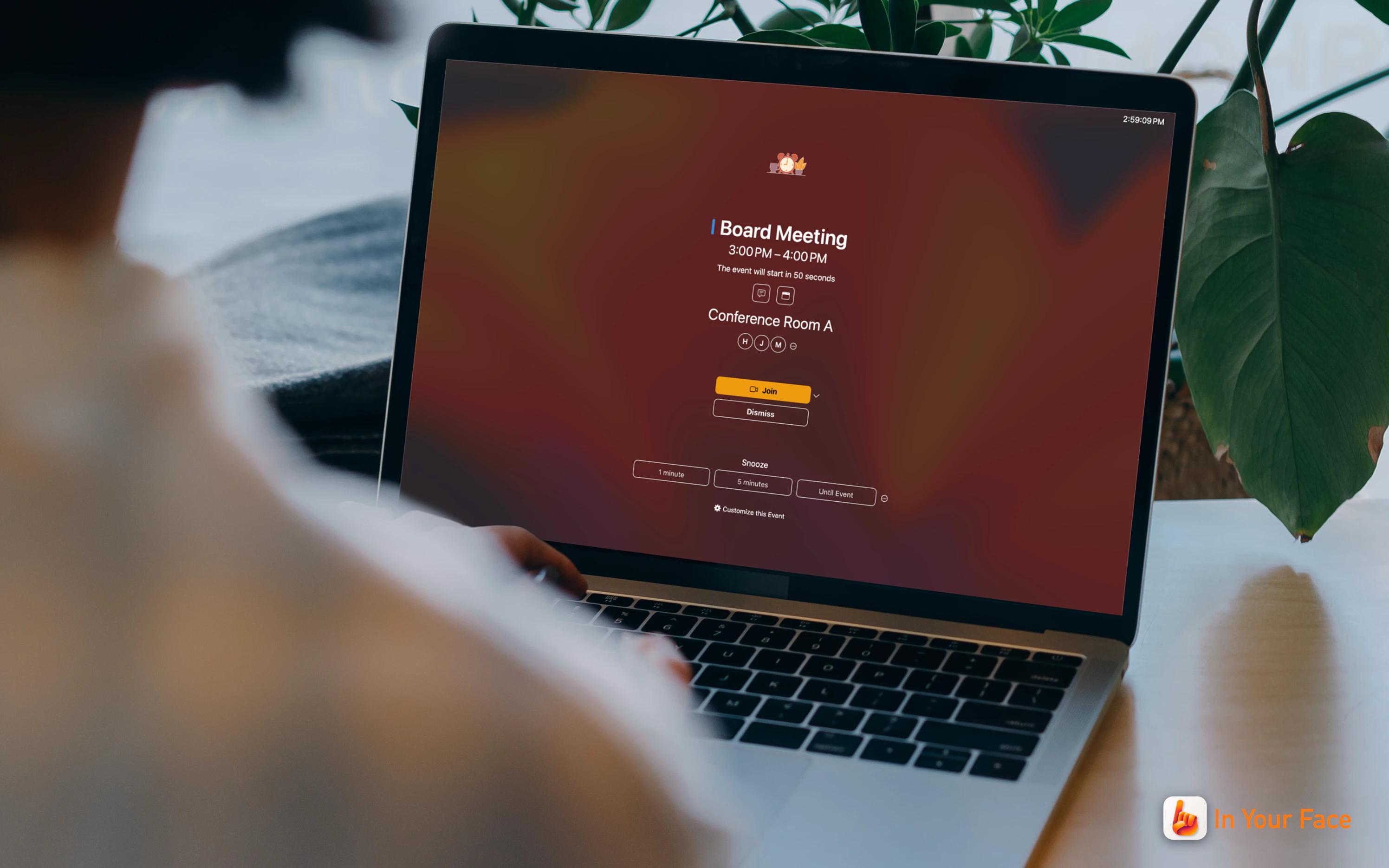
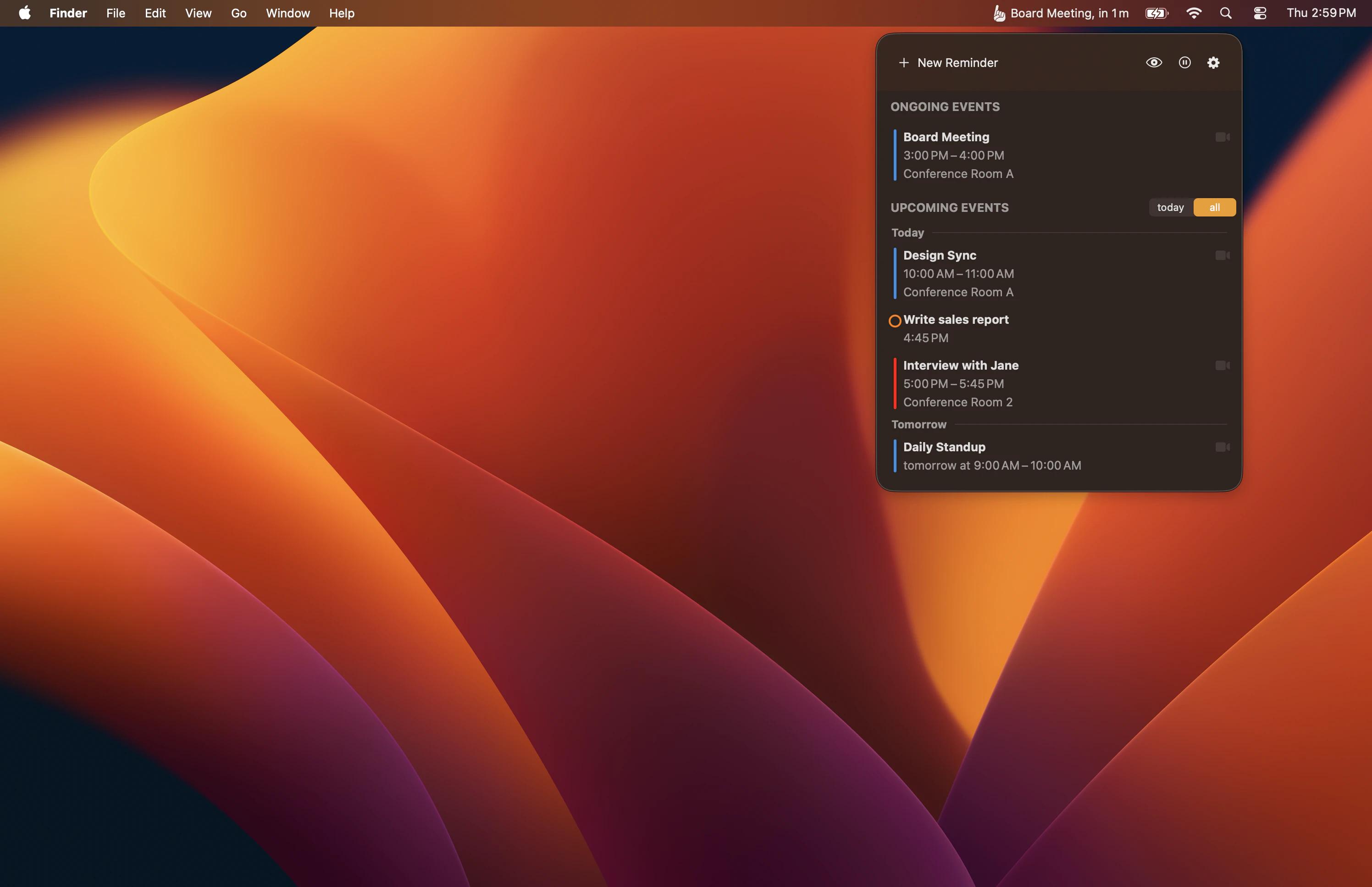
In Your Face shipped its first version on the Mac App Store in 2019, and the user base grew slowly but steadily. Then Covid hit, and everyone suddenly started working from home and having lots of video conferences. This is when it started to really take off. Today, when toggled on, it pushes a full-screen alert so you can't miss a meeting, lets you join calls directly from the notification, and lets you customize alert sounds — cutting down the chance your brain just tunes the alarm out.
I never expected this to reach beyond my own office, let alone that John Romero — the legendary co-creator of Doom — would end up telling PC Gamer he couldn't live without it. He said his desktop gets cluttered with notifications, but In Your Face helps him catch the ones that matter — on his "phone, Mac, PC – it's on every platform." It was a surreal moment.
Built for people who actually need it
But that's not the part I'm the most proud of. I'm really happy that my app is appreciated by the neurodivergent community, especially by folks with ADHD. I often get emails from users telling me how the app saved their jobs or makes their everyday life easier. That's the feedback that actually keeps me building.
Solo, on purpose — and built to be different
In Your Face is now one product under my studio, Blue Banana Software.
Staying solo shapes how I think about building in the first place, especially now that AI makes it easier than ever to spin up an app in a weekend. I use those tools myself, for small side projects — prototyping with AI lets me polish it, ship it, and see how people respond much faster than before. But I draw a hard line between a weekend prototype and a real product. You can generate code that more or less does what you want in a matter of hours. But there's a huge gap between getting something to run and shipping a polished product that people actually want to use.
My advice to anyone starting out: don't just copy other apps. Find your own problems to solve, and solve them well. Now, in the time of agentic coding, it's so easy to quickly push out new apps that it becomes harder and harder to get noticed among the flood of low-effort, low-quality products. Find a real-world problem, build a user base, and stick with it.
Word of mouth is my strongest growth driver
Whenever I release a major update, I reach out to journalists and publications. Occasionally that leads to coverage, but in my experience, press outreach is fairly hit-or-miss. I've experimented with paid advertising too, but at the scale I operate at, I haven't found it particularly effective.
What has worked is something much simpler. For In Your Face, word of mouth is incredibly important. A typical scenario is that someone in a company starts using it, suddenly stops missing meetings, and their colleagues notice and ask what they're using. That's been one of the strongest growth drivers for me.
Reliability first, curiosity second
More than two decades into software development, two things haven't changed for me: my passion for the craft, and my focus on keeping users happy. If you ask me what I prioritize in a given week, one word comes first: reliability.
If something is broken or users are running into bugs, that comes first. I don't want people to be left with a product they can't rely on. Beyond that, it's a balance of several factors. User feedback is a big one — if I keep hearing the same request from different people, that's usually a good sign it's worth addressing. Business considerations matter too, like preparing a major release or investing in the apps that have the biggest impact on the business.
Underneath all of it, though, is something less measurable. One of the advantages of being an indie developer is that I can follow my curiosity. If I'm genuinely excited about a feature or an app, I'm much more likely to do great work on it. So while I try to make data-informed decisions, I don't ignore intuition either.






 Best solution
 Best solution