- Software marketplaces reduce research overhead. Instead of tracking down vendor sites and sitting through demos, buyers get peer reviews, structured comparisons, and often direct procurement in one place.
- Different platforms serve different stages. G2 and Capterra are best for research and shortlisting; AWS Marketplace and Salesforce AppExchange handle procurement inside existing cloud stacks; Google Play and the App Store are where direct-to-consumer purchases happen.
- Product Hunt is a launch tool, not a long-term channel. It generates early traction and social proof, but won’t sustain discovery month after month.
- Setapp is both a subscription platform and a direct marketplace for Mac and iOS apps. The Membership model gives users access to hundreds of curated apps; the Marketplace model lets developers sell directly with one-time or subscription pricing. Join Setapp as a developer and start distributing to a paying audience from day one.
Gartner predicts that the total software spend will grow by 15.1% in 2026. Around 85% of apps used by businesses are already SaaS-based. The market is large — and, for buyers and developers alike, increasingly confusing.
I’ve used several of these platforms over the years, both as a buyer evaluating tools and as someone who tracks how developers distribute and monetise their products. Below is a practical breakdown of the eight most relevant app marketplaces: what each one actually does, who it’s for, and where it falls short.
Why use a software marketplace at all?
A SaaS or app marketplace reduces the research you’d need to find the right app for your systems or workflow. You don’t need to track down vendor websites, evaluate whether an app works well in your platform, or just hope that a demo gives the real picture.
These marketplaces are full of ratings and reviews from peers working with similar systems or workflows, and some also consolidate payments to avoid multiple bills.
Marketplaces also make it easier for developers and vendors to access a ready market.
Best software and app marketplace comparison
Platform | Type | Best for | Pricing model |
G2 | B2B review marketplace | Research and shortlisting enterprise software | Free to list; paid visibility tiers |
Setapp | Subscription platform + direct marketplace | Curated Mac/iOS apps (Membership & Marketplace) | Usage-based share (Membership) / direct sales (Marketplace) |
Capterra | B2B review/discovery | SMB software discovery and comparison | Pay-per-click for vendors |
AWS Marketplace | Cloud procurement | Buying/selling SaaS within AWS infrastructure | Revenue share |
Salesforce AppExchange | Enterprise app marketplace | Salesforce integrations and add-ons | Revenue share |
Google Play Store | Mobile app store | Android app distribution | 15–30% commission |
Apple App Store | Mobile app store | iOS app distribution | 15–30% commission |
Product Hunt | Launch platform | SaaS launches and early adopter traction | Free |
G2 – the peer review marketplace for B2B software
Best for: SMB buyers' shortlisting tools, and vendors looking to drive demand
We’ll start with G2 as that’s also where most SaaS purchases start. It’s not a marketplace that will sell apps on your behalf, but it’s the largest software review marketplace.
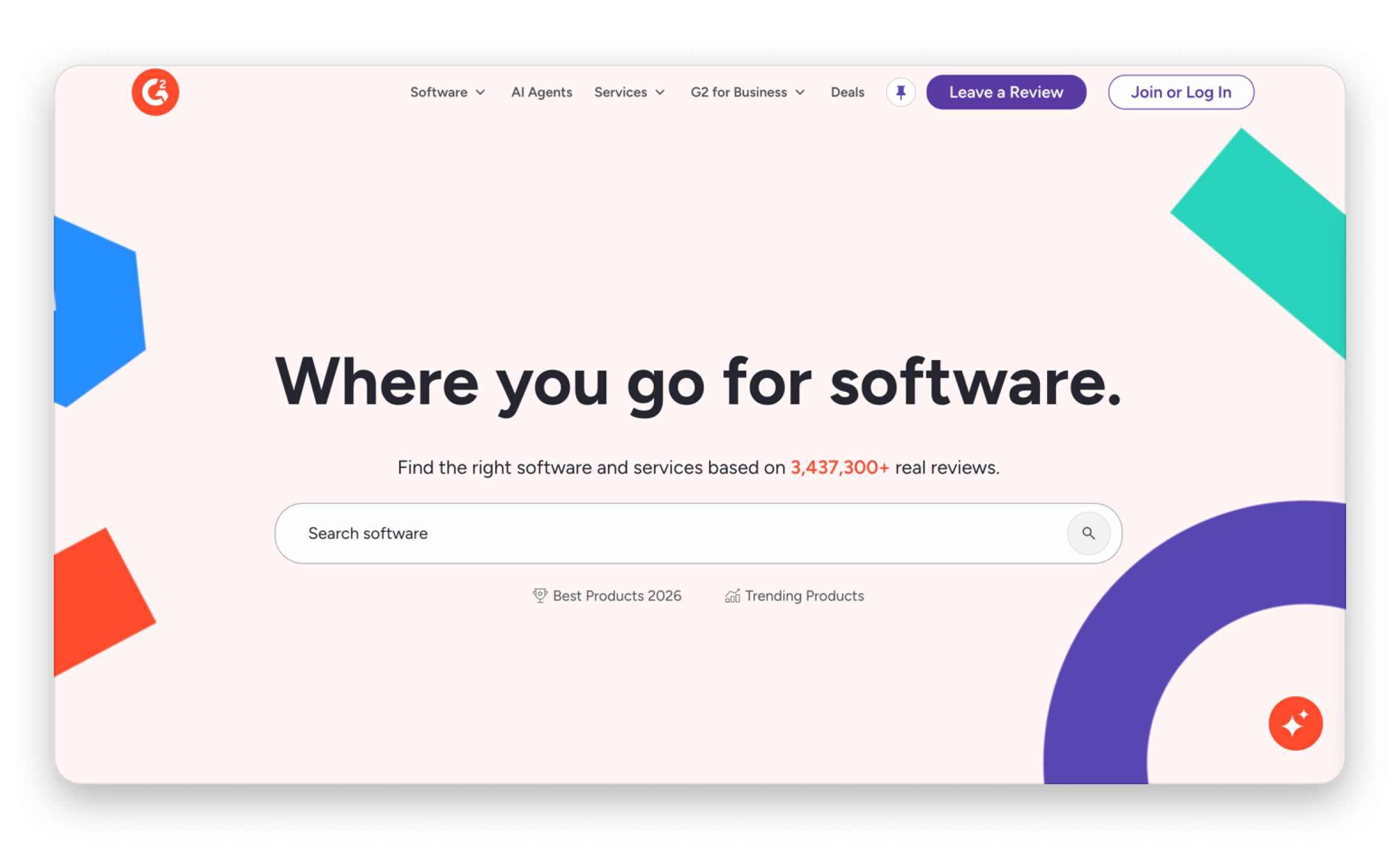
And it’s getting even bigger. In early 2026, G2 announced that it had acquired SaaS discovery platforms Capterra, Software Advice, and GetApp from Gartner. This means that the company now owns the four largest B2B discovery platforms.
Listing your software on G2 puts you side-by-side with market leaders and significantly helps with discovery. It’s free, but you may need to pay for visibility and insights into user purchase intent.
Pros:
- Largest verified review database in B2B
- Strong buyer trust
- AI-driven discovery tools
- Useful for competitor research
Cons:
- Placement and visibility require paid tiers
- Competitive categories can feel crowded
- Not a direct purchasing platform
Setapp – subscription platform and direct marketplace for Mac and iOS apps
Best for: Mac and iOS developers who want fast distribution without App Store dependency and launch overhead
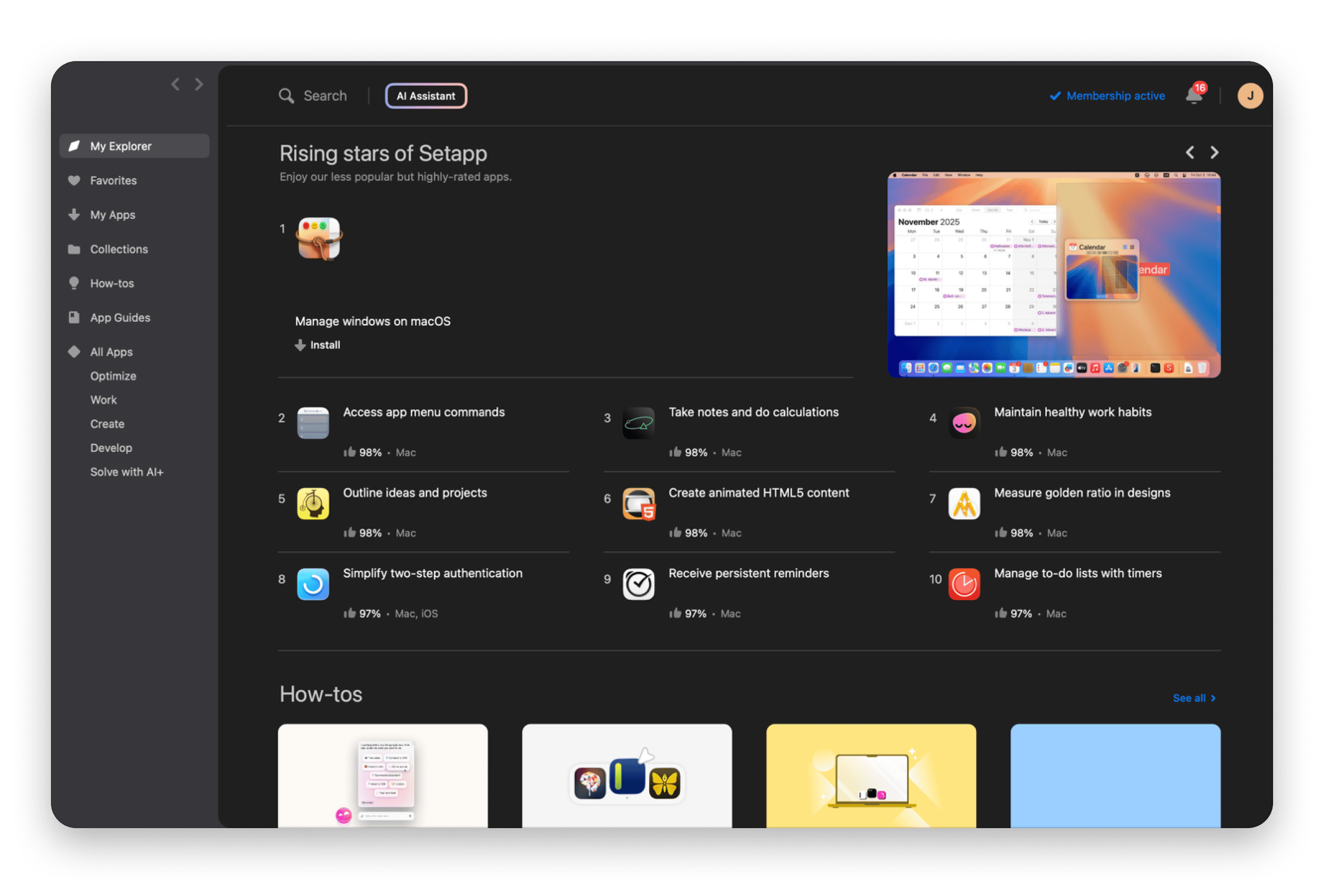
Setapp takes a completely different approach from every other store on this list. Unlike G2 or the App Store, it gives developers two distinct revenue paths:
- The Membership model plugs your app into a subscription catalog where users pay a flat monthly or annual fee for access to all listed Mac and iOS apps. Developers are paid based on usage, with up to 90% of revenue distributed back to them.
- The Marketplace model lets you sell directly, supporting both one-time purchases and subscriptions — without the overhead of managing your own storefront.
Both models bypass App Store gatekeeping, but the Membership model stands out for developers who want stable, hands-off revenue without pricing wars or visibility battles. Setapp curates the apps it accepts, and they undergo quality and security checks — but the process is much friendlier and faster than Apple’s.
Developers gain access to an already paying audience and enjoy minimal management burden compared to the App Store. With a smaller, curated catalogue, visibility is high, and Setapp actively promotes its apps rather than leaving discovery to algorithm luck.
Allen Wang, developer of One Switch, on reaching new users:
“We have a friend who is one of the developers behind Inboard. We were super inspired when he told us they had 50% of their daily users coming from Setapp. That’s kind of what we were aspiring to as well. One week with Setapp, and we’ve actually reached the goal.”
Philip Young Gunawan, developer of Session, on the revenue impact:
“The only metric that I care about is revenue. First month I joined Setapp, Session made exactly the number I promised myself to quit all job/contract work.”
Pros:
- Two monetisation paths: Membership (usage-based) and Marketplace (direct sales)
- No App Store dependency — faster reviews, no arbitrary rejections
- Access to an already paying, high-intent Mac and iOS audience
- High in-catalogue visibility with active promotion from Setapp
- No ads, in-app purchases, or upgrade pressure for users
Cons:
- Smaller catalogue compared to large marketplaces
- Limited to iOS and macOS users
Capterra – the SMB software discovery and comparison platform
Best for: SMB buyers who want to compare tools and vendors, looking for lead generation
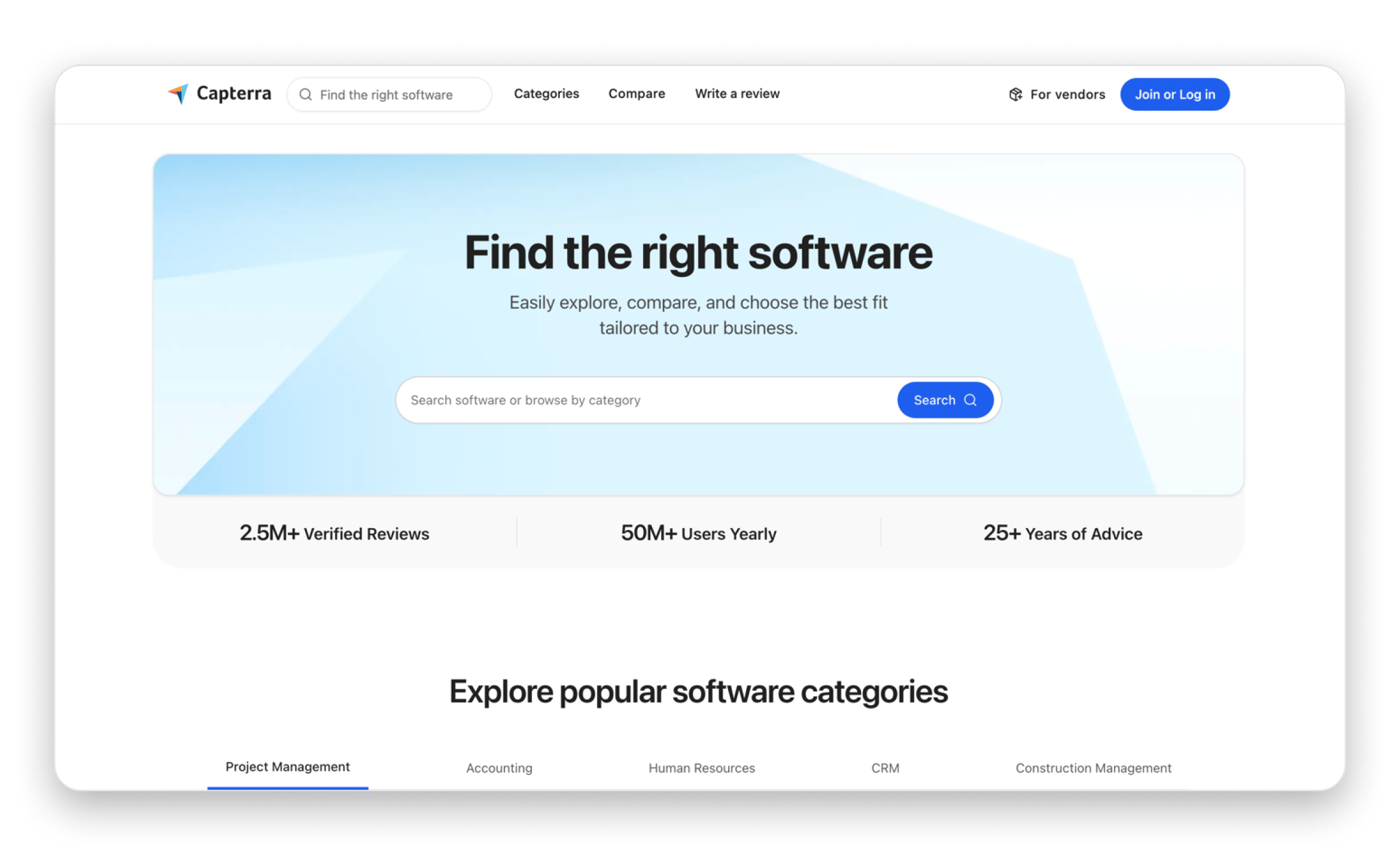
Although it’s now under the same roof as G2, Capterra is still operating as a separate SaaS marketplace platform. Whether that changes remains to be seen, but the platform itself is worth understanding for both buyers and vendors.
The marketplace operates with a pay-per-click (PPC) model for software, but the users are high-intent buyers who are actively evaluating tools. This means conversion is high, and the platform filters clicks to ensure vendors only pay for high-quality ones.
For buyers, Capterra makes it easy to search a category, filter by price, and compare tools. It’s particularly strong in HR software, CRM, project management, and accounting.
Cons:
- Strong visibility among SMB buyers
- High buyer intent
- A chance for direct lead generation
- Clear categories and structured comparisons for buyers
Cons:
- Clicks correlate with expenditure
- PPC can be expensive for devs
- Smaller products can struggle for visibility
AWS Marketplace – the enterprise procurement hub for cloud-native software
Best for: AWS enterprise users and cloud-based software developers
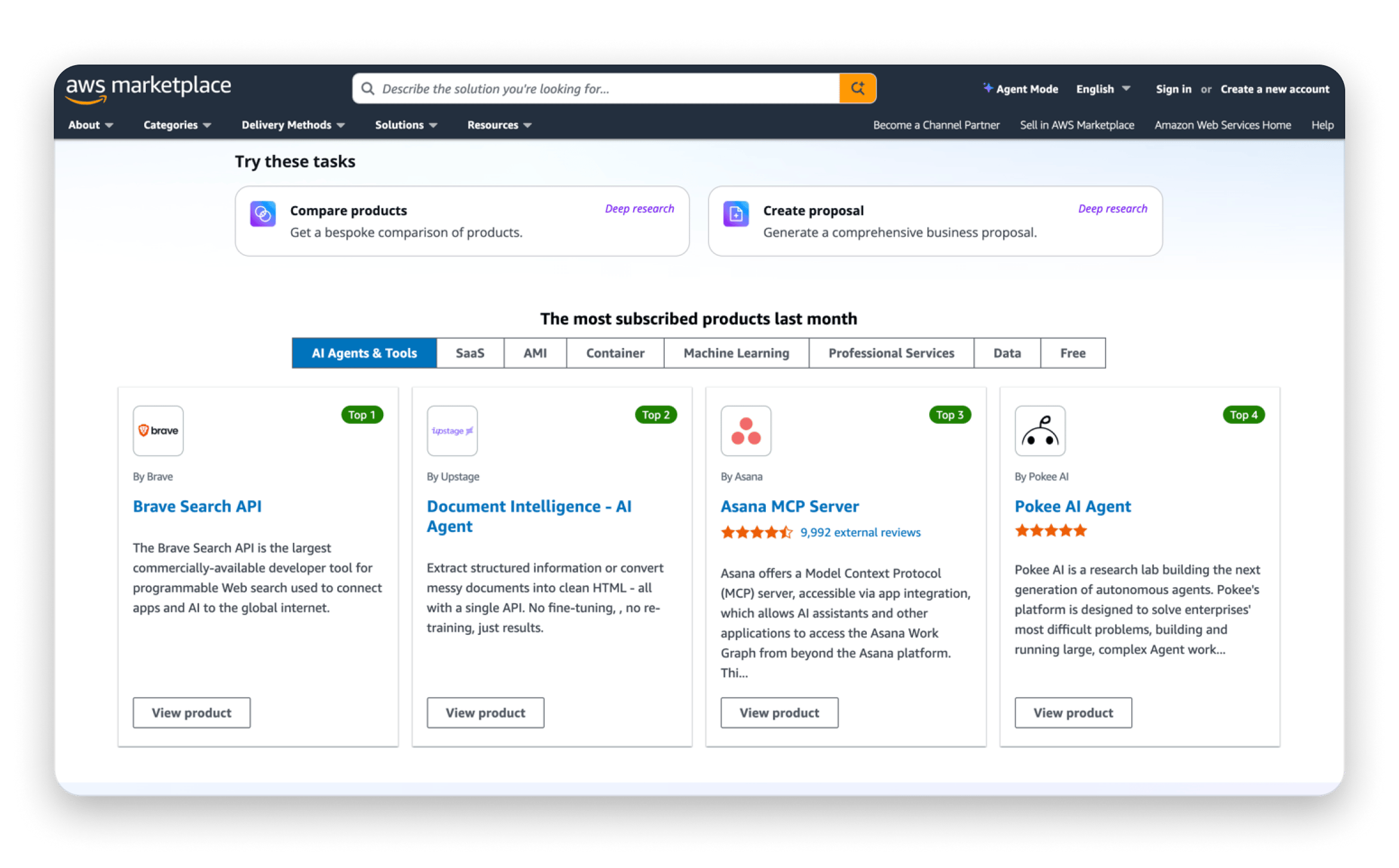
AWS Marketplace is less about discovery and more about procurement. When a user comes across your product in the marketplace, they already have an AWS setup and are actively looking to extend its functionality.
For buyers, the marketplace SaaS platform is a great way to simplify purchases, as purchases are added to their AWS contract. It avoids lengthy processes such as contract negotiations and setting up separate payments.
Developers and vendors can treat it as a distribution channel for users who are highly likely to buy.
Pros:
- Makes procurement easy for enterprise buyers
- Gives direct access to AWS users
- Beyond SaaS, it supports APIs and data products
- Great fit for cloud-based tools
Cons:
- Limited discovery for smaller tools
- Only targets AWS users
- Less useful for non-enterprise users
Salesforce AppExchange – the app marketplace for Salesforce users
Best for: Businesses that want to extend Salesforce functionalities and vendors targeting Salesforce organisations
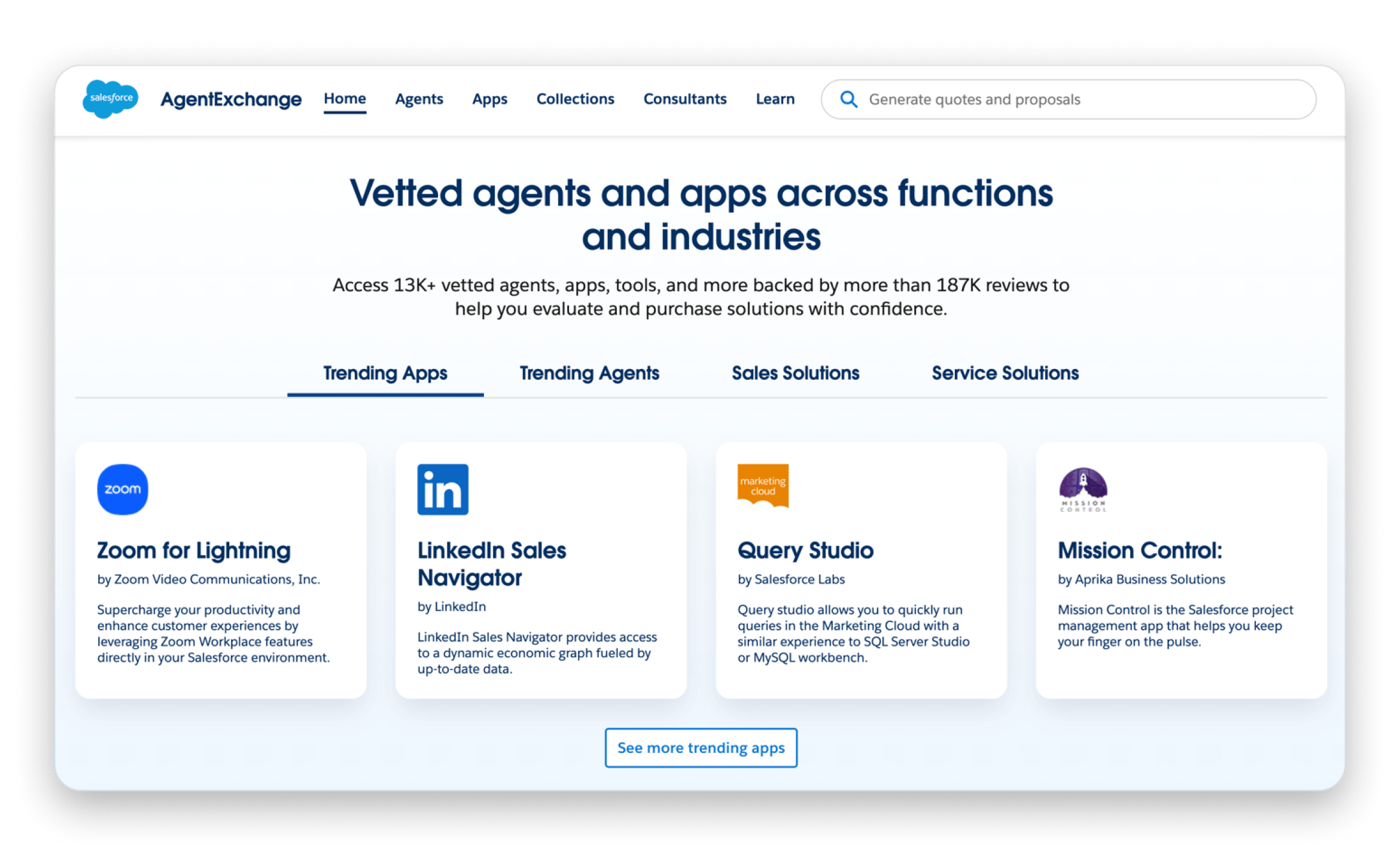
Salesforce AppExchange has been around since 2005, making it one of the oldest SaaS marketplaces. It’s also one of the biggest, giving users access to thousands of vetted apps and integrations.
The key thing to note about the software marketplace is that it’s built to extend functionality for enterprises using Salesforce CRM. These are always looking for add-ons and workflow tools they can add to their setup, meaning it’s a great fit if your tools are in areas like sales, marketing, customer service, finance, and HR.
The apps and addons on the marketplace can be grouped into two. There are those built within Salesforce and therefore offer direct integration. There are then standalone apps that run on their own cloud but have a connector to talk to Salesforce.
Accommodating both gives Salesforce users variety. It also allows vendors to extend their existing products to Salesforce’s enterprise customers.
Pros:
- Direct access to Salesforce’s enterprise customer base
- Better discovery as the entire platform is targeted
- Listed apps are credible and trustworthy
- Makes it easier to extend workflows beyond Salesforce
Cons:
- Apps only target Salesforce users
- Approval and requirements can be strict
Google Play Store – the default app marketplace for Android
Best for: Android users and developers looking for global reach
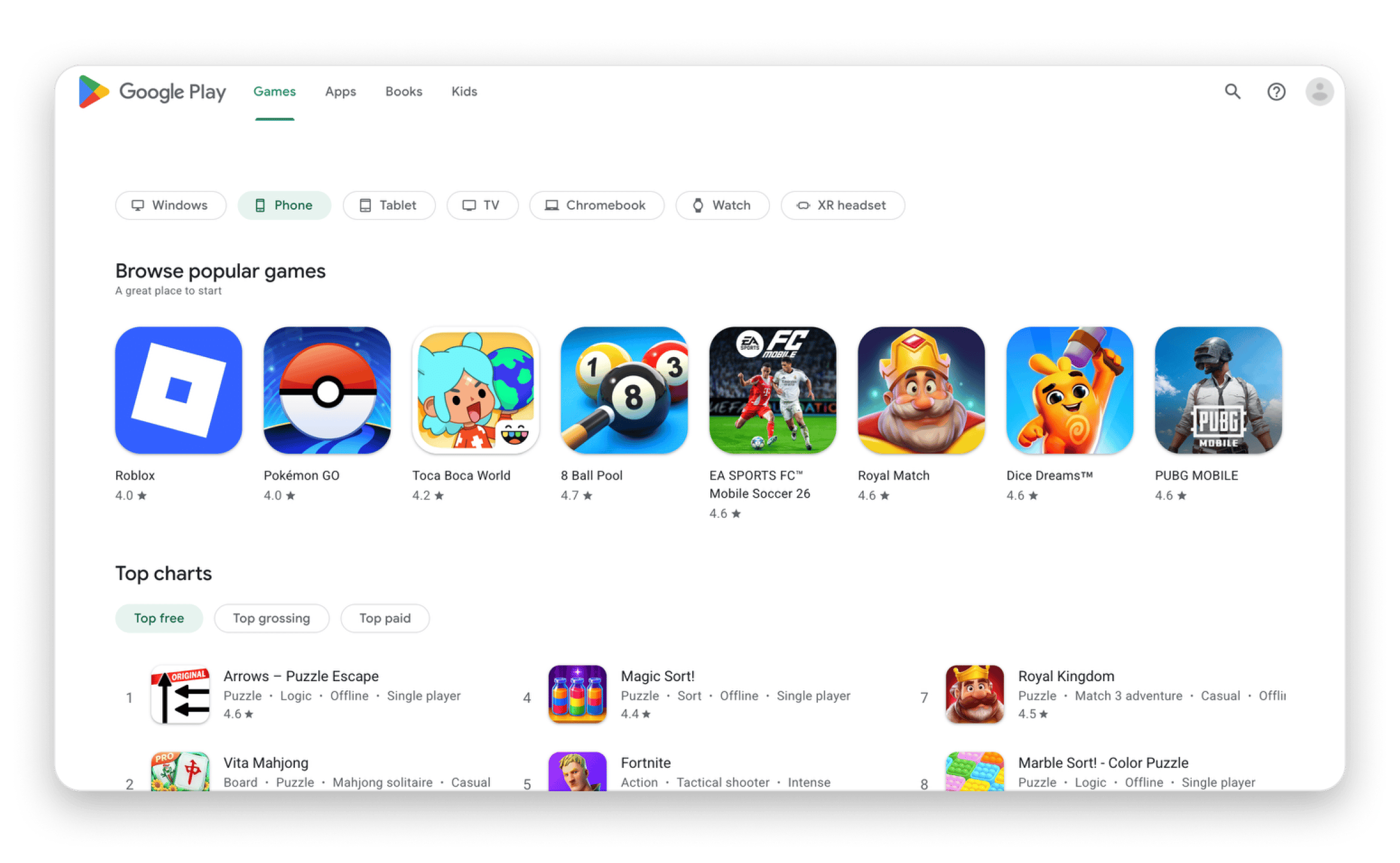
The Google Play Store is the discovery and purchase platform for users on most Android devices. It’s built into each device except in China, where Google services are banned.
The platform targets users instead of organisations, and it has over 2 million apps. These are in pretty much every category, and you can search, scroll, compare, and install them.
The Play Store gives developers quick access to a global user base. The app review process is mostly automated, and the rules aren’t very stringent.
Pros:
- Largest app library across mobile platforms
- A fast and flexible app approval process
- It’s built into Android devices and has a global reach
Cons:
- App quality varies significantly
- The huge number of apps makes discovery tough
Apple App Store – the main store for iPhone and iPad apps
Best for: iPhone and iPad users, and developers targeting a high-trust, high-spend audience
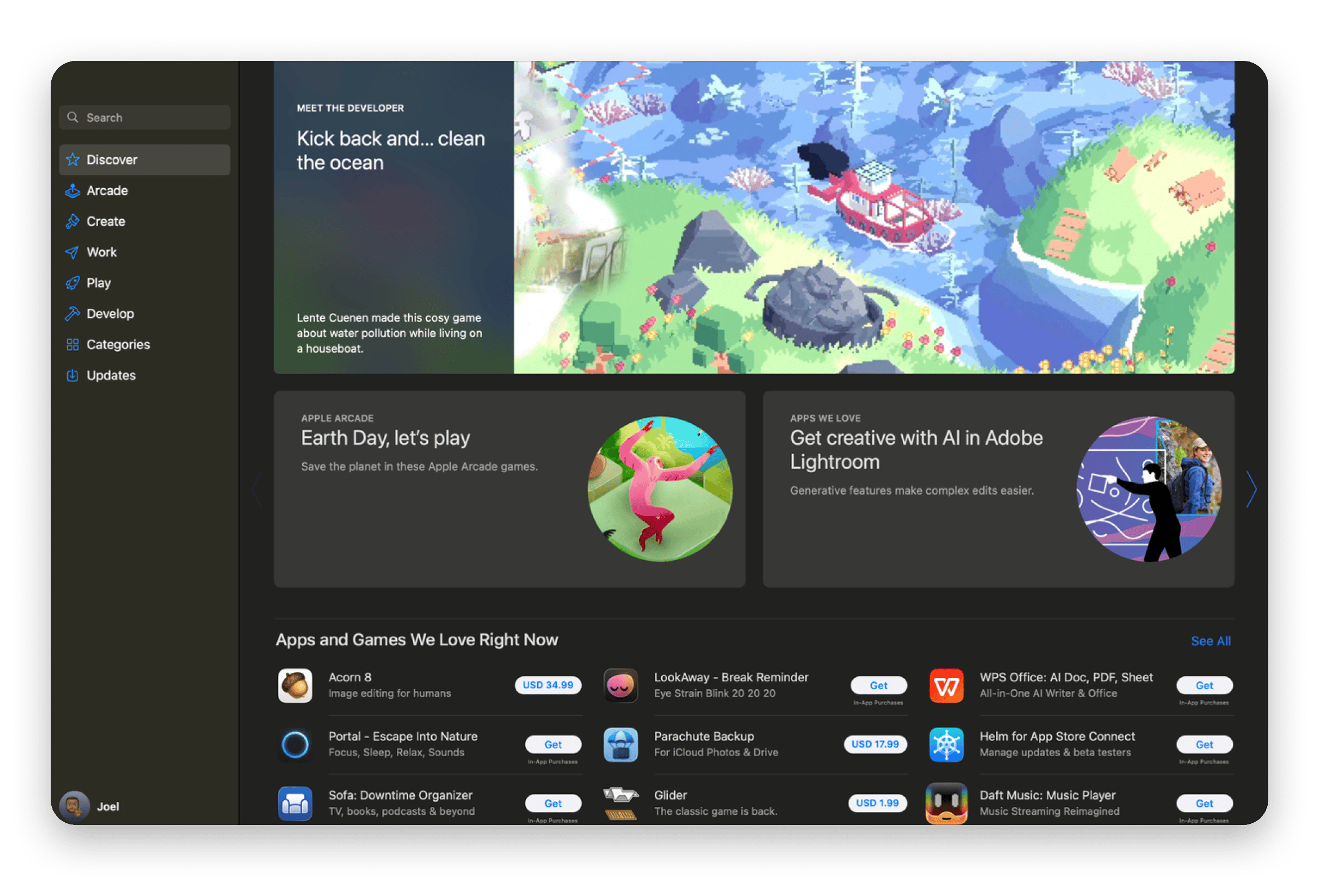
The App Store is more tightly controlled compared to the Play Store. It’s meant for the iPhone and iPad, but it’s also largely integrated with the macOS version.
The store has 1.8 million apps, and each of these is reviewed manually before going live. The apps are checked for quality, safety, and compliance with a strict set of rules. This means that users can trust the store for a consistent user experience and secure apps.
However, that translates into slower approvals or even denials for developers. And in some cases, you’d need to drop some features to qualify for publishing.
Pros:
- The strict review process ensures security and a high level of quality
- User experience is consistent across apps
- Has high user trust, spending, and engagement levels
Cons:
- The stringent guidelines restrict apps and features
- Publishing and update cycles are slower
Product Hunt – the launch platform for new software products
Best for: Devs launching new products and tech enthusiasts looking for cool new apps
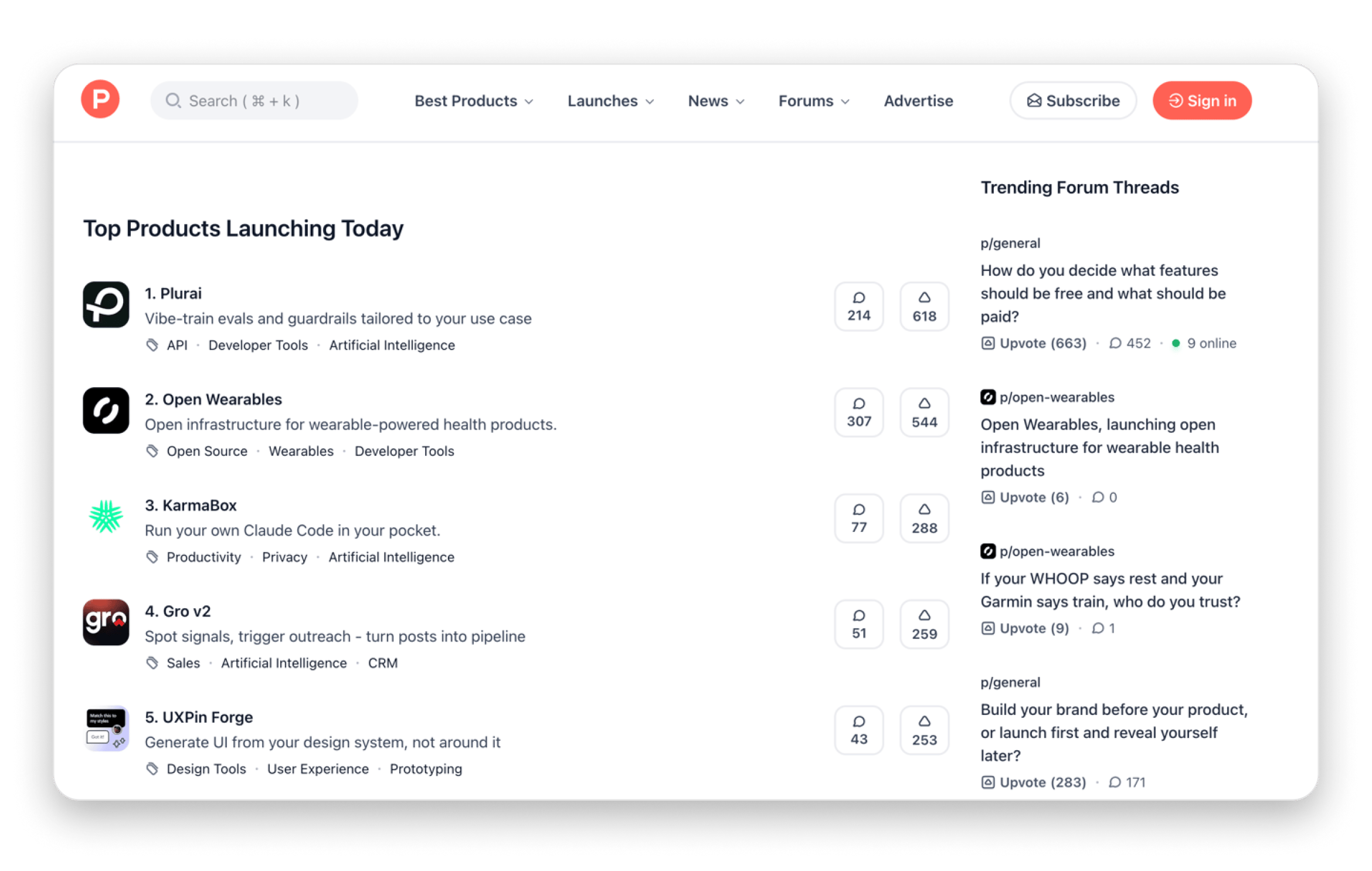
Product Hunt is more like a launch and SaaS discovery platform. When you post an app there, it gets its first real exposure and is ranked through upvotes from a community of early adopters, tech enthusiasts, and investors. If it does really well, it can give you thousands of signups and even press mentions. You’ll also have built social proof that can help carry the momentum.
I’ve seen this happen to several apps, but you need to ensure you have a well-planned launch strategy to succeed. Posting alone is not enough, especially considering that it’s not a distribution platform.
Pros:
- High visibility during app launches
- Active community of early adopters and tech enthusiasts
- Potential for traction beyond the platform
- Helps validate ideas and market positioning
Cons:
- Short attention window after launch
- Not a long-term discovery or distribution channel
- Highly competitive
How to choose the right software marketplace for your needs
If you are a buyer, G2 and Capterra are the two main SaaS discovery platforms during your research and shortlisting phase. From there, the purchase mostly depends on your device and setup. You can buy within your existing cloud stack (Salesforce or AWS) or consider Google Play and Apple App Store for mobile devices. Product Hunt is great for finding cool new apps, while Setapp helps build a macOS and iOS pro stack under a flexible model.
For developers, it pretty much depends on whom you are targeting. You can generate B2B interest through G2 and Capterra and get access to enterprise cloud users via AWS Marketplace and Salesforce AppExchange. Google Play Store and Apple App Store are the go-to for mobile customers, while Product Hunt helps gain momentum for new apps. Setapp then gives access to an active iOS and macOS user base and a friendly monetisation model.
To sum up: app marketplaces are shaping how software is distributed
The best app marketplace depends on the buyer’s stage and the developer’s target. For research, G2 and Capterra remain the most trusted platforms. For procurement within enterprise cloud environments, AWS Marketplace and Salesforce AppExchange are purpose-built. For mobile, Google Play and the App Store are unavoidable.
What Setapp does differently is give developers two paths — Membership for usage-based revenue in a curated catalogue, and Marketplace for direct sales, while removing the friction of App Store dependency entirely. For users, no per-app decisions. For developers, no race-to-the-bottom pricing. It’s a model worth understanding whether you’re building a Mac toolkit or looking for a smarter distribution channel.
Join Setapp as a developer and get instant visibility, stable usage-based revenue, and users who actually stick around!
FAQ
What is the difference between a software marketplace and an app store?
The term software marketplace is mostly used when talking about B2B apps. A typical example is a procurement platform like AWS Marketplace, but the definition often includes platforms like G2 and Capterra that don’t have an actual download option. An app store is more like Apple App Store, Google Play, or Setapp, where users can download and license software.
Which SaaS marketplace is best for listing a new B2B product?
Product Hunt is the best during the initial launch as it generates momentum. G2 and Capterra help gain credibility after launch, while a hand-picked subscription app store like Setapp gives access to premium users in a platform that encourages them to try new apps.
What is Setapp and how is it different from the Mac App Store?
The Mac App Store lets you browse, buy, or download the apps you want and pay for them individually. Setapp groups hundreds of curated apps and only charges a single subscription fee. Unlike the App Store, it has no per-app fees, ads, or in-app purchases. However, some apps overlap.
Are there any software marketplaces that offer a subscription model?
Setapp is the best example of a software marketplace that’s based on a subscription model. Users only pay a single monthly or yearly fee, then access all apps within the catalog.
How do I choose the right marketplace to distribute my SaaS product?
Start with the platform. If it’s mobile apps, there’s the Apple App Store and the Google Play Store. If it’s an enterprise SaaS product, go to AWS Marketplace or Salesforce AppExchange. For Mac, you have the Mac App Store and Setapp. You can then consider the model you prefer as they differ significantly, from per-app purchases to Setapp’s subscription model.






 Best solution
 Best solution