Build an MVP right away and show it to users to get feedback. Vibe coding will help you launch your app faster. Tools like Cursor, Lovable, and Bolt let non-developers ship a working MVP using plain-language prompts.
The most effective early-stage promotion channels are community-driven: Reddit for fast, high-intent feedback and initial revenue, and SEO for long-term sustainable growth.
Most developers underestimate distribution. Listing an app on Setapp puts it in front of thousands of paying, engaged users from day one. Join Setapp and turn your launch into a growth moment, not a guessing game.
“I know this may sound cliché, but I have an idea for an app and I'm unsure where to start. I'm not a programmer. My background is in marketing. I'm wondering how should I go about creating a first version of it?” asks a user on Reddit. And in fact, questions like this pop up there almost every week. People have app ideas that could solve a specific problem, but they don’t have enough knowledge on what to do next.
There's more. The number of new apps in 2025 rose by 25% to over 1.4 million total launches, but only 10% of them captured any meaningful user attention, according to AppMagic’s Mobile Market Landscape 2026 report. It turns out that the challenge lies not only in app launch strategy, but also in distribution.
The good news is that distribution is learnable. This guide walks through how to launch an app successfully — from validating your idea and building an MVP, to the exact acquisition channels that drove real revenue for founders who’ve done it.
Before diving into the steps, it helps to see the whole path. Vadym Muraviov, Head of Product Marketing at MacPaw, frames a launch as four stages:
"It's a simple approach — four stages as a roadmap for creating your app. First is research, then you validate, then you actually build the app, and then you ship and distribute it. You're not just creating an app as an output — you want an outcome: the first users, the first money, the first traffic to your website." — Vadym Muraviov, Head of Product Marketing at MacPaw.
Step 1: Validate before you build
The most common mistake indie developers make is building in isolation for months, only to discover nobody wants what they made. That’s why validation should come first.
Start by answering three questions clearly:
What specific problem does your app solve?
Who experiences this problem regularly enough to pay for a fix?
What makes your approach different from existing solutions?
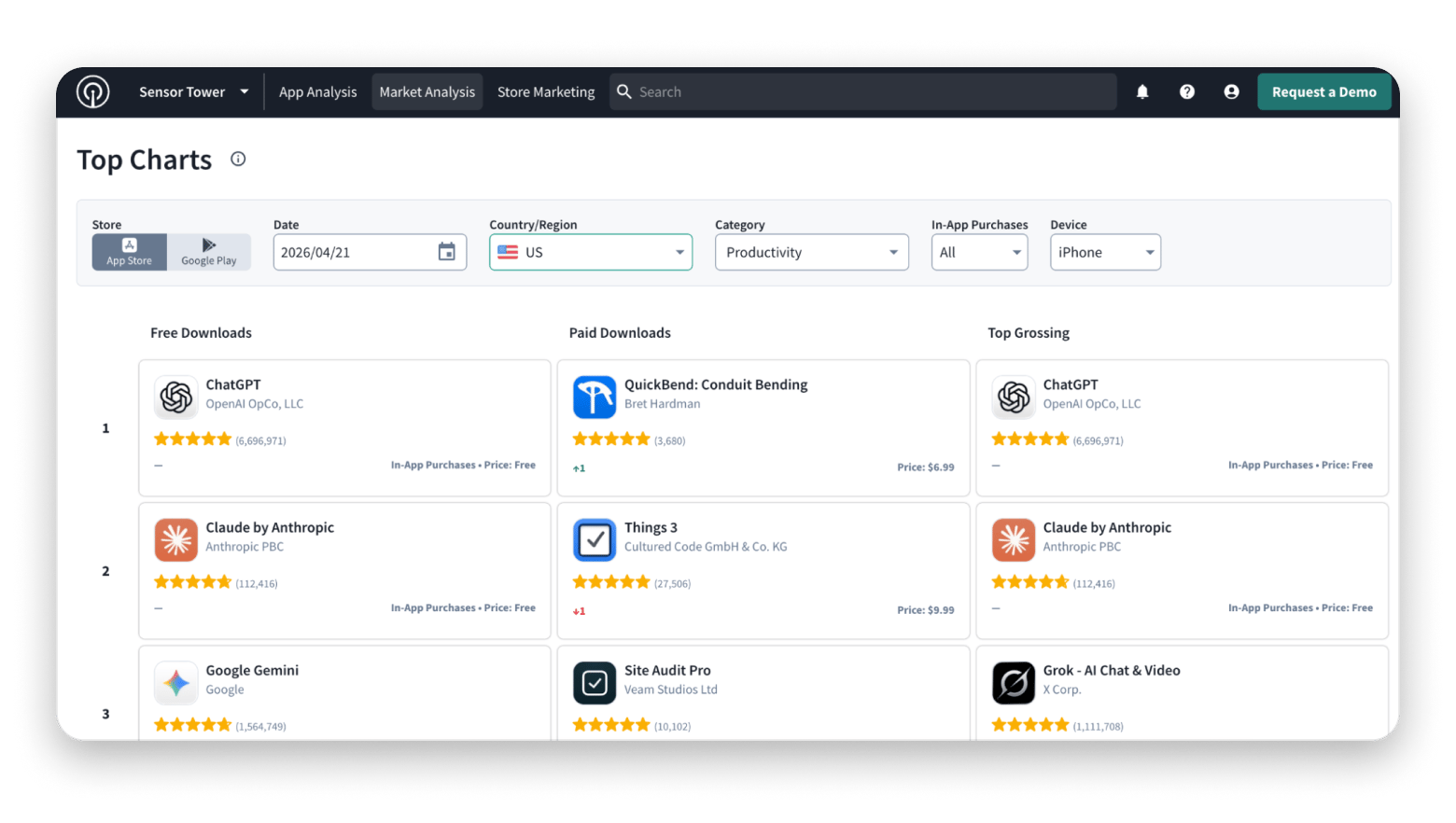
After that, conduct market research. Tools like Sensor Tower and AppMagic provide download estimates, revenue trends, and category rankings for existing apps. Check out the niche for your potential app and see who you’ll be competing with. Notice that the same five apps have been leading the niche for several years? It will be difficult for you to break through. Instead, a category where mid-tier apps are steadily climbing signals real, unmet demand.
Also, check out Google Trends — type your core use case into both and see what users are searching for. If there’s a problem similar to one your app can solve, that’s a good sign.
"Run a SWOT analysis to understand your competitors — their strengths, their weaknesses, and the opportunities to create new features and stand out in the same niche. Look at their pricing and the messaging they use. Parse user reviews to understand what's bothering people, and use the negative reviews to see which pains you can cover." — Vadym Muraviov, Head of Product Marketing at MacPaw.
Once you’ve confirmed that there’s a market for your idea, validate it with potential users. Use Reddit, talk to people in Facebook groups, or run a simple landing page with a waitlist. If people don’t sign up, your positioning needs work before anything else does.
"Find five to ten people that fit your user persona and run user interviews. I got a full user persona out of those interviews, and we now use it in our marketing to understand which channels to use, which media to collaborate with, and which influencers developers love and follow." — Vadym Muraviov, Head of Product Marketing at MacPaw.
Step 2: Build an MVP, not a masterpiece
An MVP (Minimum Viable Product) is the smallest version of your app that delivers your core value proposition. The goal is to get something into users’ hands fast, gather feedback, and iterate.
For your first release, you need one thing done really well, not ten things done adequately. Advanced features, polished onboarding, and extra integrations can all come later.
"Before you code, define your core features. There's the point of parity and the point of difference. The point of parity is the core features that already exist on the market, so you're ready to enter it. The point of difference is what makes you stand out. Measure impact and effort for each feature and start with the quick wins — high impact, low effort. Ship the quick wins first, then see how it goes", adds Vadym.
How much does it cost to launch an app in 2026?
App development costs depend on the project’s complexity, but if you don’t want to waste money, stick to a phased approach rather than a full build upfront. This means that each stage earns the next round of funding only after real user feedback confirms the direction. When founders follow a validation-first framework, typical total outcomes in 2026 look like this:
Phase
What's covered
Timeline
Cost
Discovery & validation
User research, workflow definition, architecture planning
The first two phases, discovery and design, cost $5,000–$12,000 total and are worth treating as a separate decision gate. If the prototype doesn't get real user interest, you've saved yourself $30,000+ on a build nobody wanted.
Step 3: Get your first users with Reddit and SEO
Building a great app doesn't automatically bring users. For most indie developers and first-time founders, the two channels that consistently deliver early traction without ad spend are Reddit and SEO.
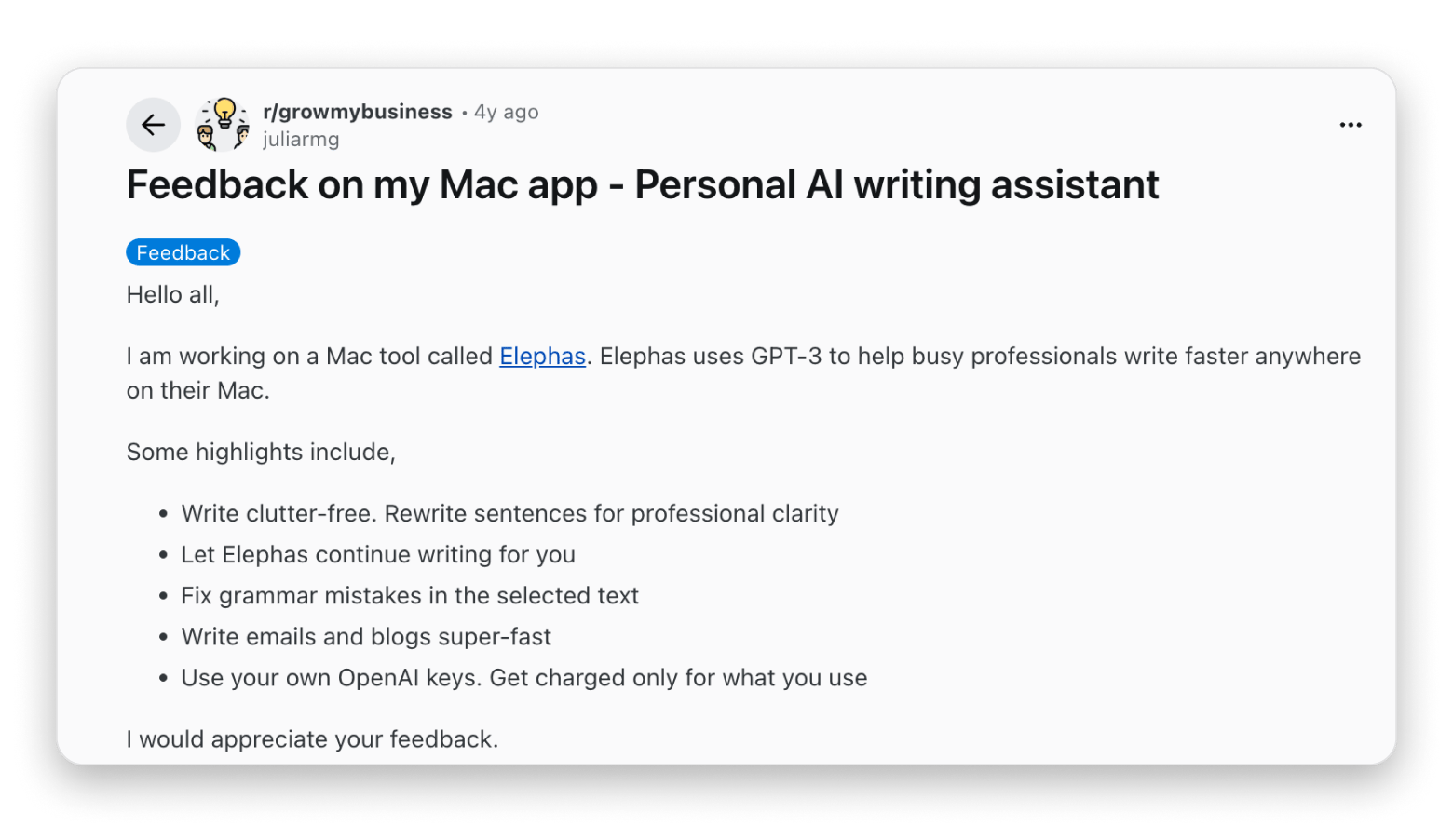
Reddit is underrated as a launch channel because most people use it wrong — they post once, get ignored, and give up. The developers who get results treat it as a long game: show up where your ideal customer already hangs out, lead with value, and introduce your product only after demonstrating you understand the problem.
Ayush Chaturvedi from Elephas built a repeatable playbook for this:
"In the early days we posted a lot on niche subreddits, asking for feedback, showcasing the product, giving demos, which led to our initial revenue customers.
We essentially used Reddit to go from 0 to $3,000 in MRR within six months."
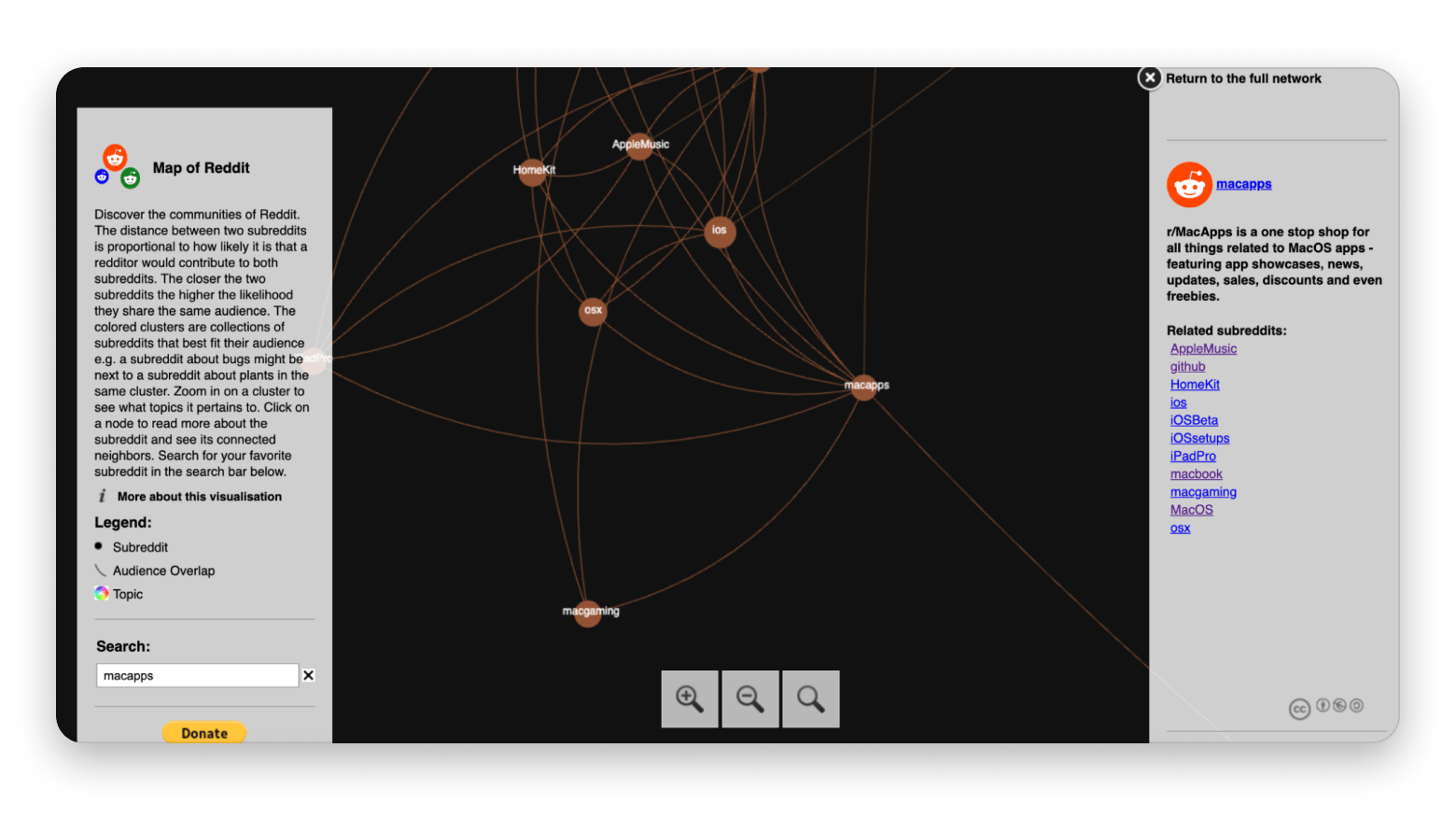
Make a list of 15 subreddits where your target user hangs out daily. Smaller subreddits are better — niche audiences, simpler rules, more forgiving moderators. Use mapofreddit.com to find them.
2. Create a pain-point-targeted post. Make a short video demo explaining why you built it. Add a free trial link at the bottom and UTM parameters on every URL so you know exactly which subreddit and which angle drove clicks.
3. Post once per day maximum across different subreddits. Don't hit all 15 in one day. It reads as spam and people will notice.
Once you have an initial audience, SEO becomes your most efficient long-term channel, especially if you can't sustain paid ads.
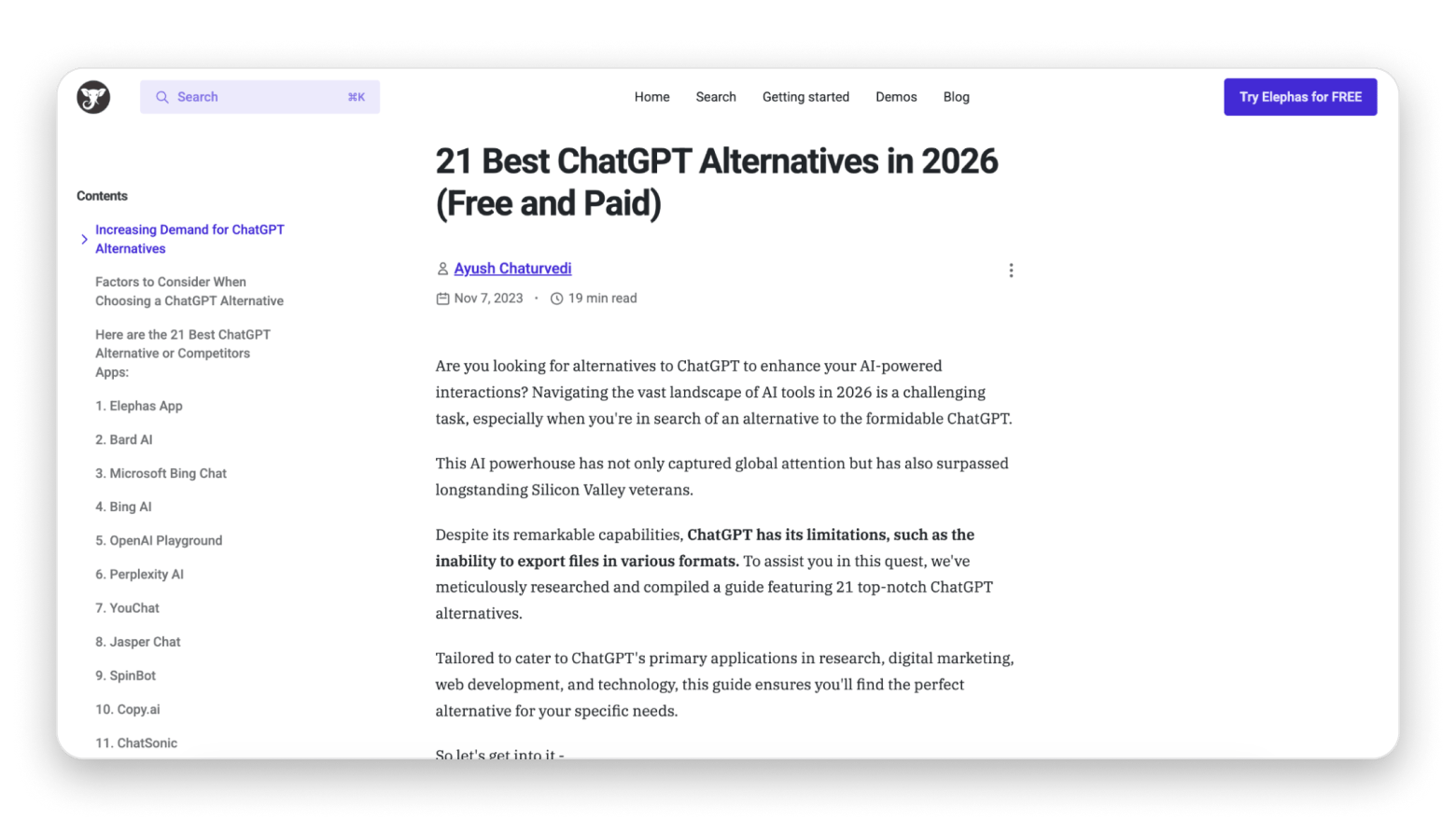
"We started getting organic traffic on our help articles. Those support articles, written for our initial customers, started getting traction from Google. During a 12-month period we made around $70,000 from Google only." — Ayush Chaturvedi, ex co-founder of Elephas.
The SEO steps that worked for Elephas:
Understand your positioning before touching keywords. Know exactly who your customer is and what job they're hiring your app to do. For Elphas, it was “ChatGPT Mac apps”— a clear label for identifying relevant keywords and content themes.
2. Do keyword research, thinking like your customer, not like a marketer. Use Ahrefs to find what your audience searches for and what competitors already rank for. If your domain is new, filter for low volume and high intent, don't chase keywords you can't rank for yet.
3. Start with support and how-to content for your existing users. These articles answer specific questions, rank faster than broad awareness posts, and bring in exactly the kind of high-intent traffic that converts.
The two channels complement each other naturally. Reddit gives you fast feedback, early revenue, and a real understanding of how users talk about their problem. SEO turns that understanding into sustainable traffic that doesn't require daily effort to maintain.
Step 4: Expand your app distribution through Setapp
Once your app is validated, the App Store is the natural first home — it's where most users look and where most developers start. But seasoned indie developers rarely stop there. The ones who grow fastest treat distribution as a portfolio: multiple channels, each reaching a different slice of their potential audience.
One option worth considering for Mac developers is Setapp — a subscription platform with a curated collection of 250+ Mac and iOS apps. For developers, it means your app reaches an existing, paying audience from day one.
New apps generate around 30,000 unique impressions in the first days after release. The revenue split goes up to 90% in the developer's favor, and the average customer lifetime sits at 24 months.
"Paid ads we've almost fully automated with AI. As soon as an app appears on the website, we do keyword research and launch the first campaigns automatically. For SEO, we write blog posts and cross-post on Reddit, Medium, and other platforms — our blog gets almost a million visits a month. On email, we send an App of the Week to all users and a monthly digest of new additions", shares Vadym.
Karol Kłusek, creator of SlouchSniper, came to Setapp in his distribution strategy and found that it outperformed everything else:
“I listed my app everywhere, but Setapp is by far the most successful. I'm getting a lot of global users through Setapp, and it helps me understand localization opportunities.”
Daniel Alm, Timing founder, appreciates Setapp for the opportunity to expand its audience:
“Setapp's large audience is a big upside, as it lets me reach many customers who would otherwise have never heard of my app or at least not paid for it by itself.”
Allen Wang, One Switch developer, emphasizes the value of feedback from Setapp users, which he uses to improve his app.
“We receive great feedback from Setapp users every day. They actually help us build a better version of One Switch. The most incredible thing is we got a mention from the MacRumors editor in their app review article in the first week on Setapp. Couldn’t even dream of this.”
Final words: How to launch an app successfully in 2026
The app market is more crowded than ever. The developers who grow fastest combine three things: a focused MVP that solves a real problem, community channels like Reddit to build early momentum, and a platform like Setapp that delivers paying users without requiring a marketing operation.
If you’re building a Mac or iOS app, Setapp is the highest-leverage distribution decision you can make. List your app alongside hundreds of tools used by power users every day, and start reaching the audience that’s already looking for what you’ve built.
Start by validating your idea with real users before building. Launch an MVP quickly, choose two or three distribution channels, and treat launch day as the beginning of a feedback loop rather than the end of a development cycle. For Mac/iOS apps, listing on Setapp gives you immediate access to a paying, engaged user base without requiring a marketing budget.
How much does it cost to launch an app?
A simple MVP typically costs from $5,000 to develop. But in 2026 that floor can be brought down dramatically with vibe coding tools like Lovable, Bolt, and Cursor. User acquisition adds cost on top of development, unless you distribute through a platform like Setapp, where the subscriber base becomes your audience from day one.
What is the best app launch strategy for getting users fast?
The fastest path to early users is community-driven: post in relevant subreddits where your target customer already hangs out, demonstrate your app solving a real problem, and include a free trial link. For sustainable growth, pair Reddit with SEO — write support and how-to content that ranks for the specific searches your target users make. Also, listing on Setapp delivers instant visibility to an existing paid subscriber base.
How does Setapp help with app distribution?
Setapp puts your app in front of a ready-made audience of paying users the moment it goes live. Developers keep the vast majority of the revenue their app generates, and integration takes a few hours. Listing on Setapp doesn't affect anything you're already doing — it's an additional channel, not a replacement for ones that are already working.
Powerful apps live on Setapp
Ditch defaults and discover new gems on one app platform.






 Best solution
 Best solution





_-which-one-is-right-for-you_-1920-646.webp)