Originally, I was trying to design a more elegant calculator for computers.
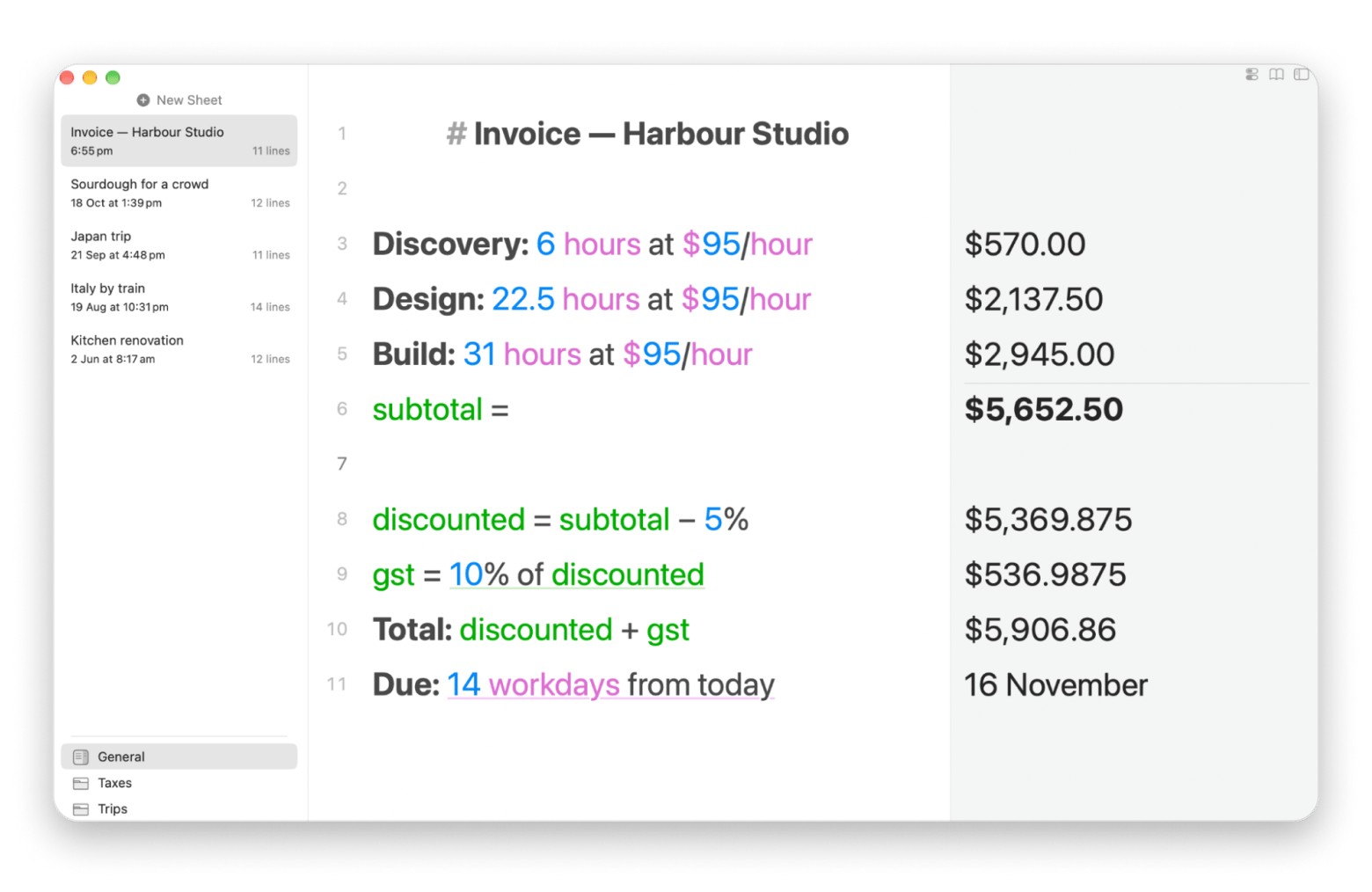
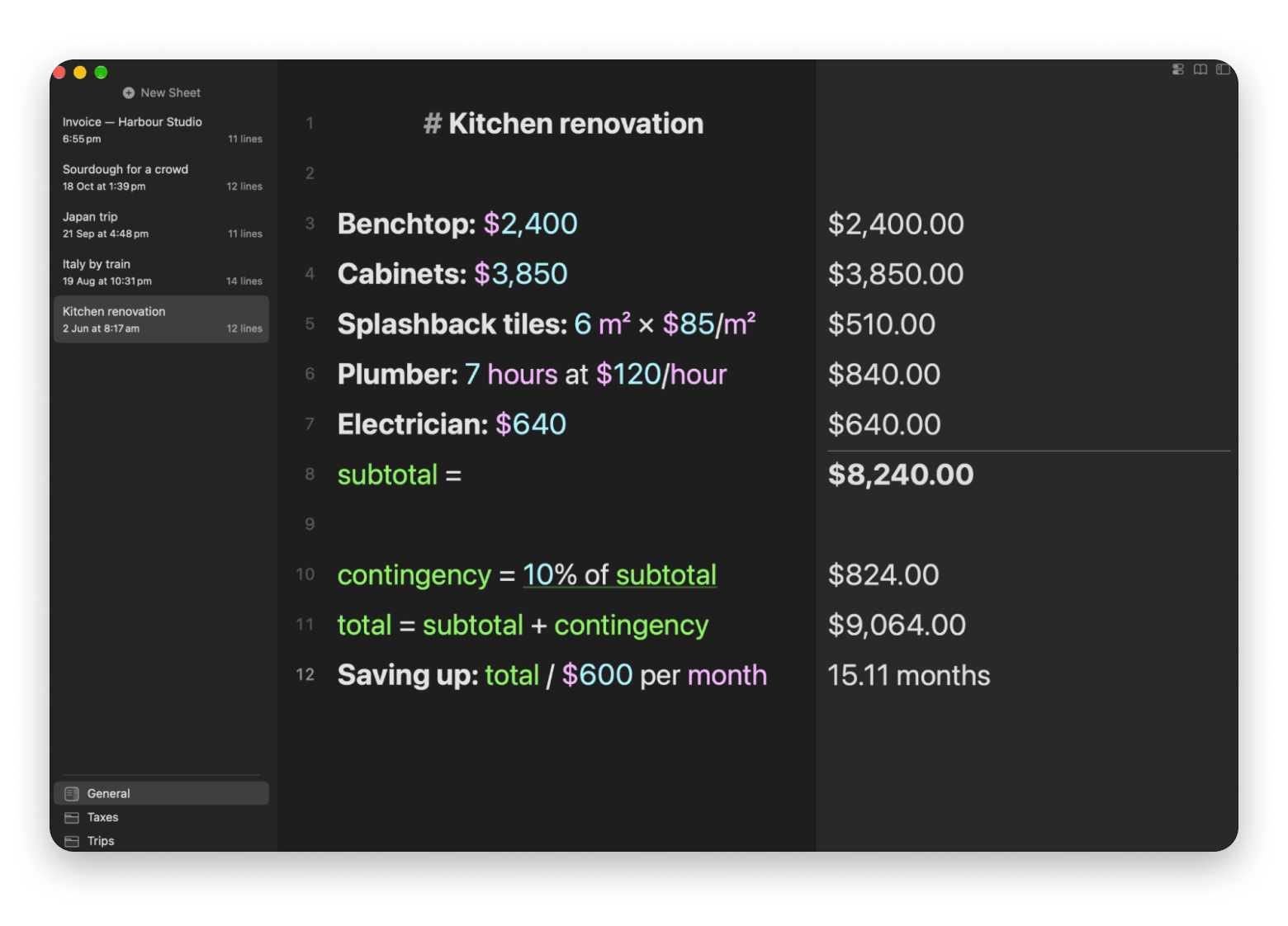
The idea came to me one day in a sudden flash in January 2005 while looking at ferns: we can put a column alongside a text editor, which automatically calculates answers for each line. That way you could do math like on paper (line by line), without pressing an equals button for answers.
Soulver's UI has been copied on every platform, but the original idea was mine. Since then I've been improving Soulver year after year, making its natural language calculator engine "SoulverCore" useful for more areas of work & life.
My users keep spreading the word
Soulver is not something anyone goes looking for, and you don't really know you need it until you start using it. Marketing something like that is nearly impossible. Instead, it's the people already using it who do the talking.
Luckily, I have very evangelical users who spread the "gospel" of Soulver themselves and show it to their colleagues and friends, so I rely on this word-of-mouth most of all.
It's also sweet when Apple features Soulver on the App Store. Occasionally, a mega fan like Marco Arment mentions Soulver on a podcast, and that brings an influx of new fans too. I think we're so overwhelmed with marketing messages every day that only a heartfelt recommendation from someone you trust makes it through the noise.
One-time purchases keep Soulver sustainable
In terms of a business model, my optimisation has always been to find a win-win arrangement that makes customers feel happy and keeps Soulver sustainable by allowing me to work on it without needing another day job to support my family.
I want the "deal" at check-out to feel like an incredible no-brainer for potential customers. So I think a paid major upgrade every ~7 years, with great support in between, remains the sweet spot for me.
It's not that there hasn't been pressure to switch. Friends have encouraged me to switch to a subscription model. I don't like subscriptions as a user when the app feels like a product, not a service. Software subscriptions often feel like optimisations for the developer's business, at the expense of what feels good for users. And they encourage the app to keep changing to justify continued payments.I think the ideal craft of software is to try and find a platonic form for the app that ideally doesn't change too much over time.
I don't do any unique user tracking for Soulver, so it's hard to say exactly how many people use it: I'd estimate 10-20k people. Many Soulver users still use Soulver 2, actually, which I think is neat for a 16-year-old app.
This is another reason I prefer the one-time purchase model. I want Soulver to feel like a tool you've bought, that's yours. I want each version of Soulver to work for years, so users feel like it's a reliable old friend, like a trusty hammer your dad might have given you that "just works," potentially for decades.
Where I sell matters
Selling on both platforms draws a sharp line between the two.
Setapp shows what's possible when the marketplace cares about both developers AND customers. There's no conflict: everyone is treated with dignity, and the experience for me as a developer is so much more pleasant and positive than with the App Store. The review process on Setapp has always been quick, professional and fair. I love the Setapp developer portal too.
The App Store feels like it was designed for smartphones first and foremost, with the Mac App Store being an afterthought. Setapp feels like it was designed specifically for the Mac, and that makes it special & unique — it feels like Setapp is holding the torch of "Mac energy." As someone doing Mac apps for 20+ years, it feels like you're an ally in that general commitment to the Mac, more so than Apple has been since 2008.
I leave room for the next idea
Last year, Soulver celebrated its 20th birthday. I'm proud to have supported it for more than two decades, adding the features people ask for most without making the app overly complicated. The emails and reviews I receive remind me how much a small tool can improve someone's work and daily life. That's still deeply rewarding.
I don't plan too far ahead. Staying flexible leaves room for happy accidents — the kind that gave me the idea for Soulver in the first place. After two decades, I still find it helps to step away from the keyboard and let ideas surface while I'm doing something else: washing dishes, practising yoga, or walking on the beach.





 Best solution
 Best solution