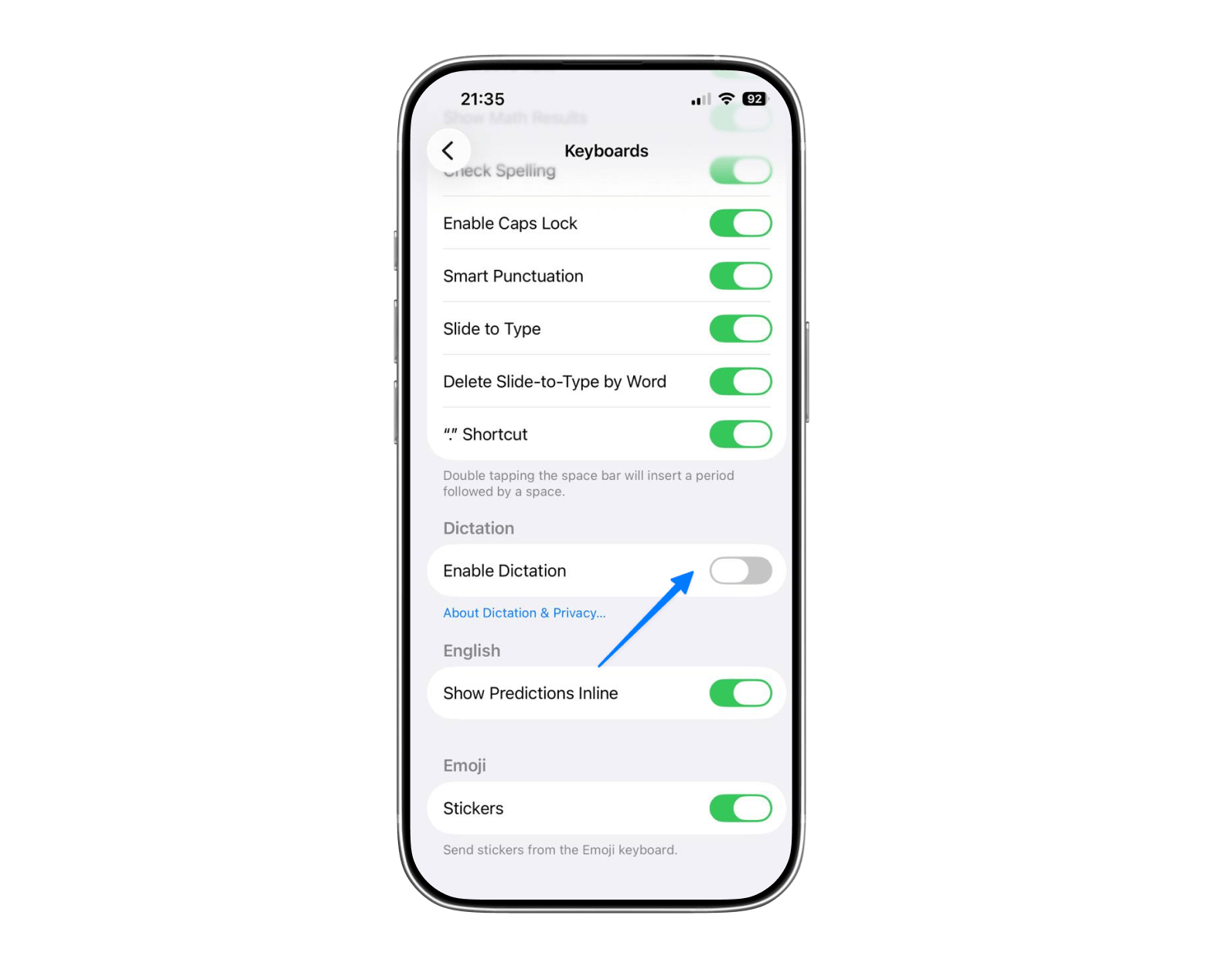
Voice dictation is built into every iPhone. Go to Settings > General > Keyboard and turn on Enable Dictation — that's all it takes to start typing hands-free.
Voice commands handle punctuation for you. Say "period," "comma," or "question mark" while speaking to format your text without touching the keyboard.
Dozens of languages are supported for dictation. Switch between them by pressing and holding the microphone icon while dictating.
When dictation stops working, network issues are usually the culprit.Usage monitors your connection, memory, and CPU from one dashboard so you can spot and fix the problem fast.
Take voice typing to your Mac, too.Usage and MurmurType are both available on Setapp — 270+ Mac and iOS apps for one subscription, free for 7 days. Start your free trial.
It’s simple — enable dictation in Settings, make sure your preferred language is enabled as well, and then just tap the microphone symbol in the bottom-right corner of the keyboard whenever you’re ready to type.
It might seem like a little thing, but voice typing helps me save quite some time on tasks like emails, messaging, and jotting down quick ideas. In this article, I’ll show you where to start with voice-to-text and share a couple of tips I find really useful.
Here's a summary of the main solutions covered in this guide. Detailed instructions follow below:
Good for long speech. OpenAI-powered accuracy with privacy. Record on Mac and easily send to your iPhone.
Troubleshooting steps
Fixing common issues
Quick fixes for network and settings problems
Why use voice-to-text on iPhone?
Voice-to-text on iPhone does more than save you from typing. I use it to stay focused, take notes hands-free, and stay connected with friends.
Here are the benefits of voice dictation on iPhone I value the most:
Efficient email replies: Responding to emails becomes quick and simple
Simplified writing: Draft blog posts or social media captions faster
Quick texting: Voice-type messages and review before sending
Detailed reminders: Add comprehensive instructions for upcoming tasks
Smooth web browsing: Navigate search bars easily with voice input
And last but not least, it's also a crucial accessibility feature for those who struggle with traditional typing methods.
Turn on voice-to-text in settings
Before I walk you through the steps, make sure voice dictation is enabled on your device — it's off by default.
Here's how to enable it:
Go to Settings.
Tap General > Keyboard.
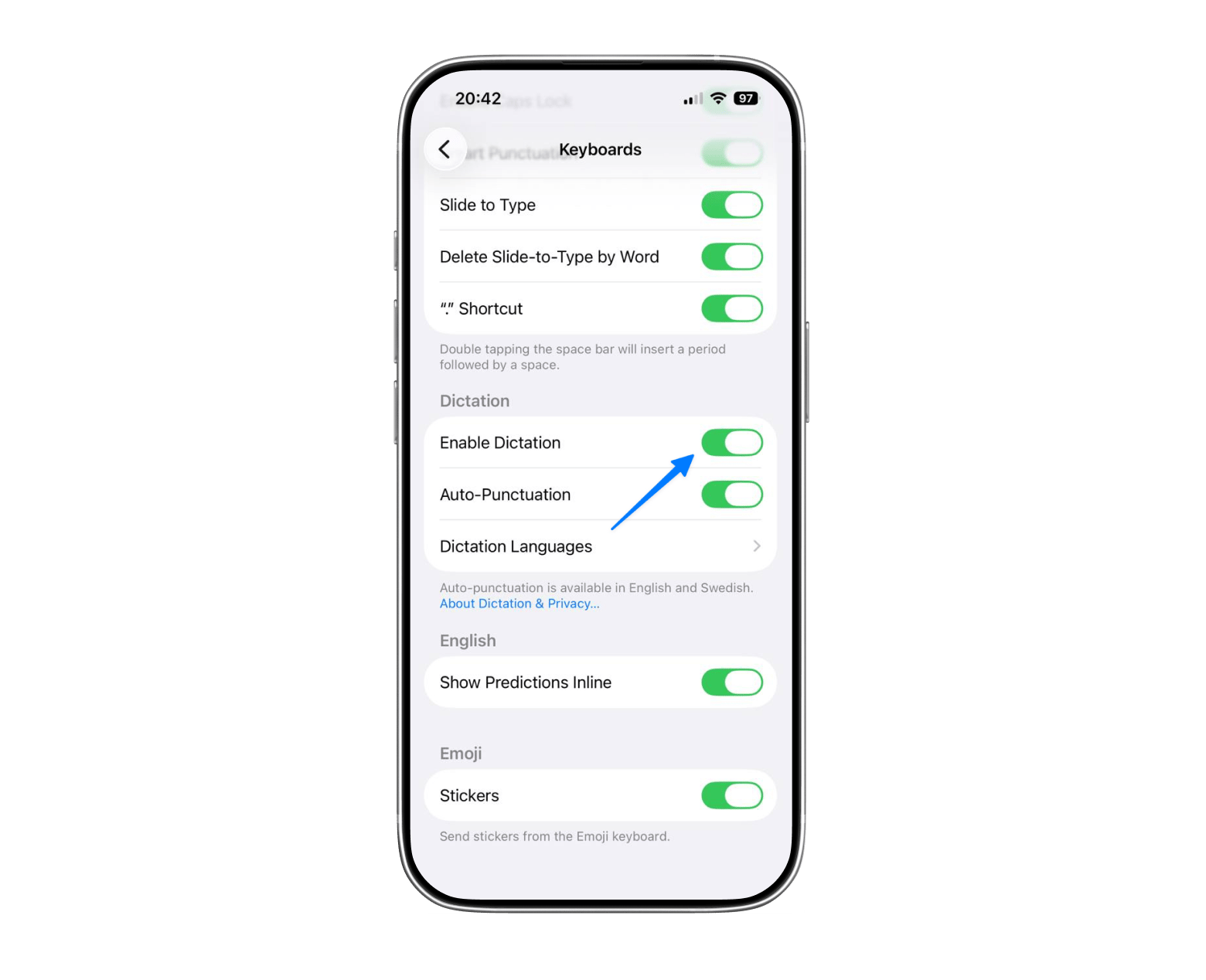
Under Dictation, turn on Enable Dictation.
In this menu, you can also turn on Auto-Punctuation (recommended) and add Dictation Languages. I'll explain language options in more detail later.
How to use voice dictation on iPhone
Now that dictation is enabled, here are the steps for using voice-to-text:
Open the app where you want to type.
Tap the text field to enter text.
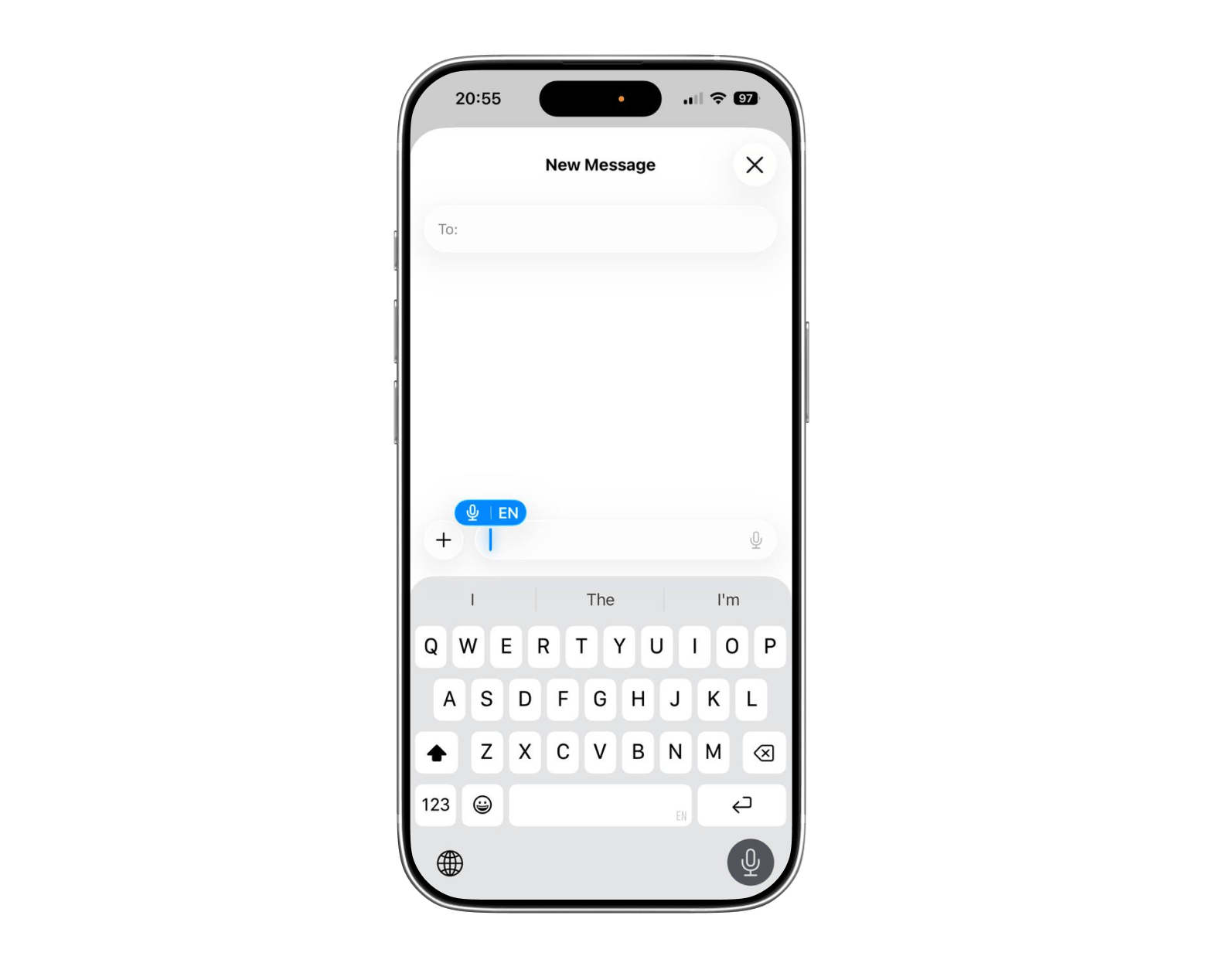
Tap the microphone icon in the bottom-right corner of the keyboard.
When the blue microphone icon appears, start speaking clearly.
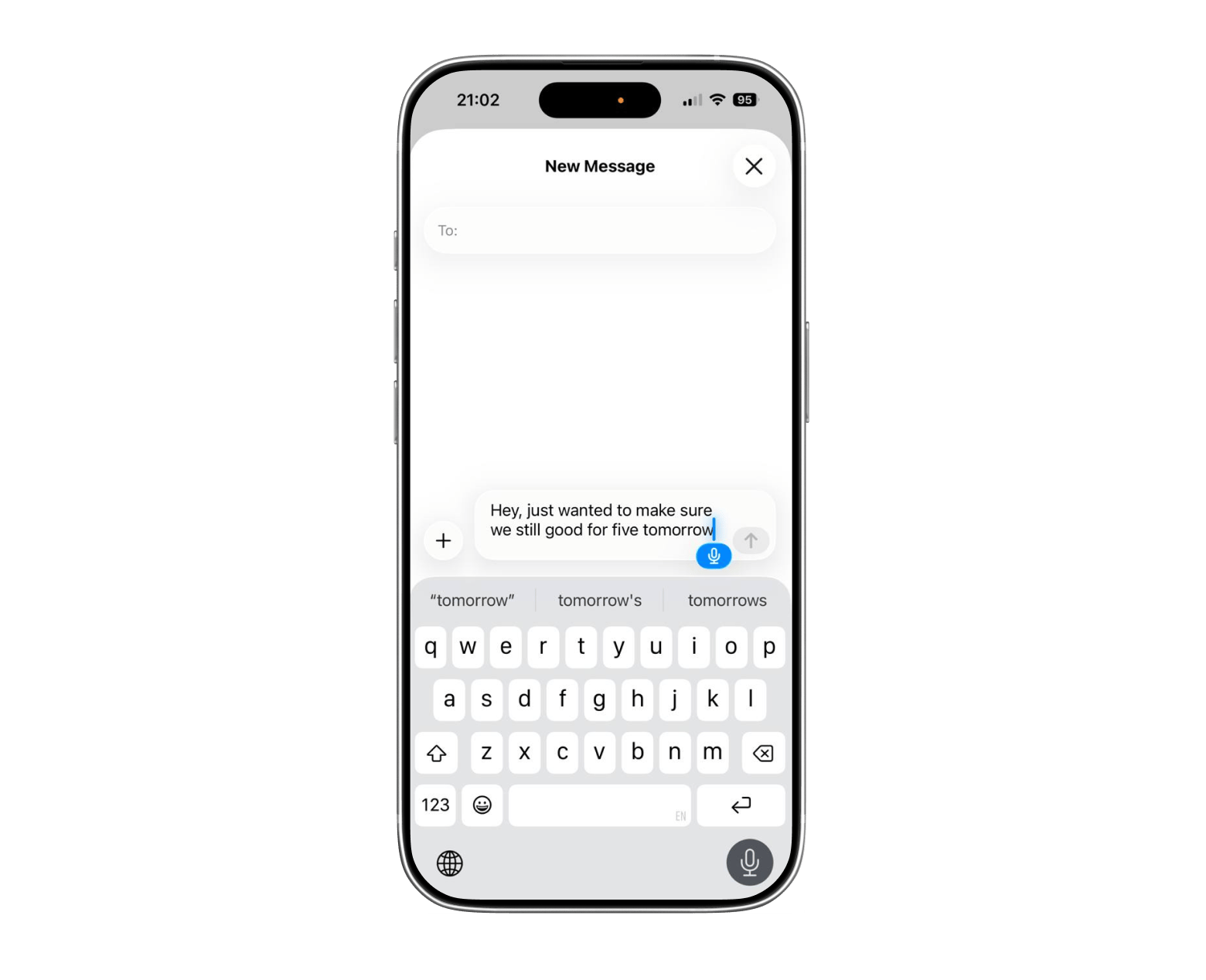
The iPhone transcribes your words on the screen in real time.
Edit voice text before sending
What I love about voice texting is being able to review and edit before sending. This lets me correct mistakes and adjust the message if needed.
To edit your voice text messages:
Dictate your message by speaking naturally.
Make corrections to any errors you spot.
Select and delete or replace incorrect words.
Use the keyboard to insert missing words.
Manually add punctuation if needed.
Once you're happy with the message, go ahead and send it.
Voice commands that speed up your workflow
In my experience, iPhone's voice dictation is quite accurate. But it won't always catch punctuation and formatting automatically — that's where voice commands come in.
To use a command, say it where you want the punctuation. For example, say "Thanks comma see you Friday exclamation mark" to get "Thanks, see you Friday!"
Voice commands to add emoji
You can add emoji by describing them followed by "emoji." Say "See you Friday smiley face emoji" to get "See you Friday ☺"
Switch languages for voice to text on iPhone
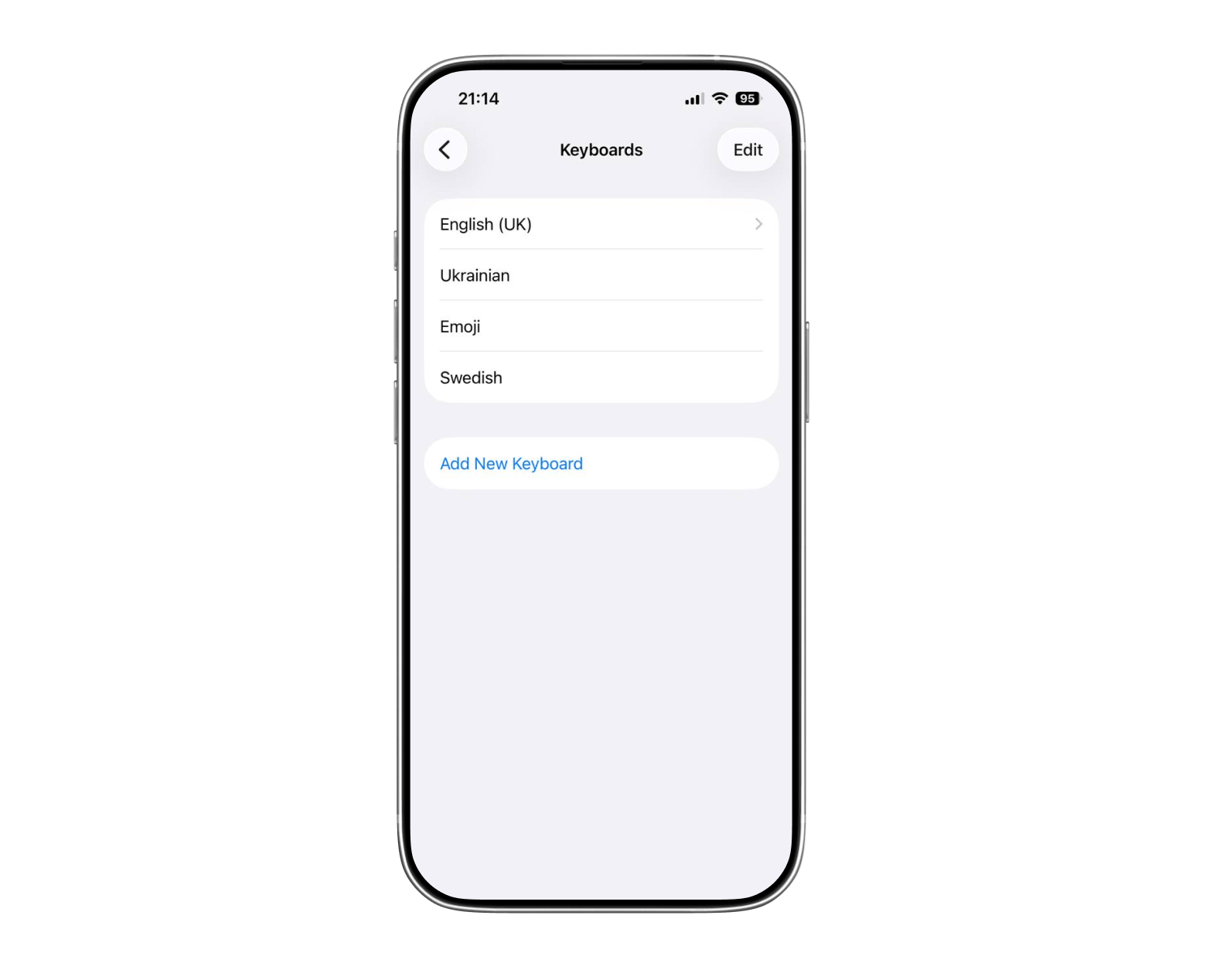
Remember I mentioned adding Dictation Languages above? Make sure you have enabled all the desired languages.
Once you get the hang of voice texting on your iPhone, it quickly becomes one of those features you wonder how you lived without. Still, I've had frustrating moments when it suddenly stopped working.
Here are common reasons and fixes:
What happened?
What to do
Network issues
Switch between Wi-Fi and Cellular, or check network status with Usage.
Dictation not enabled
Go to Settings > General > Keyboard > Turn on Enable Dictation.
Noisy environment
Try somewhere quieter or use headphones.
Microphone problem
Test microphone in Voice Memos app.
Wrong language
Hold the microphone icon to check the language setting.
Bluetooth interference
Turn off Bluetooth temporarily.
Content & Privacy Restrictions
Settings > Screen Time > Content & Privacy Restrictions > Check Microphone is Allow.
Dictation problems can also be a symptom of broader slowdowns. In this case, check out this guide on how to speed up your iPhone — it covers everything from clearing cache to monitoring battery health.
Turn voice dictation off
If you want to take a break from voice dictation or prefer to keep it off when you don't need it, turning it off is just as easy as enabling it.
To disable voice-to-text on iPhone:
Go to Settings > General.
Tap Keyboard.
Turn off Enable Dictation.
The microphone icon will disappear from your keyboard once disabled.
Get the most out of iPhone voice-to-text
The biggest challenge with iPhone speech-to-text is learning punctuation and formatting commands. These get easier with practice.
To prevent problems, remember to choose the right language when dictating and make sure it’s quiet enough for your iPhone to pick up what you’re saying. Keep an eye on the network conditions because they often cause dictation problems. Usage monitors your device performance in the background to prevent unexpected issues.
And if you, just like me, become a fan of voice-to-text, get MurmurType for your Mac, too. Both Usage and MurmurType are available on Setapp — a platform with 270+ Mac and iOS apps for your Apple workflow. There's a free 7-day trial, so you can explore them without any upfront commitment.
FAQ
Is voice-to-text available on all iPhone models?
Voice-to-text works on all iPhone models running iOS 10 or later. For offline dictation, you need an iPhone 6s or newer with iOS 15+. Check for updates in Settings > General > Software Update.
Is speech-to-text secure on iPhone?
Starting with iOS 16, Apple processes most dictation on-device for privacy. Your voice data stays on your iPhone unless you're using Enhanced Dictation, which may send data to Apple servers. Review privacy details in Settings > General > Keyboard > About Dictation & Privacy. You can opt out of server processing at any time.
Can I use speech-to-text in offline mode?
Yes, offline dictation works on iPhones running iOS 16+. Download the offline dictation model in Settings > General > Keyboard > Dictation Languages. Not all languages support offline mode — English, Spanish, and Mandarin work best offline.
Why is voice-to-text not working on my iPhone?
First, check Settings > General > Keyboard to ensure Enable Dictation is on. Test your microphone in Voice Memos. Switch between Wi-Fi and cellular data. Restart your iPhone. Update to the latest iOS version. Turn off Bluetooth if connected. Check Screen Time restrictions for microphone access.
Transcribe with AI
Use Murmur Type for perfect speech-to-text in almost any language.






 Best solution
 Best solution