Command + Up arrow is the closest match: It moves the cursor to the beginning of a document in most Mac apps and webpages.
Fn + Left arrow is your Home key: It scrolls to the top of the page without moving the cursor.
Word and Excel use their own combos: Press Command + Fn + Left arrow in Word and Control + Fn + Left arrow to jump to cell A1 in Excel.
Remap the apps that don’t cooperate:BetterTouchTool sets app-specific shortcuts, Keysmith turns repeat steps into macros, and KeyCue shows every shortcut in the app you’re using.
Try all three on Setapp: They’re included in Setapp Membership with 300+ other apps. Start your 7-day free trial.
Switching from Windows to Mac means relearning shortcuts, and compact Mac keyboards don’t even have a Home key. The quick answer: press Command + Up arrow to use Control Home on Mac in most apps, or Fn + Left arrow to scroll to the top. I’ve been there, scrolling endlessly while my fingers reached for Ctrl + Home. Below, I’ll cover Word, Excel, and how to fix apps where the default shortcut fails.
What is Control + Home on a Mac?
Command + Up arrow moves the insertion point to the beginning of a document in many Mac apps. In browsers, it may also scroll to the top of a page, depending on the page and keyboard focus. Fn + Left arrow works like the Home key: it scrolls to the top of the page but leaves the cursor where it was.
Most MacBook and compact Apple keyboards don’t have a dedicated Home key, so macOS covers the same jobs with arrow-key combinations. These shortcuts work in macOS Golden Gate and are listed in Apple’s Mac keyboard shortcut guide.
Mac shortcut
What it does
Command + Up arrow
Cursor to start of document
Fn + Left arrow
Scroll to top, like Home
Command + Left arrow
Cursor to start of line
Command + Down arrow
Cursor to end of document
Command + Fn + Left arrow
Start of document in Word
Control + Fn + Left arrow
Cell A1 in Excel
Each app can handle these shortcuts a little differently. Microsoft Word is the main exception: there, Command + Up arrow jumps to the previous paragraph, so use Command + Fn + Left arrow instead. If a shortcut does nothing, go to System Settings > Keyboard and click Keyboard Shortcuts to check for conflicts.
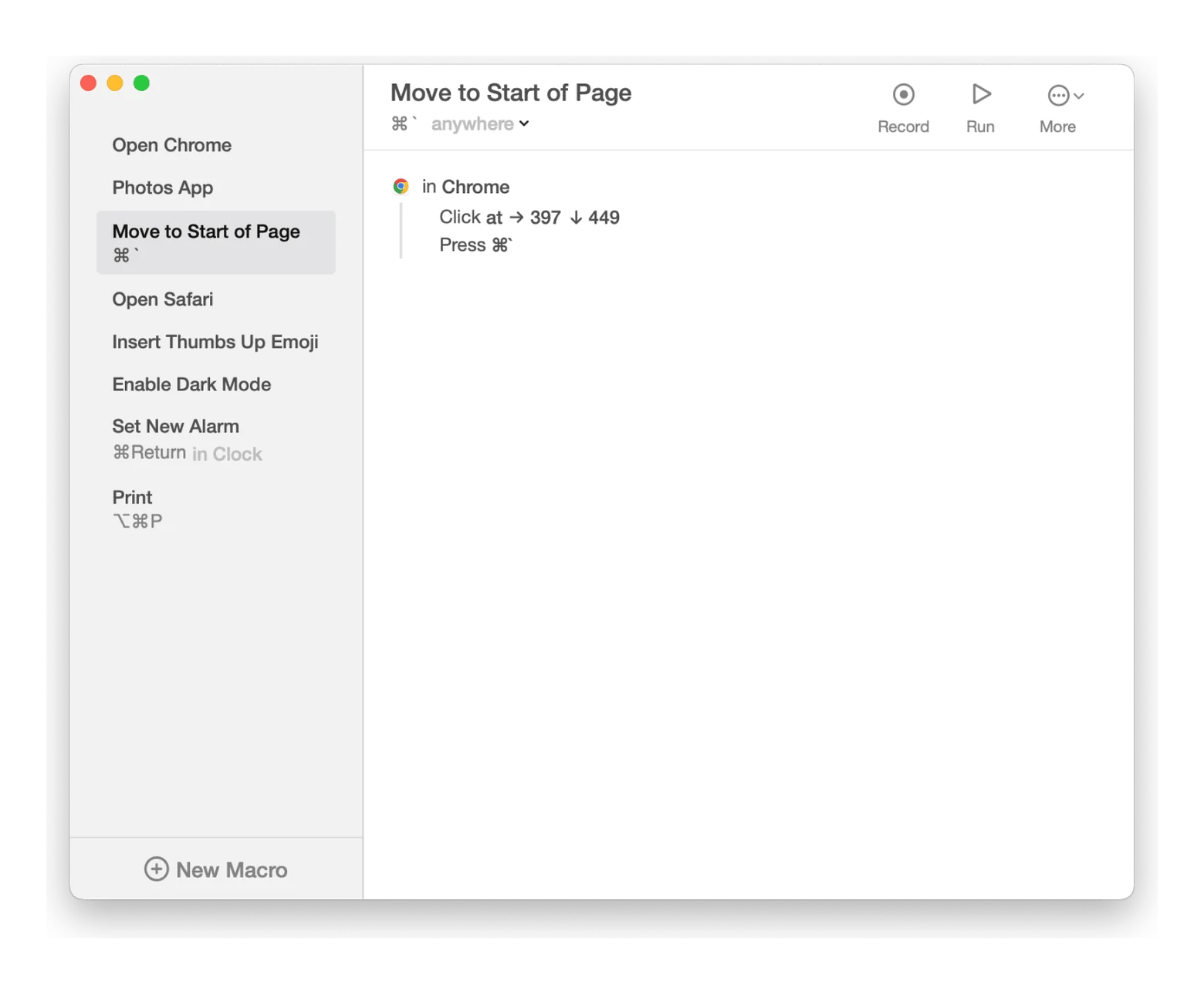
Some shortcuts are quick, like Command + C. Others, like Control + Fn + Left arrow, take two hands. When that stretch started to bug me, I tried Keysmith, a macro app for Mac that records what you do and replays it with a hotkey you choose.
Your recorded macros appear in Keysmith, where you can assign hotkeys to run them anywhere or only in a specific app, like Chrome or Clock. When I forget a hotkey, Keysmith’s Spotlight-like Quick Launcher lets me find and run a macro by name.
One thing I learned the hard way: some recorded clicks rely on screen coordinates, so they can misfire if a window moves or resizes. Keysmith can also recognize interface elements, which makes certain clicks more reliable. When a macro stops behaving, open it and check whether you can replace a coordinate-based click with a keyboard action. For example, Command + Up arrow can move to the beginning of a document in many Mac apps, though its behavior depends on the app and keyboard focus.
How to use Control + Home on Mac
To get to the top of a page on Mac, press Command + Up arrow, or Fn + Left arrow if you only want to scroll. Here’s the full routine:
Open the document, webpage, or spreadsheet you want to navigate.
Press Command + Up arrow to move the cursor to the beginning of the document.
Press Fn + Left arrow to scroll to the top without moving the cursor.
Press Command + Down arrow to jump to the end of the document or webpage.
To move within a single line, press Command + Left arrow or Command + Right arrow. Together, these shortcuts replace most of the scrolling in long documents.
In Excel for Mac, press Control + Fn + Left arrow to jump to cell A1 on a compact keyboard. If your full-size keyboard has a Home key, press Control + Home instead.
Large spreadsheets are slow to navigate with a trackpad. These shortcuts help:
Press Control + Fn + Left arrow to move to cell A1.
Press Command + Arrow key to jump to the edge of the current data region.
Press Control + Fn + Right arrow to move to the last cell in use.
Keyboard settings and other apps can intercept these combinations. Microsoft’s Excel keyboard shortcuts guide lists the Mac versions and how to fix conflicts.
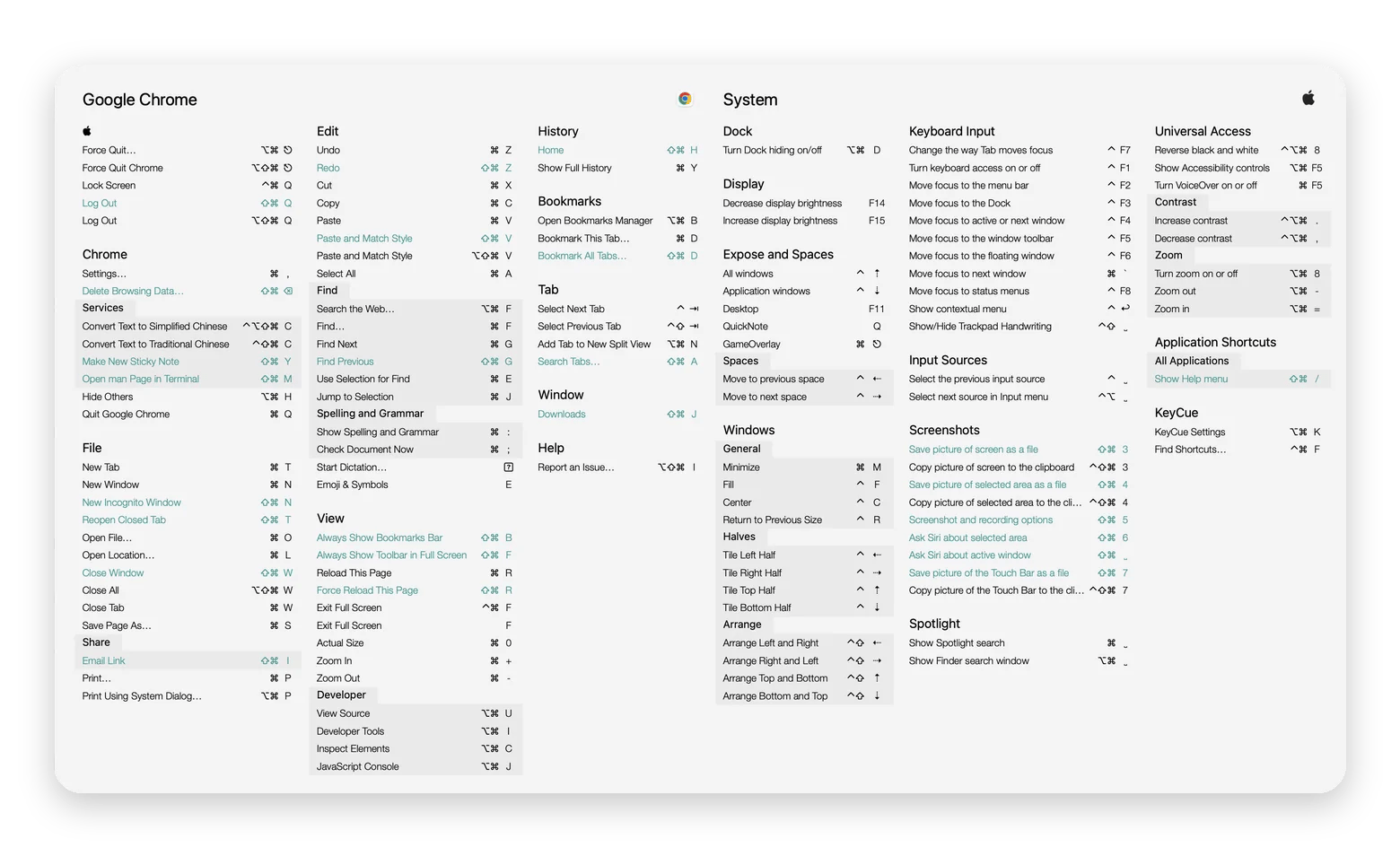
When you’re still learning Mac shortcuts, KeyCue works like a cheat sheet that appears on demand. Hold down the Command key for a moment, and it lays out every shortcut for the app you’re in, plus system shortcuts for window tiling, screenshots, and Spaces. A legend at the bottom decodes the symbols, so ⌥ and ⇧ stop looking like hieroglyphics. One catch I noticed in Chrome: the only Home entry is Shift + Command + H under History, which opens your browser’s home page, not the top of the document. Text navigation combos like Command + Up arrow don’t appear in the table at all, so keep the table in this article handy for those.
Mastering Control + Home on Mac without a Home key
Compact Mac keyboards lack a Home key, but built-in shortcuts cover the same jobs. Press Command + Up arrow to reach the beginning of most documents, Fn + Left arrow to scroll to the top, Command + Fn + Left arrow in Word, and Control + Fn + Left arrow to jump to cell A1 in Excel.
For apps that don’t cooperate, BetterTouchTool remaps shortcuts per app, Keysmith records repeat actions as macros, and KeyCue shows every shortcut in the app you’re using. All three are included in Setapp Membership, an app subscription with 300+ apps for Mac, iOS, and web, and you can try them free for 7 days.
FAQ
How do I replicate the Home key on a Mac?
Press Fn + Left arrow to reproduce the Home key on a compact Mac keyboard. It scrolls to the top of the page without moving the cursor. To move the cursor to the beginning of a document in most apps, press Command + Up arrow.
How do I replicate Control + Home in Word on Mac?
In Microsoft Word for Mac, press Command + Fn + Left arrow on a MacBook or compact keyboard, or Command + Home on a full-size keyboard. Command + Up arrow doesn’t work here: in Word, it moves the cursor up by a paragraph. To make Command + Up arrow behave the same in Word as in other apps, remap it with BetterTouchTool.
What is Control + Home on a Mac for Excel?
Press Control + Fn + Left arrow to jump to cell A1 in Excel on a MacBook or compact Apple keyboard. If your keyboard has a dedicated Home key, press Control + Home.
Why doesn't my Mac have a Home key?
MacBook and compact Apple keyboards save space by replacing dedicated navigation keys with Fn and arrow-key combinations. The Magic Keyboard with Numeric Keypad includes Home and End keys. On a compact keyboard, press Fn + Left arrow instead.
Superpowers for your Mac
Tackle your tasks with dozens of helpful apps on Setapp.






 Best solution
 Best solution