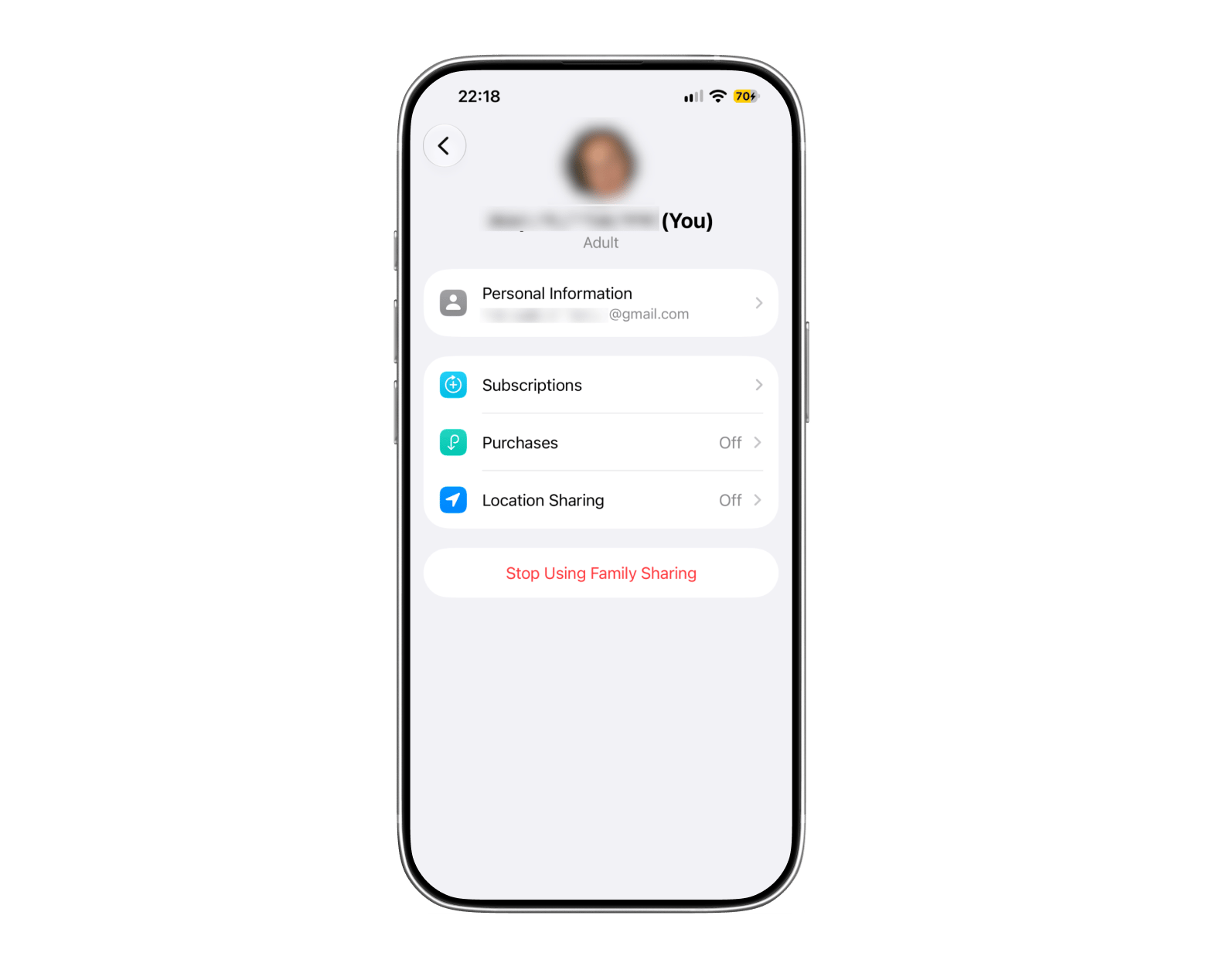
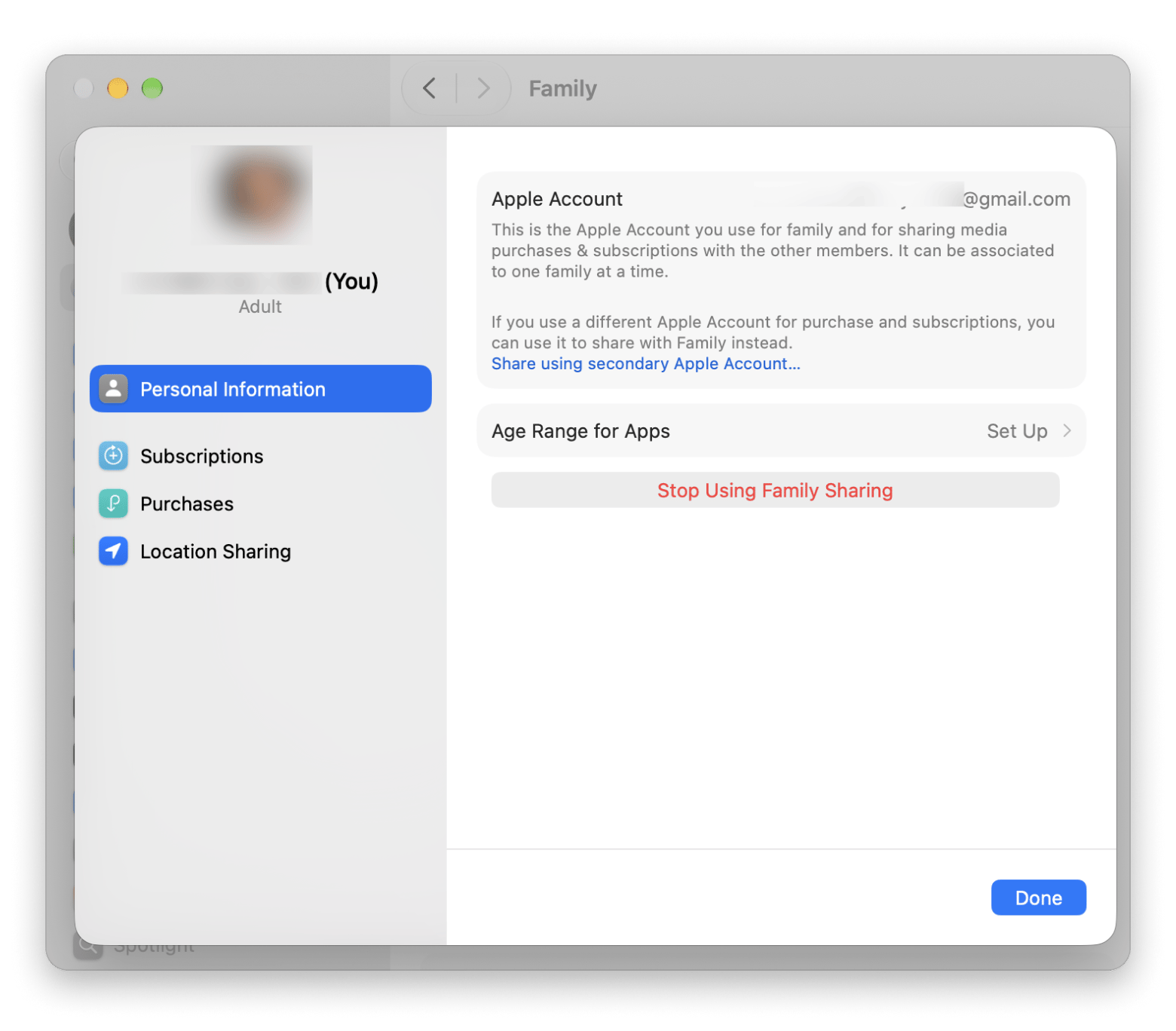
Leave from Settings: On iPhone, go to Settings > Family, tap your name, then tap Stop Using Family Sharing. On Mac, use System Settings > Family.
Know what you lose: Shared services, such as an Apple Music family plan or shared iCloud+ storage, end. So do shared albums, calendars, and reminders.
Organizers disband the group: If you run the group, stopping Family Sharing removes everyone at once.
Save before you go: Copy shared photos to your library and back up your iPhone to your Mac with AnyTrans for iOS.
Stay on top of your own bills: Track subscriptions with Chronicle, then try both apps through Setapp Membership, free for 7 days.
After a few family debates over app purchases and shared subscriptions, you’ve decided to go your own way. High five, I’ve been there too.
To leave Family Sharing, go to Settings > Family on iPhone or System Settings > Family on Mac, select your name, and choose Stop Using Family Sharing. Here’s what happens next, plus the lessons I learned.
If you’re…
Do this
Jump to
A member (adult)
Leave the group
Leave steps
The organizer
Disband the group
Organizer steps
Missing the button
Check age and Screen Time
Restrictions
Why leave Family Sharing?
People leave Family Sharing mainly to control their own purchases, subscriptions, and privacy. If you've been in a Family Sharing group, you know how great it sounds in theory, right? Shared access to apps, services, and subscriptions, plus that sweet feeling of splitting bills. But then reality kicks in.
So, here are several Apple Family Sharing problems that might make you want to go solo:
Limited control: Shared purchases can make managing family expenses more complicated.
Privacy concerns: Family members may see eligible shared purchases and each person’s iCloud storage usage, but not private files.
Shared billing: The organizer generally pays for eligible purchases when Purchase Sharing is enabled.
Subscription preferences: You may prefer to manage and pay for your own subscriptions.
Family changes: Leaving the group can mean losing access to shared subscriptions, purchases, and other benefits.
Ultimately, Family Sharing might sound great, but it can feel like you're living in a digital fishbowl. If you're ready to manage your own purchases and subscriptions, leaving may give you a more personal Apple experience.
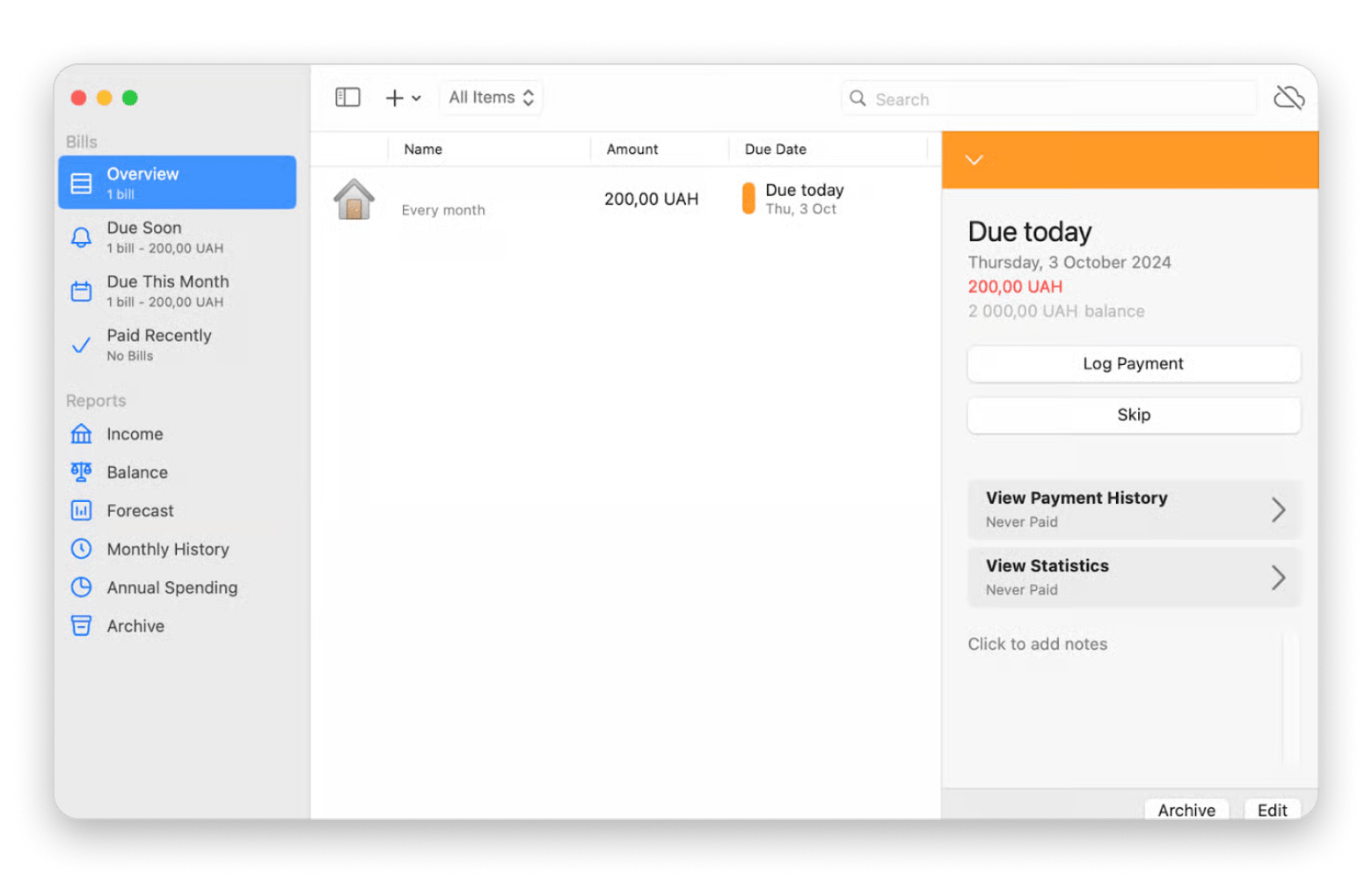
To manage all these subscriptions with ease, I use Chronicle, a bill and subscription tracker for Mac. It helps me stay on top of my bills and avoid surprise charges. It tracks bills and subscriptions, sends payment reminders, and syncs through iCloud. The iOS version is available outside Setapp. It's been my lifesaver for those "Oh no, I forgot to cancel that" moments.
What happens after you leave Family Sharing?
When you leave Family Sharing, you lose access to services your family shared, but you keep what you bought yourself. According to Apple Support, here's what to expect:
Your own purchases stay yours: You keep purchases you made yourself, but lose access to content purchased by other family members. If you purchased content that others accessed through Family Sharing, they may lose access to it.
Shared subscriptions end: You'll lose access to shared services, such as Apple Music and shared iCloud+ storage, unless you subscribe independently.
Shared family content becomes unavailable: You lose access to shared photo albums, calendars, and reminders. Save or copy anything important before leaving. Your personal photos, calendar events, and reminders aren't automatically deleted.
Location sharing stops: Your location is no longer shared with family members through Family Sharing, and your devices are removed from the family's Find My device list.
Apple Cash Family accounts close: If the organizer set up an Apple Cash Family account for you, it closes when you leave, and any remaining balance transfers to the organizer's Apple Cash account. This feature is available only in the United States.
Before leaving, check your shared subscriptions, save important shared content, and make sure you have your own iCloud+ plan if you need additional storage.
Leaving Family Sharing will untangle some digital ties. But you'll gain more control over your purchases, subscriptions, and privacy.
How to leave your Family Sharing group
To leave Family Sharing, go to Settings > Family on iPhone or iPad, or System Settings > Family on Mac, select your name, and choose Stop Using Family Sharing. Here are the full steps.
On iPhone or iPad:
Open the Settings app.
Tap Family. If you don't see it, tap your name, then tap Family.
Tap your name.
Tap Stop Using Family Sharing.
After you confirm, Apple removes your account from the Family Sharing group.
On a Mac running macOS 27 Golden Gate or macOS 26 Tahoe:
Choose Apple menu > System Settings.
Click Family.
Click your name.
Click Stop Using Family Sharing.
After following these steps, check your subscriptions and set up any necessary services under your own Apple Account. Not sure what’s still billing you? Check this guide on how to manage all your app subscriptions on Mac and iOS walks you through it step by step.
Note: On macOS 12 Monterey or earlier, choose Apple menu > System Preferences > Family Sharing > Details next to your name > Stop Using Family Sharing.
If you’re the organizer, choosing Stop Using Family Sharing disbands the group for everyone.
On iPhone or iPad:
Open the Settings app.
Tap Family. If you don't see it, tap your name, then tap Family.
Tap your name.
Tap Stop Using Family Sharing.
When the organizer turns off Family Sharing, all members are removed from the group at the same time. Before you can stop Family Sharing, you typically must move a child to another group or delete their Apple Account if they're below the minimum age required to manage an account independently. The exact age varies by region.
On Mac:
Choose Apple menu > System Settings.
Click Family.
Click your name.
Click Stop Using Family Sharing.
When you do this, the entire Family Sharing group ends. It's worth giving everyone a heads-up so no one is caught off guard by the change.
How to leave Family Sharing when you're not the organizer
If you're an adult member and not the organizer, you can leave the group. You can't turn off Family Sharing for everyone or remove other members.
Follow the iPhone, iPad, or Mac instructions above and choose Stop Using Family Sharing. You can also leave online: sign in at account.apple.com, open Family Sharing, and choose Disconnect Account.
Why can’t I leave Family Sharing?
You can’t leave if you’re under the minimum age for an independent Apple Account, if you’re 13–17 with Screen Time on, or if you’re the organizer, who must disband the group instead. Specifically:
Children below the minimum age for an independent Apple Account can't leave by themselves.
Members aged 13–17 may need the organizer to turn off Screen Time before they can leave.
Organizers must disband the group rather than leave it as regular members.
If you're about to leave Family Sharing, don't worry; the process is much easier than you think it is. And with tools like Chronicle, managing your subscriptions won't feel like a full-time job.
Before leaving, save anything important from the family album and review the subscriptions you'll need to replace. AnyTrans for iOS can also help you create a local backup of your iPhone content on a Mac.
I found Chronicle on Setapp, a subscription with 300+ Mac and iOS apps. Both Chronicle (Mac version) and AnyTrans are available through Setapp Membership, which you can try free for 7 days.
Good luck! And hey, maybe send a quick heads-up to your family before you disappear from the shared apps.
Fix Mac issues with Setapp
Get an ever-growing selection of troubleshooting apps.






 Best solution
 Best solution