Change it with your provider first. Apple Mail can’t change your provider’s password, so update it with Gmail, Yahoo, or Outlook, then re-enter it in Settings > Apps > Mail > Mail Accounts.
Change it for a reason. Current NIST guidance favors changing a password after a breach, reuse, or suspicious login, not on a fixed schedule.
Go long and go unique. Use 15 or more characters, never reuse the password, and let Secrets 4 generate and store it.
Add a second lock. Turn on two-factor authentication and keep your codes in Step Two, which syncs through iCloud.
You might think your password is strong enough to keep attackers out — I used to think the same. But compromised passwords can expose your email and everything inside it.
Here’s the quick answer to changing your email password on iPhone: update it with your provider, then re-enter it in Settings > Apps > Mail > Mail Accounts. I’ll show you the full steps for Gmail, Yahoo, and Outlook.
*Setapp is a curated platform for 300+ Mac, iOS, and web apps.
When should you change your email password?
You should change your email password if it was exposed, reused, shared, or accessed by someone else. You should also update it after receiving a suspicious login alert.
Here's why it matters:
Prevent unauthorized access. Attackers can steal personal information and compromise sensitive details stored in your email.
Protect linked accounts. Anyone with access to your inbox may be able to reset passwords for other services.
Safeguard sensitive information. Emails often contain personal, financial, and work-related data.
You don't need to reset a strong password every few months without a reason. Current National Institute of Standards and Technology (NIST) password guidance recommends changing passwords when there's evidence they've been compromised rather than on a fixed schedule.
Change your email password in Apple Mail on iPhone or iPad
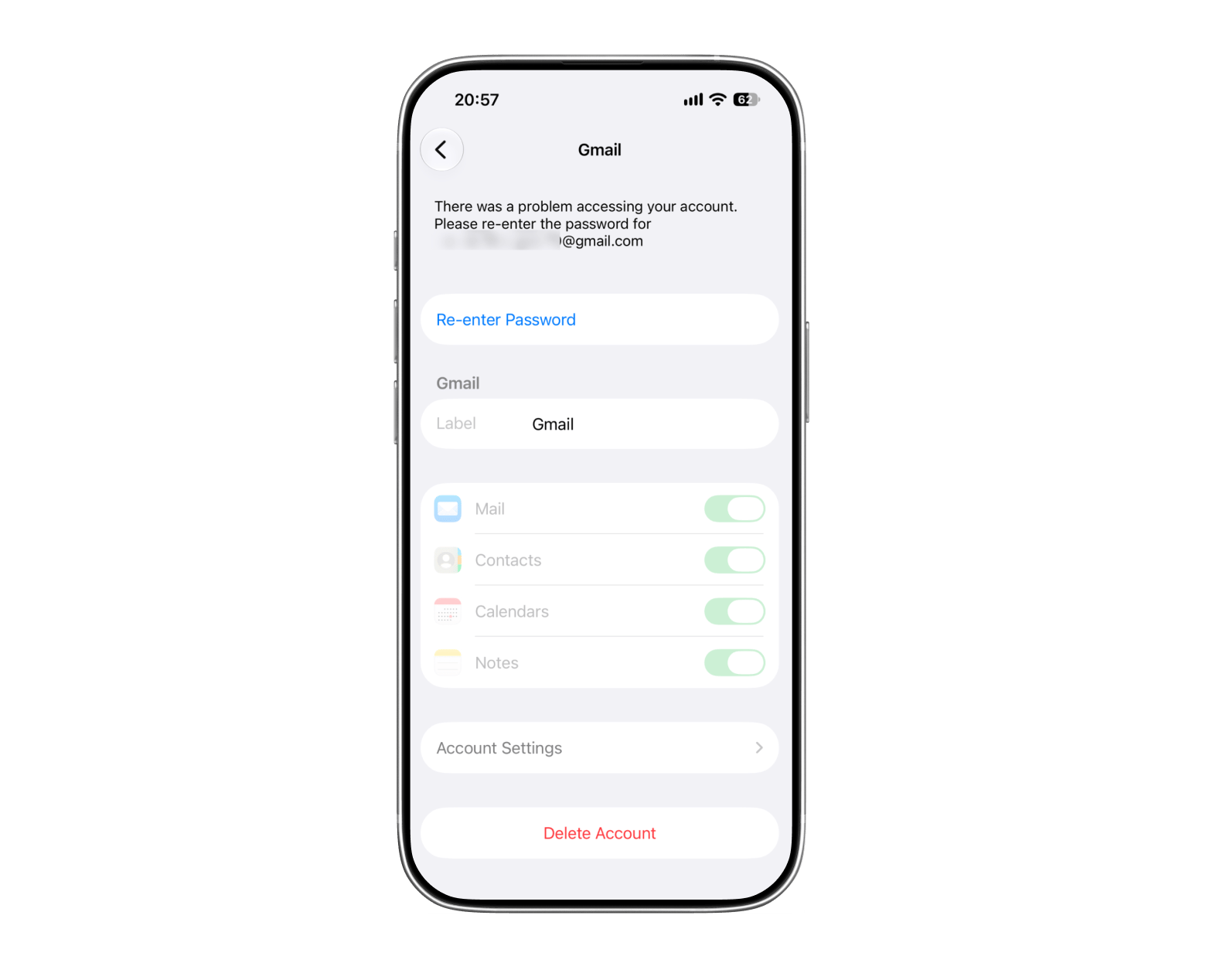
To change your email password on iPhone, first update it with your email provider (Gmail, Yahoo, or Outlook). Then open Settings > Apps > Mail > Mail Accounts, tap the account, and tap Re-enter Password to sign in with the new one. Apple Mail, the built-in iOS Mail app, doesn’t usually let you change your email provider’s password directly.
To update the saved credentials for an account:
Open Settings.
Tap Apps > Mail > Mail Accounts.
Tap the email account you want to update.
Tap Re-enter Password if that option appears, then sign in with your new password.
For a manually configured IMAP (Internet Message Access Protocol) or POP (Post Office Protocol), tap Account Settings and update the password fields if available.
When I changed my Gmail password, my inbox just stopped updating. No alert appeared. The Re-enter Password banner only showed up after I opened Settings > Apps > Mail > Mail Accounts and tapped the account, so check there before assuming something broke.
Provider
Change it here
Then in Apple Mail
Gmail
Google Account, Security
Re-enter password
Yahoo Mail
Yahoo Account Security page
Re-enter password
Outlook
Microsoft Account Security
Re-enter password
Other (IMAP/POP)
Your provider’s website
Update Account Settings
If you don't see a password option, open your provider's website in Safari and change it there. Then return to Apple Mail and follow any sign-in prompts.
How to create a strong email password
Scammers are constantly looking for ways to access personal information. That's why you should create strong passwords for your email accounts.
Here's how to create a strong email password:
Make it lengthy. Use at least 15 characters when possible, following current NIST guidance, which sets that minimum for passwords used as the only sign-in factor.
Make it unique. Never reuse your email password for another account.
Use a passphrase or password manager. A long, randomly generated password is usually stronger and easier to manage than a short, complicated one.
Avoid predictable details. Don't use names, birthdays, email addresses, or common phrases.
Keep these rules in mind when creating a new email password.
Change your Gmail password on iPhone or iPad
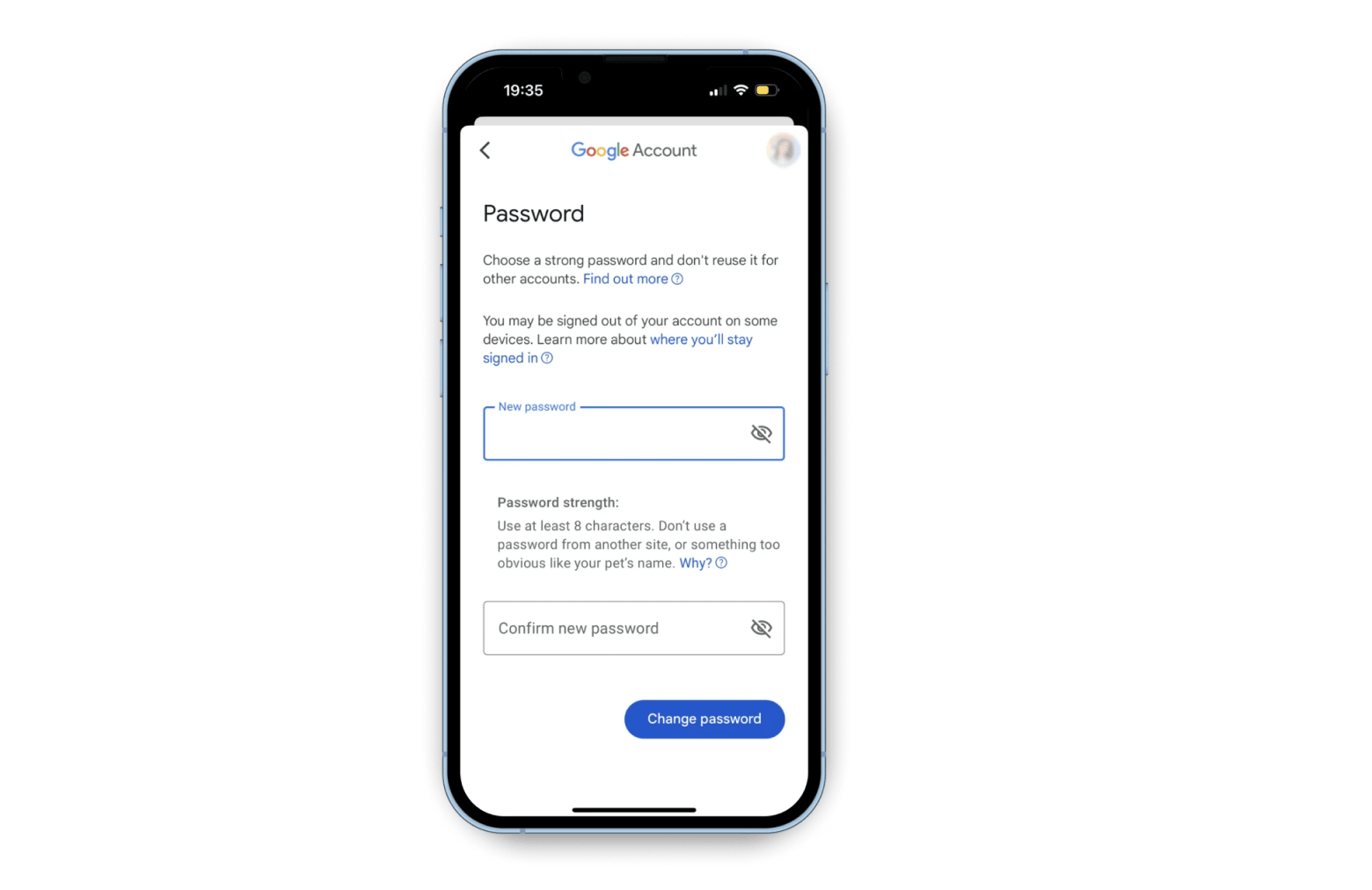
You can change your Gmail password from the Gmail app or your Google Account page. Google provides the latest account instructions in its official password help guide.
Here's how to change it on iPhone or iPad:
Open the Gmail app.
Tap your profile picture or initials in the upper-right corner.
Tap Manage your Google Account.
Tap Personal info.
Tap Google Password.
Verify your identity if prompted.
Enter your new password, then tap Change password.
Google signs you out of most devices after a password change, although some verified devices and connected apps may remain signed in.
I used to have a hard time remembering all my passwords and stressing about their security. Keeping all my passwords in random places as a safety measure made me always forget where I put them — not the best idea.
After I changed my Google password, my iPhone signed me out, but my Mac stayed connected through Mail until I signed in again. Now I change the password on my iPhone and walk through my other devices straight away.
Change your Yahoo Mail or Outlook password
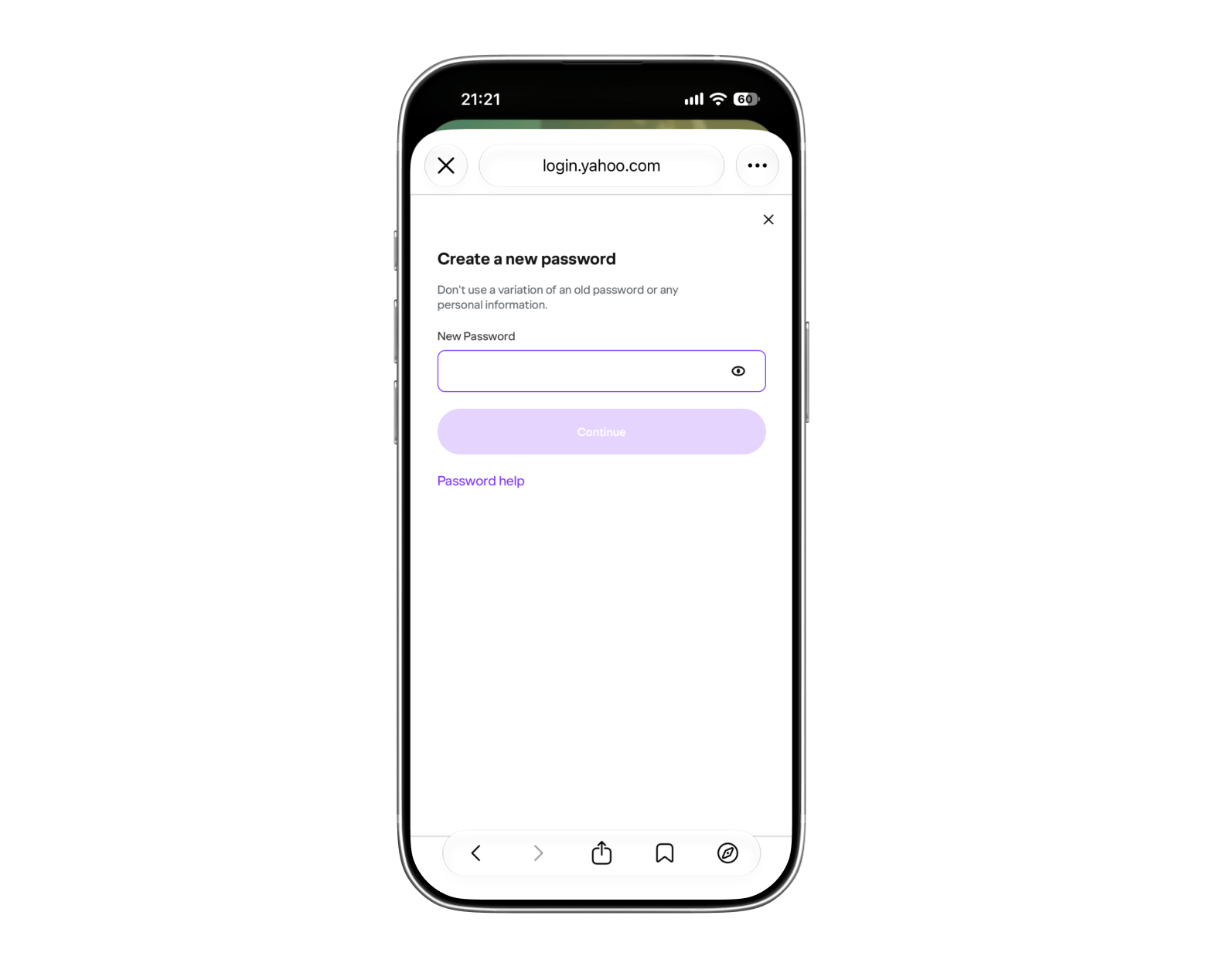
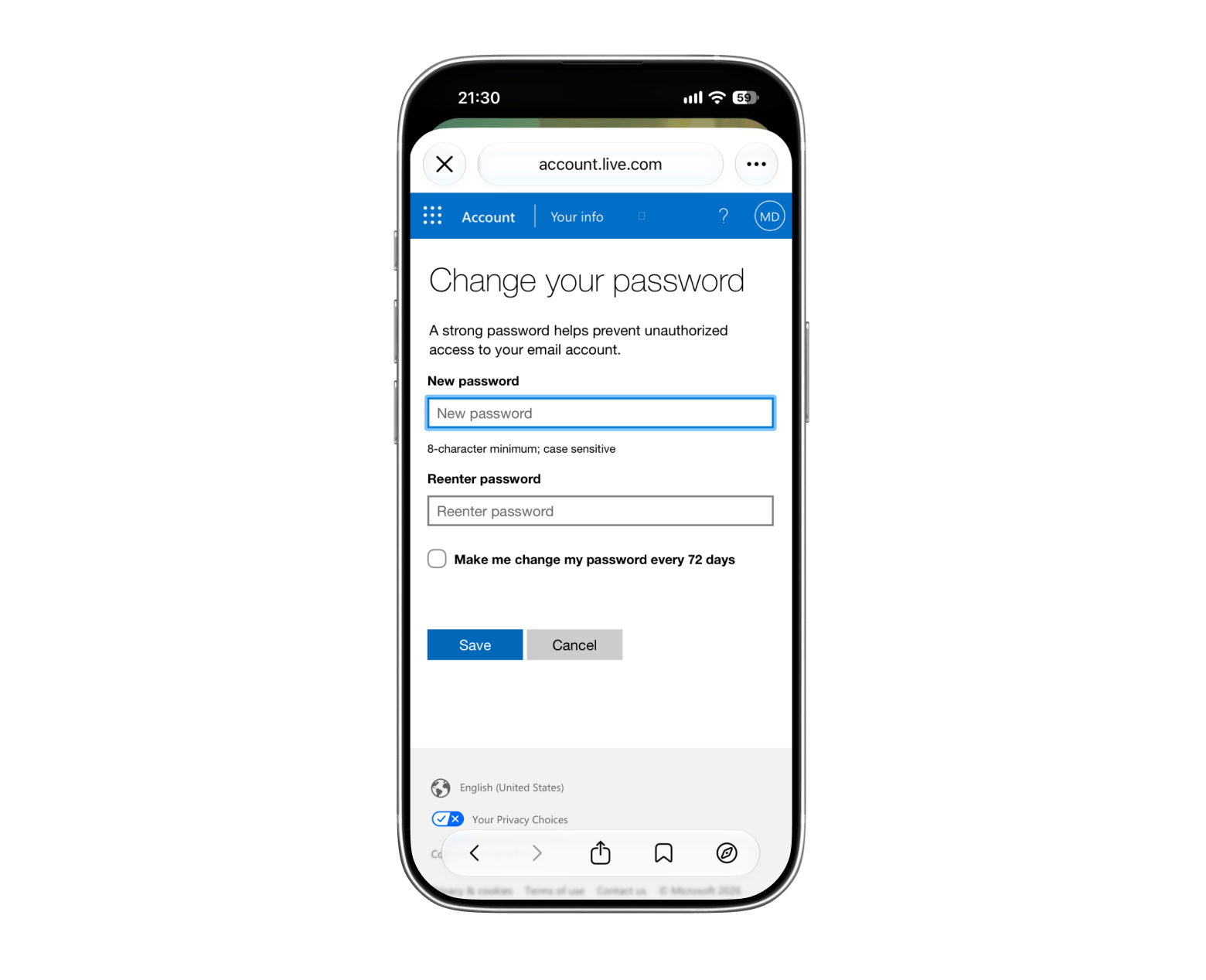
Yahoo Mail and Outlook require you to change your password through their account security pages. Afterward, you may need to sign in again on your iPhone or iPad.
Your Outlook account will now use the updated credentials. If Mail stops syncing, return to Settings > Apps > Mail > Mail Accounts and sign in again.
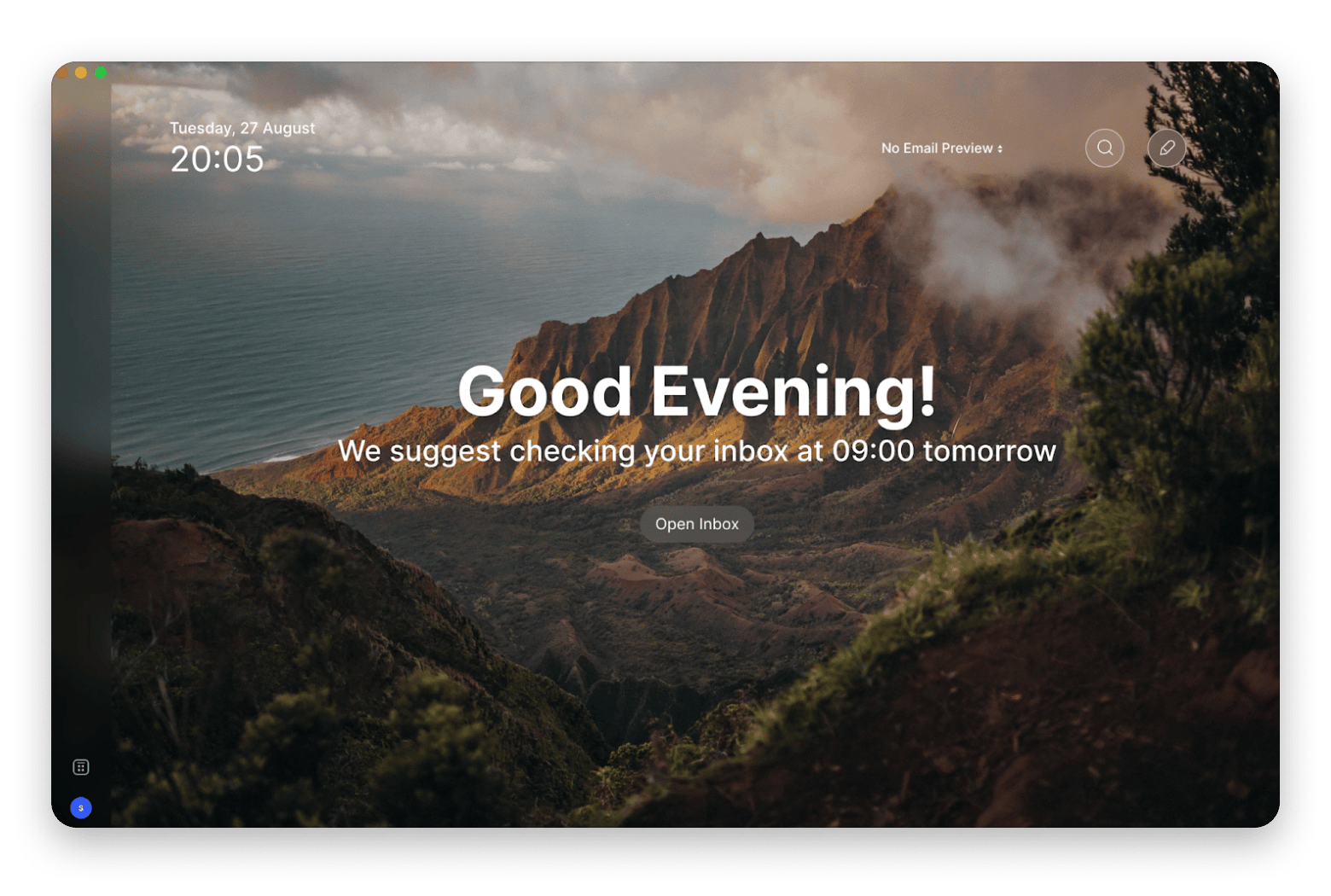
Tip: After I changed my Gmail password, I had to sign in again in Apple Mail, then check my other accounts to see which ones had stopped syncing. That’s when I started using Spark Mail, an email app for Mac and iPhone that puts Gmail, Yahoo, Outlook, and iCloud accounts in one inbox. Priority mail sorts to the top, so I notice a problem faster if one account stops delivering. It also has an AI assistant that drafts replies, which I use when I’m catching up after fixing a sign-in issue.
How to secure your email account beyond a password change
Here are a few more practices that can strengthen your email security:
Update iOS regularly. Make sure your iPhone or iPad runs the latest available version.
Use encryption. Choose an email service that offers end-to-end encryption when your conversations require extra privacy.
Set up account recovery. Add a current backup phone number or email address so you can regain access.
Monitor account activity. Check your login history for unfamiliar devices, locations, or sessions.
Review app permissions. Remove third-party apps that no longer need access to your email account.
Turn on two-factor authentication. If your provider supports time-based one-time passwords, use an authenticator app to store the codes and sync them across your Apple devices.
Change email passwords on iPhone and iPad with ease
At this point, you have everything you need to update your email password on iPhone or iPad. Focus on creating strong, unique passwords and protecting each account with two-factor authentication.
For easier email management, Spark Mail brings multiple inboxes together. Secrets 4 generates and stores passwords, while Step Two manages two-factor authentication codes.
All three apps are available through Setapp, a subscription to Mac and iOS apps, with Setapp Membership. To use them on your iPhone, choose the Mac + iOS plan. Membership includes 300+ macOS and iOS apps. Try them with a 7-day free trial.
FAQ
Where are my email settings on my iPhone?
Go to Settings > Apps > Mail > Mail Accounts. Tap an account to view its sync options and account details. For manually configured IMAP or POP accounts, you may also see incoming and outgoing server settings.
What can I do if my iPhone keeps asking for my email password?
First, confirm that the new password works on your provider's website. If you can’t remember it, look it up in your password manager, such as Secrets 4. Then go to Settings > Apps > Mail > Mail Accounts, choose the account, and tap Re-enter Password. If prompts continue, remove the account and add it again, but first confirm your messages are stored on the server rather than only on your device.
Does changing my email password in Apple Mail change it with my provider?
No. Apple Mail generally stores or authenticates your credentials but doesn't control the provider's password. Change the password through Gmail, Yahoo, Outlook, or your provider's website first. Then update or reauthenticate the account in Apple Mail.
Superpowers for your Mac
Tackle your tasks with dozens of helpful apps on Setapp.






 Best solution
 Best solution