Most developers either pay for ads or wait months for organic traction. Neither is your only option.
App Store Optimization builds passive search traffic, but takes 3–6 months to show real results.
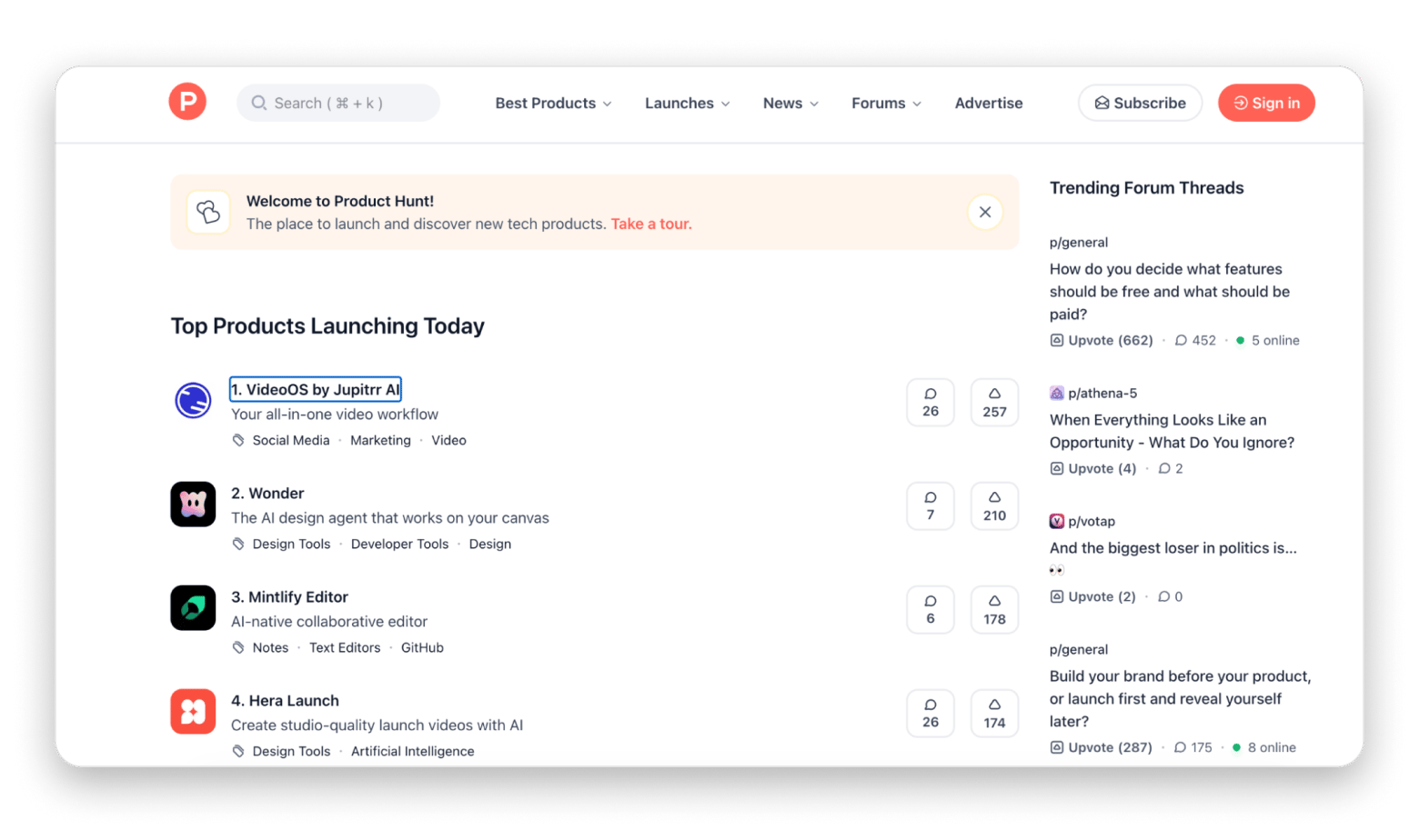
Product Hunt gives you a burst of attention on launch day. After that, you need channels that keep working.
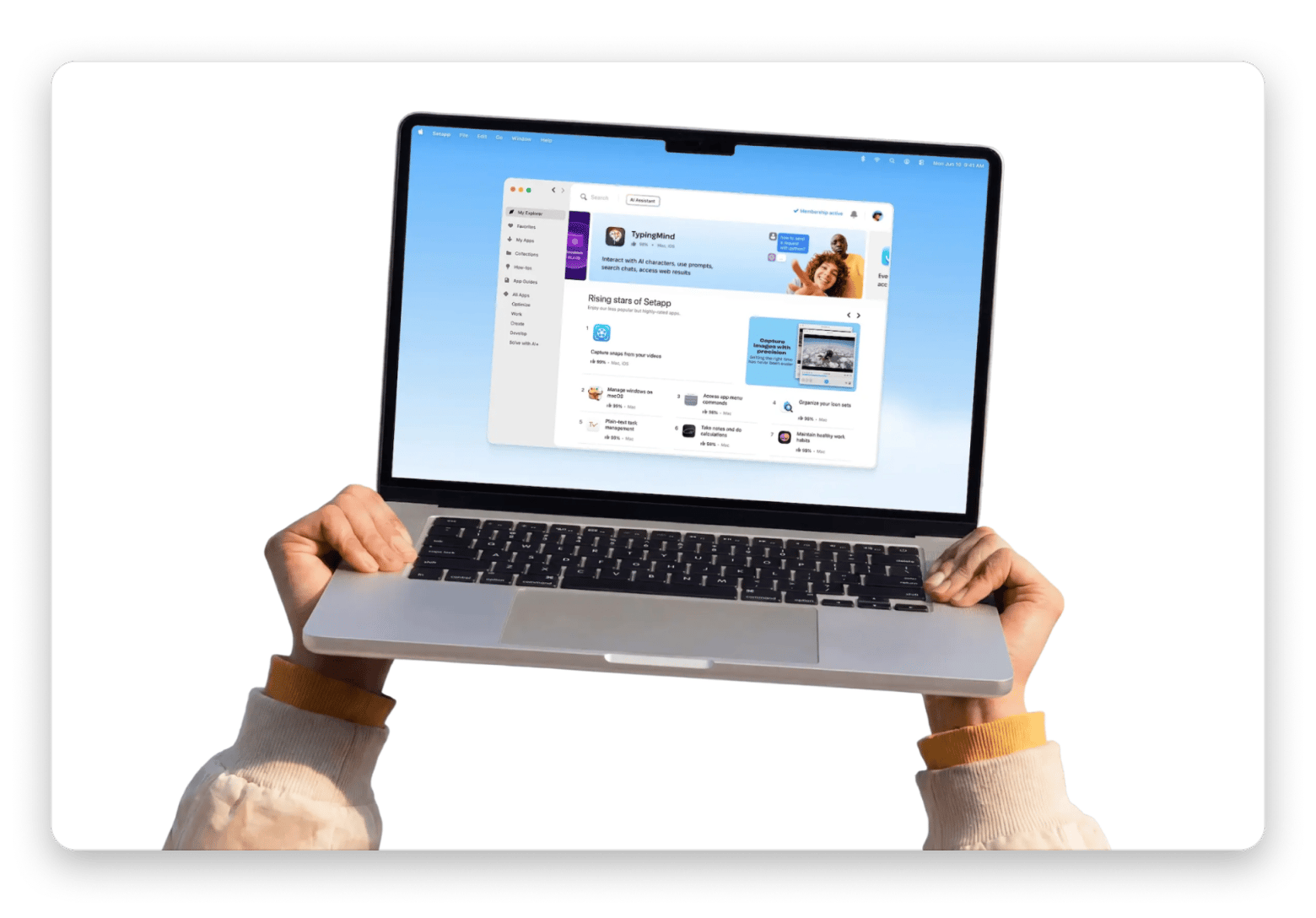
Subscription platforms like Setapp put your app in front of advanced Mac users from day one without building an acquisition channel from scratch.
Community presence on Reddit and niche forums converts better than social media ads for most indie apps.
Referral programs work only after you have retention. Build them when users come back daily, not before.
Instead of building every channel yourself, Setapp brings the audience to you. Join Setapp and reach subscribers who are already looking for apps like yours.
If you've launched an app and want to build a user base without buying ads, you've probably already signed up for Reddit and definitely heard something about ASO.
But how do you know which channel to start with, how long to wait, and what works best overall?
In this guide, we’ve compiled 6 ways to increase your app’s user base without ad spend and explained the details, so you can build your own strategy tailored to your app’s specific features.
How to acquire users for your app: 6 channels compared
Different channels work at different stages. Here's a quick overview before we go deeper into each one.
Channel
Time to first users
Effort
Cost
Best for
App Store Optimization
3–6 months
Medium
Free
Long-term passive growth
Product Hunt launch
Day 1
High (prep)
Free
Burst traffic + press
Subscription platform (Setapp)
Day 1
Low
Revenue share
Mac/desktop apps
Content and SEO
6–12 months
High
Free–$$
Compounding growth
Community (Reddit, forums)
2–4 weeks
Medium
Free
Niche audiences
Referral program
4–8 weeks
Medium
Low
Apps with daily use
App Store Optimization: the slowest channel with the longest payoff
App Store Optimization gets your app found by people who are already searching for what you built. You improve your app's title, subtitle, keywords, screenshots, and description so the App Store algorithm shows it to the right searches.
Results take at least 2-3 months. If you just launched, ASO won't help you this week. But once it works, it brings users while you sleep.
“Two weeks may be a bit early to see a clear impact from ASO, especially if your app doesn’t have much traffic yet. The first thing you can check is your keyword rankings. If ASO was done well, your app should start appearing for some new search terms. Also check your impressions and conversion rate in App Store Connect or Play Console. If impressions increase but installs don’t, the issue is usually the listing assets like screenshots or icon. Personally, I’ve seen screenshots make a big difference to conversions. When I test screenshot variations, I usually create them with Applaunchpad because it’s quick to generate and resize screenshots for different devices”, shares a Reddit user.
The things that move ASO rankings most are keyword relevance in your title and subtitle, conversion rate from your screenshots and preview video, and the velocity of recent ratings. Focus there first.
Product Hunt: one day of attention that can change your trajectory
A Product Hunt launch is a sprint, not a strategy. The traffic curve looks the same every time: a surge in the first hour, a peak between hours 8 and 12 when the daily email goes out, then a cliff. By hour 18, you're at roughly 10% of peak traffic. By day four, it's essentially zero.
A study by Saasify compared five real-world launches over 18 months. Over this period, they received between 150 and 800 likes, from 2,000 to 15,000 visitors, and 50 to 400 sign-ups per launch. High-quality sign-ups converted into paid subscriptions at a rate of 8–12% within 30 days.
Here’s an interesting fact: the success of your launch depends on the day of the week. Launches on Tuesdays and Wednesdays perform better than on other days. Monday was the single biggest avoidable mistake across all five launches.
But the most important thing when launching on Product Hunt is to have a warm audience of 50–100 people who are ready to engage in the first few hours—upvoting, commenting, asking questions, and sharing. Such launches perform 3–5x better!
One developer on Reddit who went through a "no audience" launch describes what actually moved the needle afterwards:
"The only stuff that moved the needle was going where the actual buyers hang out and showing real, working stuff, not vibes. I'd double down on that by turning those feature launches into tiny case studies: 'this team wanted X, here's what we shipped, here's the before/after.' Those stories spread way better than generic feature announces. I also found it useful to track where my best users first showed up from. For me it ended up being a mix of PH, a couple of niche Slack groups, and Reddit. Pulse for Reddit stuck because it kept surfacing threads where folks were literally asking for what I did, so I could drop super specific, non-salesy replies."
Join a subscription platform: reach users who are already looking
App stores connect you with people who search for a specific app. Subscription platforms like Setapp connect you with people who are actively looking to discover new tools for their Mac and already paying for access.
The difference in conversion is significant. A free App Store user needs to decide whether your app is worth buying. A Setapp subscriber has already paid for the platform. Their barrier to trying your app is clicking Install.
Zac Cohan has been building Soulver, a natural language calculator, since 2005. He's been on Setapp since 2022 and describes the platform dynamic in a way that explains why discovery works differently there:
“Setapp shows what's possible when the marketplace cares about both developers AND customers. There's no conflict: everyone is treated with dignity, and the experience for me as a developer is so much more pleasant and positive than with the App Store.
The review process on Setapp has always been quick, professional and fair. I can't say the same thing of the App Store. Also I love the Setapp developer portal, it's a joy to use”.
Carmen Huidobro has been maintaining Archiver and Renamer at Incredible Bee for over a decade. The longevity of the business is partly a distribution story:
"Decades in, the fact that small Mac utilities still have an audience and a viable business model is something I don't take for granted. Setapp is part of why that's still true."
Markus Müller-Simhofer, developer of MindNode, has been on Setapp since 2018. His observation about how users discover and engage with apps on the platform connects to why community works:
"User reviews are in most cases more positive and users seem to discover the app more easily. In general I really like the concept of having a limited curated selection of apps where I can trust that I constantly hit an upselling paywall."
Setapp has gathered a high-quality audience of Mac subscribers who are actively looking for new apps. On average, an app receives about 30,000 unique views in just the first few days after launching on Setapp. Become a Setapp partner and join over 240 high-quality apps for macOS and iOS.
Content marketing and SEO: the channel that compounds over time
A blog post optimized for the right keyword can bring you users every day for years. The tradeoff: it takes 6–12 months before you see meaningful traffic, and you need to produce content that answers questions your potential users are actually searching.
The most effective format for Mac app content is comparison articles and how-to guides tied directly to use cases your app solves. If your app handles file renaming, "how to batch rename files on Mac" is a better target than anything about your app by name.
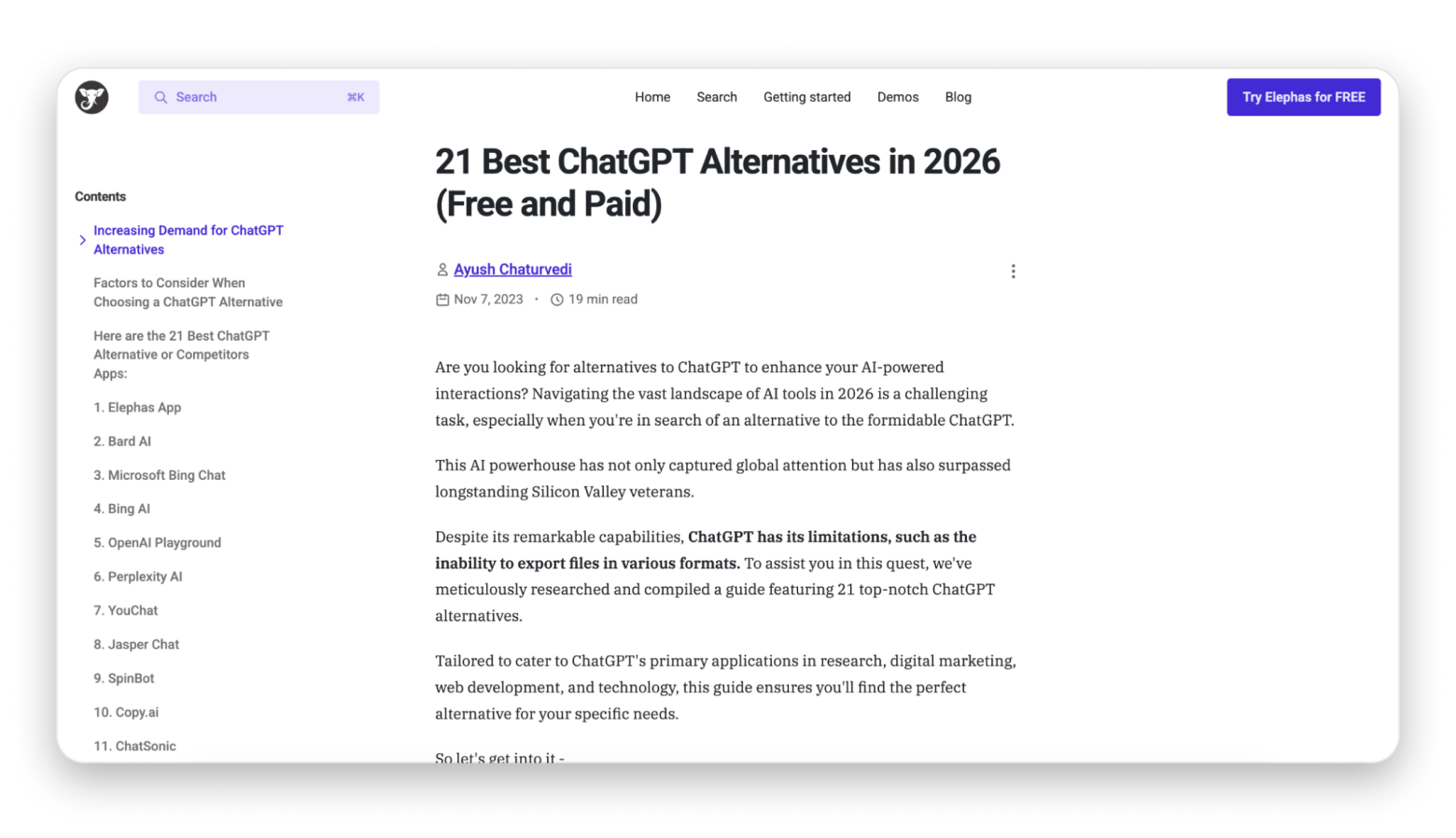
For example, Elephas co-founders say that one of the blog’s best-performing posts is “ChatGPT Alternatives,” into which they natively integrated their app.
"We started getting organic traffic on our help articles. Those support articles, written for our initial customers, started getting traction from Google. During a 12-month period we made around $70,000 from Google only." — Ayush Chaturvedi, ex co-founder of Elephas.
Build presence in niche communities like Reddit or Discord
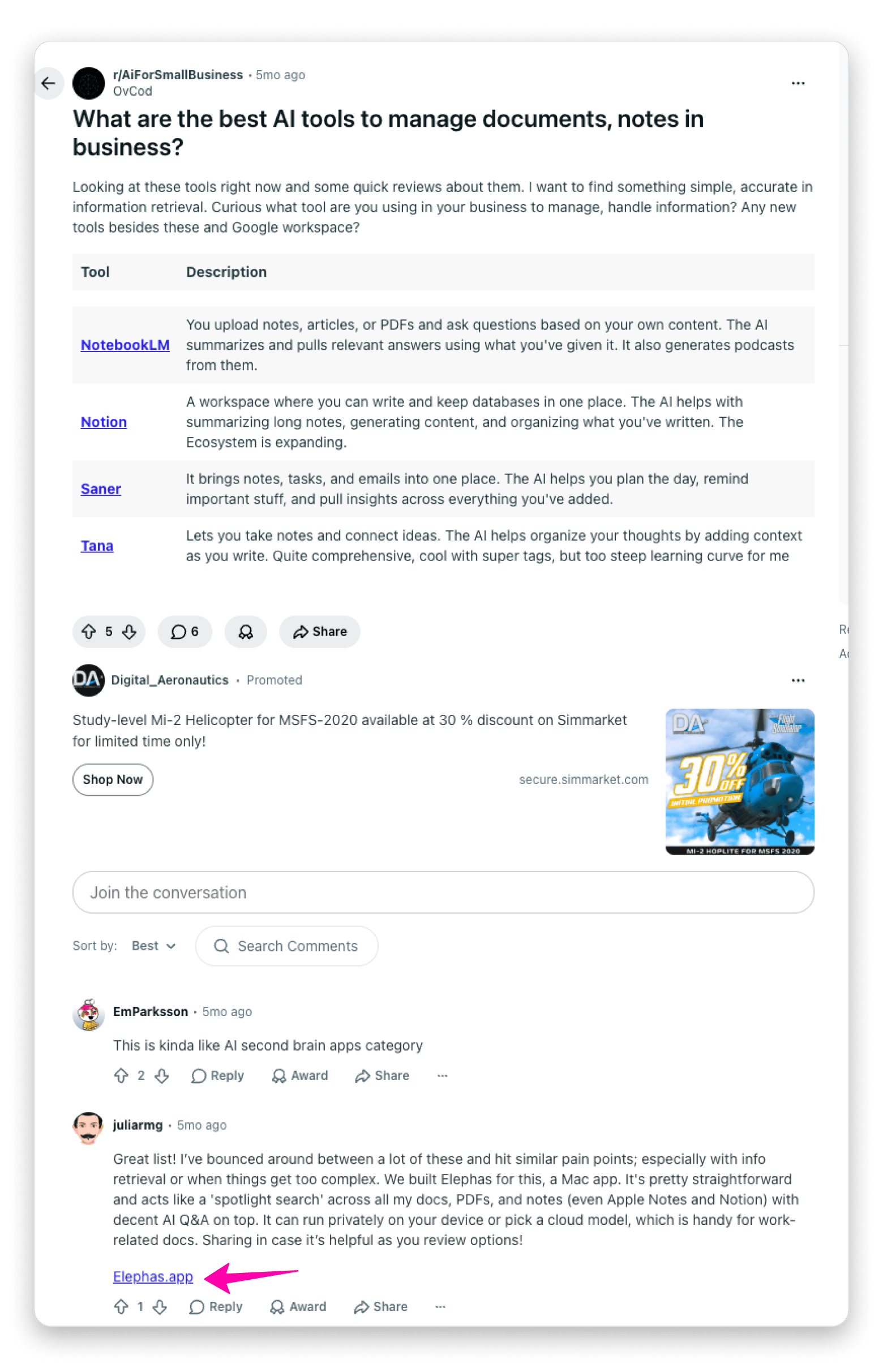
Reddit, Slack groups, Discord servers, and niche forums don't scale the way SEO does. But the users you reach through them convert at higher rates because they're already in a community that cares about your topic.
The golden rule is: don’t promote your app right away. Your goal is to be helpful and engaged, and only then move on to marketing. Answer questions in r/macapps, r/productivity, and r/apple for 4–6 weeks before you ever mention your own app. Once you do mention it, make sure it’s in a thread where it directly answers someone’s question.
Referral programs: turn existing users into your acquisition channel
A referral program gives users something in exchange for telling their friends about your app. It works when your app has genuine daily use, when people have a reason to bring it up in conversation.
According to statistics, referral programs can increase your subscriptions by up to 50%, depending on the app category.
Important: Only launch a referral program once you have achieved retention. If most of your users churn within the first week, the effect will be the opposite, and instead of growth, you’ll increase churn.
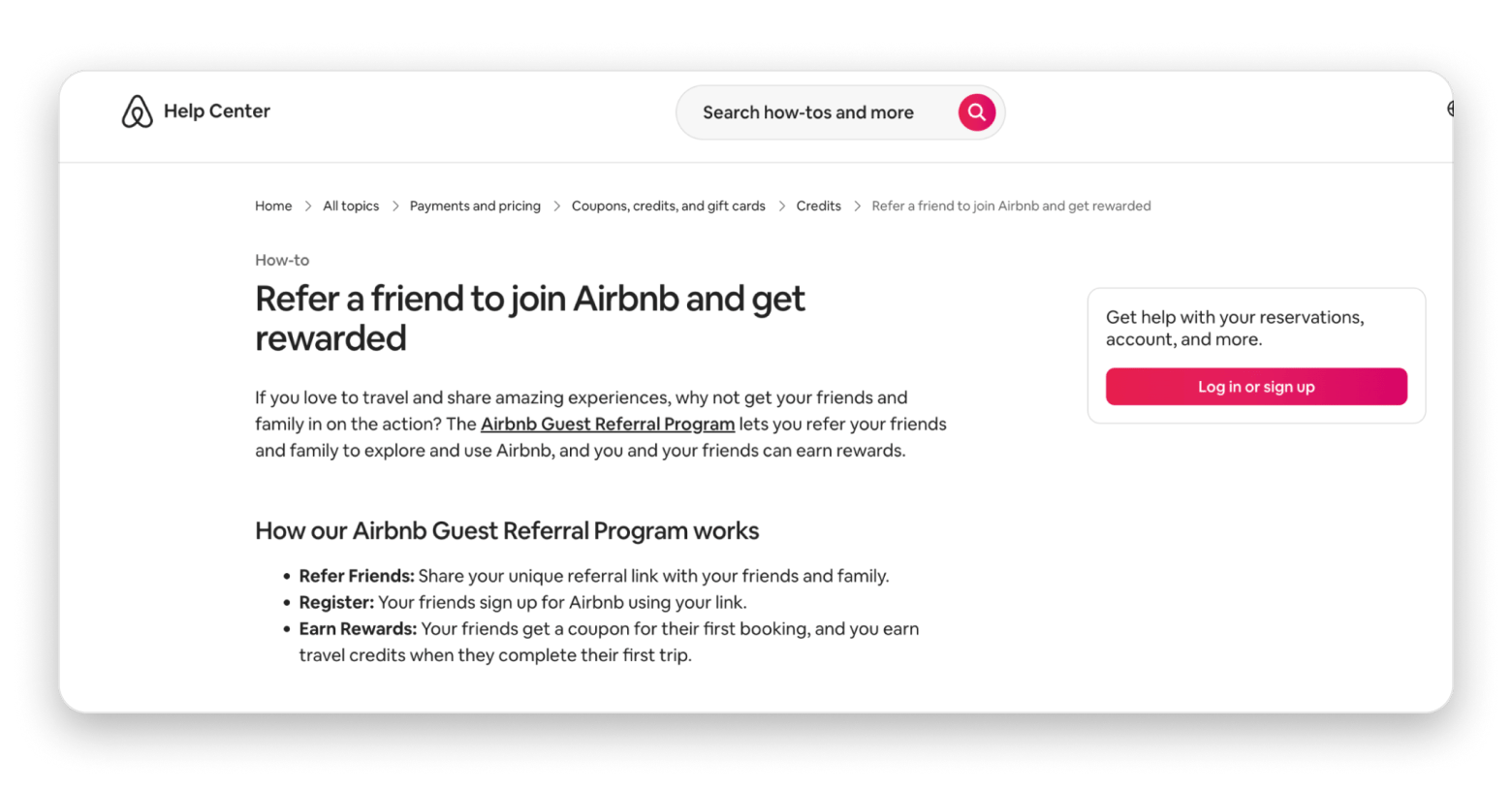
What should you offer a referred user? It could be an extended trial, a feature unlock, extra storage, etc. For example, Airbnb engages users by encouraging them to share the platform with friends using their referral link, for which they can earn travel credits, while new users receive a coupon for their first booking.
Final words: How to get more app users
To get users to try your app without spending money on ads, you can use methods like ASO, content SEO, community building, posting on Product Hunt, and joining Setapp.
The fastest way to get users to try your app is to reach out to those who are already looking for similar tools. That’s exactly what Setapp offers to Mac developers. You add your app once. Setapp subscribers can install it with a single click. No purchase decisions, no conversion funnels to build from scratch. The platform handles distribution, and you focus on development.
If you're looking to increase your app's user base without building every acquisition channel yourself, apply to become a Setapp partner. You bring the app. Setapp brings the audience.
FAQ
How long does it take to get the first users without ads?
It depends on the channel. Product Hunt and subscription platforms like Setapp can deliver users on day one. App Store Optimization and content SEO take 3–6 months minimum before you see meaningful results. Community building typically shows results in 2–4 weeks if you're consistent.
What is the fastest way to get users for a new app?
The fastest way is to join a platform where your target users already are — a subscription service, a curated directory, or a niche community. Building your own channel from scratch is slower than plugging into an existing audience. For Mac apps specifically, Setapp gives you access to subscribers from the day you launch on the platform.
How do subscription platforms help developers get more users?
Subscription platforms remove the purchase barrier. Users who are already paying for the platform can install your app with one click — no payment decision required. You reach a pre-qualified audience of people who use Mac apps regularly and are open to discovering new ones. The tradeoff is revenue share instead of direct sales.
Is Product Hunt worth it for Mac apps?
Yes, if you prepare properly. A top-5 finish brings press attention, newsletter mentions, and direct traffic that can last months. The preparation matters more than the launch itself, so build relationships with early supporters, write a compelling maker story, and time your launch for Tuesday–Thursday. Without preparation, results are unpredictable.
What is the difference between ASO and SEO for apps?
App Store Optimization targets the App Store search algorithm — it gets your app found within the App Store when users search for specific terms. SEO targets Google and other web search engines — it gets web pages about your app found when users search online. Both are valuable, but they work on different timelines and require different content. Most developers underinvest in SEO for their app's website while spending all their effort on ASO.
Powerful apps live on Setapp
Ditch defaults and discover new gems on one app platform.






 Best solution
 Best solution




_-which-one-is-right-for-you_-1920-646.webp)