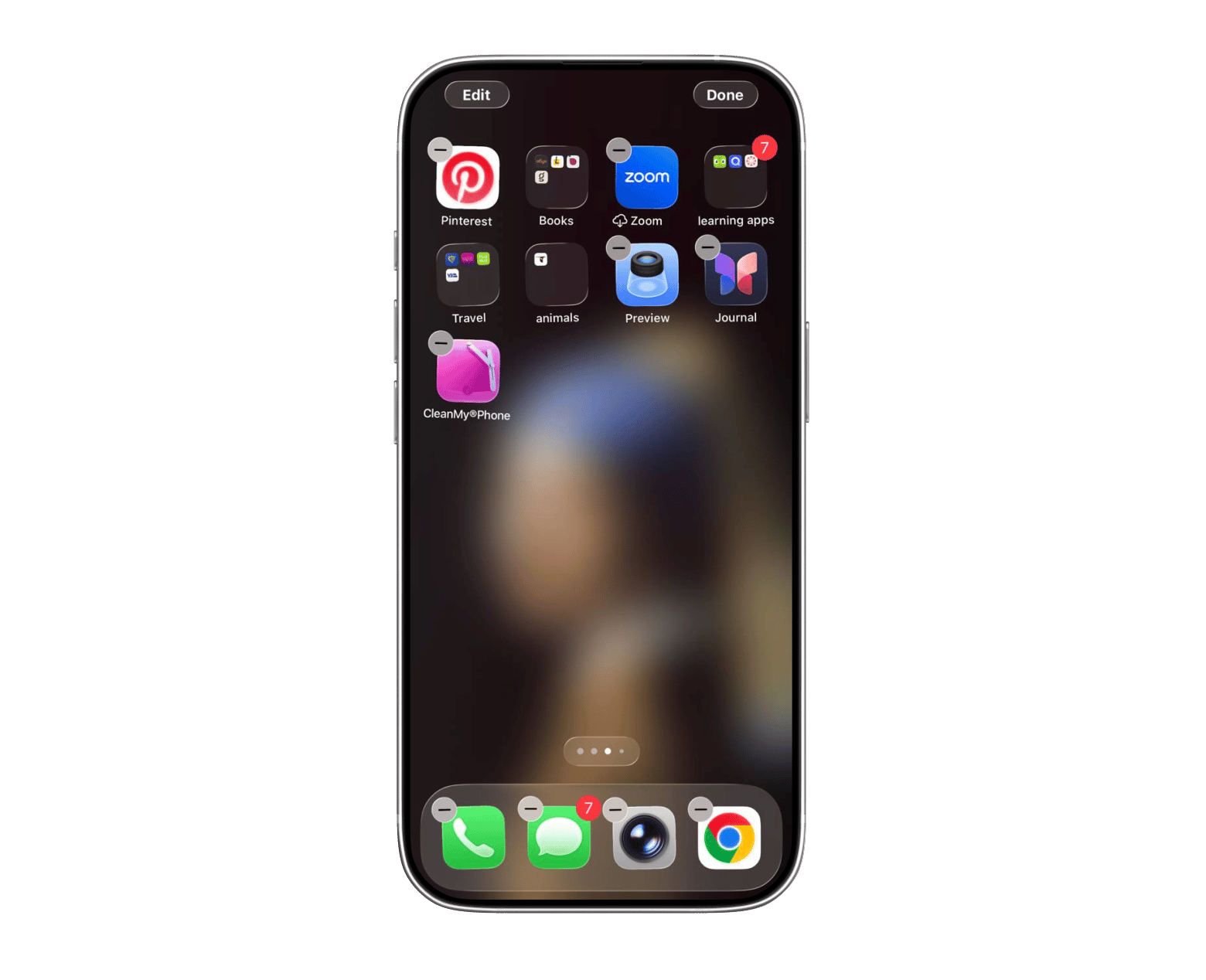
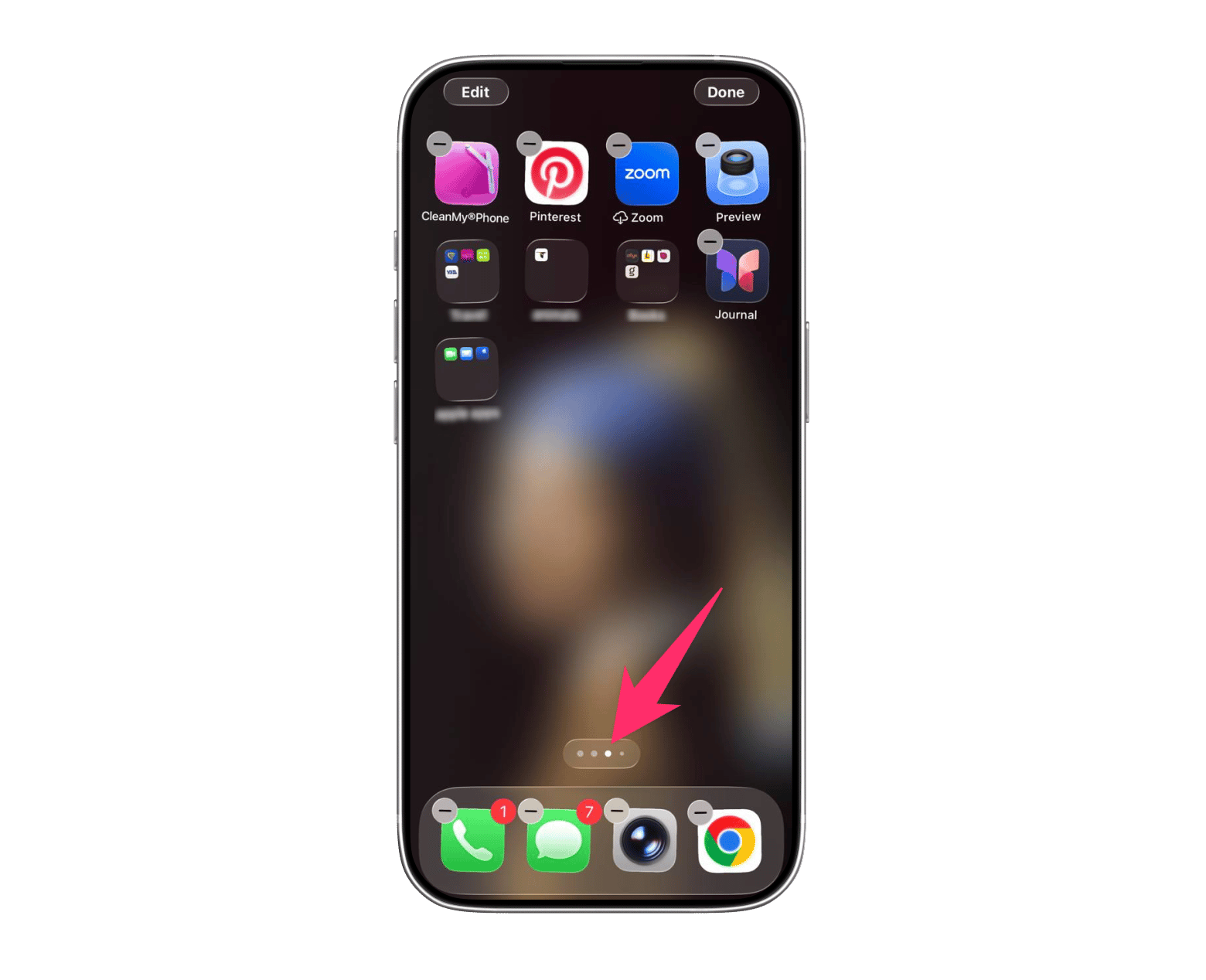
Start with jiggle mode. To customize your iPhone Home Screen, long-press the background until icons jiggle, then tap Edit in the upper-left corner.
Place icons freely. iOS 18 and later let you put app icons anywhere on the grid and apply system-wide themes like Dark, Clear, or Tinted to match your style.
Add widgets for live info. Widgets turn your static Home Screen into a live dashboard — stack same-size widgets on top of each other to save space and keep multiple ones accessible.
Hide what you don't need. You can hide individual apps or entire Home Screen pages, and tie specific pages to Focus modes so the right layout appears automatically.
Take it to your Mac too. WidgetWall brings the same desktop freedom to your Mac — place widgets anywhere, no grid required. Available on Setapp. Try it free for 7 days.
Сustomize your Home Screen by rearranging the apps, creating folders, adding widgets, or changing its look. Long-press your Home Screen background, tap Edit, and choose the necessary category to get started.
Whether you want a cleaner layout or a setup that helps you stay focused, here is a quick overview of what you can customize. Detailed instructions follow below:
Add this
What it does
Works best for
iOS widgets
Add live information blocks to your Home Screen
Weather, calendar, news at a glance
App organization
Rearrange apps, create folders, hide pages
Decluttering and productivity
Icon customization
Change app icon colors and themes
Visual consistency and aesthetics
Lock screen setup
Customize wallpaper, widgets, and clock
Quick access to key information
Focus modes
Automatically show/hide pages based on context
Work-life balance
How to personalize your iPhone Home Screen
iPhone Home Screen settings offer plenty of room for customization.
Here's what you can do via Home Screen edit mode (works for iOS 18 and later):
Remove app labels and switch to large icons for a cleaner look
Apply system-wide icon themes (Default, Dark, Clear, or Tinted)
Drop icons anywhere on the grid to frame your wallpaper perfectly
Pair specific home screen pages with Focus modes so the right layout appears automatically
To start customizing, tap and hold any place on your iPhone Home Screen background until the icons start jiggling. Then tap Edit in the upper-left corner to begin.
How to customize your iPhone Home Screen with widgets
Widgets are one of my favorite iOS features. They turn your static Home Screen into a dynamic dashboard of information.
To add a widget to your Home Screen:
Tap and hold an empty area until the icons jiggle.
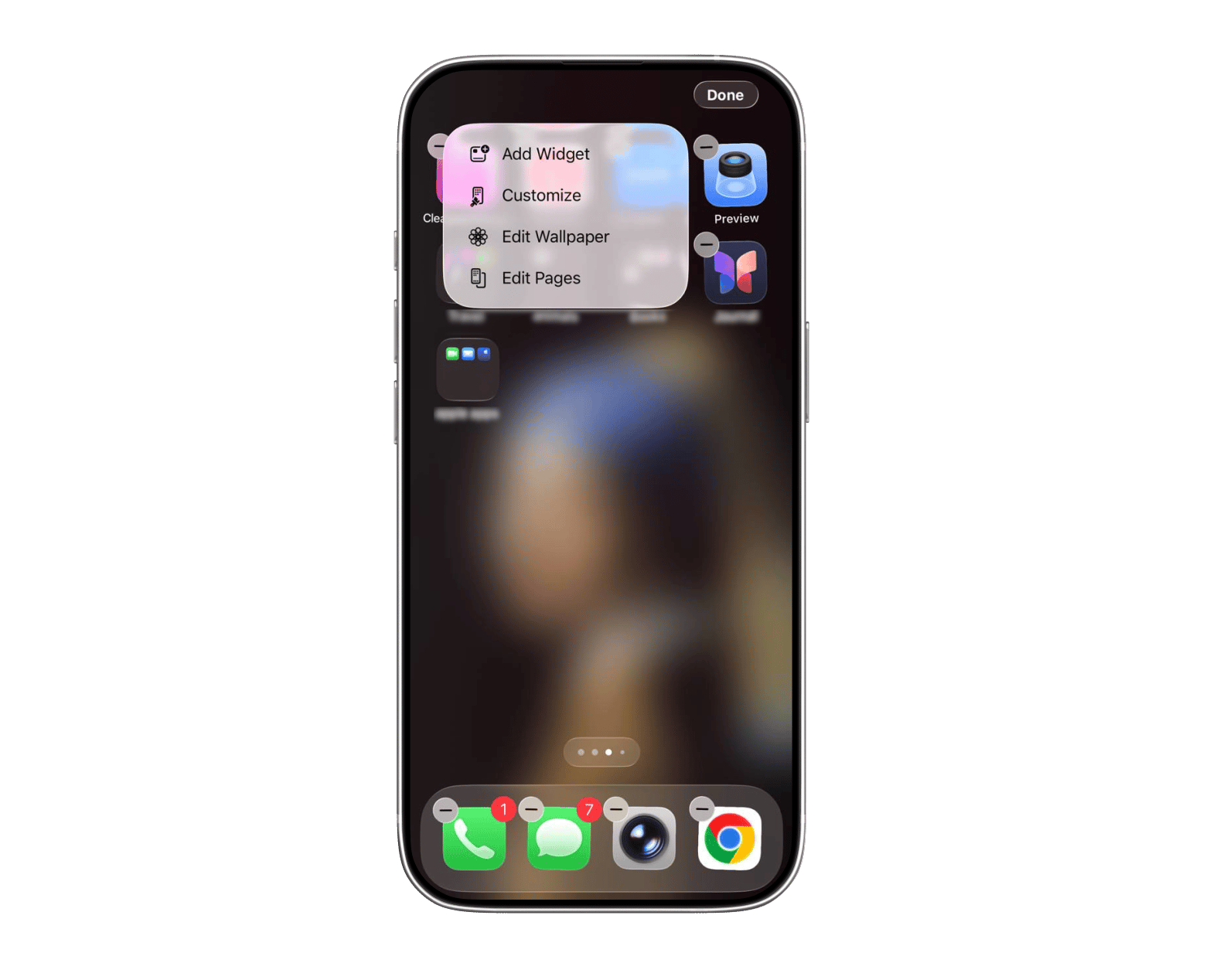
Tap Edit in the upper-left corner > Add Widget.
Browse or search for the widget you want.
Swipe left or right to choose a size.
Tap Add Widget.
Drag it to your preferred position.
You can stack widgets of the same size by dropping one on top of another. This saves space while keeping multiple widgets accessible.
How to move apps on your iPhone Home Screen
Rearranging apps is the foundation of Home Screen customization. Here's how to do it:
Tap and hold any app icon until they start jiggling.
Drag the app to its new position.
Move it to the screen edge to switch pages.
Drop it in the Dock for quick access from any page.
Tap Done when finished.
On iOS 18 or later, you're no longer forced to start in the top-left corner. Drop an icon anywhere on the grid to leave intentional blank space and design a layout that spotlights your wallpaper.
How to create folders on your iPhone Home Screen
Folders help group similar apps together. I keep all my photo editing apps in one folder and productivity tools in another.
To create a folder:
Long-press an app to enter jiggle mode.
Drag one app onto another.
Release to create a folder.
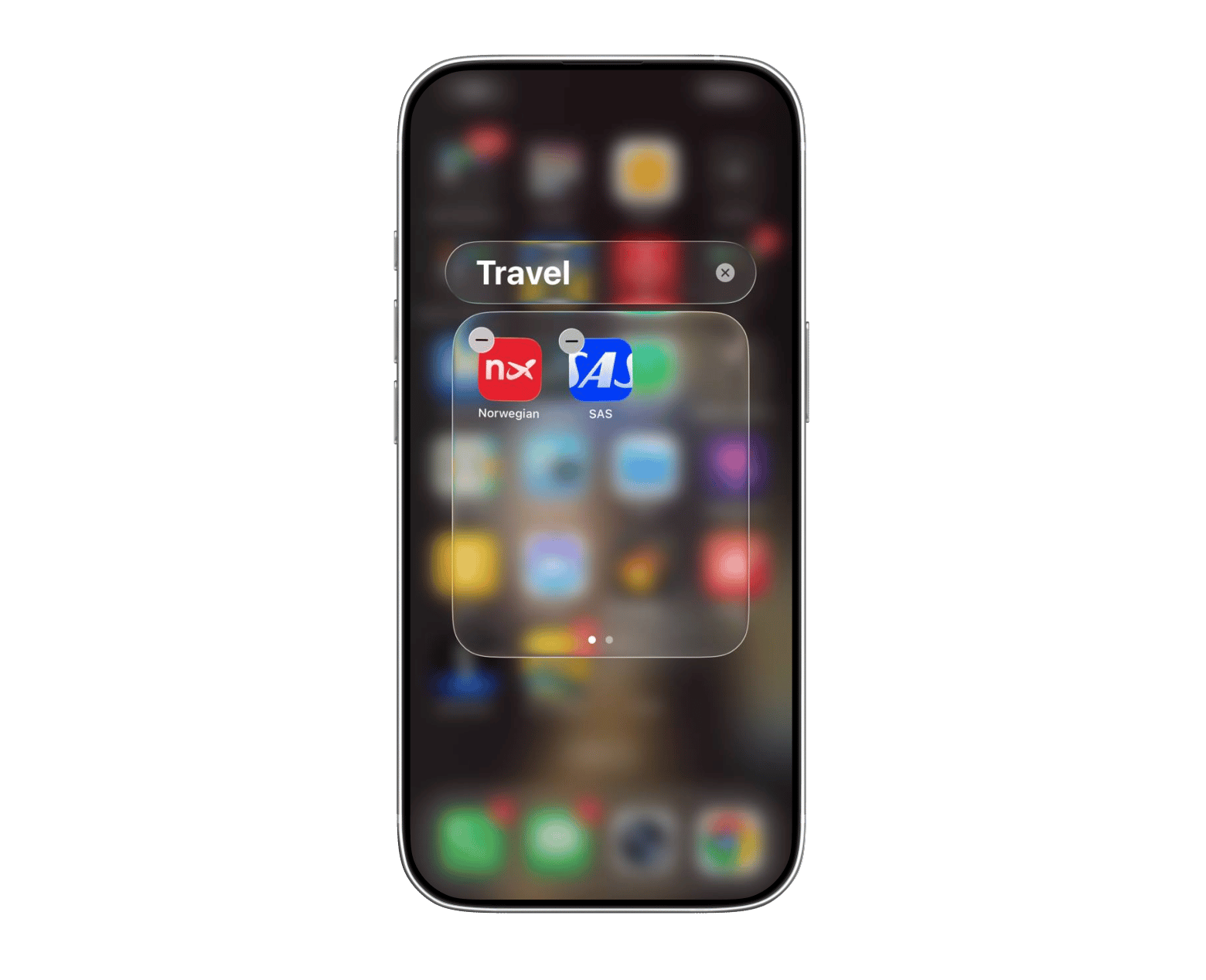
Tap the folder name to rename it.
Add more apps by dragging them into the folder.
Keep your folders organized and named clearly. It makes finding apps much faster.
If you like keeping things organized in folders on your iPhone, you can apply the same logic to your Mac — check out how to change folder icons or colors on Mac to keep your desktop just as tidy.
How to hide apps from your iPhone Home Screen
Sometimes you want certain apps installed but not visible. Here's how to hide them:
Tap and hold the app icon.
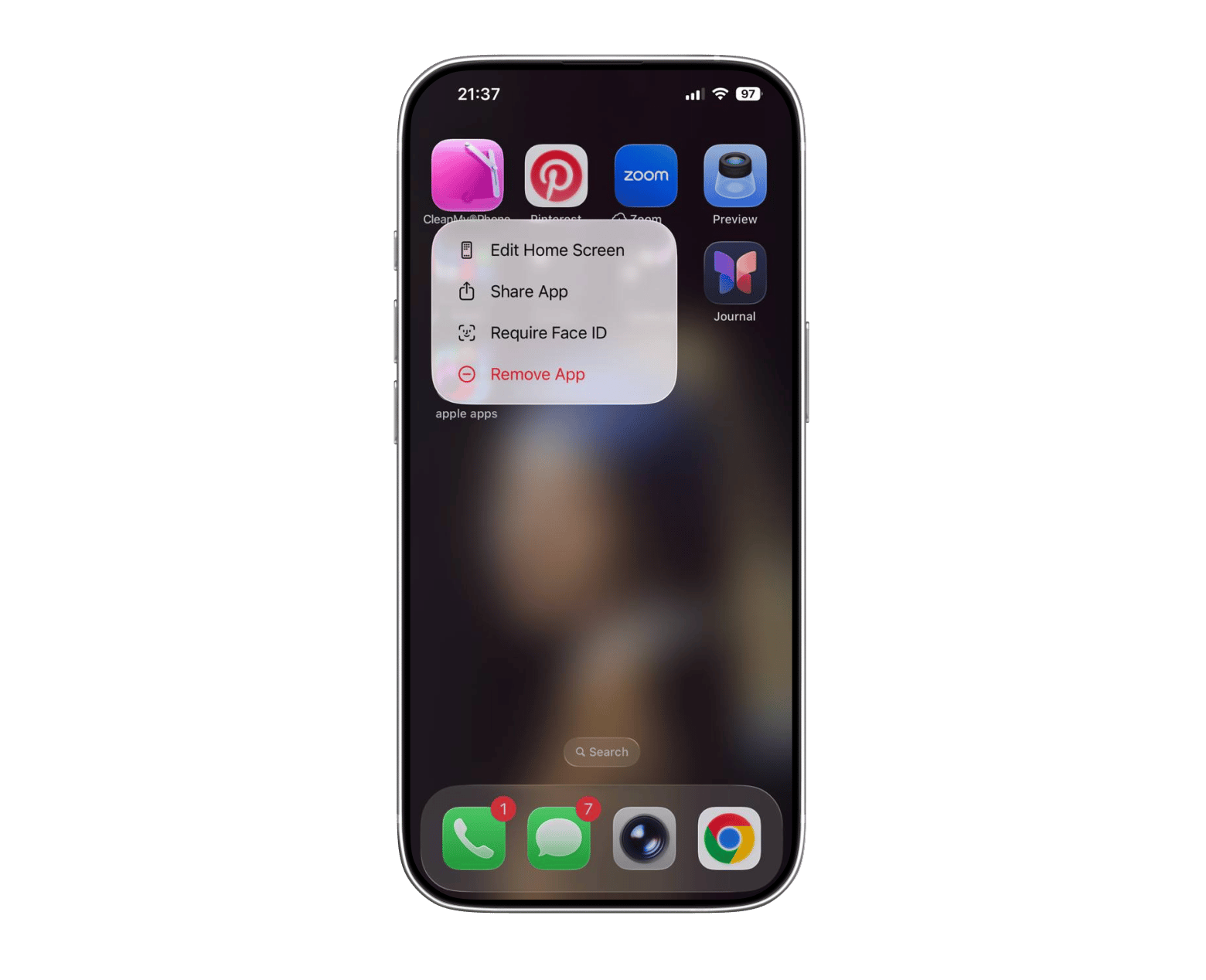
Tap Remove App.
Choose Remove from Home Screen.
The app moves to your App Library and remains installed. You can still access it through search or by swiping to the App Library.
Just like you can hide apps from your iPhone Home Screen, you can do the same on your Mac. Here's how to hide desktop icons on Mac for a cleaner, distraction-free workspace.
Hide, rearrange, and delete Home Screen pages on iPhone
Instead of hiding apps individually, you can hide entire Home Screen pages. This is perfect for seasonal apps or work-related pages you don't need on weekends.
Follow these steps to hide Home Screen pages:
Enter jiggle mode by long-pressing an empty area.
Tap the dots at the bottom of the screen.
Uncheck pages you want to hide.
Tap Done
Your iPhone remembers the layout, so you can easily restore hidden pages later.
Create a custom iPhone Lock Screen
Your Lock Screen is the first thing you see when you pick up your phone. Make it uniquely yours.
Here’s how to customize your Lock Screen.
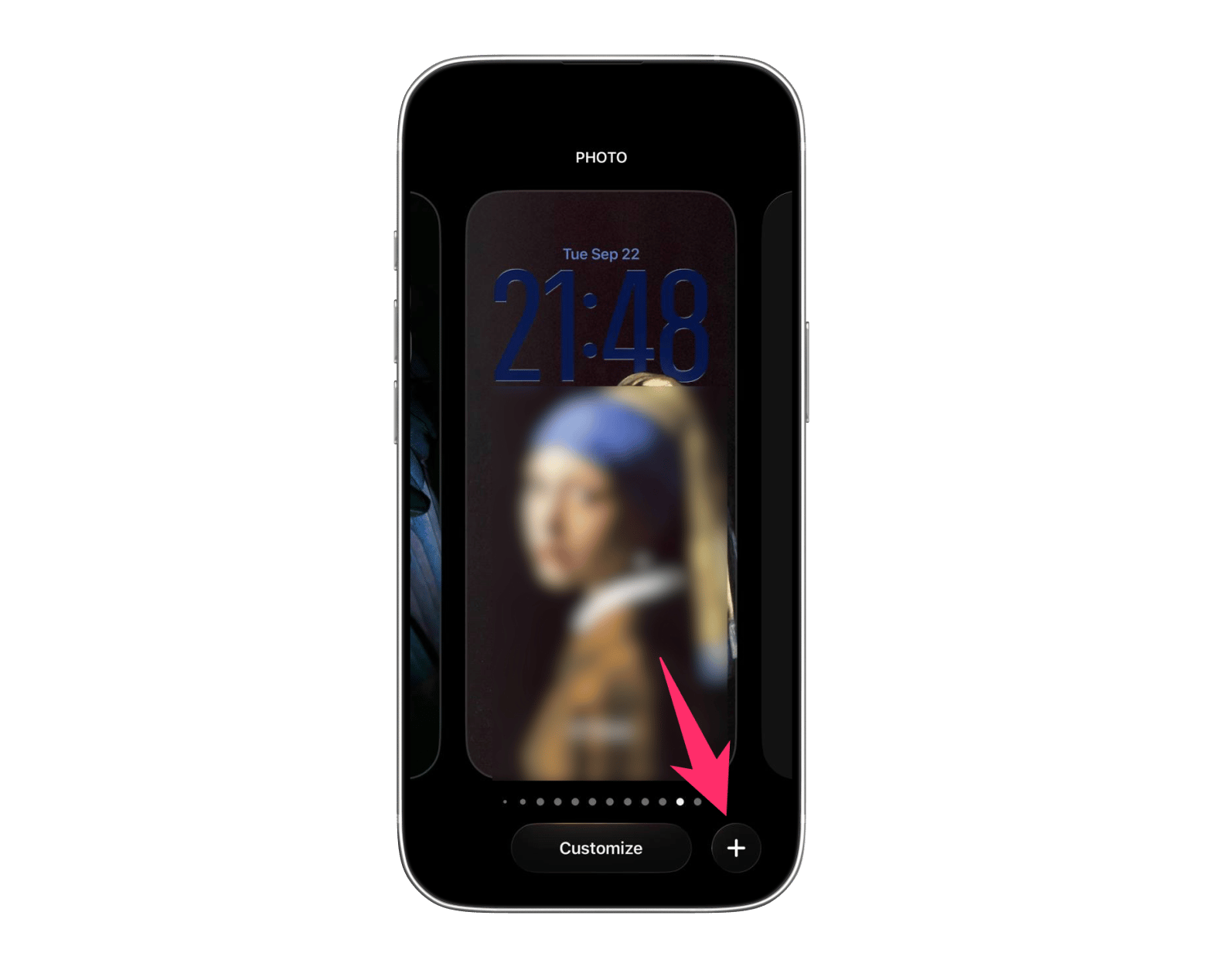
1. Wake your phone but don't unlock it.
2. Long-press the Lock Screen background.
3. Tap the plus sign.
4. Choose a wallpaper or photo.
5. Swipe to apply different photo styles.
6. Tap the clock to change its font and color.
7. Add widgets above and below the clock.
8. Tap Add in the top-right corner.
You can create multiple lock screens and switch between them based on your Focus mode or mood.
Make your iPhone Home Screen truly yours
Customizing your iPhone Home Screen isn't just about making it look good — it's about building a setup that actually works for you. From rearranging apps and creating folders to adding widgets, hiding pages, and tying layouts to Focus modes, there are more ways than ever to make it truly yours. Start small, experiment with what feels right, and use every tool available to get exactly the setup you need.
And if you want that same level of control on your Mac desktop, try WidgetWall. It’s available on Setapp with a 7-day free trial, alongside 300+ iOS and Mac apps. Try Setapp free.
FAQ
What is a widget on iPhone?
A widget on iPhone is a small, interactive module that displays information or provides quick actions directly on your Home Screen. Widgets show live data like weather, calendar events, or news headlines without opening the full app.
iPhone Settings icon missing. How do I get it back on the Home Screen?
First, swipe down and use Search to find Settings — it'll appear even if hidden. Drag it from the search results back to your Home Screen. If that doesn't work, go to Settings > General > Transfer or Reset iPhone > Reset > Reset Home Screen Layout. This restores the default layout, including Settings.
Can iPhone use custom fonts?
Yes, but with limitations. You can download font apps from the App Store to use custom fonts in documents and some apps. System-wide font changes require jailbreaking, which I don't recommend.
Can I change the color theme of my iPhone?
Yes, several ways exist. Enable Dark Mode in Settings > Display & Brightness. In iOS 18 and later, long-press your Home Screen, tap Edit, then Customize to apply tinted icons that match your wallpaper.
How do I organize my iPhone Home Screen quickly?
Start by entering jiggle mode (long-press any app). Group similar apps into folders by dragging them together. Move your most-used apps to the first page or Dock. Hide unused apps by removing them from the home screen. Use Focus modes to automatically show work apps during business hours and personal apps after.
How do I change the color of my app icons on iPhone?
In iOS 18 and later, enter jiggle mode, tap Edit, then Customize. Choose from Dark, Light, or Tinted modes — Tinted automatically matches your wallpaper colors. For individual icon customization, use the Shortcuts app to create custom shortcuts with different icons, though this adds an extra tap when opening apps.
Superpowers for your iPhone
Power up your workflow with apps for Mac and iOS on Setapp.






 Best solution
 Best solution