The best app ideas come from real problems, not brainstorms. Almost every indie Mac developer I looked at started by solving an annoyance they had themselves, then found out thousands of others shared it.
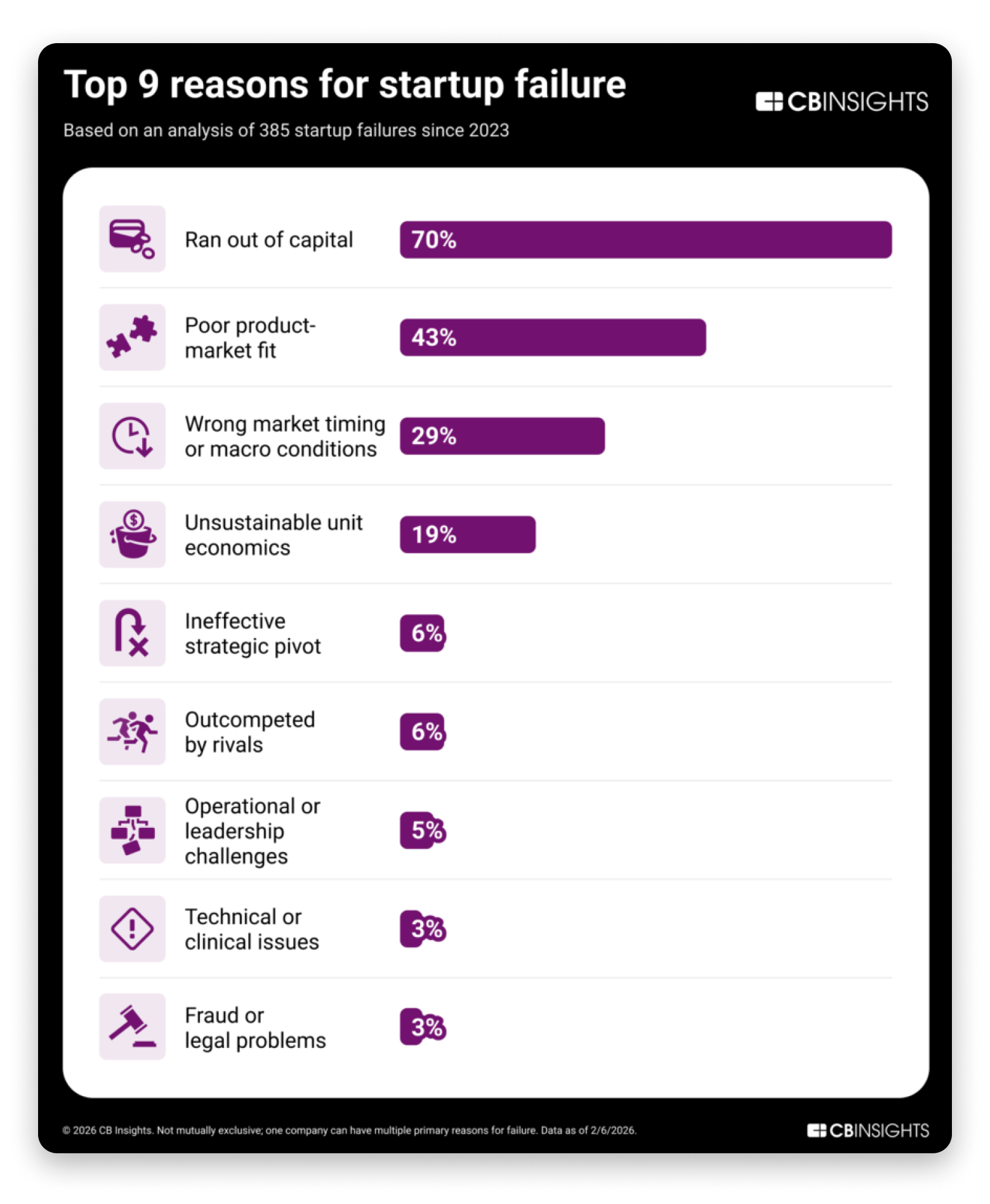
A crowded market is a good sign, not a reason to quit. If an app already exists, someone has proven people will pay to solve that problem. Poor product-market fit drives 43% of startup failures, so a validated problem is an advantage. Your job is to do it better, simpler, or for a sharper audience.
Niche communities show you where it hurts. Reddit threads, App Store reviews, and forums are full of people describing problems out loud. Learn to listen.
Knowing what not to build matters as much as the idea. Every feature you ship is a feature you maintain forever. Discipline beats ambition.
Got an app ready? Setapp helps you reach Mac users who already pay for quality software. Publish your app on Setapp!
Finding a good app idea feels like the hardest part of building software, and it kind of is. You have ten half-formed concepts in a notes app, no clue which one is worth months of work, and a creeping fear that everything has already been done.
Most app ideas fail before the first line of code, not because they're badly built, but because they solve a problem nobody actually has. This guide walks through how to find an app idea worth building, with proven methods backed by indie Mac developers who turned good app ideas into apps people use every day.
Why most app ideas fail before the first line of code
A good app idea does not need to be original. It needs to solve a real problem for a specific group of people better than the current options.
The data backs this up bluntly. CB Insights analyzed 431 venture-backed companies that shut down since 2023, and while "ran out of capital" topped the list at 70%, the report is clear that running out of money is the final symptom, not the root cause. The deeper reason, named in 43% of cases, was poor product-market fit: founders built something, then discovered not enough people wanted to pay for it.
Source: CS Insights
The flood of AI-built apps in 2026 makes this sharper, not weaker. When anyone can ship a product over a weekend, the market fills with near-identical tools. Standing out no longer comes from being first. It comes from picking a problem worth solving and sticking with it longer than everyone chasing the next quick build.
I spoke with the developers at Setapp, analyzed the market, and compiled a list of the most popular ways to find ideas for great apps.
Method
Best for
Good to know
Solve your own problem
Spotting unmet needs early
Your daily friction is shared by thousands
Watch where people complain
Validated demand from real users
Reddit and App Store reviews show the gaps
Improve an existing app
Beginners and crowded markets
A competitor proves people will pay
Find an app idea by solving a problem you actually have
The most reliable way to find an app idea is to start with your own daily friction: the tasks, workarounds, and small annoyances you hit repeatedly. If something irritates you often enough, it almost certainly irritates plenty of other people too, and most of them have quietly accepted it. Some of the best app ideas are just someone refusing to accept a problem everyone else tolerated.
That acceptance is the opportunity. Sindre Sorhus, the developer behind Supercharge, Dato, and a long list of other Mac utilities, put it well in our developer survey:
"A lot of my work comes from noticing the small annoyances people accept as just part of using a computer, and taking them seriously."
His own summary of where his ideas come from is even shorter:
"Scratching my own itches and making macOS better."
The pattern repeats across indie developers. Rafael Conde built Hand Mirror because, during the pandemic's endless video calls, he was tired of opening Photo Booth just to check his camera before joining. A tiny, specific irritation became a focused app.
Valerijs Boguckis built TextSniper for the same reason. Taking online courses, he kept needing information locked inside lecture videos and had to retype it by hand:
"I began to imagine how much easier it would be to simply highlight any text on the screen and have it instantly converted into an editable format".
He researched OCR, built a prototype, and shipped a tool that captures text from anywhere on screen, including video and locked PDFs.
The founders of ByDesign reach the same conclusion from a different starting point. After multiple pivots, their advice for finding an idea is one sentence:
"Solve problems that you personally experience."
How to apply it: keep a running note of moments where you think "this should be easier." Don't filter for ambition. The smallest annoyances are often the clearest, most buildable ideas.
Find app ideas by watching where people complain
Another proven way to find an app idea is to watch where people complain online. If your own problems run dry, listen to other people's. Social platforms exist for people to gather and talk, and when people talk, they talk about what frustrates them. Every recurring complaint about an existing tool is a candidate for a good app idea.
A few reliable places to look:
Reddit communities in your niche, where people vent about tools that fall short.
App Store and review-site comments, especially the one- and two-star reviews of existing apps. Each complaint is a feature gap.
Forums, Discord servers, and X threads about a product or a workflow.
In Your Face started exactly this way, except the complaint was about a person. Martin Höller had a coworker who ignored every calendar notification and was always late to meetings. As Martin tells it:
"The idea came from a coworker who was always late to our meetings. While we were already in the meeting room, he would still be coding, completely ignoring all calendar notifications."
Martin built a prototype over a weekend that pushed a full-screen alert impossible to ignore, installed it on the coworker's machine, and the lateness stopped. That was his signal that he had something real. When the pandemic moved everyone to video calls, the app took off.
Martin is also clear-eyed about why this matters more in 2026:
"Now in the time of agentic coding it is so easy to quickly push new apps and it becomes harder and harder to get noticed among the flood of low effort, low quality products. Find a real-world problem, build a user base, and stick with it."
How to apply it: pick two or three communities where your target users already hang out. Read the complaints for a week before you write any code. If the same frustration keeps surfacing, you've found a validated problem.
How to find an app idea by improving one that already works
You can also find an app idea by taking one that already exists and doing it better. This is the most beginner-friendly path, because the hard work of validating demand is already finished. Your only job is to differentiate: make it better, cheaper, or aimed at a more specific audience. Many of the best app ideas were never new concepts, just sharper executions of familiar ones.
Markus Müller-Simhofer found MindNode this way, almost by accident. He was stuck on a different app idea when he discovered mind mapping as a technique.
"Since there were no good Mac native mind mapping apps available at the time, I took a break from my original idea and created a small simple mind mapping app. This is how it started and I never came back to my original app idea."
The concept of mind mapping was not new. A great native Mac version of it was. That gap was the whole opportunity, and MindNode has now run for nearly two decades across Mac, iPhone, iPad, and Vision Pro.
How to apply it: list the apps you already use that frustrate you. For each, ask what you'd change. A better version for a narrower audience often beats a broad tool trying to serve everyone.
How to validate an app idea before you build
Once you have an app idea, validate it before writing any code. A good idea on paper is not the same as a viable one. Validation means confirming, quickly and cheaply, that enough people share the problem and that you can build a useful first version. Run a few checks before committing months of work:
Search demand. Use Google Trends to see whether interest in the problem is rising or fading. Aim for problems on an upward curve.
Read the competition's reviews. Existing apps' weak spots tell you exactly what users wish they had.
Estimate the audience. A niche can be small and still viable, but you need to know roughly how many people share the problem.
Check feasibility. Can you build a minimal, useful version without huge resources? The first release of most successful indie apps was deliberately simple.
The point of validation is to kill weak ideas early and commit to strong ones with confidence, not to chase certainty you'll never have.
From idea to users: getting your Mac app discovered
Finding the idea and building the app are only the first half of the journey. The harder problem, especially now, is getting it in front of people who will pay for it.
For Mac apps, Setapp is one route worth knowing. It's a curated subscription platform where users pay one fee for access to hundreds of quality apps, which means your app reaches an audience already willing to pay for good software, without you running the whole acquisition and billing operation yourself.
What the developers above value most is the relationship. Zac Cohan, a creator of Soulver, contrasted it with the App Store:
"There is a personal relationship with the Setapp team... They treat indie developers like real partners, not line items, and that makes all the difference."
Carmen Huidobro, CTO at Incredible Bee, pointed to the practical side:
"Review cycles are leagues better than the Mac App Store, and the team is responsive to questions and feedback. For a long-running indie shop, those two things matter more than almost anything else."
Finding the right app idea, in short
The best app ideas come from paying attention to your own friction, to where people complain, and to the apps you already wish were better. Validate the demand, scope the idea down to the one thing it does best, and have the discipline to leave the rest on the table.
Once you've built something worth shipping, the last piece is getting it discovered. Distributing through Setapp puts your app in front of users who already pay for quality apps, and it takes the operational weight off your plate: Setapp handles app activation, licensing, billing, taxes, and customer support, so you can stay focused on the app itself. Publish your app on Setapp now!
FAQ
How do I find a good app idea?
Start with problems you experience yourself. Keep a note of daily frustrations where you think "this should be easier," then check whether other people share the same problem in communities like Reddit, App Store reviews, and niche forums. The strongest app ideas solve a specific, real problem rather than chasing originality.
How do I know if my app idea is profitable?
Check whether demand is rising using Google Trends, read the reviews of competing apps to find their gaps, and estimate how many people share the problem. An existing competitor is a positive signal: it means people already pay to solve that problem. Your task is to differentiate by being better, simpler, or focused on a more specific audience.
Where can I distribute or sell my app?
Beyond the Mac App Store and direct sales, Setapp is a curated subscription platform that puts your app in front of users who already pay for quality Mac software. Indie developers on the platform highlight faster review cycles and a genuine partnership with the team. Join Setapp!
Powerful apps live on Setapp
Ditch defaults and discover new gems on one app platform.






 Best solution
 Best solution